This is part 5 of my series Christmas in China
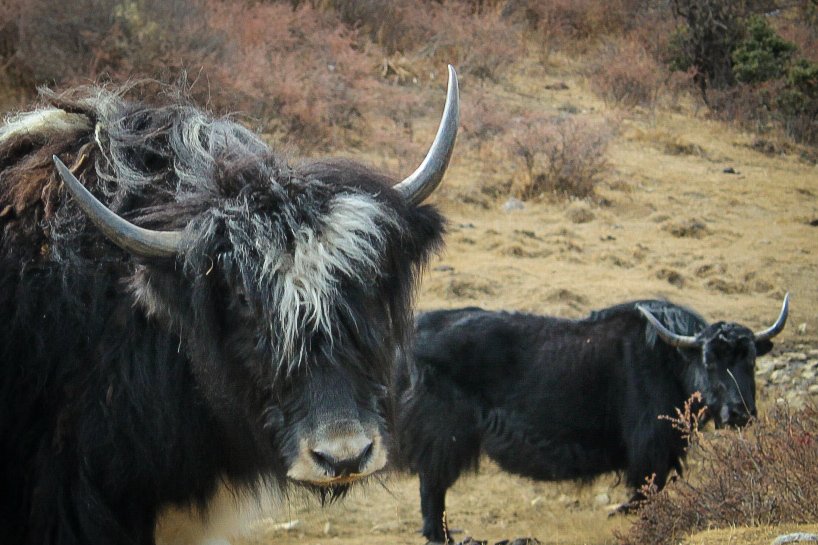
To my surprise the man tending the yaks on the hill near Shangri-La spoke to me in English. He didn’t want to be photographed but asked me what I was doing and told me about his nomadic lifestyle.
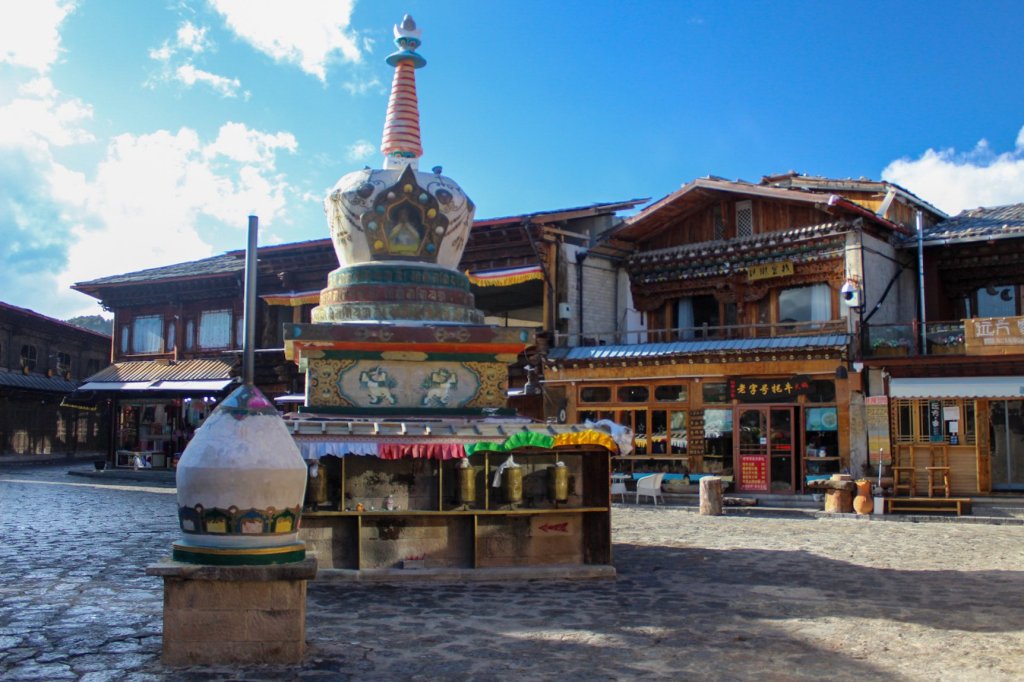
The name Shangri-La was made famous by the 20th century novel and movie Lost Horizon in which Shangri-La is a fictional community in the Himalayas. However Shangri-La is now a real place! in 2003 an enterprising town in Diqing Tibetan Autonomous Prefecture changed it’s name to Shangri-La, or Xiangelila (香格里拉) in Chinese. I found this online when planning my trip and decided I had to visit.
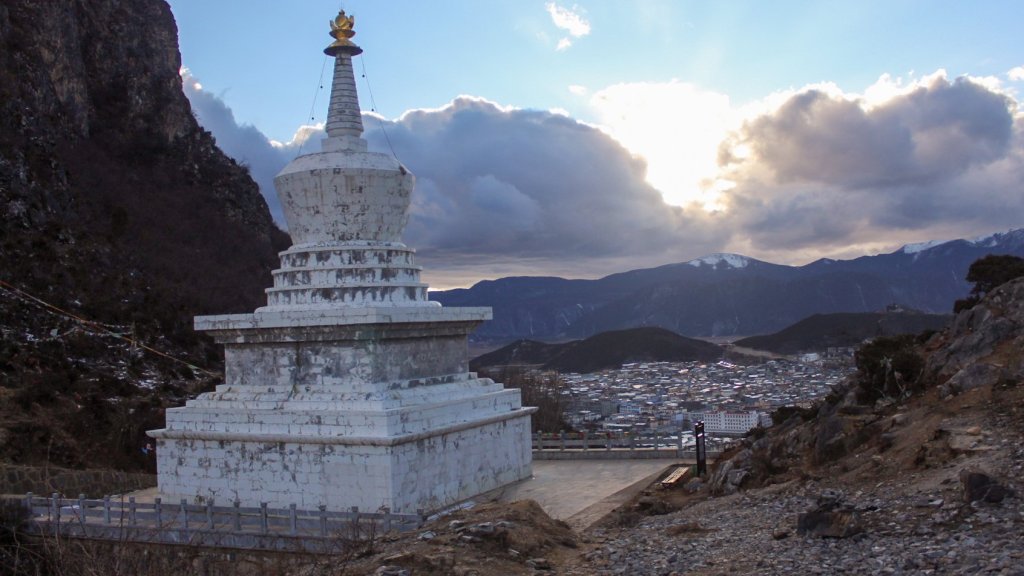
I’d seen the white stupa saddled between two peaks above the town and decided to try and climb up to it. It was gone 5pm and the beginning of January but the sun was still far from sinking behind the mountains due to being so far West of Beijing (where the time comes from). I was keeping an eye on the sun for when I’d need to turn back.
The walking was difficult; due to the altitude I’m pretty sure! The town sits at 3,160m above sea level which meant that I got out of breath much more easily than usual. When I reached the stupa, not only was I rewarded with a great view over the town but there were also yaks milling around. I also noticed that the footpath continued after the stupa.
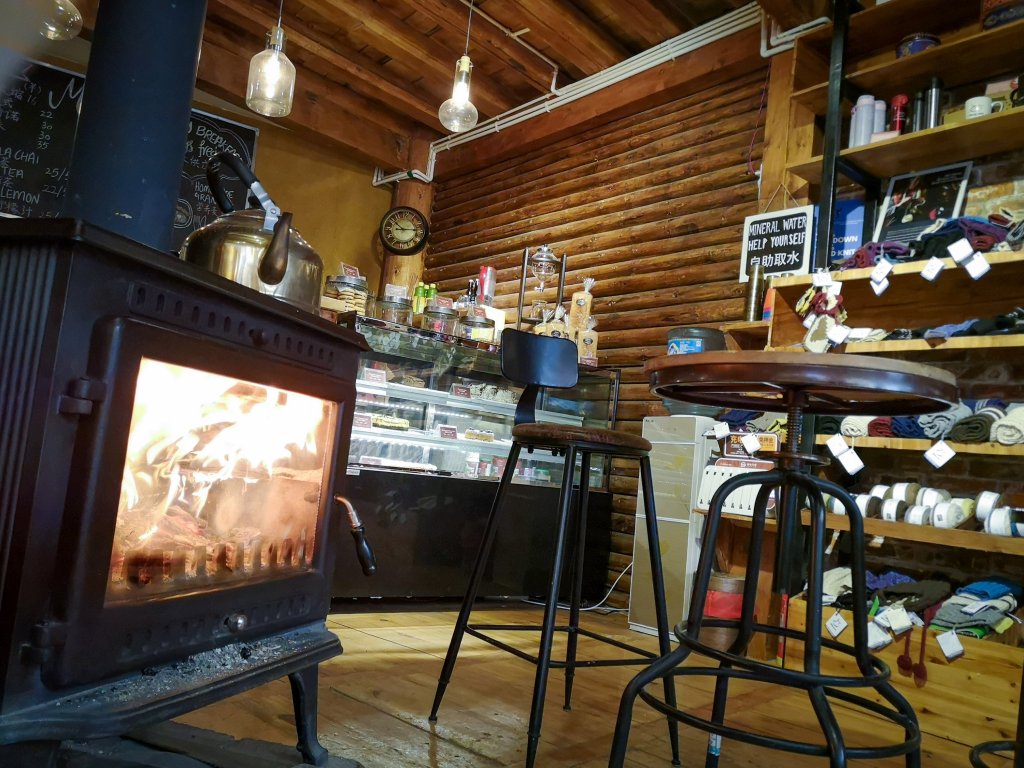
It had been hard to get out from under the electric blanket into the -9°C cold. I’d embarrassed myself ordering breakfast in Mandarin from the waitress who was actually Singaporean (so spoke perfect English). The cafe had a cosy woodburning stove which I parked myself right in front of as the only customer. The waitress told me that most of the people in the touristy old-town were not local to the Province, let alone the town. She said it’s busier in summer. Personally, I’d come here for the cold; to get away from the heat of Saigon for a while so the off-season weather suited me fine.
I’d visited to the embroidery gallery, the giant prayer wheel at Guishan temple, the Long March museum and was bored of the facades of the old-town selling the same tat that was sold in Kunming. So I decided to trek back up to the Stupa to see where the path went and that’s how I met the yak farmer.
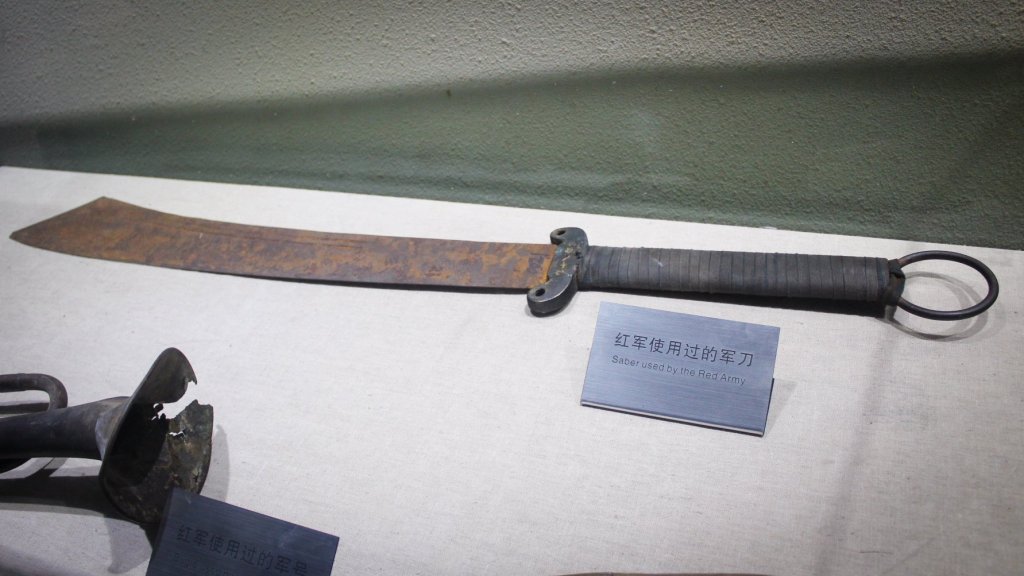
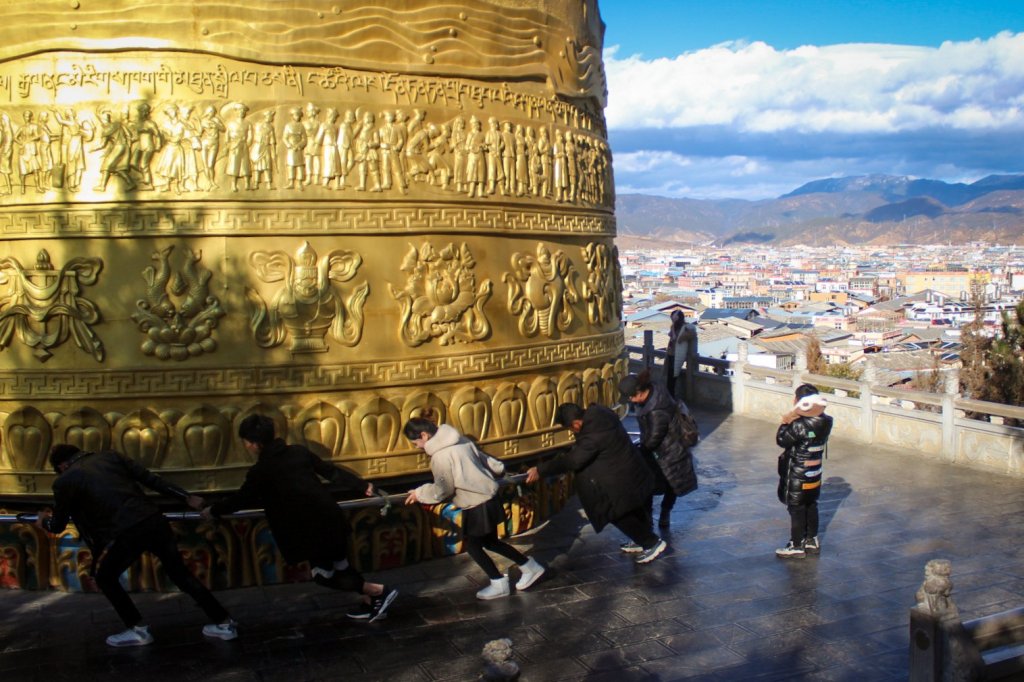
He encapsulates Shangri-La well. Tibetan but global. Rustic but touristic. Was Shangri-La worth visiting? Maybe not. Was the trip worth it? Definitely! After all, I chose Shangri-La at random after seeing the name on the internet.
The path looped around to the town on the other side of the hill. I walked from there to the bus-stop to catch the bus back to Lijiang where I’d change to a sleeper train back to Kunming – my journey unraveling a like callstack popping the previous destinations. Then I would change onto the train to Hekou which sits on the northern bank of the river Sông Nậm Thi. On the southern bank: Vietnam.
 Eastward Ho!