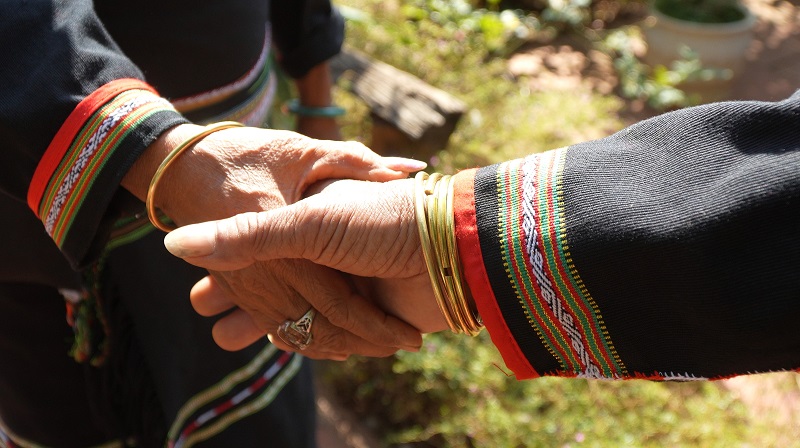
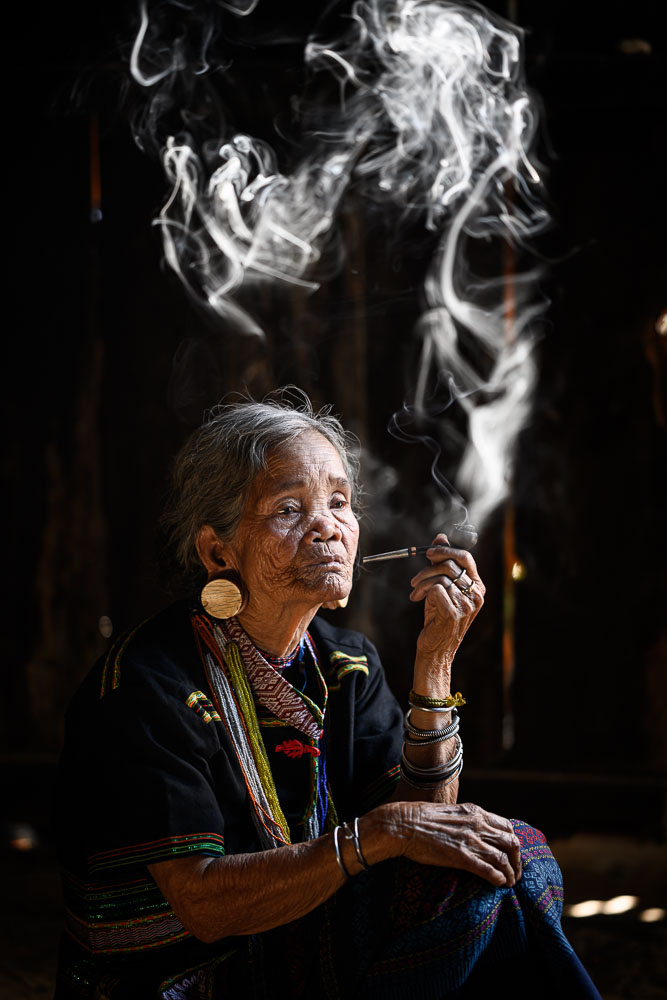
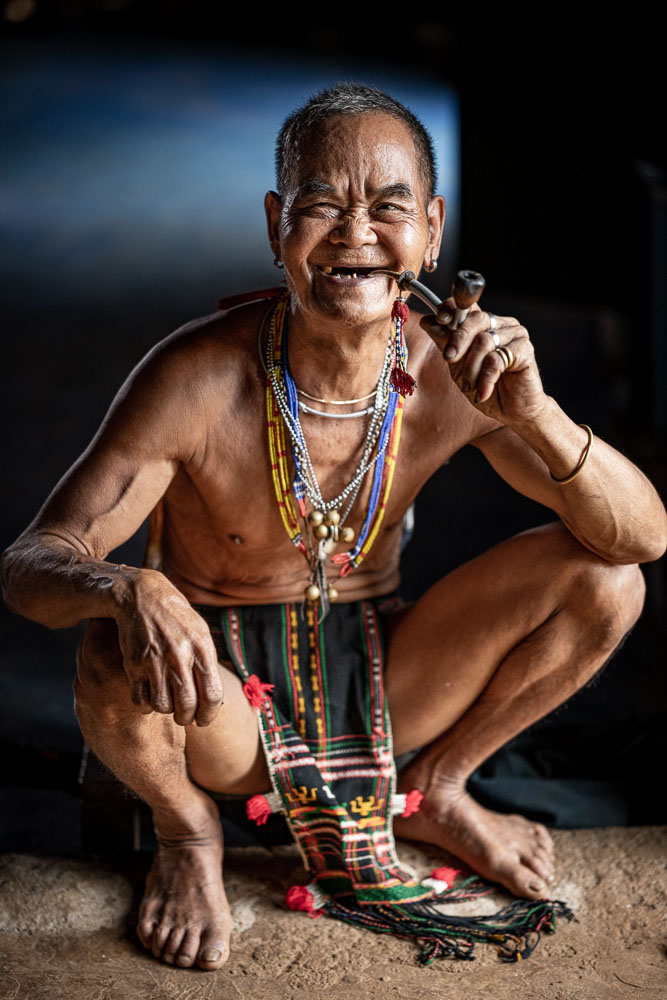
Jewelry plays a significant role in the cultures of the space of gong culture, including items like beaded bracelets, necklaces, metal belts, jingle bracelets, ear plugs, earrings, and torques. As in most cultures worldwide, this jewelry can be worn for purely aesthetic reasons or can hold deeper meaning for the individual on a personal level or social level.
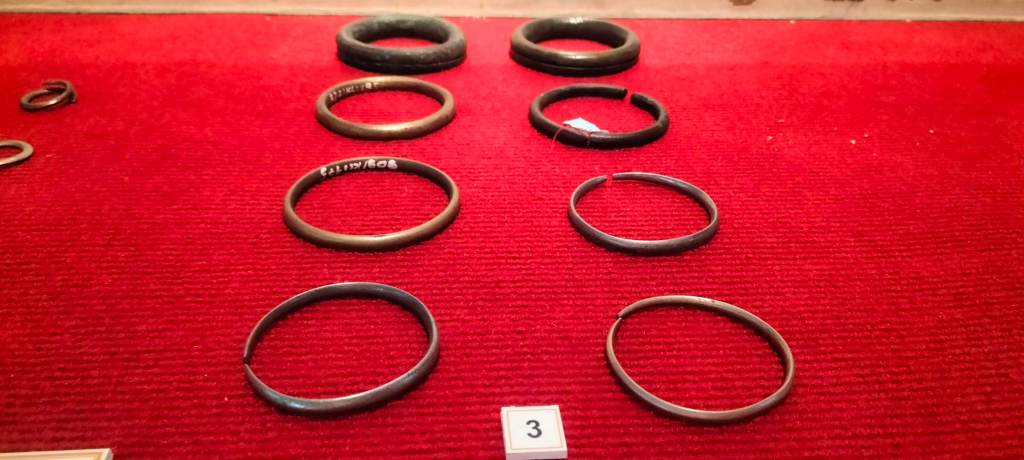
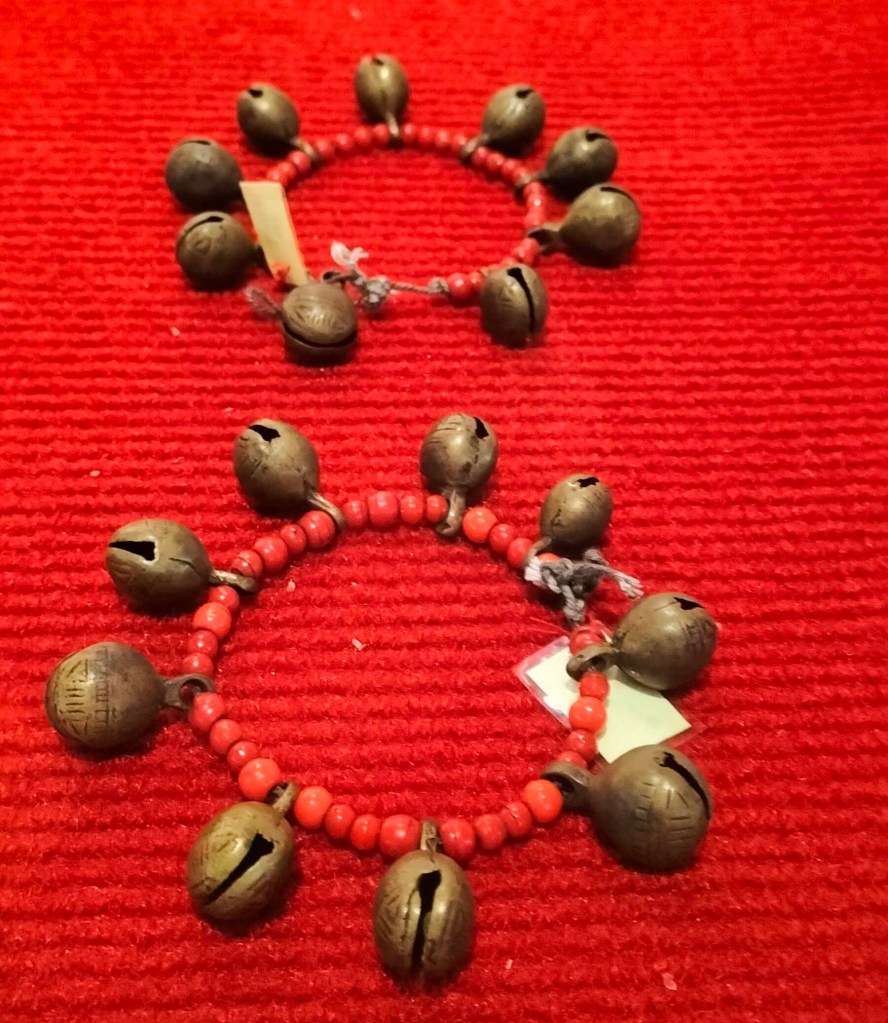


Among this array of jewelry, simple metal bangles stand out as particularly culturally significant. In Vietnam’s Central Highlands, these plain bands, made of copper, bronze, or even silver, hold profound cultural value. Today, these bangles are not only worn by highlanders proud of their heritage but have also become prized collectibles for enthusiasts of Vietnam War memorabilia, for reasons we’ll explore below.
For many people, these bangles act as enduring symbols, mementos that are presented to encapsulate various important occasions such as rituals, promises and life milestones. I’ll explore three such rituals, though this is not an exhaustive list. Firstly, we’ll look at how bangles are used for protection and promote good health. Next, we’ll look at they are exchanged during sworn-brother ceremonies. Lastly, we will look at how bangles can play a crucial role in marriage ceremonies.
Bangles for Health and Protection
Mr. Y Yuin Niê in Ea Ngai commune, (Krong Buk district) said that after a very serious traffic accident, his parents gave him a bronze bracelet in the hope of recovering from the accident. And like a miracle, the bracelet helped him gradually stabilize his health and recover quickly. Every time someone in the family is sick, the Ede people wear a bracelet that has been blessed to help the sick person get well quickly. – 2021 source

The copper bracelet is like a witness of the yang to protect and bless the person wearing the bracelet. After making offerings, the copper bracelet will be engraved with a number of marks corresponding to the number of wine jars used for the ceremony, then brought to the owner, with a maximum of 7 engraved marks. – source
The protection these bangles offer may be spiritual in nature, however, during the war, for American soldiers, wearing such a bangle had a very tangible worldly effect; It allowed the indigenous highlanders to tell which individuals had demonstrated kindness and generosity to highland people, who were often called savages by the French and Republic of Vietnam. This lead to many Americans to refer to these as “friendship bracelets.”
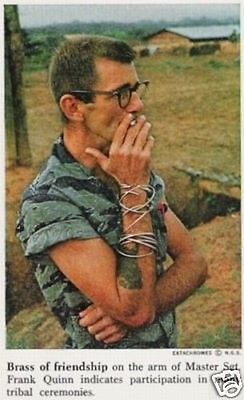
Many of the green beret-boys wear a simple brass coil around one wrist—not to be fashionable, but for added life insurance. “A bracelet identifies you as a friend of the Montagnards,” explained Capt. Larry Brown at II Corps Hq. in Pleiku. “If you are out alone and get into trouble, the bracelet could make the difference in being rescued.” – STARS AND STRIPES • December 15, 1965
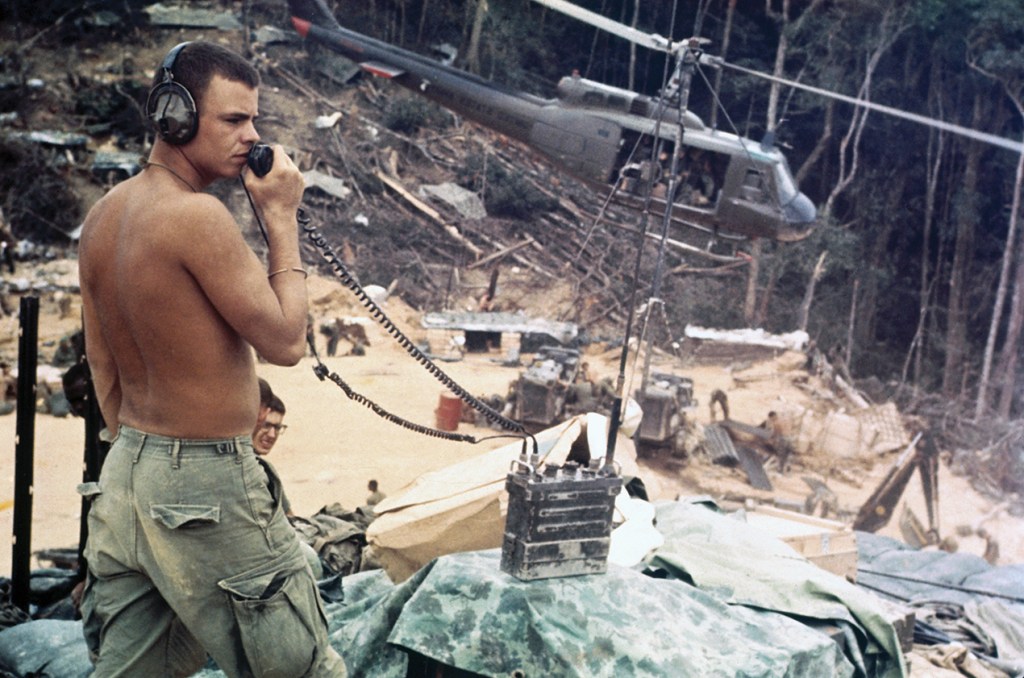
Original Caption: Specialist 4th Class Stephen Haskins from Odon, Indiana, a Radio Repairman with the 101st Airborne Division, (Air Mobile) tests an AN/PRC 77 radio transmitter here. A Huey helicopter lifts off the landing pad in the background.
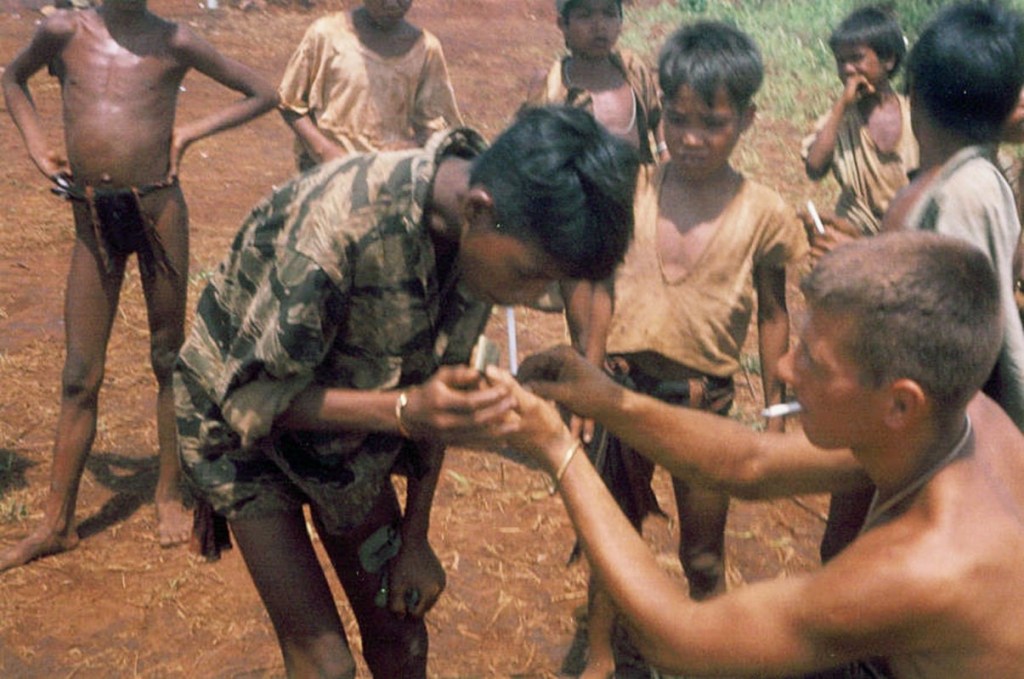
The cost of a bracelet…we paid for them in a lot of ways. Often they were gifts, sometimes a few cigarettes were traded, for the bracelet, some C rations were a good trade, sometimes we were given the bracelets for just being in the area. Montenyards were a generous people for all the ones I knew. – Steve Richey, on Mon, 19 Aug 2002
Were similar bangles given to soldiers and guerrillas from the North? I’m certain it must be the case, as there are many reports of individuals earning immense respect from the locals. Unfortunately, I have not found any contemporary writings or photos to confirm this. If you have any information or sources, please reach out and let me know!
Bangles in Sworn-Brother Ceremonies
The second use of bangles is to mark brotherhood, known as “Jiang” or “Jiang Mah” in Jrai, which translates to “ally” or “sworn brother” (anh em kết nghĩa in Vietnamese). Historically, a Ptuh Jiang or Tuh Jiang ceremony involved animal sacrifice, drinking jar wine mixed with chicken blood, and exchanging bangles . The bangles represent an unbreakable promise (indeed they may also be used to enforce a promise of improved behavior after a misdemeanor). From the day they take the ceremony, the jiang brothers swear to help each other through thick and thin and the bangle acts as a reminder of that promise. I like to think of this ceremony as like a wedding for a “bromance”.
Anthropologist Jonathan Padwe observed this in Jrai culture in Ratanakiri, Cambodia around 2001. From interviews I’ve conducted in Gia Lai, older residents recall the ceremony from their youth, but it has become rare today. However newspapers still report it in Ede and Mnong cultures in Dak Lak.


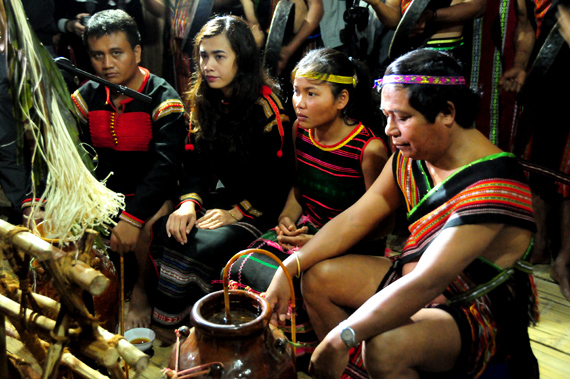
Mr. Y To Bkrong said that when the Ede people love someone outside their clan and want to become a brother, they will hold a twinning ceremony. After worshiping, the bronze bracelet is given to the sworn brother. – source
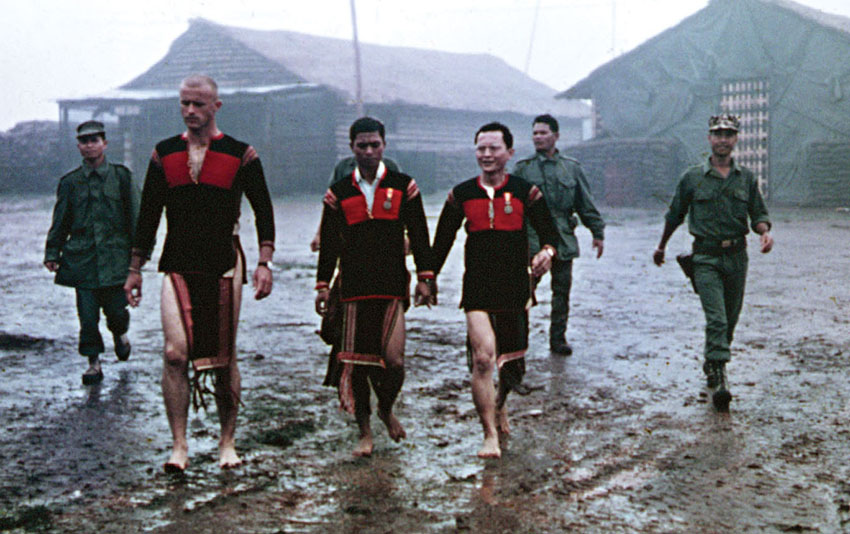
Y Jhon, Gillespie, and Truong stepped out, dressed in traditional Montagnard clothing for the two-hour ceremony. As Gillespie, Y Jhon, and Truong drank Nhom Pae through long reeds, a Montagnard shaman chanted and daubed their bare feet with the blood of the sacrificed buffalo to drive the evil spirits away. At the same time, “Montagnard women danced in the background to the tune of brass gongs.” When the ceremony ended, the shaman placed identical copper bracelets on the wrists of Y Jhon, Gillespie, and Truong to symbolize the bond of brotherhood and friendship. The three soldiers from different cultures were now joined together as allies – Howard James Sochurek source
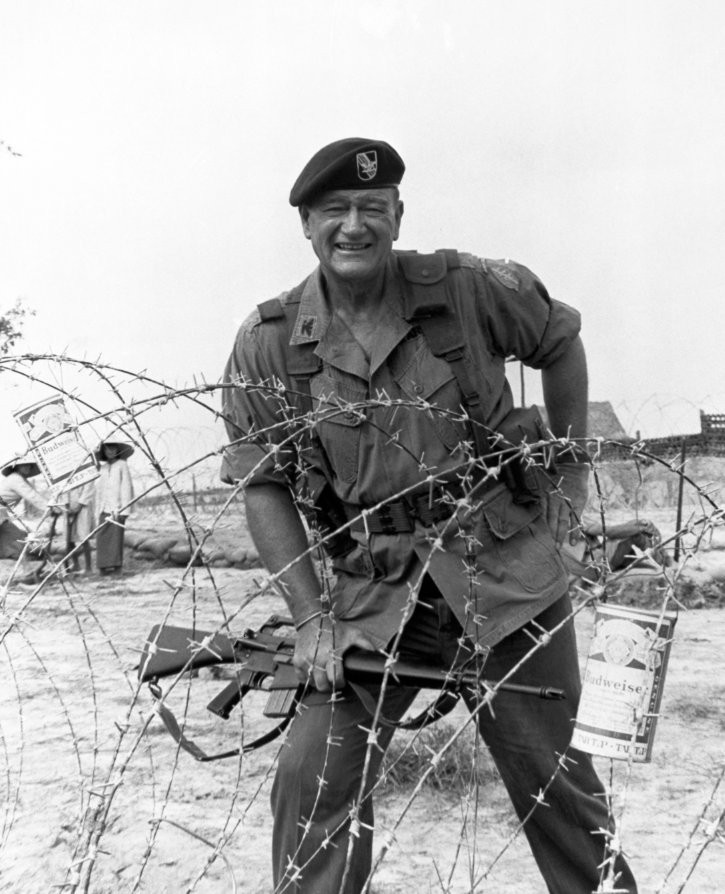
An interesting tidbit here is that the classic western movie star John Wayne visited the Gia Lai/Kontum area in 1966 where he was gifted one of the bangles as a sign of brotherhood. You can catch glimpses of the bangle in True Grit. Did “Duke” perform the full sworn-brother ceremony like Gillespie? I think it’s likely he did a modified version like David Noble describes doing in Plei Mrong in 1962.
the most famous gift Duke was given in Vietnam was the silver friendship bracelet presented by a Montagnard Strike Force unit, made up of indigenous Vietnamese soldiers. The bracelet was bent to fit his wrist, and he wore it for the rest of his life. – source
Much has been written about the movie star’s visit in preparation for the movie The Green Berets but sources are vague on the locations he visited. However, “Sergeant Gilbert Mumfort of the Fourth Infantry Division” is mentioned in connection with this visit. The 4th Infantry Division was involved in the battle of Dak To the following year. Additionally, there is a video that mentions Operation Hawthone, which also took place around Dak To so I think it’s safe to say he probably visited Dak To.
Bangles in Marriage
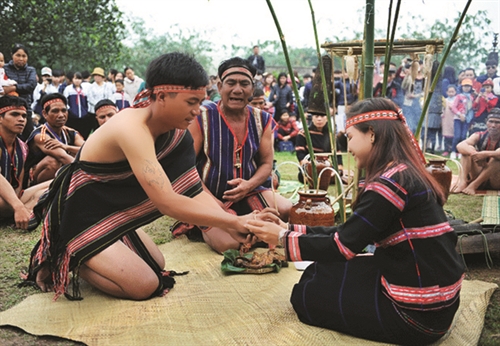
Another important cultural role of these bangles is their role in marriage. This practice, too, revolves around the theme of an unbreakable promise. A couple can exchange copper bangles that stand for fidelity and responsibility (source). Unlike some traditional practices that have faded over time, this custom remains common in 2024 although some Jrai I spoke to consider it old-fashioned. I think for those of us from a western Christian background its easy to see parallels with wedding rings.
The Gia-rai bracelet, in addition to its aesthetic function as jewelry, also performs a social function, has great significance in engagement, as the first sign of marriage….[A woman] pulls out a bracelet and asks the matchmaker (greng) to bring it and give it to her beloved. If the boy agrees, he will take the bracelet. If not, he will hold the bracelet for a while and then return it to the matchmaker. If the girl still pursues, she can ask the matchmaker to give her one, two, three more times until all hope is gone. If the boy accepts it, the matchmaker arranges a date to meet at a certain location for the girl to receive her partner’s bracelet. – source 2006
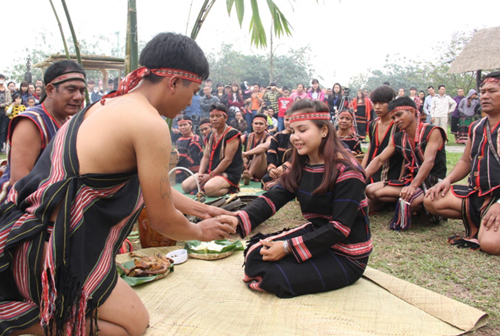
The cultural significance of bangles in Vietnam’s Central Highlands is rich and multifaceted. Whether for protection, marking brotherhood, or symbolizing marital union, these bangles are deeply embedded in Montagnard traditions. Despite the passage of time and rapid changes in the region, some practices endure. From their historical roots to their present-day relevance, these bangles offer a fascinating glimpse into the region’s fascinating cultural heritage.
 Eastward Ho!