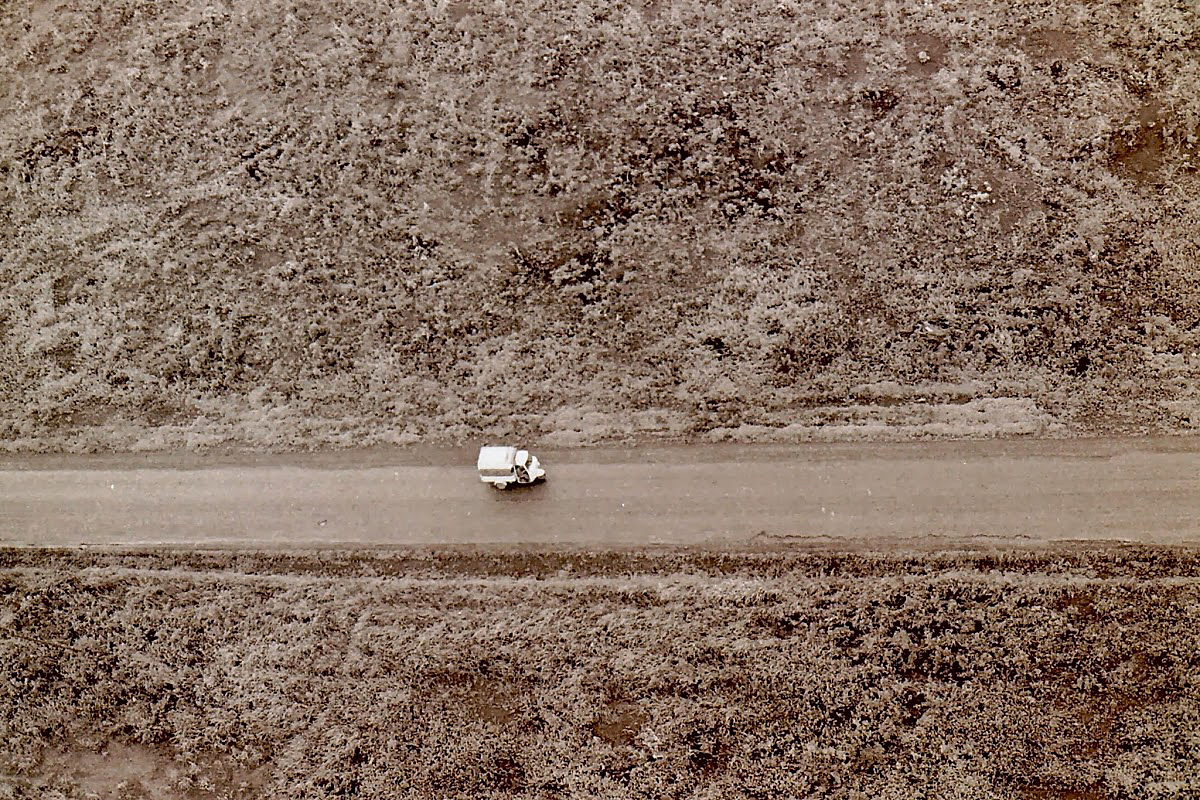
In 1962, Pleiku buzzed with the onset of US operations[1]. As the war escalated, this city would transform into a key battleground, changing rapidly in response. But in 1962, Pleiku remained a tranquil oasis for the Republic of Vietnam in the wild highlands. Join me as we journey back in time with photos and quotes to capture the essence of Pleiku as those first American arrivals saw it. While not all the photos are from 1962, some are from later in the decade, I’ve aimed to recreate the atmosphere of that pivotal year.
I’ve drawn a lot of quotes from the book Saigon to Pleiku by David Noble so many thanks there.
The City Center
When Pleiku town was first established on the land of Hoi Thuong and Hoi Phu villages, the inner-city roads were not yet developed; at that time, the French named the roads very simply: such as Hoi Thuong village’s pagoda road (French: route de la pagode Hoi-Thuong – now Su Van Hanh street), the road to the Post Office-Telegraph building (French: rue des Postes et Télégraphes, then Hoang Dieu street until 1975, now Hung Vuong street), the road to the Administrative Agency Residence (rue de Bâtiments de la Délégation, now Quang Trung street), etc. Pleiku town was planned mainly along two main axes: the business development road was Hoang Dieu street and the administrative road named Trinh Minh The street; most of the government offices and departments were located on this road (now Tran Hung Dao street) – Nguyen Quang Hien April 30, 2023
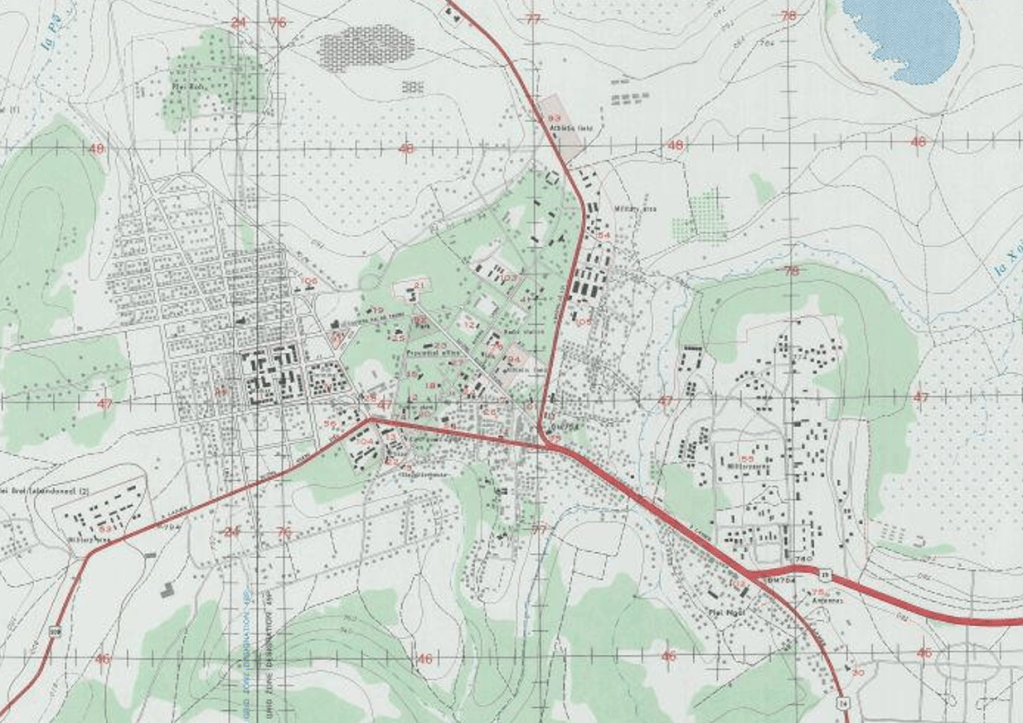
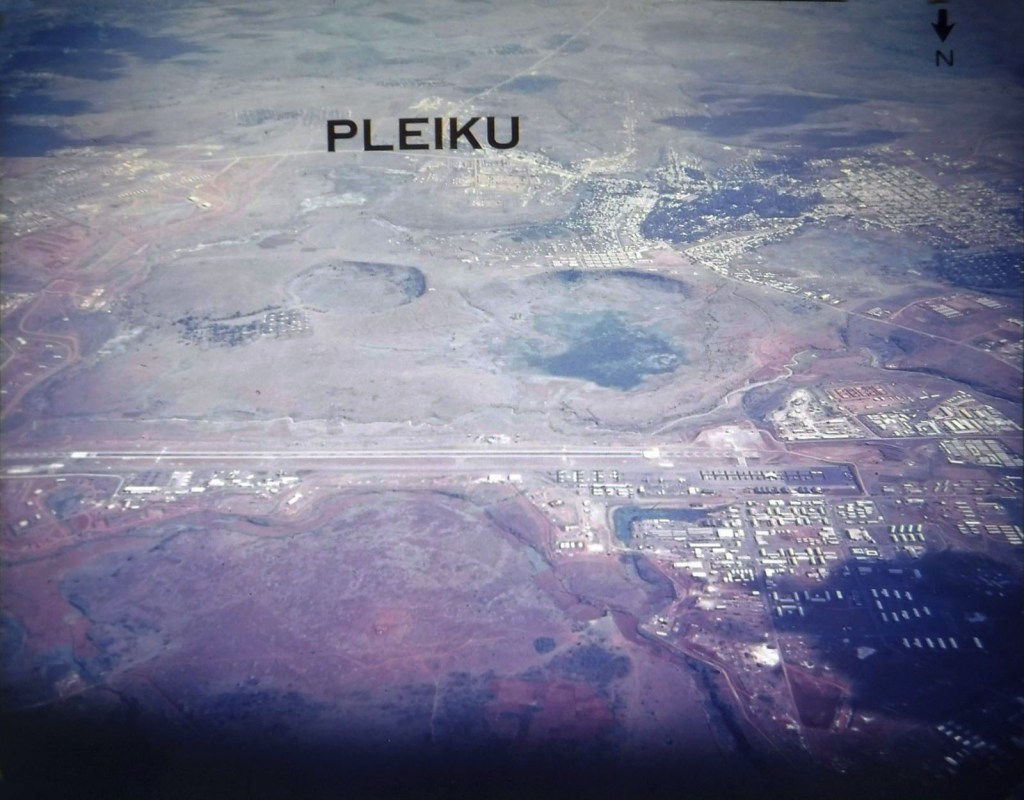
In the small town, most students walked to school. Before 1975, only the middle section of Hoang Dieu Street—approximately from the Diep Kinh intersection to the Post Office—was bustling and busy; this liveliness extended to the nearby arc: Phan Boi Chau, Quang Trung, Phan Chu Trinh, and Le Loi streets. People usually strolled around these streets. – HOÀNG TRẦN 11/05/2015
Until 1970, Pleiku city only had 3 buildings with 3 floors or more, which were: Hoang Lieng restaurant next to Diep Kinh theater (Hoang Lieng is now Hung Vuong hotel), Minh Duc private school (now Le Loi high school) and Saigon Moi shop (in front of the Moi market’s tent). There were 2-storey houses at that time but not many, only a few well-off families – Nguyễn Quang Hiền 29/02/2024
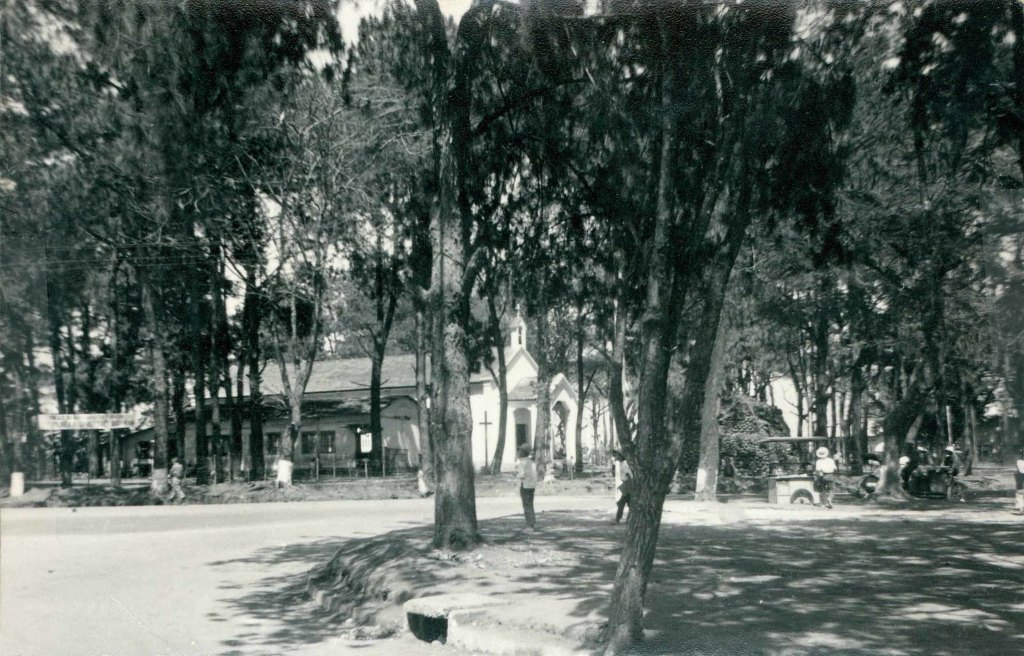
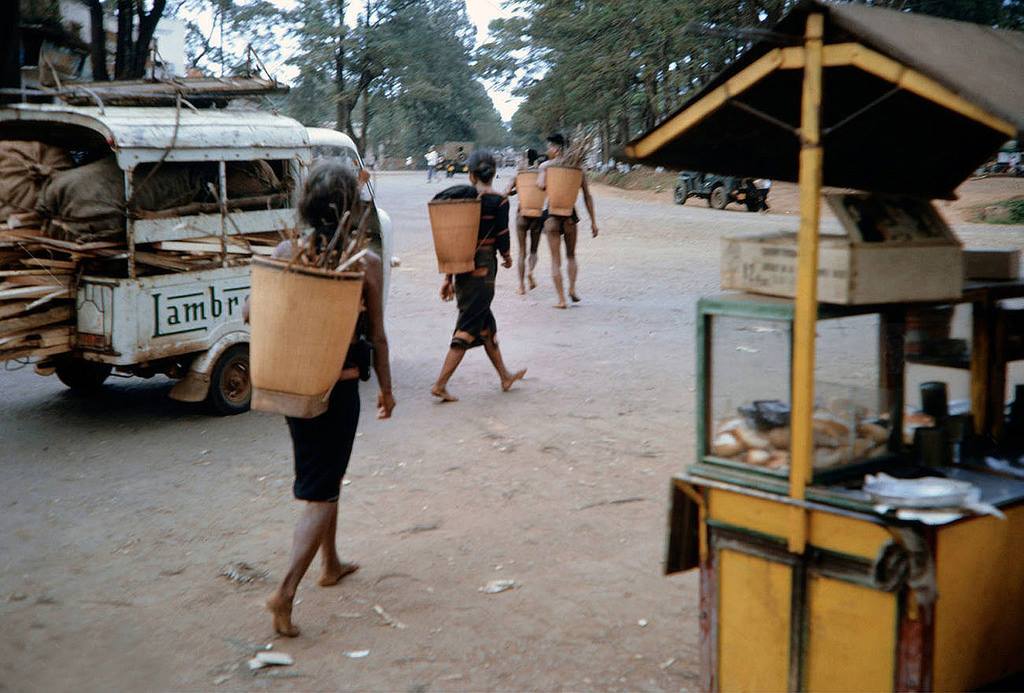
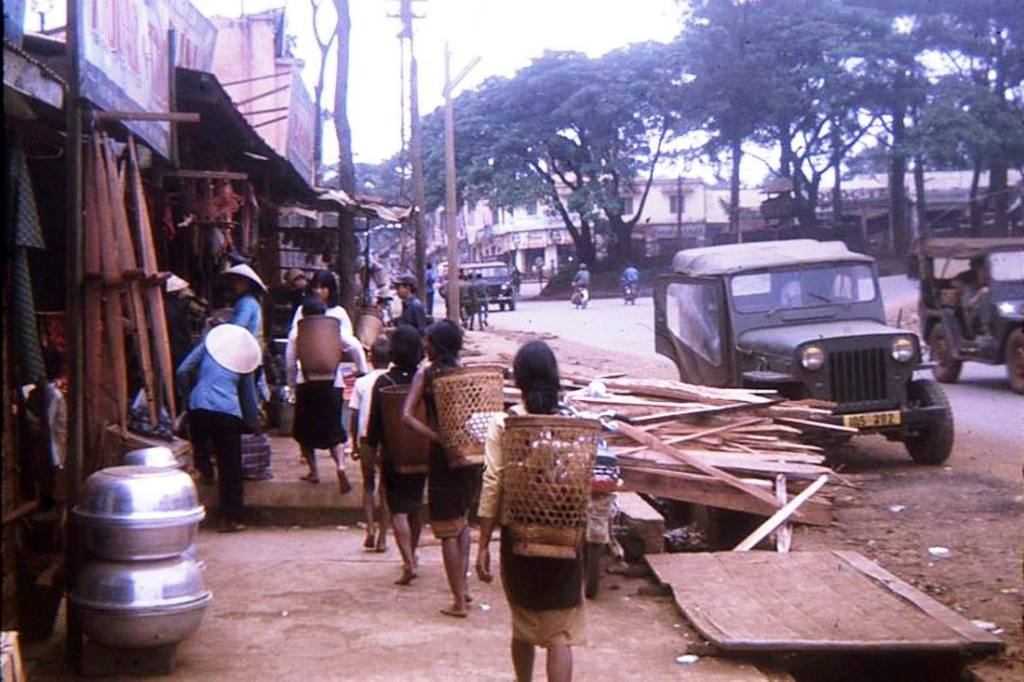
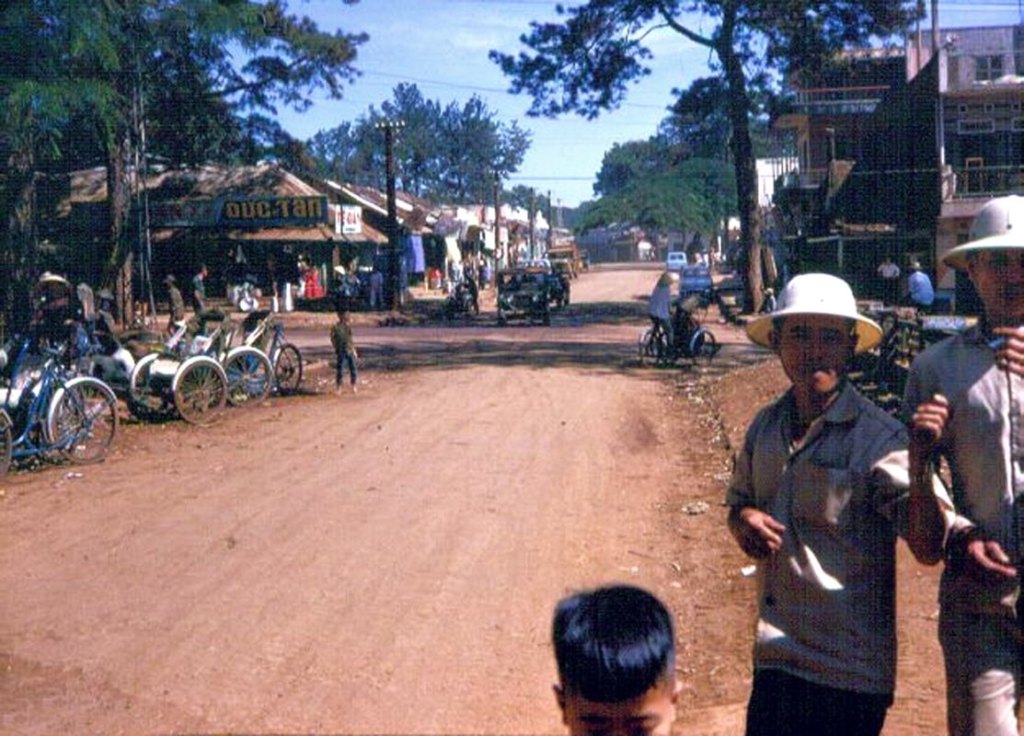
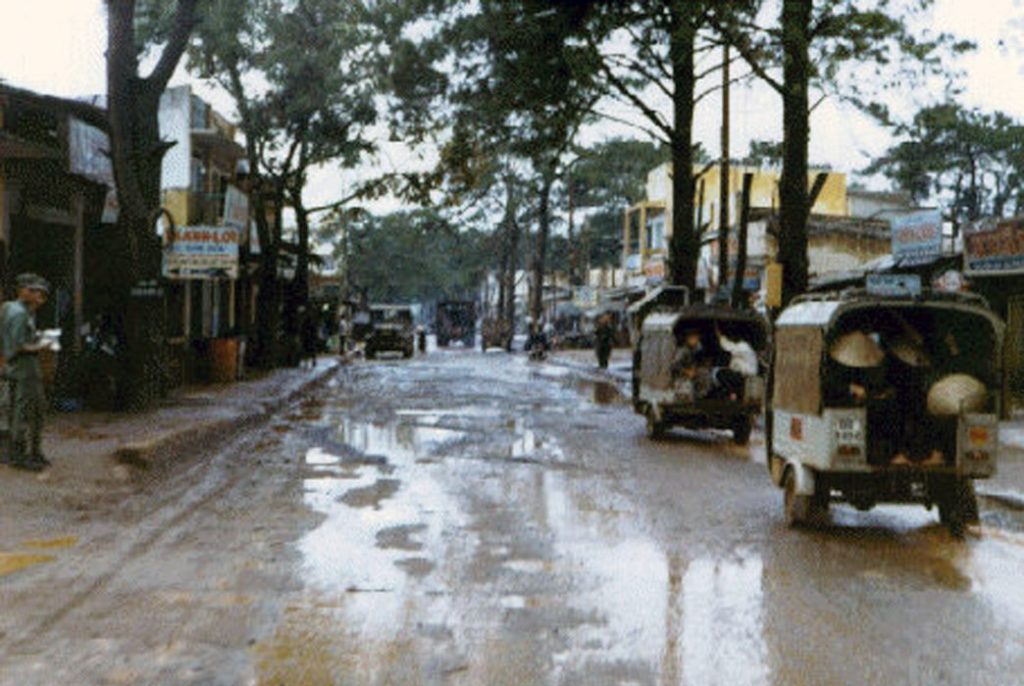
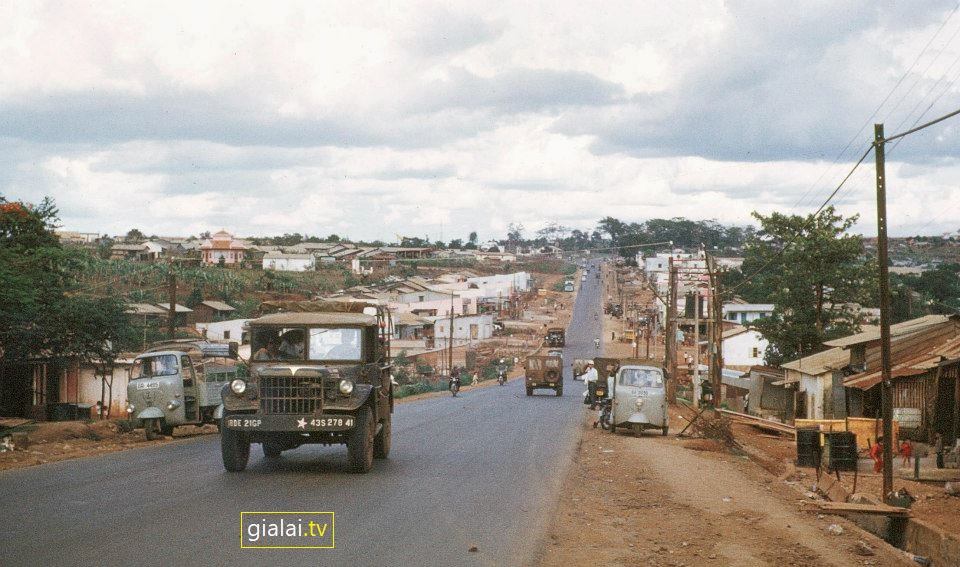
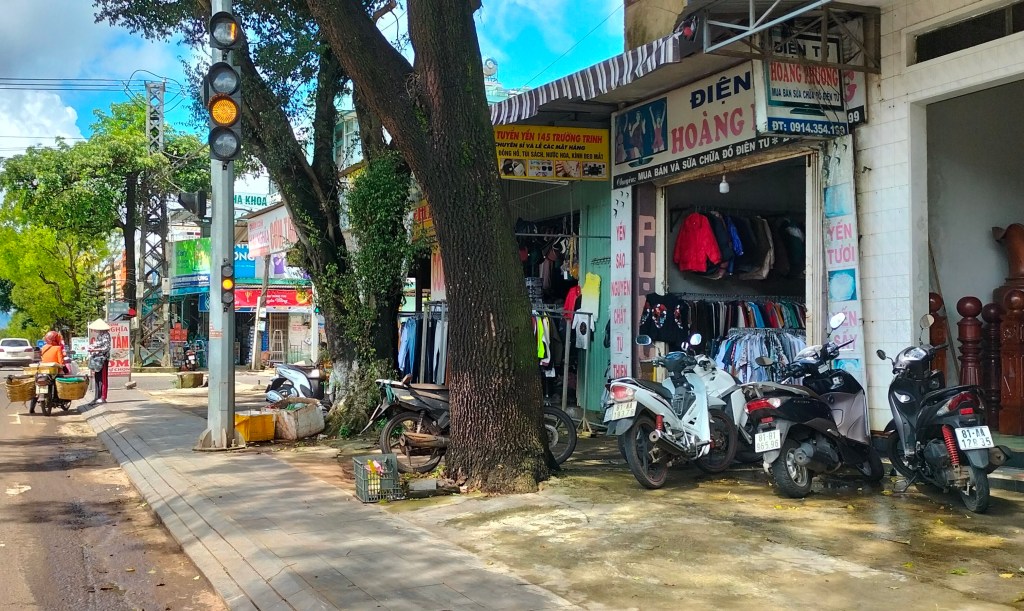
Low-rise buildings, rarely going as high as three stories, defined the cityscape[2]. The primary modes of transport were walking, cyclos, tuk-tuks (Italian Lambro 550s), and the occasional jeep—a stark contrast to Saigon’s streets filled with shiny, fashionable 60s cars. The streets were shaded by 30-year-old trees planted by the French, some of which still stand today, though many have sadly been removed and paved over.
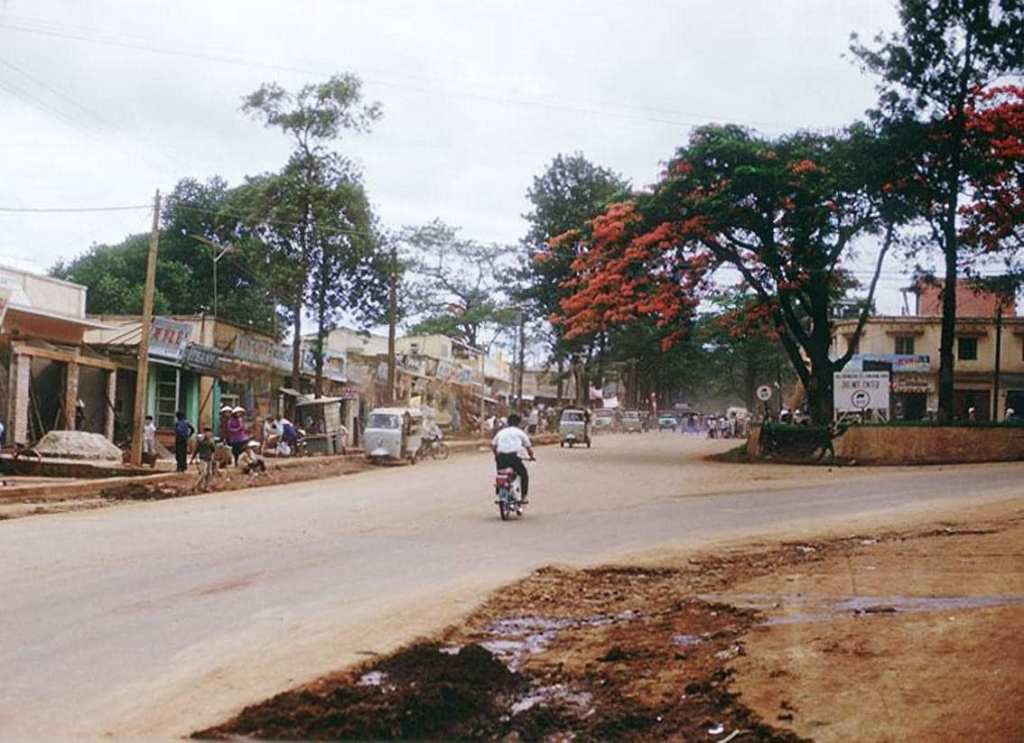
By the way, speaking of Trinh Minh The Street, now known as Tran Hung Dao Street, it was the most beautiful street in the provincial town, lined with many public offices, residences, and old trees, and had little traffic. Later on, when Pleime Girls’ High School and then Pham Hong Thai Semi-Public School were established, this street during dismissal time was always filled with the white ao dai of the schoolgirls, and naturally, there was no shortage of lovelorn boys following! – HOÀNG TRẦN 11/05/2015
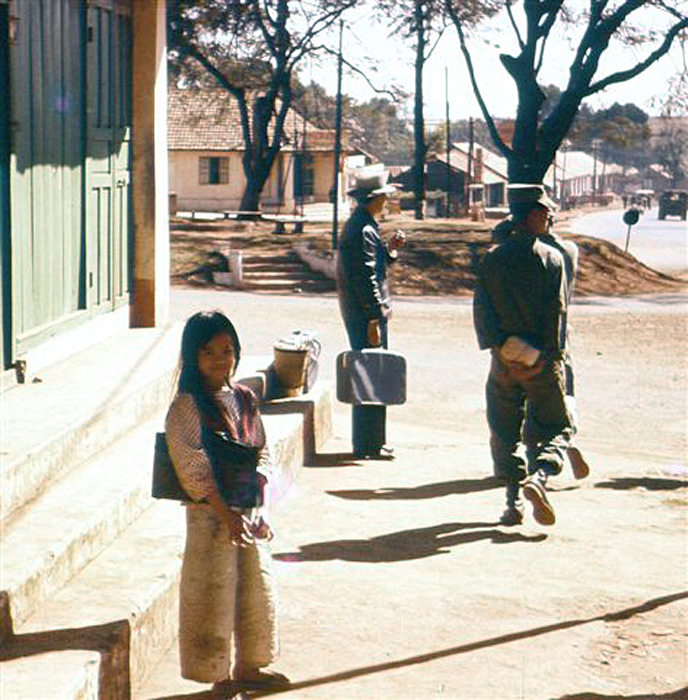
Although Pleiku was the provincial capital, it was not a large town with, depending on the season, a dusty or muddy main street and several side streets, People gathered at public pumps to draw their water in cans. The main drag had a series of textile shops owned and managed by Indians of dark complexions. Indians were Vietnam’s ubiquitous street merchants. There were other shops, too, including a jewelry store where I considered investing in a gold wedding ring for potential future use because the price seemed remarkably low. – David Noble, Saigon to Pleiku
[The Montagnards] walk through town single file (out of habit from using narrow mountain trails) with baskets strapped to their backs and babies hung on their sides (and usually hanging on to a tit for dear life!). Or they squat around smoking weird pipes, their shaggy hair falling over their shoulders… an amazing sight! – Letter by David Noble, September 13th 1962
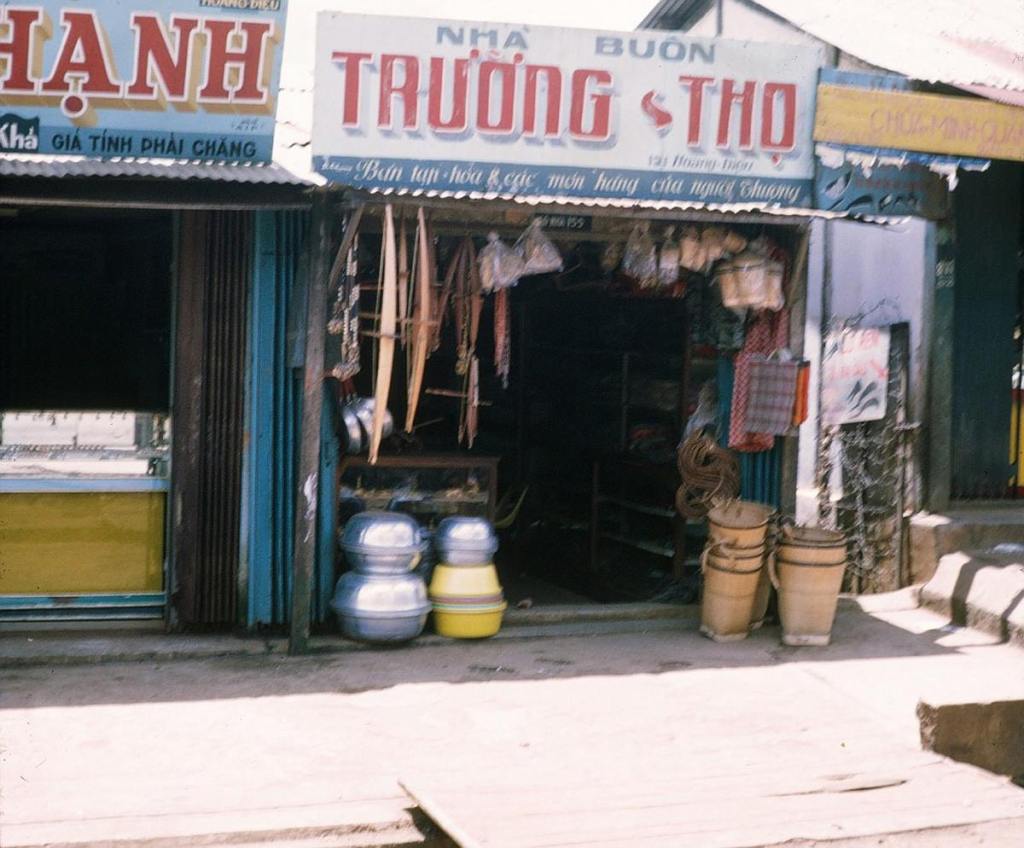
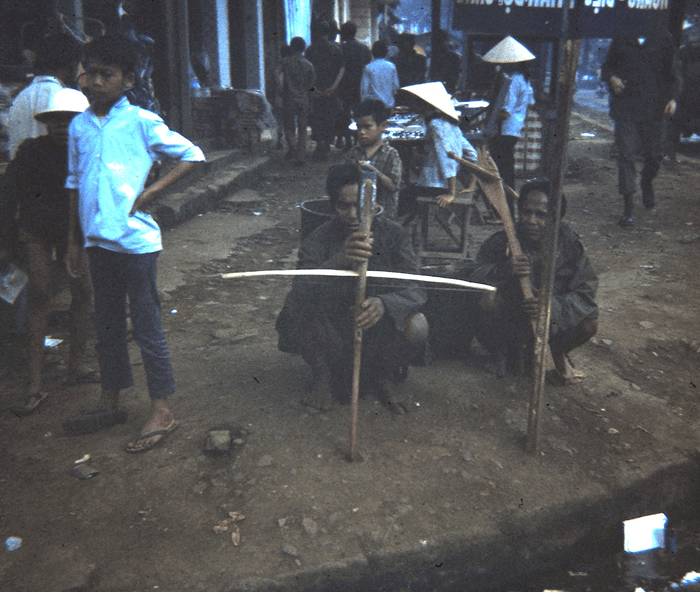
I frequented the Blue Spring Bar in Pleiku where, as in Saigon, two or three local girls would invite us to buy them shots of their colored-water beverage while we drank ba muoi ba, chatted with them, and tossed dice. – David Noble, Saigon to Pleiku
Hoi Phu
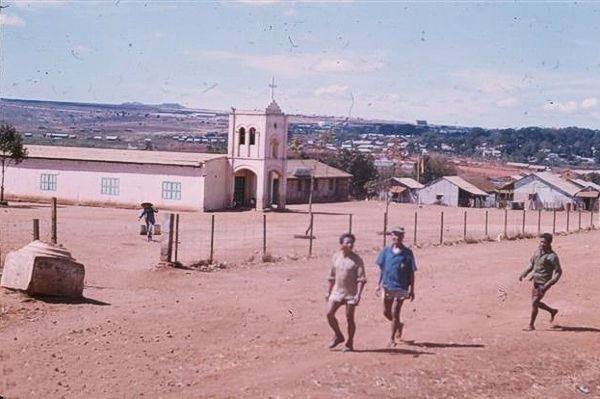
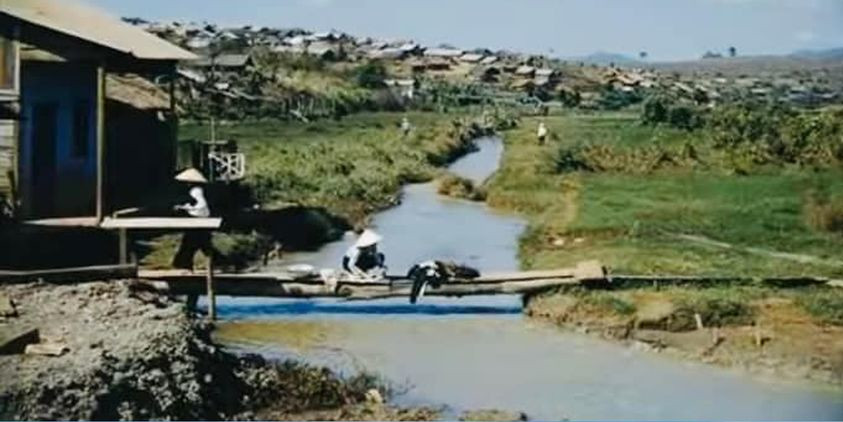
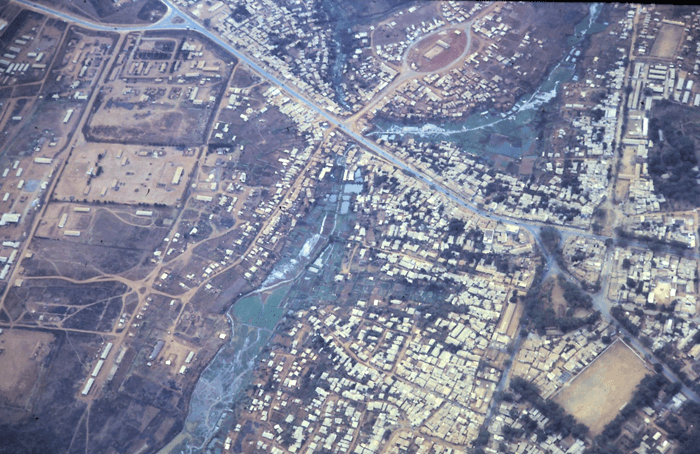
Hoi Thuong and Hoi Phu, now wards of Pleiku city, were separate villages in 1962 that actually predated the city itself. These areas were ramshackle affairs, likely growing up around the junction of roads QL14 and QL19.
Today, they are fully integrated into Pleiku, yet they still retain traces of their past which are arguably the most notable landmarks of the city (such as Minh Thanh pagoda and bờ kè embankment).
Conditions for Soldiers
There were 6 of us Air Force guys working along side the Army guys who were working with the ARVN and the Montagnards in and around Pleiku.
At first, we ate from C-rations, dated 1946. Later we had a small mess hall where we ate a lot of powdered this and powdered that and lot’s of SOS. But, we also had some local foods like Papaya, Tea and Bananas.
We were housed in a mud hut with a tiled roof and a dirt floor. There were a couple of shutters with no glass, so we had plenty of mosquitos, bugs and snakes and rats everywhere to keep us company. We slept on cots with air mattresses with mosquito net on each cot. Didn’t seem to help much because the rats would somehow get under the nets and of course scare the daylights our of us, not to mention the gunfire and explosions nearby. To this day, I often wake up thinking of those rats crawling on me. Can’t get rid of that experience. I hate rats!!
But we also had a lot of rain to deal with. It was the beginning of the rainy season and we were wet all the time, it seemed, until September.
My buddy Rodney and I got back into the Village a couple of times but all I remember is getting a haircut one time and drinking some Ba Me Ba [sic]. This was a warm liter bottle of beer that had some formaldehyde in it. It was awful, and they told us not to drink it, but we did! There was also an opium den next to where we were. We stayed out of there, but what an eye opener.
– Wilbur Orson (source)
Bien Ho
When the dust of Pleiku became overwhelming, residents and visitors alike could retreat to the serene Bien Ho Lake for some much-needed rest and relaxation. Although the pine trees it’s famous for today hadn’t yet been planted, this tranquil haven offered a perfect escape from the daily grind, where one could enjoy the calm waters and picturesque surroundings. Whether for a leisurely picnic or a dip in the cool water, Bien Ho Lake was the ideal spot to recharge. People weren’t afraid to get in the water like they are today.
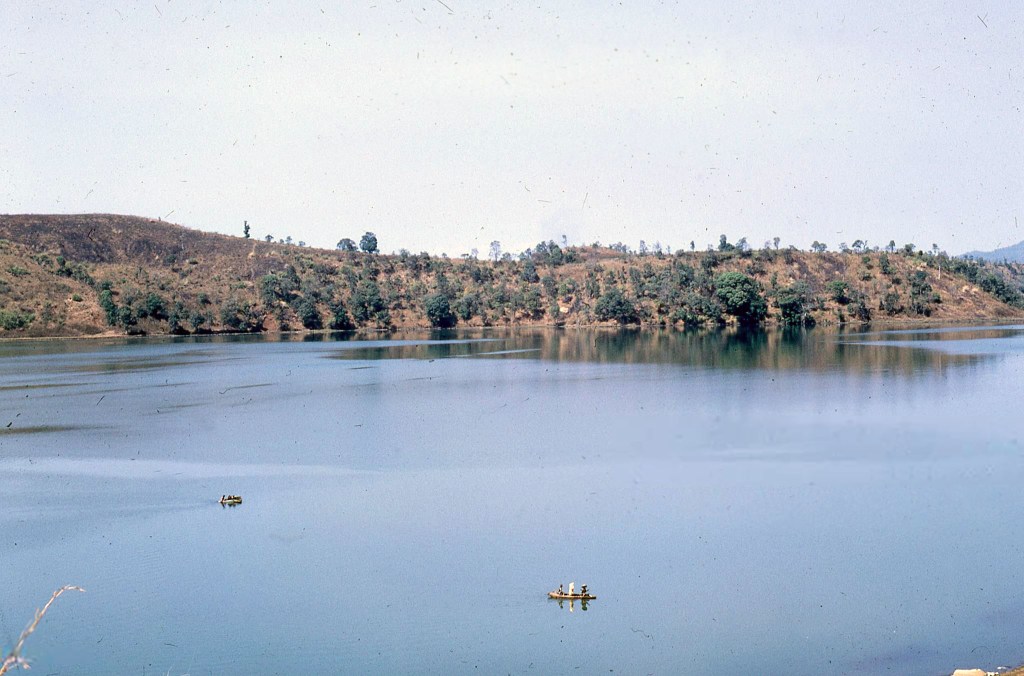
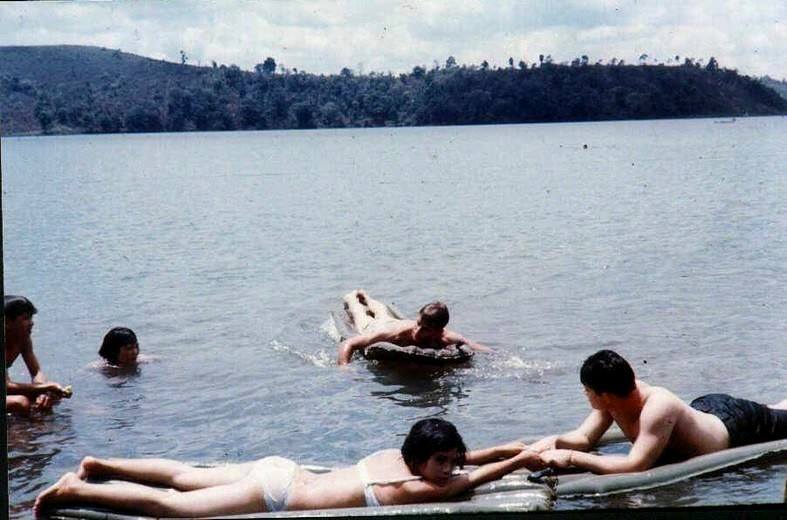
A couple of times [Captain Bang] even invited me to join him and his family on Sunday picnic outings at nearby Bien Ho Lake, where the kids would paddle around in the shallows, and, out of the corner of my eye, I would watch Montagnard women bathing. – David Noble, Saigon to Pleiku
The City Today
Now, the streets of Pleiku are half familiar, half strange. The main streets are still those beloved roads. However, Nguyen Tat Thanh Avenue and the newly opened roads towards the west have made the old downtown area feel increasingly small. In the past, reaching the Kilometer 3 milestone or Phu Dong intersection felt far, very far. But now, even driving all the way along Pham Van Dong Street to Bien Ho still feels close… – HOÀNG TRẦN 11/05/2015
Someone who lived and taught in Pleiku for a while shared his thoughts when he revisited Pleiku after nearly 40 years: The Pleiku of the past in his memory is really no longer there, now the roads, houses, and urban landscape are completely different from before. The place where he lived and taught was known as “Pleiku – dusty sun, muddy rain” but now it is an urban area with a remarkable growth rate and change. – Nguyễn Quang Hiền 29/02/2024
During the urban development process, many trees planted since the establishment of Pleiku town in 1929 have been cut down and it seems that there is something unreasonable about the types and methods of planting urban trees. The expansion of roads and the scarcity of fuel have caused many pine trees nearly a hundred years old to be cut down. Early in the morning, if you walk on Hai Ba Trung, Hoang Hoa Tham, Quang Trung streets… you can see the “old” trees of the past still lying deep inside the sidewalk, quite far from the edge of the widened road. Looking back, we see that cutting down the old trees was a pity. Nguyen Quang Hien April 30, 2023
The city has changed a lot but every so often I catch glimpses that look like they could be from these old photos.
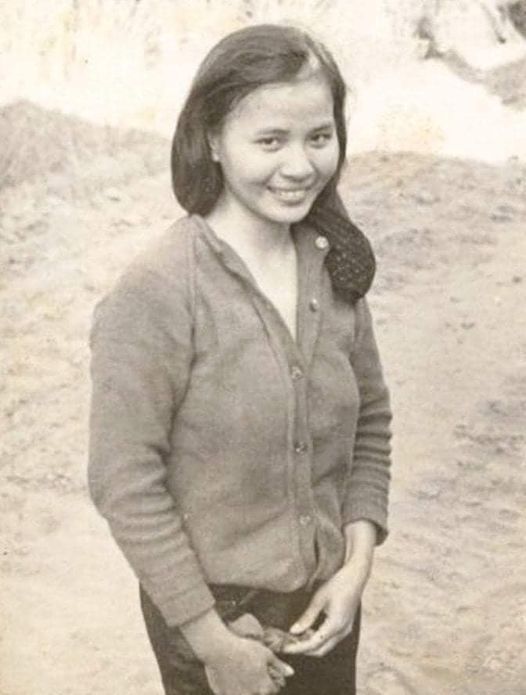
I’ll end on a poem written by Vũ Hữu Định about a 1970 visit to Pleiku to see his girlfriend. It’s entitled “Còn một chút gì để nhớ” (There’s little to remember). Translation thanks to Joshua Furler, original text here.
Mountain town high, mountain town full of fog
Mountain town has green trees, the sky is low and sorrowful
A strange visitor climbs up and down
fortunate to have you so that life remains sweet

Mountain town high, it reaches close to the heavens
A friendly atmosphere within streets that don't stretch far
In only a few minutes you can return to that old place
Every other afternoon there fills me with a deep melancholy

Pleiku girl with red cheeks and pink lips
Each afternoon feels like the passing of Winter
It leaves her eyes wet and her hair damp
Her skin soft like afternoon clouds

I am grateful to the city that has you
I am grateful for that soft head of hair
Tomorrow feels so distant, next to that hill on the border
I still have something more to ponder
 Eastward Ho!