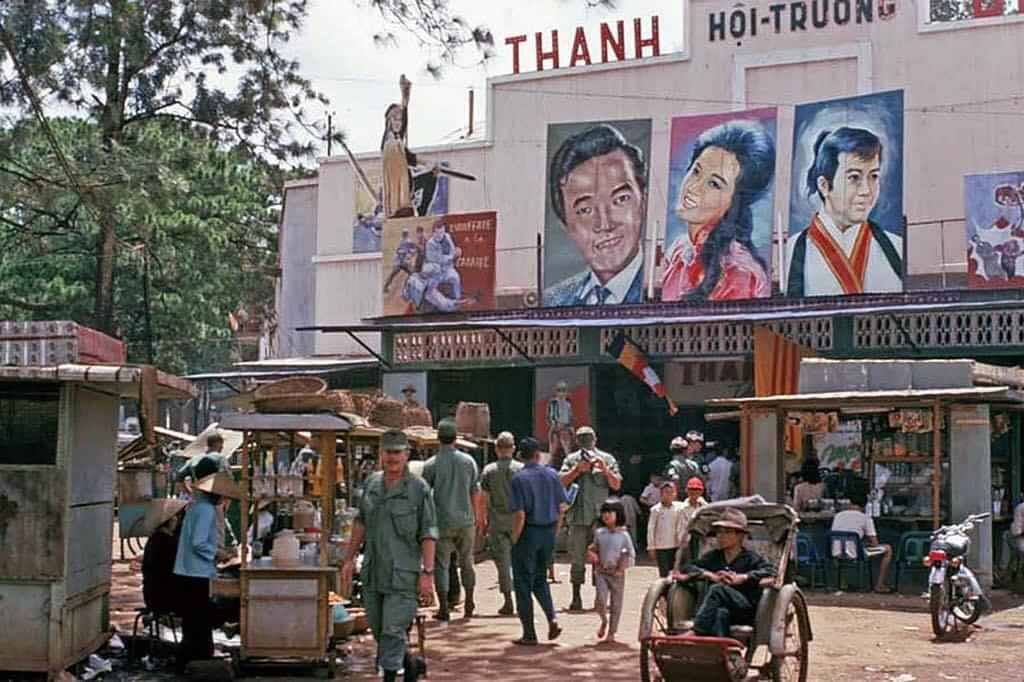
At VUS, where I teach, we have a lesson for secondary students on the topic of what their town was like in the past. Of course, this is perfect for me, a self-declared local amateur historian. But a recent comment from my teaching assistant stopped me in my tracks. She mentioned that when she was young, there were no cinemas in Pleiku. This caught me off guard—surely there had been cinemas in the past, hadn’t there?
Before 1975
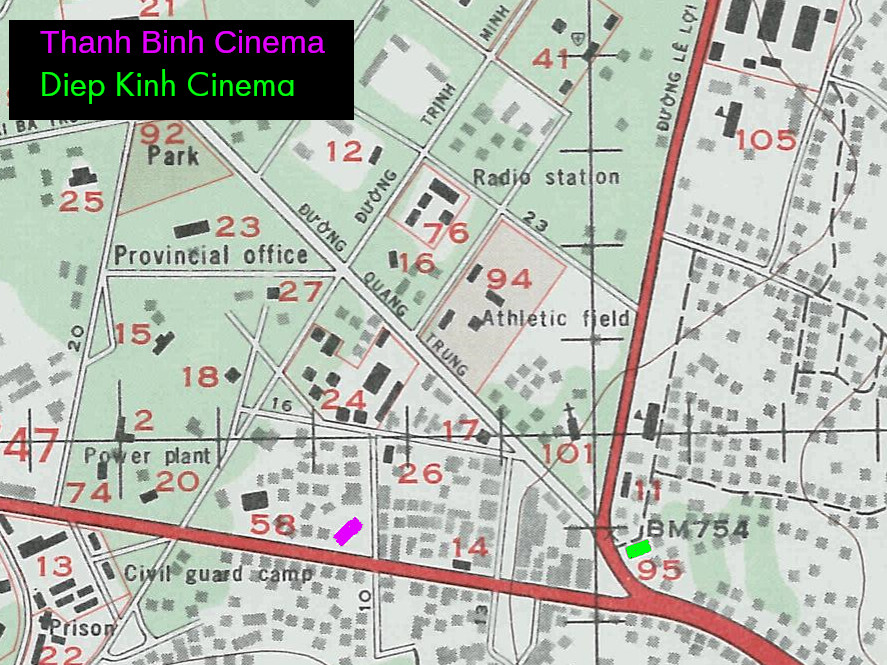
Some digging revealed that Pleiku did indeed have cinemas, even before 1975. And not just one, but at least two large theaters: Diep Kinh, Thanh Binh. They were on Hoang Dieu, the main road now called Hung Vuong, less than 300 meters apart. These theaters even had mezzanine seating, classy! (source)
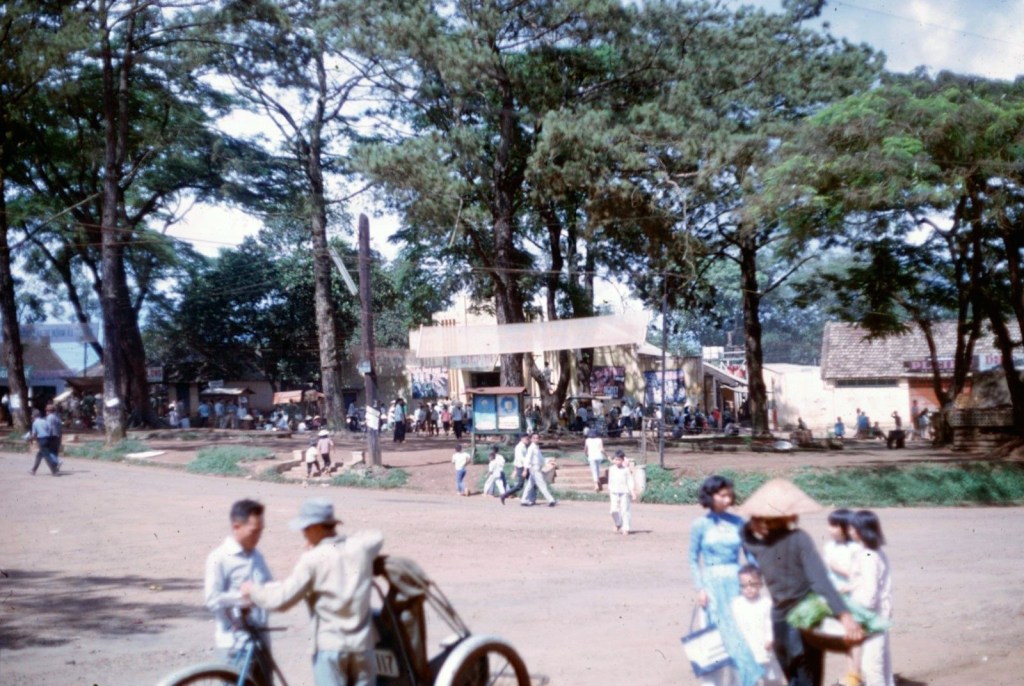

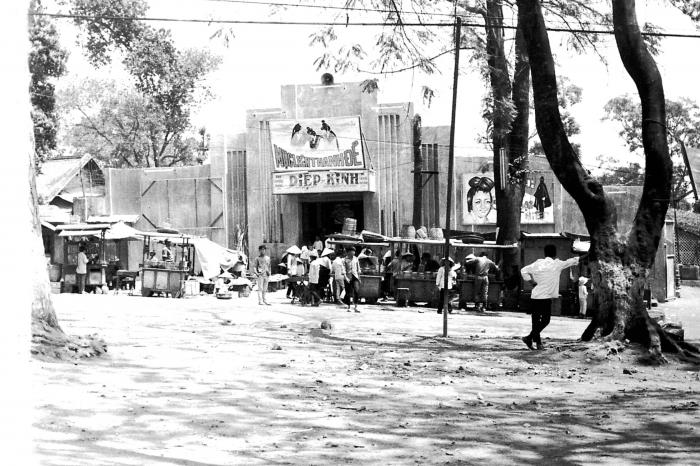
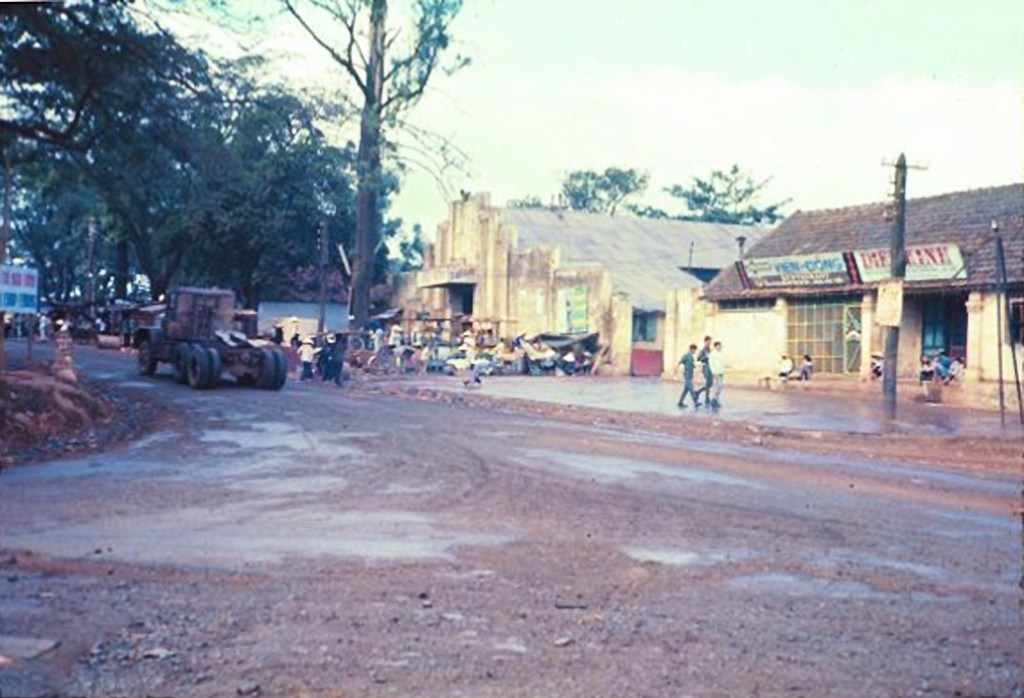
Before 1975, Diep Kinh cinema was built at this intersection, named after the theater owner. Gradually, people got used to the name Diep Kinh so it also became the name of the intersection [note: the corner of Hung Vuong and Le Loi]. At that time, a cinema was something extremely luxurious. Therefore, since the cinema opened, many restaurants and hotels have sprung up one after another at Diep Kinh Pleiku intersection. – VAN CONG HUNG
When talking about Diep Kinh at that time, many old men and women remember that it was a gathering place for “flower girls”. Every evening, they would put on beautiful makeup, gather at the Diep Kinh intersection and sit in groups. The bustling crowd caused many fights between protection gangs when some shaggy customers appeared, teasing the girls or defaulting on their payments, causing trouble. – VAN CONG HUNG

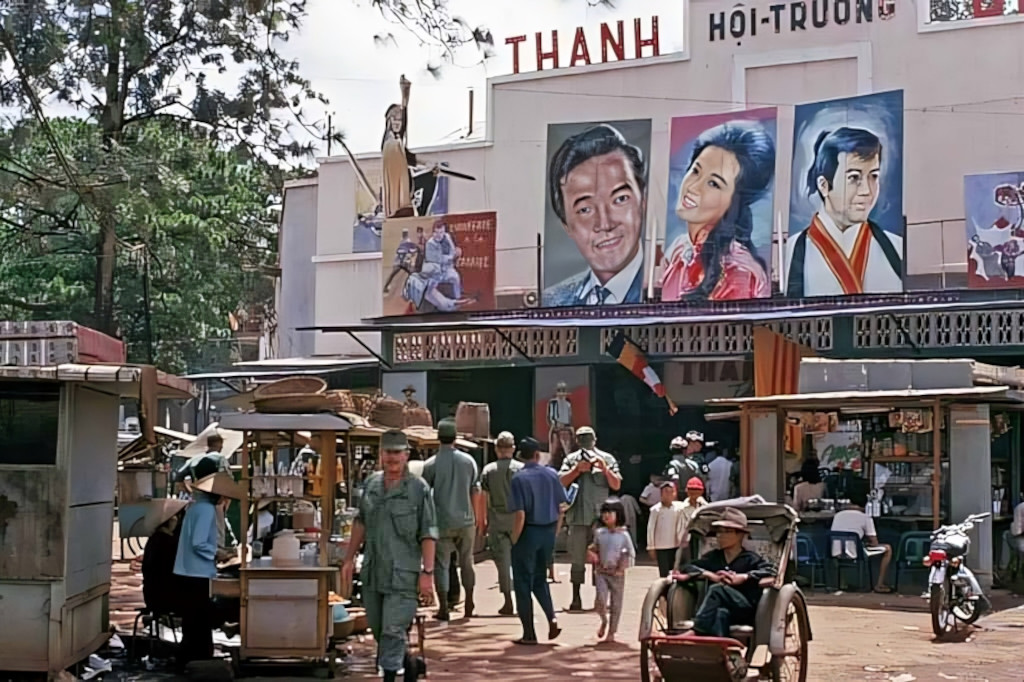
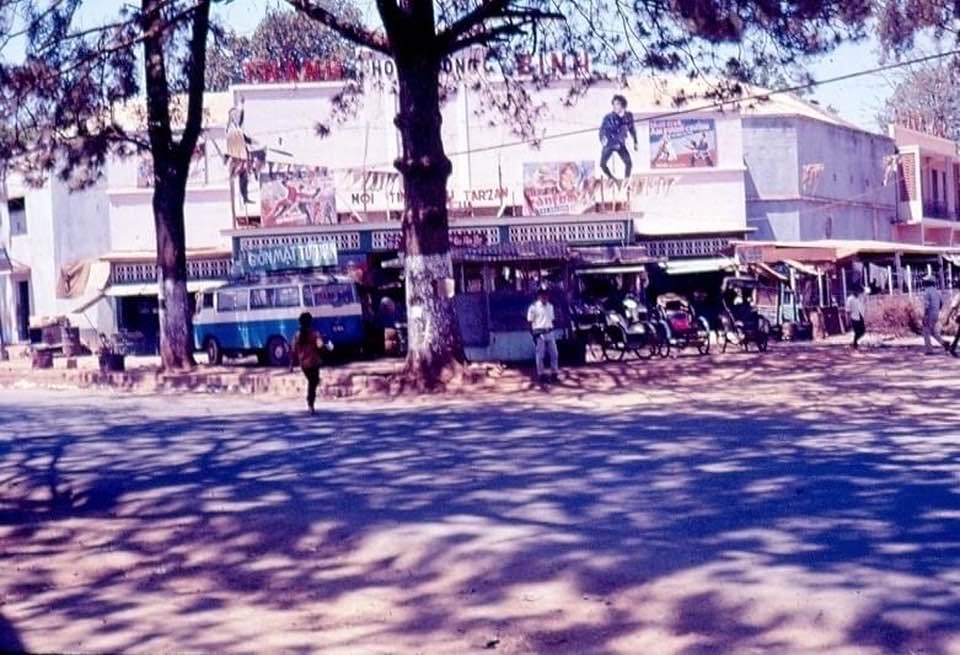
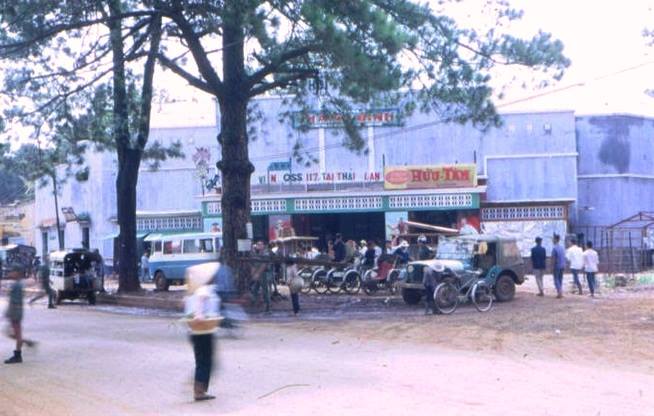
According to Bao Gia Lai, Thanh Binh was on the site that is now the dance studio on the corner of Hung Vuong and Nguyen Thai Hoc.
A third cinema is mentioned “Diên Hồng” which was renamed Thống Nhất after the war. I can’t find any photos or the location of this cinema (maybe somewhere around Cu Chinh Lan street).
After 1975
After 1975, there were 3 cinemas in Pleiku, the largest and oldest Diep Kinh, then Thang Long and Dien Hong. Except for Diep Kinh, which took the owner’s name, the other 2 were also private but had the generous names Thang Long and Dien Hong. After being taken over, the government renamed the cinemas Nhan Dan (Diep Kinh), Thong Nhat (Dien Hong), while Thang Long was transformed into the Provincial Cultural House, now the Dam San Music and Dance Theater. – VAN CONG HUNG
At that time, there were several sources of films, foreign films were mainly from the Soviet Union, occasionally Polish films, Czechoslovak films… which had to be approved in advance. The approval board was set up by the Department of Culture and Information, I was occasionally invited to attend, and enjoyed it very much. – VAN CONG HUNG
The film was shown in Pleiku town until it was strung up before being transferred to the districts for the mobile projection teams, so it was normal for the film to be spliced or interrupted while showing. The dubbing versions were torn or blurred, so to be good at dubbing, one had to know how to… lie. I was sometimes invited to narrate for the mobile team showing at the outdoor theater (now a corner of Dai Doan Ket Square), and I also had to… lie, sometimes making up half of the film without anyone knowing. – VAN CONG HUNG
 Eastward Ho!