There’s something oddly nostalgic about taking a drive I used to hate. My weekly 6am drive to Đắk Đoa once felt like a chore, but over time, the small town grew on me. I started to appreciate its quiet charm—exploring its cozy cafés, like one with tiny tiled-roof huts and hammocks, or wandering through the pine forest between classes. Occasionally, I’d take scenic detours from Pleiku, winding through rubber plantations, stilt houses, and ethnic villages. Since changing jobs, I no longer make this trip for work, this time I’m heading back to Đắk Đoa for a special event.
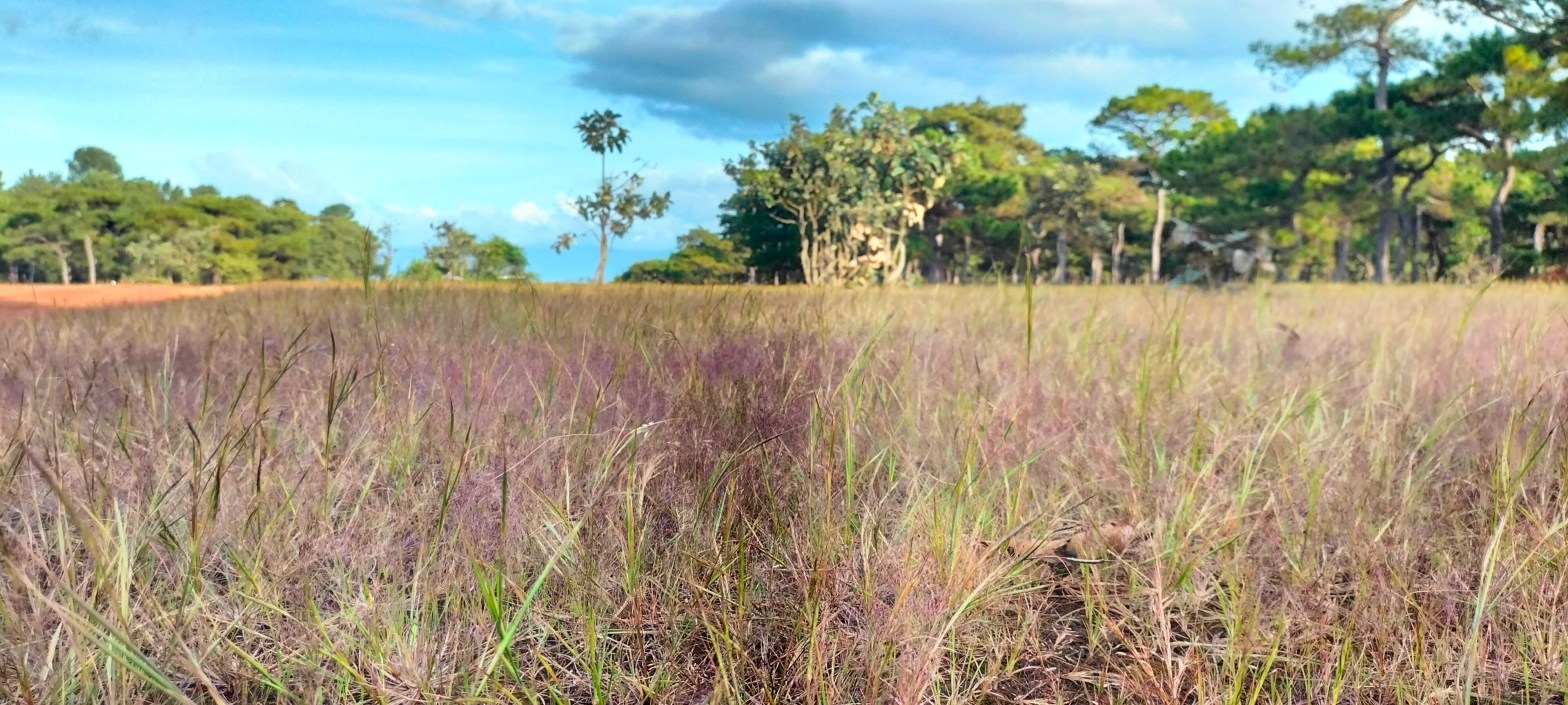
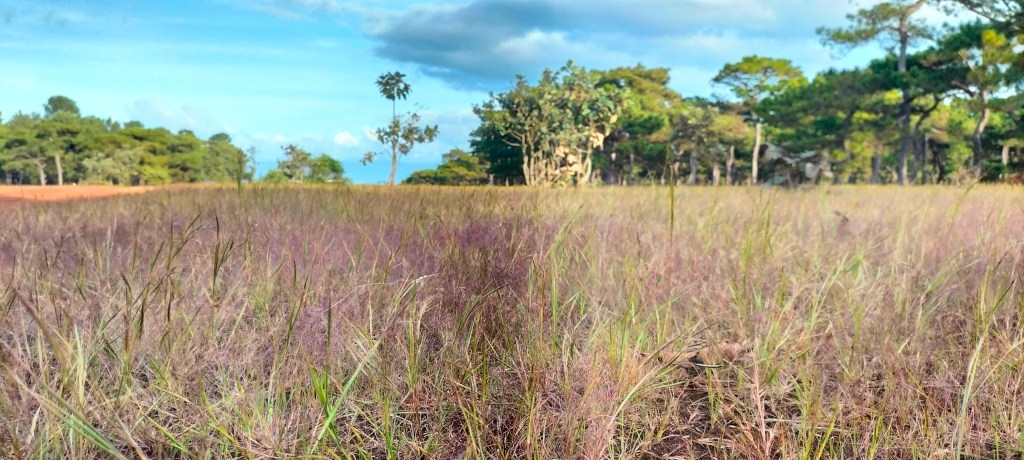
The small town of Đắk Đoa is known for its pink grass, nhět rơmuay in Bahnar (possible a species of red top, I’ve not got a proper scientific ID), a seasonal phenomenon that blankets the open fields. You could say it puts the sleepy town on the map, in fact I once did have a tourist map of Gia Lai that listed “pink grass” as Đắk Đoa’s only attraction.
Today, Monday—my precious day off—the pink grass was calling me back to Đắk Đoa. Held in late November, right after the more famous Chu Dang Ya Flower Festival, the Pink Grass Festival showcases the town’s unique natural beauty alongside its rich cultural traditions and strong sense of community. I’d never been before, but when a local friend invited me to check it out, I couldn’t resist.
I arrived at the small festival in amongst the pine forest south of the town and parked my bike, noticing a few curious stares as I stepped into the field. The sun was shining brightly, casting a warm, golden glow over everything, while little puffs of cloud drifted lazily across the sky. The air was clear and crisp, not too hot—just perfect T-shirt weather with a light breeze keeping things comfortable. The first thing that struck me was the grass—not quite the vibrant pink from the heavily photoshopped images online. Instead, it was a desaturated reddish-purple, having browsed some colour palettes online I’d now describe it as “Antique Fuchsia.” Subtle and not unpleasant, the color gave the landscape a dreamy sheen, far more refined than the photos suggest.
As I wandered, I noticed people gathering around a stage and decided to check it out, though I couldn’t shake the feeling of standing out. Just as I started wondering if I was even supposed to be there, I spotted my friend, Mr Suk, walking toward me with his two preschool-aged daughters. He’s a local-born English teacher I know from my time teaching his family here, and we’ve coincidentally worked on some of the same charity projects. His daughters were full of life, their energy lighting up the day more than any festival could. When one of them confidently said in English, “My name is… car,” I had to laugh and admire her playful confidence.
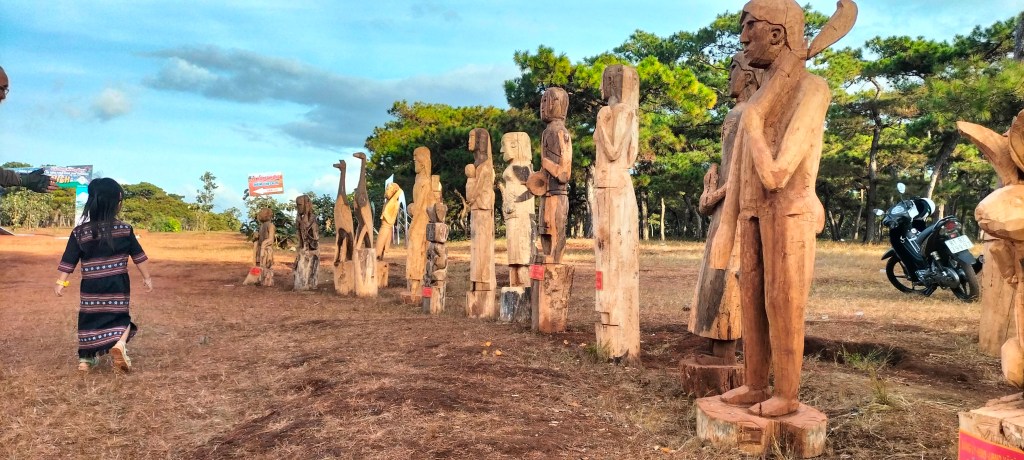
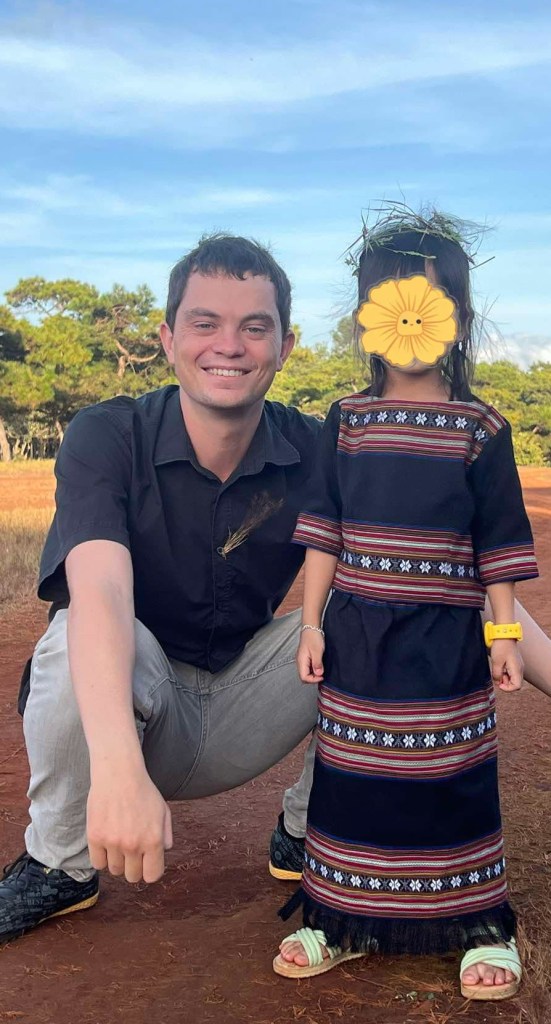
The festival itself buzzed with activity, featuring a traditional weaving competition and performances of local music. There were also stalls showcasing local organic produce, like peppercorns and macadamia nuts. Anticipation filled the air as judges examined the intricate brocades being woven, each thread telling a story of skill passed down through generations. Unfortunately, I missed all of that—arriving on the wrong day. The main events had wrapped up on Sunday while I was busy with work, and now, here I was on a Monday as the stalls were all packing up—such is the life of an English center teacher. With extra curricular classes to teach, I’m always tied up when everyone else is free.
I did arrive just in time to catch the awards ceremony on the big stage, where the winners of the previous day’s competitions were being recognized. There was a sense of pride and excitement in the air as the judges called up the winners to receive their prizes. I watched as different groups were called up, high fiving their friends as they came forward. Mr Suk’s family’s team won a prize for their brocade weaving, they were each awarded a framed certificate.
After the ceremony, we found a quiet, shady spot beneath the pine trees to sit on a woven mat. It was very pleasant in the late-afternoon sun. The soft breeze carried the scent of pine and earth. We settled in comfortably, and soon, our meal arrived—sticky rice, perfectly cooked, alongside tender grilled chicken. We ate together, savoring each bite in the relaxed, unhurried atmosphere. The girls played with their teddy bears that had been won at a fairground game: one capybara and one labubu – very on trend.
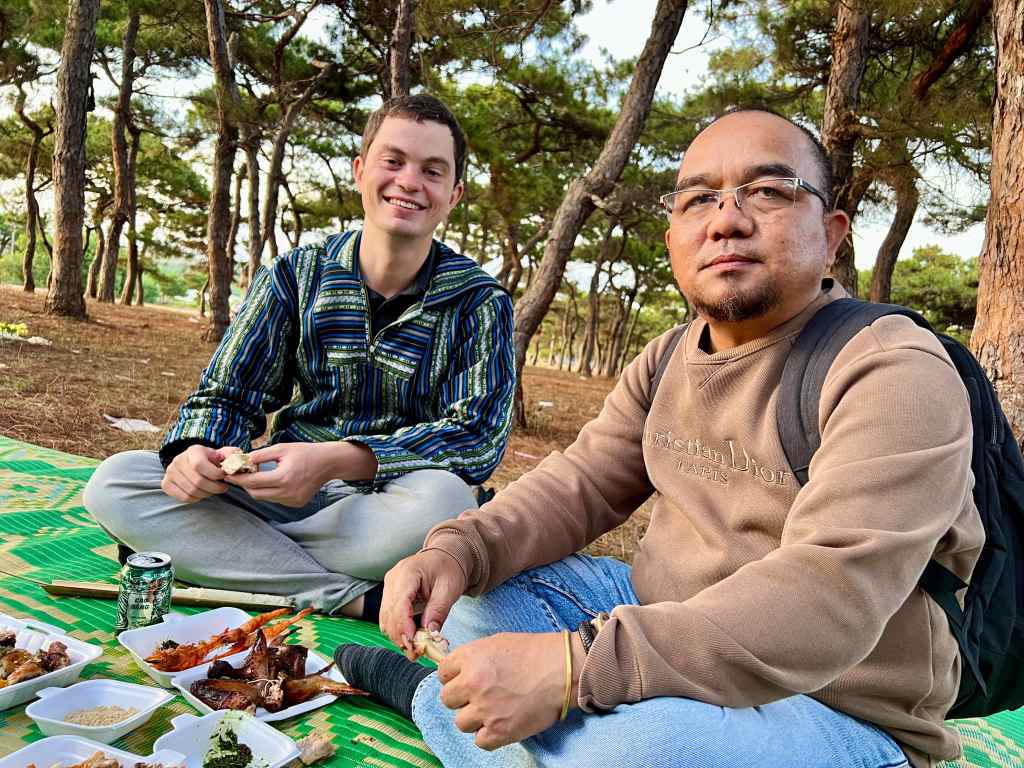
Driving back to Pleiku that evening, I felt a deep sense of gratitude for the friendships I’ve built during my time here. These connections have not only pulled me away from the isolation that can sometimes come with being a foreigner in smalltown Vietnam but have also added meaning to my days. Festivals like this help mark the rhythm of the year in ways that might otherwise pass unnoticed, especially for outsiders. It’s a unique perspective—to see these events as both a visitor and someone rooted enough to share them with friends, offering a richer, more personal experience.
 Eastward Ho!