
It’s 1773, and the red flag of the Tây Sơn movement flies above An Khê town. Due to being squeezed for taxes, people have gathered there in open rebellion against the Lê emperor and their subordinate Nguyễn lords who rule the puppet Kingdom of Champa as their own private thiefdom.
Having strengthened their ranks for two years in An Khê, the Tây Sơn forces are ready to move out from their mountain fastness and prove to the Nguyễn house how formidable the rebel army had become. At the head of the movement at this time is Nguyễn Nhạc, a charismatic and capable leader. I want to share the entry about him in the chronicle Đại Nam chính biên liệt truyện because it amuses me
Nhạc was a betel leaf trader, he used to trade with the barbarians, on his way through An Duong mountain, he got a sword, he said it was a magic sword, he brought it to deceive the people, many people believed him. – Đại Nam chính biên liệt truyện – volume 30 – 1889 (link pp 521)
So, according to his enemies, his only claim to leadership was a magic sword!
In late summer, Nhạc marched down to the plains with his cavalry and war elephants. They swiftly occupied most of the land of present-day Bình Định. However one thing stood in their way: the formidable fortress of Quy Nhơn held by the provincial governor Nguyễn Khắc Tuyên.
What follows is not attested in chronicles but instead comes from popular folklaw though the story is famous enough, and compelling enough, that I want to include it here.
The story goes that the Tây Sơn army besieged the citadel for 3 days without making any progress. And so Nhạc ordered his army to fall back. Nguyễn Khắc Tuyên was worried that the rebels would regroup in the mountains and continue to be a thorn in his side and so to try and nip the whole thing in the bud the mandarin put a substantial bounty on the capture of Nhạc.
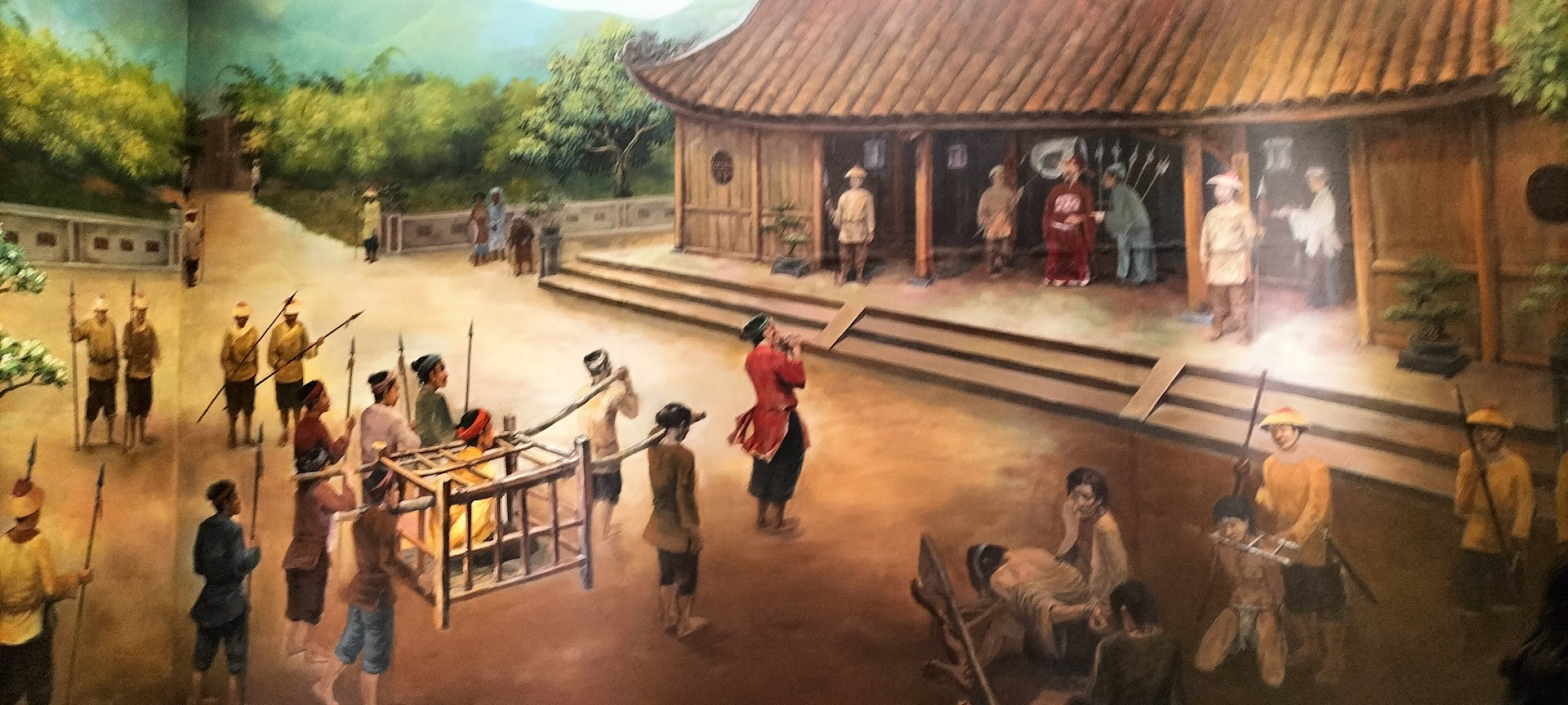
Before long, Nhạc was brought to the citadel gate being carried in a cage, captured by some double-crossing Tây Sơn soldiers. The men carrying the cage announced they had captured the rebel leader and brought him to the provincial governor Nguyễn Khắc Tuyên to face judgement. Tuyên gleefully ordered the prisoner be brought inside.
But it had been planned by Nhạc all along. Nhạc’s cage had been cleverly designed so that it could be opened from the inside, so that night he let himself out of the cage and opened the city gates wide. He sent up a flare which was the signal for the army who had been waiting out of sight to spring into action and take the city. It’s a good thing the Nguyễn governor hadn’t read the story of the trojan horse!
The citizens and merchants of the city celebrated the downfall of Nguyễn Khắc Tuyên who had been a tyrannical ruler. The Tây Sơn now controlled one of the busiest ports in the country and the sea became a major part of their strategy, they would even recruit Chinese pirates.
After the fall of Quy Nhơn citadel, Quy Nhơn prefecture was held by the Tây Sơn dynasty right up until it’s downfall in 1801. They would use the citadel as their capital until 1776, when Nhạc ordered the ancient Đồ Bàn citadel to be repaired and turned into the grand Hoàng Đế citadel: The Emperor Citadel.
I’ve always liked this story and just generally the character of Nhạc as a cunning people’s hero who united a diverse army, he must have been very charismatic. I couldn’t find any near contemporary sources for the “trojan horse” story so I it may be little more than a legend. Here is the chronicle Đại Nam chính biên liệt truyện again on the fall of Quy Nhơn.
In the autumn of the year Quy Ty (1773), Nhac from Tay Son led his troops down to attack Kien Thanh hamlet… Nhac made a secret agreement with the queen of Champa for aid. He also recruited the names Nhung Huy and Tu Linh and sent them with Nguyen Thung to lead a band of troops down to Quy Nhon prefecture, taking advantage of the night to raid, everyone was afraid of being scattered. The governor, Nguyen Khac Tuyen, fled. – Đại Nam chính biên liệt truyện – volume 30 – 1889 (link pp 523)
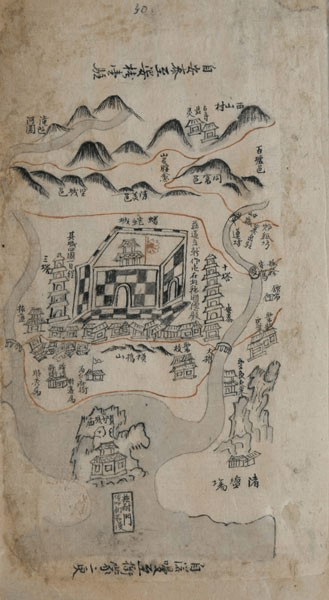
I wanted to visit the site of the Quy Nhơn Citadel. Contrary to what you might assume, Quy Nhơn Citadel was not in the bounds of the modern city of Quy Nhơn which would not be established for more than 100 years. The site was next to the current airport at a place called Châu Thành. Archeologists have excavated the site finding 18th century bullets. The citadel recorded to have been built in 1744 (source) (source). Another interesting thing about the site is that lots of relics have been found from a 4th century Champa temple.
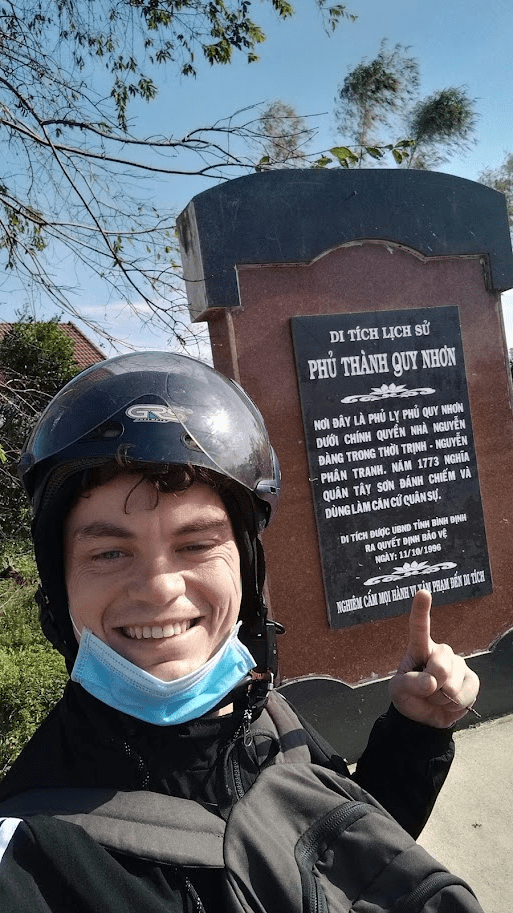
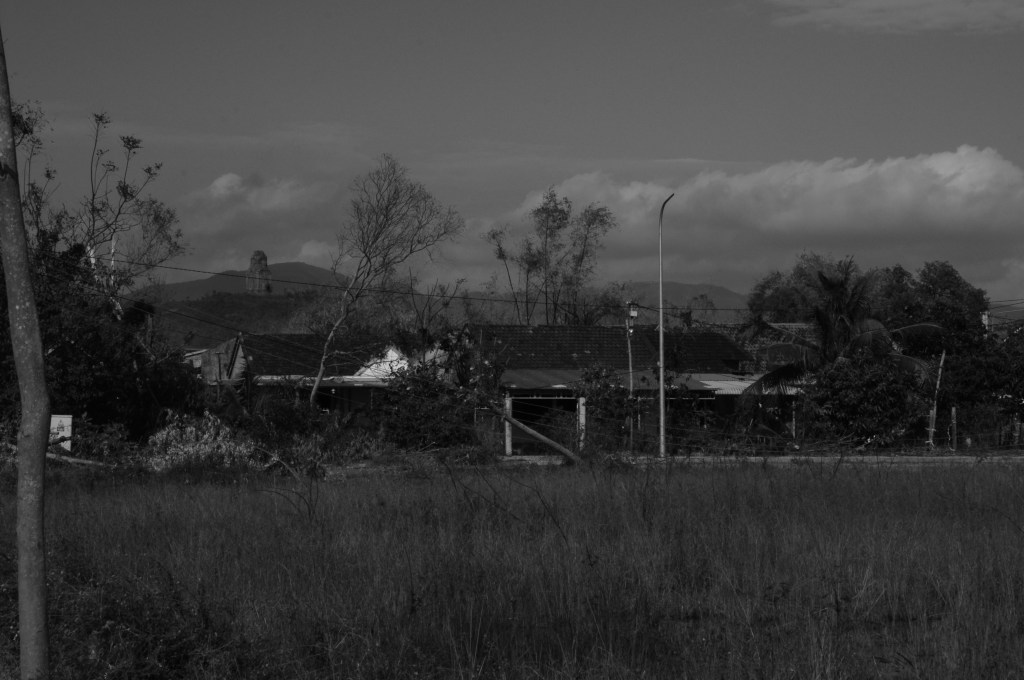
Inspired by this story of course I went to visit the site. Today it’s marked by the type of stele you can find in many places, the Vietnamese equivalent of a blue plaque. It sits in a sleepy little village and there are no other traces of the citadel as far as I can see. But one thing that stood out to me was Tháp Phú Lốc Champa tower stood on a nearby hill which would certainly would have been visible from the old citadel. Sometimes the only way to connect with history is looking at the same views they would have been. Did Nhạc look at the tower as he was being carried into the citadel?
 Eastward Ho!