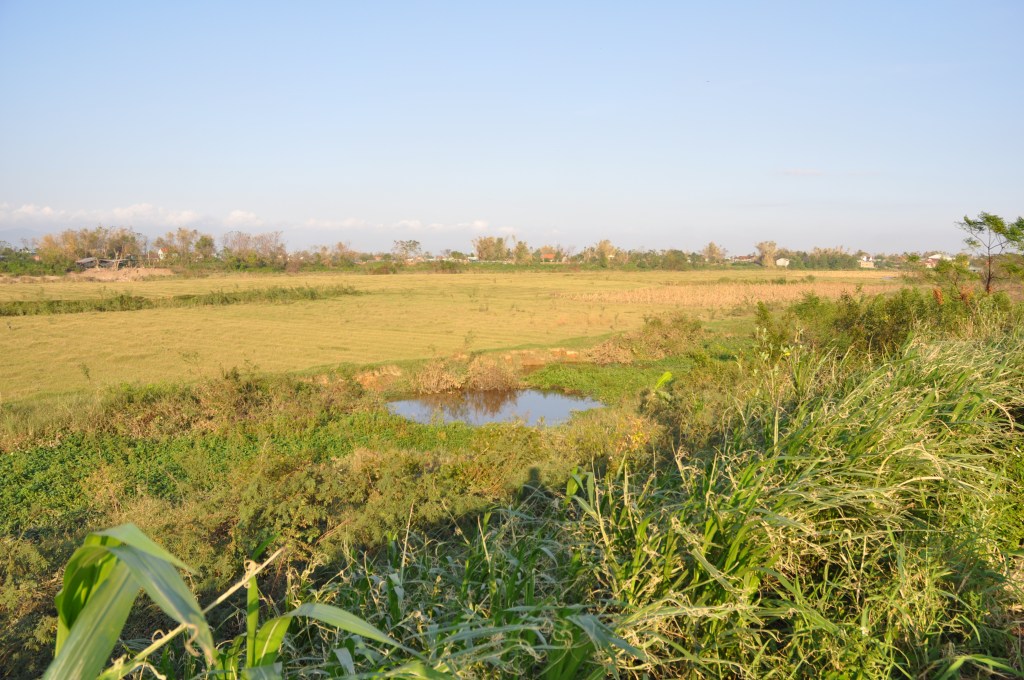
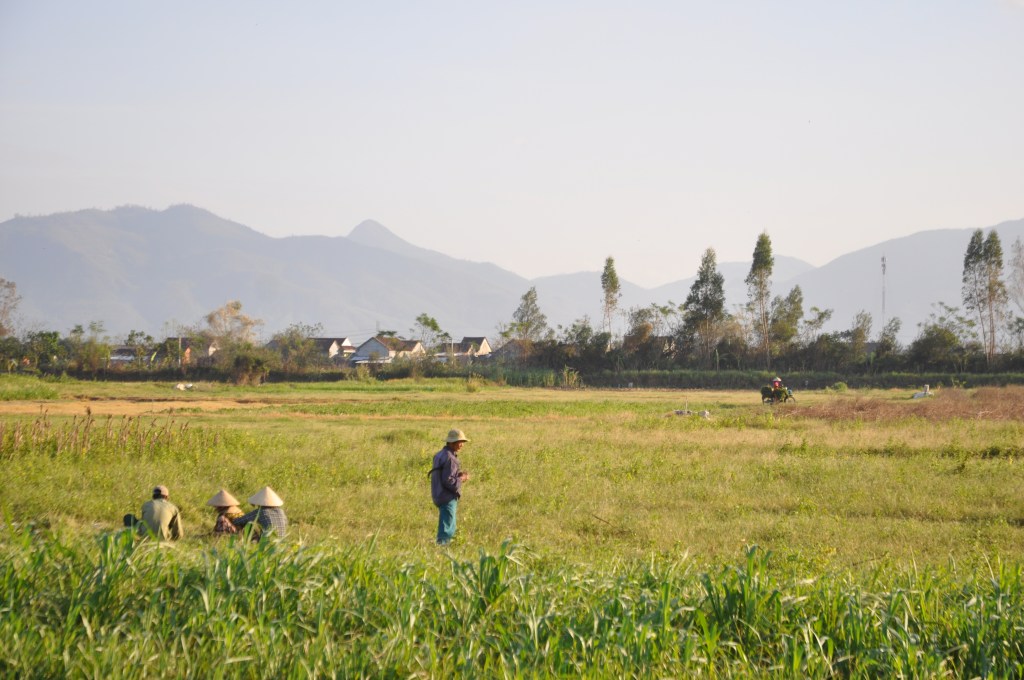
When I went out of Quy Nhơn city again, this time to visit Chà citadel, I had the most idyllic drive through the Vietnam countryside I’ve had to date. There was not a cloud in sight. The Côn river sluggishly drifted by. Cows grazed at its edge, bamboo leant over the water as if it’s nodding off to sleep, and just when I thought it couldn’t be any more perfect, I saw an ox cart trundle down a dirt path, mountains faint and blue behind it. All beautifully bucolic.
Surely not another castle near Quy Nhơn I hear your ask. I’ve written a lot about different castles in Bình Định, but put simply: Chà citadel, Đồ Bàn, Quy Nhơn, Hoàng Đế, Bình Định, for all these different sites, there has only ever been one administrative centre here at a time, shifting location around the Côn river delta over the centuries in an area with a 8km diameter. Chà is the oldest of the sites, a place whose story reaches back even before the medieval period. It was the dominant Champa power in the area until they moved to Đồ Bàn around the early 11th century.
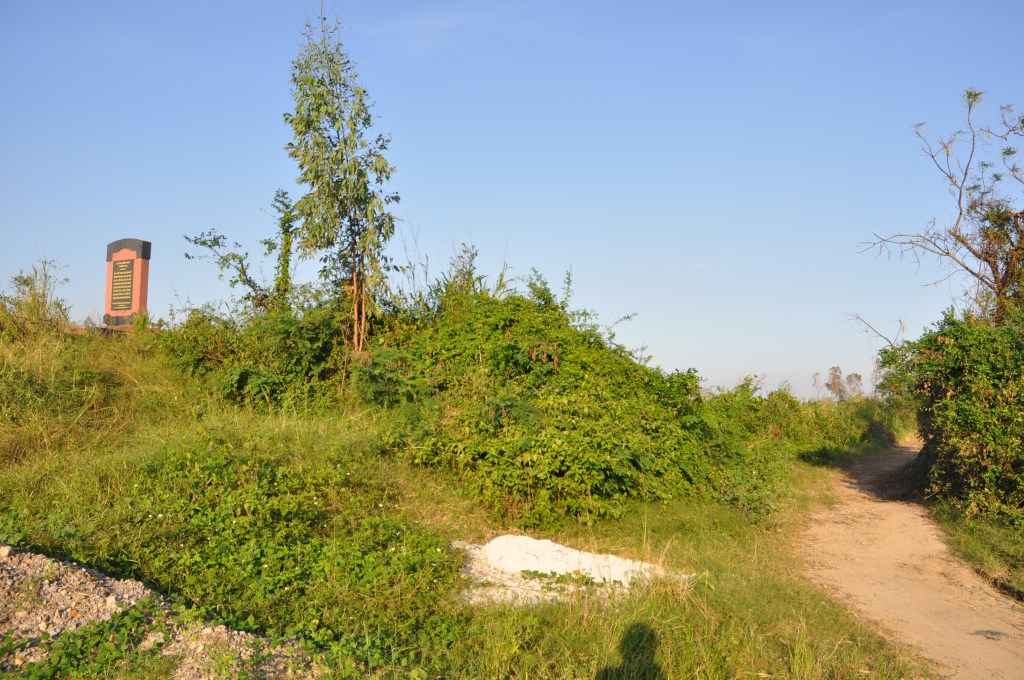
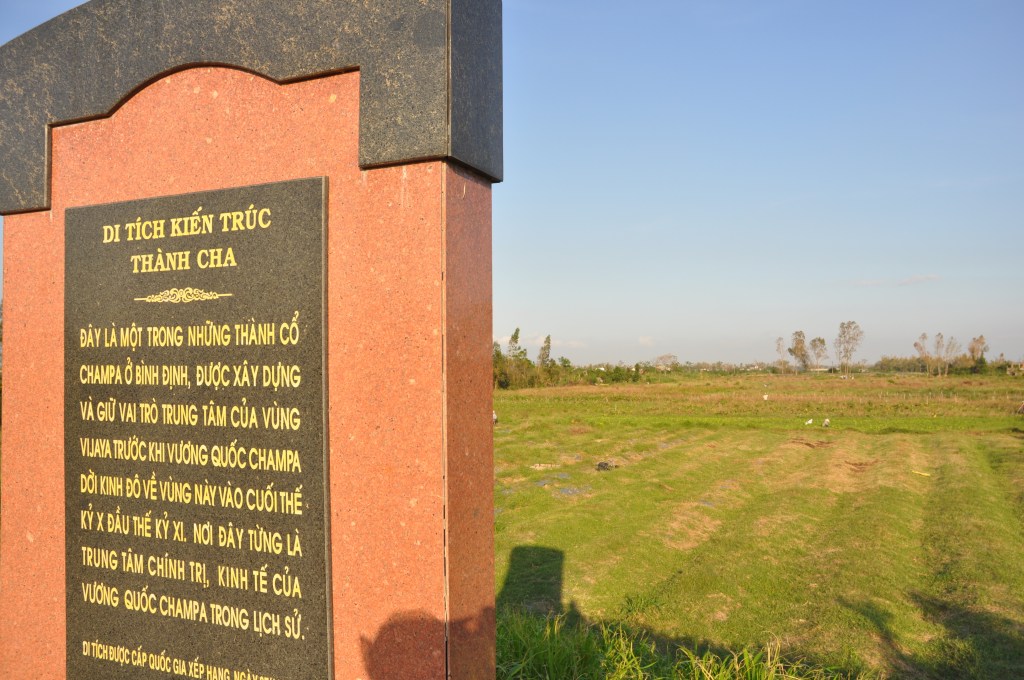
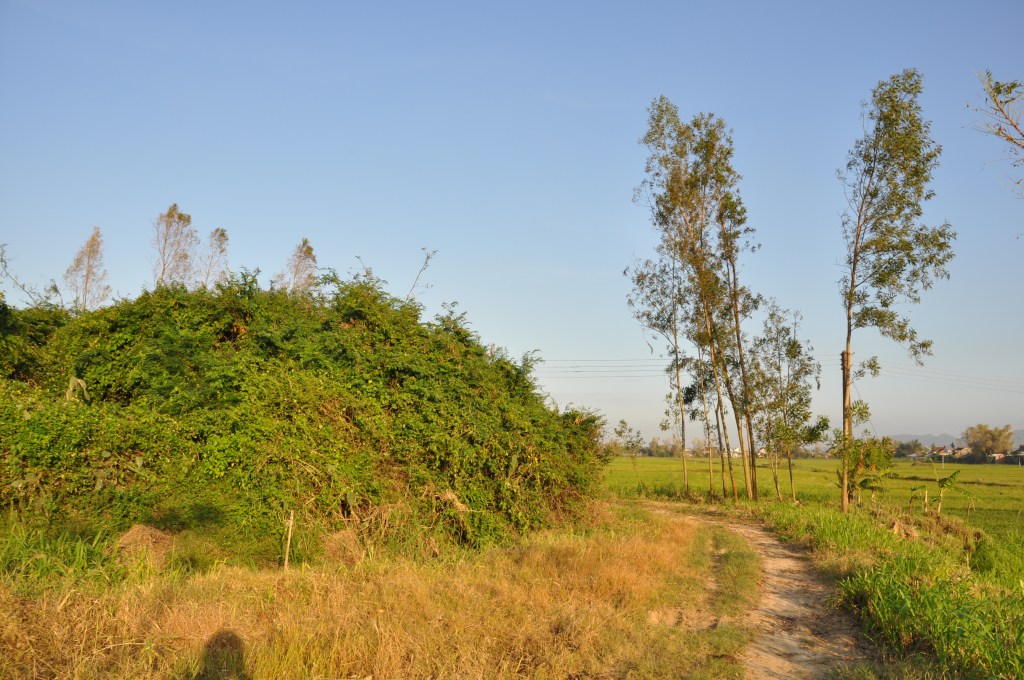
I prepared myself to see nothing at the site but decided to check it out anyway and I was pleasantly surprised that you can in fact clearly see the earthworks. There is a clear square marked out by a tall earth rampart, about 3-4metres high. A black-and-pink stele stands high on the southwest corner as you drive in announcing the history of the site. A few people in conical hats rested in the middle of the old castle as I arrived, and I could see why. It is an ideal spot for a picnic.
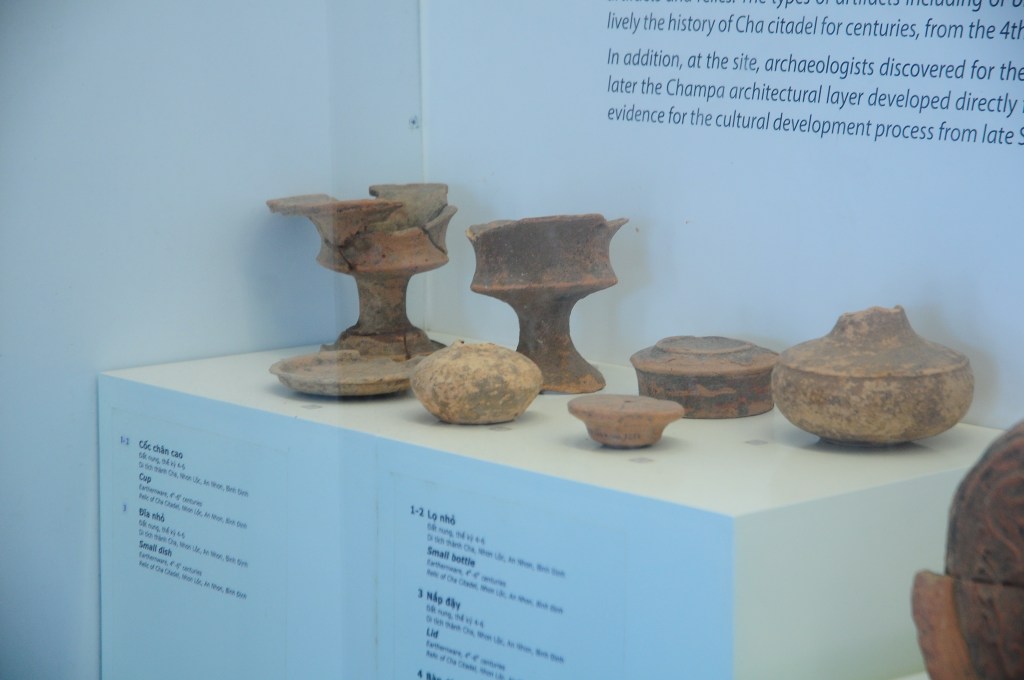
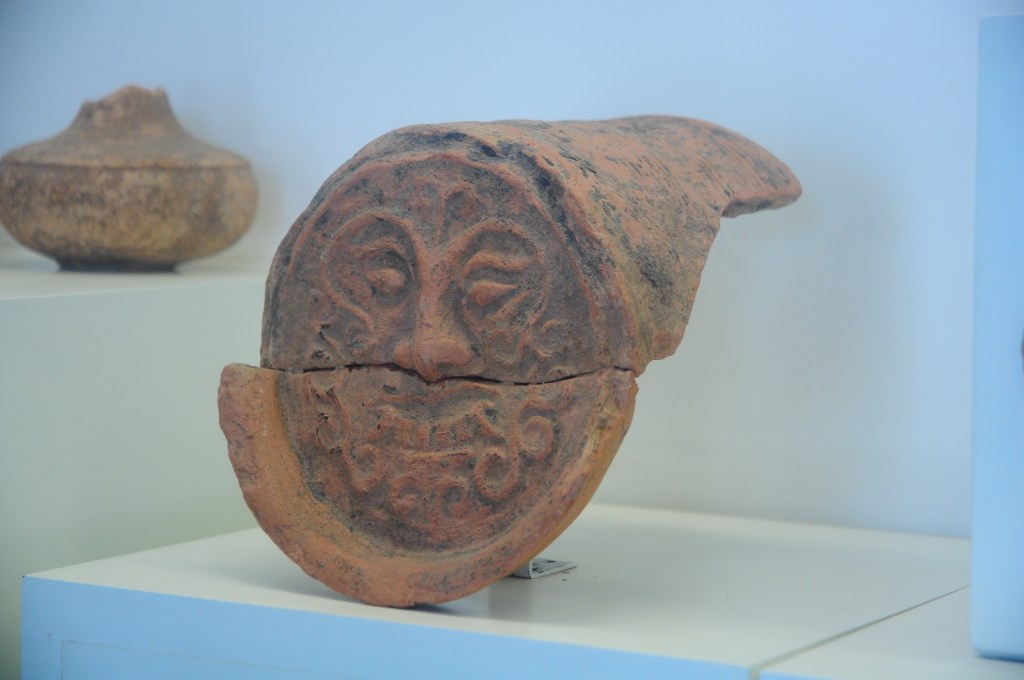
The next day I escaped from the blistering heat of Quy Nhơn city by popping into the museum to see the archeological finds from Chà castle. There are lots of pots and some really cool ornamentation with faces.
Archeological digs have not only uncovered Champa artefacts but also older Sa Huỳnh pottery at the Chà castle site (source). Sa Huỳnh is the name given to the iron-age culture of South Vietnam. This Austronesian culture has proven links all over southeast Asia being a related group to those found in Malaysia, Indonesia and the Philippines. It’s today widely accepted that this culture didn’t get replaced but instead evolved into the Cham culture through a process of Indianisation where they adopted Indian art, religion and philosophy.
I sat in a local Quy Nhơn city cafe next to my hotel to find historic written records of Chà Castle online. The cafe is next to my hotel so I’m there every morning and I’ve stuck up conversation with the owner, a single lady in her late 20s who goes by Mèo (cat). That time when I walked in a regular jokes “Mèo, your boyfriend is here”.
I learned that multiple historians identify Chà with Phật Thệ, a fortress mentioned in 15th century chronicle Đại Việt sử ký toàn thư (source). According to the chronicle, in 1044 the Vietnamese emperor Lý Thái Tông (remembered for the One Pillar Pagoda) marched south and attacked Phật Thệ. Cham King Jaya Simhavarman II was killed. Elephants, treasure and even a princess named Mi E were taken as loot.
This coincides with the time Đồ Bàn Citadel was first constructed. It seems that after the defeat, Chà was abandoned. Đồ Bàn is larger by far, but I still find myself wondering why they shifted their capital rather than expanding and strengthening the old one. Perhaps the defeat exposed some strategic flaw in the location. Or perhaps the place seemed unlucky, its spirit broken in a way that couldn’t be repaired. Civilisations move on not only because they must adapt, but because sometimes rebuilding on the same foundations is emotionally harder than moving and starting afresh.
 Eastward Ho!