
In this 2 part post I’m going to recount a remarkable episode in the history of Kontum province, central Vietnam. It follows the escapades of a French cavalryman turned confidence trickster, Marie-Charles David de Mayréna, who ventured beyond the frontiers into lawless winderness. When he got there he did something very unexpected. He declared himself king.
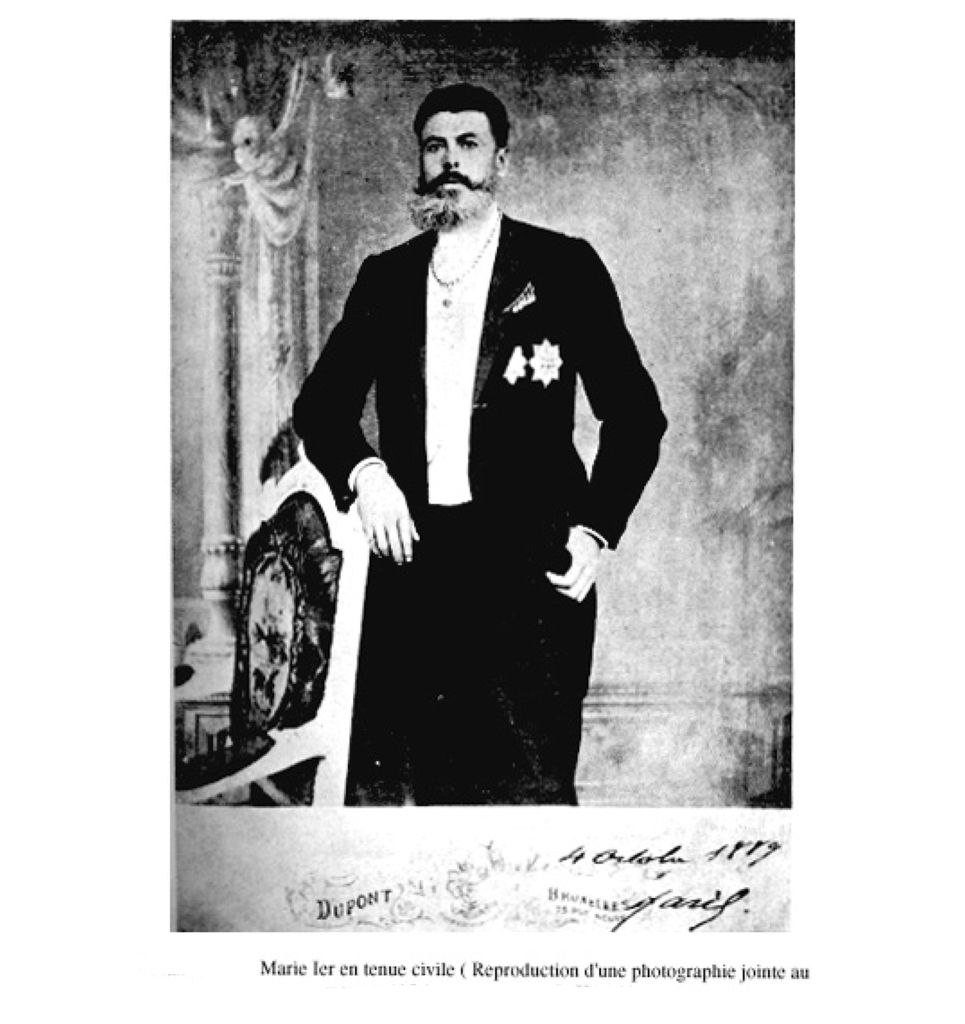
Born in Toulon, France in 1842, Mayréna started his career in the French cavalry where he was involved with the annexation of Vietnam- here he would gain experience which he would draw from with his later ambitions. In 1868, he resigned from the army and returned to France, settling in Paris. Strikingly tall and handsome, Mayréna was a natural seducer and duelist, often seen prowling the Grands Boulevards. His commanding presence, combined with his flair for storytelling, made him a magnet for intrigue and opportunity, as he schemed to make his fortune. After setting himself up as a banker on the Rue de Châteaudun, he was forced to flee the country in 1883 following questionable stock market transactions and a complaint of fraud. He ended up back in Vietnam because he had nowhere else to go.
In Vietnam, Mayréna hopped from one con to another, for example in one scheme he secured government funds for a rubber plantation in Ba Ria, near Saigon. The rubber plantation never existed. His personal life was no less scandalous—he seemed to marry a new woman in every town he passed through, despite already having a wife in France. One such lover, Mayréna claimed, was a princess of the ancient kingdom of Champa, cheated out of her inheritance by Vietnamese warlords. This romanticized fiction was foreshadowing of his later grand ambitions.
In January 1888, word had reached him of an impending Prussian expedition from Siam through the lawless region between the Mekong and the rugged highlands west of Annam – the French colony that is now the Central Coast of Vietnam. The Prussians, looking to exploit recent unrest in Annam, were seeking alliances with local tribes to establish themselves a colonial foothold. They set out from Battambang with a Siamese armed guard headed for Attapeu which would be their base to penetrate deeper into the wilderness.
Like many modern conmen, Mayréna had a sixth sense for turning political turmoil to his financial advantage. Acting quickly; he petitioning the Governor-General to let him intercept the Prussians. The official rebuffed him, due to diplomatic concerns. Undeterred, he quickly reshaped his proposal and offered to lead an unofficial expedition into the highlands west of Annam’s Binh Dinh province. His objective was to secure treaties with the local chiefs before the Prussians could. This time, the Governor-General approved his plan.
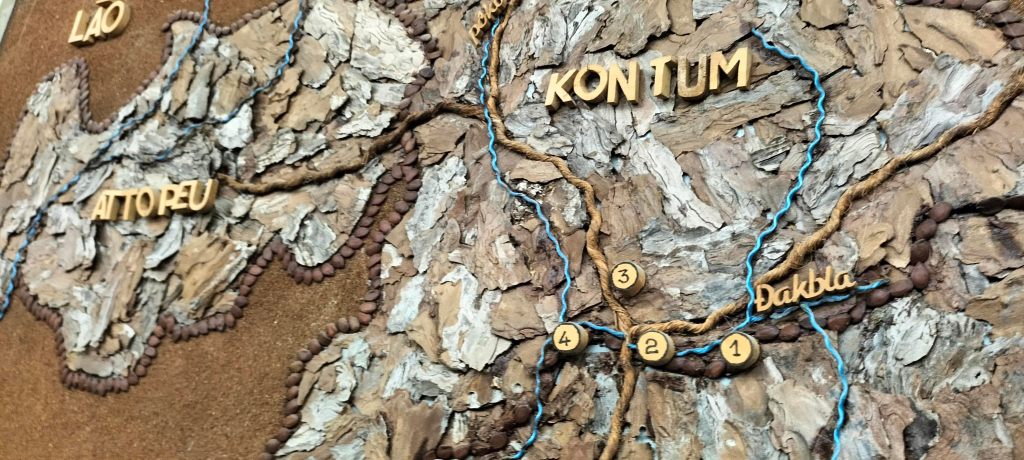
The French had already made some inroads into the highland territory, largely due to the efforts of Christian missionaries. These missions had established routes from An Khe in Binh Dinh to Kon Tum, fostering connections with the Bahnar and Rengao peoples. However, standing between the French and Prussian interests in Attapeu was the Sedang tribe. Whichever side could win over the Sedang would gain the upper hand in the region.
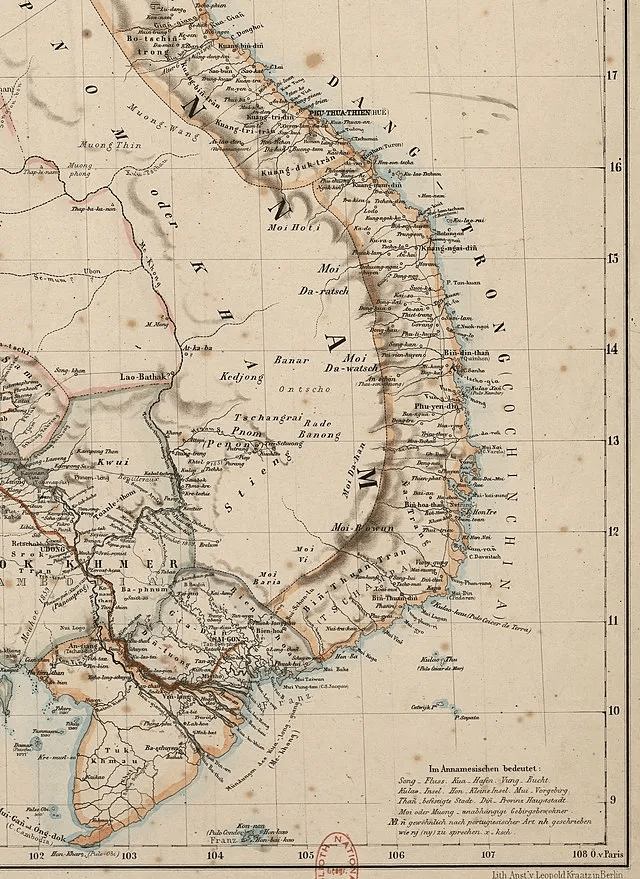
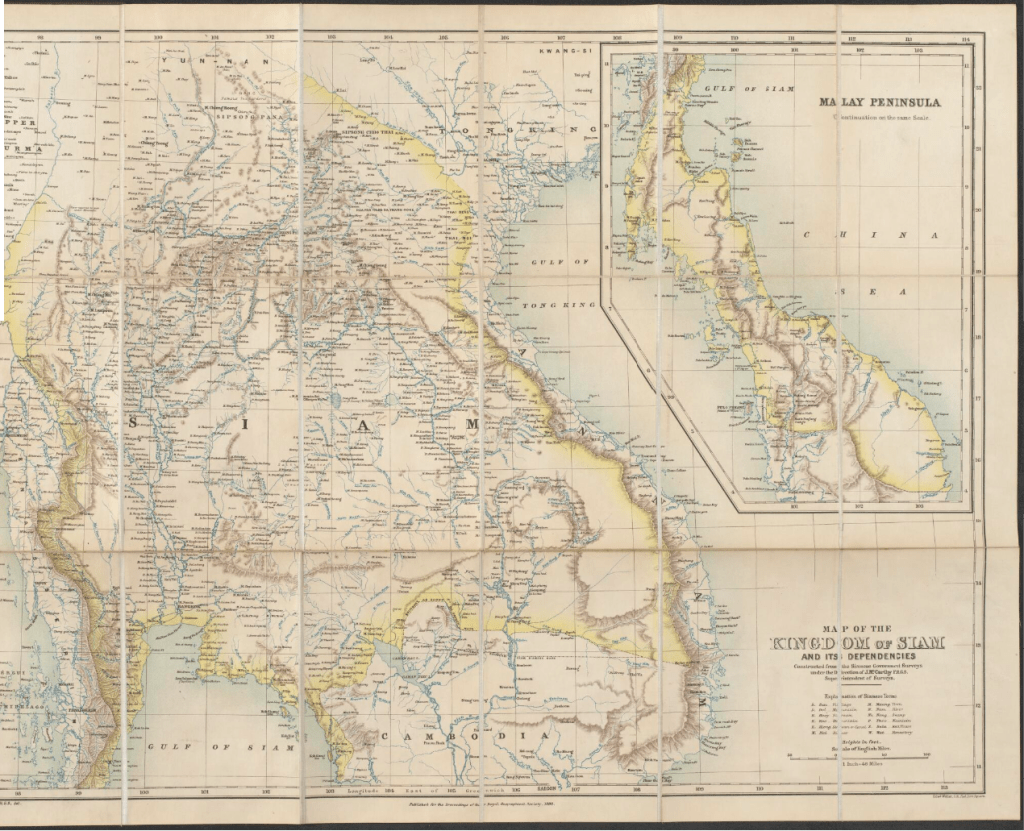
So it was that this ambitious expedition was set in motion. Mayréna and a friend, Alphonse Mercurol, set sail from Ba Ria and arrived in Quy Nhon City, Binh Dinh, in March 1888. Mercurol, like Mayréna, had been a soldier, though dishonorably discharged. Their journey was delayed in Quy Nhon after a mishap with wet gunpowder—while attempting to dry it, they accidentally set it on fire, and Mayréna was badly burned trying to contain the blaze. This setback gave the Prussians a lead and heightened the urgency, as the looming highland rainy season would soon make any expedition nearly impossible. Nevertheless, on April 21, 1888, they finally left Quy Nhon and ventured into the wild west of Annam.
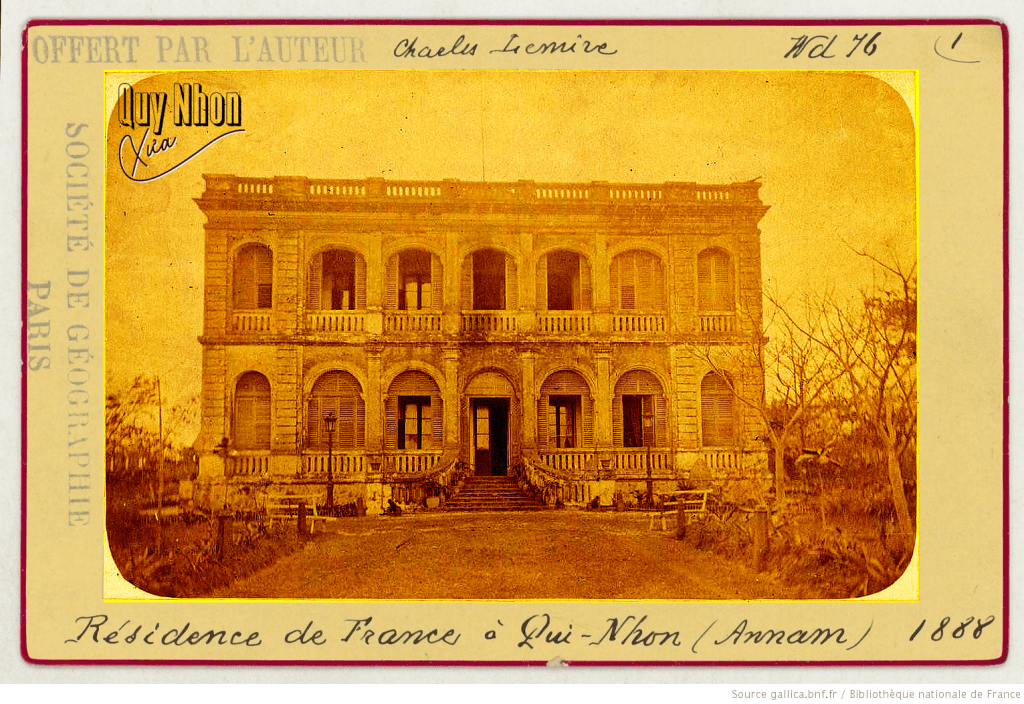
It was indeed a real column that was heading West! At the head, went David de Mayréna, the Colt at his belt, mounted on a large Arab horse, survivor of the mounts of the Chasseurs d’Afrique of the conquest, then Alphonse Mercurol, Paoli [a cook], the two “congaï” [girls], the four Chinese, prospectors of future gold mines! the interpreter of the Sûreté Pham-Van-San, 18 Saigonese and, finally, 80 coolies carrying baggage! Mayréna has the four hundred piastres that the government coffers generously granted him, weapons, a barrel of powder, canned food of his food officer! Before his departure, he received the wishes of a good journey and the wishes of success from his compatriots of Qui-Nhon – Father François-Xavier VAN CAMELBEKE, Quy Nhon
From Quy Nhon, Mayréna and his party journeyed toward the village of Chief Pim. Educated by missionaries in Kontum, Pim was literate and maintained a friendly relationship with the French. It was at this pivotal location that the expedition would coordinate with the Christian mission, in the form of Father Guerlach.
Guerlach was quite the character himself. A missionary based near Kontum, he had mastered several local languages and earned a formidable reputation. During the Cần Vương Revolt of 1887, when Vietnamese rebels targeted Christians, Guerlach—known as Boc Can to the Bahnar—led 200 Bahnar warriors to rout the Vietnamese forces. He later commanded 1,200 warriors against Jrai bandits, this was said to be the largest highland force ever assembled. His influence and respect among the Bahnar and Rengao tribes were unparalleled.
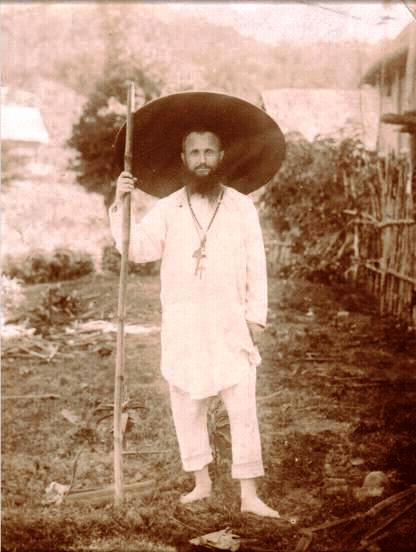
After eleven arduous days of travel, Mayréna’s party ascended from the coastal plains into the high-altitude interior, finally reaching the village of Chief Pim. Nestled among the wooden stilt houses typical of the Montagnard tribes, they were met with the modest yet sincere hospitality of their hosts, providing them with shelter and a brief respite from the trials of the journey. From this temporary refuge, Mayréna’s group sent word to Guerlach, to support the expedition.
I am at Pim’s, and I have not come to ask you to do the corvée of your Christianity here; but you would be very kind to send me some Catholics and your two elephants. I had 100 coolies, but, to use a parliamentary word, the incapacity of the Résident was the cause that at Pim’s they fled. – Mayréna, May 1st 1888
Mayréna’s charm initially proved irresistible to Guerlach, who, as a staunch patriot, was easily persuaded that their goals were aligned. Mayréna deftly presented himself as a champion of both French interests and the Christian faith, convincing the missionary of the nobility of his mission. In response, Guerlach offered significant support, swayed by Mayréna’s apparent dedication to their shared ideals. However, later when Mayréna’s true motives emerged, Guerlach would grow increasingly disillusioned, distancing himself from the conman once he recognized the self-serving nature of his schemes.
On May 10, the entire caravan left the village of Pim and took the road to Kon Jeri Krong(1), where the staff of the commission was installed on Sunday, May 13. Ten days were devoted to rest, installation work and preparations for the first excursion. On May 23, in the evening, we went to sleep at Kon-Tum; on the 24th, we were at Kon-Trang(2), the residence of Father Irigoyen. To celebrate the arrival of our compatriots, the Father gave an ox that the people of the village tied to the post, and the Rolang dance was performed to a large orchestra of drums and tom-toms. Here the expedition truly begins. The caravan consisted of three Frenchmen: Mr. de Mayréna, Mr. Mercurol and myself, two Annamites on horseback, ten savages from my household, who carried our baggage, a pack horse, six Saigonese matas [police officers] who were not very resourceful, except for Doi and finally four Chinese, delegated by Chinese traders from Saigon, to check the presence of gold mines- Guerlach, November 13, to the newspaper Le Courrier d’Haïphong
(1): from this document, it seems that Kon Jeri Krong is now called Kon Jơdreh, a Rengao village near Kon Tum City.(2): Kon Trang is here.
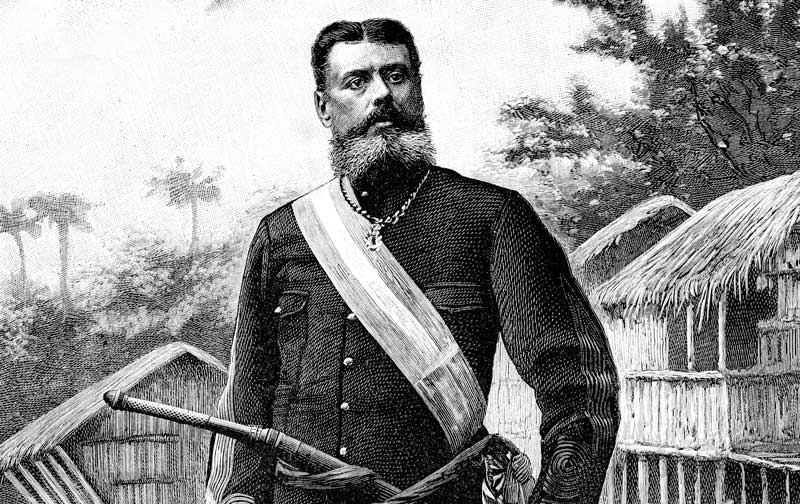
Letters by Guerlach meticulously detail their journey, documenting each village they visited, the exchange of red beaded necklaces for rice, and the nights spent in communal houses. Guerlach was also able to sent locals ahead of the expedition to clear a road as well as keep it safe from bandits. Over the course of three arduous weeks, they steadily approached their final destination – the the Pekau river. At last, they were able to make contact with the Sedang people, as Mayréna himself recounted in a letter.
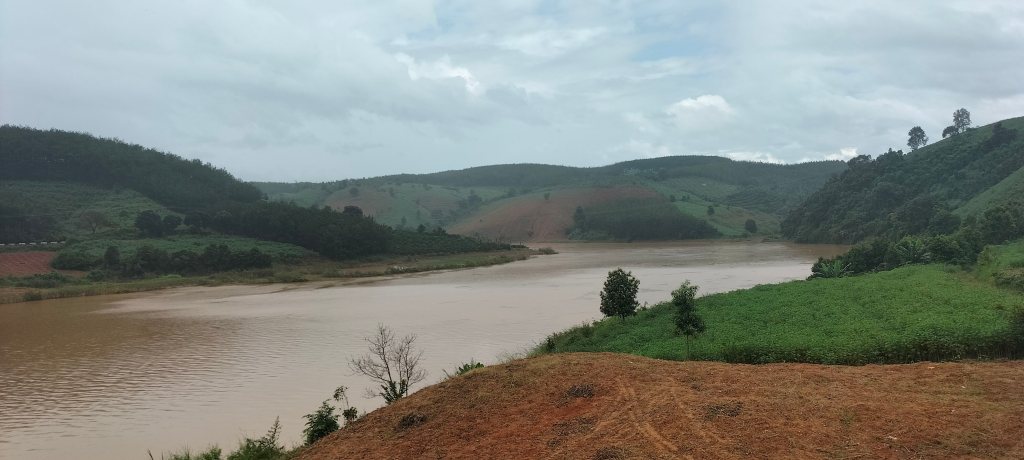
I explained to the Sedangs that I was going to meet Europeans [the Prussians] who wanted to enter their country. My character pleased these untamed nations. It rained as it rains in India, the rivers were transformed into torrents; I remained in the rain, I crossed the rivers by swimming. I thus reached the Pekau. Having crossed this great river, I stopped at the village of Kon-Gung. I was looking for a solution, when the chief of this village, named Sui, made me find it by offering me a war performance. They were very proud of their skill in handling the sabre. I let it happen, then I provoked the victor. After a few parries I succeeded in touching him… I therefore offered to the chiefs and warriors to take me as war chief (tenul bla) or (Kedra bla) — both are said — which was accepted. I was successively appointed by all the villages bordering Pekau. I then had warriors placed blocking the road. He was no longer a French explorer, he was a Sedang chief opposing an invasion. The Prussians learned of this new state of affairs, and withdrew to the right bank of the Mekong, saying that they had the fever – Marie-Charles David de Mayréna, October 8th 1888
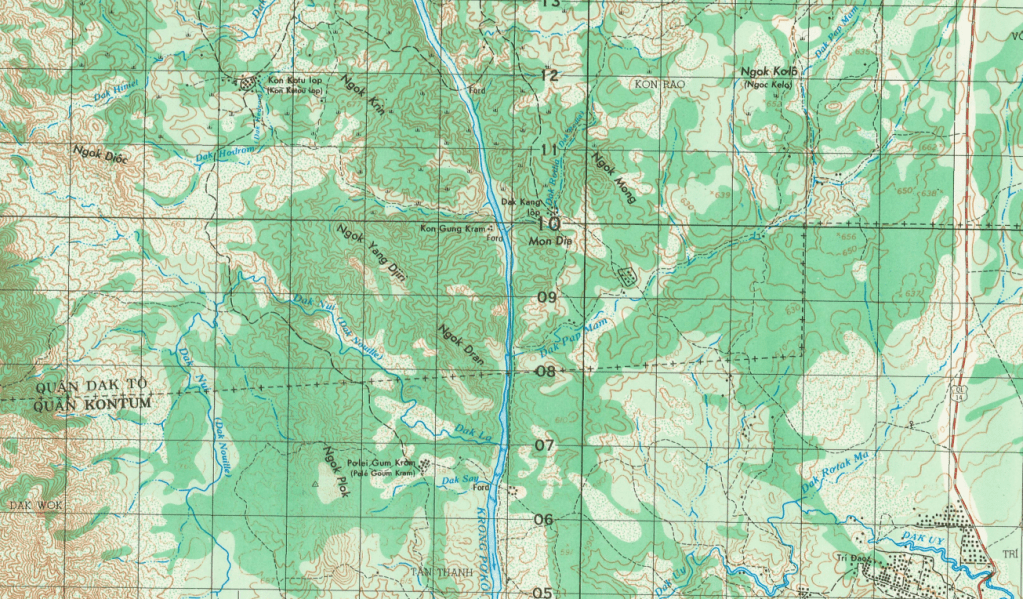
The expedition had successfully outmaneuvered the Prussians, eliminating the threat of their influence in the region, but for Mayréna, this was just the beginning. Mayréna’s success emboldened him, revealing selfish ambitions that may have been the force that was driving his actions all along. In part two, we’ll delve into how Mayréna declared himself king, and how this bold move brought him fame and fortune before ultimately leading to his downfall.
Sources
My main source for this post is a collection of letters written by those involved collected as a book in 1927 in Bulletin des Amis du Vieux Hue, 14e Année No 1-2 Janv-Juin. If you find getting stuck into the gory details in letter form fun, I highly recommend reading this in its entirety as I found reading it incredibly entertaining and I had to leave out a lot of details here.
- History of the Mountain People of Southern Indochina upto 1945 – Agency for International Development, Washington DC
- https://nghiencuulichsu.com/2015/09/30/vua-bip-phap-xung-vuong-tren-cao-nguyen-dat-viet/
- https://cand.com.vn/So-tay/Vuong-quoc-Sedang—Tro-bip-bom-cua-oc-phieu-luu-thuc-dan-i312710/
- on Guerlach: https://antontruongthang.wordpress.com/than-h%E1%BB%AFu-chung-s%E1%BB%A9c/guerlach-b%E1%BB%81-tren-mi%E1%BB%81n-truy%E1%BB%81n-giao-kontum-1858-1912/
Further reading
- de Mayréna’s memoires of his time in the army in Vietnam: Souvenirs de la Cochinchine
 Eastward Ho!