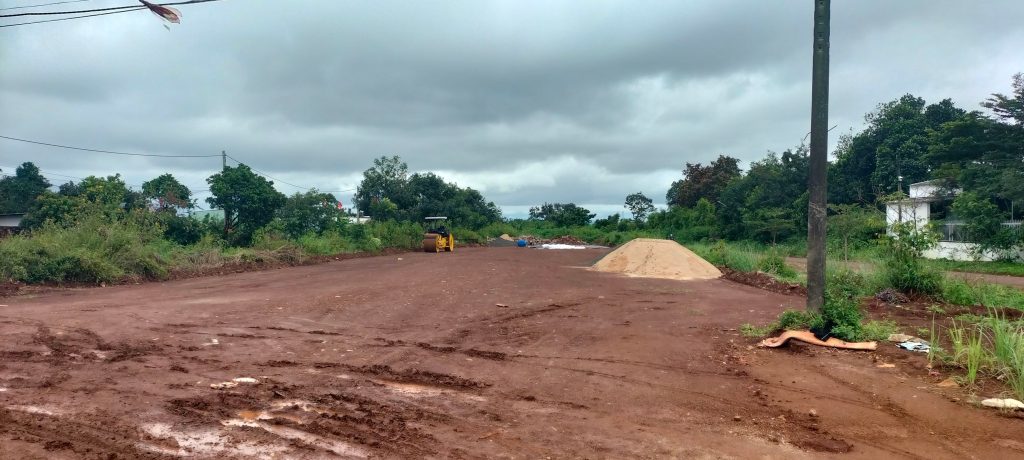
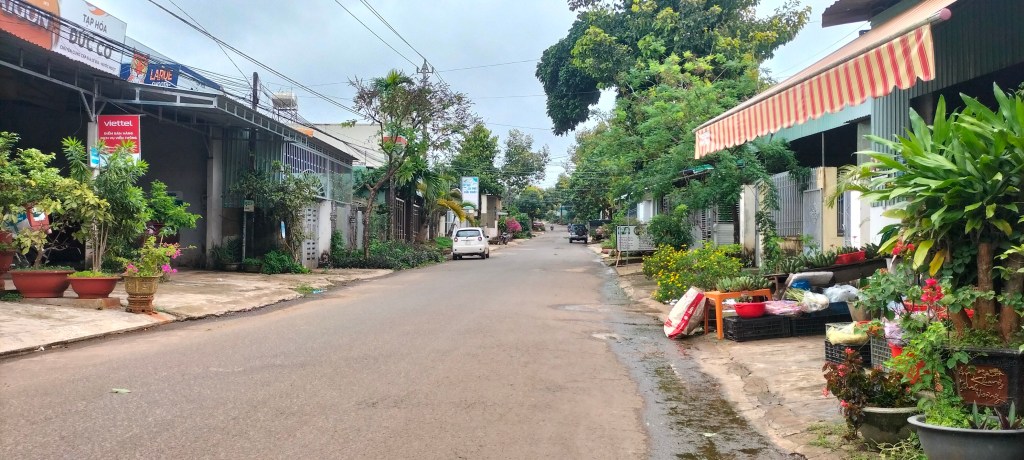
House hunting in a small Vietnamese city, like I’ve recently been doing here in Pleiku, is pretty stressful. There are no letting agents—just a Facebook group that moves at lightning speed. Thankfully, getting out to actually view places has been rather fun for me to offset the stress; it’s given me a chance to explore parts of the city I hadn’t had any reason to visit before. One viewing took me down the old French airport runway, now a public road, and another led me near the current airport onto the road that once led to the American 71st Evacuation Hospital. I get a bit of a buzz out of seeing these sites.
This gives me a good excuse to write up this topic because it took place at the 71st Evacuation Hospital (here). The site has no shortage of stories, such as the lives of the nurses who served there, like Diane Carlson Evans. Today, though, I’m sharing a snapshot of something more off-beat — a pirate radio station that was run by some rogue engineers. It’s a far cry from the official radio propaganda I’ve written about before, and just the kind of offbeat details I love learning about when digging into the history of Pleiku.
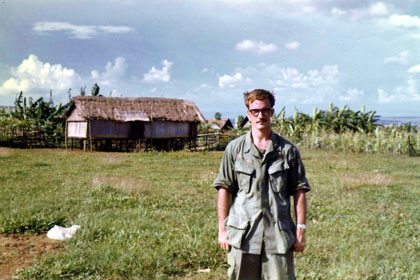
At the time the pirate radio was on the air – 1971 – the Vietnam War still had a good four years to go, but for the U.S. Army, things were beginning to wind down. Under the policy of “Vietnamization,” introduced by President Nixon, the U.S. was gradually transferring the responsibility of the war to South Vietnamese forces, aiming to reduce American involvement. The 71st Evac Hospital had reduced their staff considerably, giving the buildings that were no longer used over to the Signal Corps. The area had an eerie liminal quality that was captured in photographs by Joel Dinda who was with the Signal Corps and living in the Hospital grounds. The atmosphere of these photos brings to my mind the style of Wes Anderson film, which I also find a fun lens through which to think about the story around the pirate radio station.
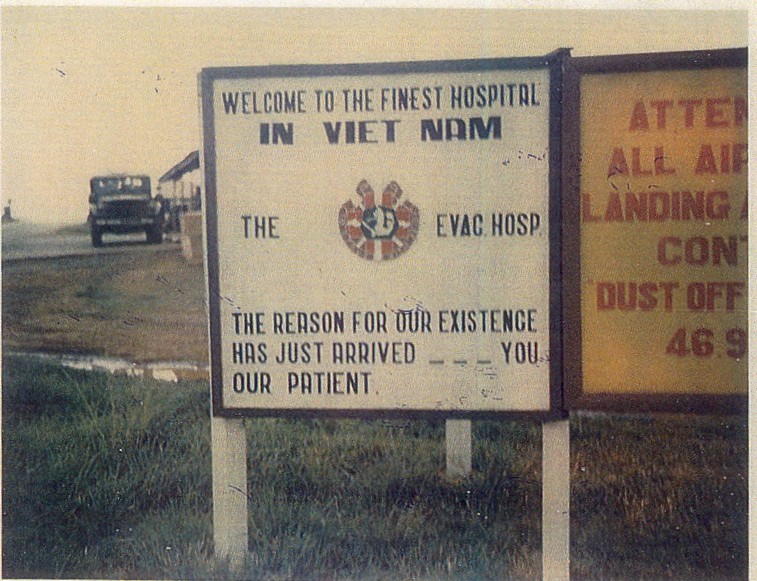
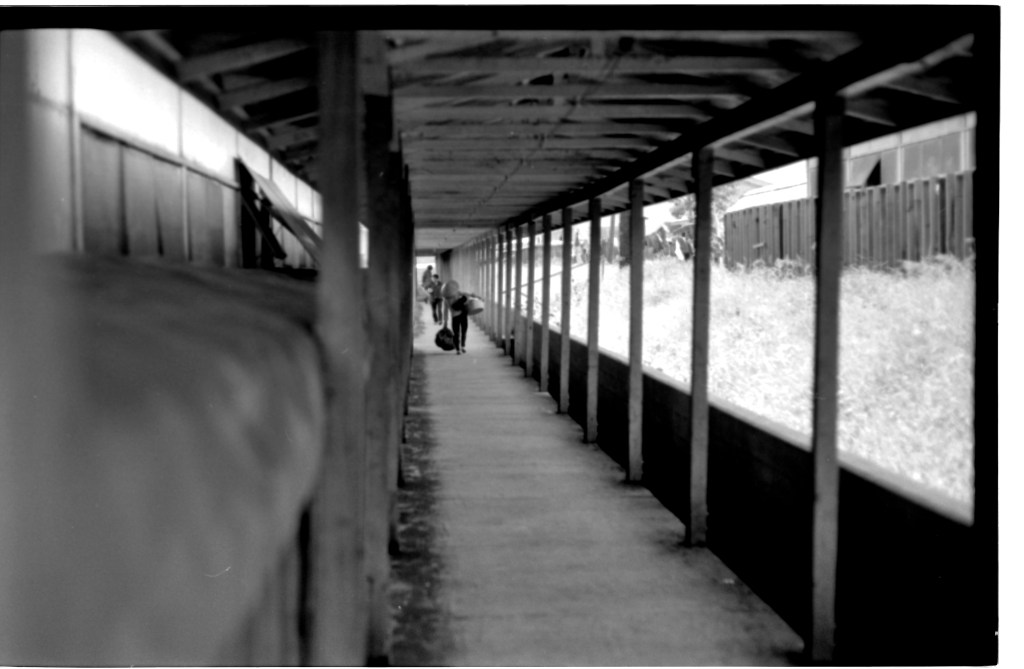
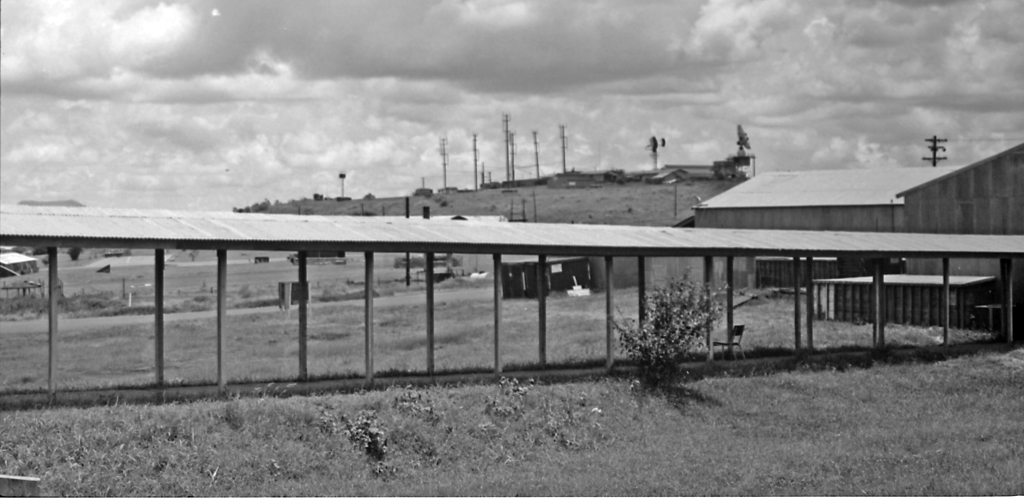


“By 1971 the 71st was but a pale ghost of itself, and most of the hospital complex had been either ceded to the local Signal Corps folks (that would include me) or completely abandoned. So I spent my Vietnam year living in a hospital ward… All in all, we Signal folks thought the medical operation a mysterious and wonderful thing; we shared the complex but had little interaction with the professional staff, and less with the patients. ” – Joel Dinda
One of those signal folks was the main character of our pirate radio story: SP5 Schmidt of the 146th Signal Company. SP5 meaning Specialist 5-stripes rank.
“Since the war was winding down (for us GIs at least) a lot of equipment was being turned in to our shop from field sites reducing their inventory as they shut down. That provided a marvelous opportunity for me to scavenge an excess intercom for conversion to what would become the Peanut Whistle of the Central Highlands, so named after the HAM (amateur radio) nickname for a low power transmitter.” – SP5 Schmidt
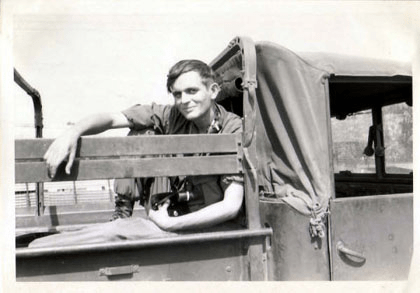
Schmidt and a group of co-conspirators from the his company used their vocational skills to cobble together a homemade broadcasting setup and started transmitting their pirate radio station on 95FM. They called it the Peanut Whistle of the Central Highlands, and each volunteer took on their own radio persona to remain anonymous – because what they were doing was strictly against the rules. Schmidt went by “The Choo-Choo-Cherry Kid” (a name inspired by his drink of choice: vodka mixed with Choo-Choo-Cherry powdered drink mix from care packages). Other DJs went by equally whimsical names like Goofy Grape and Rah Rah Root Beer. One of the crew had even been a professional DJ before being shipped off to Vietnam.
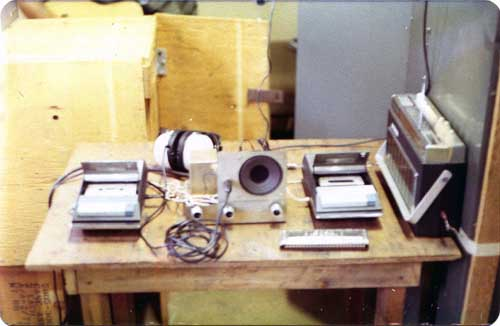
Cassette (l), LPFM Transmitter (c), Cassette (r)
Harmonica (front) for live concerts
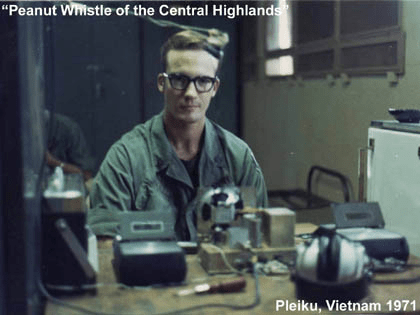
(Photo by SP5 Schmidt)
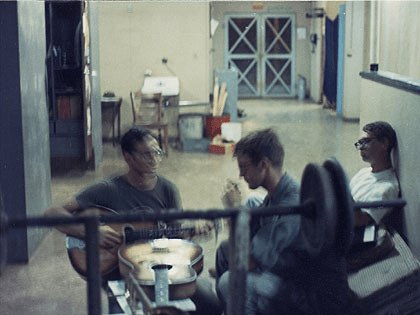
The station didn’t exactly have a massive range—about two miles, depending on conditions—but that was enough to cover the medevac hospital and, the nearby Pleiku Airbase, and on a good day maybe Camp Holloway.
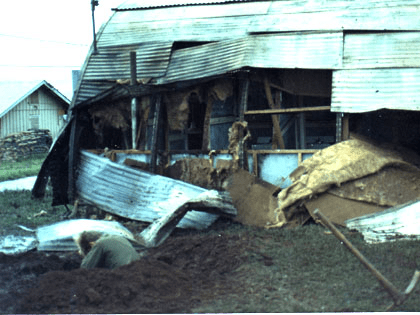
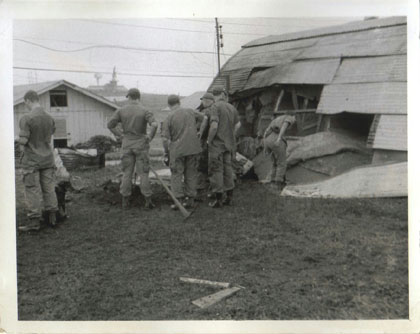
If you hop over to Schmidt’s website (my main source for this article), there’s more information about the pirate radio as well as a modest collection of photos and even some audio. One photo that caught my eye was of the officers’ latrine, which got hit by a 122mm rocket. Luckily, no one was using the facilities at the time. This was possible because the hospital was close to Rocket Box, the area I wrote about last time when I went to see one of the rockets in the museum. It’s funny how these things connect.
The Peanut Whistle wasn’t the only pirate radio station operating in Vietnam during the war. One of the most famous was Radio First Termer, run by a DJ who went by the name Dave Rabbit. Broadcasting from a brothel in Saigon, Rabbit pumped out heavy rock and anti-war commentary, gaining a lot more fame than our Choo Choo Cherry but maybe that was due to his inner-city location.
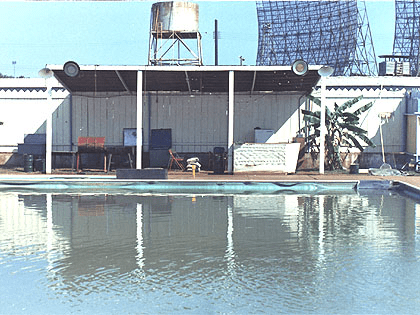
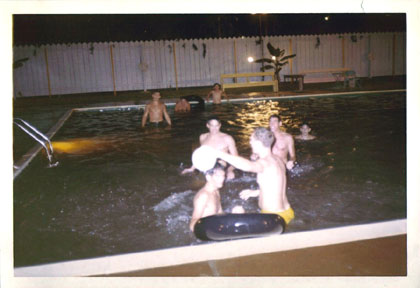
Fortunately, CCCK and his friends were never caught by the military police or other radio authorities. They even managed to throw pool parties at the medevac hospital’s pool—I was surprised to learn a pool even existed. I find a lot of joy in stumbling across these quirky stories, it adds a lot of colour to the history of my adopted home, Pleiku. There’s something absurd about this story—especially through the lens of the liminal looking photos.
You can listen to some of The Peanut Whistle of the Central Highlands on YouTube.

 Eastward Ho!