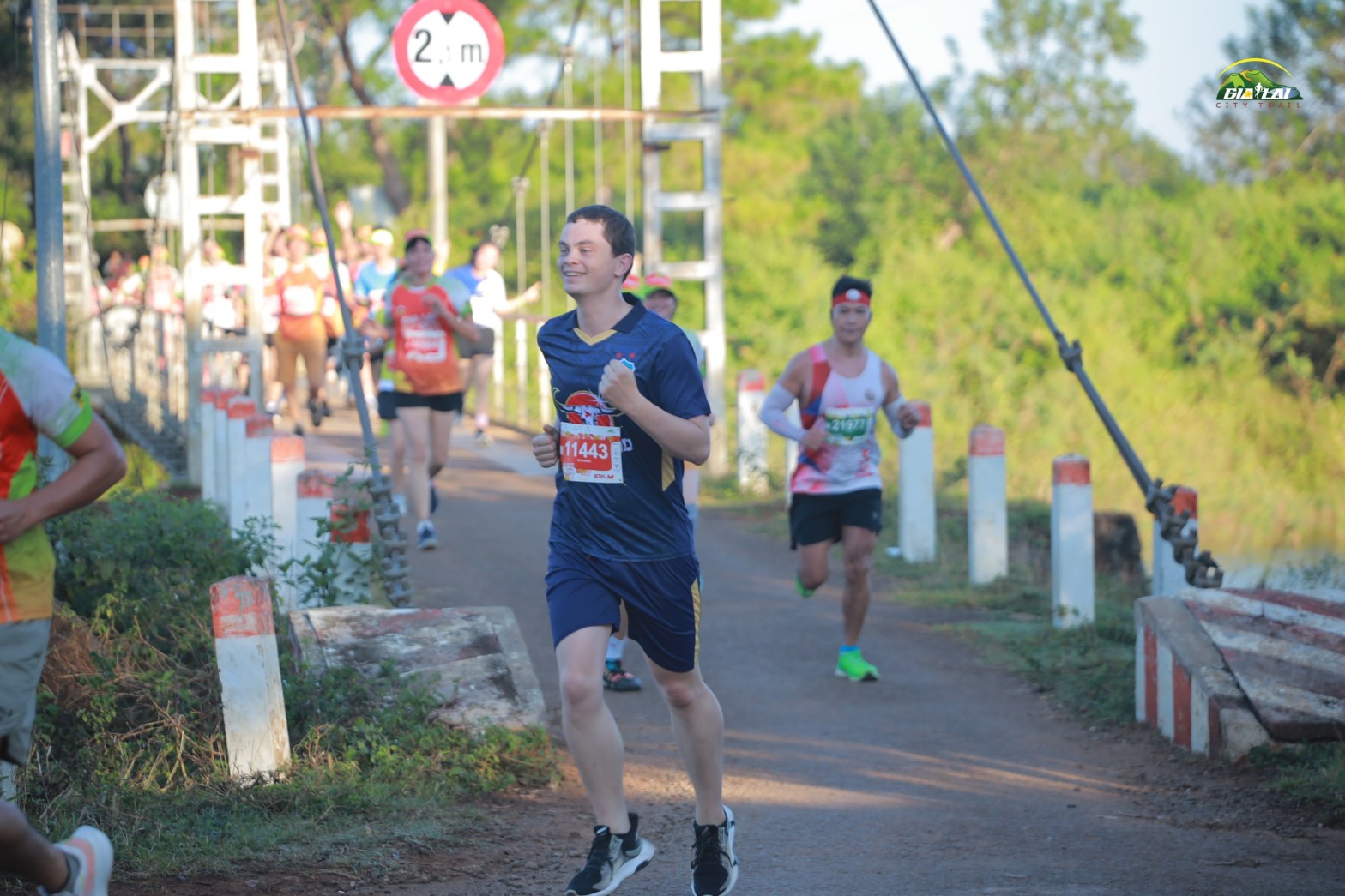
It’s still dark when I arrive at Biển Hồ 9km north of Pleiku City. I shuffle nervously through the large crowd, unsure of where to go or what to do. The PA crackles in Vietnamese, but I can’t make out the words. I’m surrounded by seasoned runners adjusting their gear and some people looking a little apprehensive like me. This is my first time running a 10k, but I’ve been training for months now, ever since I decided to take on long-distance running this summer. Before then, I’d never run for more than a few minutes at a time. So when I signed up for this event, I knew it would be a challenge.
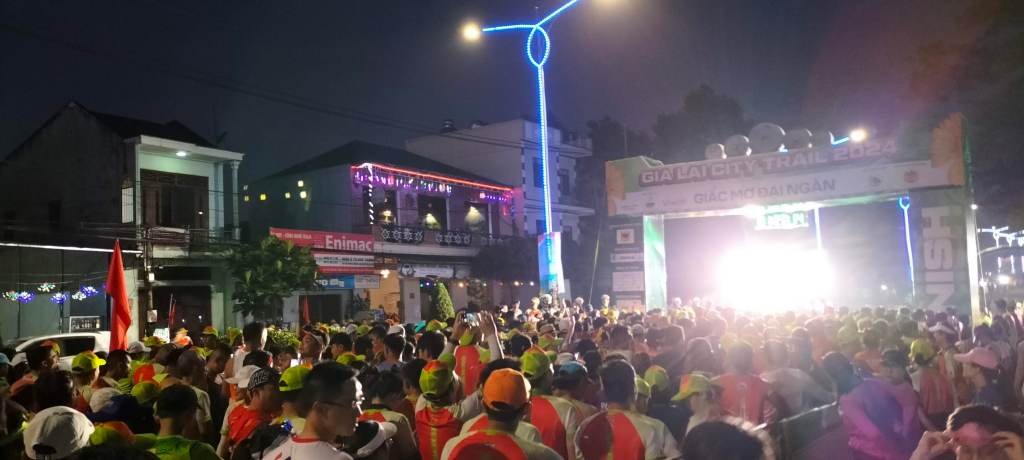
I’d come here to pick up my bib a previous evening, and in doing so, bumped into a friend I hadn’t seen since I lived in Saigon – 4 years ago. It showed how much of a draw this event is, pulling people not just from Gia Lai but from all over Vietnam. Around the starting line, a small fair had been set up, offering everything from local produce to fitness and wellness products.
I’m not just running for myself today; I’ve been sponsored by friends and family, raising nearly £500 for local community projects. The weight of that generosity makes me feel equal parts proud and determined—it’s about more than just fitness for me now.
As the starting countdown ends, the mass of runners moves forward like honey dripping off a spoon—slow at first then spreading out as it gains momentum. In my effort to show appreciation for the local area, I’d chosen to wear the HAGL football team kit—Gia Lai’s pride. It’s my small way of connecting with this place that’s become home. The first corner hosts a Jrai band playing traditional music. I know these musicians from Pleiku Roh; they spot me, shouting and waving as I pass. Their cheers make me grin—a moment of connection that reminds me why I love living in Pleiku.

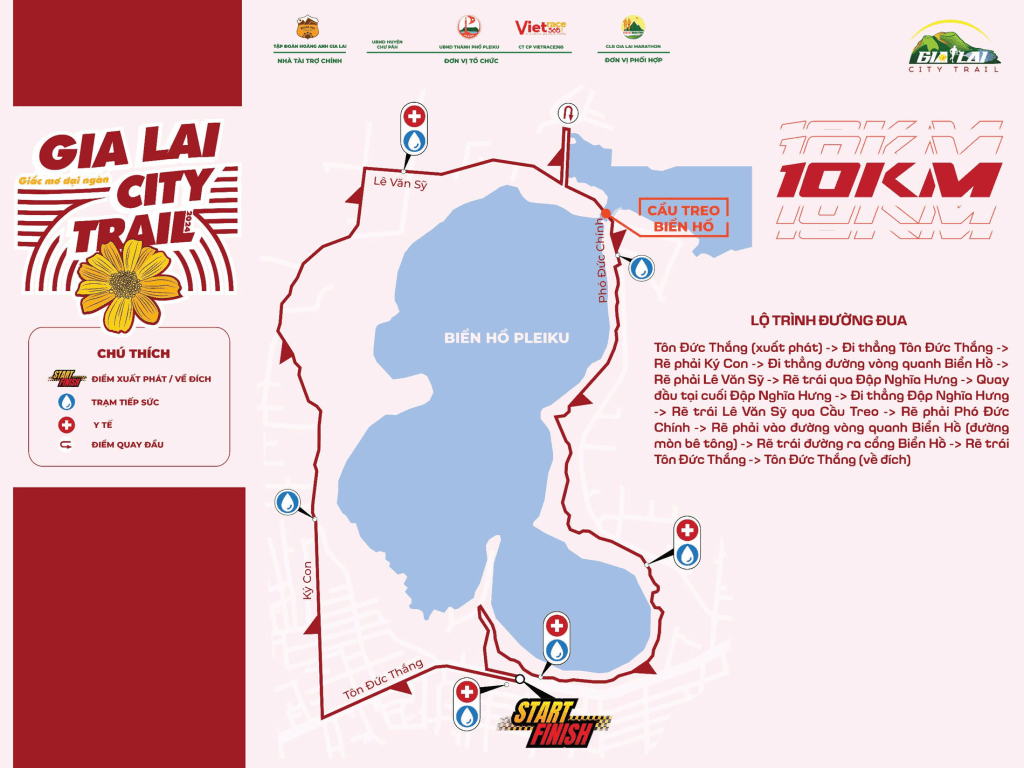
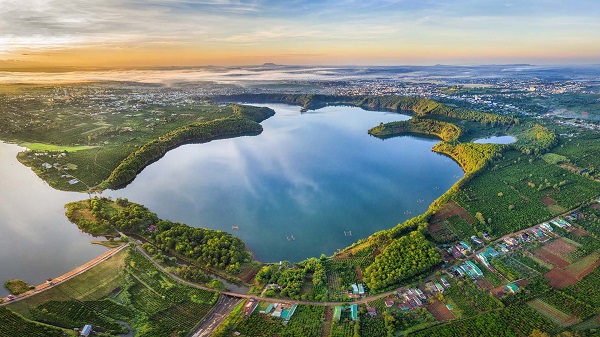
The 10k route encircles Biển Hồ lake – the “Sea Lake” of Gia Lai province, a popular tourist attraction. We set off clockwise, taking us first past its iconic pine trees. The lake itself is a remnant of volcanic activity, formed by overlapping craters, it covers and area of 228 hectares and conveniently for today, a lap around is about 10km.
Biển Hồ isn’t just beautiful; it’s a place of deep cultural significance. Stone Age tools discovered here hint at its importance to early human settlers. Of course there are several “pourquoi” origin stories of this natural feature. One story says the lake was once only a small spring. But when the magical giant white pig belonging to Ya Chao was killed to be eaten, water erupted, creating the lake and turning Ya Chao to stone.
The first kilometer or so of running flies by easily. We pass a local school where a marching band is playing. Their music is invigorating, blowing away the last vestiges of sleep as the sun rises.
My guilty secret is that I’ve never actually run a full 10 kilometers before. My best distance is 8.5 km on a treadmill, and life’s been so busy lately with a promotion and moving house that I had no time to complete my running training program. At this point, I don’t know whether to conserve energy or push harder. Some runners are already walking, while others surge ahead with confidence.
We reach Nghĩa Hưng dam, crossing to the northern side of the lake near the old French tea plantation. The main body of Biển Hồ lies to the south, while the northern reservoir, created by a dam in 1978, shimmers in the early morning sun. Although some people call this upper reservoir part of Biển Hồ, the Jrai villagers call it Ia Rơnhing, after the stream that was dammed. Although there was no dam prior to 1978, it wasn’t the first of it’s kind. Centuries earlier, the Cham people are said to have attempted hydroengineering here, redirecting water for their agriculture.

French missionary Henri Maître recorded(source) an oral legend from the Jrai people dating back to the time of the Vijayapura Dynasty, when the Cham dominated Gia Lai. The Cham reportedly drained Biển Hồ to irrigate the Menam plains on the north side of the lake. However after suffering a major defeat to the rebellious Jrai in the 13th century, they were forced out of the area. As the retreating Cham tried to seize a valuable jar from the lakebed—that had belonged to the same Ya Chao from the origin myth—spring water burst forth, drowning their entire army and reflooding the basin. This tale, perhaps contains some grains of true historical events, as it aligns with the Cham’s presence in the region; a Cham-era archeological site lies just 14 km away in An Phú (source).
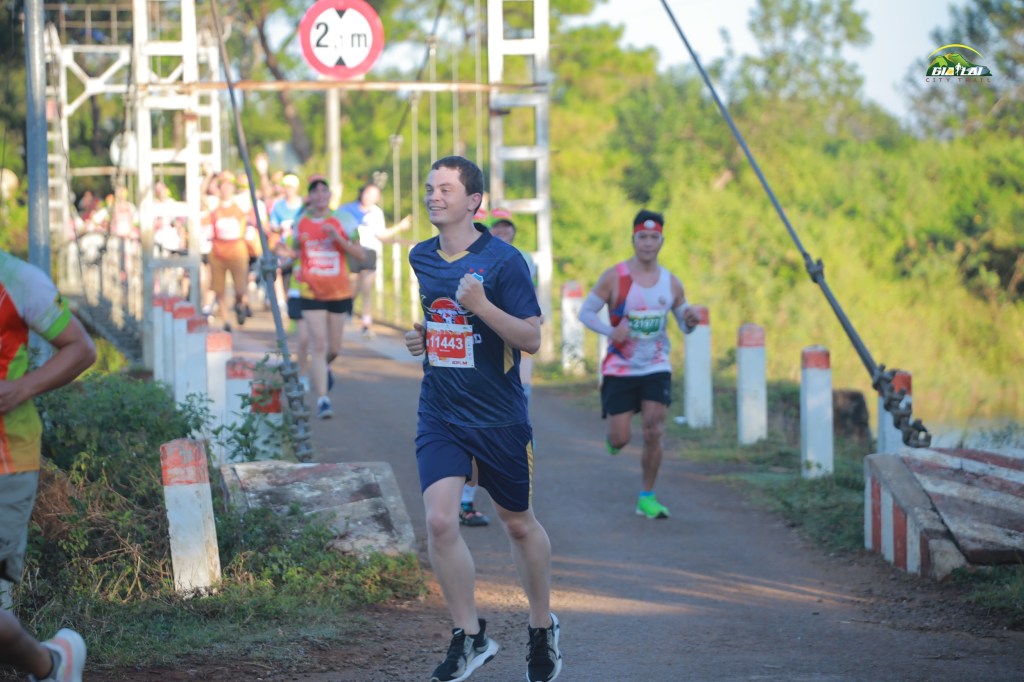
The next water station is a welcome sight as the sun gains strength heating up the trail. By now, the different race groups—10k runners, 5k runners, and marathoners—have started to merge. The path narrows, creating congestion. Shouts of “42 coming through!” echo through the crowd as marathoners on their final stretch try to pass. Some people step aside, but others remain oblivious. While it’s great to see so many enjoying the event, I can’t help but wish for some more displays of etiquette.
As we round the far side of the lake, I spot one of my students wearing a 5k bib. We exchange a quick wave, and I feel a spark of pride seeing different generations out here, embracing the event.
The last stretch takes us along the spit at the southern edge of the lake. A marshal shouts that there’s only 400 meters left. At the tip of the spit stands the Quan Âm, or Lady Buddha, shrine. During the war, Pleiku became a sanctuary for Buddhist communities under the South Vietnamese regime, which systematically favored Christians. The iconic Quan Âm statue, originally erected around 1969, was rebuilt in 2018 after falling into disrepair. While this revival has brought new life to the shrine, some locals who grew up with the 1990s structure—a hexagonal pavilion—view the change unfavourably.
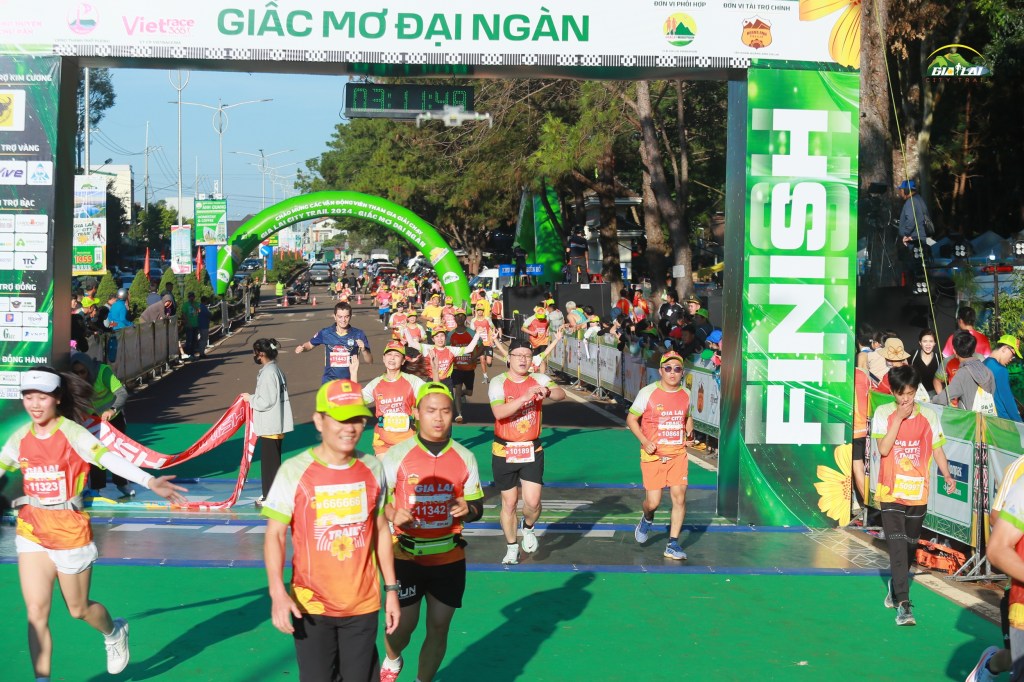
As I cross the finish line, exhausted but elated, a surge of emotion hits me. This wasn’t just about testing my limits; it was also about the generosity of the people who believed in me. Nearly £500 in sponsorship money will go to causes that matter deeply to me here. Thinking about the lives this will touch fills me with gratitude. Running around Biển Hồ, with all its beauty and history, feels like an offering in return. I remember this poem by Hồng Thanh Quang:
“Biển Hồ như tình yêu,
Mặt nước chỉ hiện ra từng đấy,
Nhưng ai biết ở sâu dưới đáy,
Nó ăn lan rộng đến bao chừng…”
(“Biển Hồ is like love.
Its surface appears only so,
But who knows deep below,
How far does it go…”)
 Eastward Ho!