Regular readers know the Vietnamese civil wars of the 18th century known as the Tây Sơn wars are one of my favorite topics. Now that I’m back living in Hồ Chí Minh City, it’s interesting to learn how many connections there are between this place and those wars, which it turns out is quite a lot.
One sunny December day, I dragged new colleague Ellis—a fellow Manchester alum teaching ESL kindergarten gigs with me—on a walking tour of loyal Nguyễn tombs that connect to topics I researched and written about in the past.
Võ Tánh
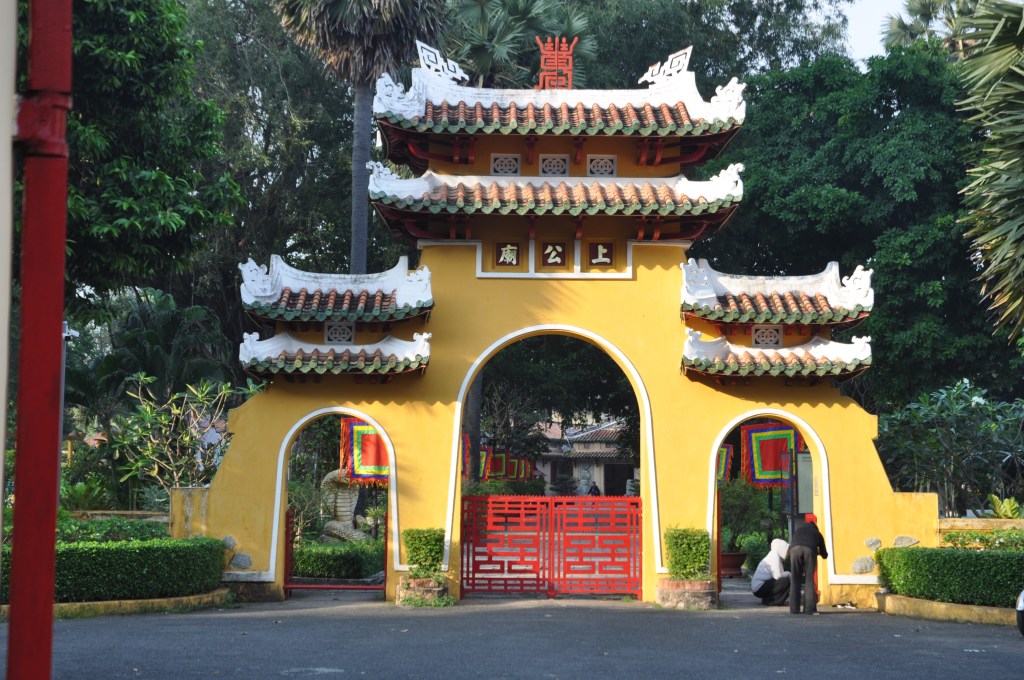
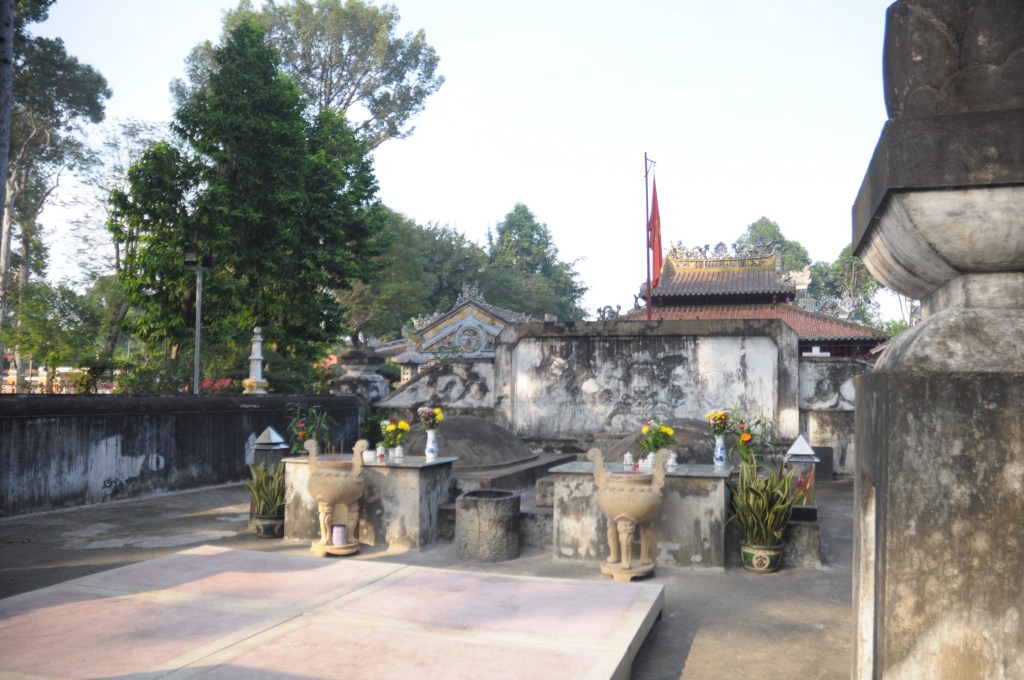
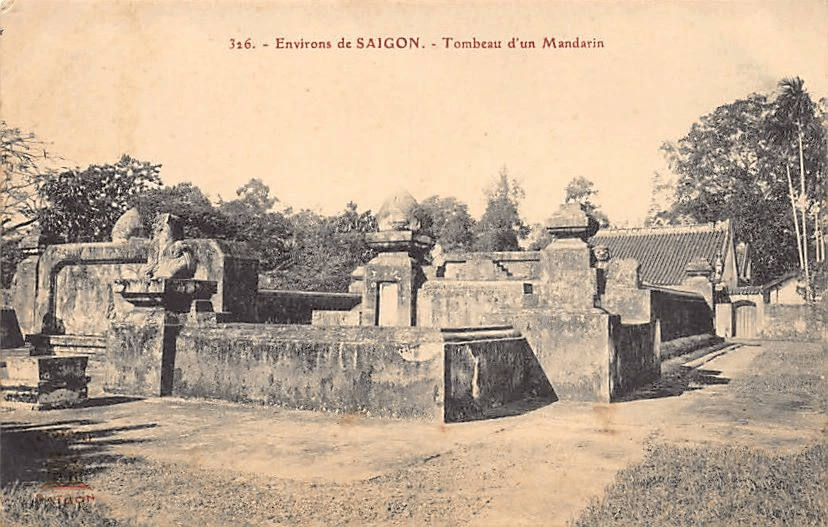
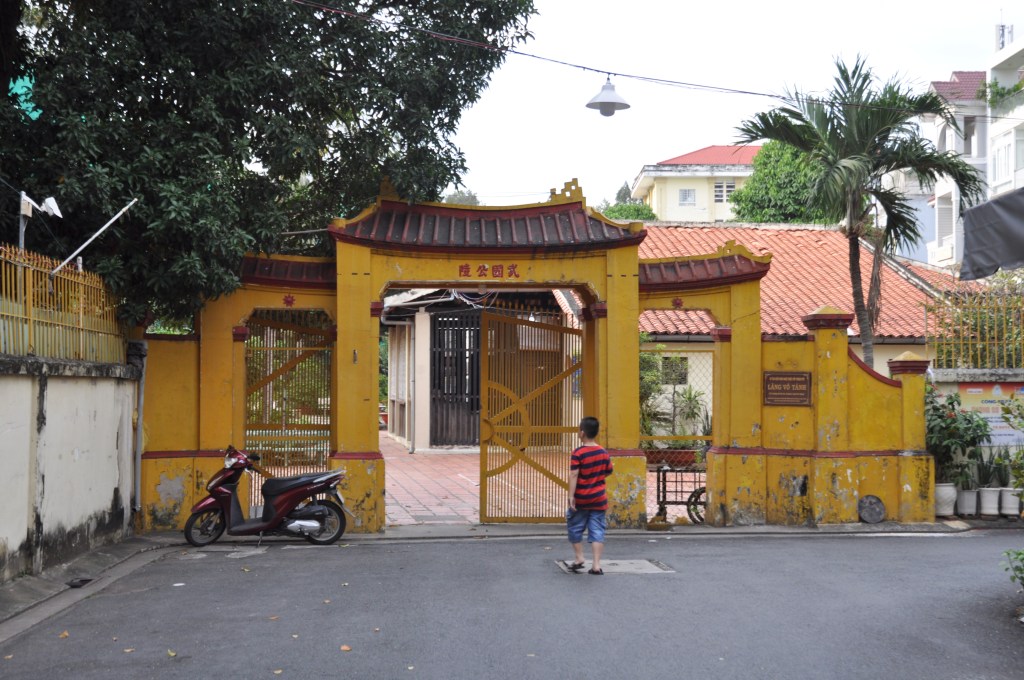
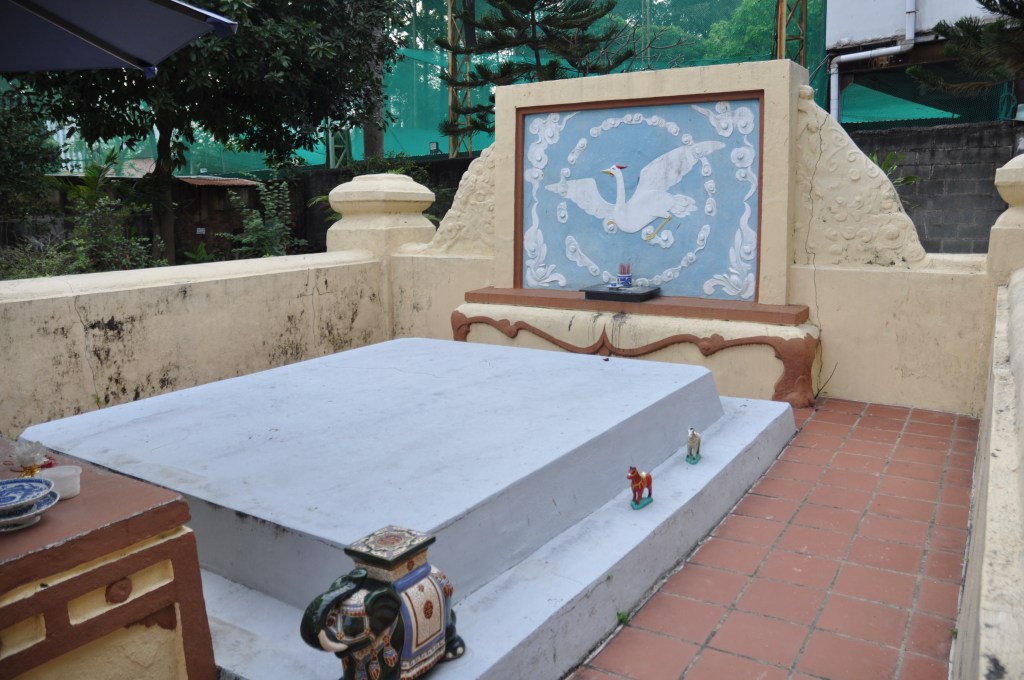
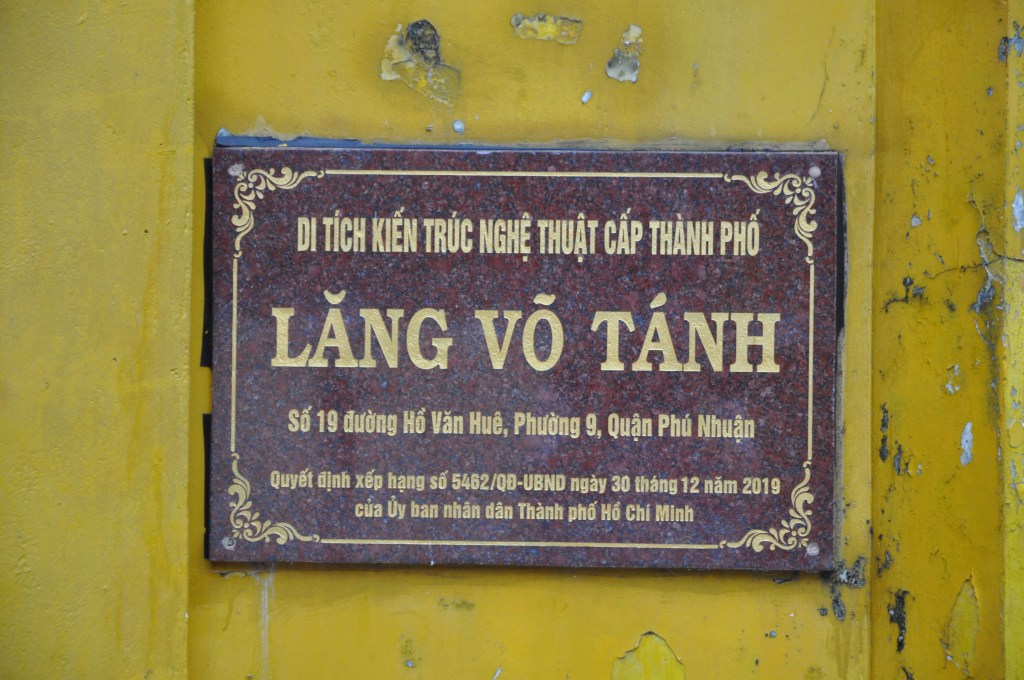
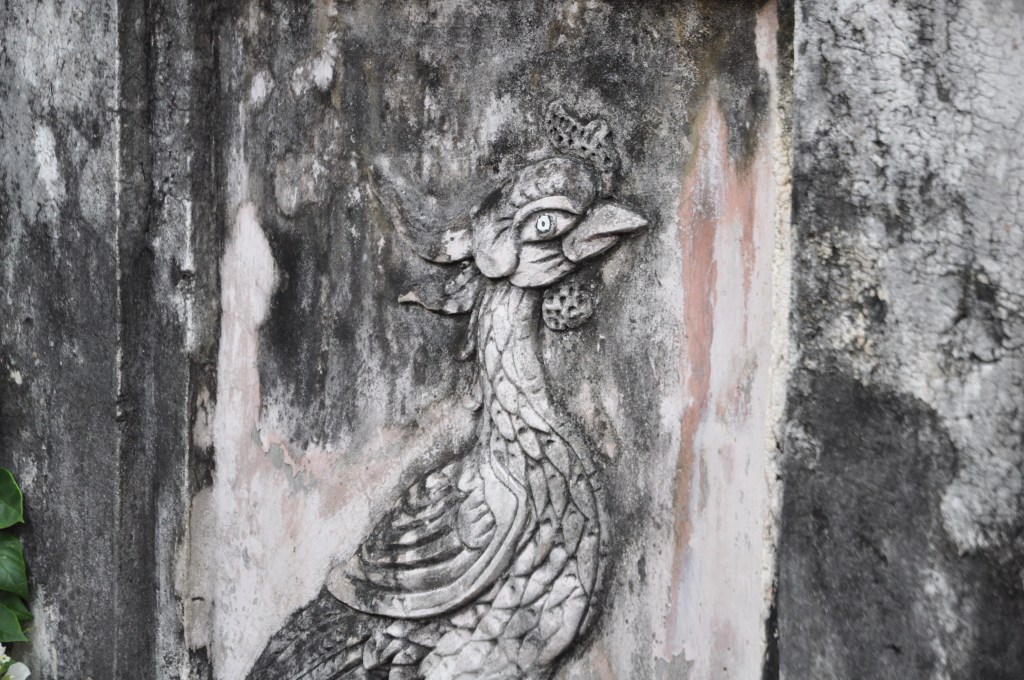
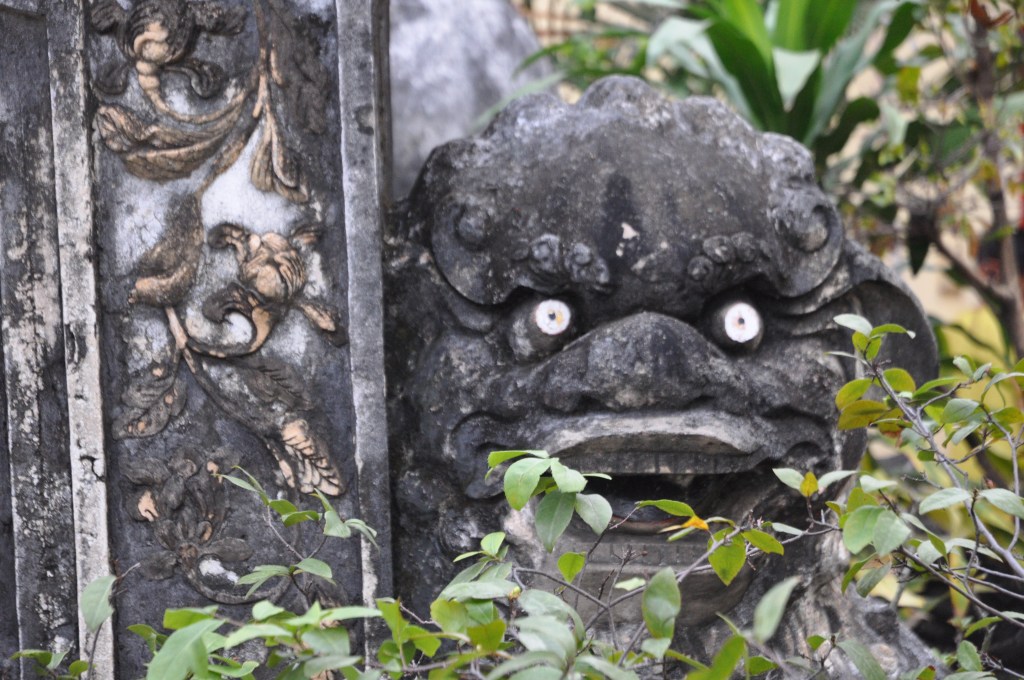
Tucked away down an alley off a busy street near the airport is the resting place of Võ Tánh (location). The mausoleum site had a shine with an alter for offerings, some outbuildings that seemed to be used to store children’s outdoor toys like push-along cars. Then out in the yard is a walled enclosure, with statues and bas reliefs, and in the center of the tomb enclosure is the tombstone itself.
Võ Tánh was a senior Nguyễn general, remembered today mostly for the manner of his death. Võ Tánh’s story is tied to one of my favorite sites: Hoàng Đế Citadel in Quy Nhon. In 1801, after capturing the Tây Sơn capital, Võ Tánh found himself surrounded by enemy forces with no hope of relief. His men had eaten the horses and the elephants and were slowly being starved inside the fortress walls. Rather than allow his troops to be slaughtered in a final assault, he negotiated a surrender. Once the safety of his men was secured, he set fire to himself inside the citadel. The act was a ritual intended to preserve his honour in defeat. It left a deep impression even on his enemies who gave him a good burial at the center of the citadel. The tomb in Bình Định can still be seen and visited.
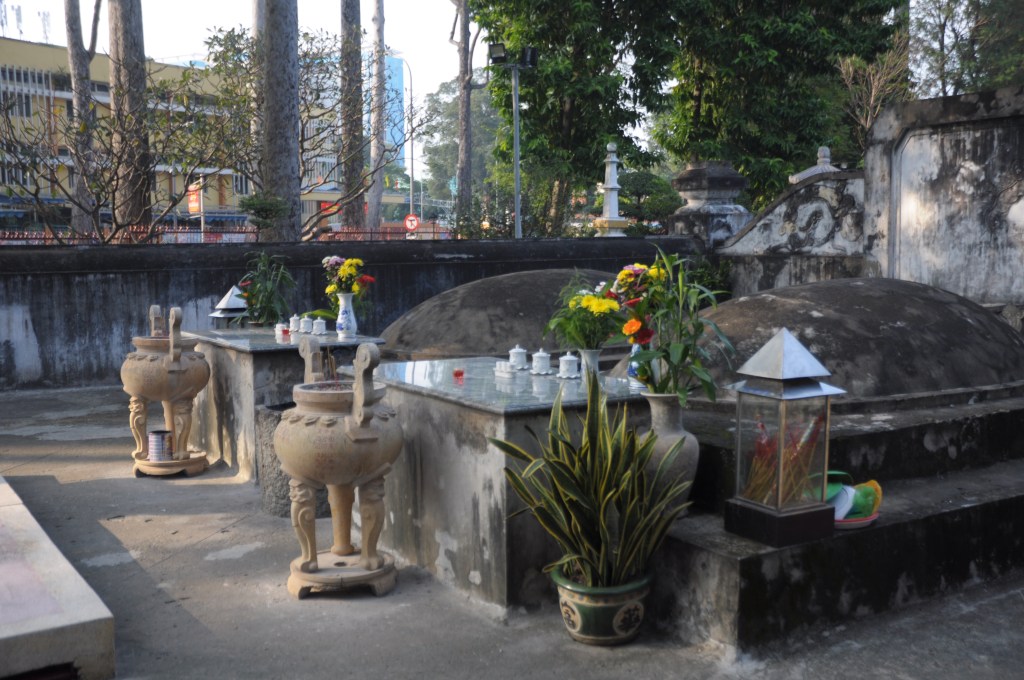
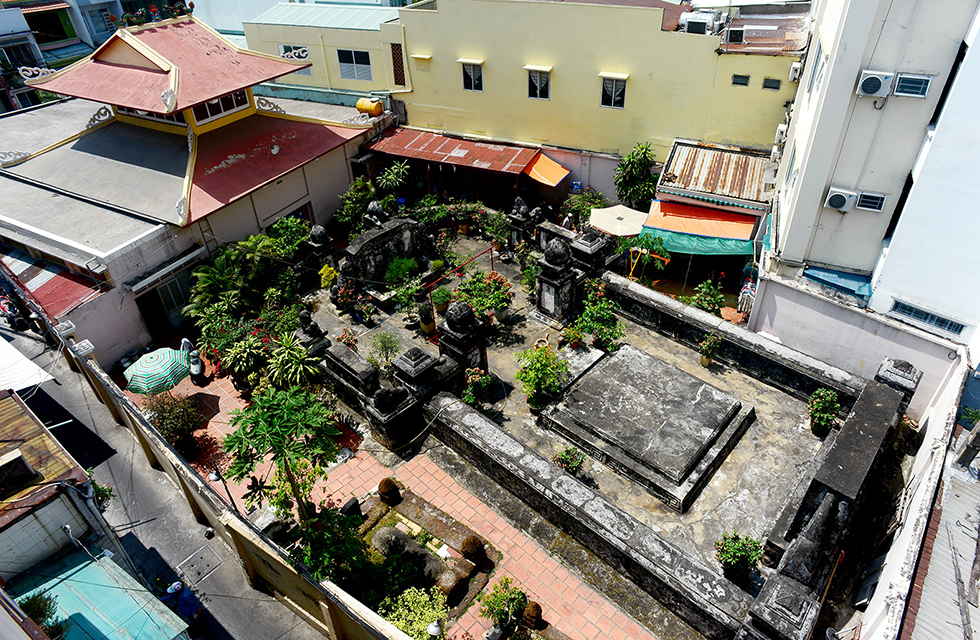
However the tomb in Bình Định lies empty. The war was won by Võ Tánh’s Nguyễn lord the following year and his remains were moved to what is now Hồ Chí Minh City. When it was built, this tomb would have sat outside the upperclass neighborhood of Phú Nhuận where the mandarins lived but now it sits surounded by flats in a sea of tarmac, quite the contrast to the sleep countryside of Bình Định.
Võ Di Nguy
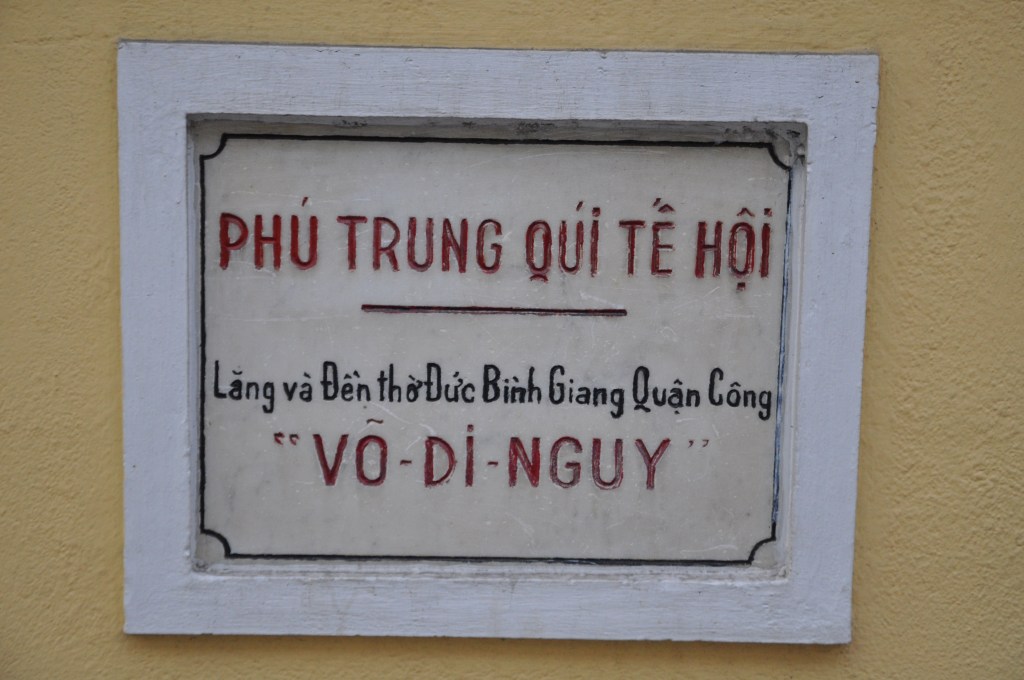
From Võ Tánh’s tomb, we headed over to the next mausoleum, that of Võ Di Nguy (location). Võ Di Nguy was the navy commander who made his name at the decisive final battle of the war: the battle of Thi Nai in 1802. Although the Nguyễn side he fought for would win the battle, Võ Di Nguy lost his life. He was posthumously given many high honours and brought here to be buried.
The entrance was hard to find at first, half-buried in the urban sprawl. Finding a solid wall with a plaque but no door, I asked a street-food vendor how to see the tomb and he pointed down the alley next to him. He also gave a shout to someone on the inside.
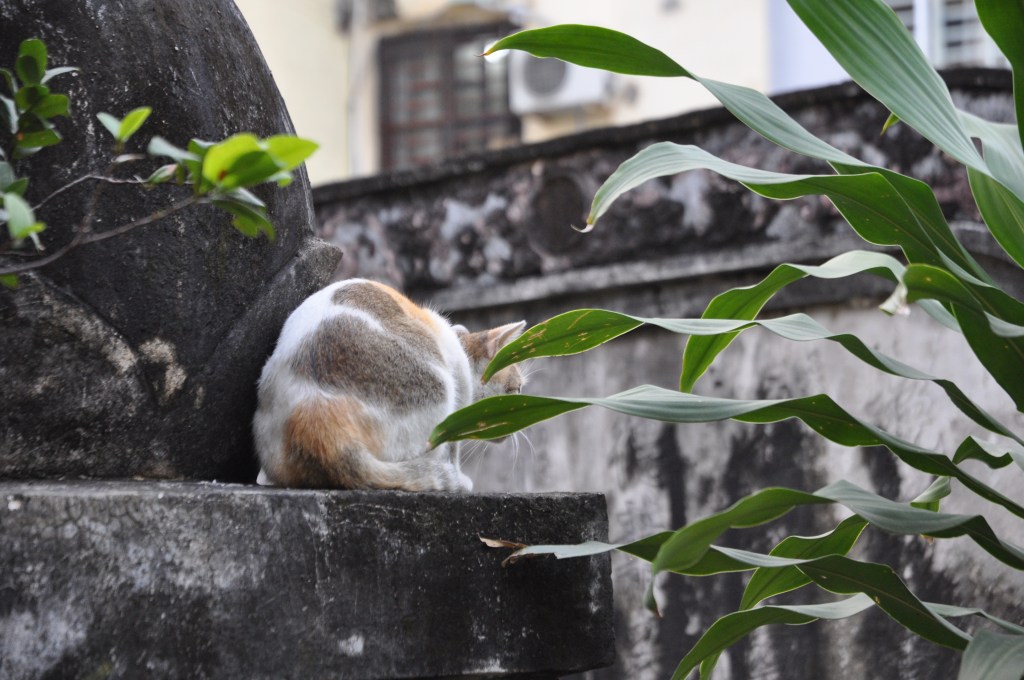
A middle-aged woman cracked open a side door, ushering us in. The area was full of statues and temple paraphernalia but it felt like the lady’s personal domain—she seemed to be living there with her husband and elderly father. A veritable hoard of dogs and cats roamed around.
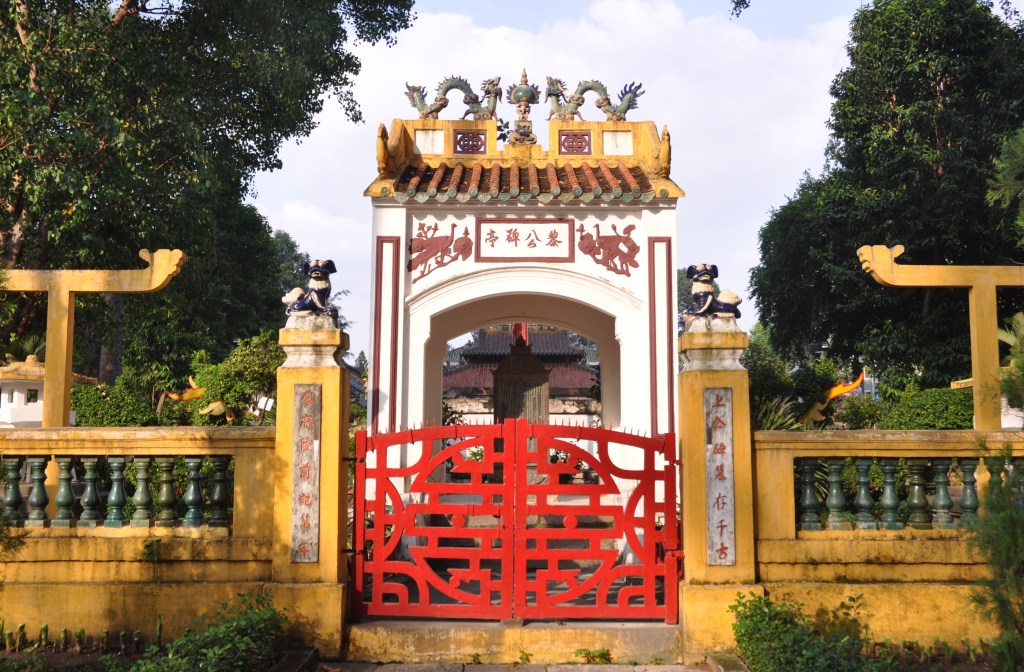
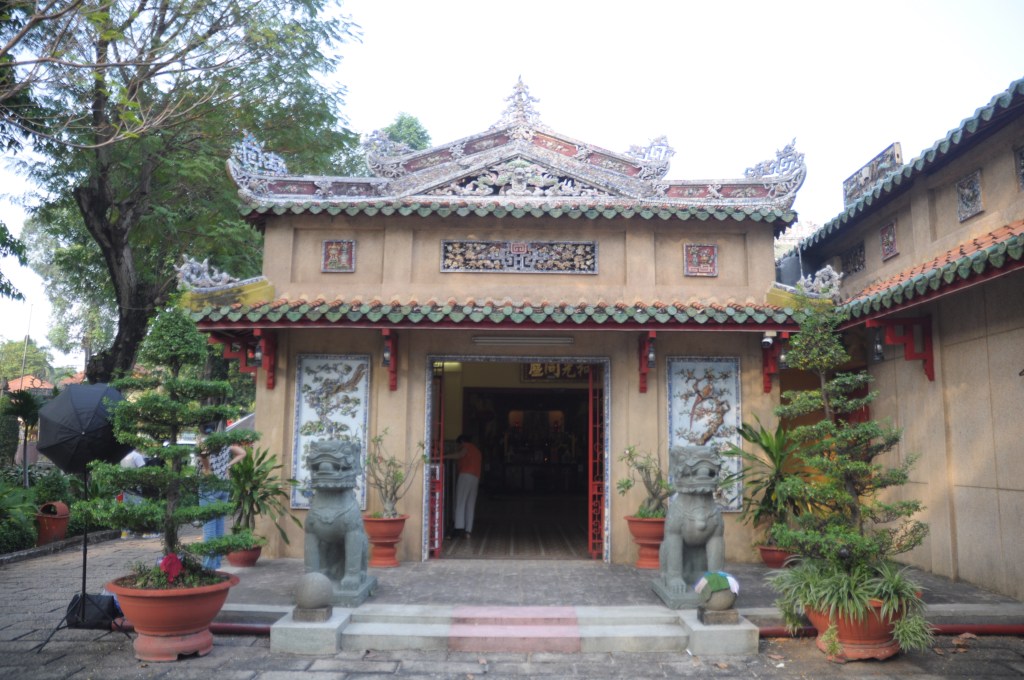
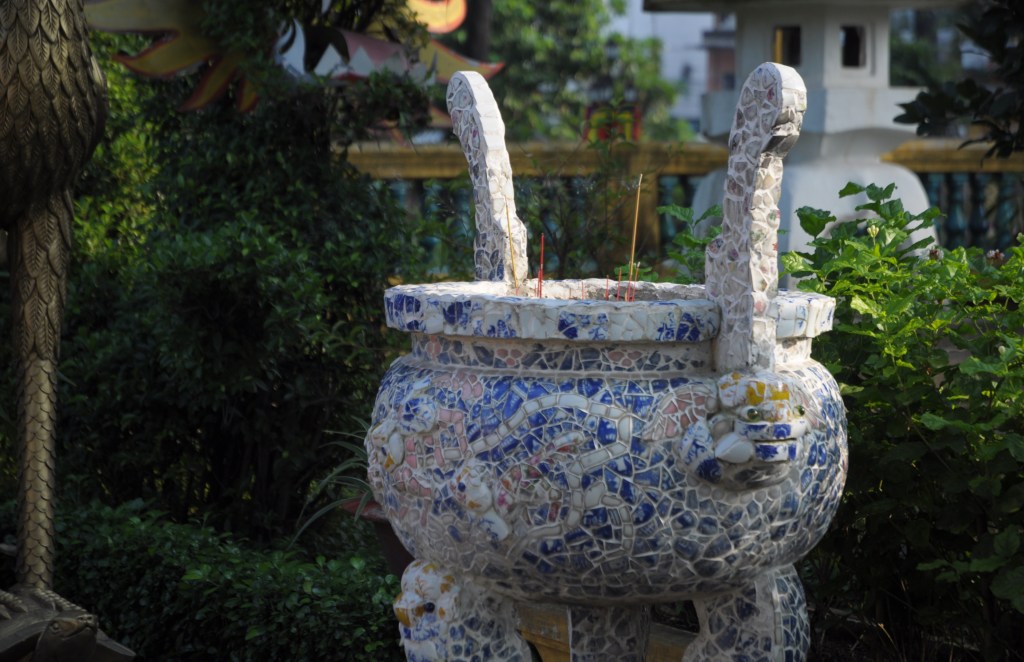
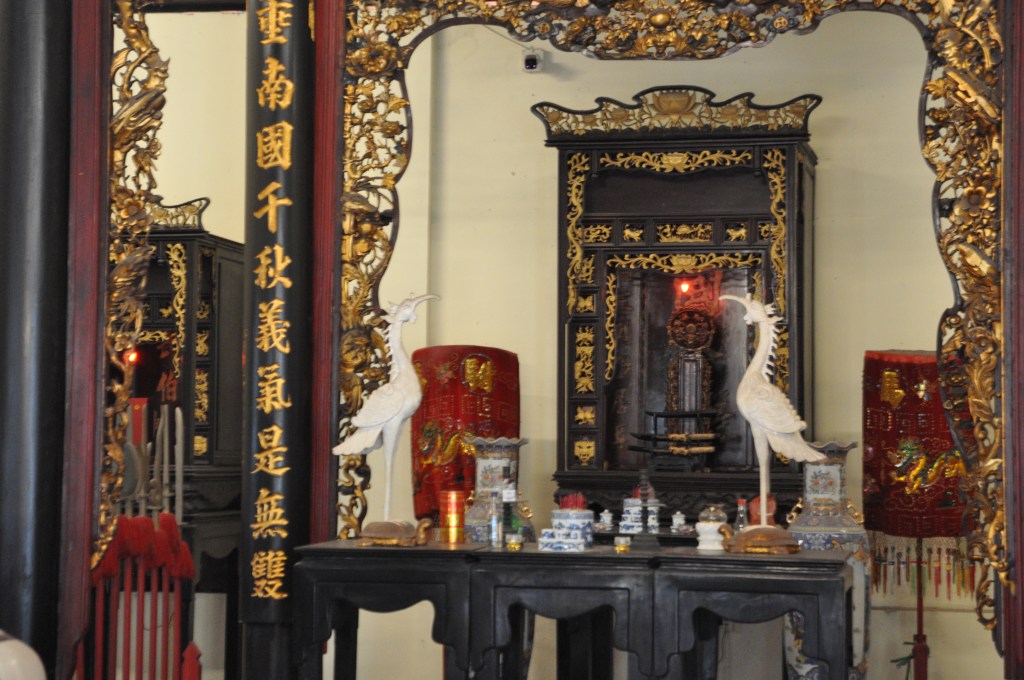
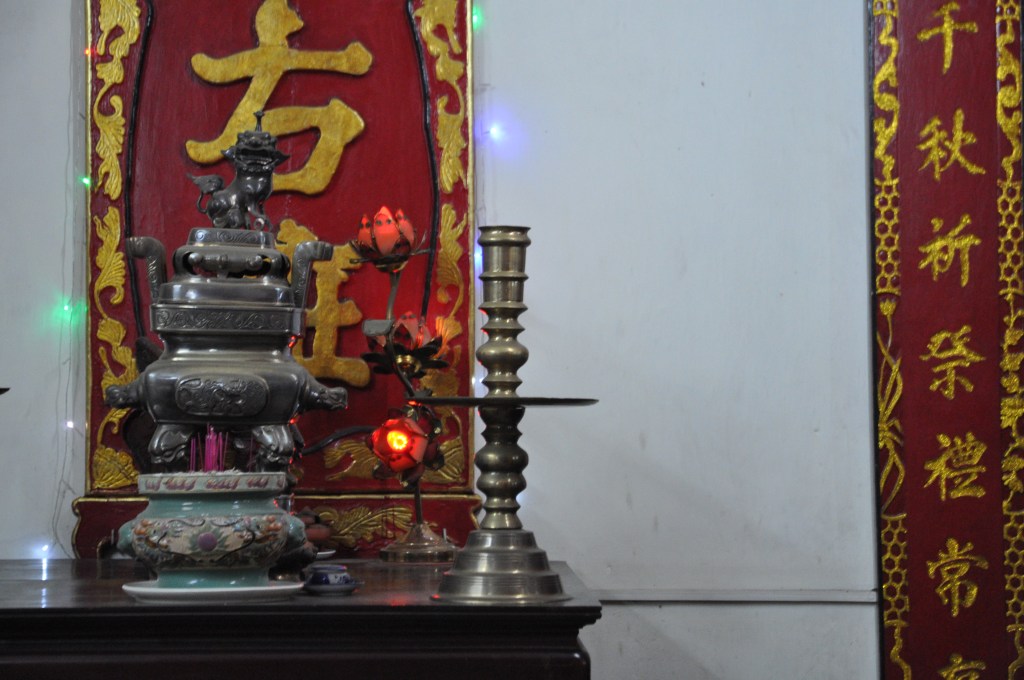
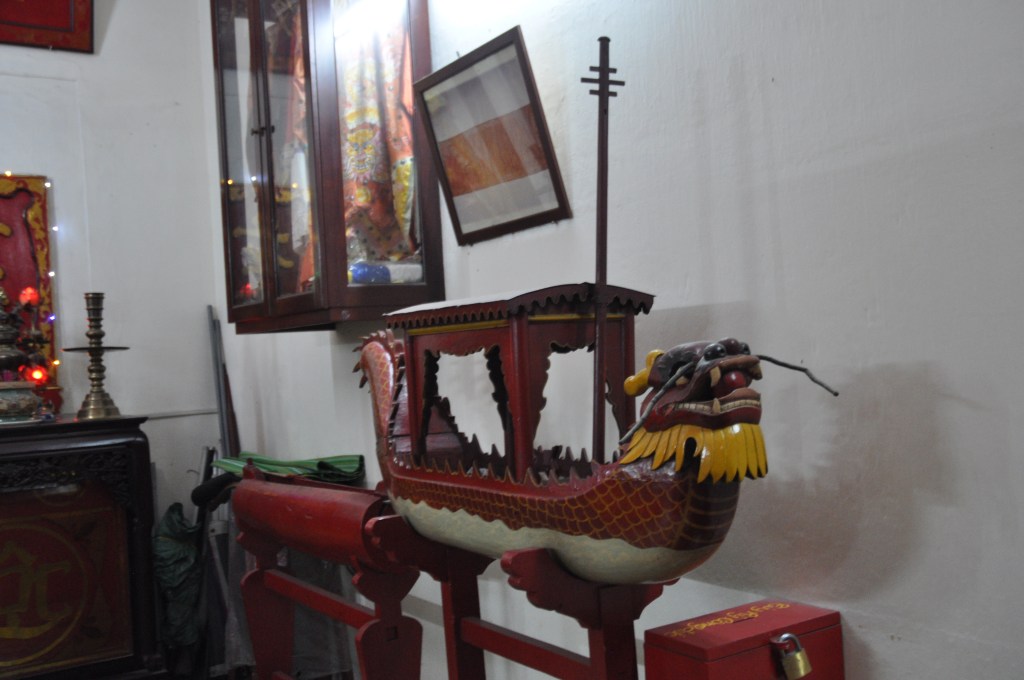
Similar to the Võ Tánh site, there is a shrine and then a walled tomb enclosure with a tombstone in the middle. At the front of the enclosure was a large cup-shaped censer (lư hương) for placing incense. The shrine contained many beautiful ornaments including a model boat to represent his nautical accomplishments.
Lê Văn Duyệt
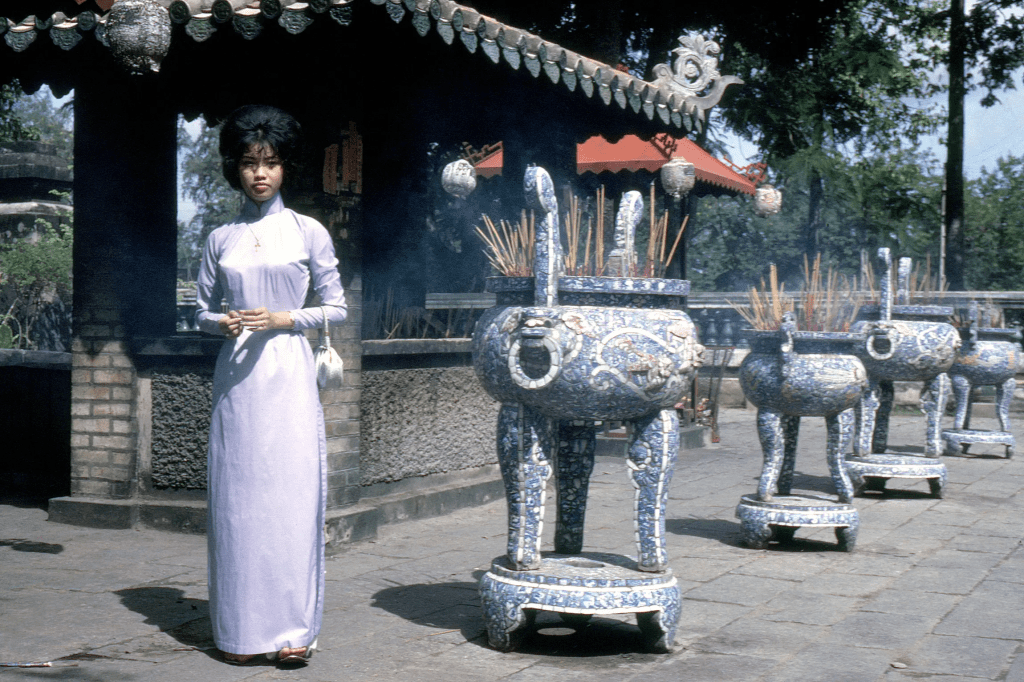
At the next destination, the courtyard was thronging with people posing for photographs. I had timed my visit for golden hour, hoping to get some good photos of the tomb. For these people, the temple was the backdrop for their Tết photos while they show off their ao dai. For me, the tomb was the subject.
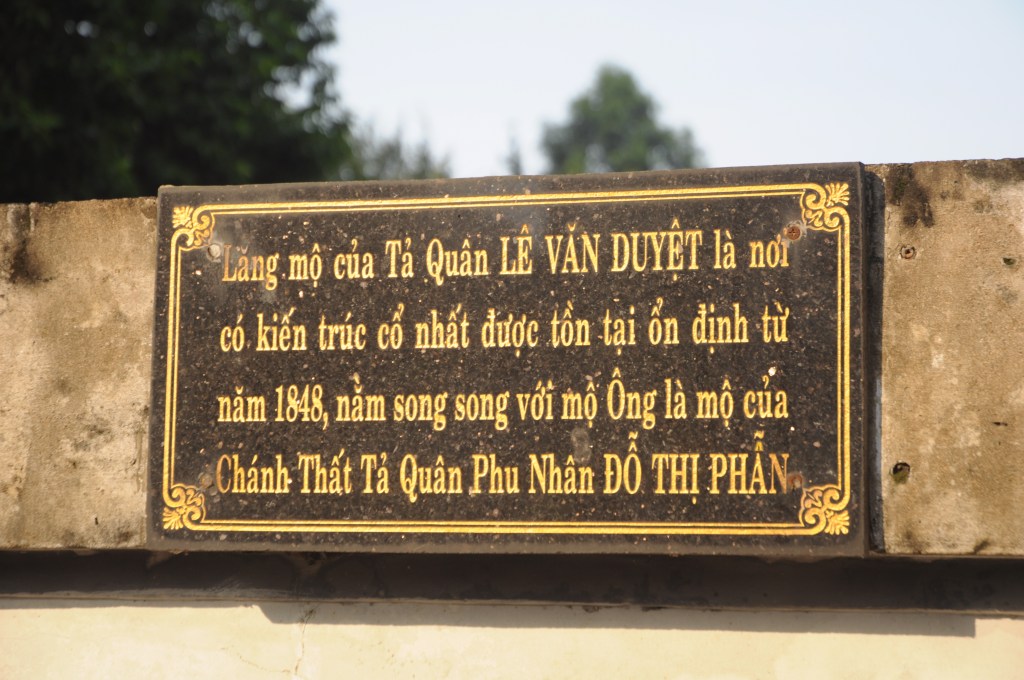
This place is known Lăng Ông (location) and is actually quite a well known spot, unlike the other tombs. In fact, it even featured on the 100 dong bill of the Republic of Vietnam. I used to live not far from here and must have driven past the rear wall hundreds of times without giving it much thought. From the back it looks like just another place of worship.
It surfaced again while I was researching about Thị Nại, because this is the resting place of Lê Văn Duyệt — the other Nguyễn general. It is said that when Võ Di Nguy was killed, the emporer Nguyễn Ánh ordered a reteat but Lê Văn Duyệt refused; fighting harder than ever. The battle was won and Lê Văn Duyệt lived to tell the tale.
After the war he was appointed Governor of Gia Định Citadel in 1812. Gia Định was a large frontier province and the city of Saigon would grow up outside the citadel. Gia Định was the precursor to the modern Hồ Chí Minh City. Lê Văn Duyệt is recorded as having been a good governor who facilitated a lot of growth in the region. He passed away from illness in 1832 but his death was followed by a lot of drama because he was accused of disloyalty. In 1835 the emperor ordered his tomb destroyed and replaced with a headstone reading “The eunuch Lê Văn Duyệt was punished according to the law”. One story says that his grave was whipped 100 times. Once the dust had settled, he was pardoned in 1841 by the next emperor and the current tomb built.
Today the complex stands as an area of calm in the churn of the city. The main entrance is from the back and few guests seem to bother to walk around to the front to visit the tomb.
As Ellis and I finished our tour of these quiet mausoleums, I found myself thinking about how such tucked-away graves connect the Tây Sơn saga directly into the fabric of modern Hồ Chí Minh City. What is now Hồ Chí Minh City—once Saigon, and in the late eighteenth century Phiên An—was still a developing frontier outpost when these dramas unfolded. The citadel here was only raised in the 1780s as a consequence of the Tây Sơn conflict, yet the decision to lay figures like Võ Tánh to rest in the south reveals how important the area was to the Nguyễn court at the time. In fact, Saigon would serve as the capital of the Nguyễn dynasty from the end of the war until 1811 when they moved to the famous palace at Huế. These graves mark the moment a marginal frontier began to transform into the heart of a new polity.