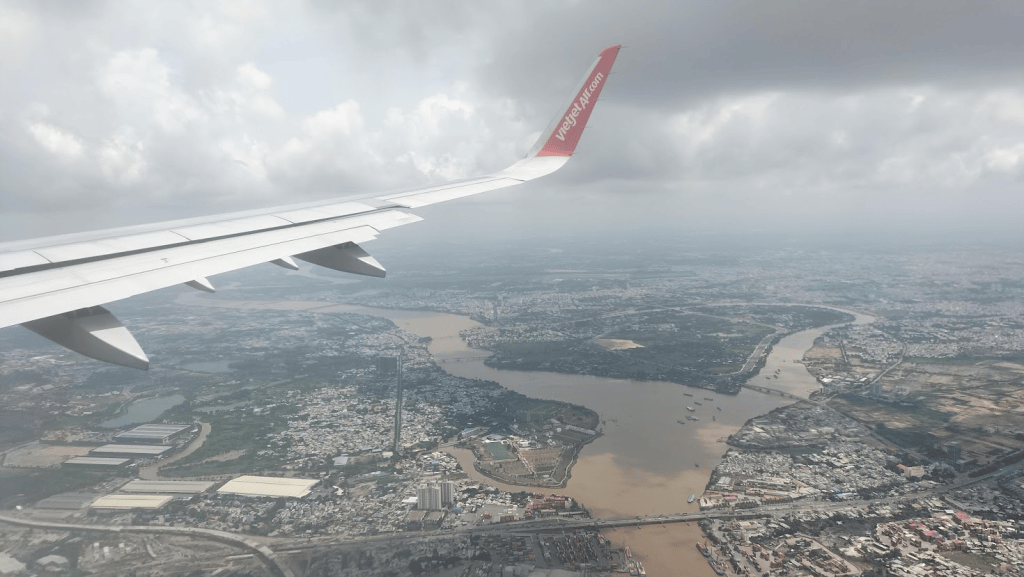
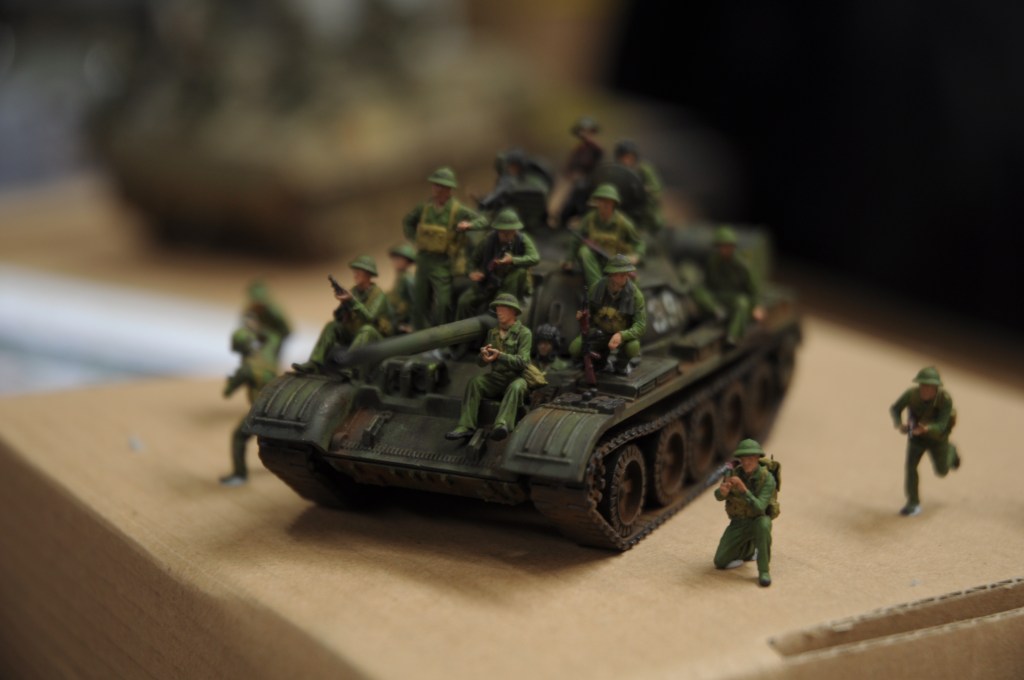
Recently while surfing the web, I came across an ad for the “Saigon Model Show” and so I picked up my DSLR and went along. It was a great few hours looking at scale models made by locals and one guy from New Zealand. Mostly there were model kits of the Vietnam war which rekindled a childhood passion in me and I started thinking about making my own. That’s why when I visited Dong Nai museum I was delighted to see how many dioramas they had.
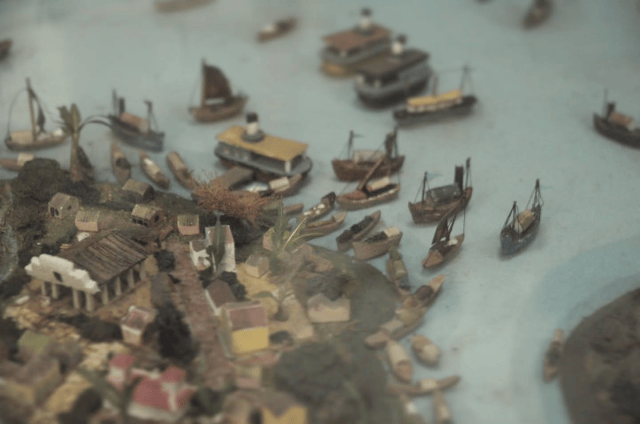
My favourite showed a crowded riverside settlement with tiled roofs and desne with junks. It had a sense of movement and purpose. This was Cù Lao Phố.
To understand the history of Cù Lao Phố, it helps to start far away in China. In 1644, the Qing took Beijing and the Ming collapsed. The transition was not clean. Decades of bloody war followed. Some who stayed loyal to the Ming until the last ended up having to flee south and eventually sought refuge in Vietnam.
The Nguyễn lords, ruling the southern frontier of Đại Việt, recognised the opportunity. These were not ordinary refugees but commanders with followers and resources. In 1679, one of them, Trần Thượng Xuyên, was granted permission by lord Nguyễn Phúc Tần to settle in Đồng Nai.
It seems an odd choice on a map. The area lay not just beyond the borders of Vietnam, but one kingdom over, on the complete opposite side of the of Champa, into Cambodia. That was precisely the point. Cambodia was under attack from Siam and relied on Nguyễn support. The region was unstable marches, weakly held and open to whoever could organise it.
When Trần Thượng Xuyên arrived in Biên Hòa, the land was not empty, but it was far from developed. The Chinese arrivals saw potential on Cù Lao Phố, an island in the Đồng Nai River. Mangrove forest had to be cleared. Land had to be reclaimed from the river and marshes. The conditions must have been harsh, with insects, and dangerous animals.
The new settlers did not only manage to survive but in a few short years developed a major commercial centre. For a time, it overshadowed other settlements in the region like Saigon and Mô Xoài (now Bà Rịa – Vũng Tàu). Contemporary accounts describe a settlement of surprising scale:
Tran Thuong Xuyen recruited Chinese merchants, built streets, and magnificent double-story buildings on the riverbank, stretching for five miles and dividing into three streets: the large street in the middle paved with white stone, the side street paved with laterite stone, and the small street paved with green stone. The roads were wide and flat, merchants gathered in large numbers, sea ships and river boats crowded together, and there were more large merchant houses here than anywhere else, forming a great metropolis… – Dai Nam Nhat Thong Chi
The river here was deep enough for ocean-going vessels, and it was fresh water. Ships could remain for long periods without the problems that came with saltwater harbours (barnacles apparently). In practical terms, this made Cù Lao Phố particularly well suited as an inland port.
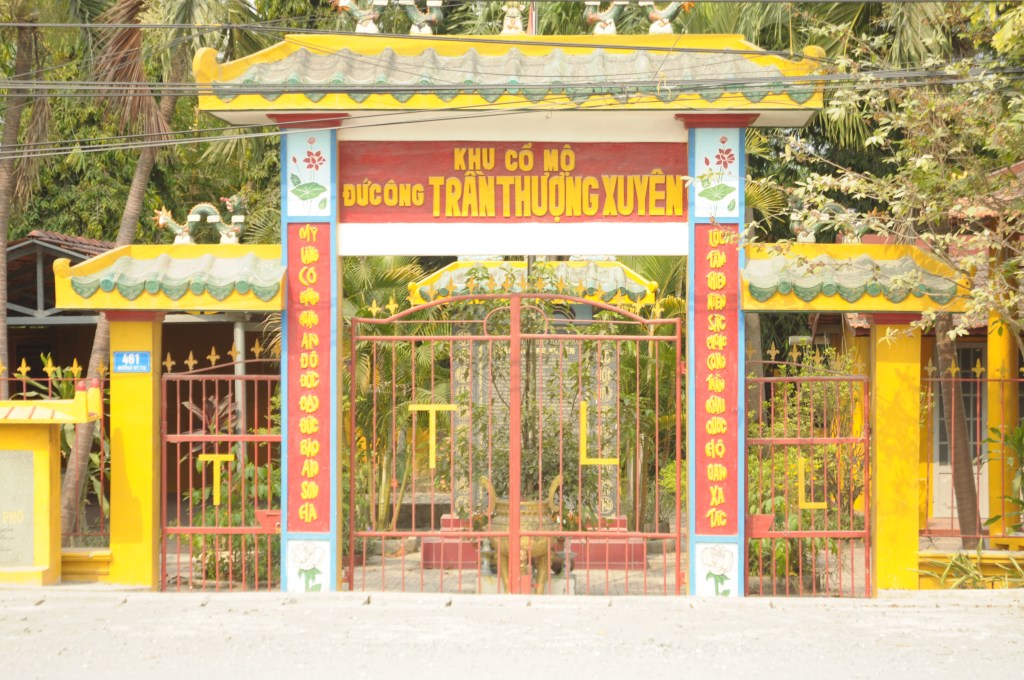
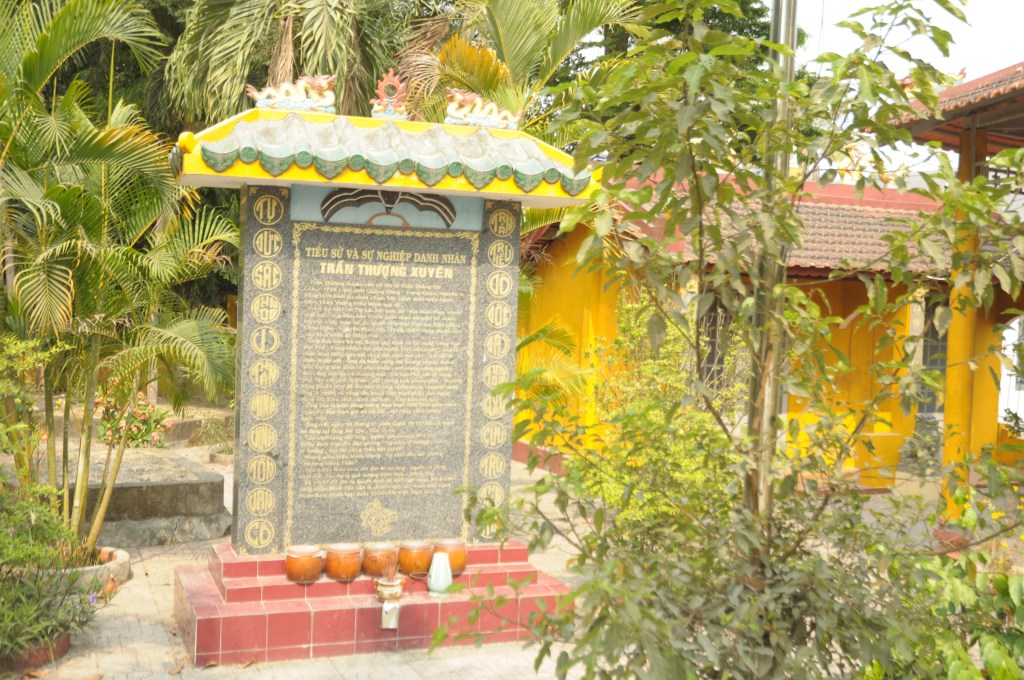
From the museum, I set out to find Trần Thượng Xuyên’s tomb. It took another stretch of riding through Biên Hòa’s sprawl and then a turn into quieter roads of Tân Uyên.
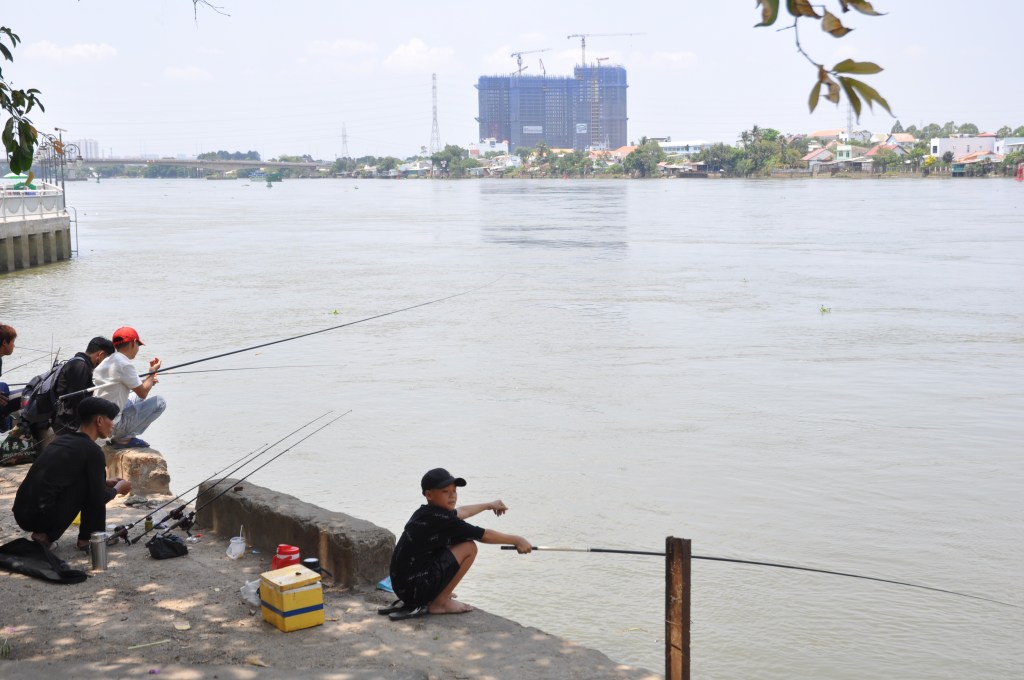
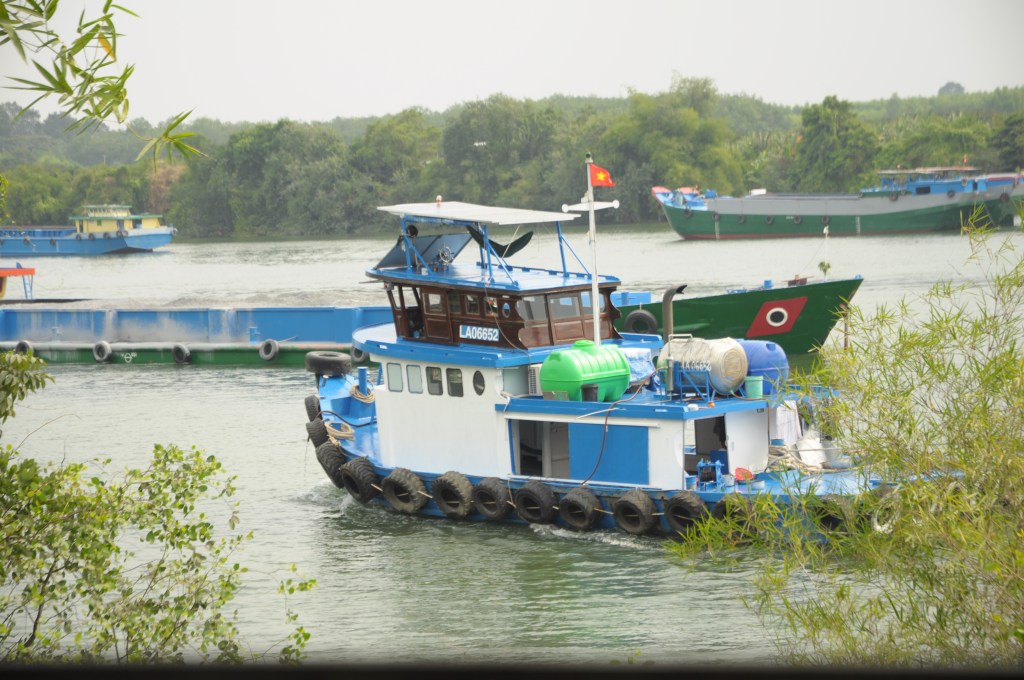
Unfortunately when I arrived, the outer gate was locked and I didn’t get to see the gravestone. There was a cafe sandwiched between the road and the river, a simple bamboo shelter frequented by truckers. I had a drink and watched the barges on this still commercial and busy river.
Cù Lao Phố’s prosperity lasted for 100 years. In 1776, during the Tây Sơn wars, sources say the Chinese settlement was sacked by Emperor Quang Trung for having supported his rivals the Nguyen Lords.
This place turned into an overgrown mound, after the restoration, although people returned, the population was not one percent of what it was before
– Gia Dinh Thanh Thong Chi
What remained of the Chinese merchant community moved to Chợ Lớn nearer Saigon. That settlement would grow and merge with the expanding city and become the new main commercial centre of the south.
Today, Cù Lao Phố island is quiet. It sits within Biên Hòa but feels like a forgotten corner.
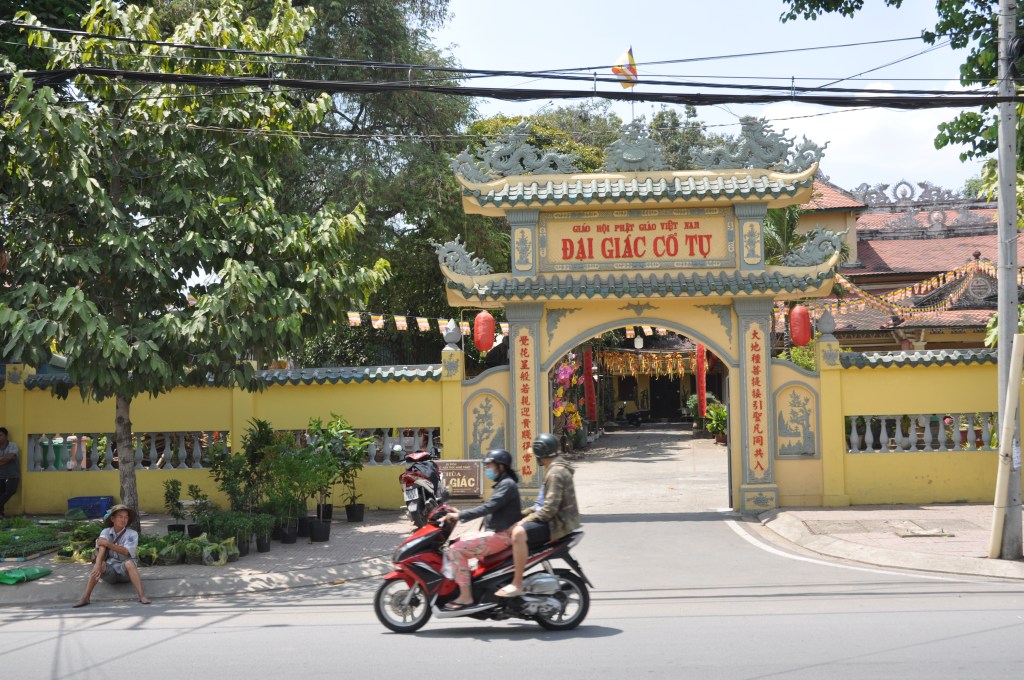
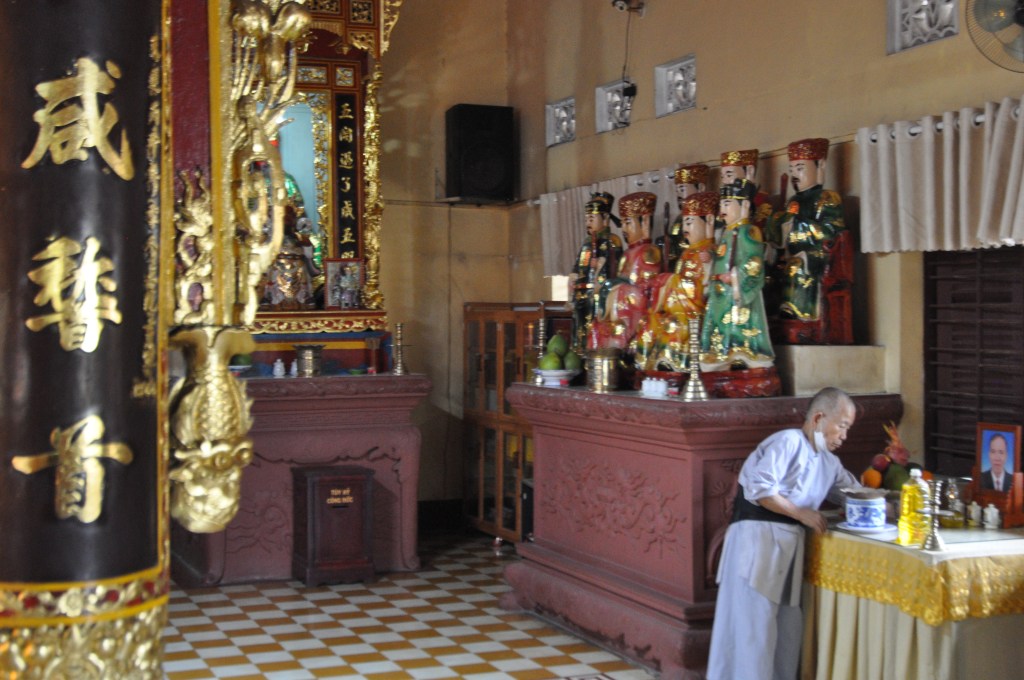
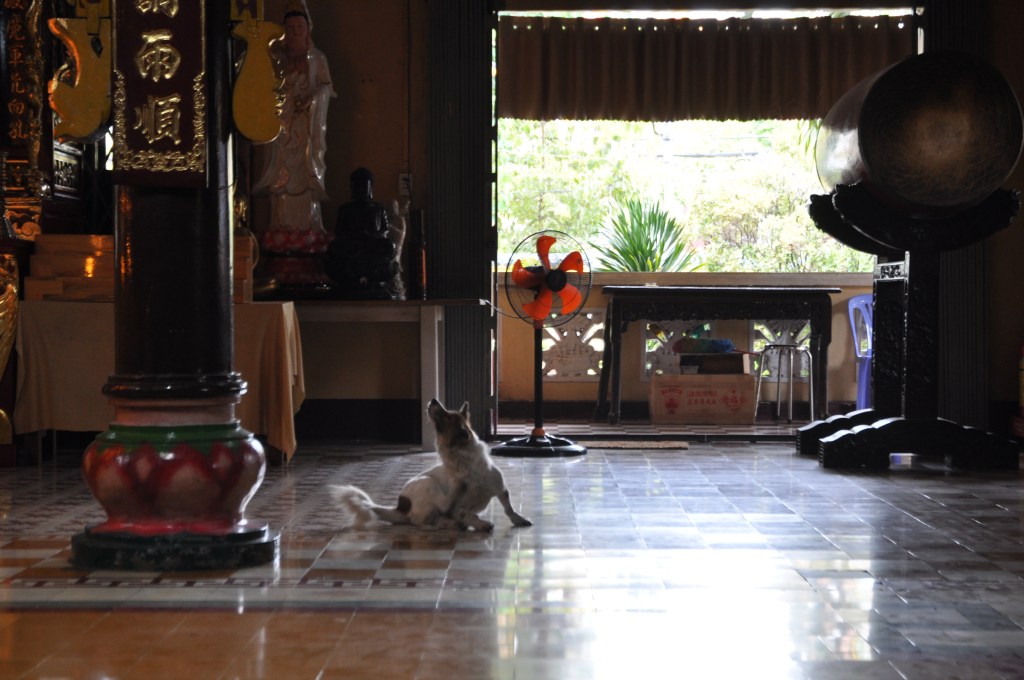
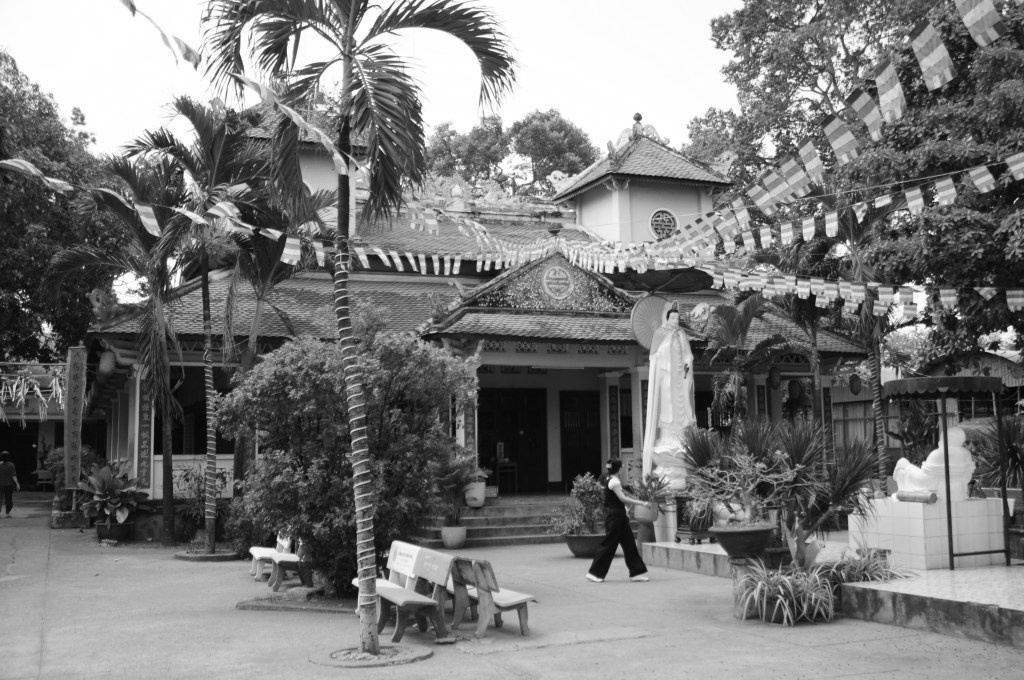
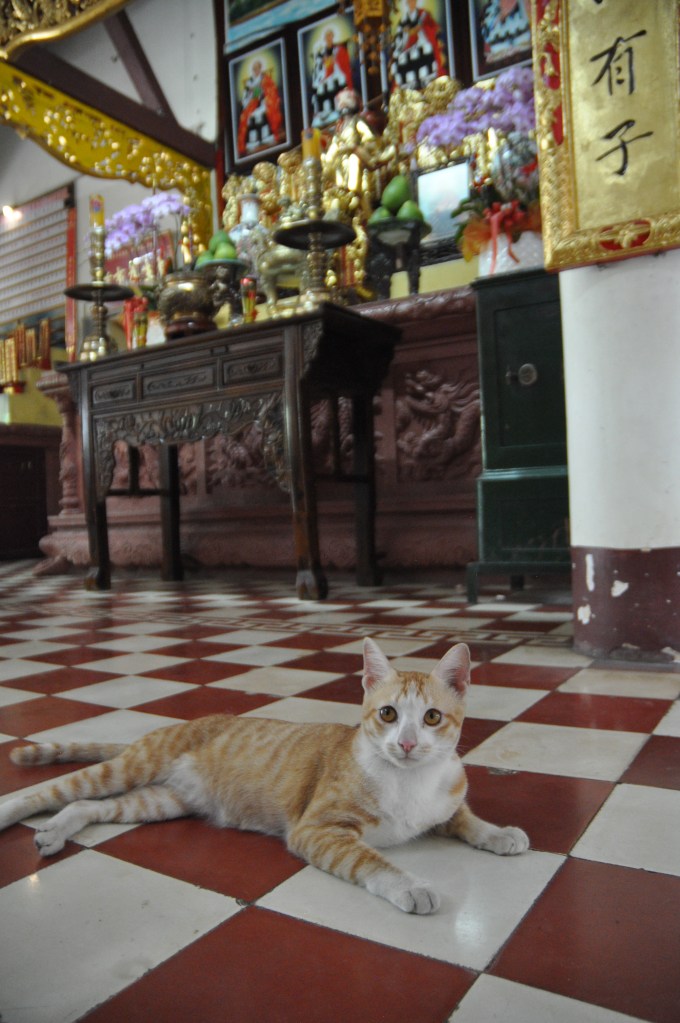
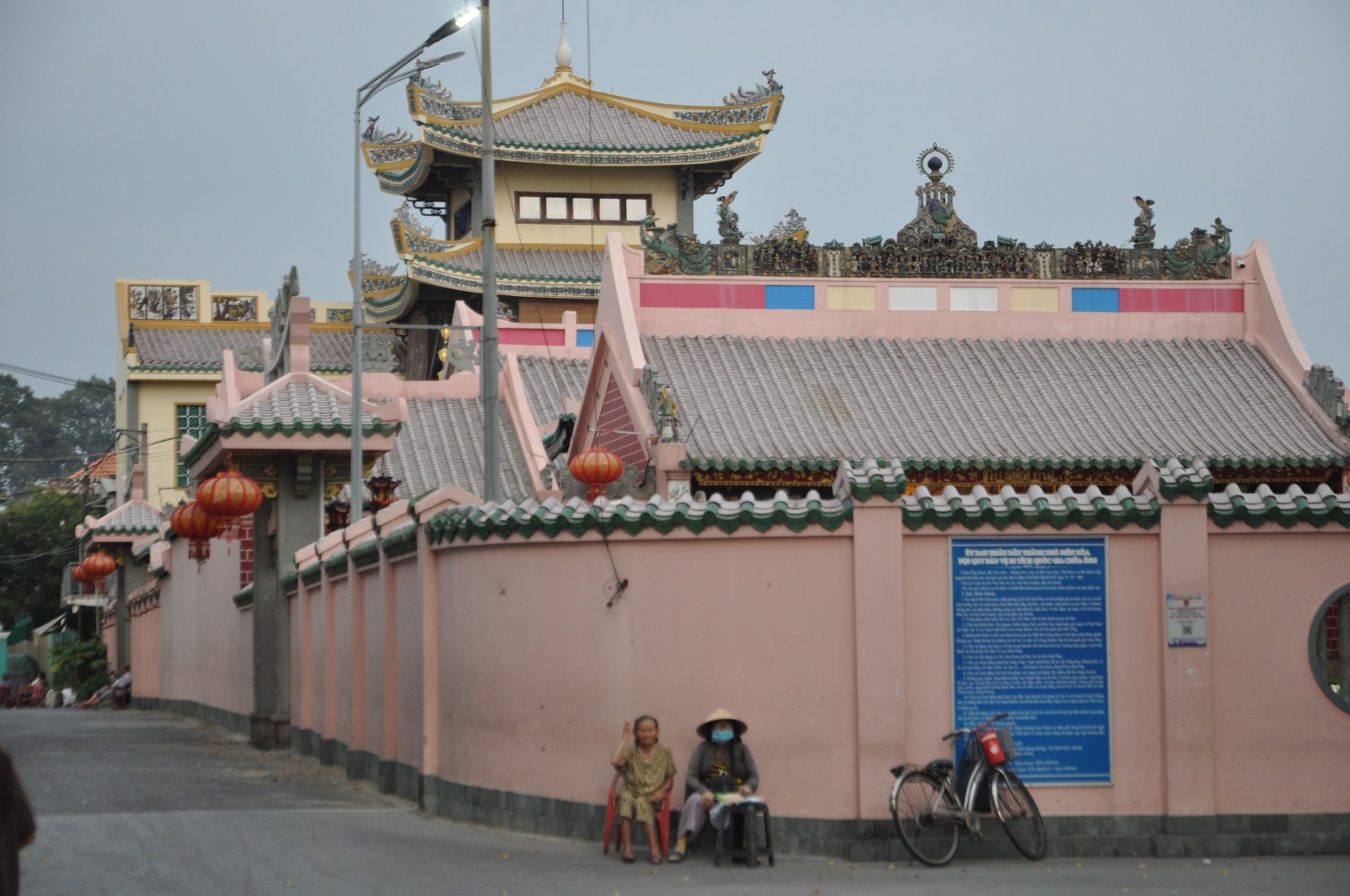
There are still historic traces if you look for them. Chùa Ông pagoda, founded during Trần Thượng Xuyên’s lifetime, still stands. Inside, the air is thick with incense and the woodwork has darkened with age. People practice a religion that feels untouched by time.
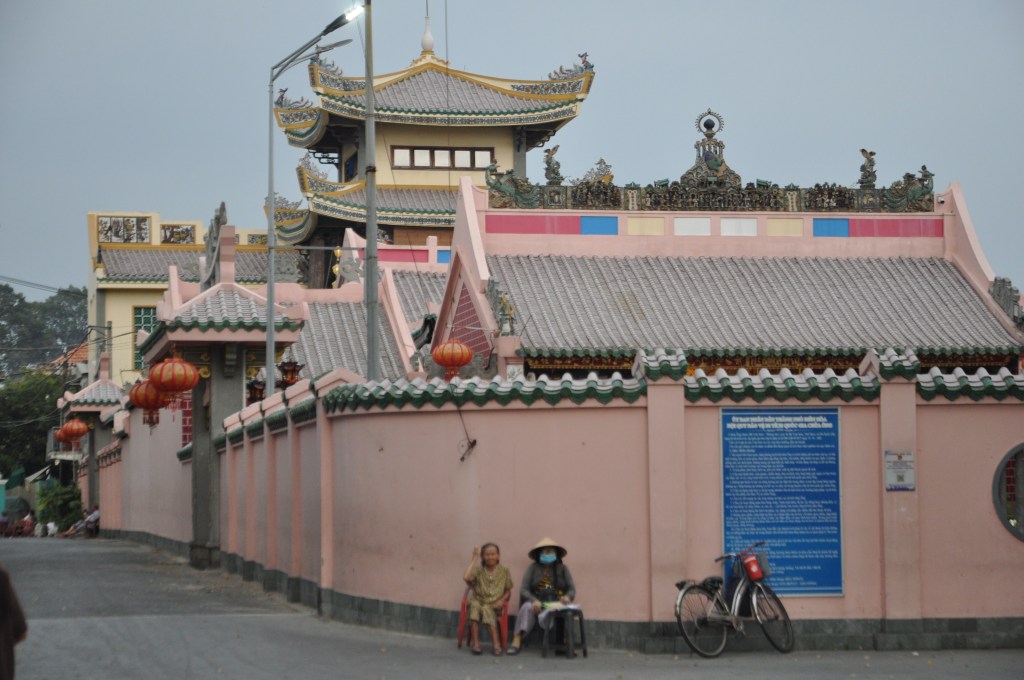
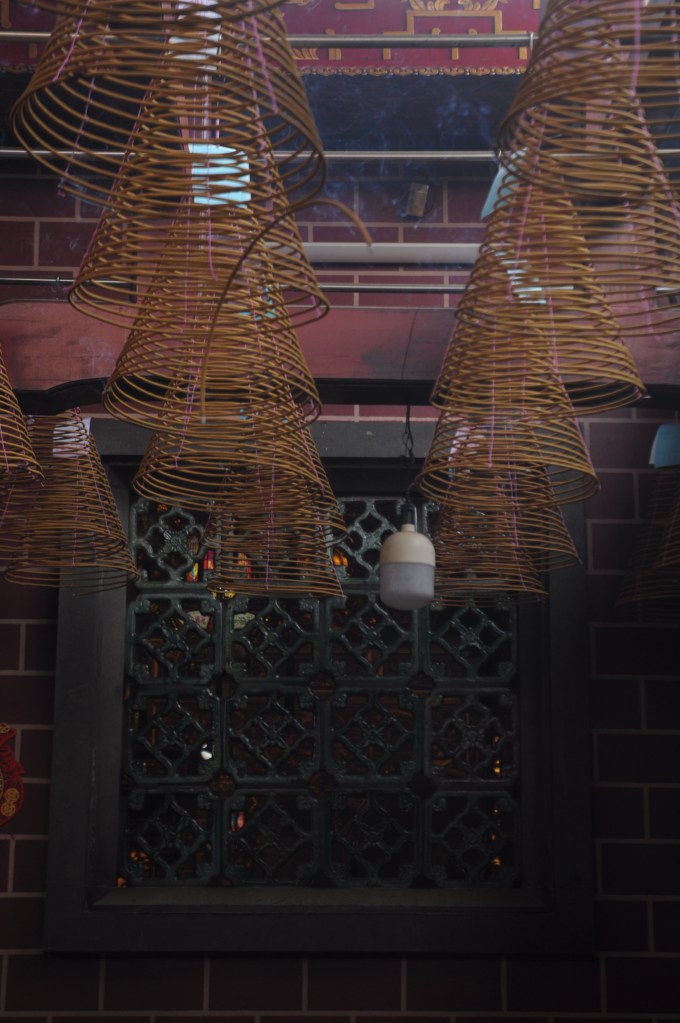
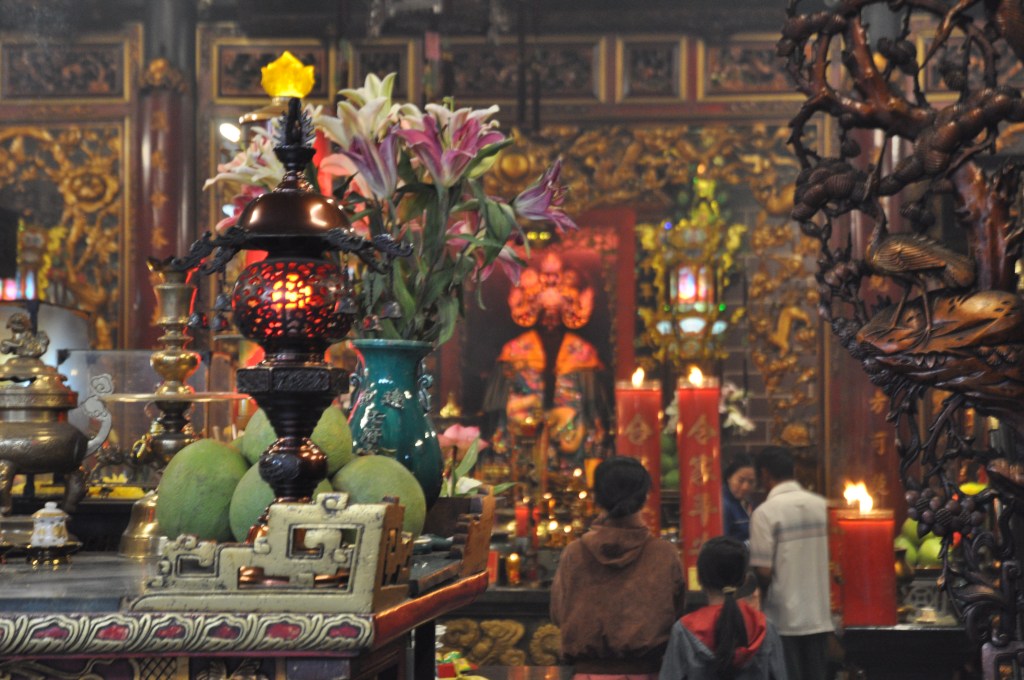
The diorama that first caught my attention showed a place full of energy and direction. What remains is slower, quieter, but not empty. The river still carries goods, the temple still draws people, and the memory of the settlement lingers in scattered forms. History here has to be assembled piece by piece like a model kit. Maybe I’ll make a diorama of Cù Lao Phố.