

Exploring the Ancient People and Geography of Tây Nguyên
Six years ago this month, I first arrived in Pleiku during the summer break, fell in love with the city and quickly moved there. Now that I’ve moved away, I have summer holidays again, giving me an excuse to return.
Having taught near Chu Đăng Ya, I’ve long been fascinated by the region’s volcanic past: its red basaltic soil (bazan in Vietnamese), volcanic craters and surrounding mountains. While researching the geological history of Pleiku through my university library for what was ostensibly my PGCEi work, I found myself drawn south towards The Central Highlands provinces of Đắk Lắk and eventually Đắk Nông, home to one of Southeast Asia’s largest volcanic cave systems.
Since I was already planning to visit my friend Pierre in Buôn Ma Thuột, I suggested that we go and investigate. So after spending a week in Pleiku I hopped on a bus down.
For the volcano, I imagined a short drive, a walk to a cave entrance and perhaps an hour or two of poking around underground. I was even slightly worried that Pierre might find it boring.
Instead, I discovered that the volcano sits inside a national park, that we would need to hire a guide and that visiting the caves meant trekking through the jungle for much of the day. Luckily, thanks to birthday money from my Mum, Dad and Grandma, we could splash out on the full tour package. What began as a search for the geological history of Pleiku had turned into a two-day, two-night expedition into the ancient landscape of Đắk Nông.
Along the way we would climb over volcanic rock, descend into lava tubes, swim in a jungle pool, travel through the countryside on some unconventional forms of transport, and encounter traces of people who inhabited this landscape thousands of years ago.
Most of what I’ve written about Tây Nguyên (Vietnam’s Central Highlands) has been about its people—the Jrai, the Chăm, French colonisation and the Vietnam War. This time, I wanted to look further back, into the primeval landscape beneath that history: a world of “wind, rocks, water, trees, fire, light” (to borrow a phrase from Đắk Nông’s own marketing).
Going Underground
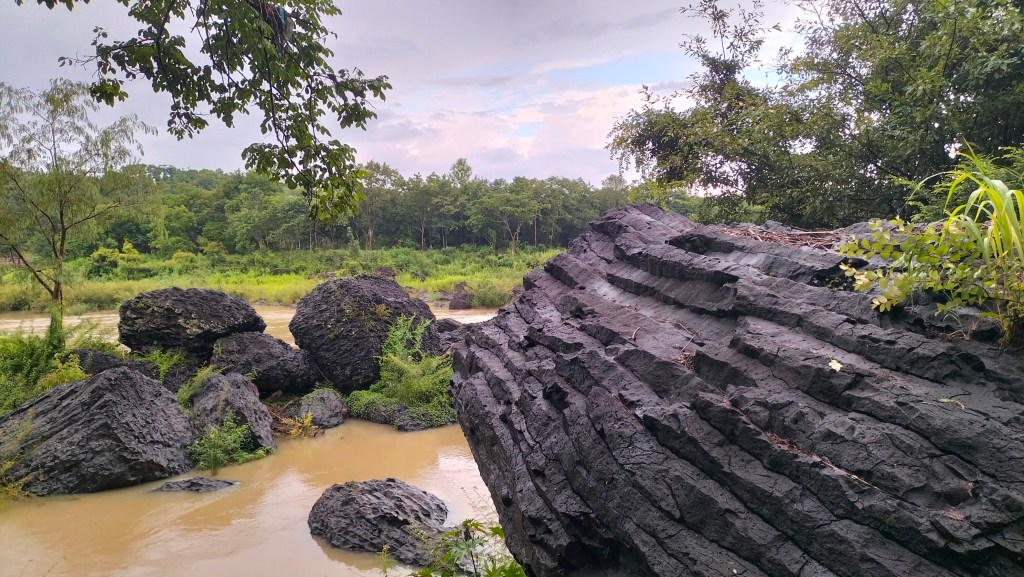
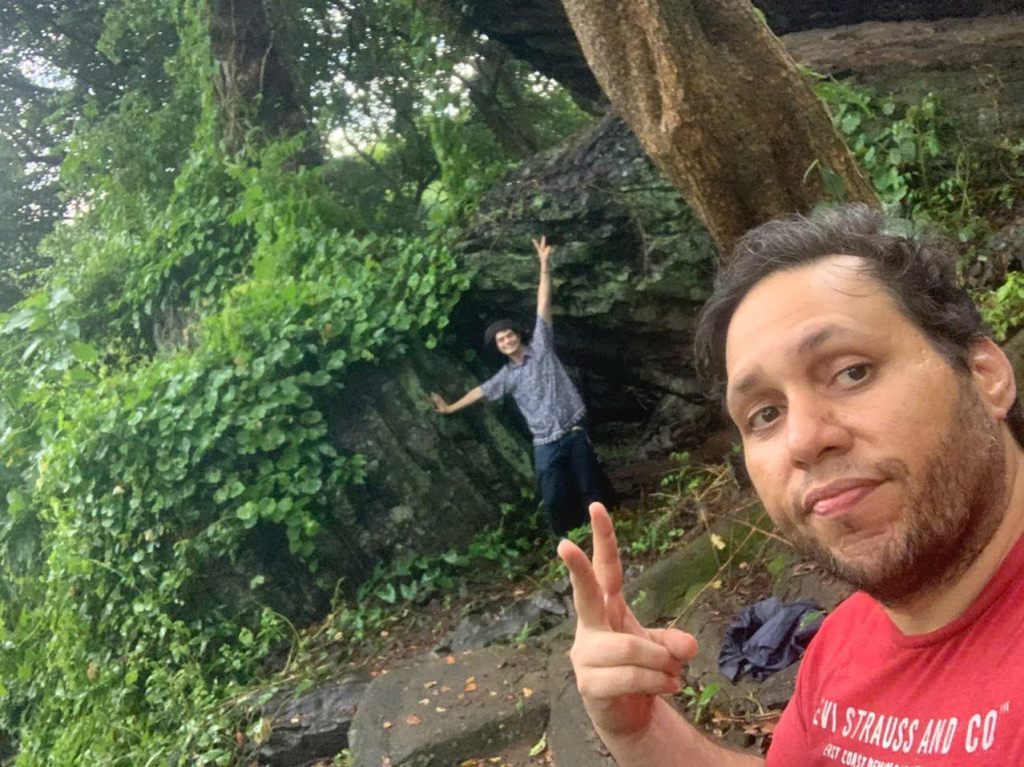
Pierre took me into the park on his 300cc motorbike, driving through the pouring rain as we made our way into Đắk Nông Geopark. The raindrops stung my face as we zoomed along. Our first stop was the basalt Bang Rup Rapids at Cư Jút. They were officially closed for the rainy season because of the slippery rocks, but thanks to Pierre’s mastery of Vietnamese, we managed to persuade the groundskeeper to let us enter at our own risk.
The rock formations were spectacular. Nestled in the lush tropical valley, basalt columns were clumped into great boulders and scattered across the river at all sorts of angles, with turbulent water crashing around them. They looked as though some prehistoric demi-god had picked them up and thrown them into the river. I could see why ancient people might have imagined something similar at the geologically related Giant’s Causeway in Ireland.
A sign told us that we were standing in a UNESCO Global Geopark. The volcanoes of Đắk Nông were active from three million until about 200,000 years ago. Their existence is ultimately connected to the Indian subcontinent colliding with Asia, pushing up the Himalayas and sending enormous stresses through the crust. This helped shape the Annamite Range, of which Đắk Nông lies at the southern end, while fractures in the crust allowed magma to rise and erupt here.
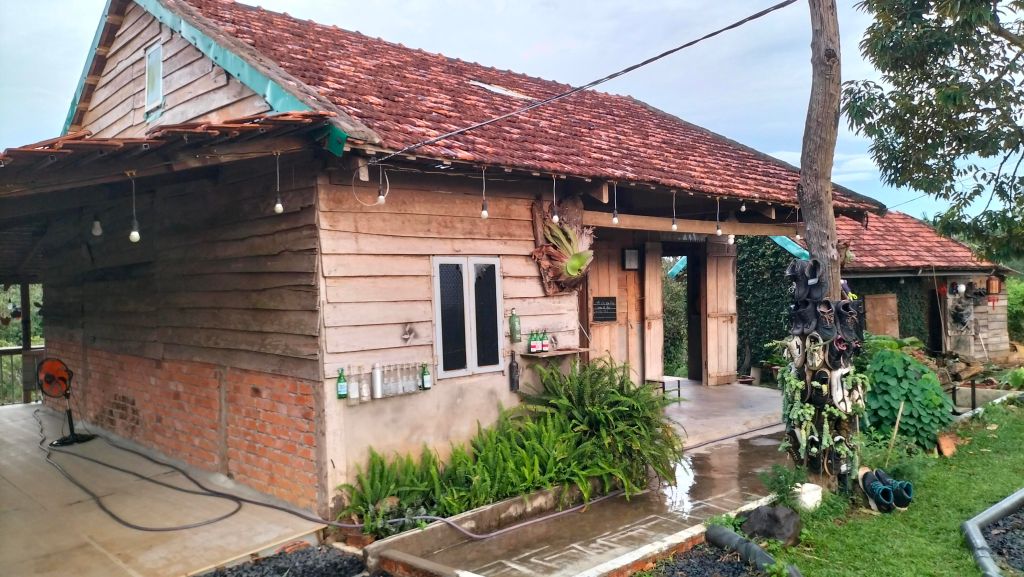
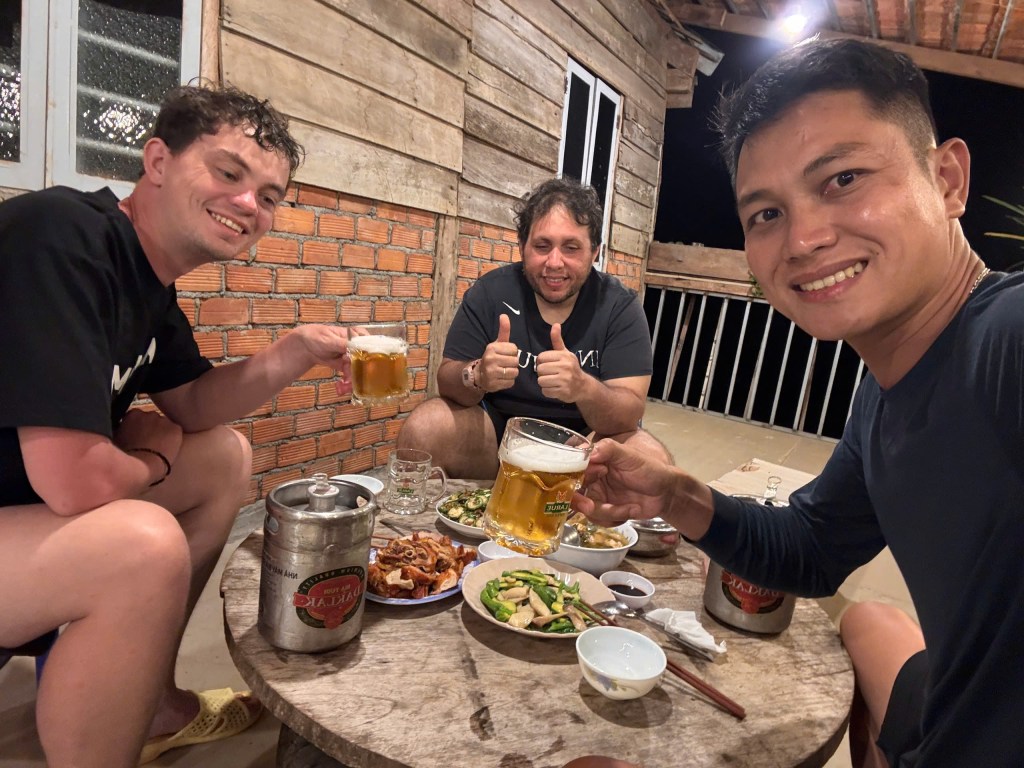
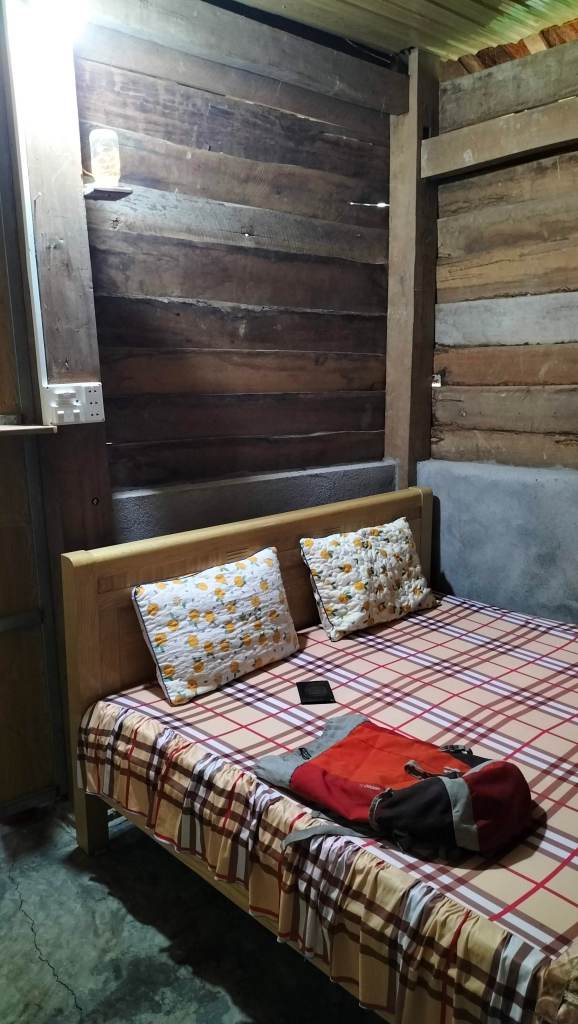
Despite the downpour, we reached our homestay (Cuong Volcano Homestay) in time for dinner and met our guide, Cường, a sporty man in his late twenties who seemed to own an impressive collection of T-shirts from the marathons he had run. We bought a keg of fresh beer from a village shop that doubled as a pool hall, and spent the evening drinking, playing tunes on Cường’s guitar and listening to the backing chorus of crickets and frogs.
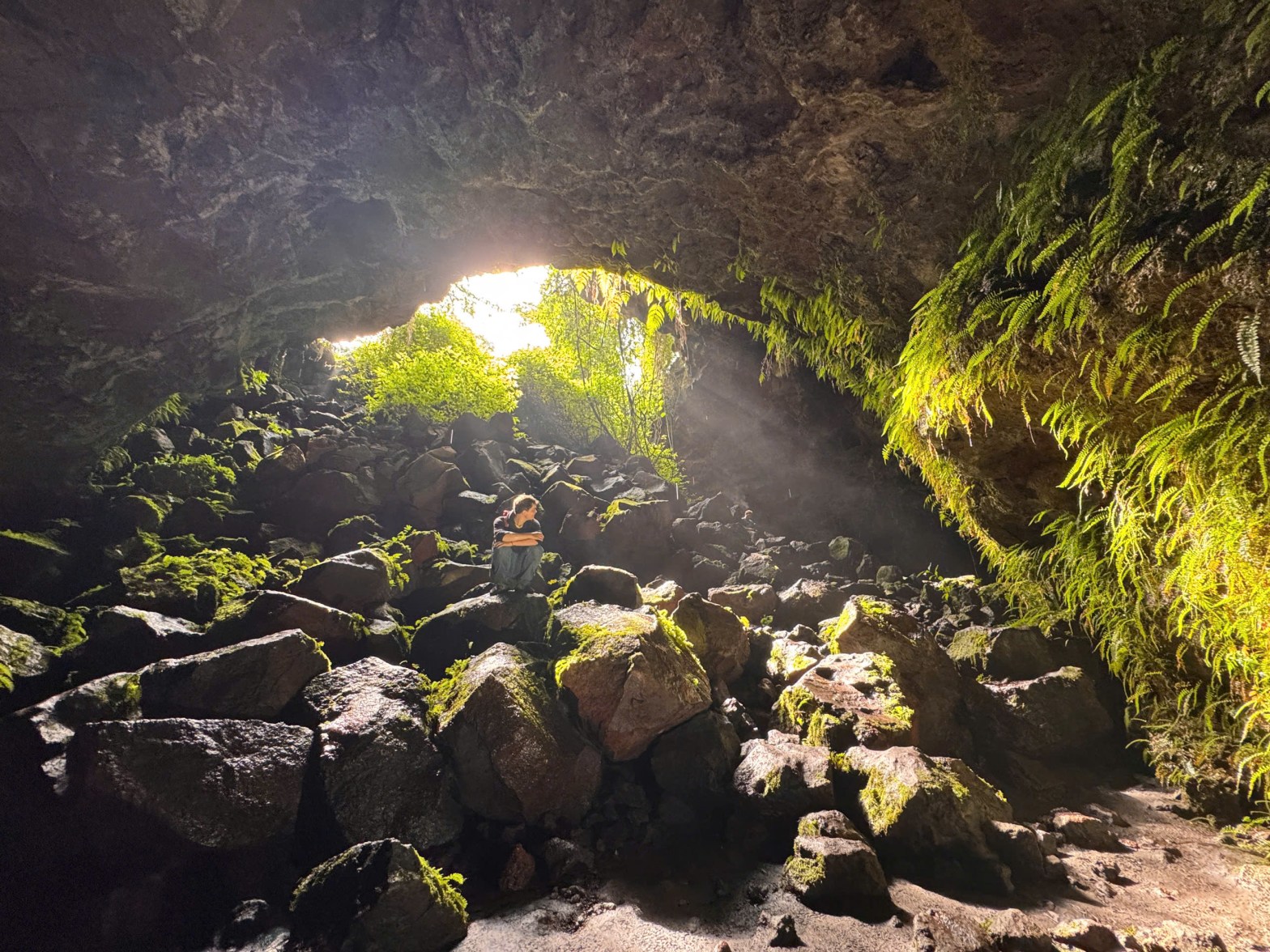
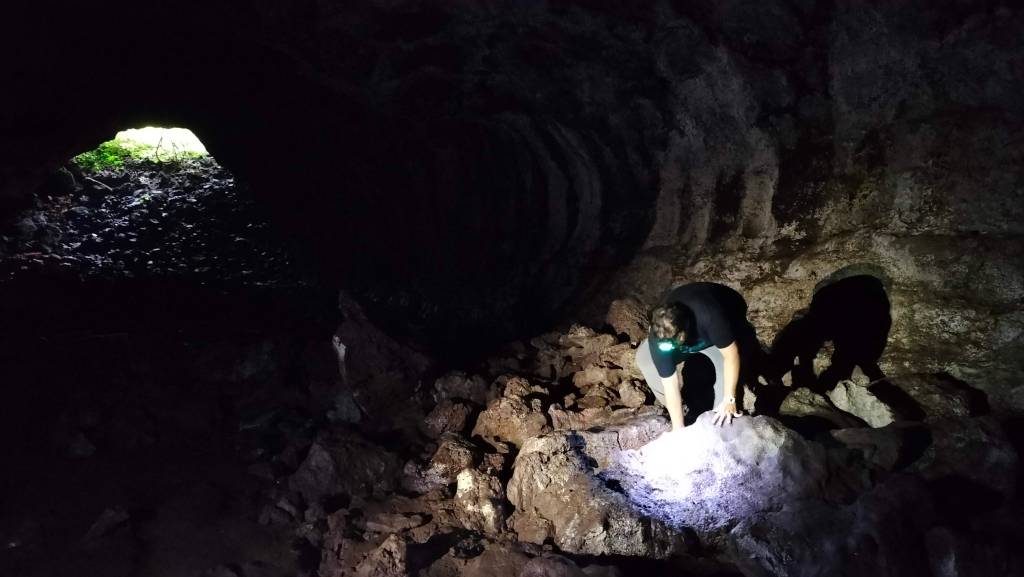
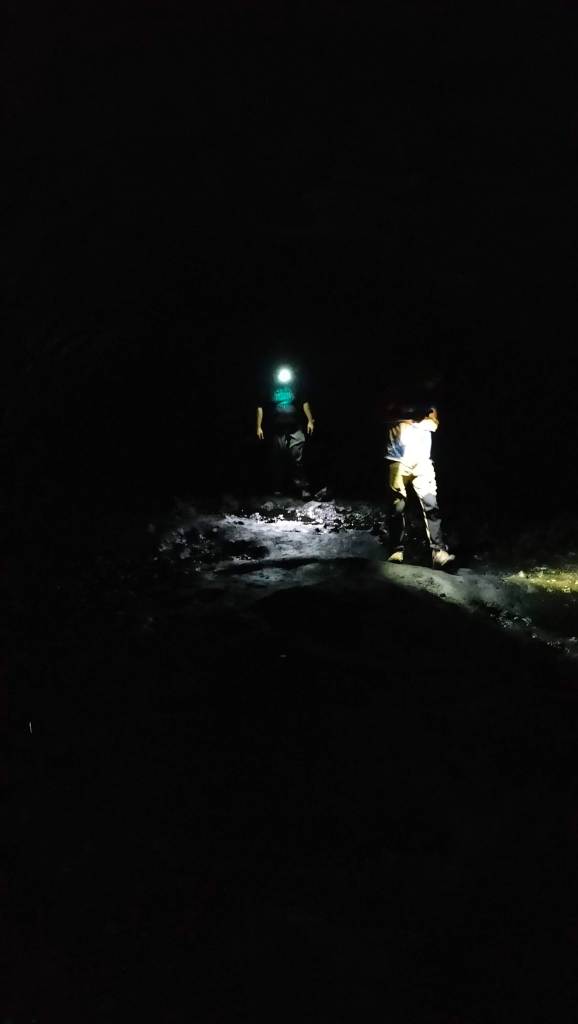
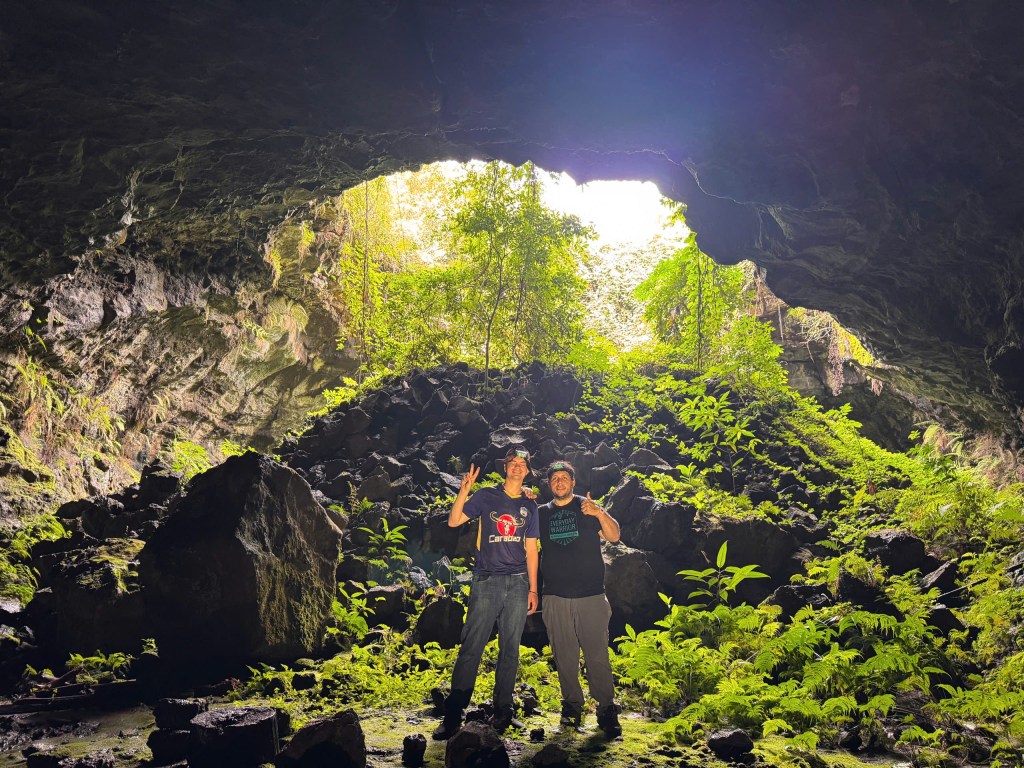
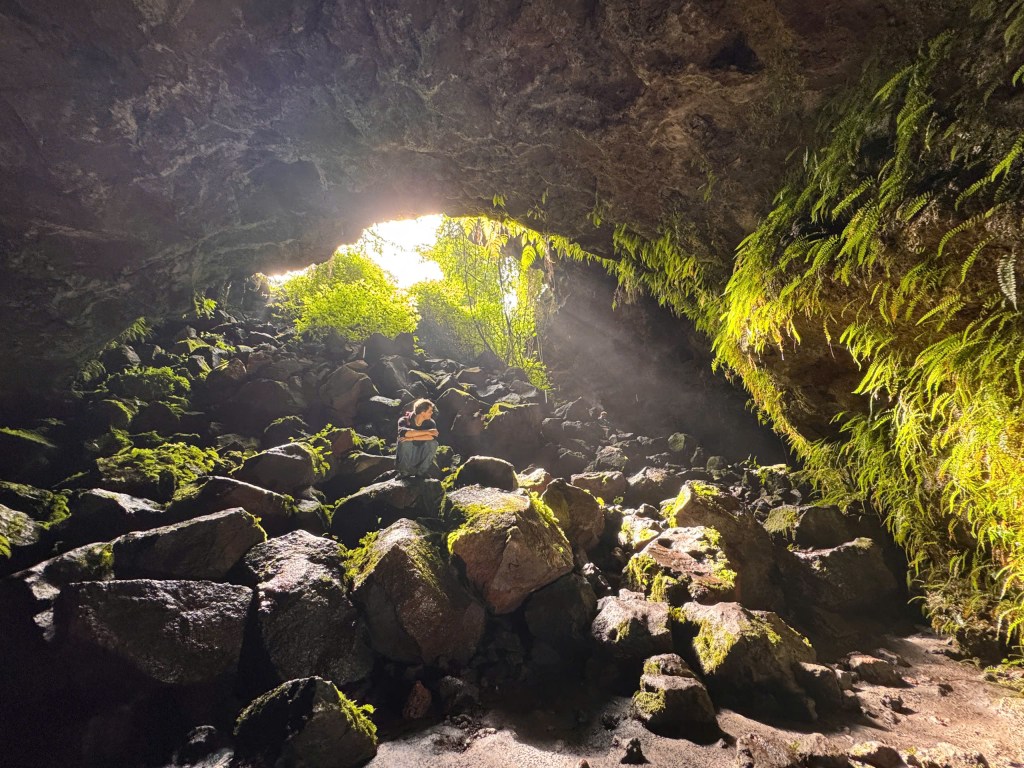
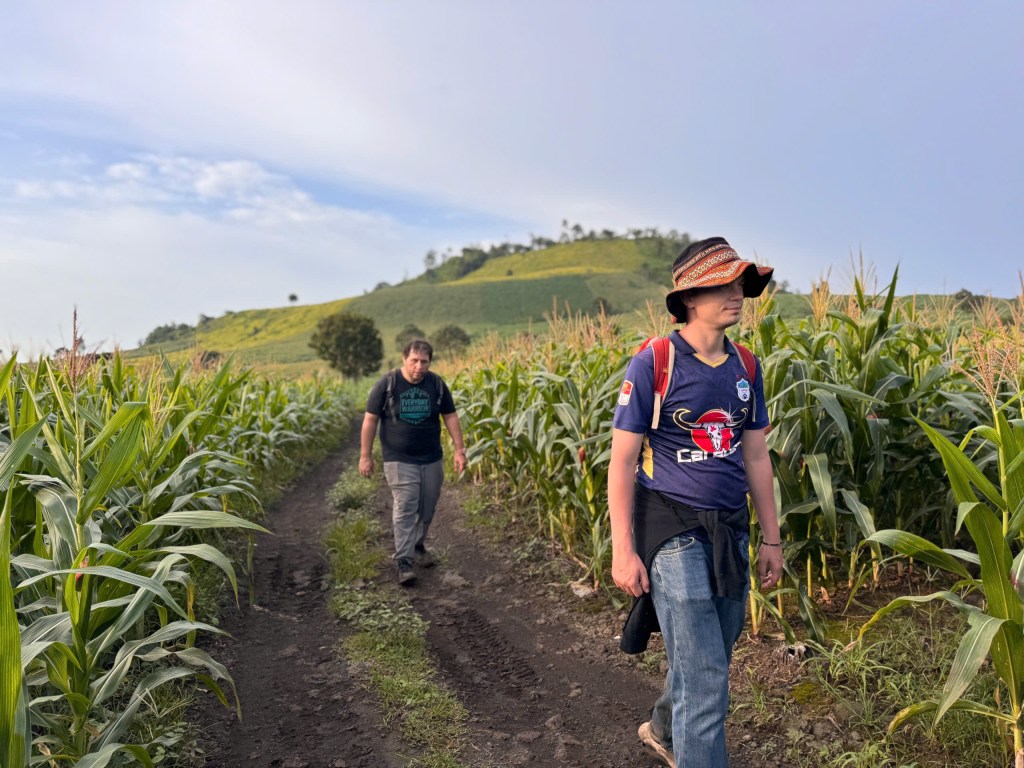
The next day we started at dawn to trek across the countryside and visit three caves spread around Chư B’Luk volcano. What struck me was how little there was to suggest what lay beneath our feet. We walked through cornfields and ordinary-looking countryside until we reached a small clump of trees. Then, between the trees, the ground dropped away and we descended over mossy boulders into a damp, dark and distinctly otherworldly place.
The clammy air and foul odour of bat shit made me think of Greek myths about heroes descending into the underworld. I found myself wondering whether the M’nông people have their own stories about these strange places beneath the earth.
The caves were formed by ancient lava flows. As the outer surface cooled and solidified, molten lava continued flowing beneath it. When the eruption ended and the remaining lava drained away, it left tunnels beneath the surface. These are known as “primary caves” because they formed alongside the surrounding rock, unlike limestone karst caves such as the famous Sơn Đoòng, which are carved out later by erosion.
We walked several hundred metres into each cave. At one point, we turned off our torches. The blackness was total. With no light and almost nothing to hear except the constant drip, drip, drip of water, it became an oddly mindful experience, like being inside a sensory deprivation tank.
Then we turned the torches back on and began the journey out. Emerging into the sunlight instantly lifted my mood. After the dampness of the caves, the jungle trees smelled almost like sweet, spiced desserts.
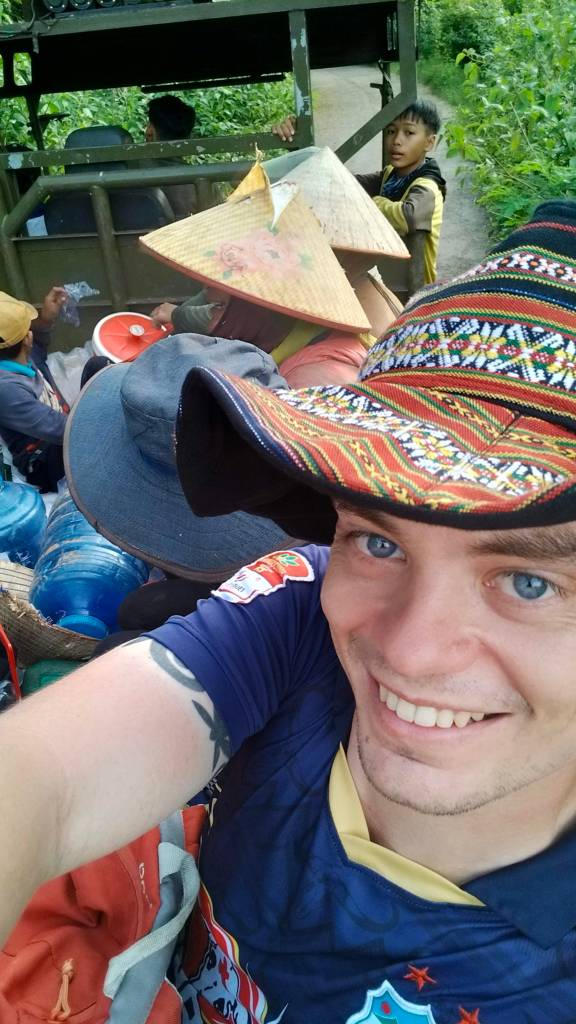
We were exhausted, and Pierre had found the day’s hiking particularly difficult, with much of the path consisting of large lumps of volcanic rock. Fortunately, we managed to hitch a ride home on a tractor with a group of M’nông people returning from a day’s work. It has long been an ambition of mine to ride on one of the distinctive tractors used in Vietnam, which are steered by a driver sitting on top and holding two long handles, rather like an ox cart.
The day ended with a communal dinner, including a local speciality of vinegary cucumber salad with tiny fish, which Cường assured me was a delicacy. There was more beer, too: Cường insisted that I match him glass for glass in the traditional Vietnamese way until I had finished my entire two-litre keg of fresh beer.
Pre-history of Tây Nguyên
The caves were not always home only to bats. Archaeologists have found evidence that people used some of these volcanic tunnels as shelters thousands of years ago, including stone tools, musical instruments, pottery, animal bones and human burial remains. In the Đắk Nông Geopark, some archaeological evidence dates back around 6,000–10,000 years. Similar Stone Age remains have been found elsewhere in Tây Nguyên, including near Biển Hồ in Pleiku.
But do the Indigenous peoples of Tây Nguyên descend from the first Homo sapiens to inhabit this region? It is impossible to know. Archaeological remains can tell us that humans lived here thousands of years ago, but they do not provide a simple, unbroken line connecting those people to the communities living here today.
What is important, however, is not to fall into the trap of thinking of the Indigenous peoples of Tây Nguyên as somehow primitive. Some people have romanticised their way of life as an ancient, pure existence untouched by the modern world, but the cultures of Tây Nguyên have evolved continuously in response to their environment and to developments beyond it.
Long before European explorers arrived, Tây Nguyên was connected to the wider history of mainland Southeast Asia. The Chăm tower I visited in Đắk Lắk is one reminder of the connections between the Central Highlands and the Chăm kingdoms. By the time Europeans entered the region, they encountered societies whose agriculture depended on crops from the Americas, who manufactured their own firearms and who exported valuable raw materials to markets in Vietnam and Thailand. These were not isolated people frozen in an ancient way of life, but cultures actively participating in an ever-changing world.
Đắk Nông: The Land of Sounds
On the second day with Cường, we trekked deeper into the jungle to a crystal-clear pool. Sadly, Pierre couldn’t manage the tricky hike and turned back, but Cường and I pressed on. When we finally reached it, the pool looked like something from the dinosaur books I loved as a child: fallen tree trunks crisscrossed beneath turquoise water, while jungle flora reached down from above as though taking a drink. Tiny fish swam around our toes as we floated in the cool water.
From there, I made my way to Gia Nghĩa, the provincial capital of Đắk Nông. Pierre had warned me I’d have to take a “chicken bus”—slow rural buses that carry as much cargo as passengers, from farm produce to parcels and, yes, chickens. Years ago, I travelled on one with a chicken among my fellow passengers. I was jealous that she got the window seat. This time, my bus was heading all the way from Buôn Ma Thuột to Cà Mau, a journey of around 15 hours without stopping. With all the farm stops along the way, it would certainly take longer: my supposedly two-hour journey from south of Buôn Ma Thuột to Gia Nghĩa ended up taking five.
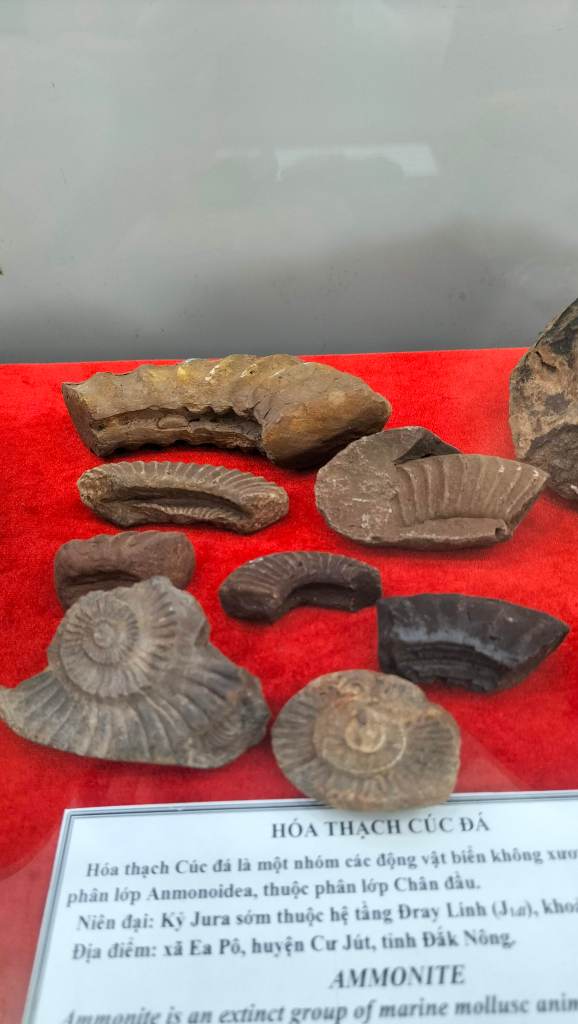
Gia Nghĩa itself is remarkably sleepy, even by the standards of Tây Nguyên. I visited the UNESCO Geopark Information Centre, where displays of fossils and semi-precious rocks offered another glimpse into the geological history of the region. There were interactive exhibits where visitors could handle the rocks themselves, a great way to bring the ancient landscape to life for students, I thought. The centre promotes several routes across the province with epic names: “Rhapsody of Fire and Water”, “The Sounds of the Earth”, and the route my chicken bus had taken: “The Wind of Changes Concerto”.
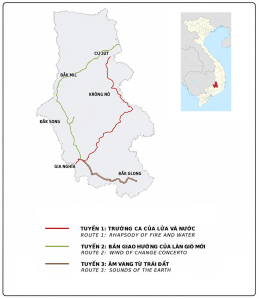
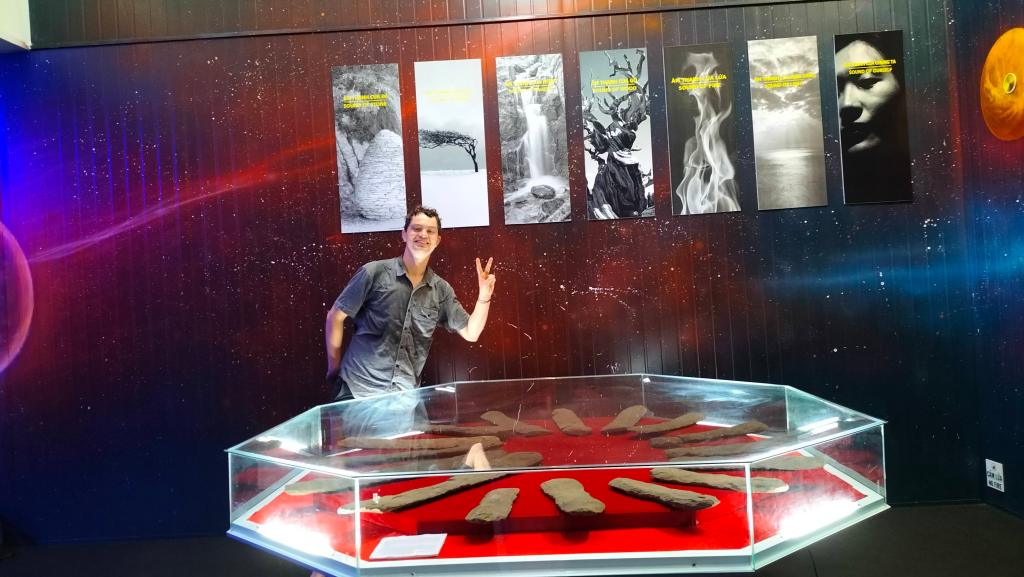
But it was at the ExploraSound museum that the different threads of my journey began to come together. The museum explores Đắk Nông through its natural environment, history and cultures, combining historical artefacts with interactive multimedia and music. It is divided into curtained-off rooms, each dedicated to one of the themes of wind, rock, water, trees, fire and light.
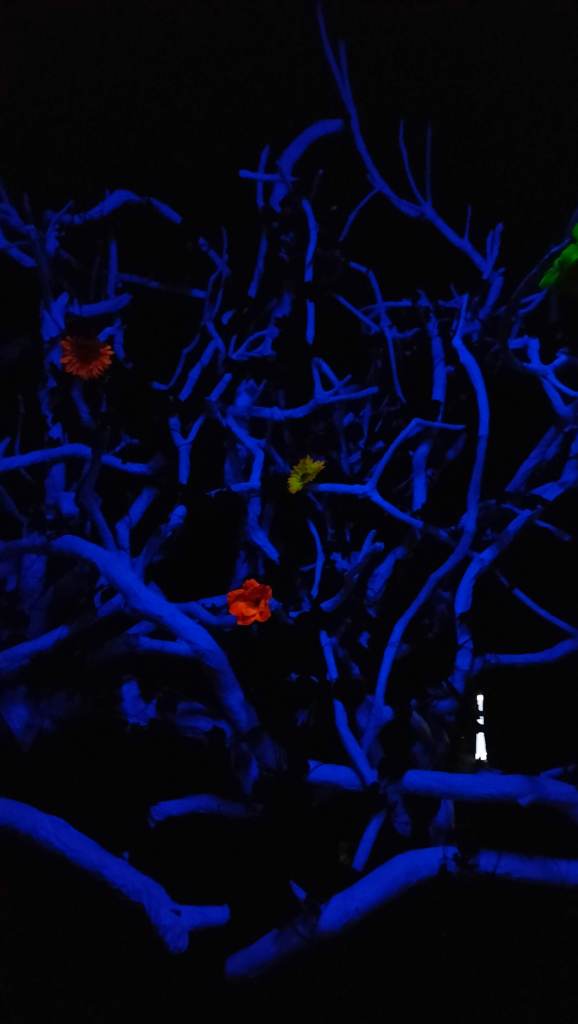
My favourite installation was a dark room containing a large, thorny sculpture covered in flowers. The curator told me to shine my phone torch at the flowers. I assumed I was simply being shown the sculpture more clearly. Instead, each flower produced a different musical tone. Light sensors were connected to a synthesiser, turning the installation into an instrument. So this was the room of light, I realised.
I had spent the previous days exploring rocks created by ancient fire, descending into caves moulded by flowing lava, swimming in water surrounded by jungle and thinking about the people who had inhabited this landscape for thousands of years. Here, those elements were being transformed into sound.
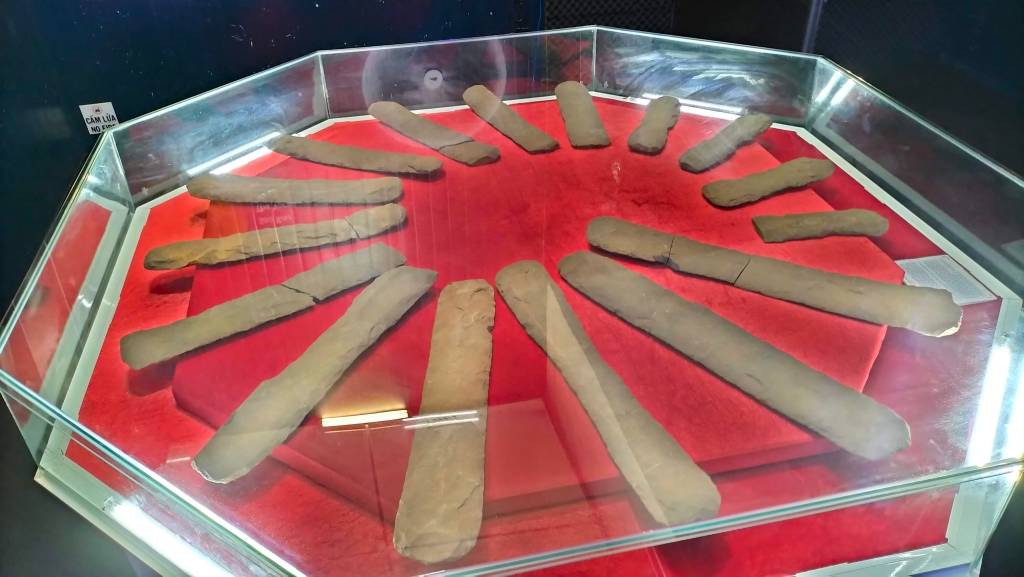
And then I found the pièce de résistance: an ancient lithophone, a kind of xylophone made from stone, thought to be around 3,000 years old. Stone from the landscape had been shaped by human hands into an instrument. I had the pleasure of playing a modern lithophone in Chư Đăng Ya while volunteering, bringing the journey unexpectedly full circle. You can hear a lithophone being played in this video.
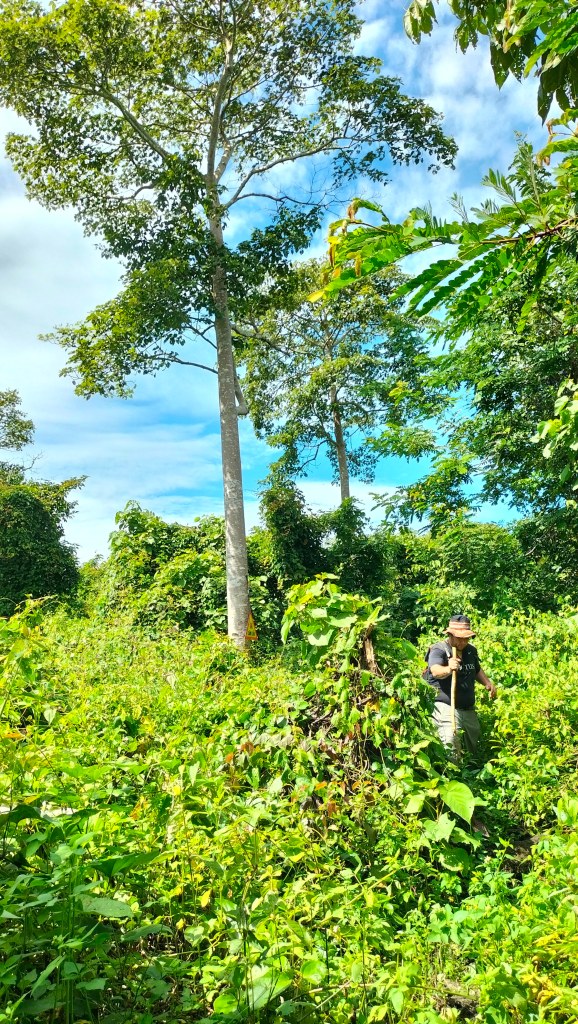
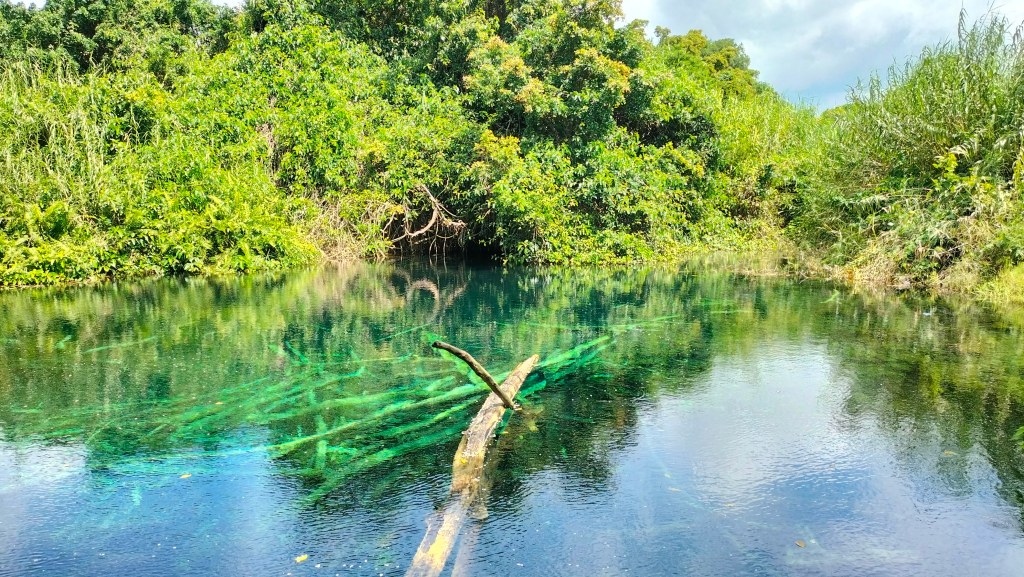
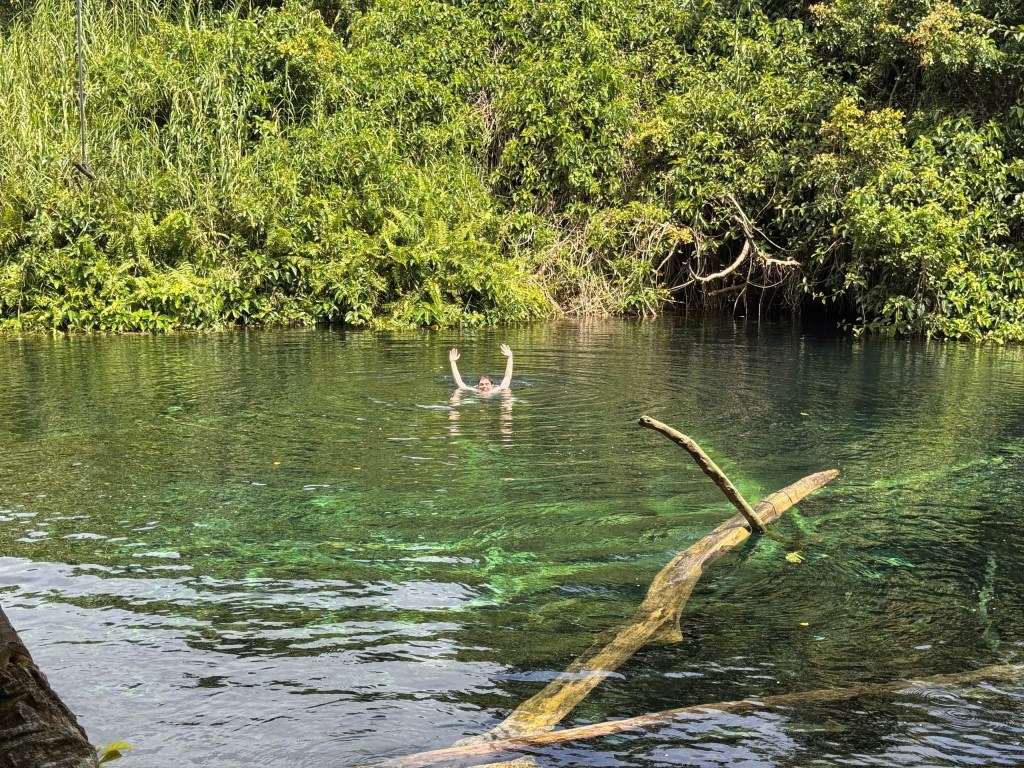

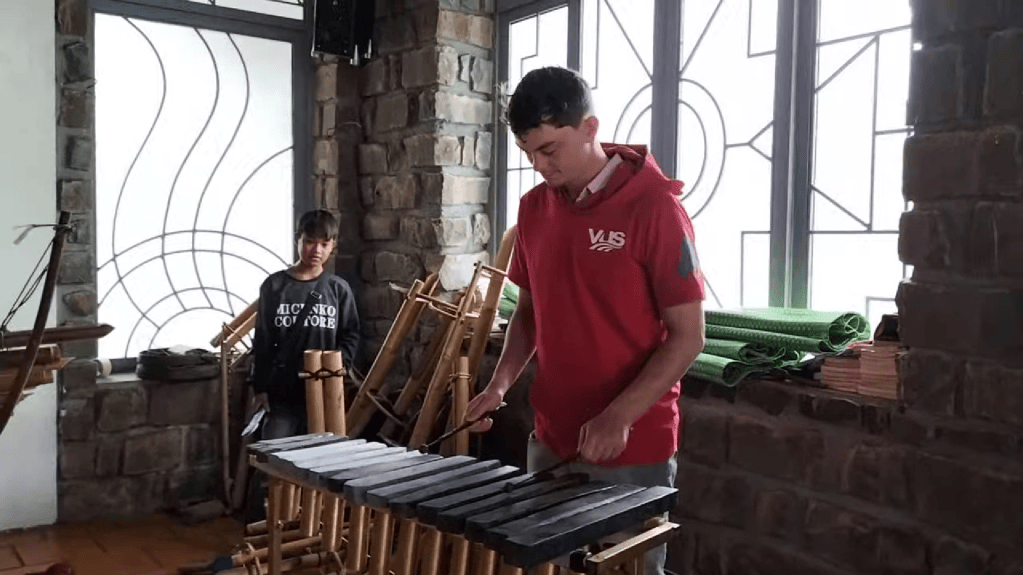
This journey has left me with a profound sense of awe. The mountains, rivers, volcanic rocks and forests are not simply the backdrop to human history. They have provided food, shelter, materials, routes of travel and inspiration, while people have transformed them into tools, buildings, weapons and music. I set out to write about the geology of Tây Nguyên rather than its people for a change, but found that it is impossible to separate the two.
I’m writing this from a café in Gia Nghĩa, listening to another downpour as I wait for my bus back to Saigon. I fell in love with Pleiku when I first arrived six years ago, but I’m still trying to untangle exactly why. The more I learn about Tây Nguyên, the more I realise how little I know, and how much more there is to discover. After six years, I thought I knew this place; this summer has shown me how little of it I had seen. Goodbye, Tây Nguyên, until we meet again. I leave with a deeper love for you than ever.


loveelllyyyyyy!!!
LikeLike