Gosh It’s been a long time since I’ve written a blog post! In the last one I was talking about moving to Pleiku and now 3 years on I’m settled here and a lot has happened! I’ve decided to try updating this space more often about life in Vietnam and my projects (let’s see if I can keep it up).
Life in Vietnam
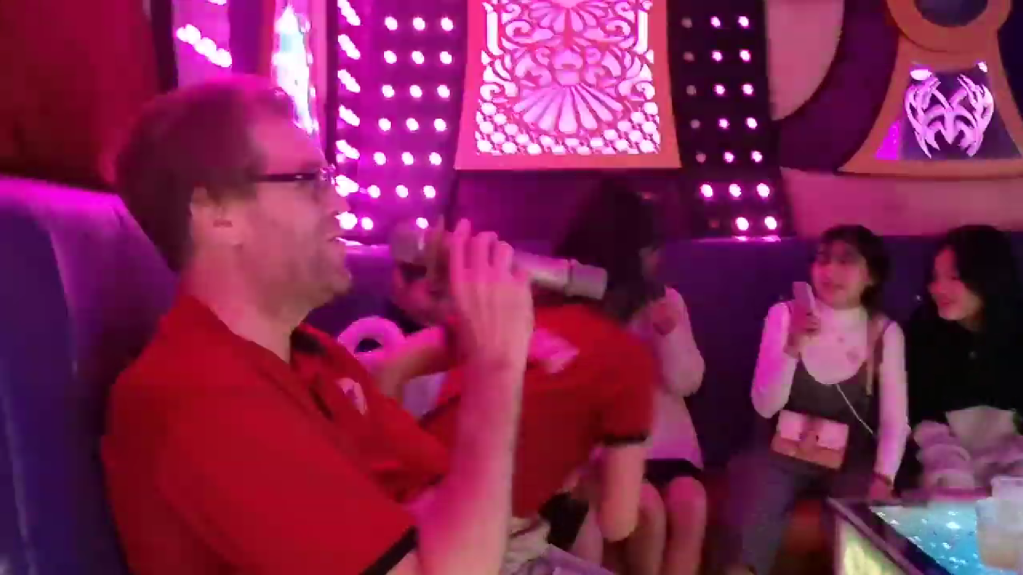
The festival of Tết (Chinese New Year) ran from the 8th of February to the 14th. We spent a lot of quality time with Yumi’s large family, we sat in the shade, ate until we burst and sang karaoke. 2024 is the year of the Dragon which is Yumi’s zodiac sign which according to tradition means she has to be careful with her luck this year.
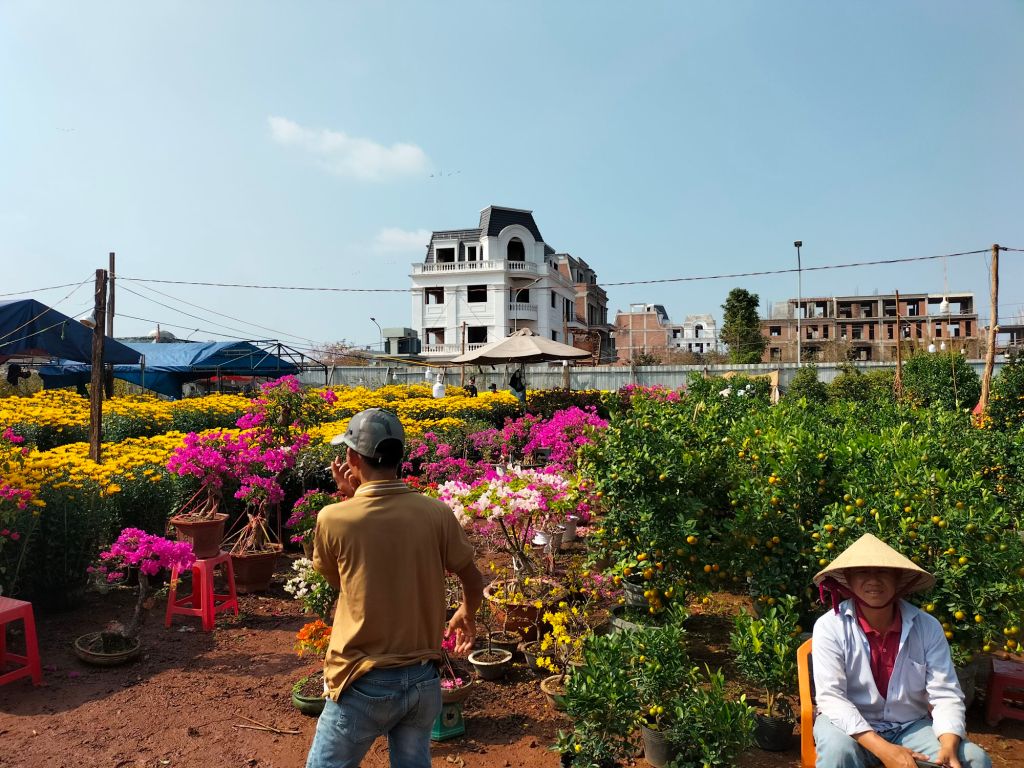
Vietnamese people buy flowers at Tết. This is a popup flower market in pleiku for the occasion.
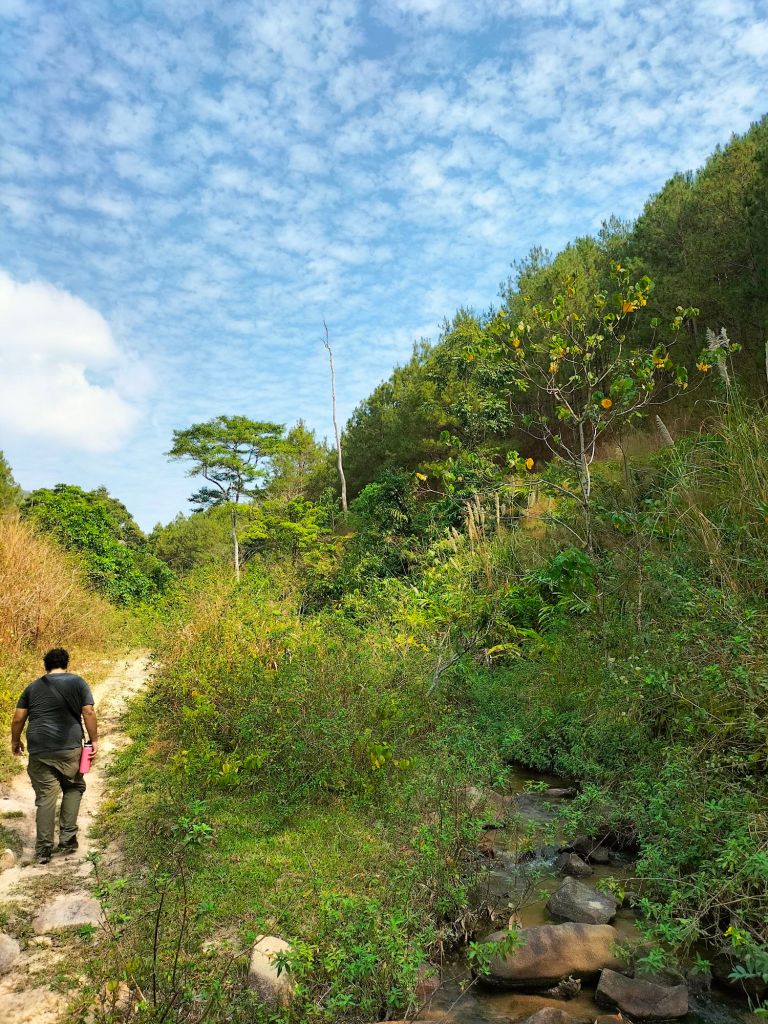
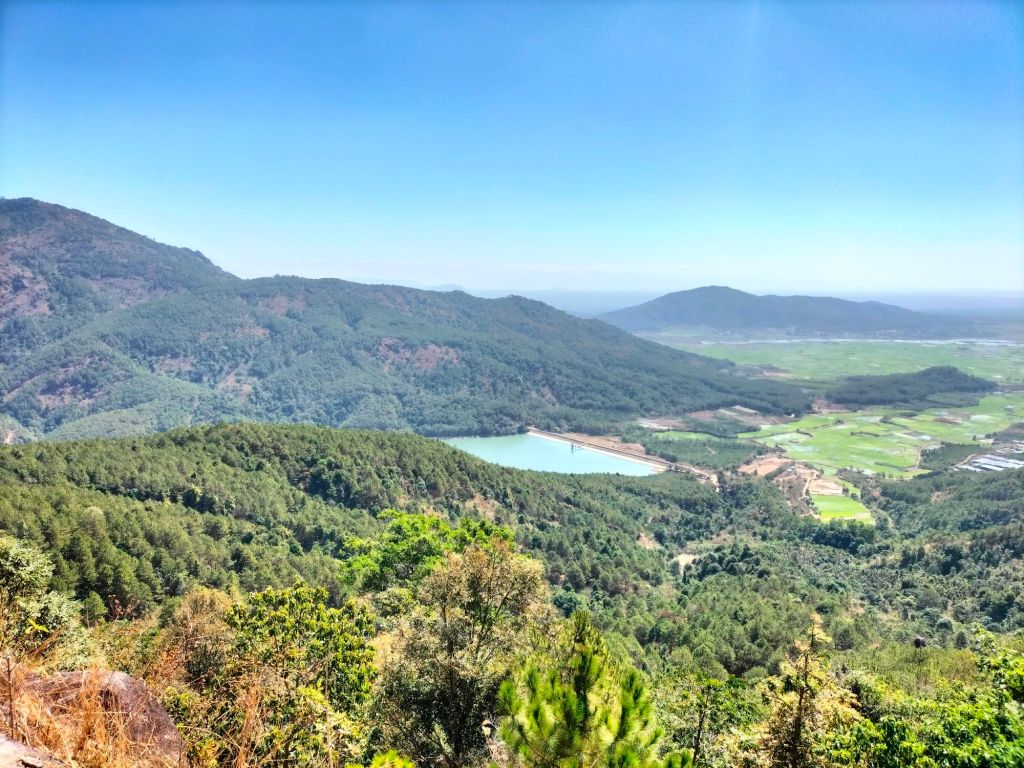
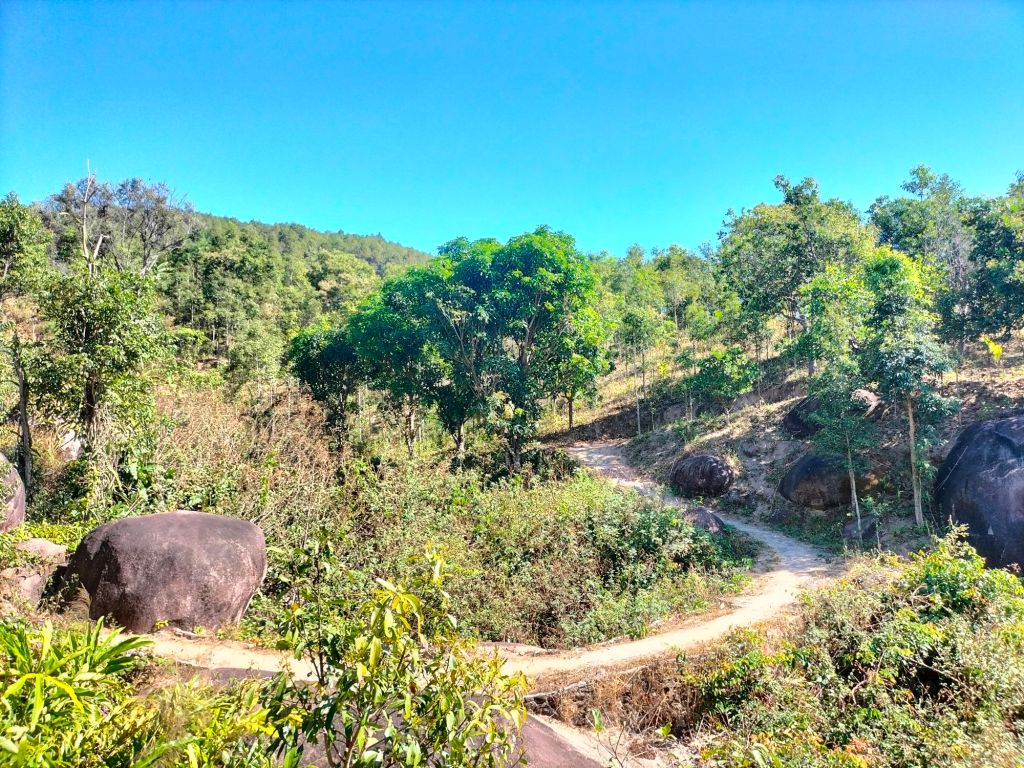
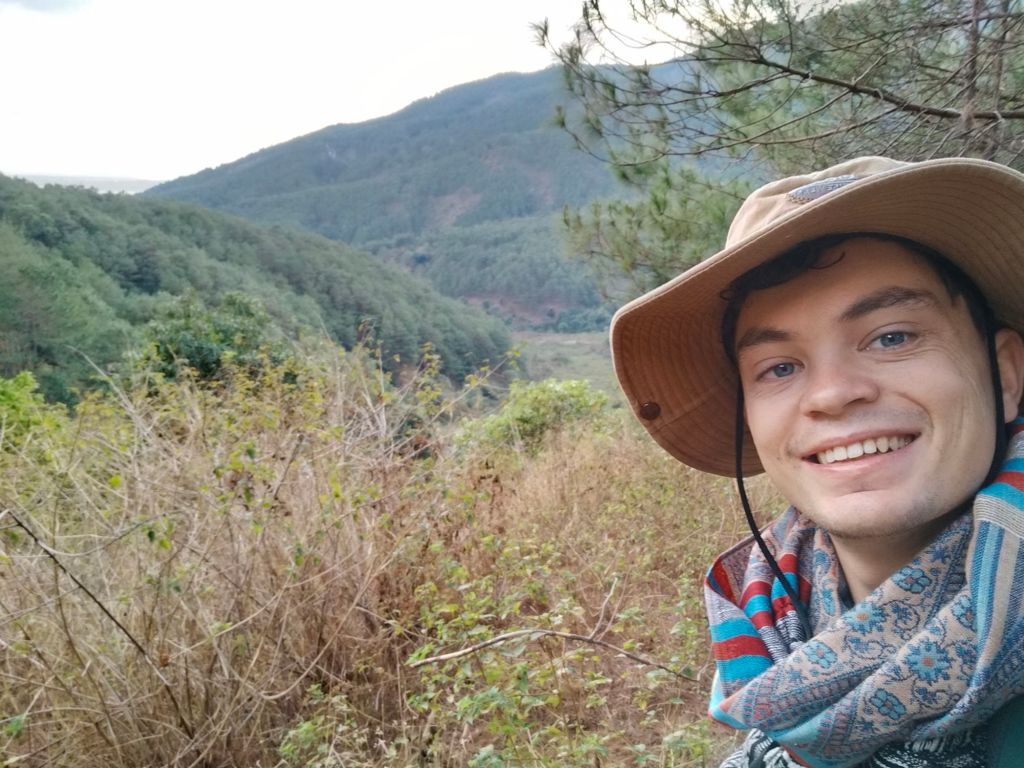
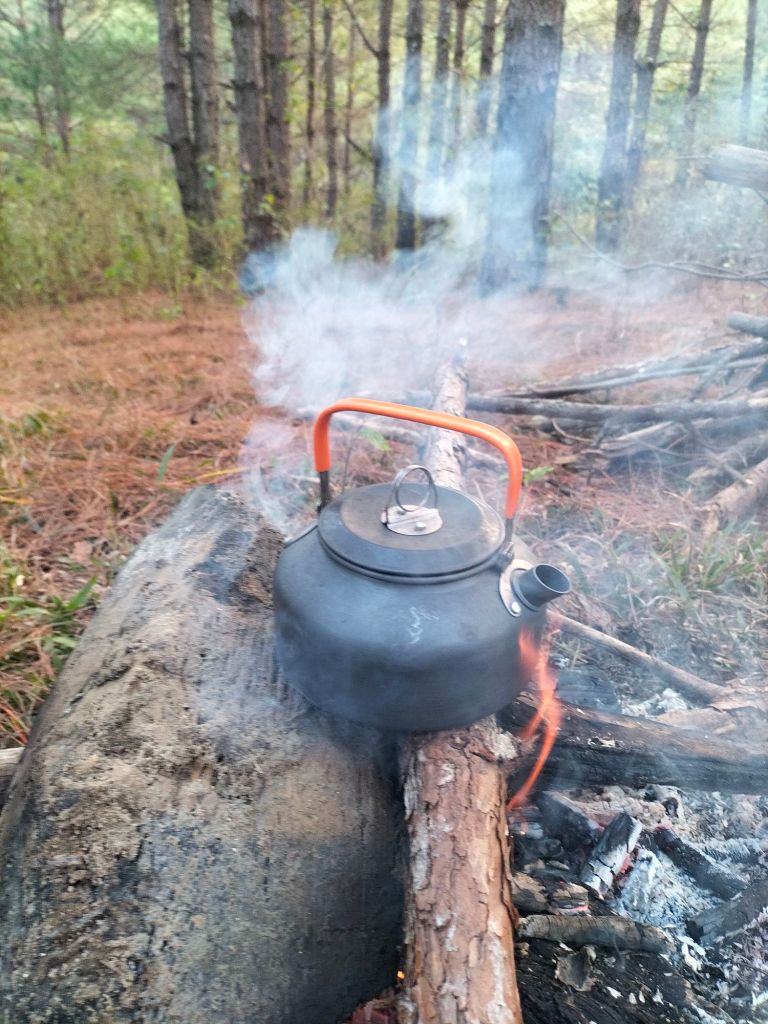
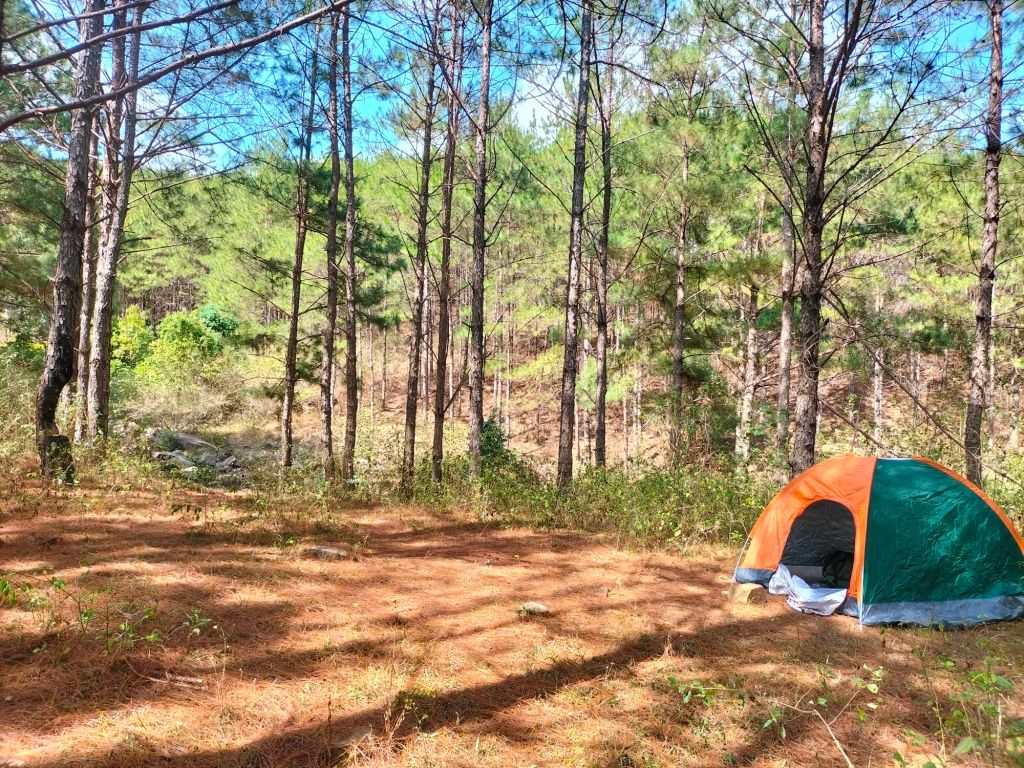
I managed to carve out some time for hiking and camping during the week-long bank holiday break. There are no guidebooks or modern maps available so I consulted the old 1:50k maps that the American’s made in 1970 and cross-referenced with Google Maps satellite images to find points of interest and I’m making my own maps based on what I found on the ground; I discovered a few great circular walks during the holiday and I’m looking forward to taking other people out on them. For those with local knowledge, this was all in Chư Păh district, near Chư Nâm.
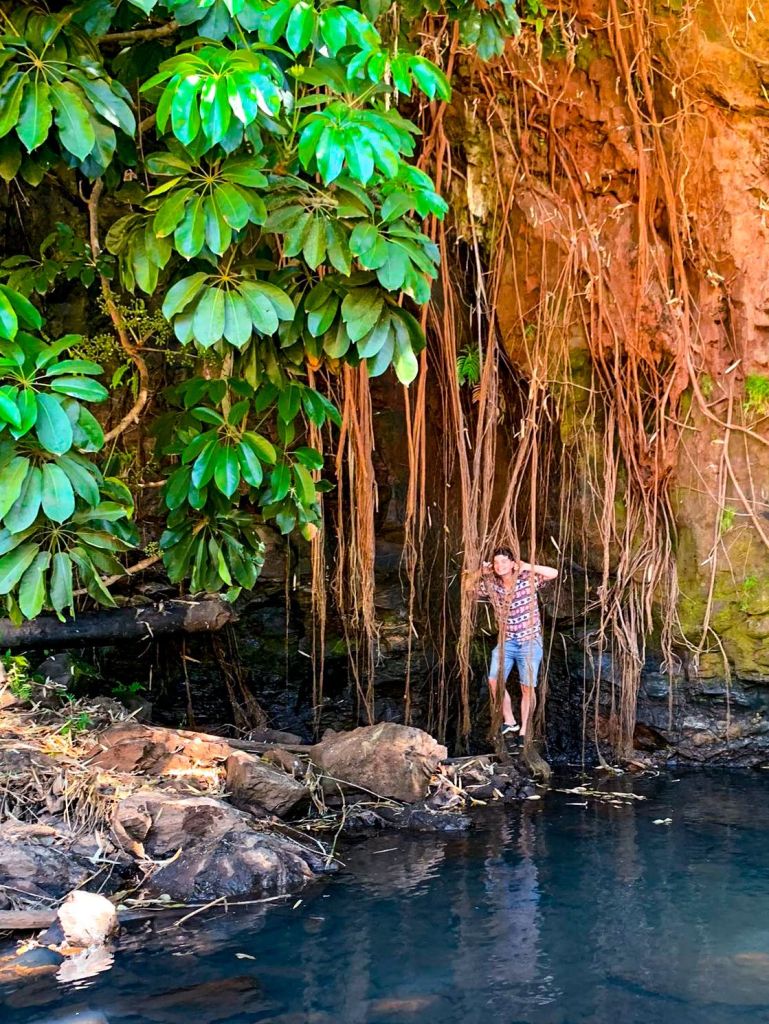
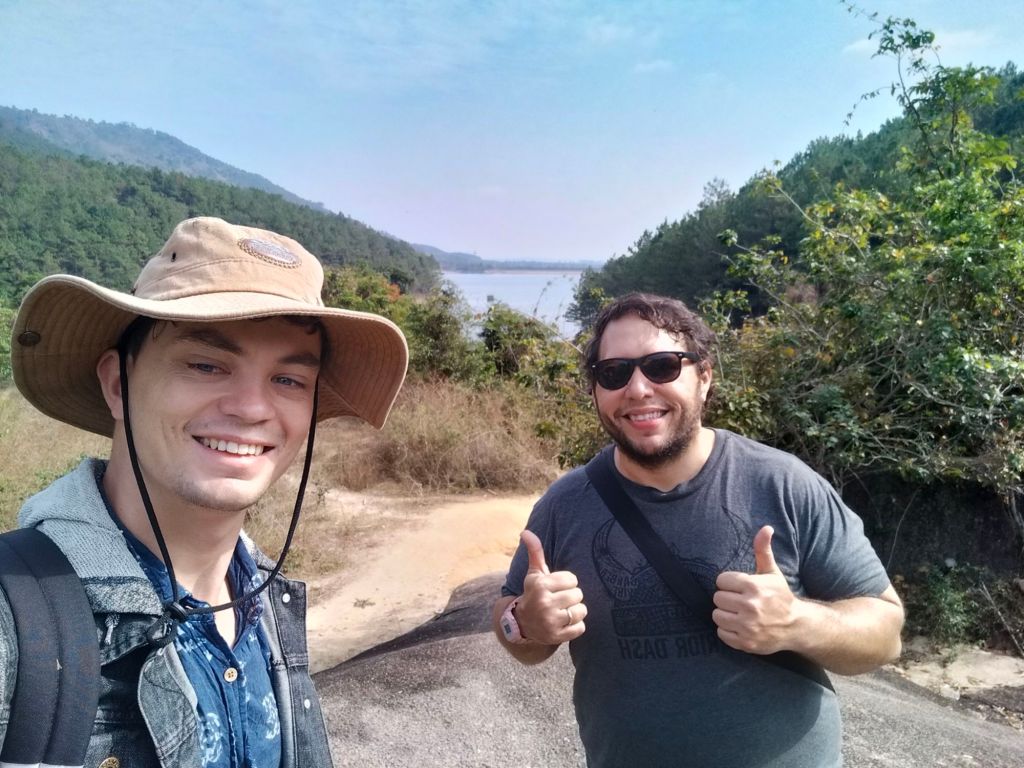
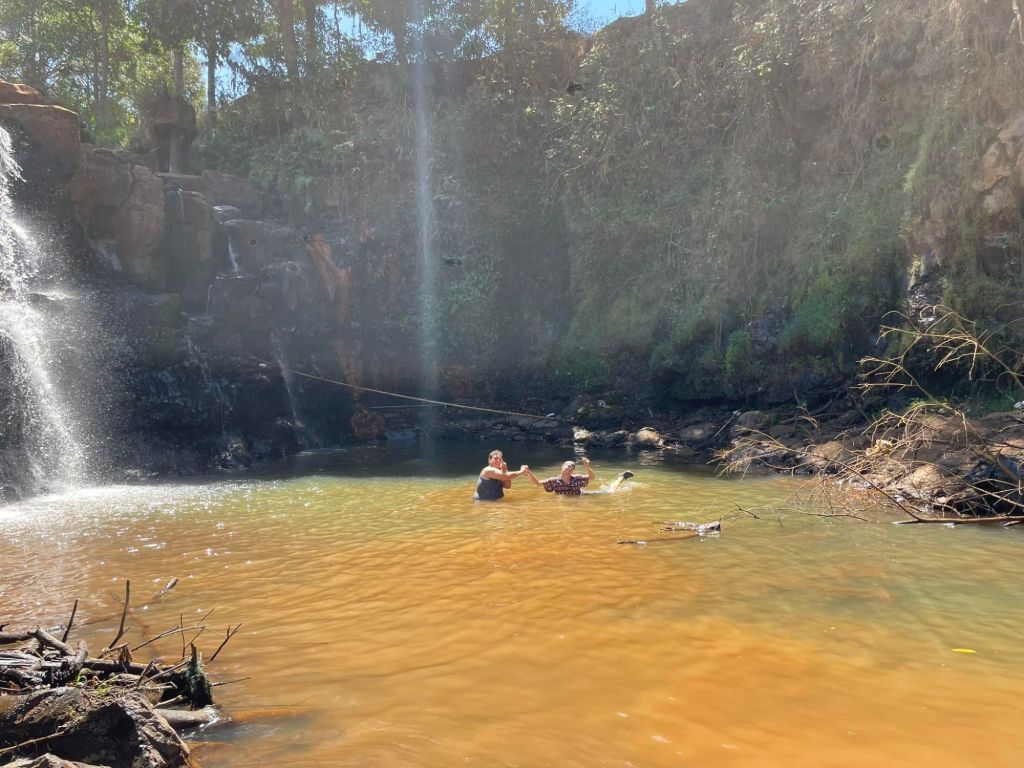
Me and PierreDon’t talk to me before I’ve had my coffee …Taking a dip under the waterfall
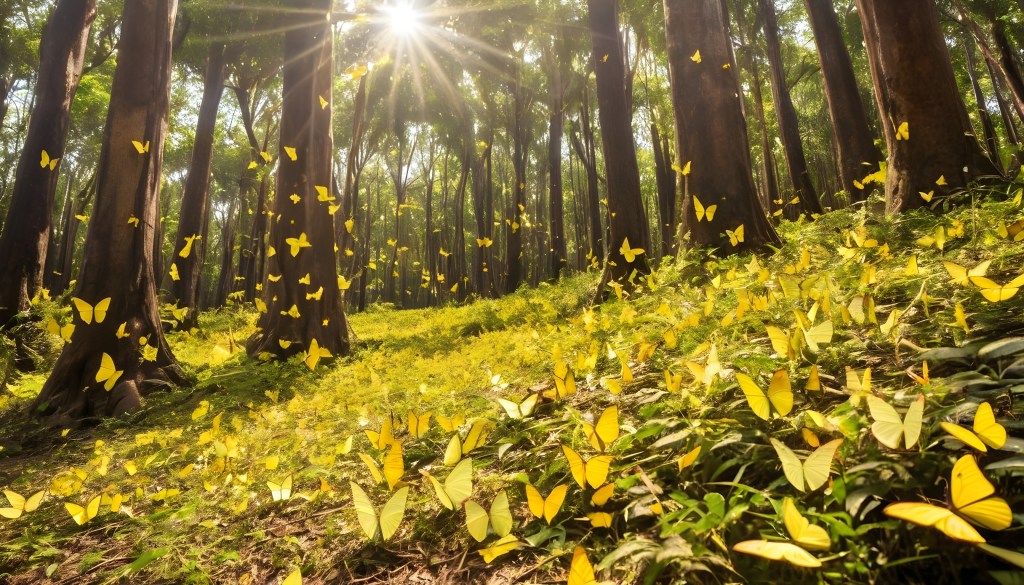
In other news, today I saw the first emigrant butterflies of the year! In the region of Pleiku, the butterflies (Catopsilia) pass through on their way from Cambodia to the Philippines . Seeing the sky filled with these delicate insects around midday is a beautiful spectacle! Sadly it’s basically impossible to capture the magic on camera so I’ll share an AI-generated image that attempts to encapsulate the essence of this mesmerizing phenomenon.
Emigrant butterflies in a dipterocarp forest in central Vietnam according to AI
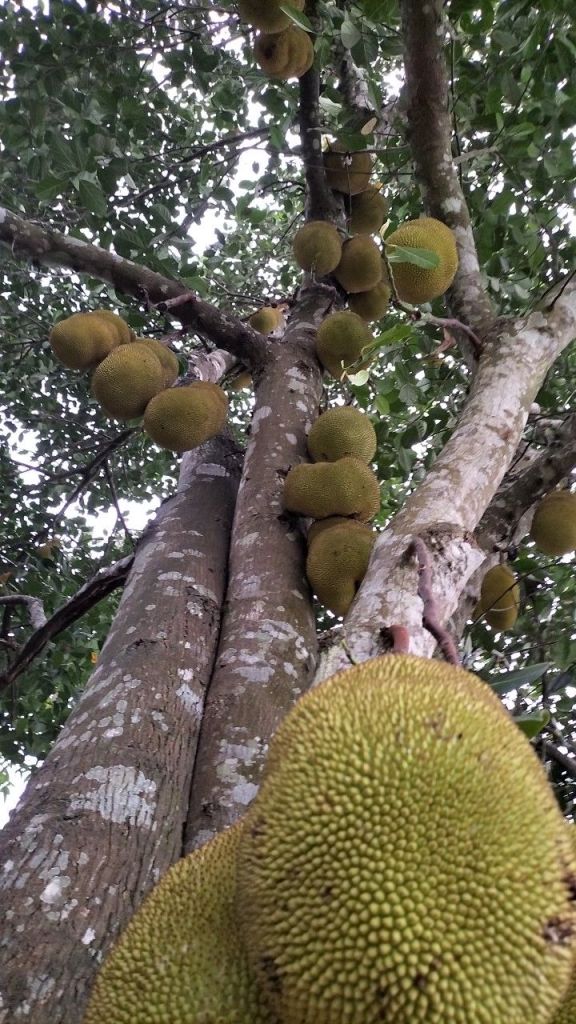
The arrival of the butterflies heralds the season when the Jackfruits are best to eat in Pleiku. Jackfruit is my favourite fruit!
Tree full of jackfruit
Projects
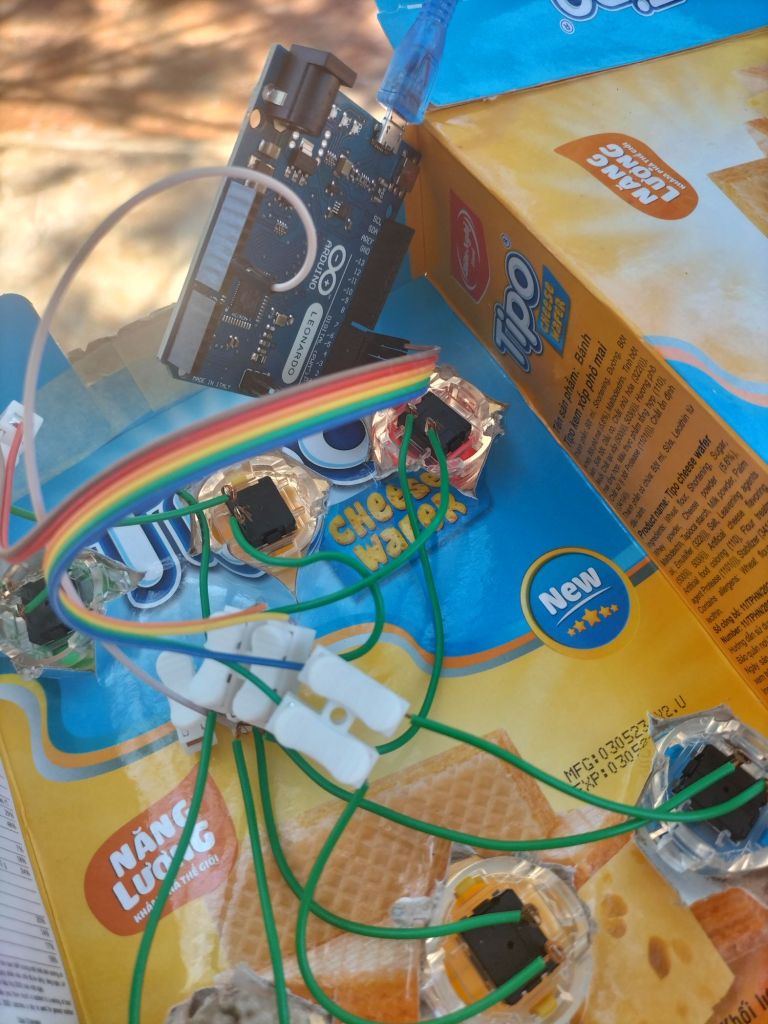
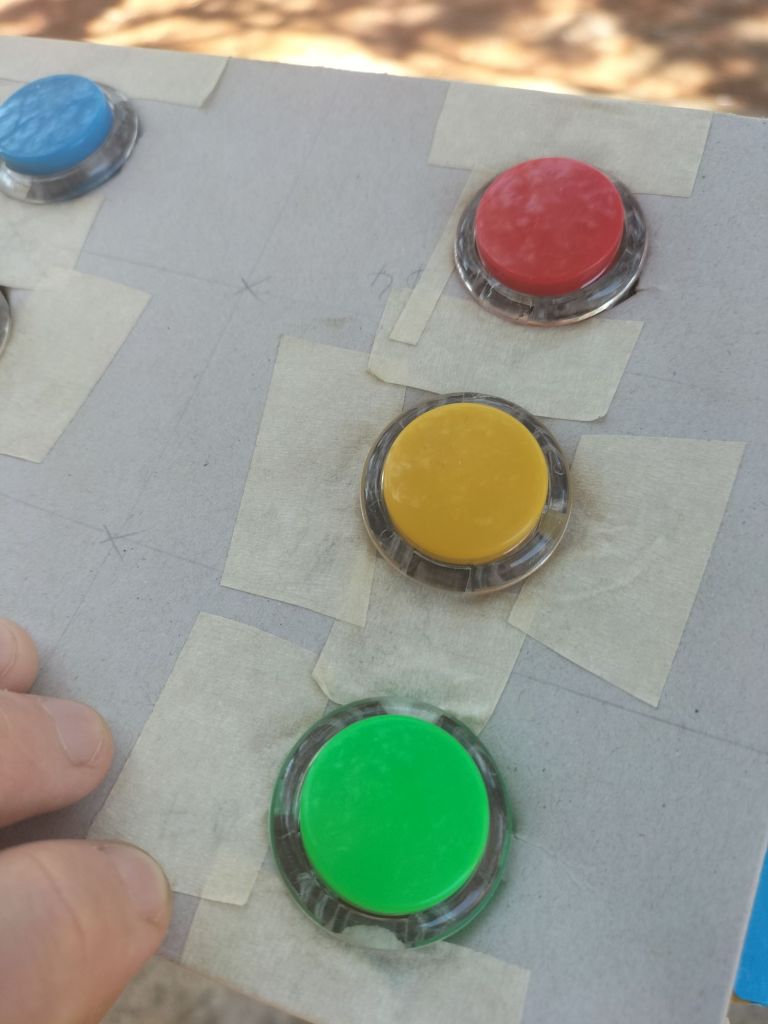
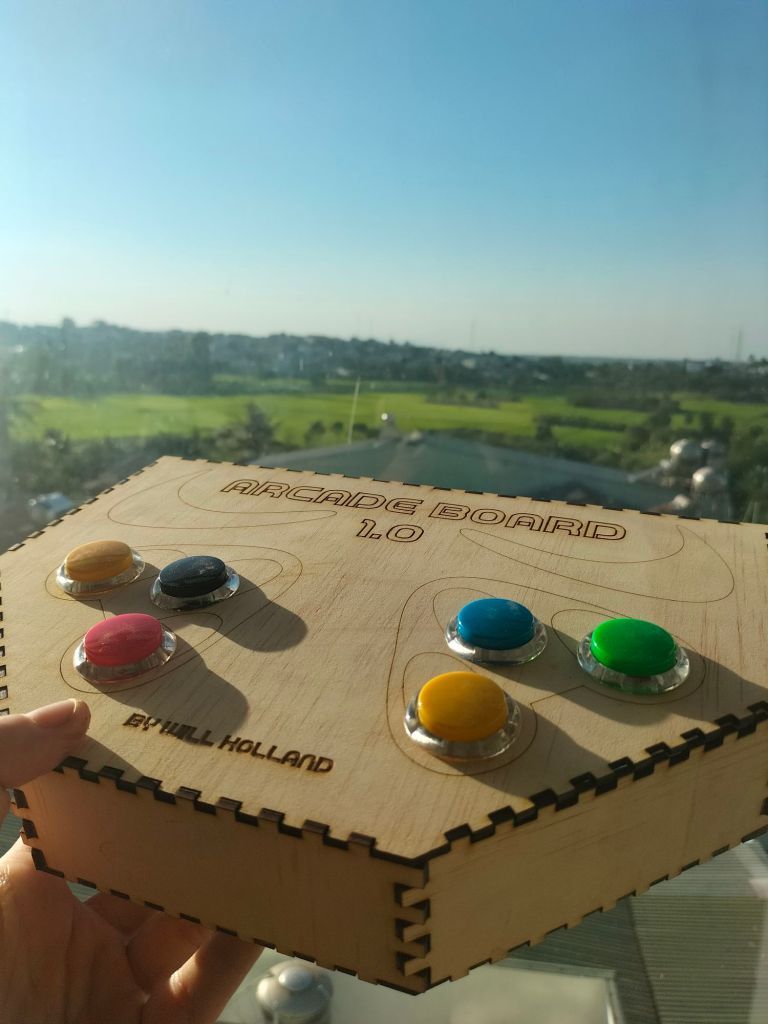
One of my recent endeavors involves crafting an arcade machine for my classroom. Designed to plug into the computer like a keyboard, this project aims to bring some of the digital activities in the classroom to life as it’s much easier to interact with than keyboard and mouse.
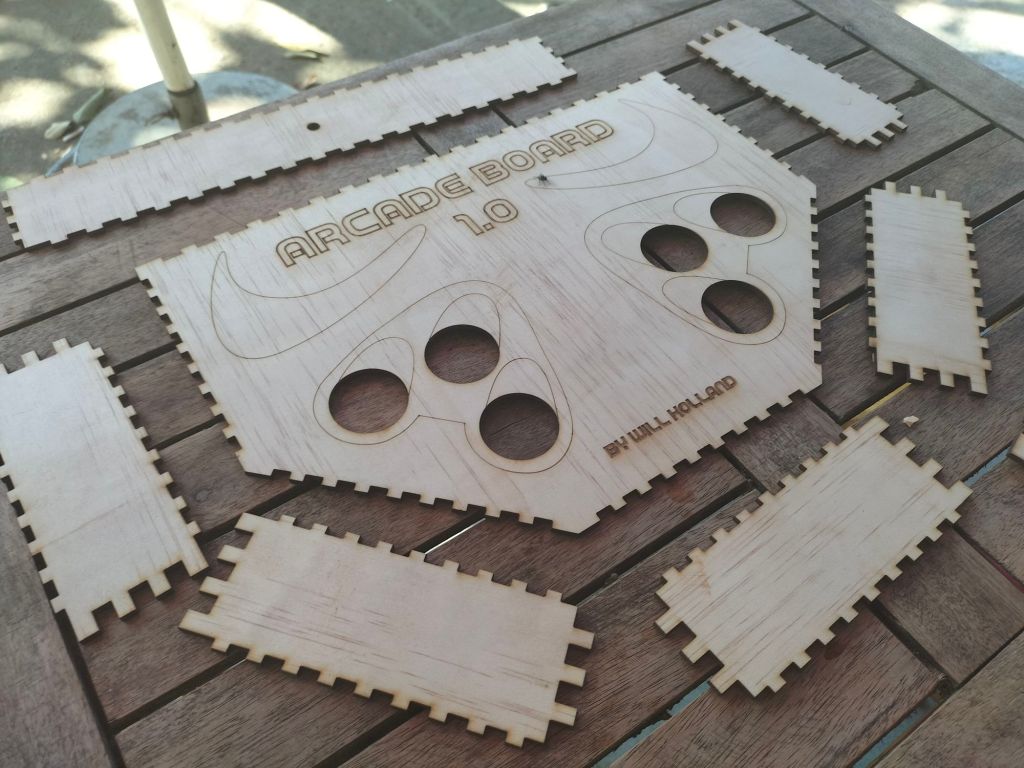
I bought arcade machine buttons online and an Arduino Leonardo board. First I made a prototype out of a cardboard box but now I’ve designed a container to be laser cut so it’s durable enough to be in the vicinity of kids.
For the software side of things I’ve been learning to program in the game engine Godot which is a lot of fun! It’s free (as in gratis and libre) and I’m hoping to make some much more involved projects soon.
When I first came to Vietnam, a year ago at the end of August, I had planned to see how I felt after a year, if I wanted to go home or move to a different country. What I didn’t plan for is a pandemic! So moving country is out of the question so I came up with a different solution.
I’m excited to announce that next week I’m moving to the city of Pleiku (still in Vietnam) and this is how it came about.
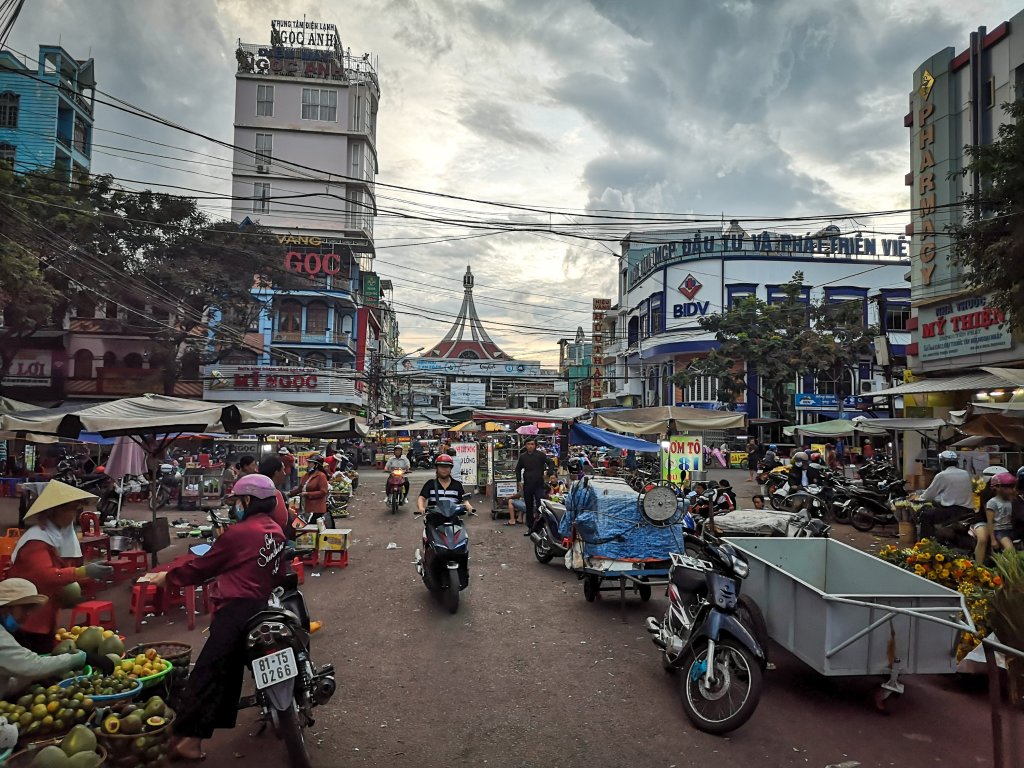
Pleiku night market
What does one do in a pandemic when they’re tired of living in the big city? For me, tired of the noise and crowds of Ho Chi Minh city where I’ve lived for over a year now, I found a company willing to help me take a big leap.
Many English centre’s are short of staff these days with teachers not being able to enter the country, small cities are feeling it more than big cities like HCM and Hanoi which have a large pool of expats. So I picked the city I wanted to move to and emailed a few of the English centres. They were amazingly fast at getting back to me.
I ended up taking a job with a well known national chain. APAX English started in Hanoi and now has hundreds of centres, including many in HCM and one in Pleiku. I passed the interview with flying colours but there was still a problem.
Pleiku is a sensitive area for the Vietnamese government. Not only is it a province with a lot of ethnic groups living their traditional lifestyles in the mountains, it is also a border province near Cambodia and Laos where a lot of smuggling takes place! So I could not relocate there with my current papers; I needed new papers to live in the region.
It took about a month to get all that sorted by now I’m very happy to say that I’m moving to Pleiku on Monday the 14th September! I’m looking forward new experiences in a peaceful mountain city.
Update: 2026
I recently went through my old photos from the last few months in 2020, and found myself feeling rather nostalgic. So, six years on, here are some of the photos that now bring back the memories of moving to Pleiku and beginning a very different chapter of my life.
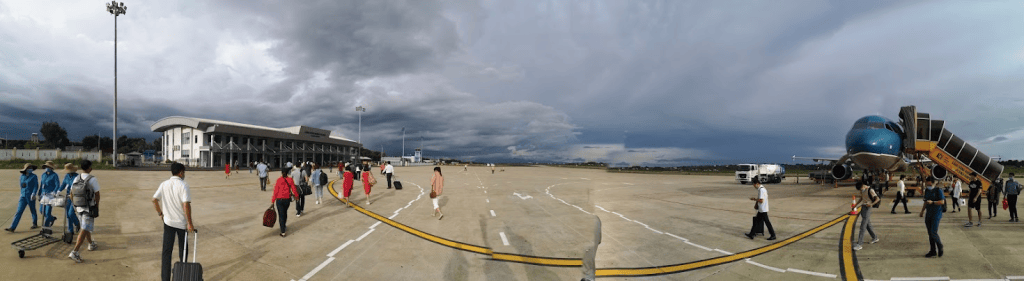
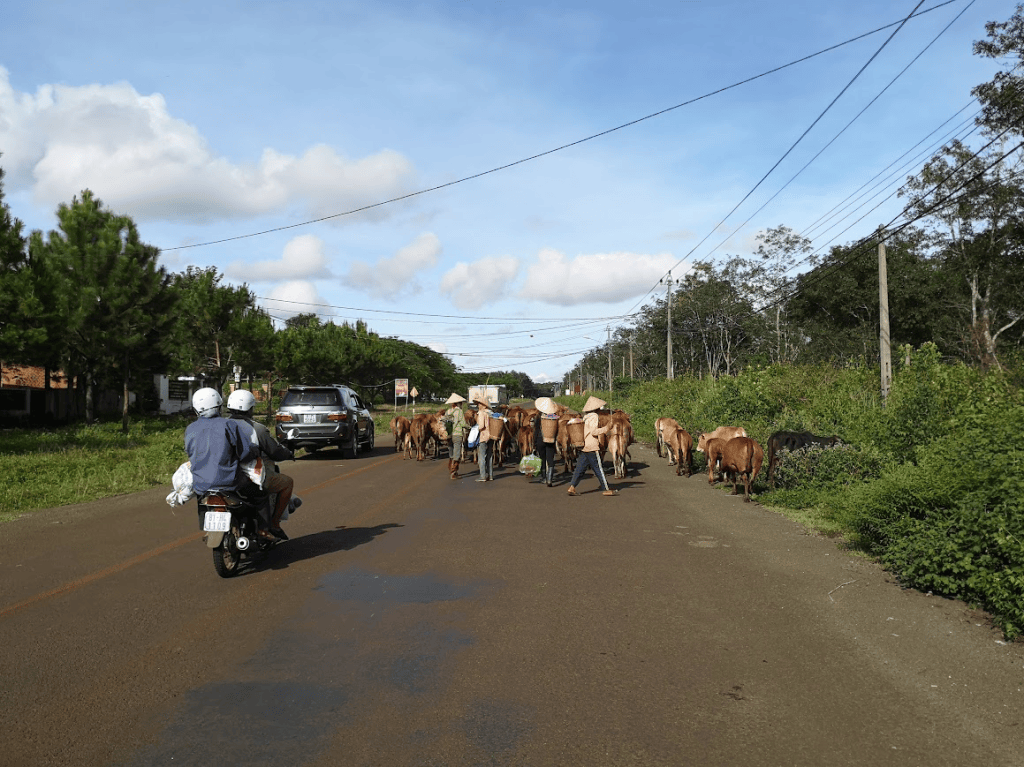
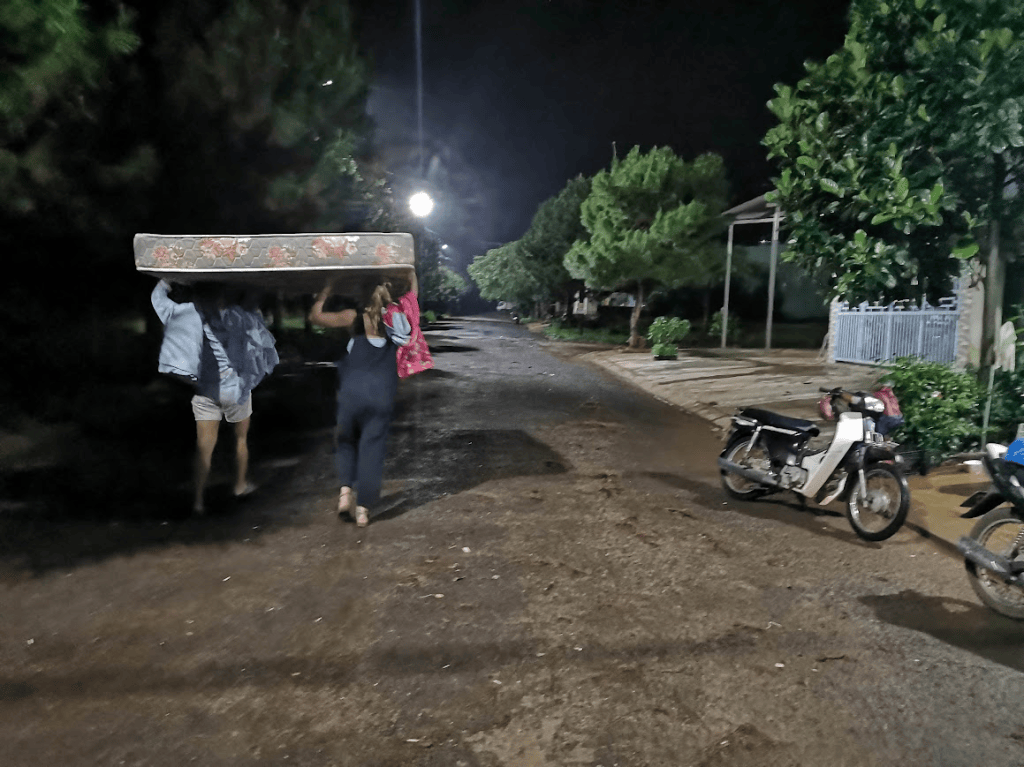
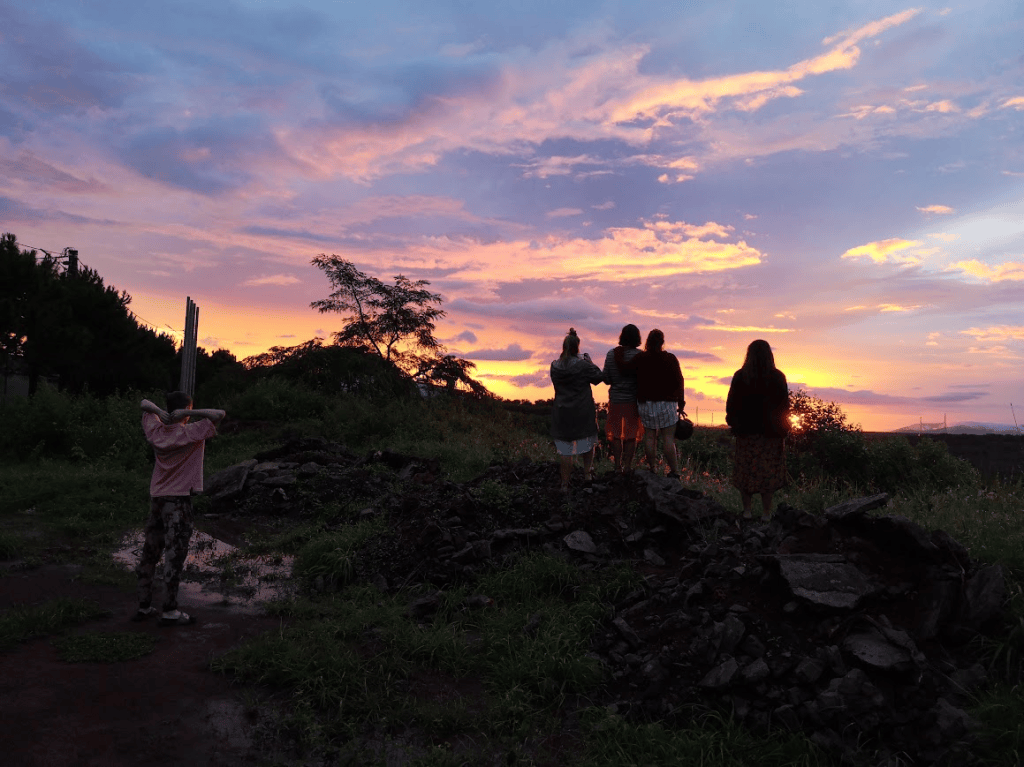
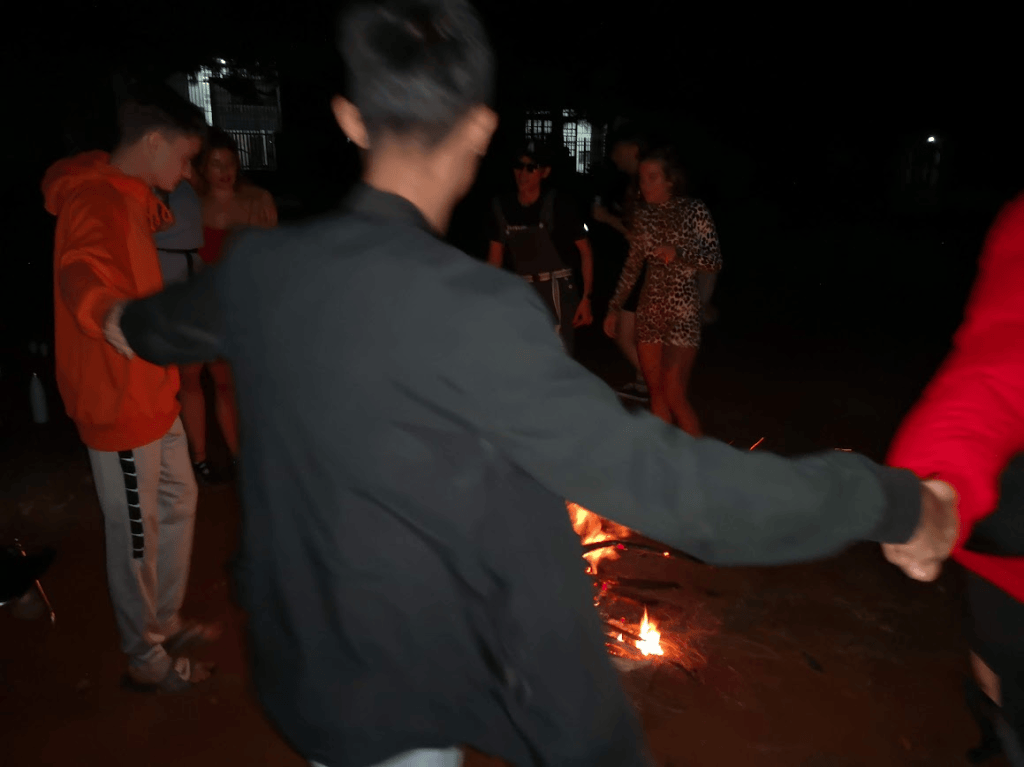
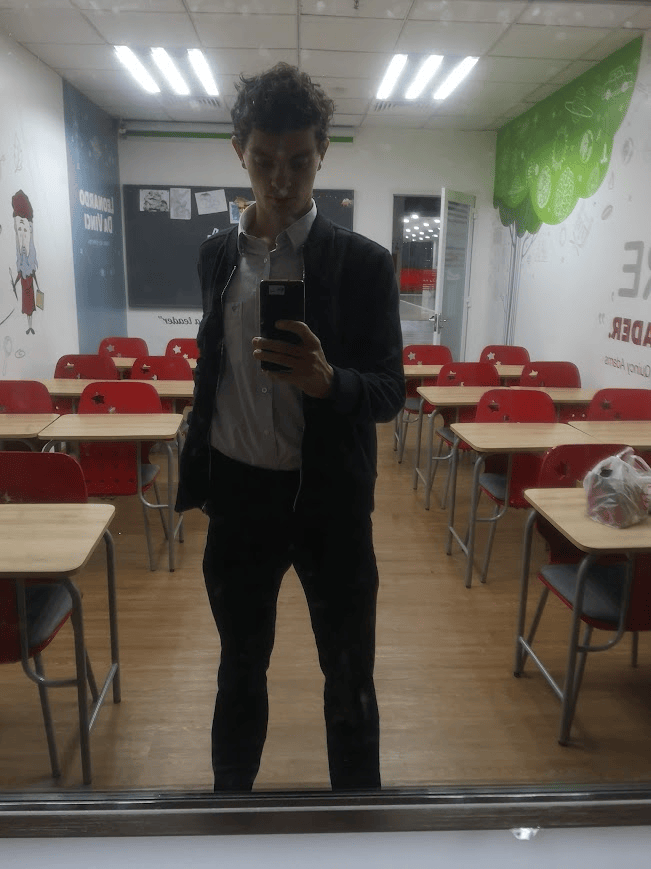
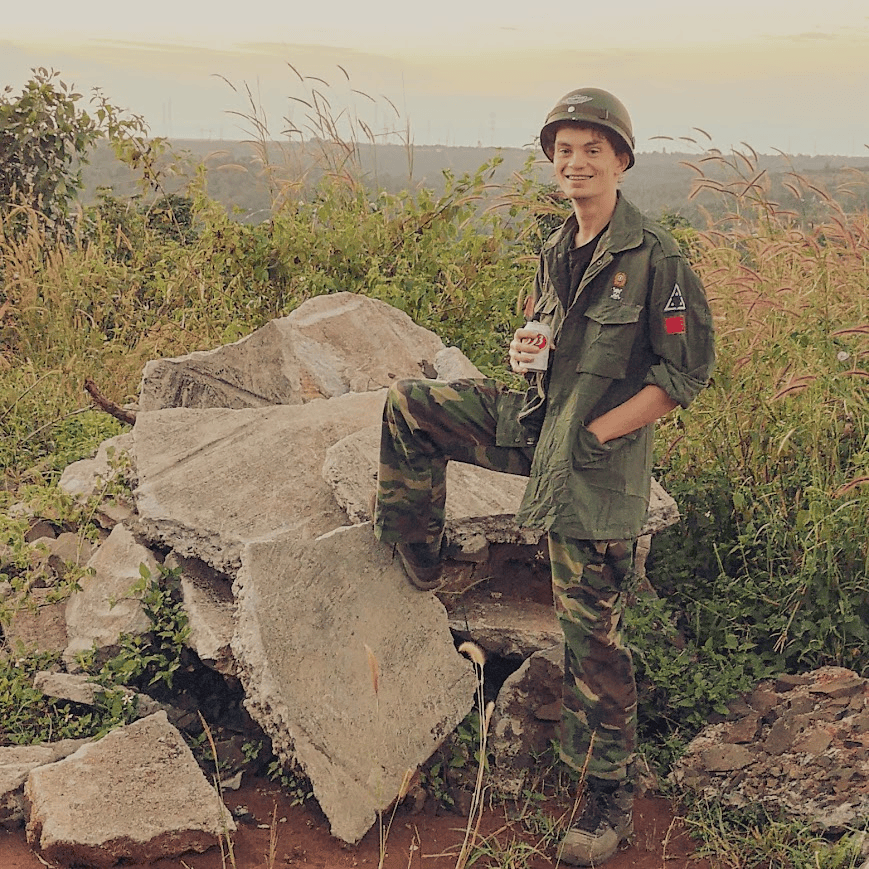
when I got off the plane I took a very bad panorama. You can’t walk on the tarmac like this anymore, they have busesMy first time seeing cows on the road in VietnamThe girls gave me a matress.The girls always insisted we watch the sunset on days off.a party around a fire was a common activityclassroom selfie at APAXMy first trip to Chu Dang Ya. Little did I know…For halloween I dressed up as an American Solider. I even chose 333 beer as it was popular with the GIs. Questionable costume choice? maybe…My first Christmas in Vietnam. With Toby, a star of Come Dine With Me
I was incredulous when we got back to the office after coronavirus and the boss asked “did you enjoy your holiday?”. I had worked every day except 1 or 2 through the lockdown and found working from home just as difficult and more emotionally taxing. Now, Finally, I’m getting a holiday, and in an unusual place.
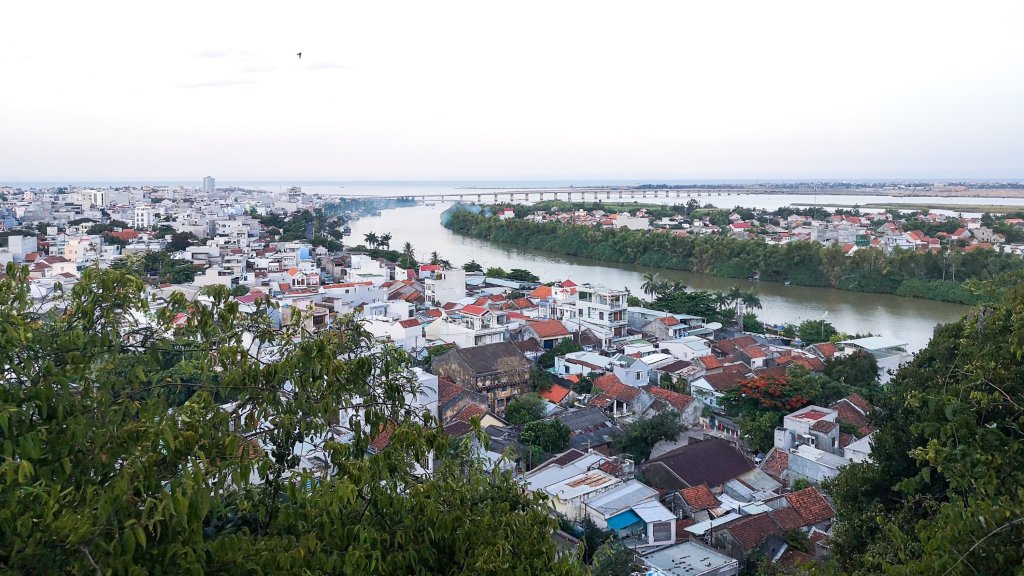
For a Monday rush hour, the leafy street was nearly empty; only a few dosen mopeds pootled by. It’s a welcome change from bustling ho chi minh city. This is the city of Tuy Hoa which has a few good things to offer a weary city dweller.
Birds eye view of Tuy Hoà
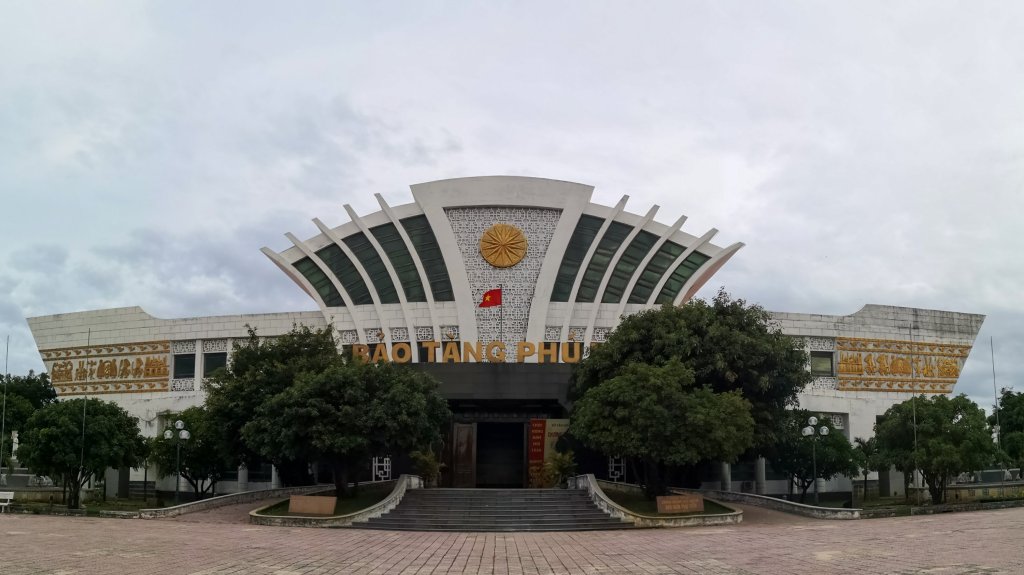
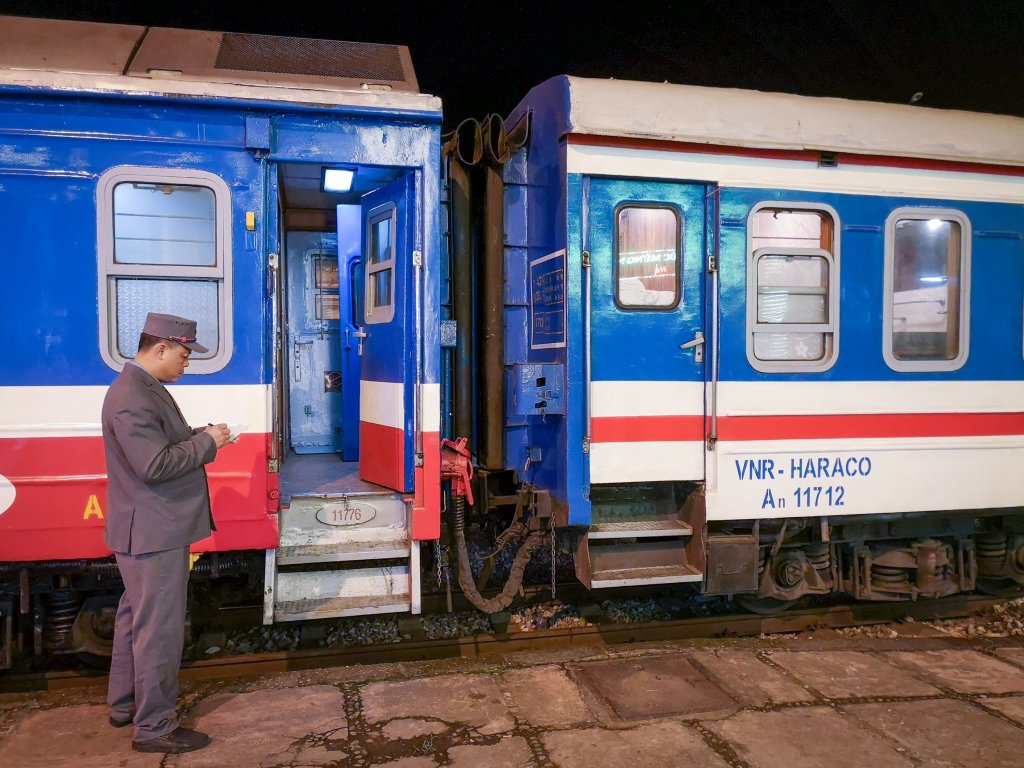
The sleeper train from Ho chi minh city took 10 hours (this ride was an exciting milestone for me because after passing Nha Trang I’d ridden every inch of Vietnam’s mainline from Saigon to Lao Cai at the chinese boarder). Tuy Hoà boasts an impressive old Champa tower, the Phu Yen province museum (which was free) but I mostly came to Tuy Hoa for one thing…
Phu yên museumMe drinking a coconut at the tower
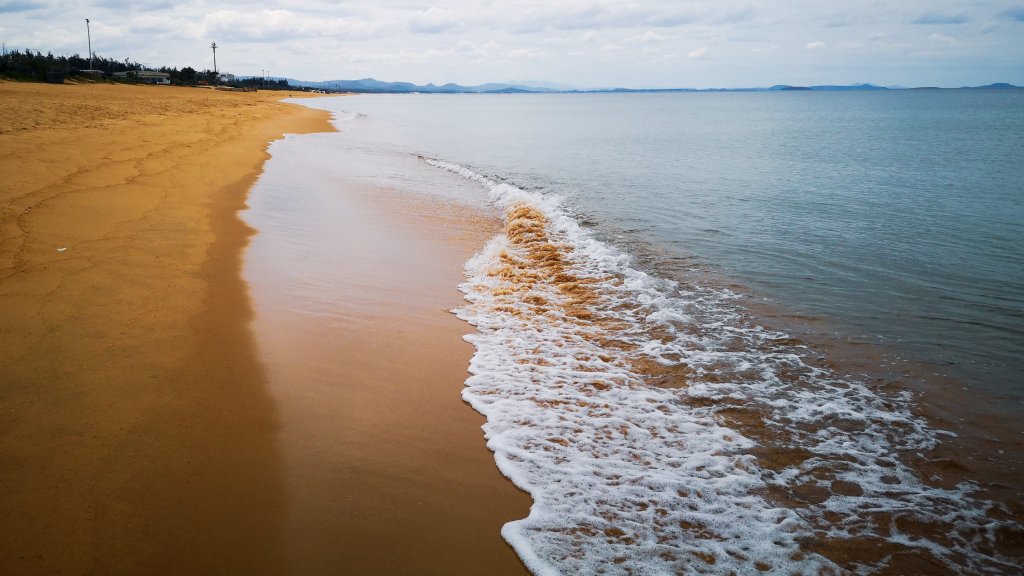
Tuy Hoà has an amazing beach! During the day it was completely empty but when the sun began to cool around 5pm it filled up with locals cooling down after work. As someone who cut his teeth sea swimming in Cornwall, the sea here is very warm. You could even rent a karaoke speaker for 50k an hour right on the sand! After a lot of swimming I was famished and this the city boasts some delightful street food.
Idyllic beach
Tuy Hoà has a great selection of southern style pho noodles, puddings such as durian che and ice tofu. There is also a famous restaurant near the seafront selling Tuna eyes!
Overall I think Tuy Hoà made a great quiet getaway from Ho Chi Minh City which I desperately needed. Next stop is Qui Nhon which is a short bus ride from Tuy Hòa.
I spent a night in Bangkok but didn’t sleep a wink. If you’re thinking about Bangkok’s nefarious reputation you might need to get your mind out of the gutter because it’s not what you think.
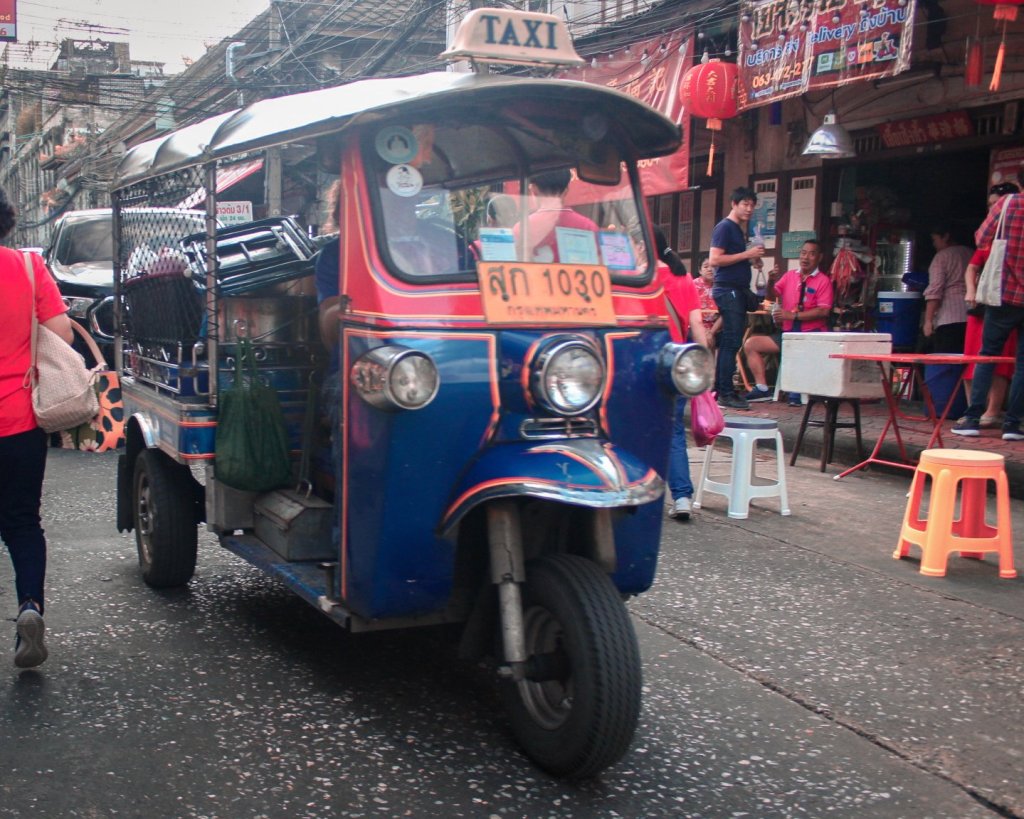
A tuktuk in Bangkok
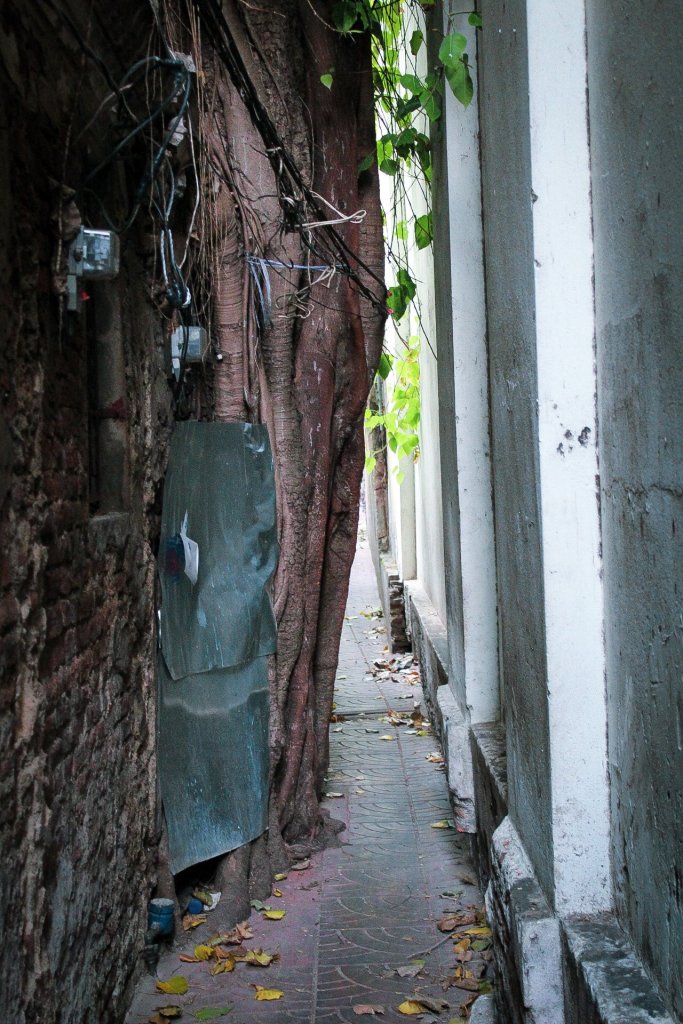
Bent over double I managed to squeeze passed the banyan tree that half blocked the narrow alley. I would never have even found this place if it wasn’t for the family I encountered eating their dinner on the pavement who very kindly led me here. This is where I’m staying tonight; in a hostel down this alley.
The alley to the hostel
This is Bangkok, just off Yaowarat Road. I’ve been to Thailand before but it’s my first time in the capital. It had been a long day flying from Saigon via Hanoi then exploring the city, little did I know I wouldn’t get any rest that night…
Meeting up with a friend from Glasgow was a rare treat. Unfortunately Mook had come home due to a sick family member but it was still great to eat street food and compare life in Southeast Asia to life in Scotland. However the reason for me being in Bangkok was very different.
It was the eve of Chinese New Year. The festival is also celebrated in Vietnam so I get a week off work and I’ve taken advantage of that to travel. Have you figured out why I chose to stay by Yaowarat Road?
Thai culture doesn’t observe Chinese new year; their new year celebration falls around April and is called Songkran. However there is a large Chinese diaspora in Thailand and Yaowarat Road is Bangkok’s Chinatown. This week the street is done up with lanterns and lined with an tantalizing array of street food vendors. The food is an amazing fusion of Thai and Chinese cuisine. It’s one of the few places in the world where you can still see people selling the controversial shark fin soup (which I did not try!).
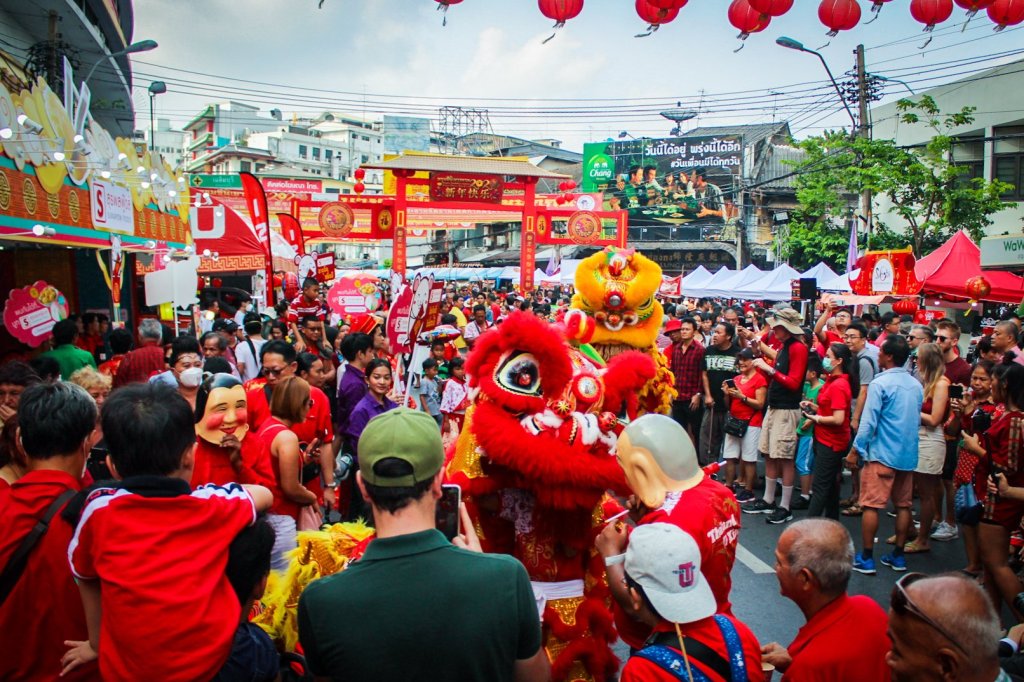
And so after an evening of crowds, snacks and Thai beer I headed to the dorm. I’d just settled my head down when the clocks struck midnight and there was a cacophony of drums! It turns out that Chinese New Year here is welcomed with dragon dances which are accompanied by a band of drummers. It was impossible to sleep! So as they say, if you can’t beat them, join them. It was amazing to watch the dancers in their elaborate costumers parading down the brightly lit street. The lions collected lucky money which the audience fed into their mouths.
Lion dance in Bangkok Chinatown during the day
I spent the next day exploring Bangkok. In the evening I headed to Hua Lamphong station to catch a sleeper train to Chiang Mai for the next exciting instalment of my trip. Keep an eye on this blog for the next update.
I think this trip will be difficult to match next chinese new year! Do you know any great or unusual places to celebrate chinese new year? Leave me a comment to let me know!
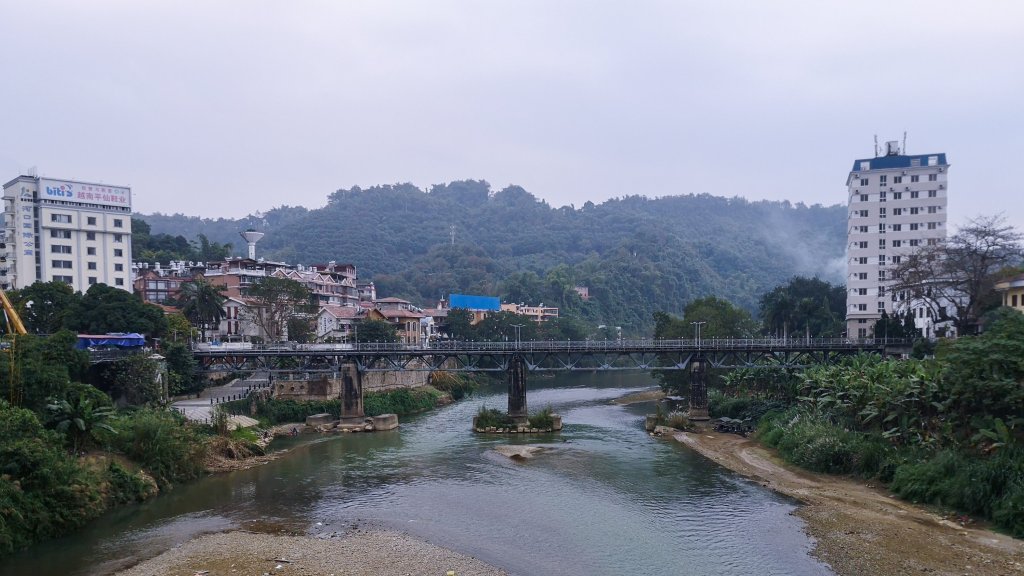
Is it my imagination or does the air smell sweeter on the Vietnamese side of the border? There’s certainly more greenery around. China seemed suffocating now looking back but it’s only 200 meters away. The austere concrete high-rises stop suddenly at the river and then on this side there are rows of typical tacky faux-classical Vietnamese villas. Looking at them now with fresh eyes, I appreciate them as expressions of individuality, if not of great taste.
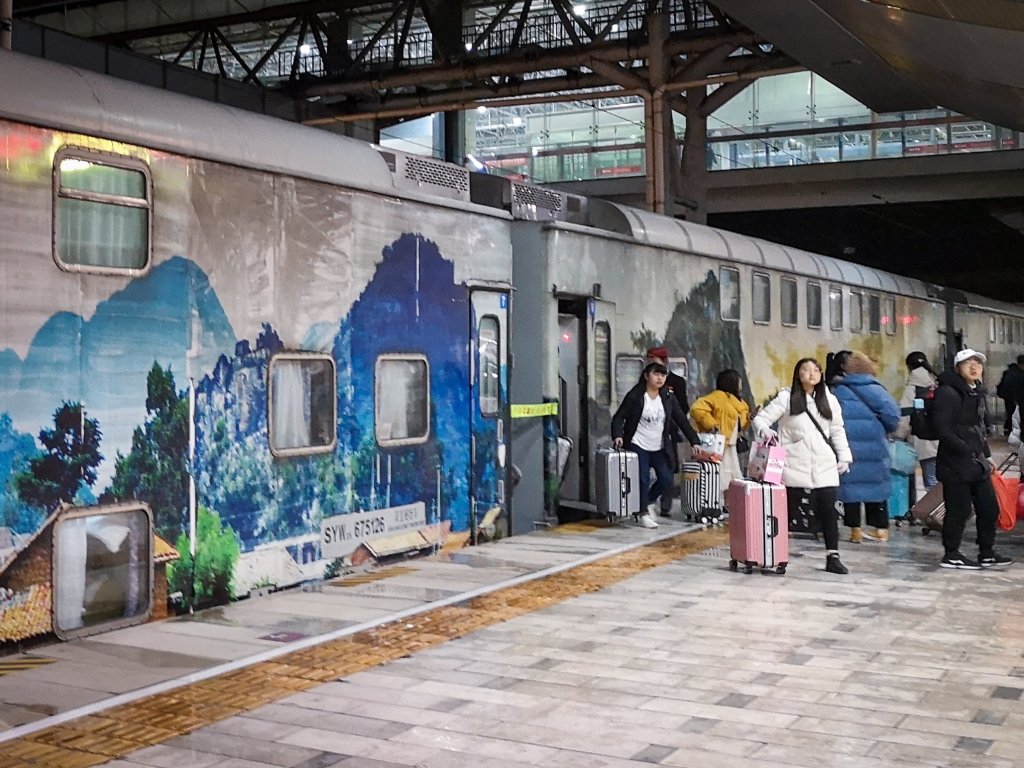
Double decker sleeper from Lijiang arrives in Kunming
I’ve always imagined there’s a certain romance to crossing a border on foot. Leaving one countries soil to set foot on another without a plane or boat in between. After getting off my the morning train from Kunming, I took a taxi to the border. I was confronted by a huge queue, several hundred meters long! But I realised this was for goods to declare and people with nothing to declare could skip this queue entirely. The building was not entirely dissimilar to an airport or the ferry terminal in Shanghai. However queuing at passport control which was a nightmare! People were pushing and shoving and the chinese staff did nothing to control it. Eventually I got to a counter and was given the worst interrogation of my life: about why I’d been in china and what my business was in Vietnam. After that I was out onto the bridge. The bridge is a couple of hundred meters long. One side is china and the other vietnam. There was a steady stream of people going each way.
Left: China, right: Vietnam
The other side of the bridge had a grand colonial style building, very Vietnamese taste. Inside was peaceful with organised queues and beautiful wooden counters where I was stamped into Vietnam. The officer teased me about my poor vietnamese language skills. I realise that I missed the vietnamese playful sense of humour.
It’s a few hours until my train home and Lao Cai town doesn’t have much going on. Its walking distance from the border crossing to the train station. I wander down the side of the narrowguage railway that once crossed the border and went on to Kunming. Apparently the track is still used on the chinese side of the border but only for freight. I wave to a train and have a moment of childish glee when the driver waves back, followed by the guard in his coach on the back!
I have dinner in a restaurant aimed at western tourists and indulge in entirely inauthentic banana pancakes. I muse over the 2 week journey. Have I learned anything? Maybe that Christmas doesn’t need music, decorations and a big dinner (although I do miss that if I’m honest). Or maybe the main lesson of this trip was that the destination was disappointing and the best bits of the journey were serendipity along the way. Perhaps next time I’ll plan less and find my Shangri-La by going with the flow. Nah that’s cheesey, I’ll stick with the dinner thing.
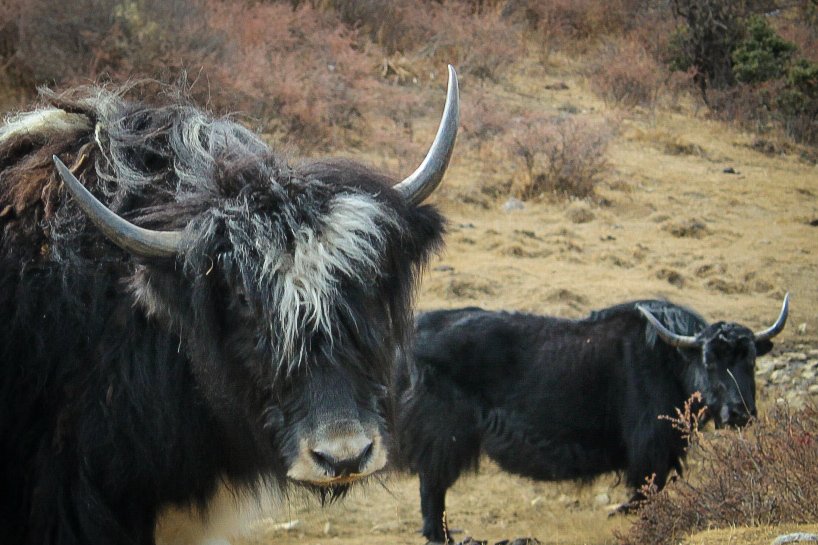
To my surprise the man tending the yaks on the hill near Shangri-La spoke to me in English. He didn’t want to be photographed but asked me what I was doing and told me about his nomadic lifestyle.
Yaks
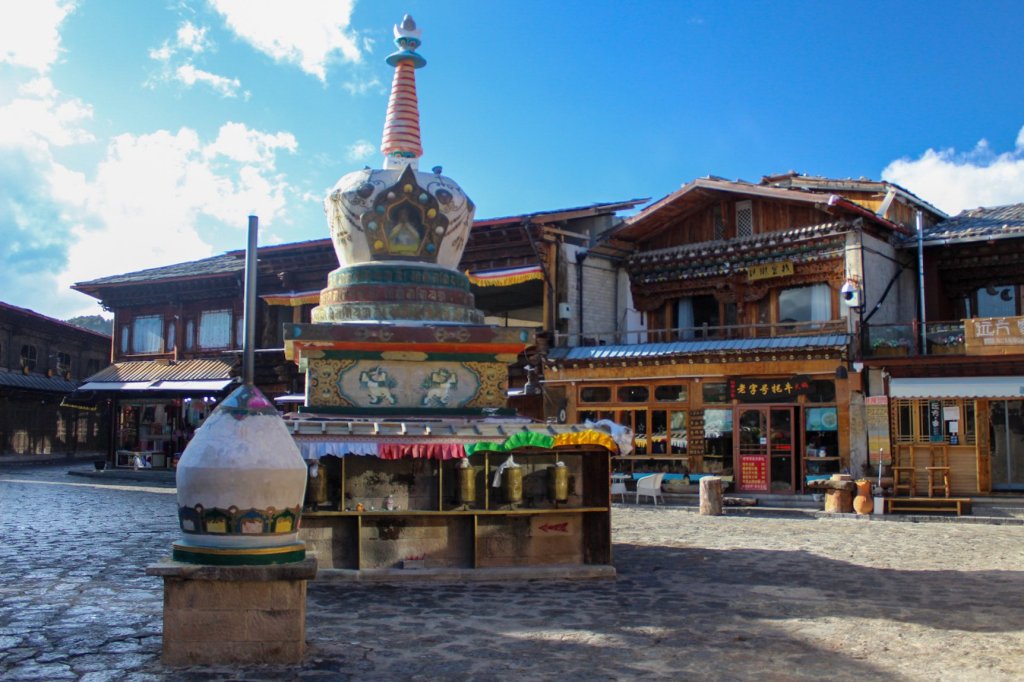
The name Shangri-La was made famous by the 20th century novel and movie Lost Horizon in which Shangri-La is a fictional community in the Himalayas. However Shangri-La is now a real place! in 2003 an enterprising town in Diqing Tibetan Autonomous Prefecture changed it’s name to Shangri-La, or Xiangelila (香格里拉) in Chinese. I found this online when planning my trip and decided I had to visit.
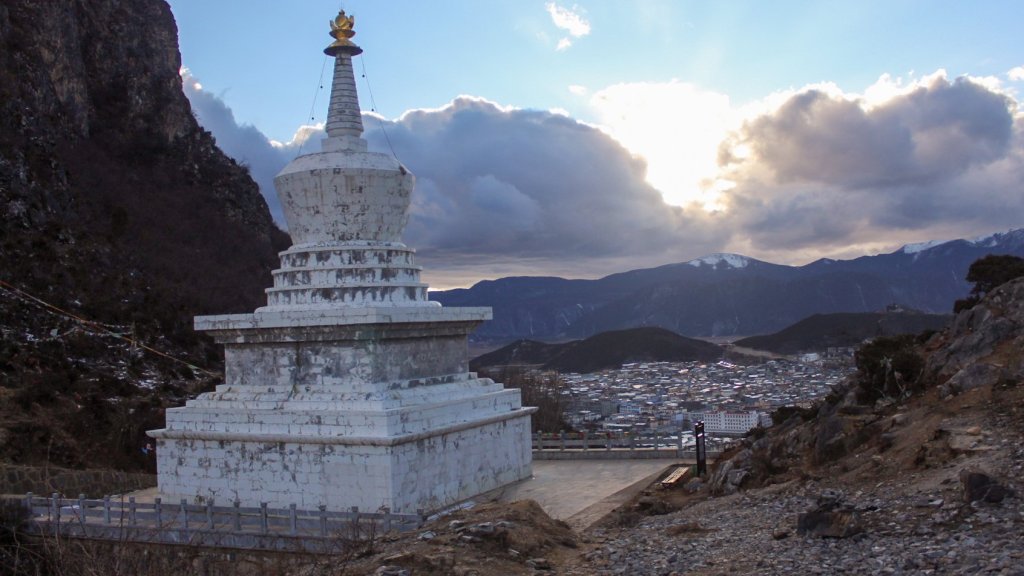
I’d seen the white stupa saddled between two peaks above the town and decided to try and climb up to it. It was gone 5pm and the beginning of January but the sun was still far from sinking behind the mountains due to being so far West of Beijing (where the time comes from). I was keeping an eye on the sun for when I’d need to turn back.
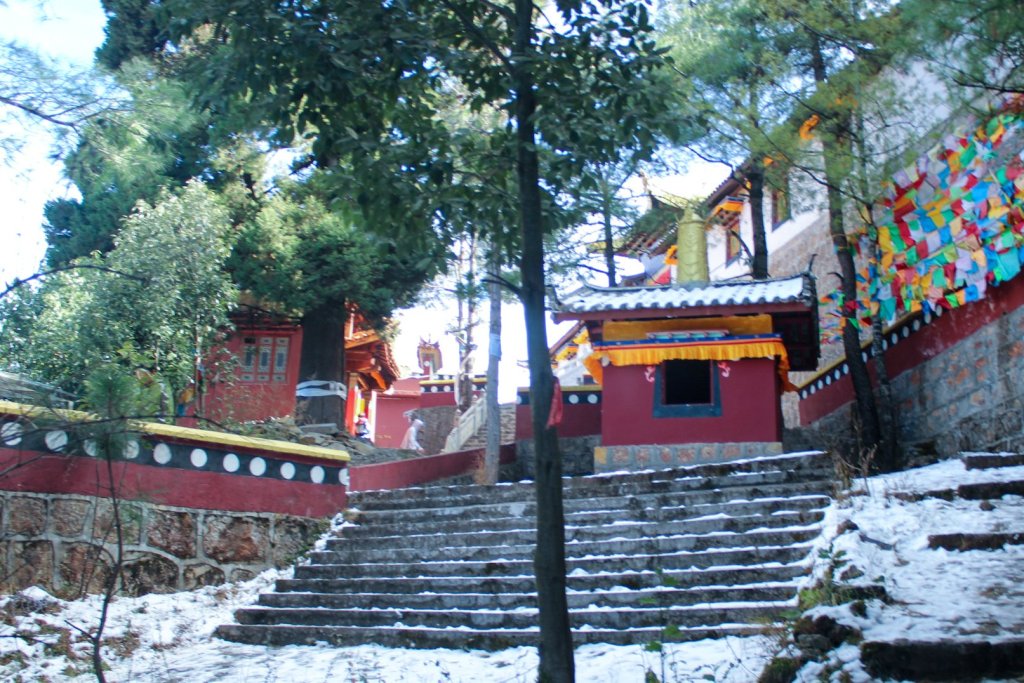
The walking was difficult; due to the altitude I’m pretty sure! The town sits at 3,160m above sea level which meant that I got out of breath much more easily than usual. When I reached the stupa, not only was I rewarded with a great view over the town but there were also yaks milling around. I also noticed that the footpath continued after the stupa.
View of Shangri-La from the stupa
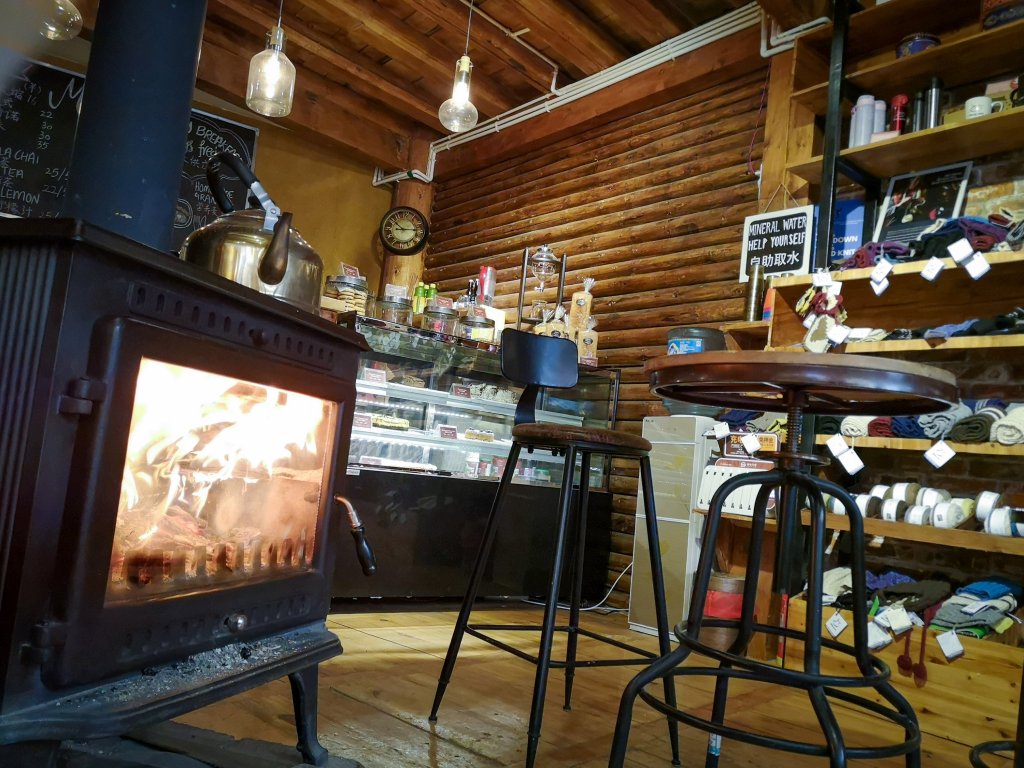
It had been hard to get out from under the electric blanket into the -9°C cold. I’d embarrassed myself ordering breakfast in Mandarin from the waitress who was actually Singaporean (so spoke perfect English). The cafe had a cosy woodburning stove which I parked myself right in front of as the only customer. The waitress told me that most of the people in the touristy old-town were not local to the Province, let alone the town. She said it’s busier in summer. Personally, I’d come here for the cold; to get away from the heat of Saigon for a while so the off-season weather suited me fine.
Cosy cafe in Shangri-La where I had breakfast
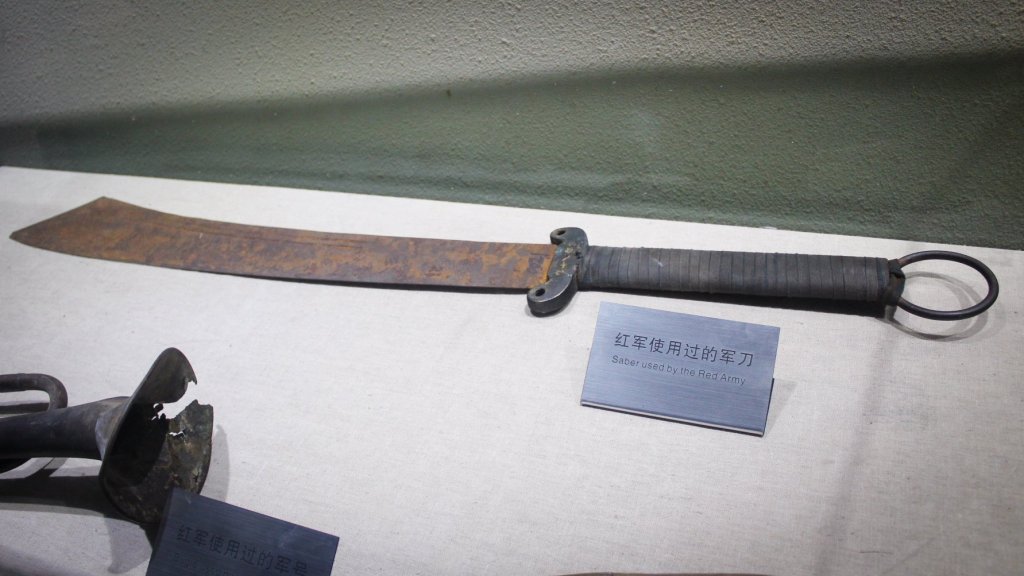
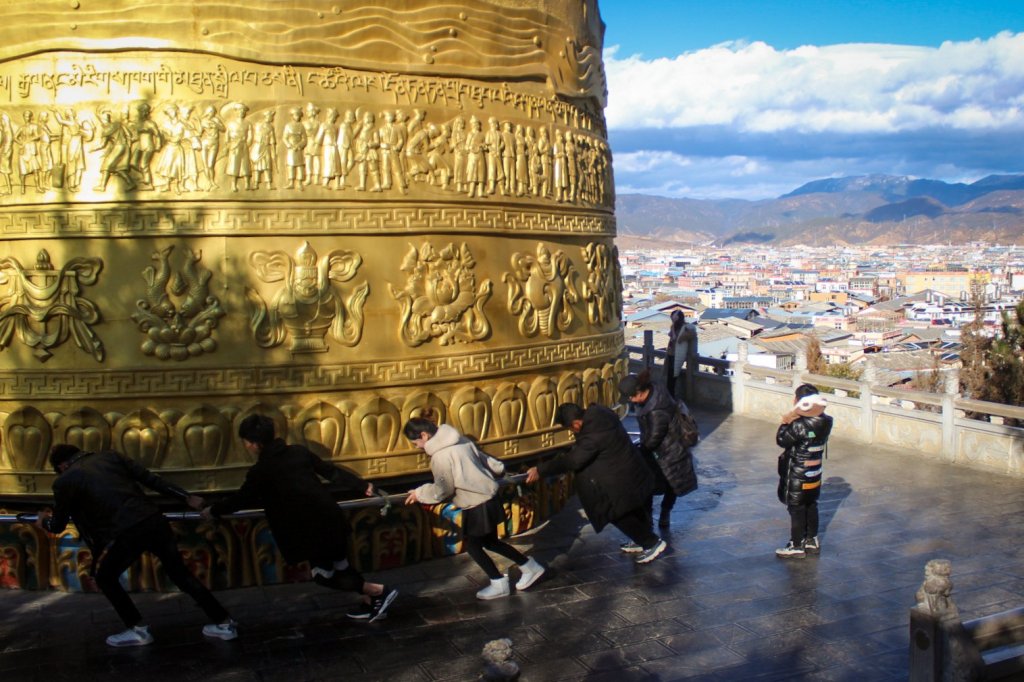
I’d visited to the embroidery gallery, the giant prayer wheel at Guishan temple, the Long March museum and was bored of the facades of the old-town selling the same tat that was sold in Kunming. So I decided to trek back up to the Stupa to see where the path went and that’s how I met the yak farmer.
Exhibit in the Long March museum Han tourists in a jolly mood rotate the giant prayer wheel
He encapsulates Shangri-La well. Tibetan but global. Rustic but touristic. Was Shangri-La worth visiting? Maybe not. Was the trip worth it? Definitely! After all, I chose Shangri-La at random after seeing the name on the internet.
The path looped around to the town on the other side of the hill. I walked from there to the bus-stop to catch the bus back to Lijiang where I’d change to a sleeper train back to Kunming – my journey unraveling a like callstack popping the previous destinations. Then I would change onto the train to Hekou which sits on the northern bank of the river Sông Nậm Thi. On the southern bank: Vietnam.
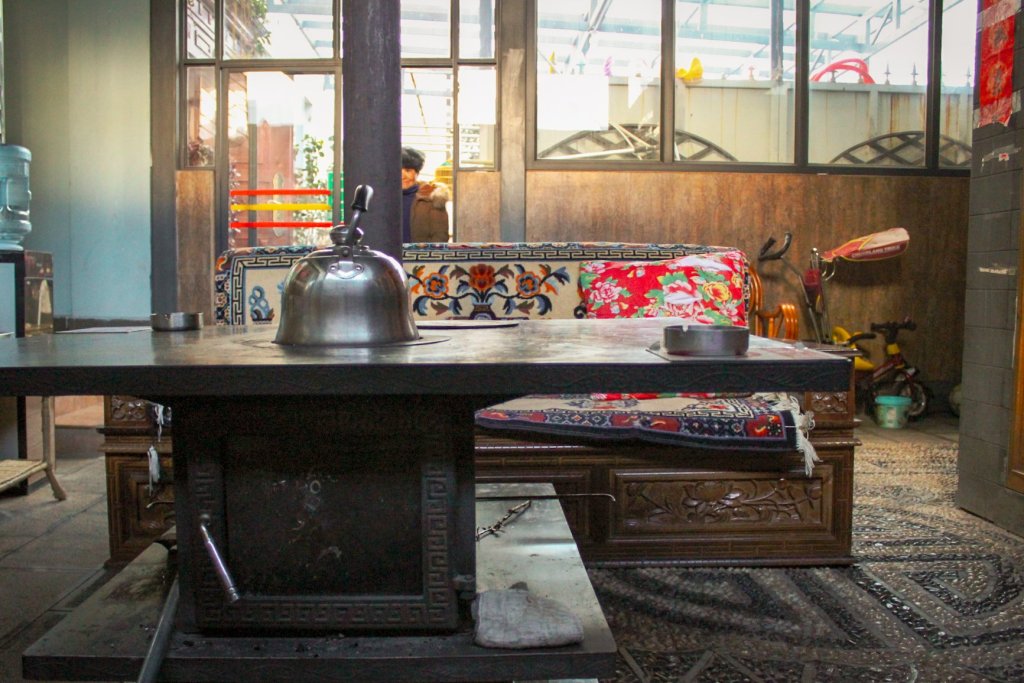
Smoke fills the room from the wood-burning stove in the centre. Mama says the chimney is cracked and needs repairing but I enjoy the smell of the wood-smoke. The stove has a large flat metal top that acts as a table. Around it are old comfortable sofas. Currently they are filled mostly by a family of Malaysians. They pass me a beer and ask me about my travels.
Mama Naxi’s cosy front room
We are in Mama Naxi’s Guest house, just outside Lijiang‘s ancient city centre. Mama means mother in Mandarin but these people here are Naxi people who speak their own language. I learned a lot about the Naxi people by visiting the deserted museum on the outskirts of Lijiang, just passed the giant statue of Chairman Mao Zedong. I never did figure out however if Mama was her name or a title; everyone just called her Mama.
There was also an old man in the house who spoke scant English but we could talk well in Mandarin; his Mandarin was also bad which meant he understood me easily! He also had an air of peaceful serenity and was almost always offering me corn on the cob which he grilled on the stovetop all through the day. He was also in charge of keeping the water topped up. Water in china shouldn’t be drank straight from the top so all day he was boiling it on the stovetop and topping up large metal flasks with cork stoppers.
It was the night of December 31st and I asked Mama if there would be any fireworks. She said there would not be as the Chinese celebrate new year by the lunar calendar. Come midnight and there was a deafening sound of fireworks from all around. From the house we didn’t get a good view.
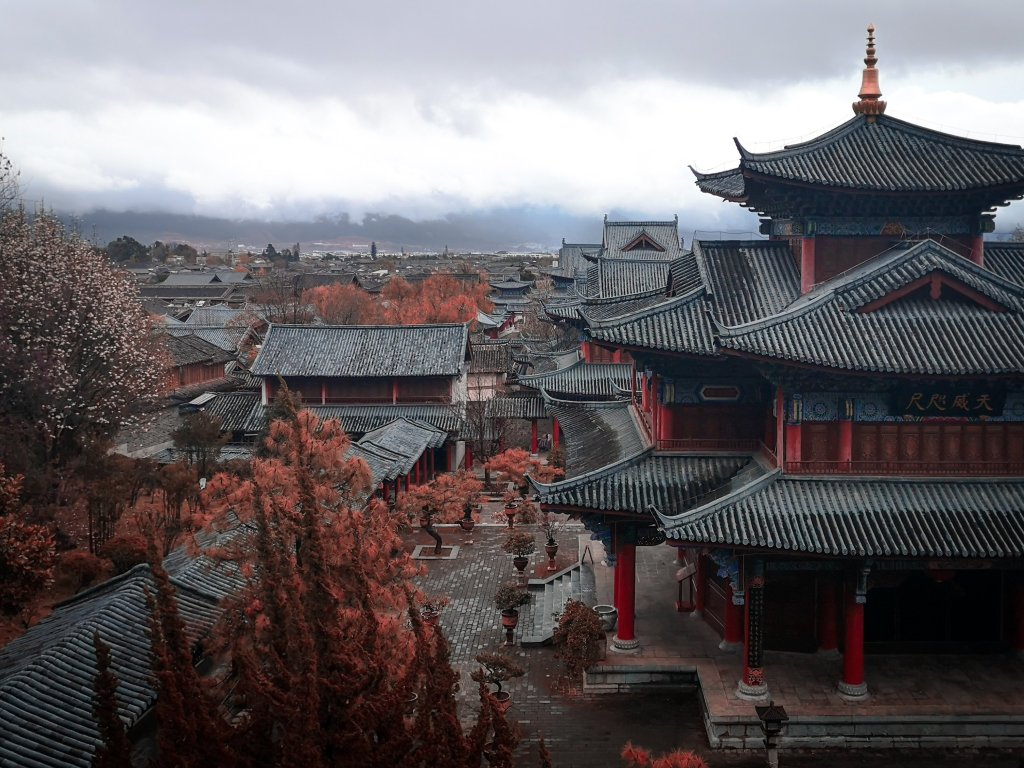
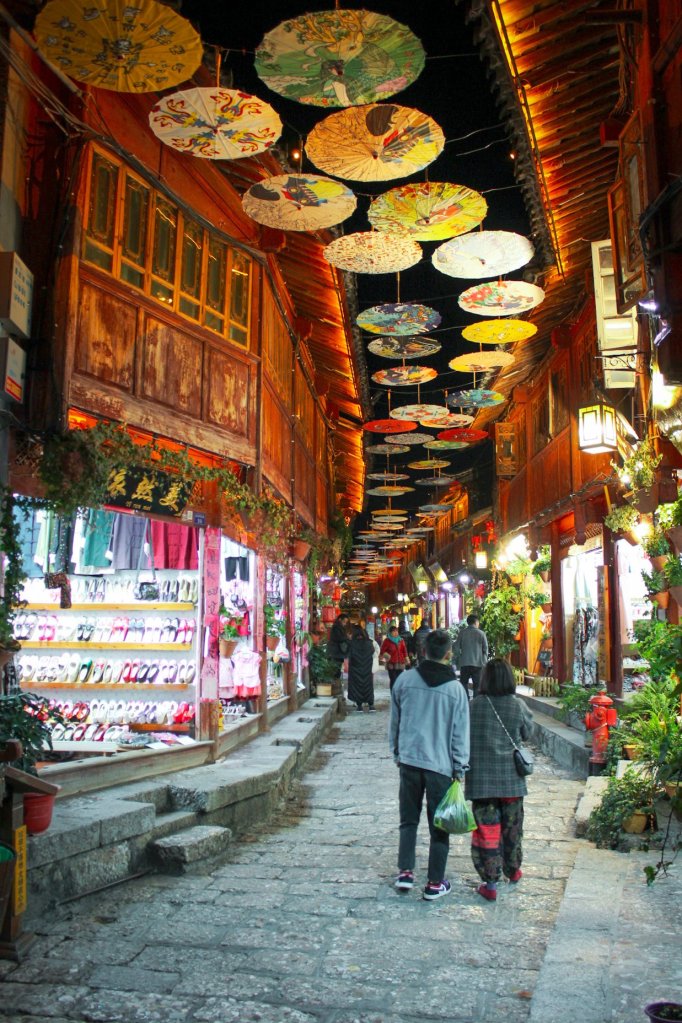
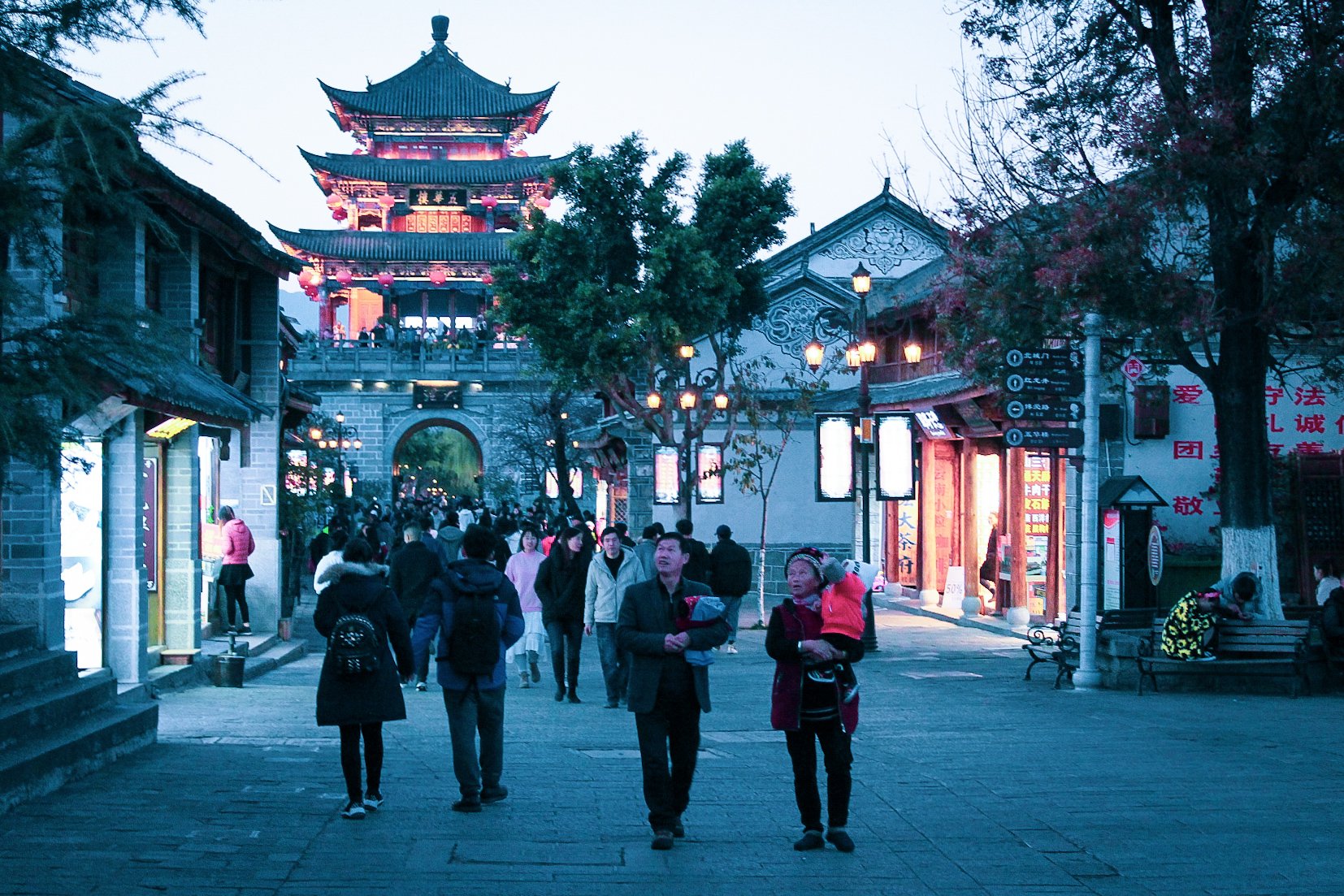
Lijiang is another city on the tea horse road. It has a sprawling ancient town, but unlike Dali where the ancient town is a few miles from the modern city; Lijiang’s ancient town sits in the middle of the new town. The ancient town is so big and the roads twist all over the place, I got lost every day. I found that the best food came from the local marked that sat just outside the ancient town. They had many fried delights for a much more reasonable price than the inflated prices of the food within the ancient town, which attracts a lot of tourists from all over china as well as Malaysia and Thailand.
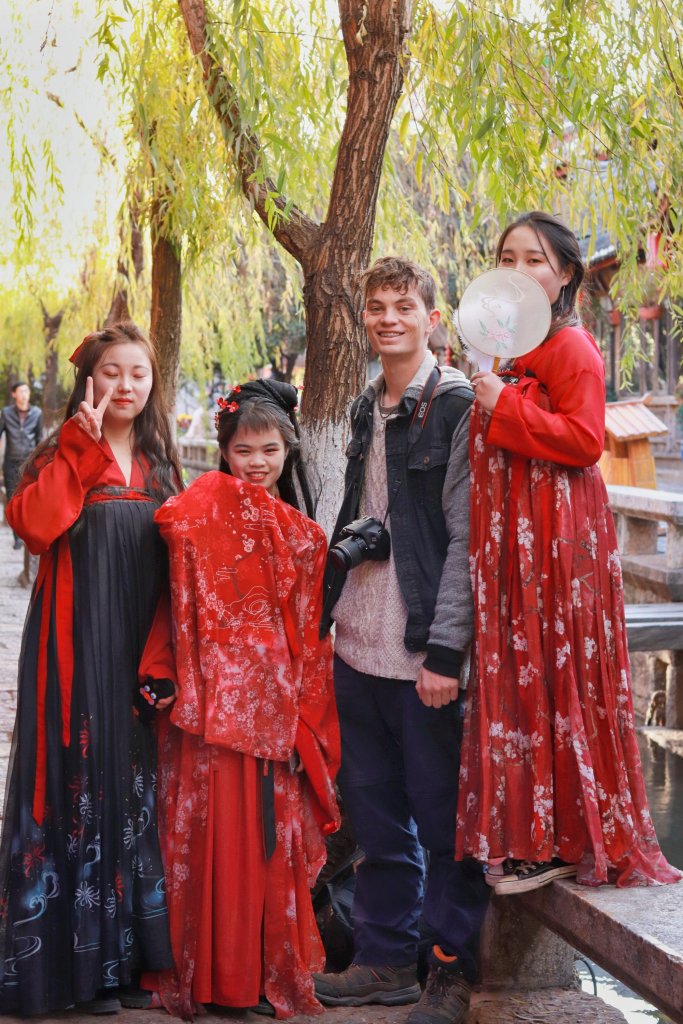
A street in Lijiang Dressing up in period costumes is popular. There were a lot of shops with dresses for rent
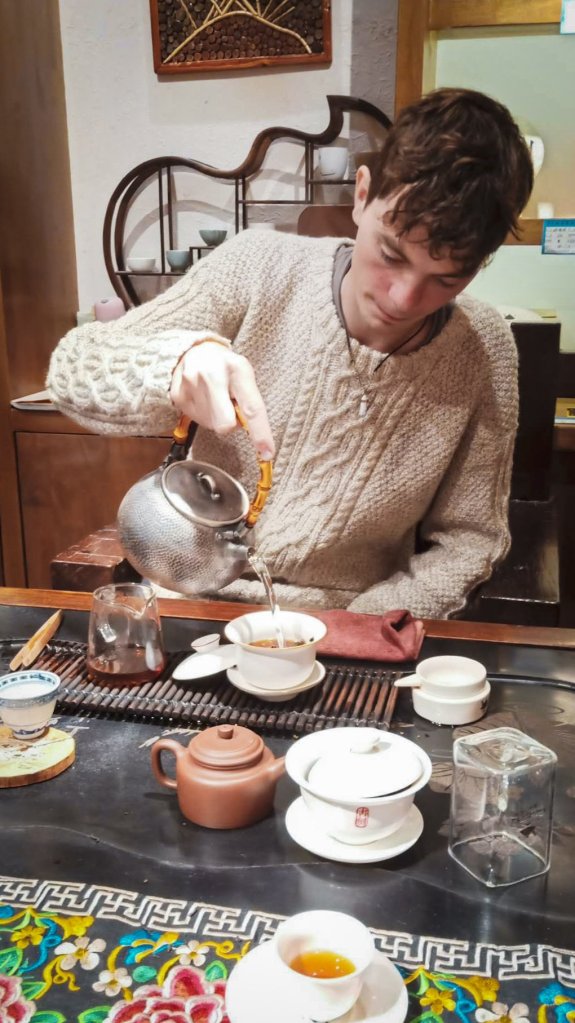
I had a few nice trips out while in Lijiang, I couldn’t leave this tea horse road town without having some tea. I went out to look for a chaguan (teahouse). I didn’t find one but I did see people drinking tea in the shops selling tea so thought I’d try my luck and walked into one with no customers and asked. The lady not only served me tea but also gave me a lesson in serving her tea! I bought two circular bricks of tea to bring home. When the shop closed, she took me on a quick tour of the city and then we joined the folk dancing in the square. I couldn’t get the hang of the steps but everyone went around in a circle with their arms around the people either side. I found an example on Youtube.
Learning to serve tea
From Lijiang I took the bus to my final stop on my Christmas adventure; Shangrila!
I haven’t finished writing about Christmas yet and then I have Chinese New Year to write about…. However I thought I should do a quick update on the coronavirus situation.
Let me start by saying I haven’t caught the virus and neither has anyone I know. There have been surprisingly few cases in Vietnam. At the time of writing, there is a higher probability of catching it in the UK than in Vietnam so don’t worry about me!
School’s have been shut here since the start of February in response to the virus. They closed at the end of January for Chinese New Year and never reopened. I have been tutoring some of my students in cafes and others via Skype from home. There is talk of GCSE and A’level exams being pushed back but the IB organisation have apparently issued a statement saying that nothing will change so we’re worried about that.
Other than that most things are operating as normal here. People are wearing surgical masks but people always have done; they think it helps with pollution. I hear that Vietnam is no longer issuing new visas and have removed the visa waiver for tourists. I haven’t noticed any difference in the number of people out and about but I hear tourist cities like Hoi An are very empty.
I grew up in the countryside and I’m definitely a country boy at heart. I love to get away from the roads, noise and crowds of city life and lose myself in the wilderness. In the novel and film Lost Horizon, Shangri-La is a place to escape from modern society. I guess that’s why I was so attracted to Shangri-La when I heard that it’s the name of a real place and why I dedicated two weeks to traveling across China in the heart of winter to get there.
This is what I was thinking about as I sat alone on the pine-needle covered floor of the mountainside eating duck jerky and watching the view; nothing around me but trees and snow.
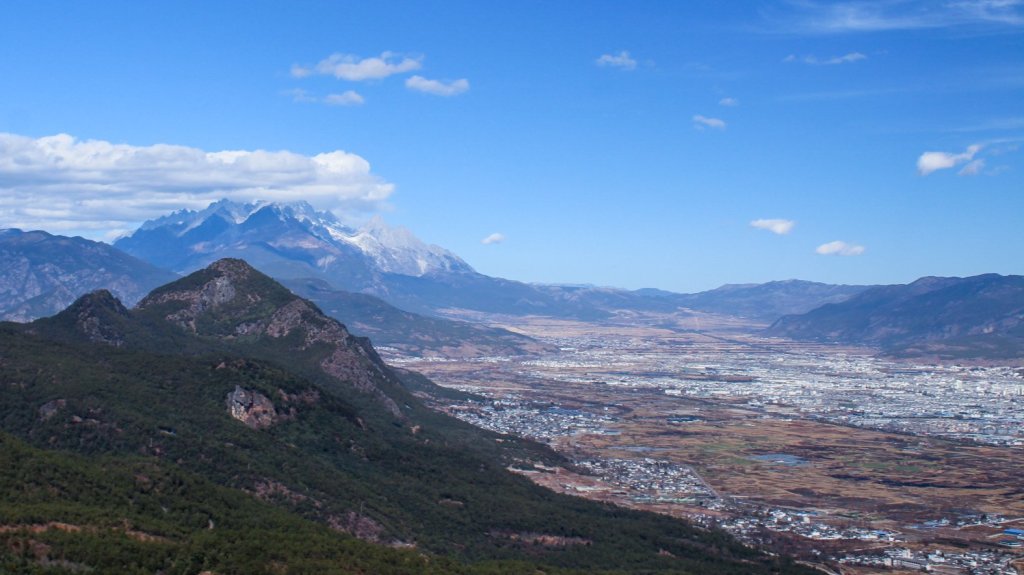
Looking out from my seat 500m up Cangshan mountain I had a fantastic view of Erhai lake: the source of the Mekong river. I could also see the famous ancient three pagodas – which I had visited the previous day – and the ancient walled city of Dali where I was staying in a hostel.
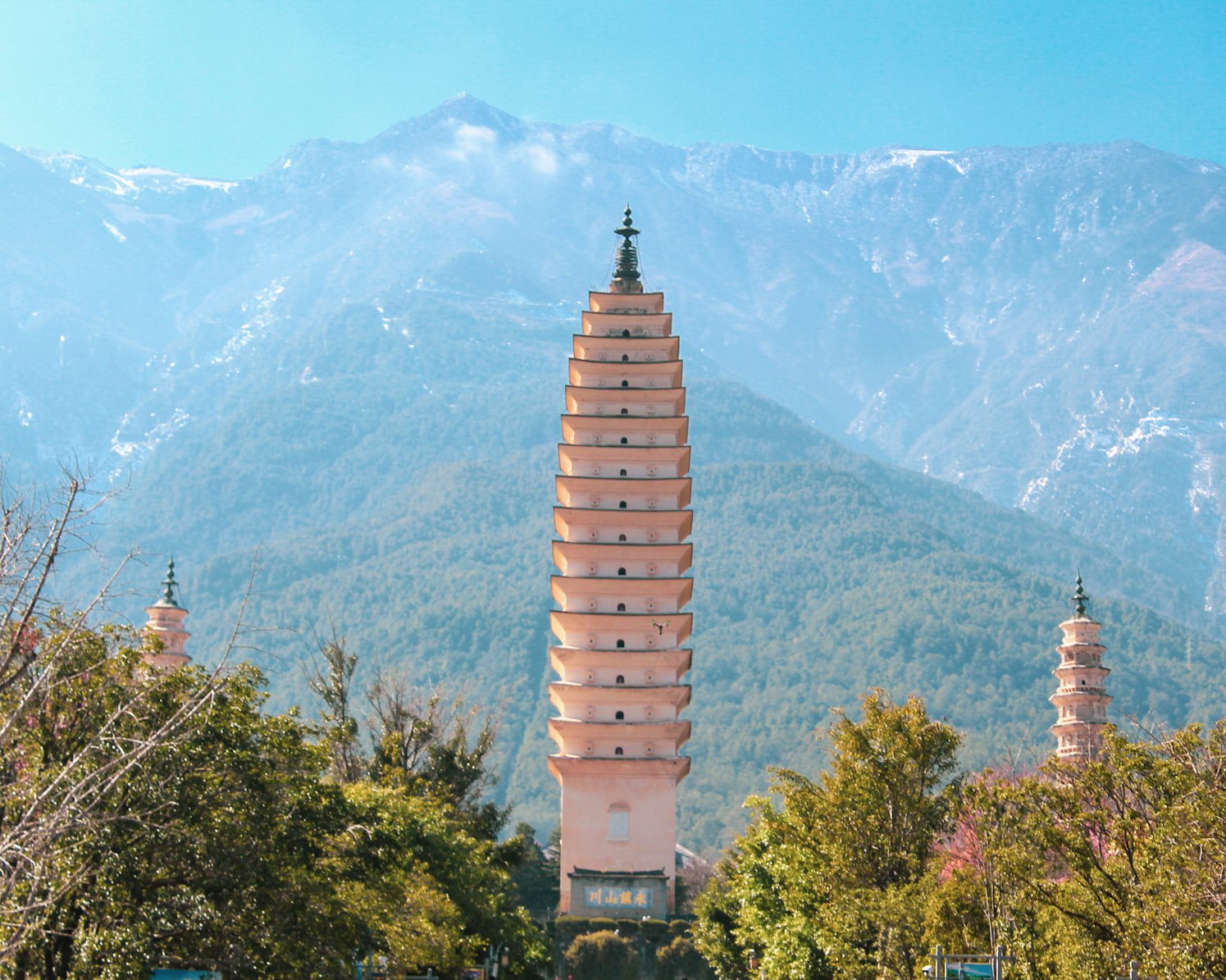
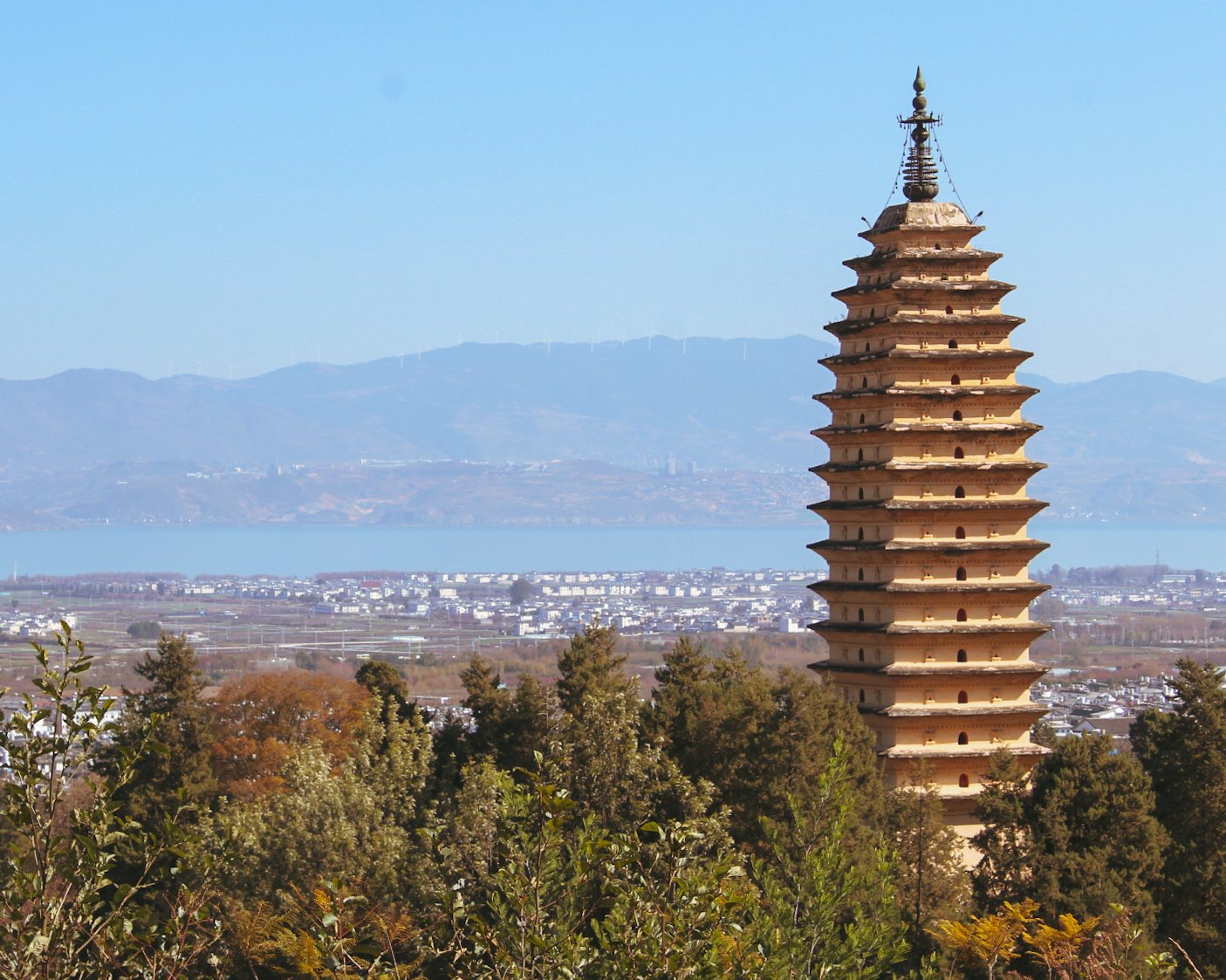
The three pagodas with Cangshan behindA different pagoda looking out over Erhai Lake
The only reason I had chosen to stop in Dali because it is a city that is easy to reach by train from Kunming and directly south of Shangri-La. I had seen online how Dali has an ancient citadel outside the modern city – like a Chinese Carcassonne – the stone streets lined with alluring street food. However, as soon as I had arrived in Dali and seen how Cangshan loomed over all the streets I knew that I would have to climb the mountain.
Dali itself is at an altitude of nearly 2000m (higher than any peak in the UK) but Cangshan touches heaven at over 4000m! The previous night the owner of the hostel had pulled out all his torn old maps and laid them out on the floor of the deserted common room. I was the only guest for the whole week. The maps hadn’t been any help; they’re not maps for hikers and only approximately where various tourist sites were.
I left the hostel early in the morning so that I had maximum daylight hours to reach the summit. After visiting a corner-shop for supplies: lunch and water, and a zaodian for a filling breakfast of baozi, I headed to where I thought the path up the mountain should start according to a blog I found on Bing. There’s no Google in China and the available English-language internet is very limited. I went up a few dead-ends thanks to that blog but eventually with the help of openstreetmap I found a footpath that would take me onto the mountain. Then it should have been a simple case of going upwards, right?
This path was guarded by a couple of old men. I think they were fire wardens. They told me that I couldn’t pass. I talked to them for a while and I don’t know what I said to convince them but after signing my name and declaring that I didn’t have a lighter on me they eventually let me passed onto the mountain. The blog I had read said that you need to pay to enter the mountain area but nobody had asked me for money.
I walked through what seemed to be a wooded graveyard then the graves ended and the path got steeper. The going was very pleasant with dappled sunlight coming through the trees and no other people around. This is what I left the city to do; get some peace and some nature. I felt very mindful, maybe even spiritual! Perhaps I was just lightheaded from the altitude…
After climbing only a few hundred meters I reached a wide, flat stone path contouring the mountain. The path I had come on continued up the mountain but was blocked with barbed wire and some angry looking signs. I came here for an adventure, not to walk on something flat and paved. In places there was even generic folk music playing from low fidelity speakers.
I consulted the map for another path that went up and walked around the stone path until I found it. However this was also blocked, and so was the third path. I ended up walking the entire length of this stone path and there was no further path up the mountain. On my way I passed a few walkers as well as some people collecting an entry fee at the top of some steps. They ignored me because I was already on the mountain and I think they assumed I’d already paid. I seem to have inadvertently found a backdoor onto the mountain.
The route around the stone path was nice in it’s own way even if it wasn’t to my taste. It goes in and out of folds in the side of the mountain created by streams. Each stream had a little pagoda. On the south side of each fold the day was getting quite hot and I removed my warm gloves and woolly hat but on the north side of each fold it was very cold and there was even snow! Back on went the gloves and woolly hat.
Taking a break on one of the shady side of one of cangshan mountain’s many folds
It is possible to get the the summit of the mountain by cablecar but I think they have closed all the paths despite the fact that they look very old and well trodden. I was very disappointed that I was stopped from attempting to reach the top and out of spite refused to take the cablecar. I’ve seen on the map that the other side of the mountain has what looks like a road which might be for cablecar maintenance. I was told that it might be possible to walk up that way during the summer.
After deciding to give up and go back I headed back down the path I came up. I eventually passed the old men fire wardens again who recognised me and gave me a wave; I suppose they don’t have many people coming this way.
By the time I got back to the old town the sun was setting. Time to pass through the ornate gate in the city wall and dine on the delicious street food and soak up the atmosphere.
It wasn’t a bad day by any means but what I’d really wanted to do was to lose myself in the wilderness for a while. I’m starting to learn that this is more difficult here in Asia than in Scotland. At least the food is better here.
Like Chita in Russia, I didn’t have any expectations of Kunming and ended up having a great time because I met friendly people by chance.
With Christmas Day and Boxing Day spent in Chengdu, I left for Kunming on the 27th. I left the hostel at 5am. My train wasn’t due to leave until 8am and I usually wouldn’t stress so much about getting to the train station early but China’s intercity train stations are different. They’re more like airports than train station, with baggage scanners and passport checks. They usually have a waiting area on a concourse above the platforms and check-in gates where you wait until you’re allowed through the ticket turnstiles onto the platform. The whole vibe is similar to Birmingham New Street but a bit more dystopian and yet a bit less unpleasant.
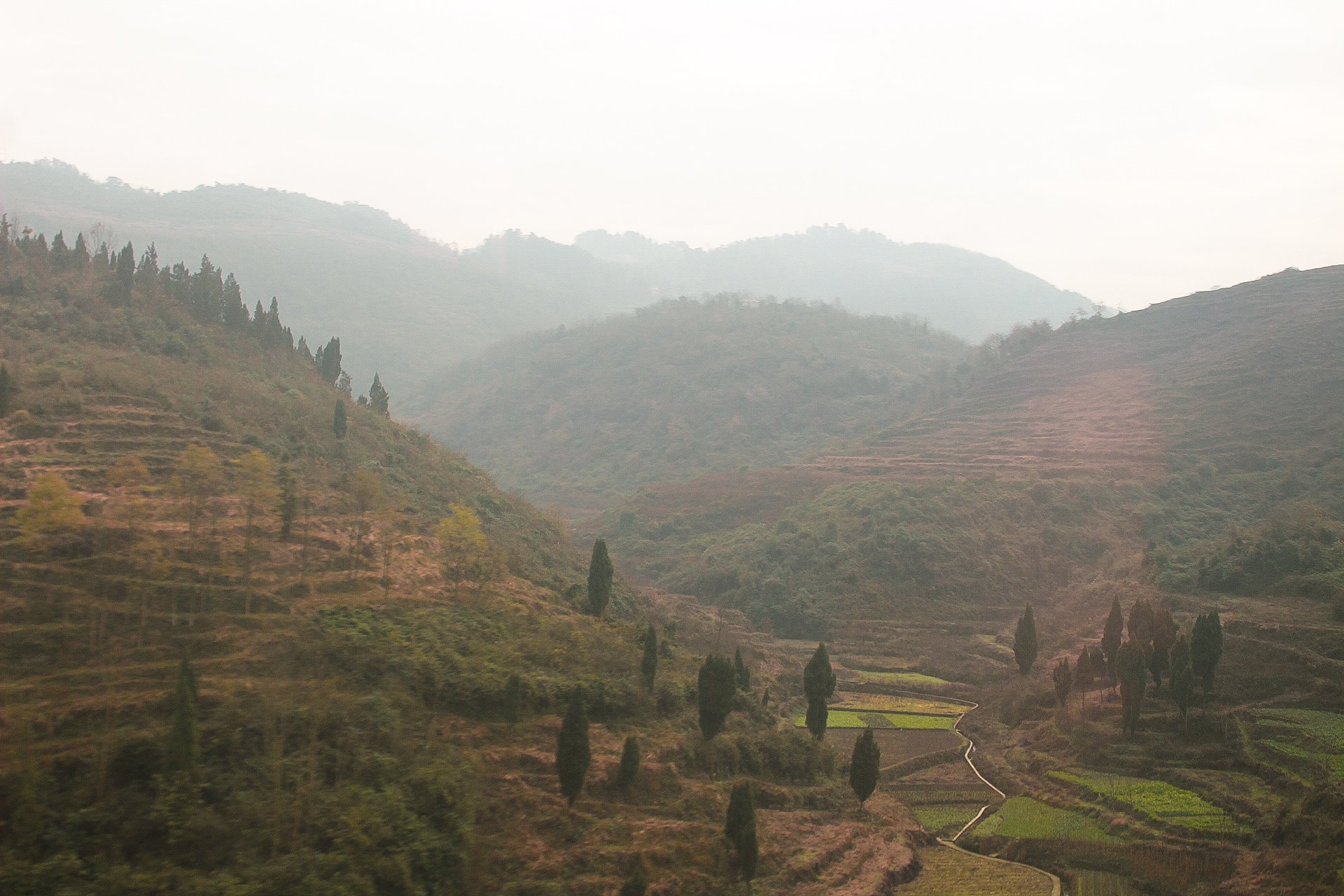
View from the train from Chengdu to Kunming. The soil of Yunnan is a distinctive red.
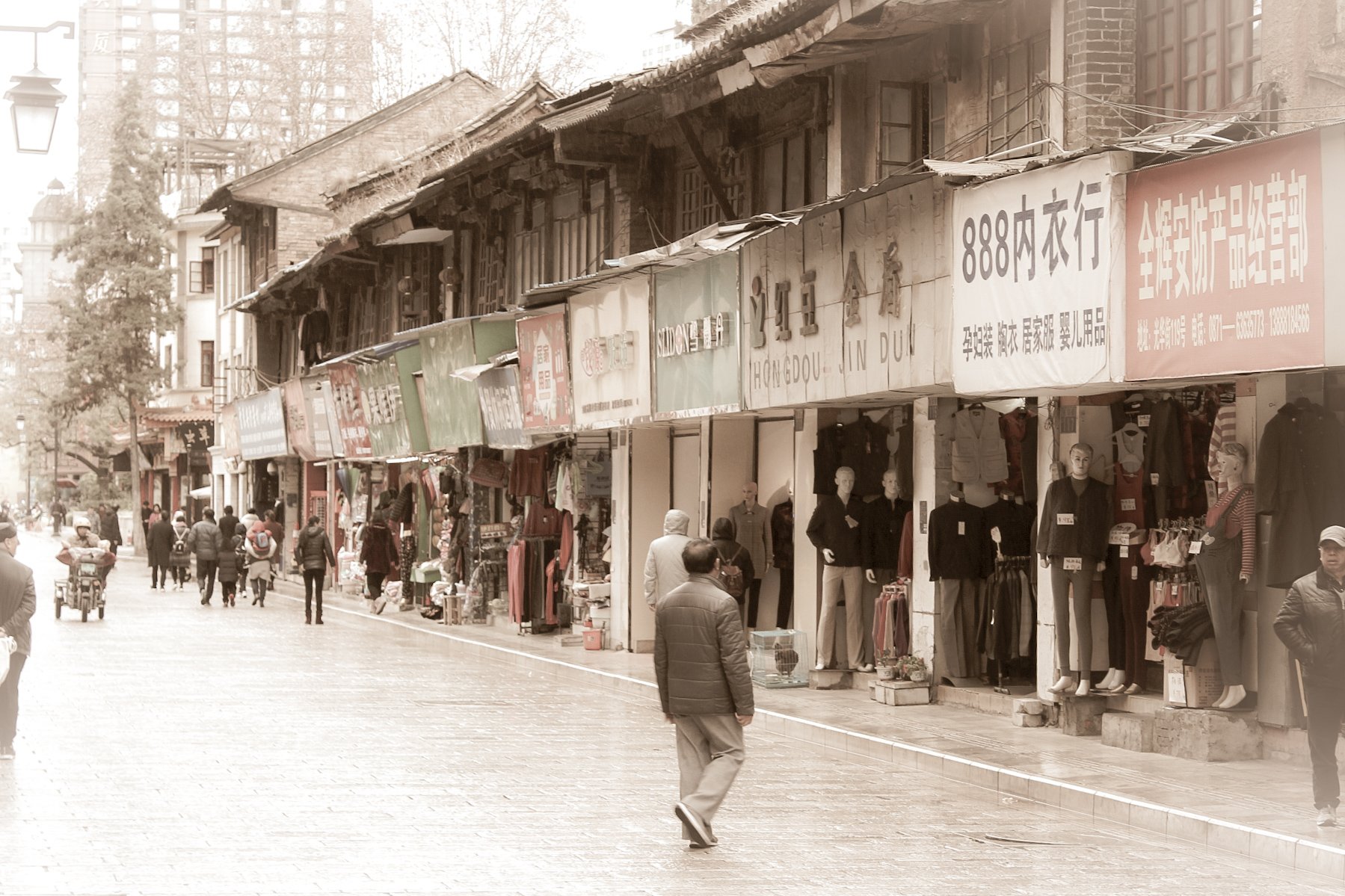
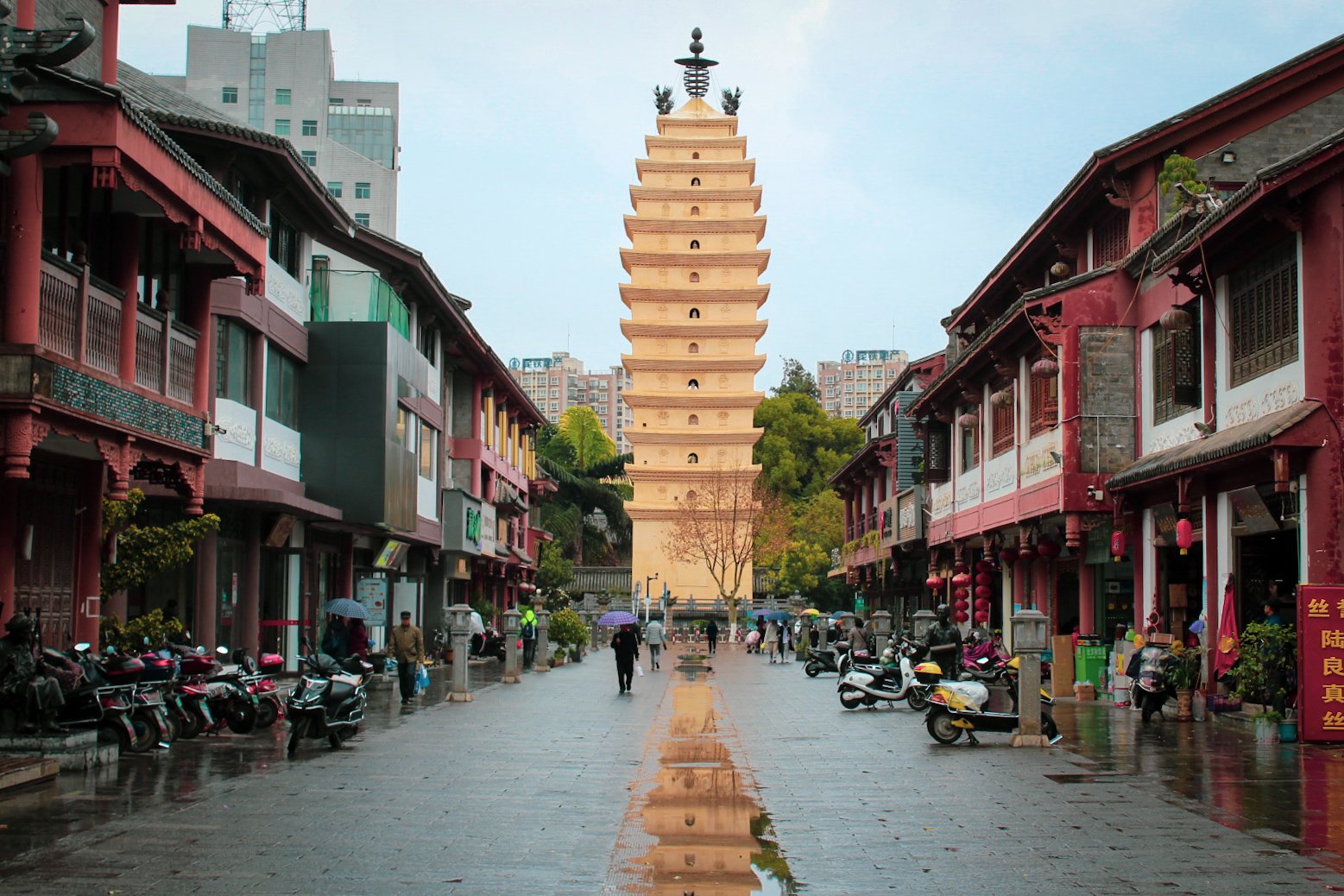
I pulled into the sleepy city of Kunming around lunch time, the province of China that borders Vietnam, Laos, Myanmar and Tibet. As you can imagine it has a diverse past. Kunming shows its history here and there amidst the modern Chinese cityscape with monuments such as the two ancient pagodas and ancient city gates. The streets also had some run down old houses that remind me of old films from Hong Kong.
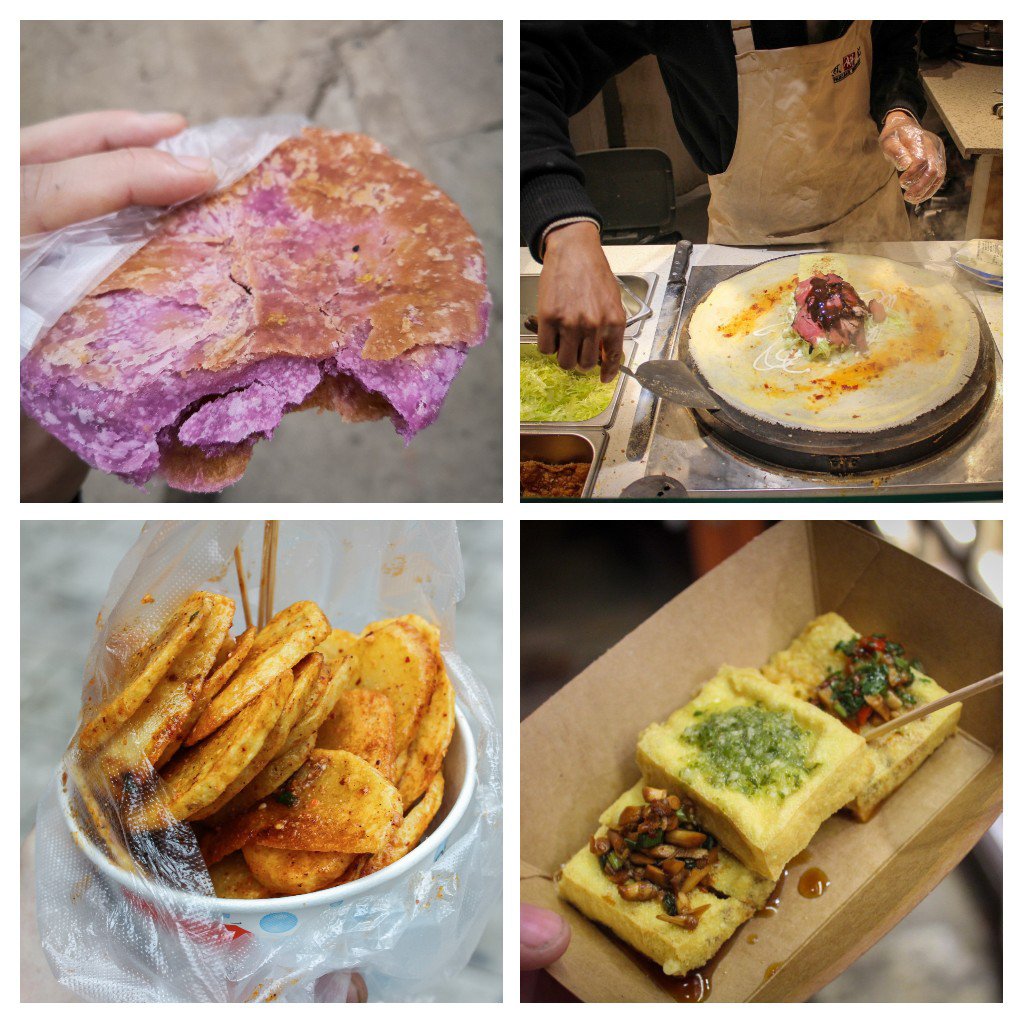
The thing I initially liked about Kunming was the street food. There were potatoes, pancakes, tofu and various other delights. I spent my afternoon wandering the streets sampling various treats until I was ready to burst!
Street foods of Kunming
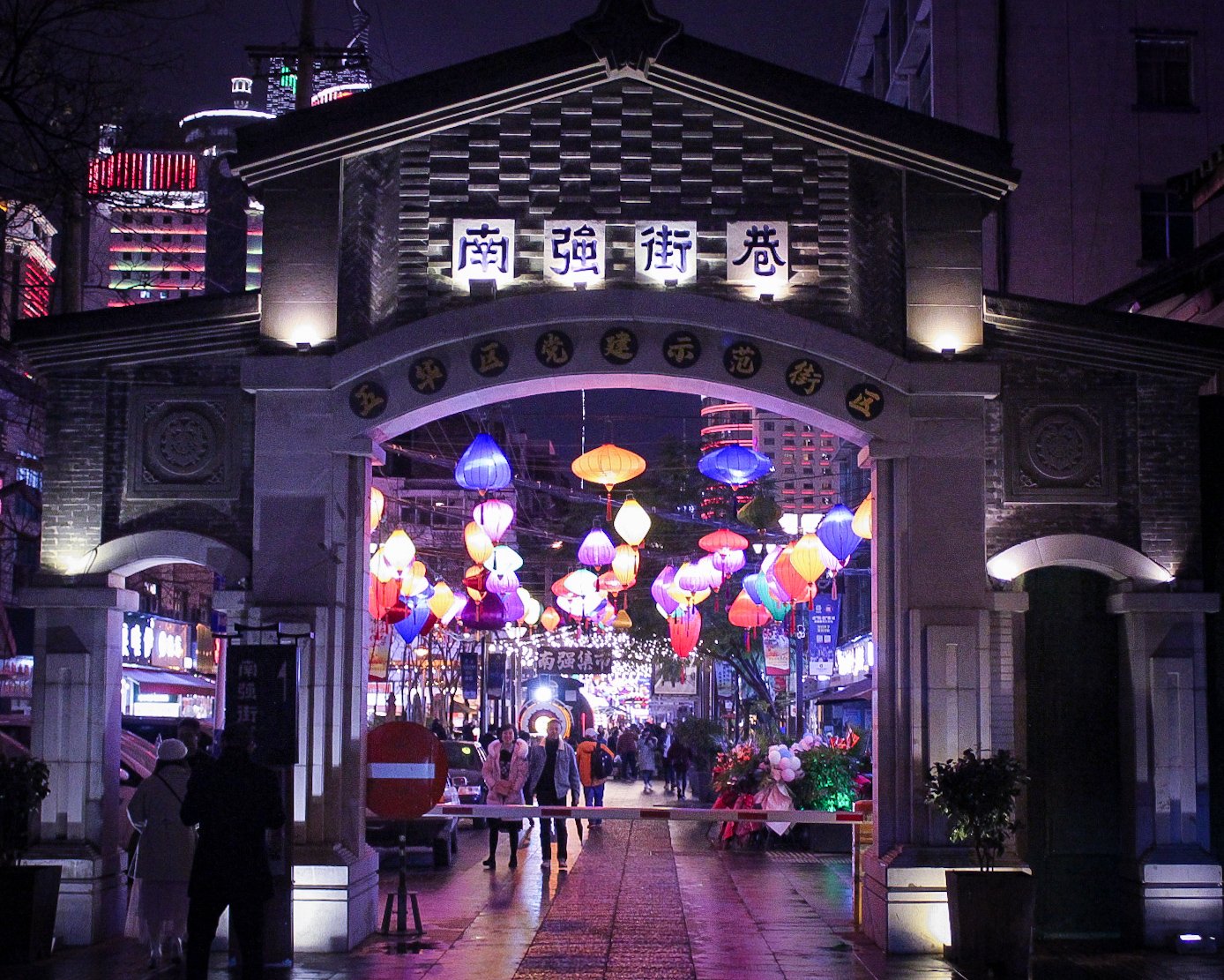
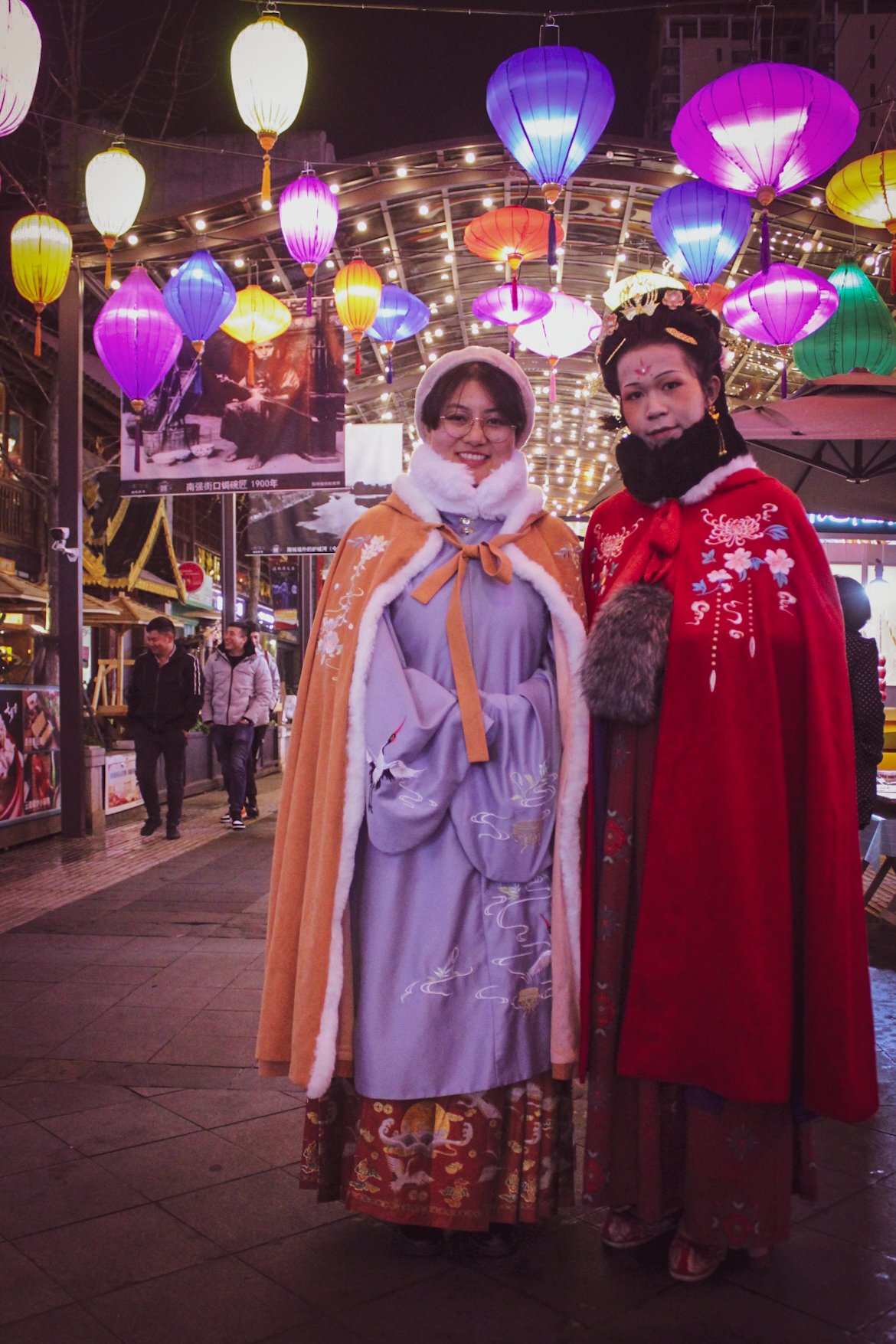
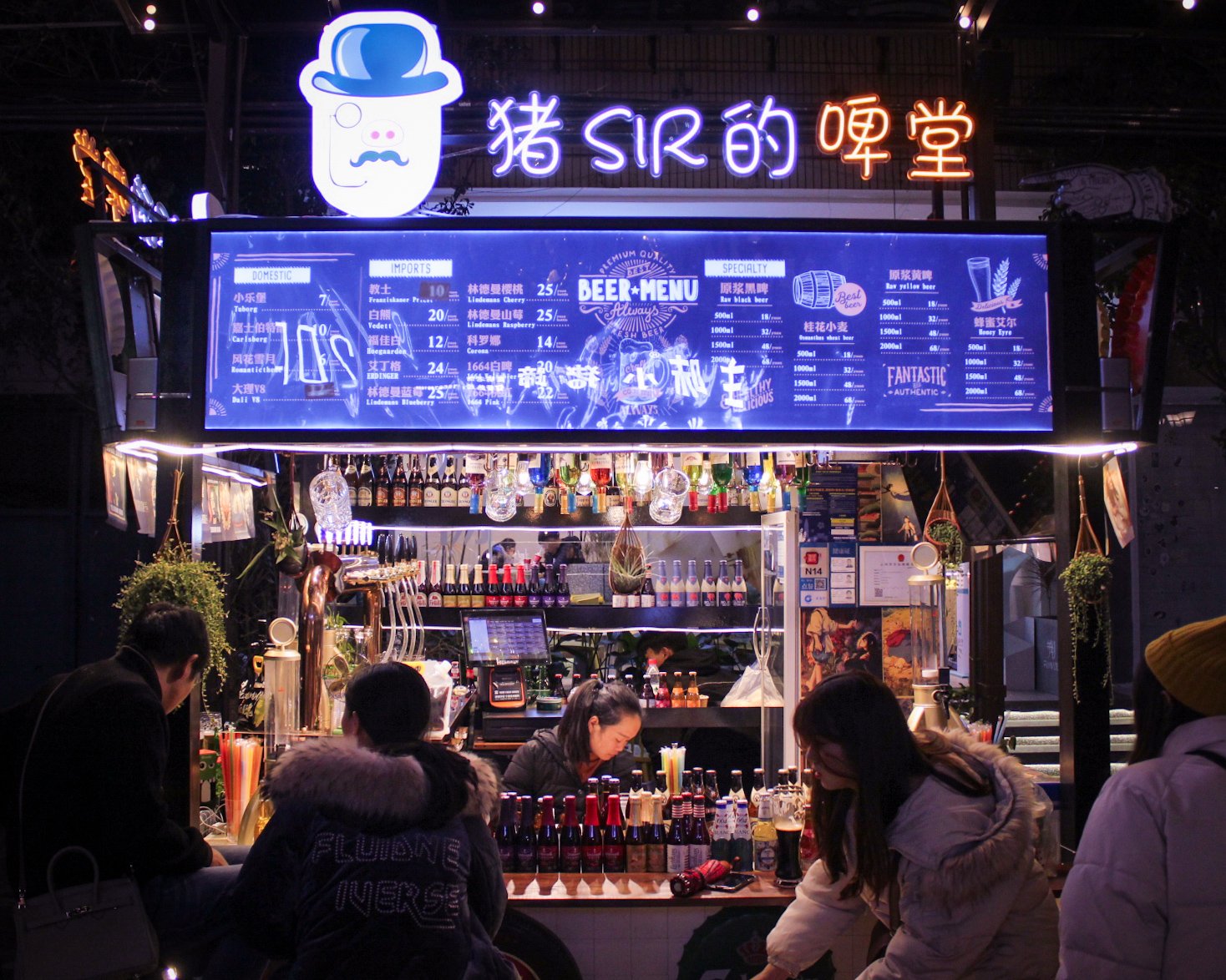
By the time I was done eating it was dark and so I headed to a nightmarket. I browsed for a while and admired the period costumes the teenagers were wearing as they drank tea and took photos. With nothing better to do, I stopped at a market-stall serving as a bar for a beer and instantly a group of students struck up a conversation. They were livestreaming their evening on some Chinese website. Comments and questions were scrolling fast on their device, it seems like they had a lot of viewers. They invited me to join them in their drinking games and answering questions for their viewers. We chatted, played games and drank until the nightmarket closed and I headed back to the hostel.
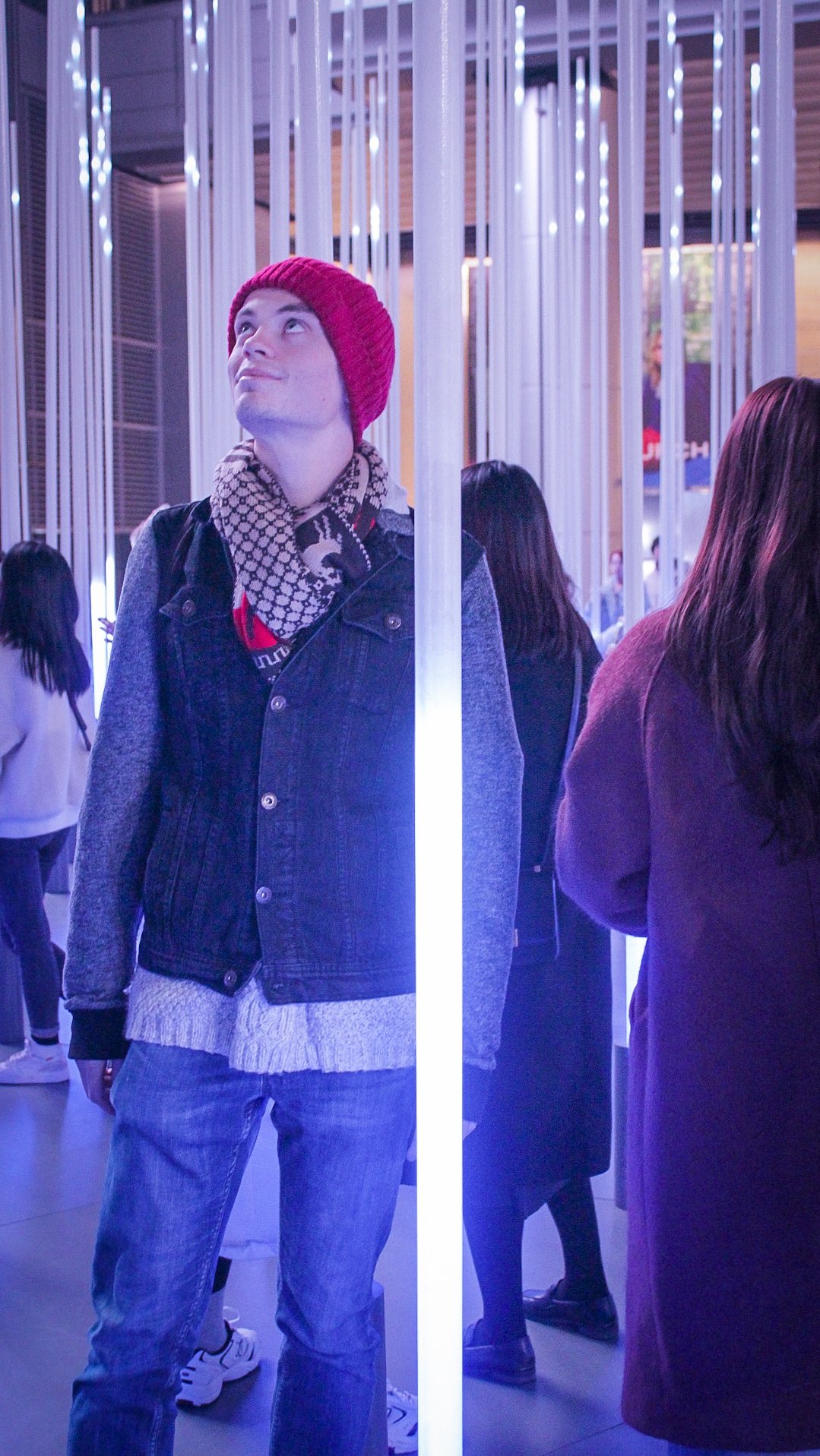
The livestreamers said I look cool 😎 however nobody else in Asia seems to like my fashion sense. I got my christmasy scarf cheap from a market in ChengduThe nightmarketSome people in period costume. I asked them if it was any special occasion and they said it’s just for fun“Sir Pig’s beer hall” where I drank with livestreamers on a nightmarket in Kunming
Returning to the hostel I spoke to the landlady who I thought had a strange accent when she spoke English. It turned out she had spent a year living in Redruth!
I stayed just one night in Kunming (although I pass through again on the way home) before catching a train westward to Dali.