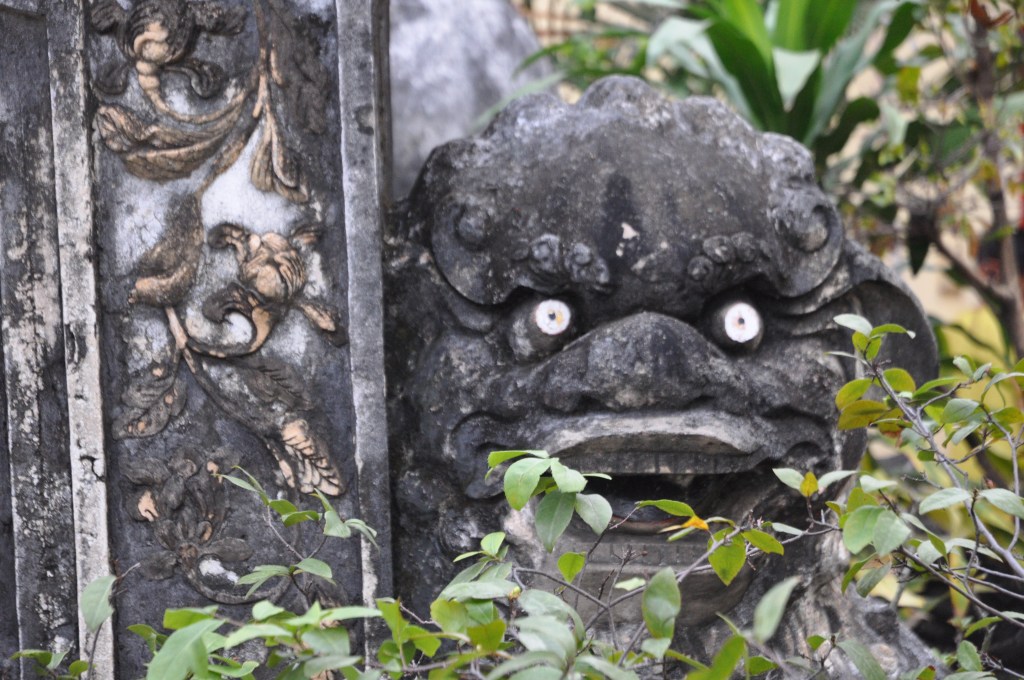
Lũy Bán Bích

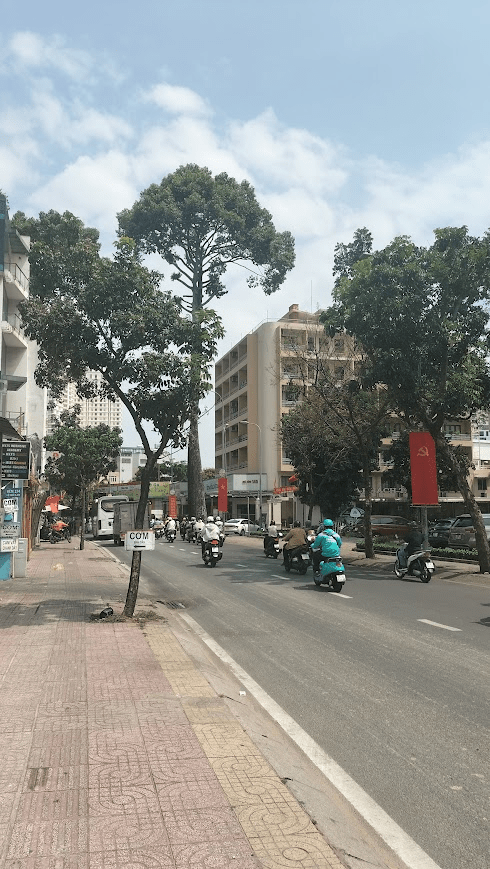
You haven’t seen a bad school run until you’ve seen it in Tân Phú, Ho Chi Minh City. Each morning at seven the alleys clog with motorbikes pressing through like sheep herded through a narrow lane. I plan my commute to work to be very early to avoid this rush. Then I wait for school to start in a pavement café in the shade of a banyan tree. Sipping coffee and planning lessons, I watch the chaos unfold along Lũy Bán Bích street.

As a proud nerd, it did not take long for me to start wondering about the street name “Lũy Bán Bích”. Vietnamese streets are often small monuments to history, commemorating people such as military leaders, poets, or revolutionaries. However, I learned that Lũy Bán Bích was not a person at all. Lũy means rampart, and the full name of the road translates roughly as the “half rim rampart.”

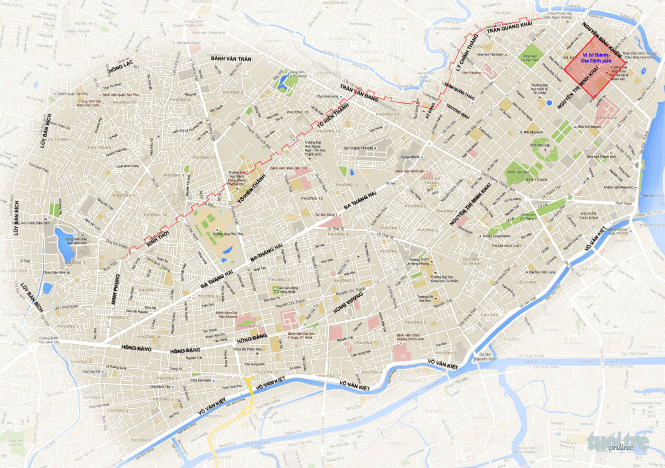
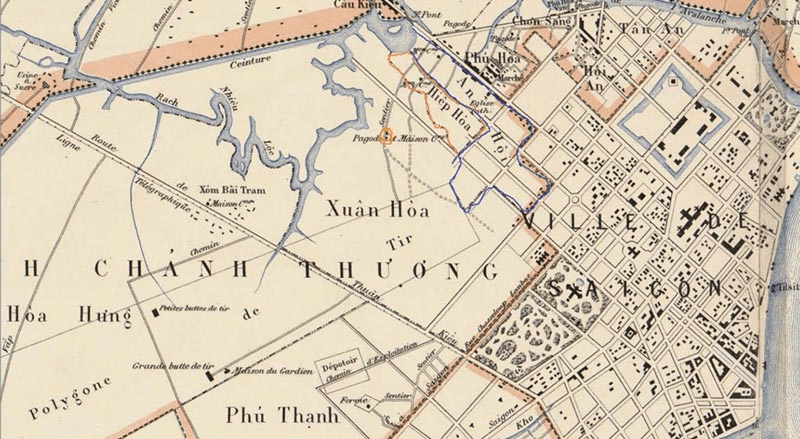
Like a truffle hog who’s picked up a scent I dug into the history of the earthwork. I found that the rampart itself has long since vanished, but you can still see its impact on the shape of the city. Lũy Bán Bích street isn’t where the eighteenth century defensive earthwork was actually situated; it’s simple named in it’s honour. The actual location was closer to the city centre, with Lý Chính Thắng and Trần Quang Khải streets today following the course laid out by the defensive structure (source).

One afternoon after finishing teaching, I went to up to Lý Chính Thắng street to see whether anything in the area might still look like a rampart, after all, I’ve found ramparts in Binh Dinh and Phu Yen provinces.

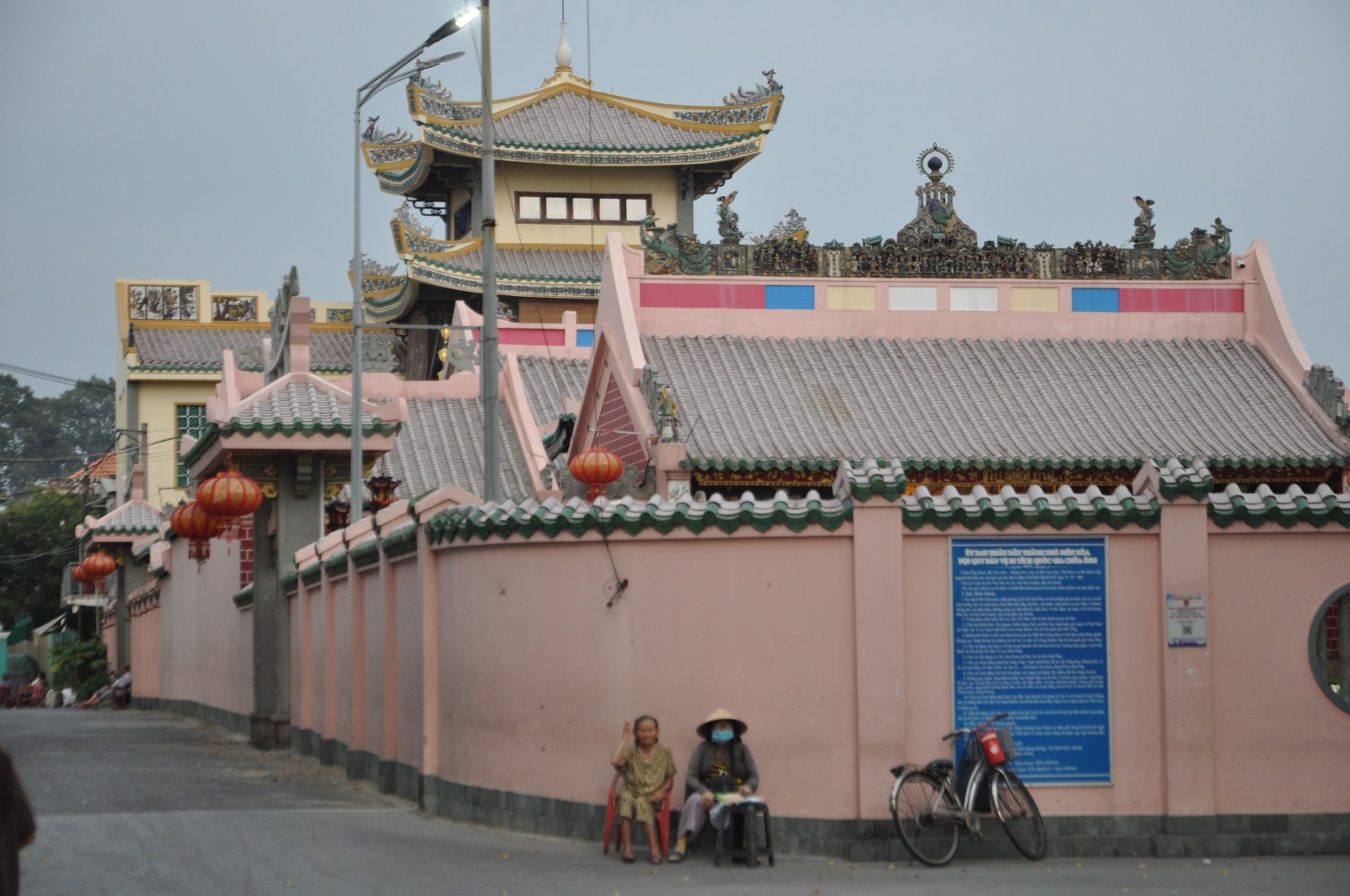
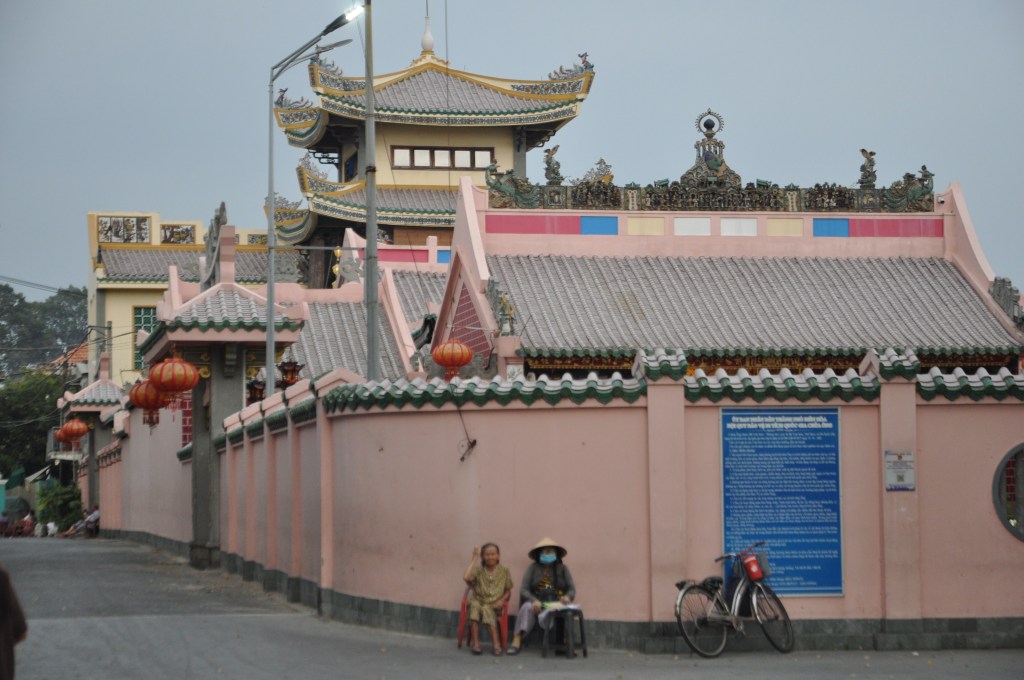
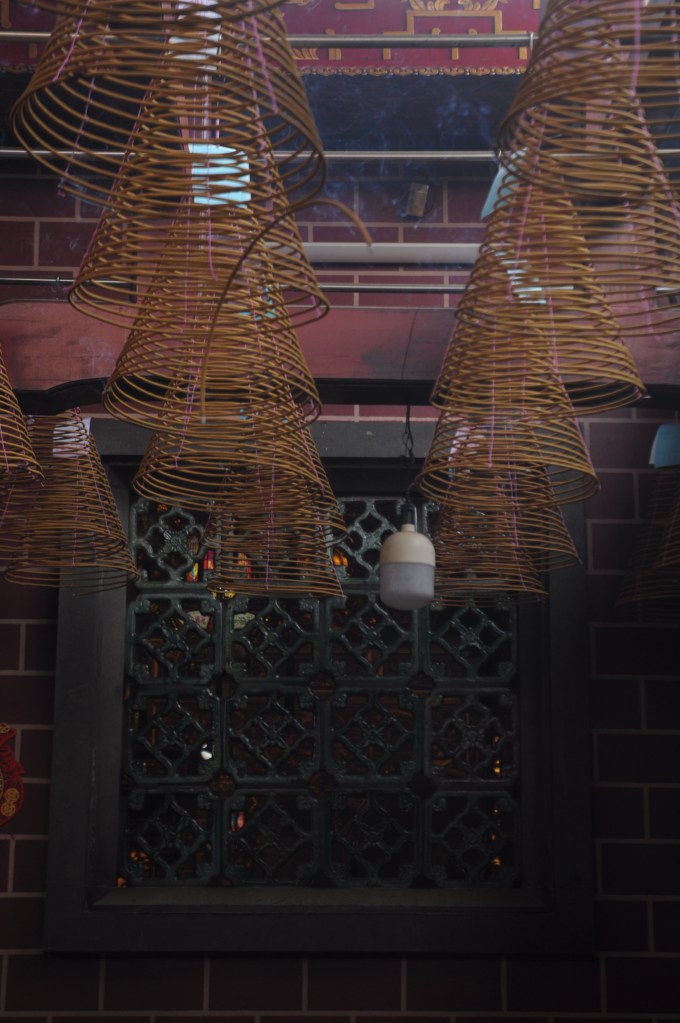
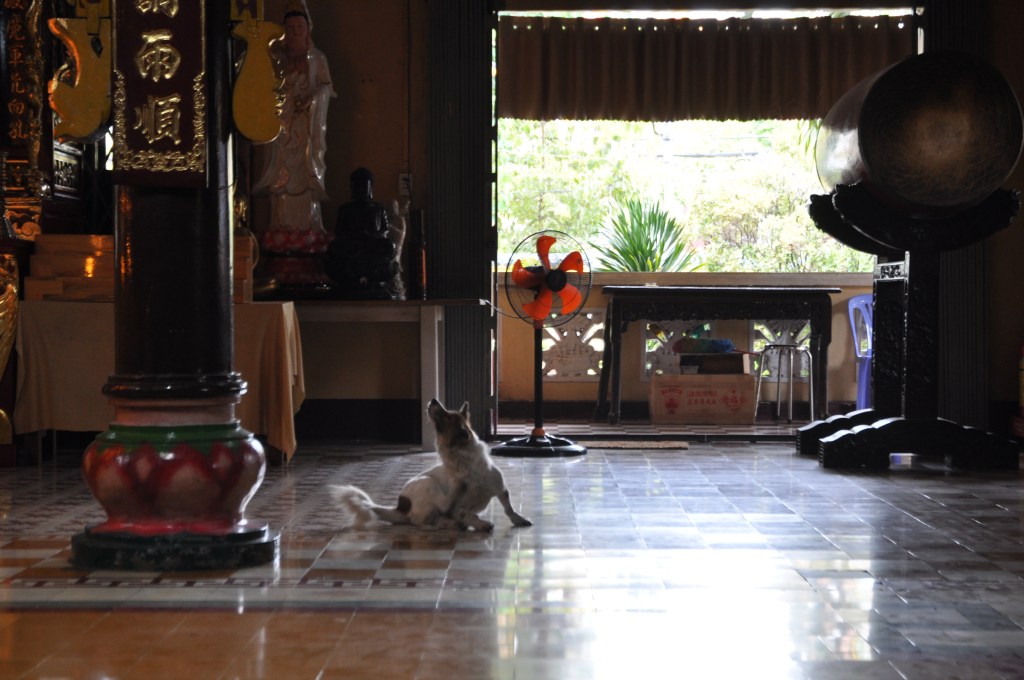
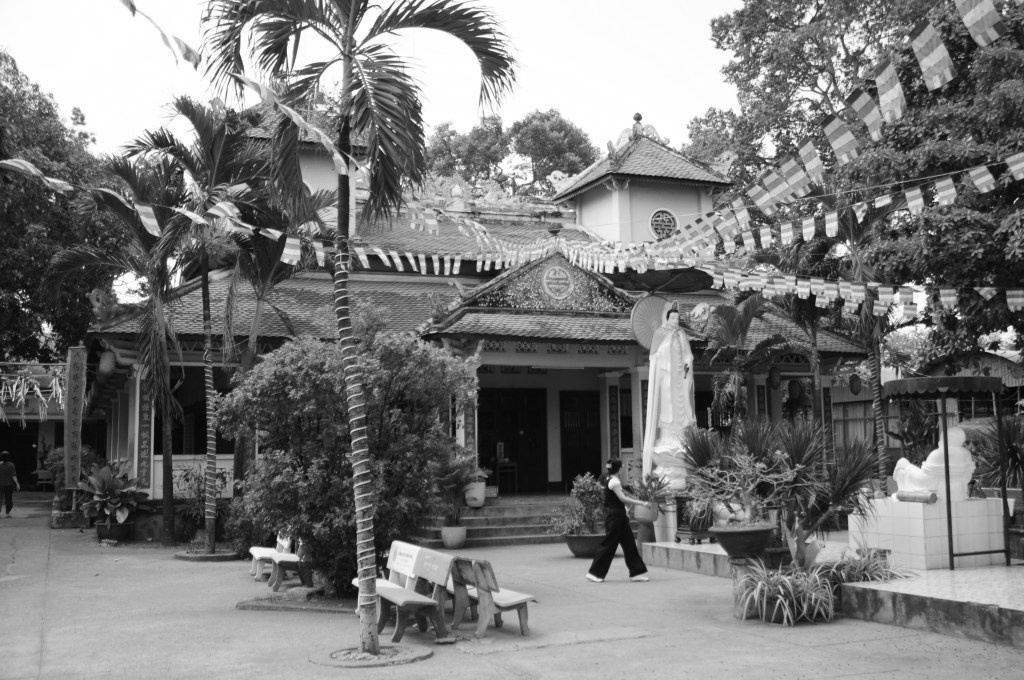
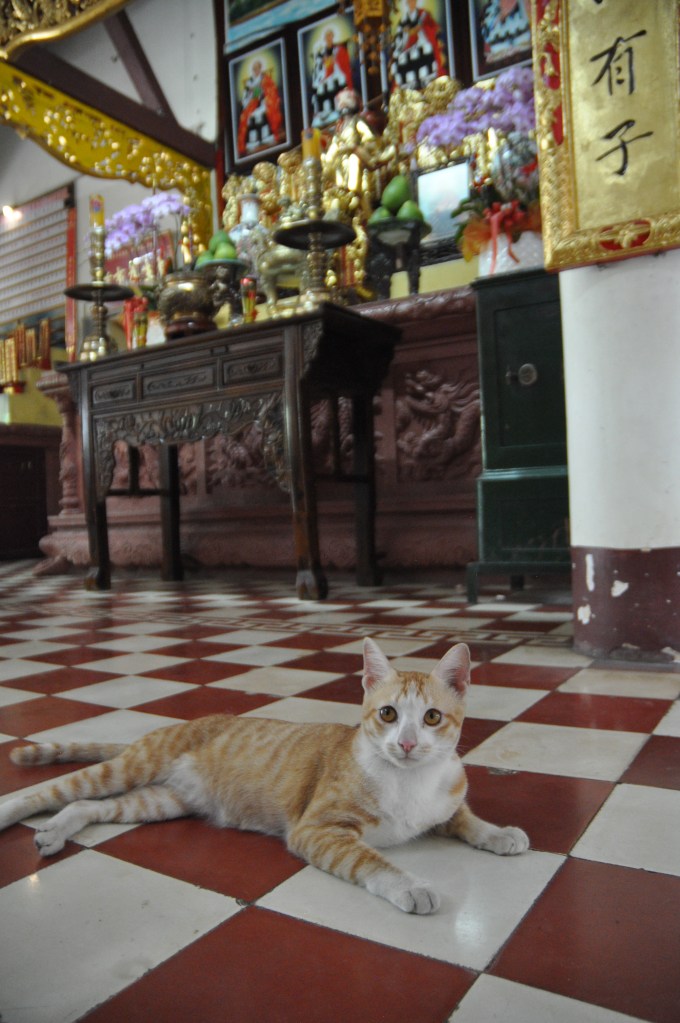
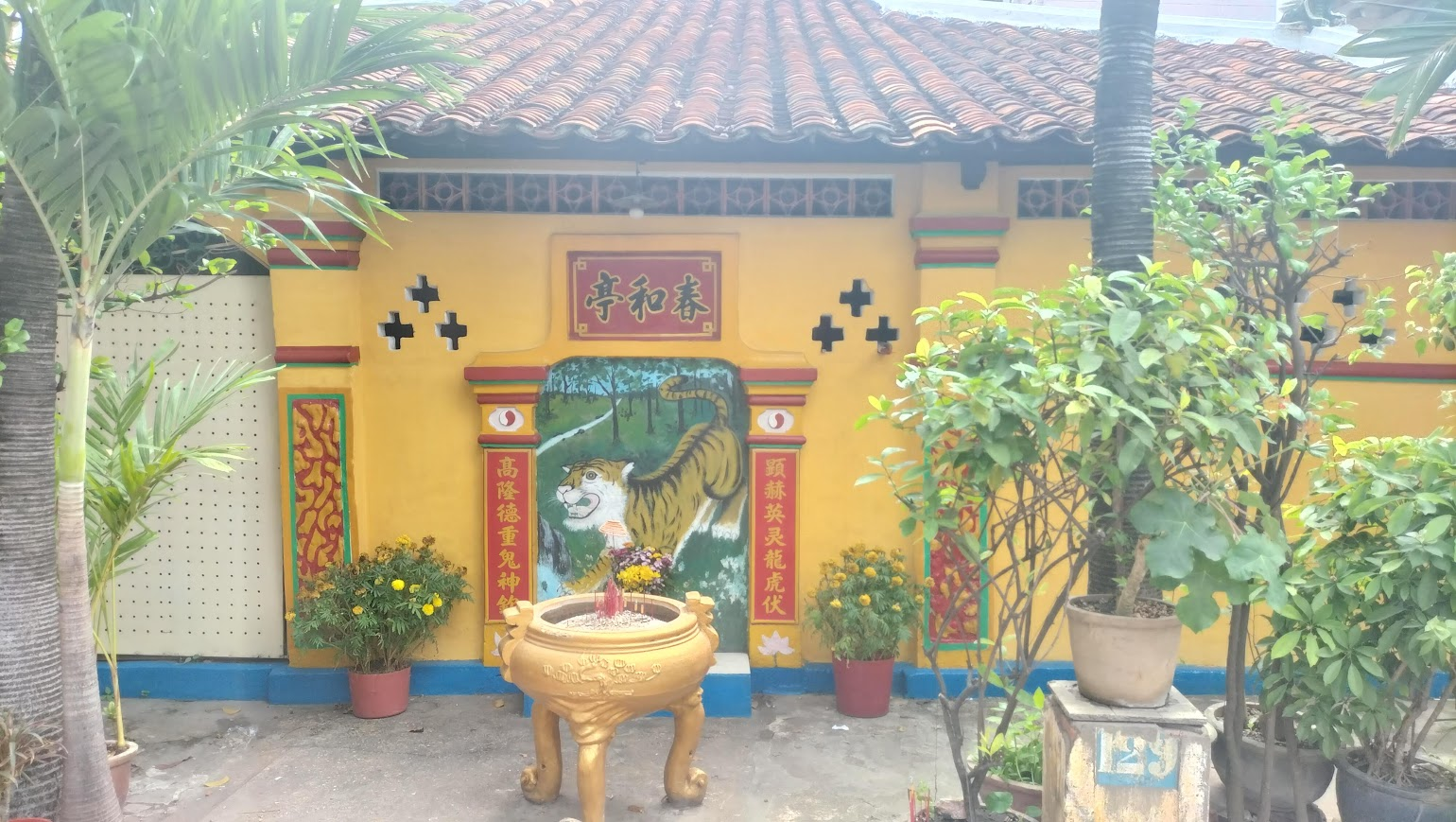
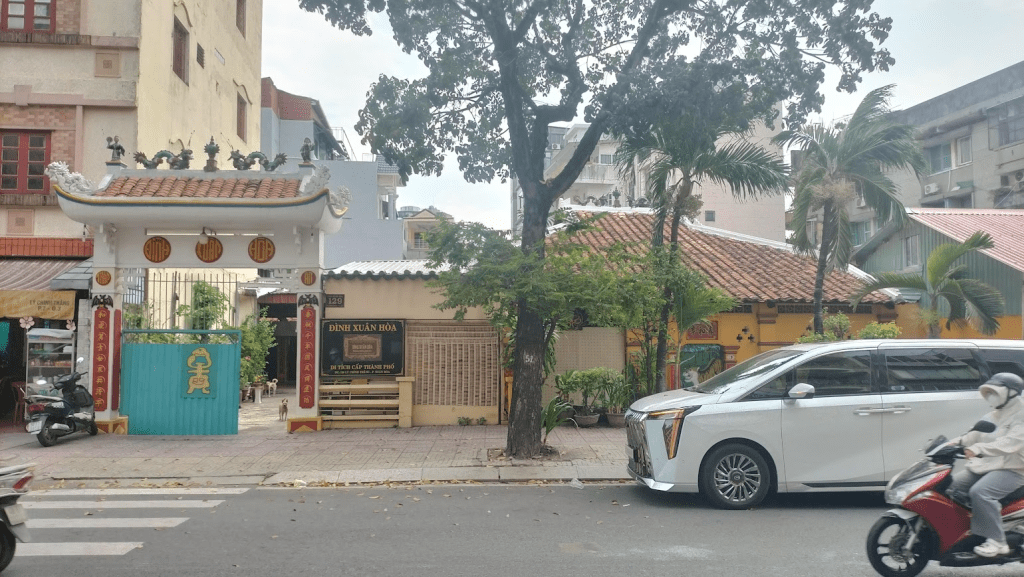
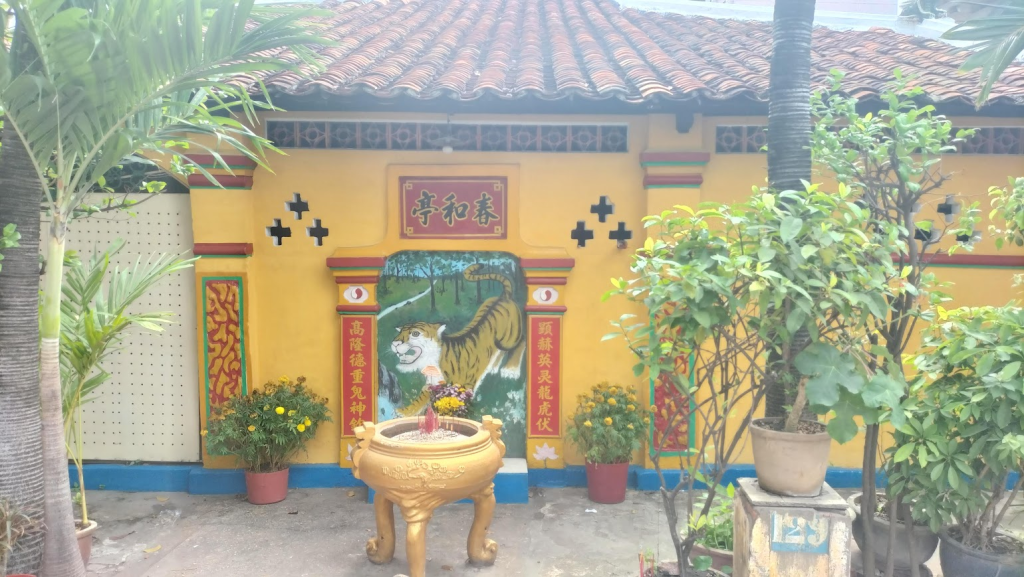
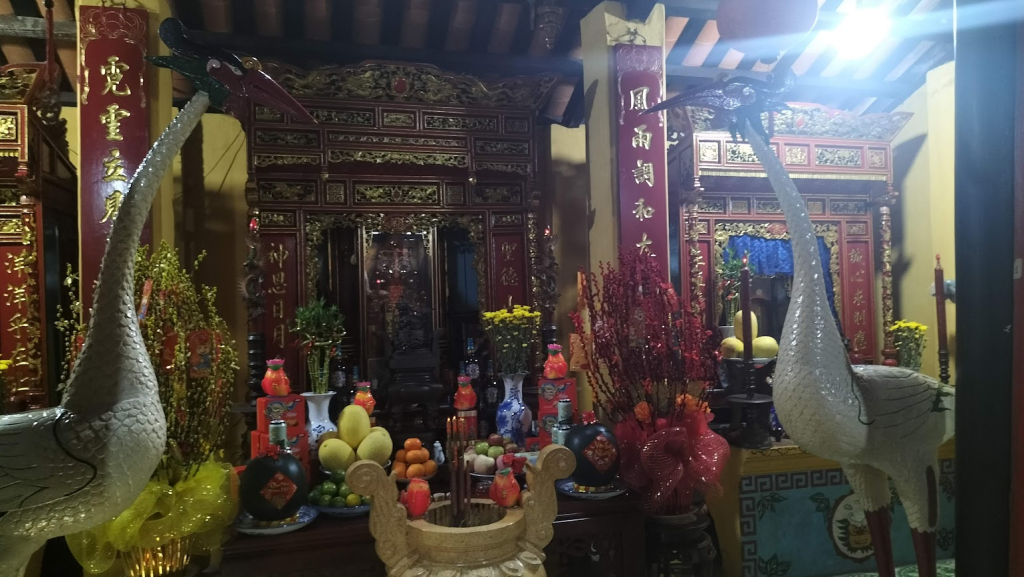
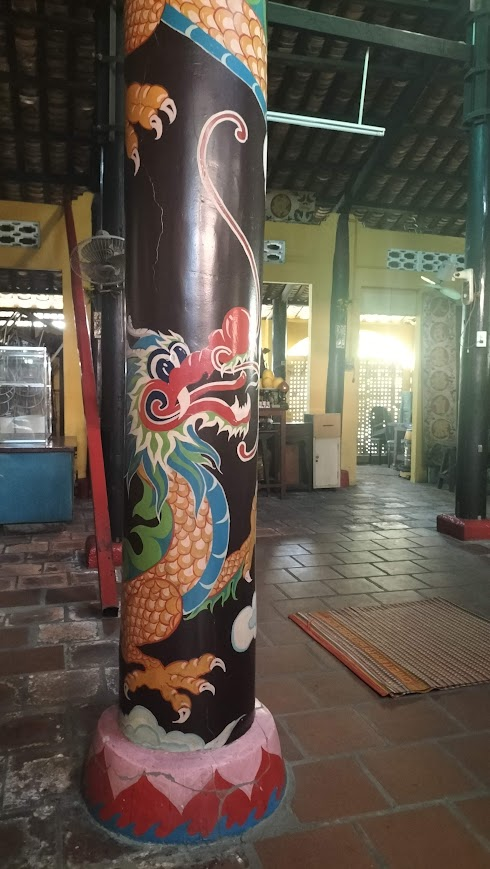
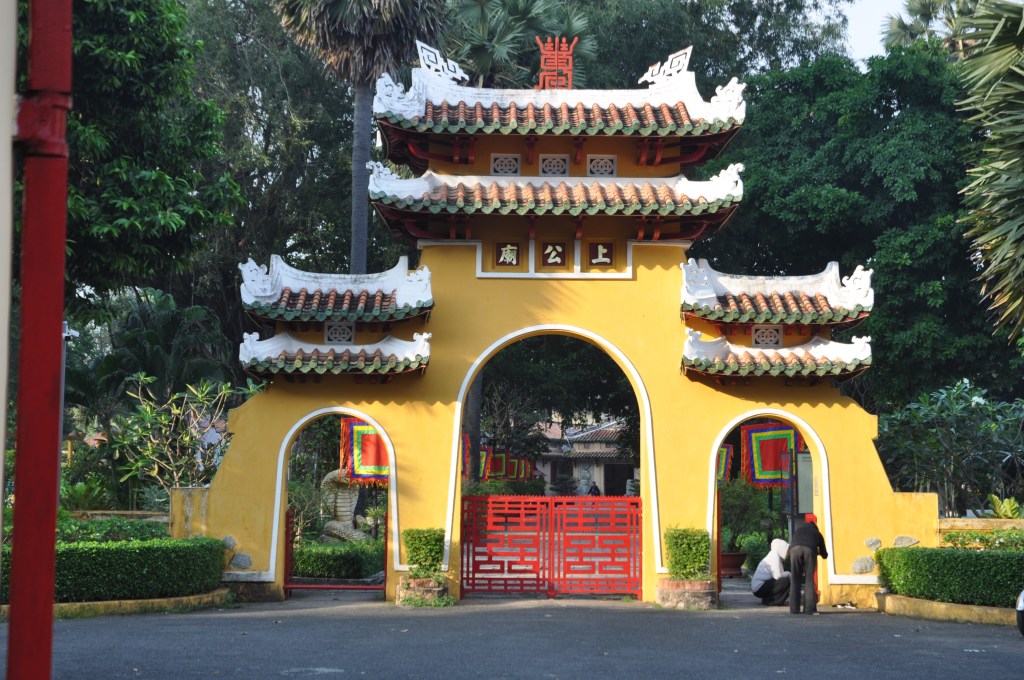
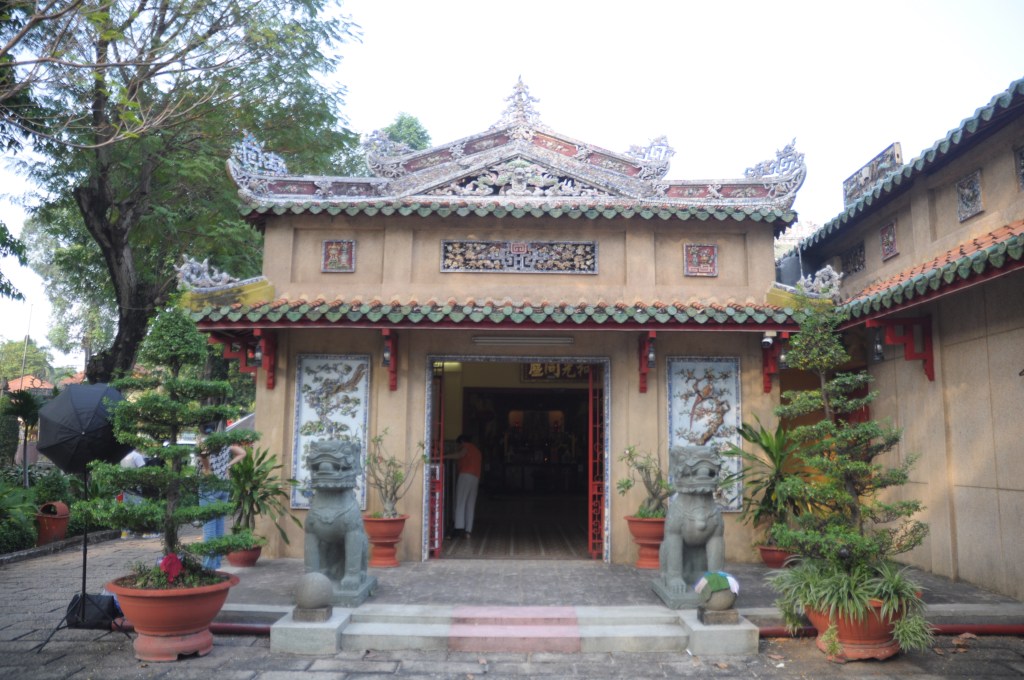
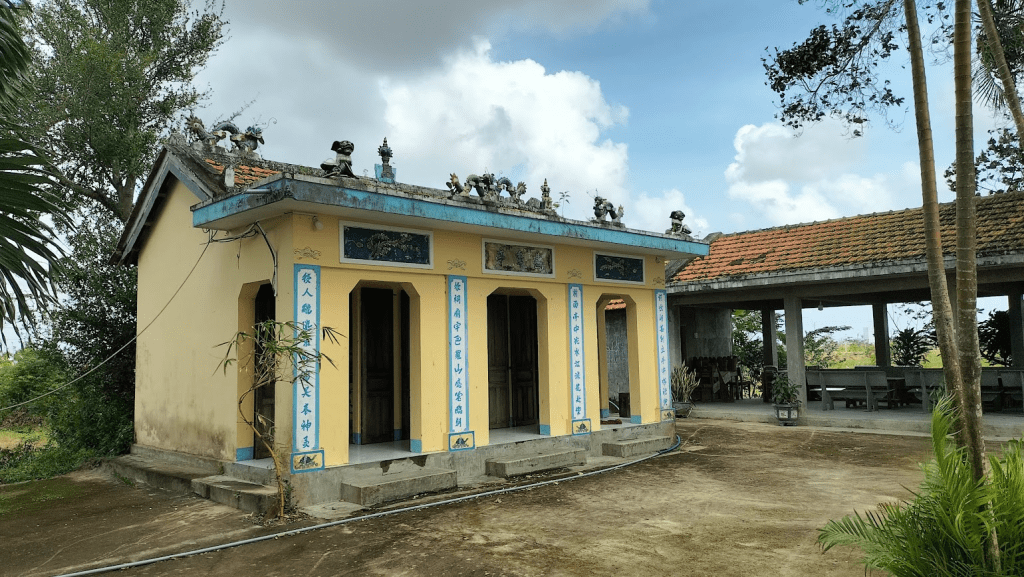
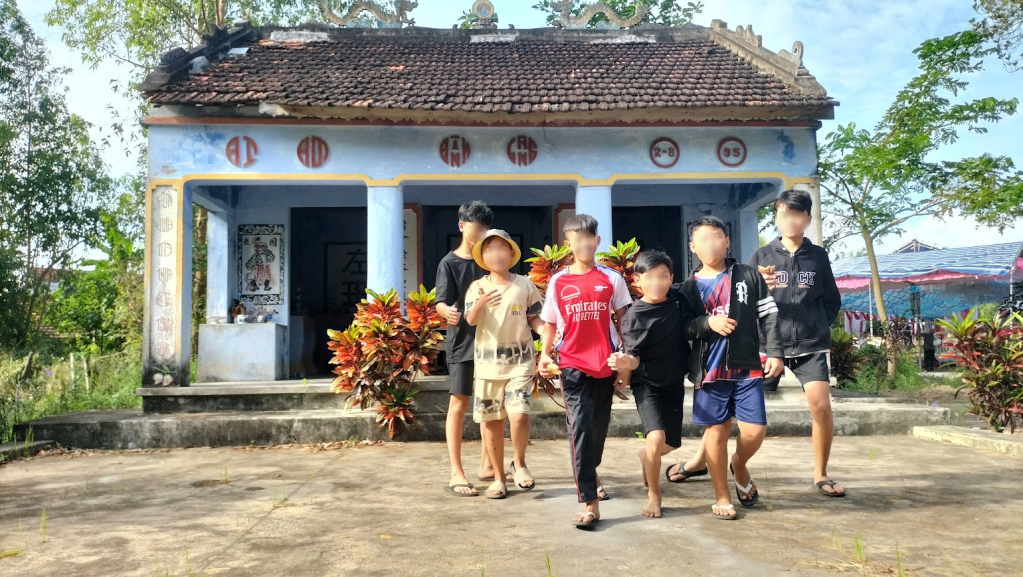
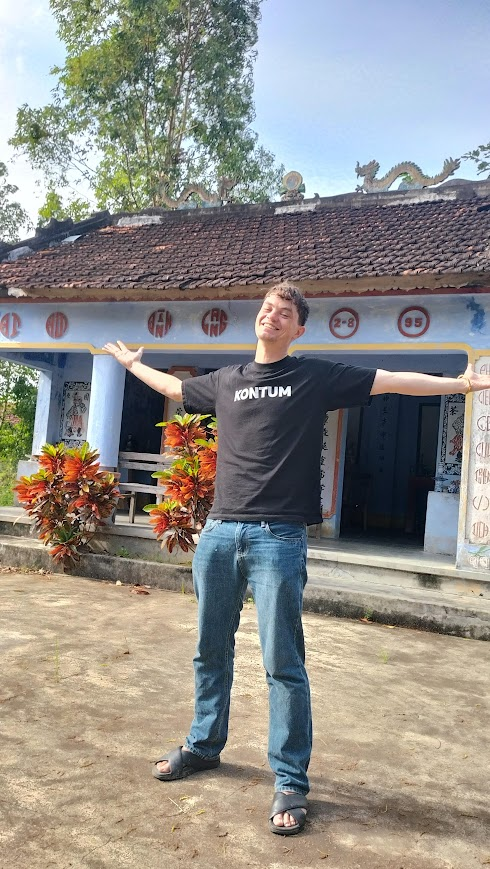
As I wandered down the street, wondering if it was on slightly raised ground or if it was my imagination, my eye was drawn to an old temple called Đình Xuân Hòa. It is a squat yellow building, the sort of Asian architecture that seems compressed under the weight of its terracotta-tiled roof. As I stood looking, a hunched elderly woman emerged and waved me inside with a smile. She seemed pleasantly surprised to discover that I could manage a little Vietnamese. She showed me around the incense-smoke-filled interior, where paintings of bucolic scenes hung beside statues of animals and golden Buddhas were surrounded by offerings. She explained that the đình was about three hundred years old, though the earliest written record I could find dates from 1852 (source), which is still impressively old for Saigon. Before I left she introduced me to the resident thầy (master), a serious grey-haired man. He disappeared briefly and returned to present me with a small bag of bananas to take home.

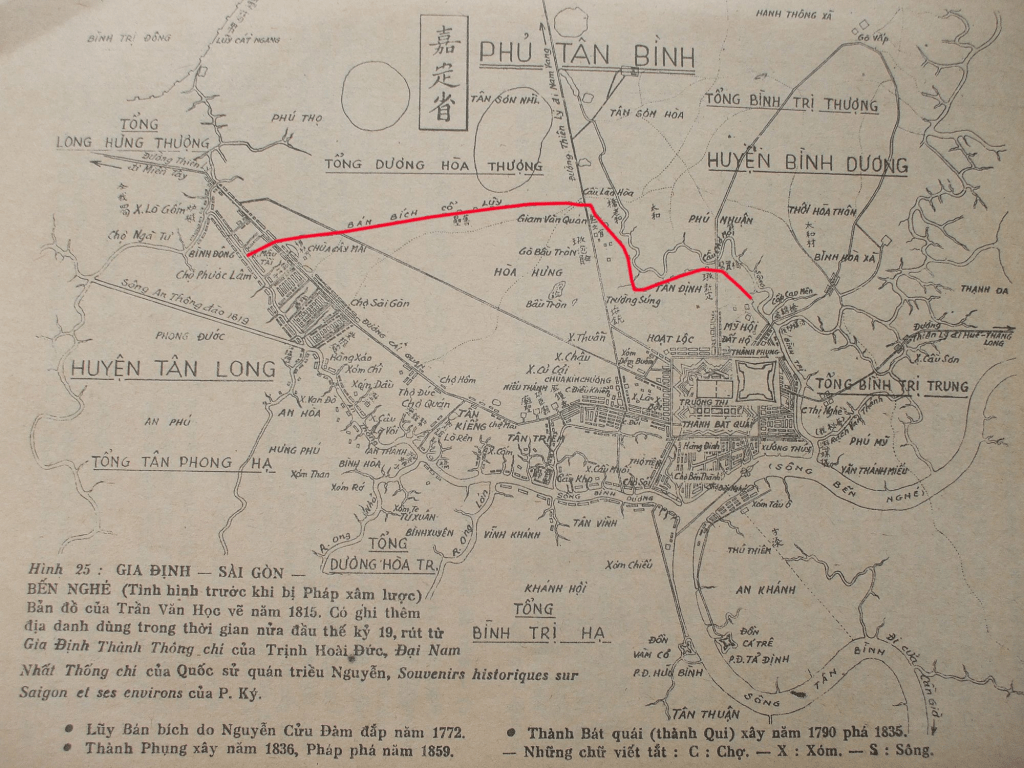
Leaving the temple I’m back on the street where the old rampart once ran. To understand why a rampart was built here, you have to go back to a time when the city was still a fledgling settlement in the wild frontier of Vietnam. In 1772, a general named Nguyễn Cửu Đàm, a second generation settler, made a name for himself by defeating the Siamese. To deter attacks on his hometown of Saigon, Nguyễn Cửu Đàm ordered the construction of a defensive system around the fledgling settlement. Creeks were dredged to form a partial moat and then closed by an earthen rampart. This is documented in the chronicle Đại Nam liệt truyện compiled in 1852.

“That summer (1772), Đàm advanced from the Tiền Giang River and decisively defeated the Siamese army in Phnom Penh. The Siamese army fled to Hà Tiên, then sued for peace. The situation in Cambodia was restored to peace. Đàm led his troops back and built the Tân Hoa rampart, 15 dặm* long and shaped like a crescent moon, surrounding the camp and blocking the land route to prevent any unforeseen events.” – Đại Nam liệt truyện

*: dặm is a historical unit of distance. One dặm was probably 576m at the time (source), so it gives the length of the rampart as 8.64km

Upon moving back to Saigon, I had assumed my history excursions would have to be put on hold. That was a disappointing thought because following up a historical lead has resulted in so many of my favourite adventures and human encounters, the sort that make life feel worthwhile. But history has a habit of always appearing in the most ordinary places. This time it was just the street name of my school. Following that thread led me on a small adventure that ended, as all good adventures should, with a story to tell and a bag of bananas in my hand.

The course of the rampart in red on the modern city map source
The course of the rampart marked on a map from 1815. The Village which hosts Đình Xuân Hòa temple is marked as Tân
Đình Xuân Hòa temple marked as a pagoda on a French map. The old rampart is marked as “sentier” which means path

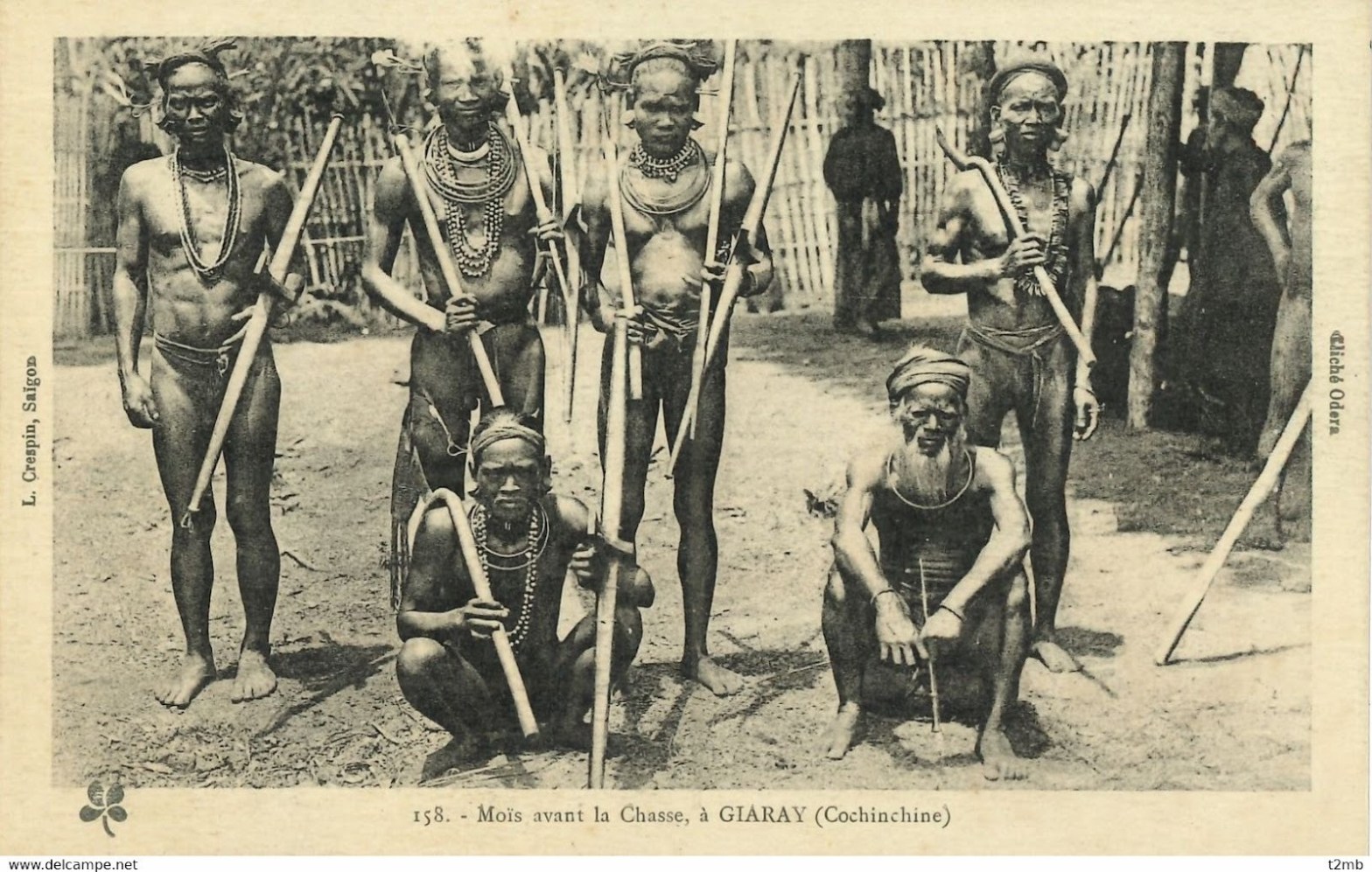
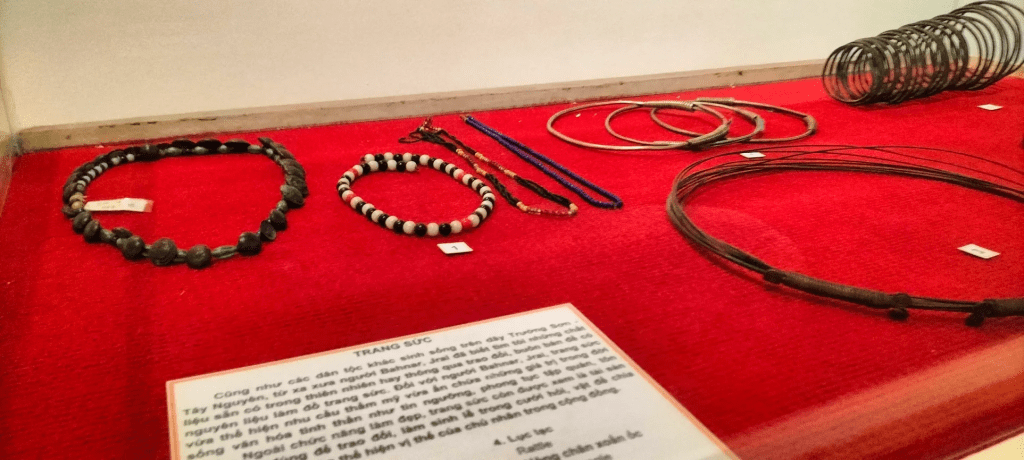
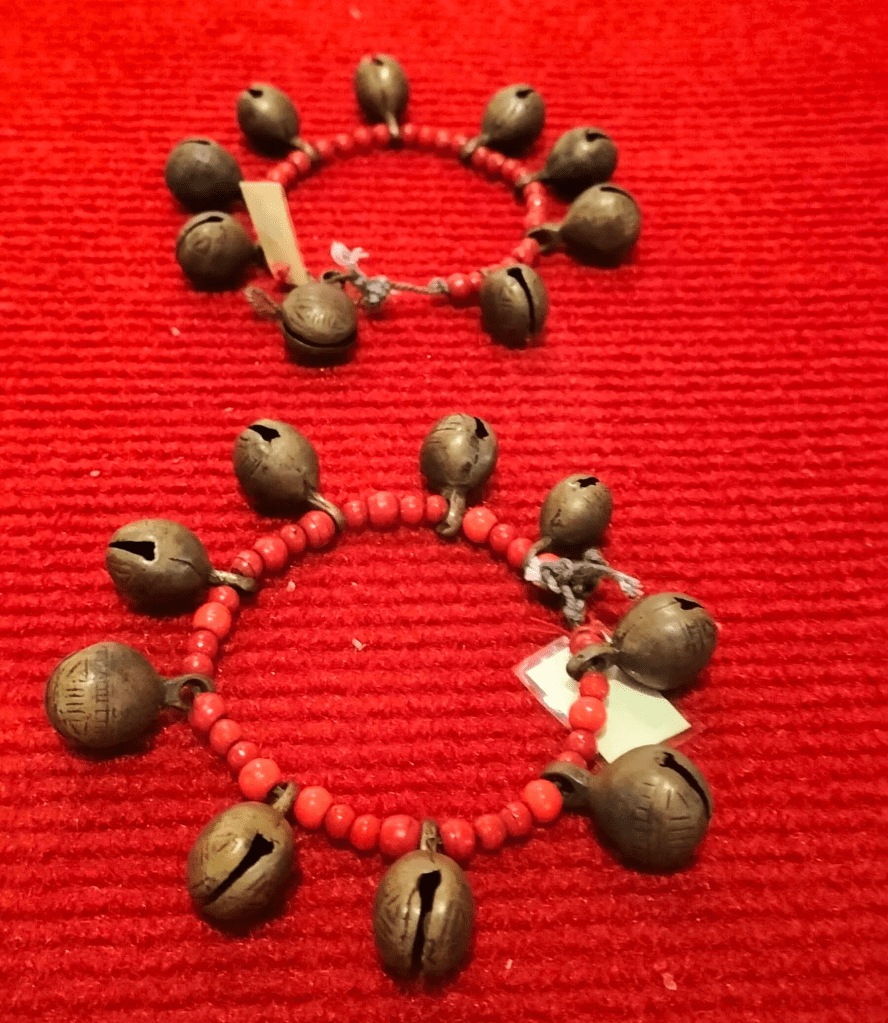
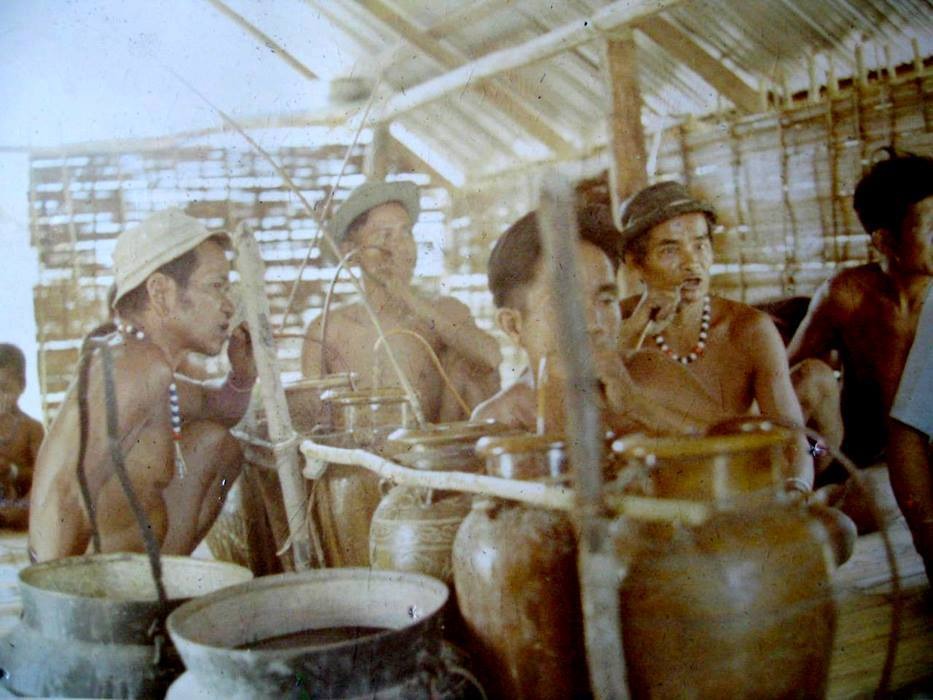
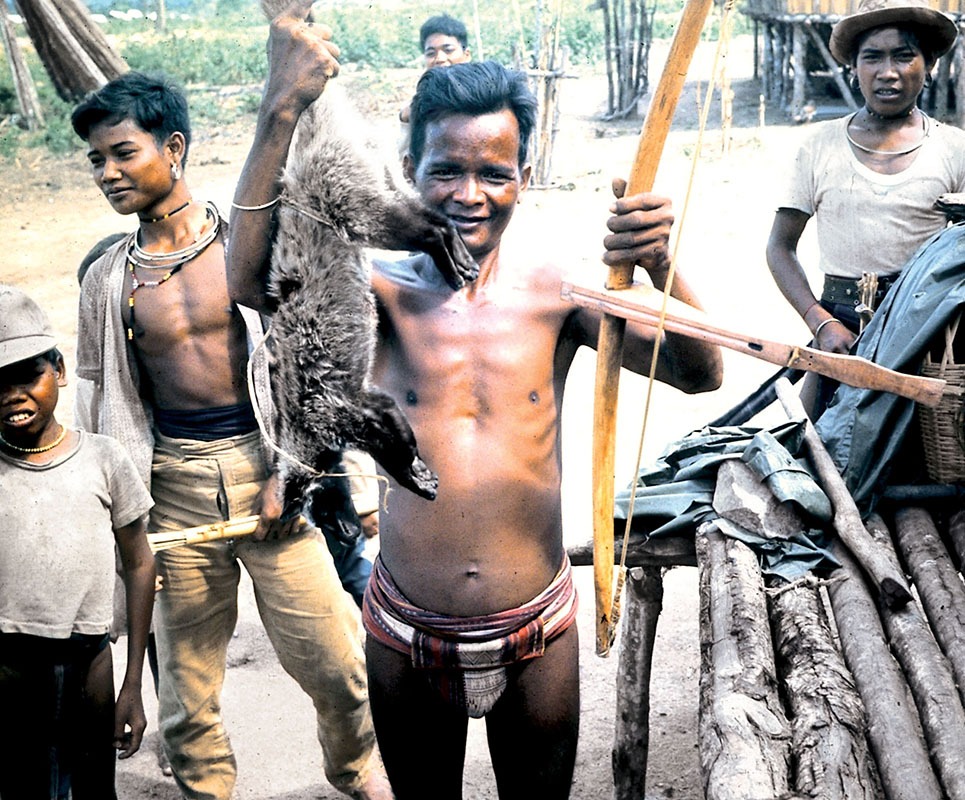
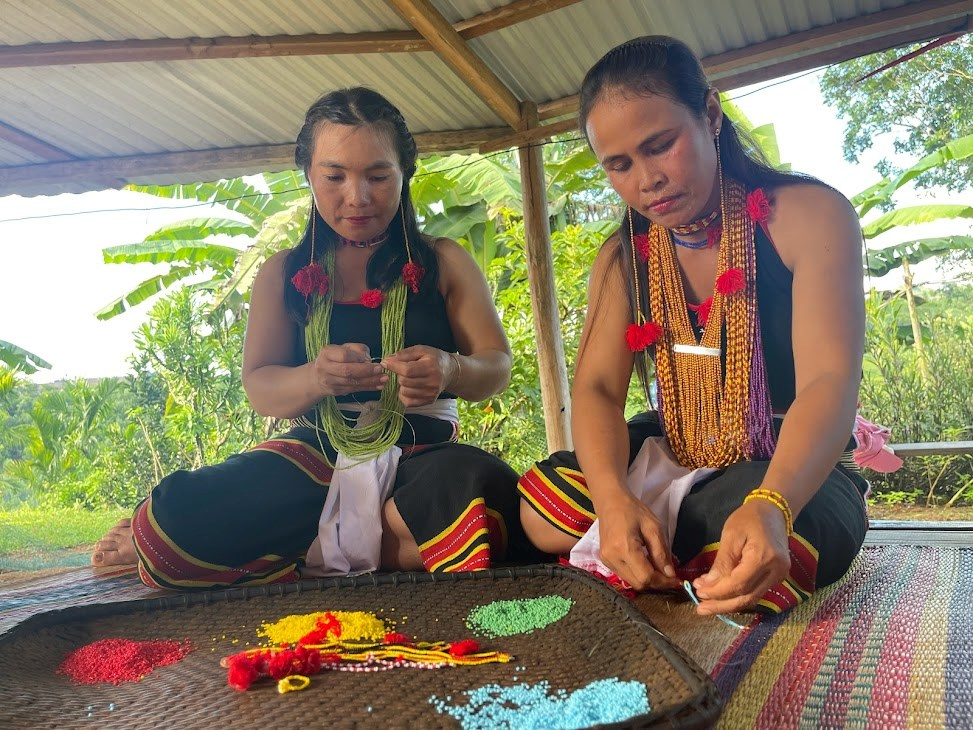
Beads in Jrai Culture

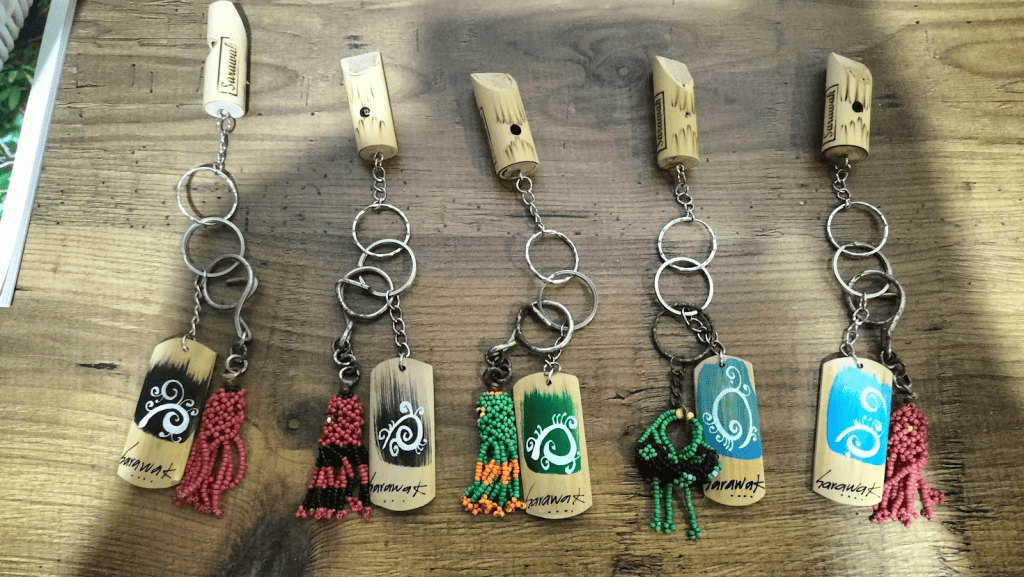
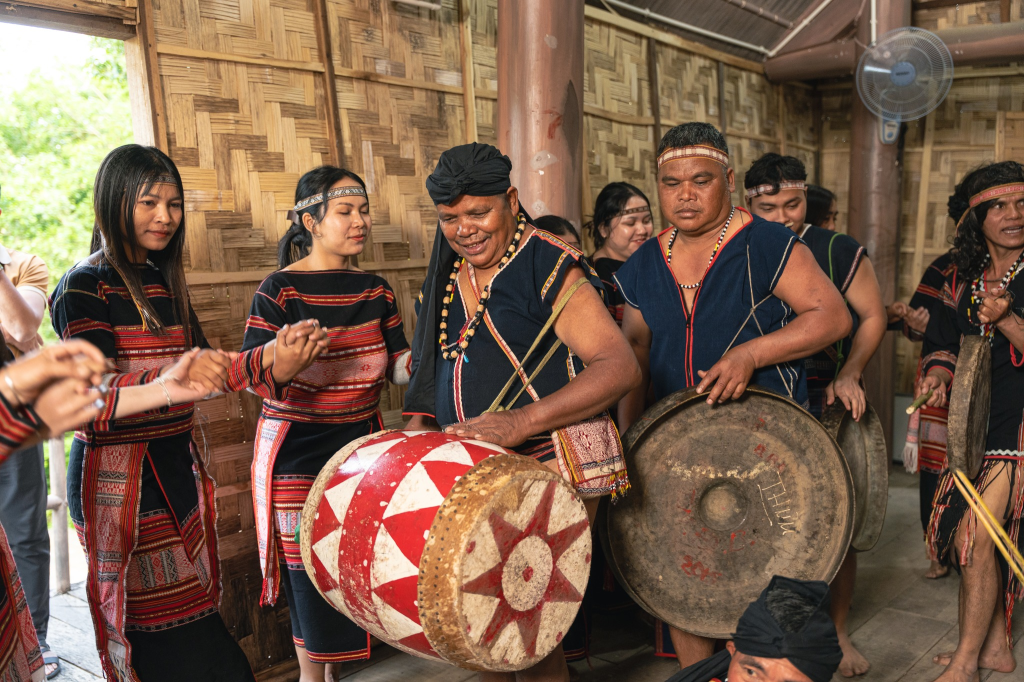
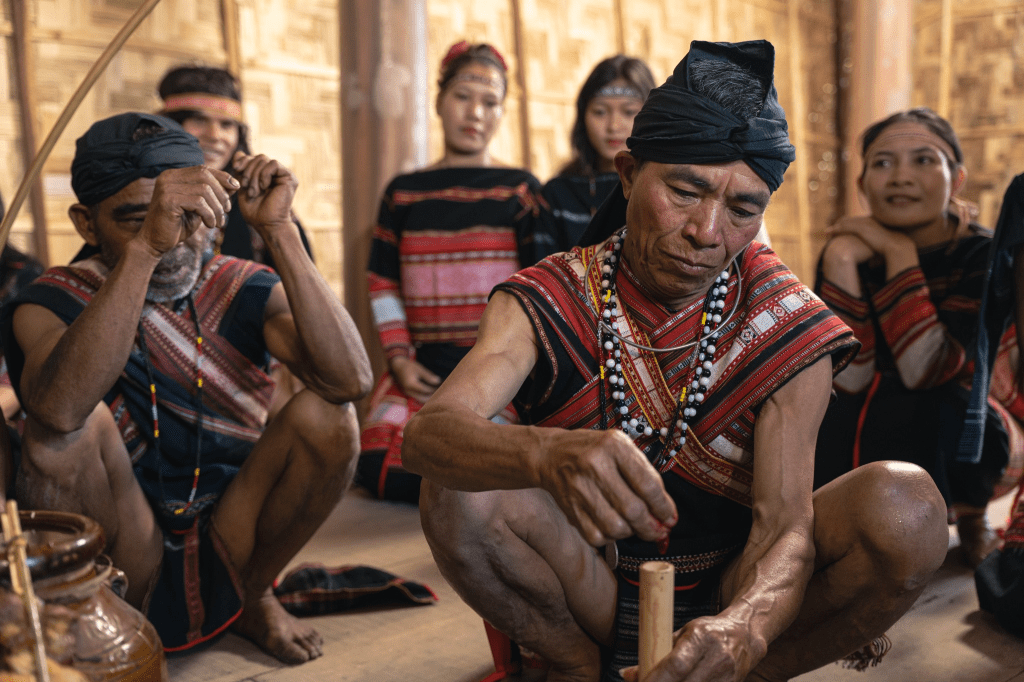
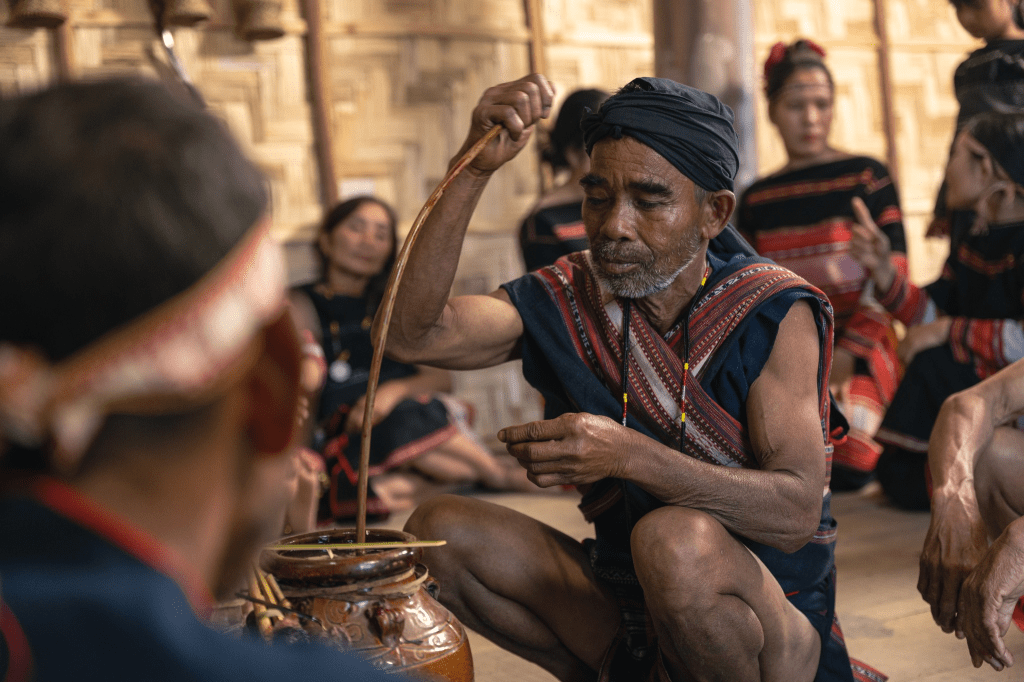
It’s been a while since I’ve written about the indigenous cultures around Pleiku, though I feel there is still a lot more to uncover. At the time of writing, I’m in Sarawak, Borneo for Tết holiday. One of the first things that stuck me here as a tourist is the beads. Among indigenous Bidayuh communities in particular, strings of beads are not just fashion; they are integral to culture and identity.

The indigenous people here appear outwardly to be similar to the cultures around Pleiku (and possibly distantly related, splitting off about 2500 years ago). Which for me raises the question: were beads ever significant to the Jrai? Afterall, I’ve written about the significance of bangles before.

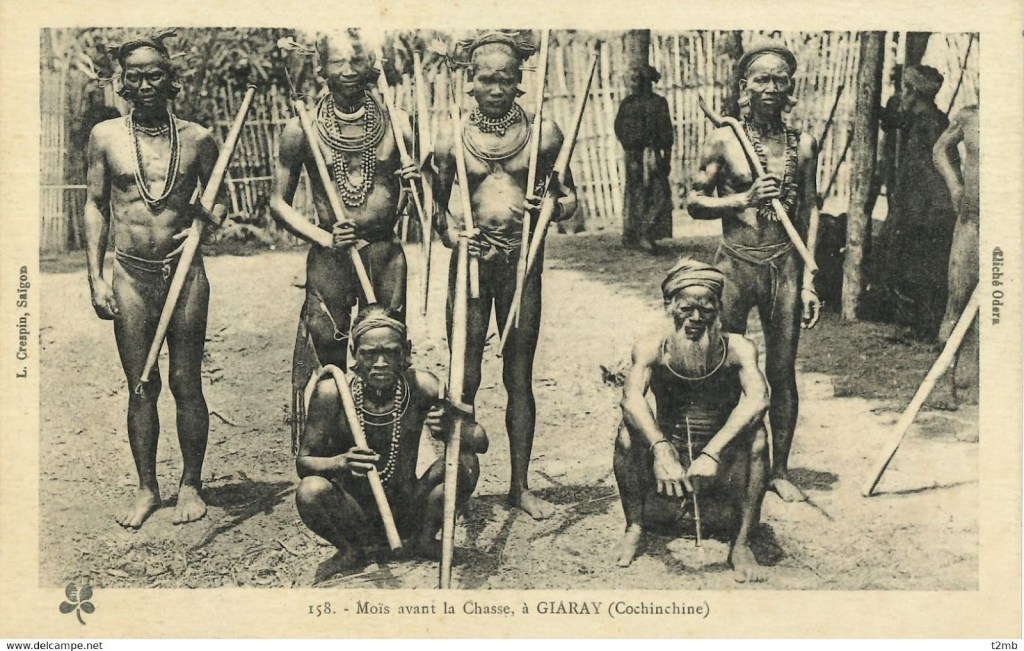
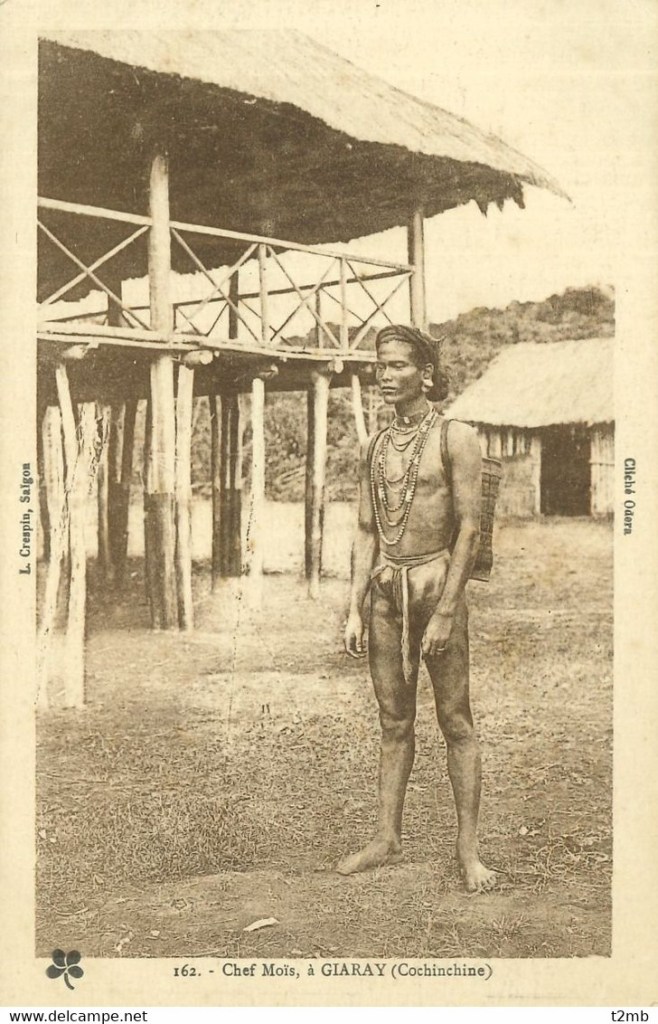
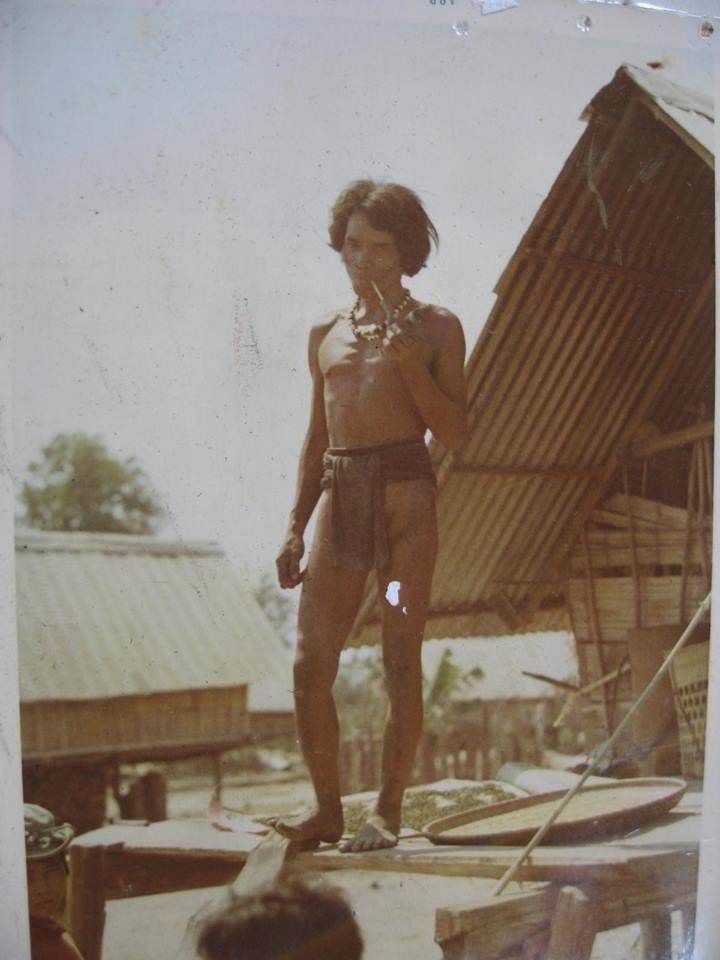
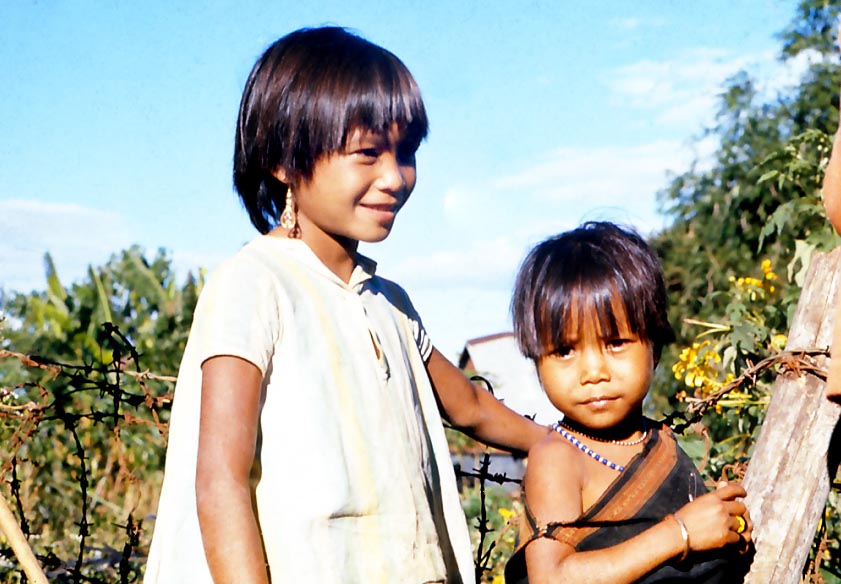
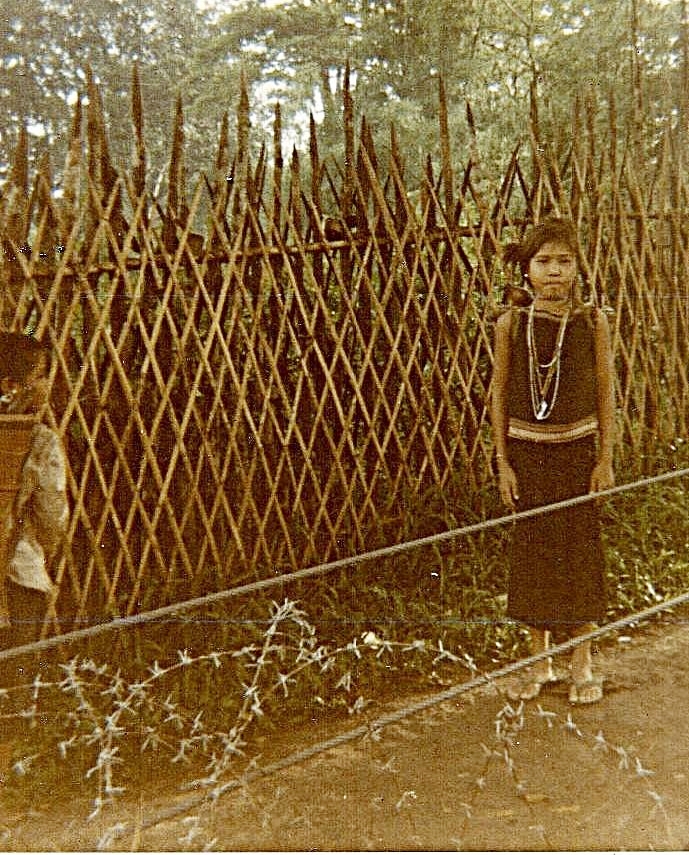
The answer is … maybe. The oldest photographs from the late nineteenth and early twentieth centuries show Jrai men and women wearing multiple strands of beads around their necks. There is also material evidence in Pleiku’s museum you can see Bahnar beads. But as the decades moved on — particularly from the 1960s into the 1970s — the strands thin out in the visual record. By the war years, jewellery of any kind is far less visible except the bangles.

The mid-twentieth century disrupted highland lifestyles significantly. French administration, missionary influence, relocation into strategic hamlets and the wider cultural shift of Southeast Asia all altered patterns of dress, ritual practice and local economies.

In neighbouring groups, bead significance is more clearly documented. Among the K’ho people of Lâm Đồng, certain agate beads are associated with wealth, power and even love. The K’Ho believe that white represents water; black represents earth; red symbolizes desire and will; blue is the color of the sky; and yellow is the color of light. Usually the big beads are oval and the small ones are round and flat. The beads are strung by alternating colors and sizes (source).

For Co people in Quang Nam, Every Co girl is taught how to string beads by her grandmother or mother from a young age. On special occasions such as weddings and festivals, the Co people wear their traditional clothing along with colorful bead strings they have handcrafted (source).

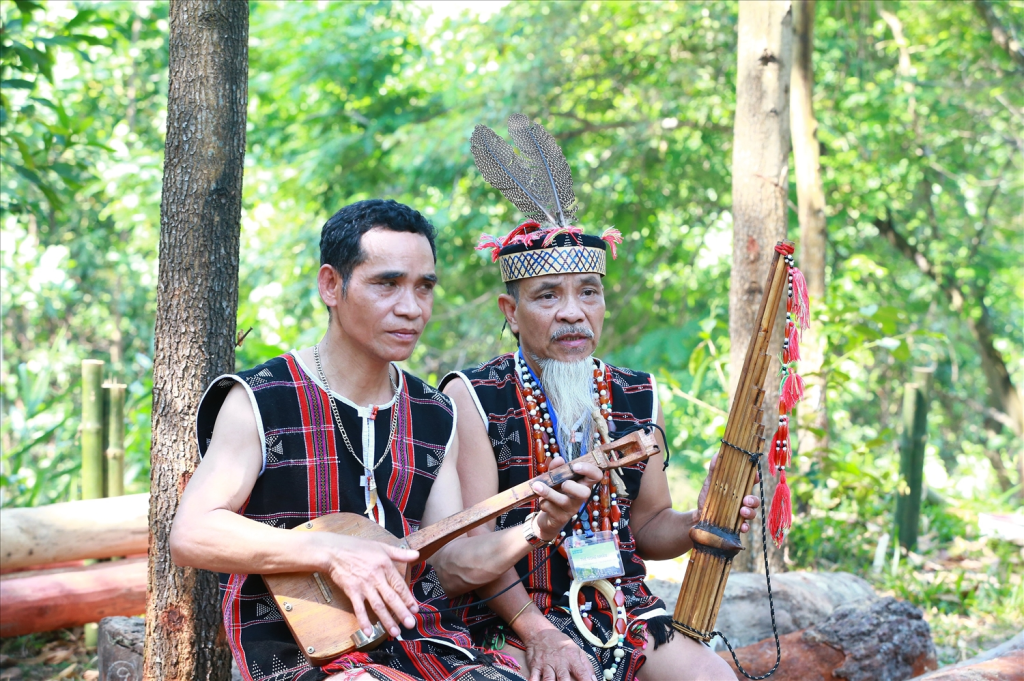
The beaded necklaces of the Katu people, who live near the boarder with Laos, are worn by elderly men at Tết, weddings, and other important gatherings. Strings of agate beads are prized, often strung along with wild boar fangs, bear claws, or small carvings of rare wood. The length of a fang or claw signals a man’s status within the village. These necklaces are considered part of a man’s life, and when he dies, they are buried with him. (source)

More recently, there are signs of a reappearance of beads in Jrai communities. Bus Rcom, a friend of mine and public figure who goes by the name Tarzan Tay Nguyen (Facebook) (Instagram), often appears at cultural events wearing several bead strands as part of his traditional costume. When I asked him for a quote he had this to say

Each bead, each bracelet has its own story and it all goes to the old stories, the spiritual stories of each different people – Bus Rcom

Saigon’s Tombs of the Tay Son War

Regular readers know the Vietnamese civil wars of the 18th century known as the Tây Sơn wars are one of my favorite topics. Now that I’m back living in Hồ Chí Minh City, it’s interesting to learn how many connections there are between this place and those wars, which it turns out is quite a lot.

One sunny December day, I dragged new colleague Ellis—a fellow Manchester alum teaching ESL kindergarten gigs with me—on a walking tour of loyal Nguyễn tombs that connect to topics I researched and written about in the past.

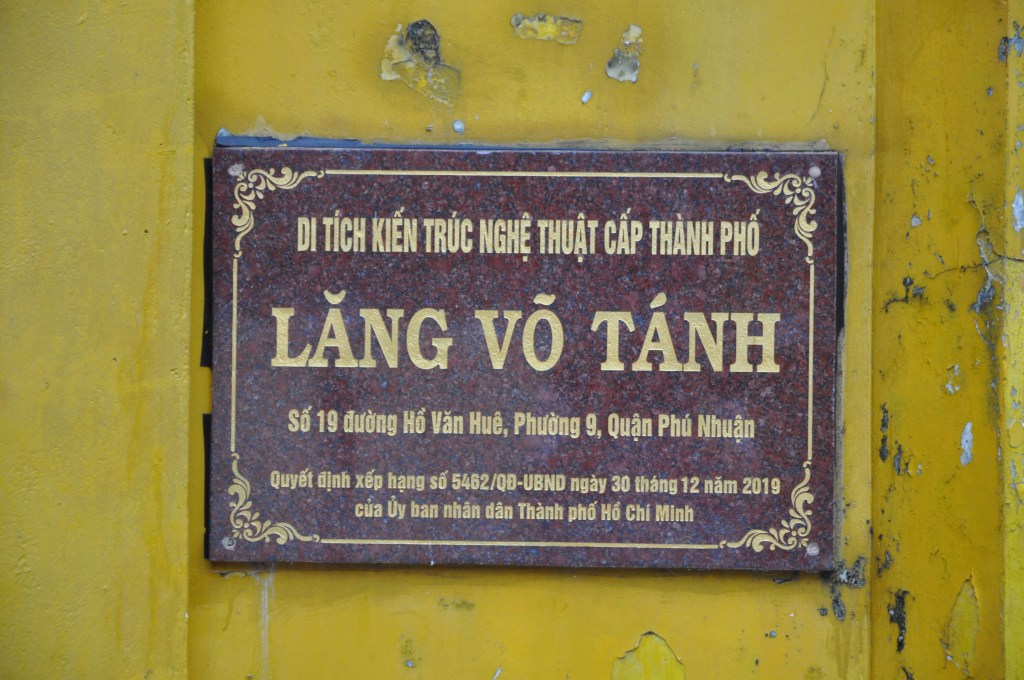
Võ Tánh

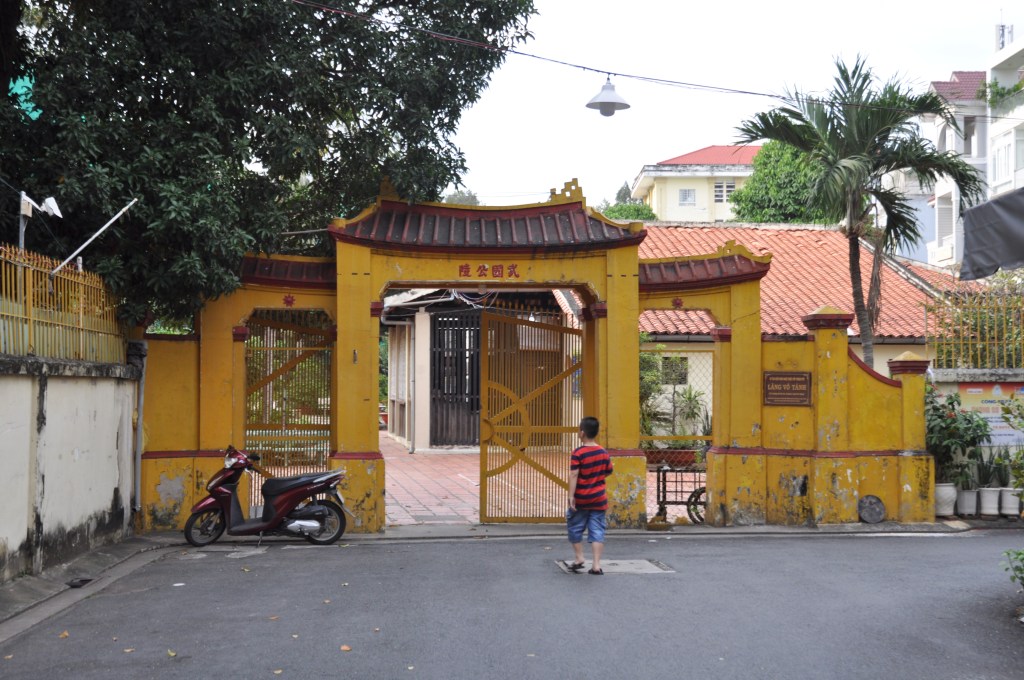
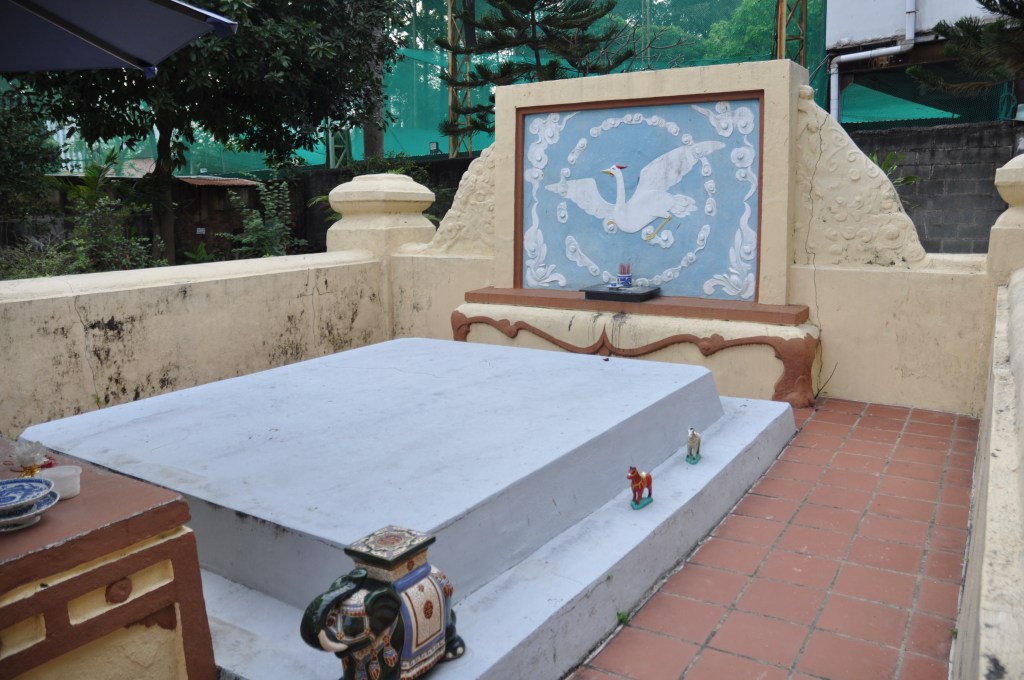
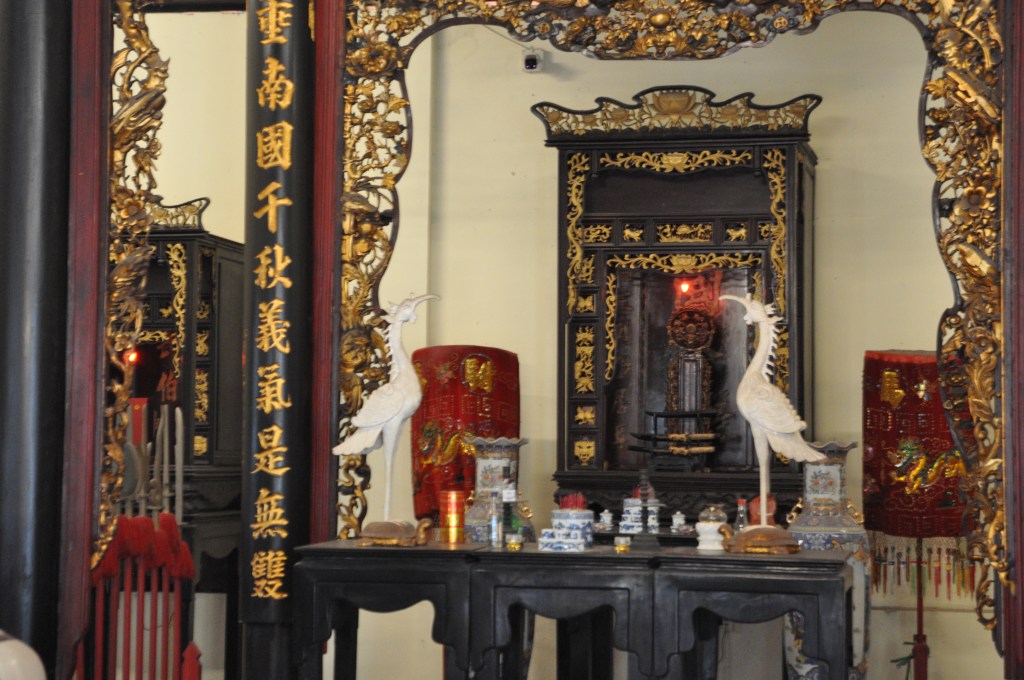
Tucked away down an alley off a busy street near the airport is the resting place of Võ Tánh (location). The mausoleum site had a shine with an alter for offerings, some outbuildings that seemed to be used to store children’s outdoor toys like push-along cars. Then out in the yard is a walled enclosure, with statues and bas reliefs, and in the center of the tomb enclosure is the tombstone itself.

Võ Tánh was a senior Nguyễn general, remembered today mostly for the manner of his death. Võ Tánh’s story is tied to one of my favorite sites: Hoàng Đế Citadel in Quy Nhon. In 1801, after capturing the Tây Sơn capital, Võ Tánh found himself surrounded by enemy forces with no hope of relief. His men had eaten the horses and the elephants and were slowly being starved inside the fortress walls. Rather than allow his troops to be slaughtered in a final assault, he negotiated a surrender. Once the safety of his men was secured, he set fire to himself inside the citadel. The act was a ritual intended to preserve his honour in defeat. It left a deep impression even on his enemies who gave him a good burial at the center of the citadel. The tomb in Bình Định can still be seen and visited.

However the tomb in Bình Định lies empty. The war was won by Võ Tánh’s Nguyễn lord the following year and his remains were moved to what is now Hồ Chí Minh City. When it was built, this tomb would have sat outside the upperclass neighborhood of Phú Nhuận where the mandarins lived but now it sits surounded by flats in a sea of tarmac, quite the contrast to the sleep countryside of Bình Định.

Võ Di Nguy

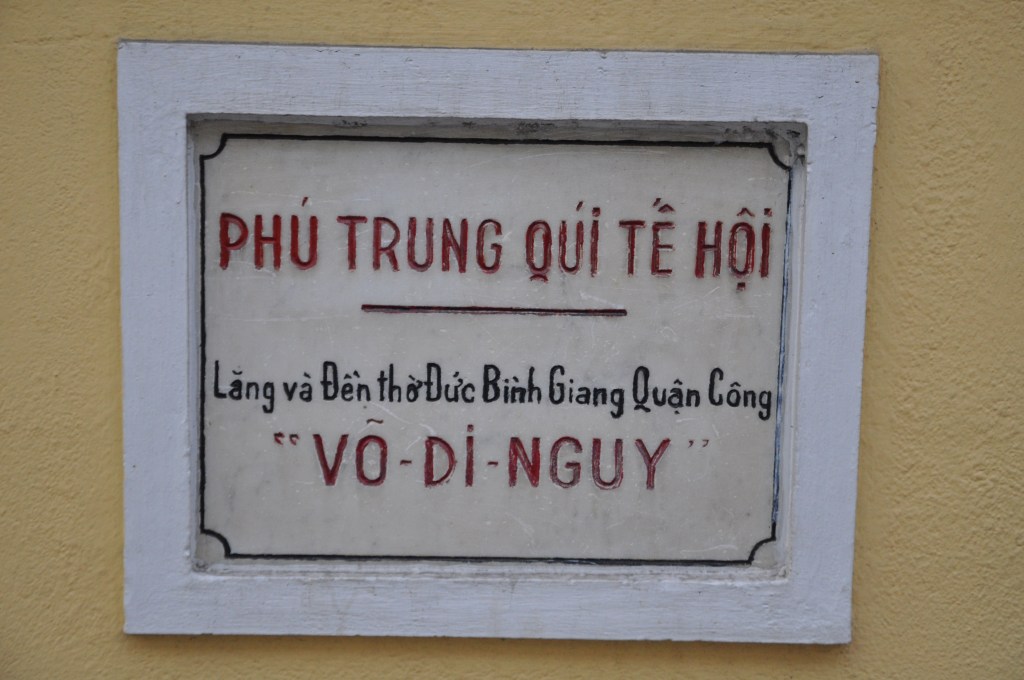
From Võ Tánh’s tomb, we headed over to the next mausoleum, that of Võ Di Nguy (location). Võ Di Nguy was the navy commander who made his name at the decisive final battle of the war: the battle of Thi Nai in 1802. Although the Nguyễn side he fought for would win the battle, Võ Di Nguy lost his life. He was posthumously given many high honours and brought here to be buried.

The entrance was hard to find at first, half-buried in the urban sprawl. Finding a solid wall with a plaque but no door, I asked a street-food vendor how to see the tomb and he pointed down the alley next to him. He also gave a shout to someone on the inside.

A middle-aged woman cracked open a side door, ushering us in. The area was full of statues and temple paraphernalia but it felt like the lady’s personal domain—she seemed to be living there with her husband and elderly father. A veritable hoard of dogs and cats roamed around.

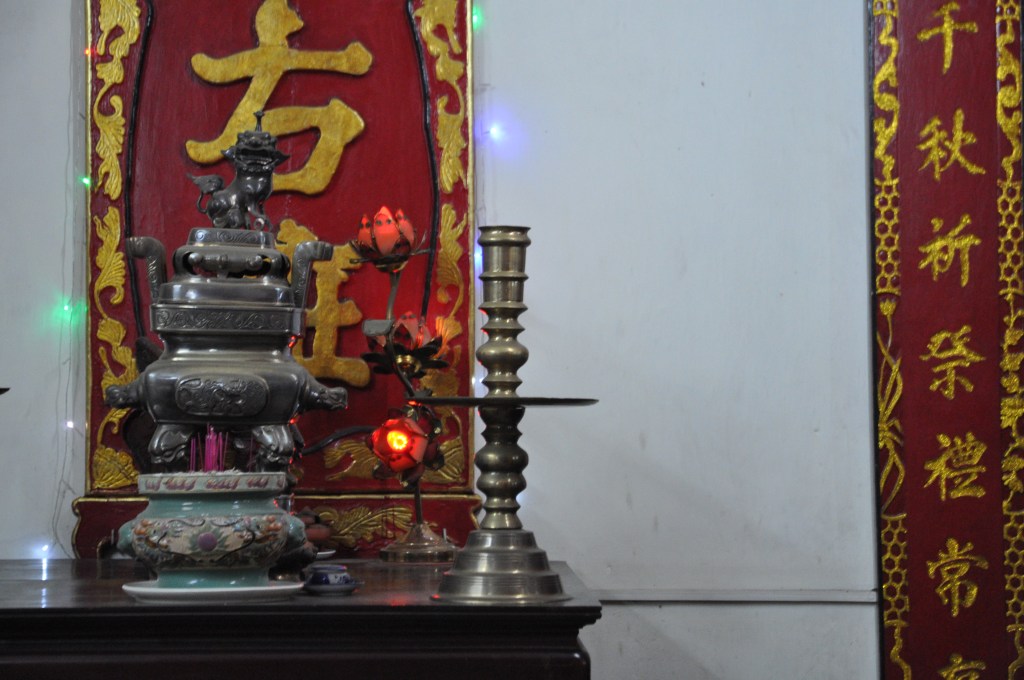
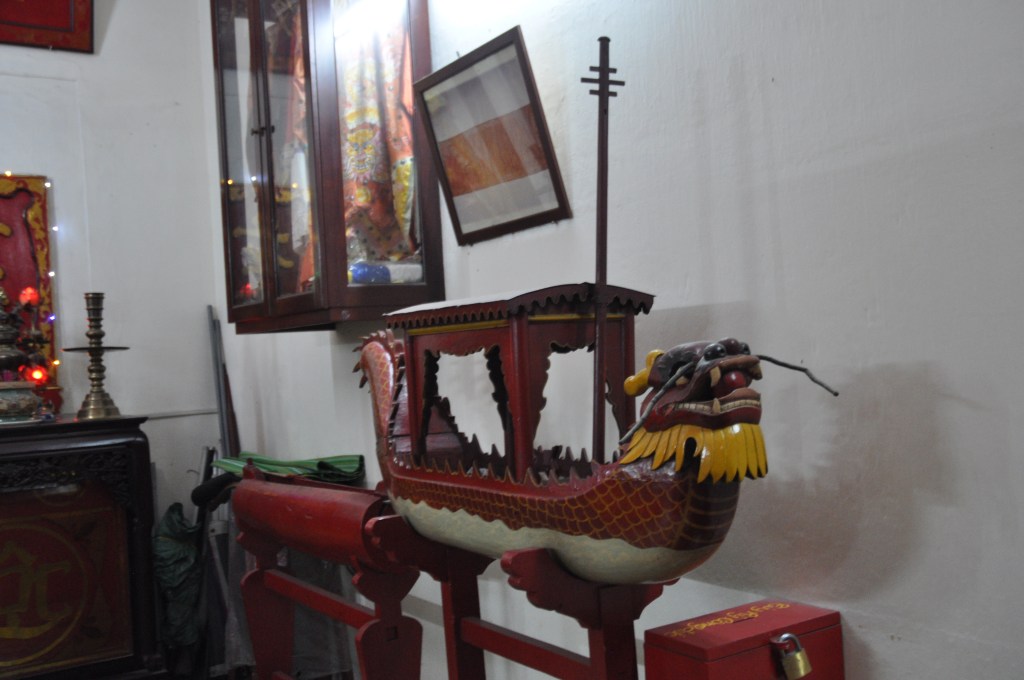
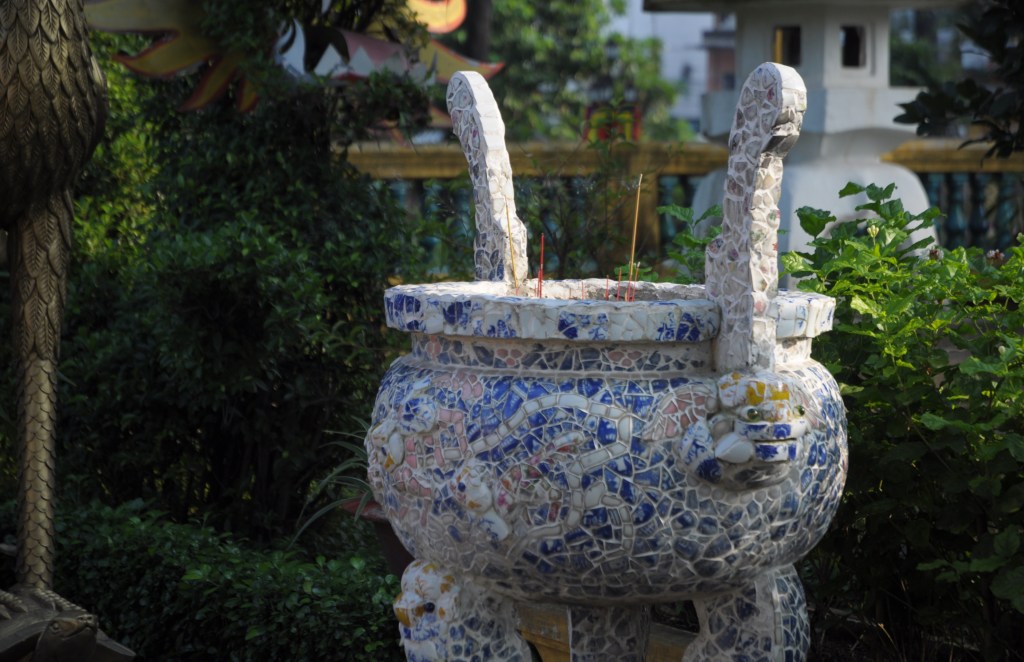
Similar to the Võ Tánh site, there is a shrine and then a walled tomb enclosure with a tombstone in the middle. At the front of the enclosure was a large cup-shaped censer (lư hương) for placing incense. The shrine contained many beautiful ornaments including a model boat to represent his nautical accomplishments.

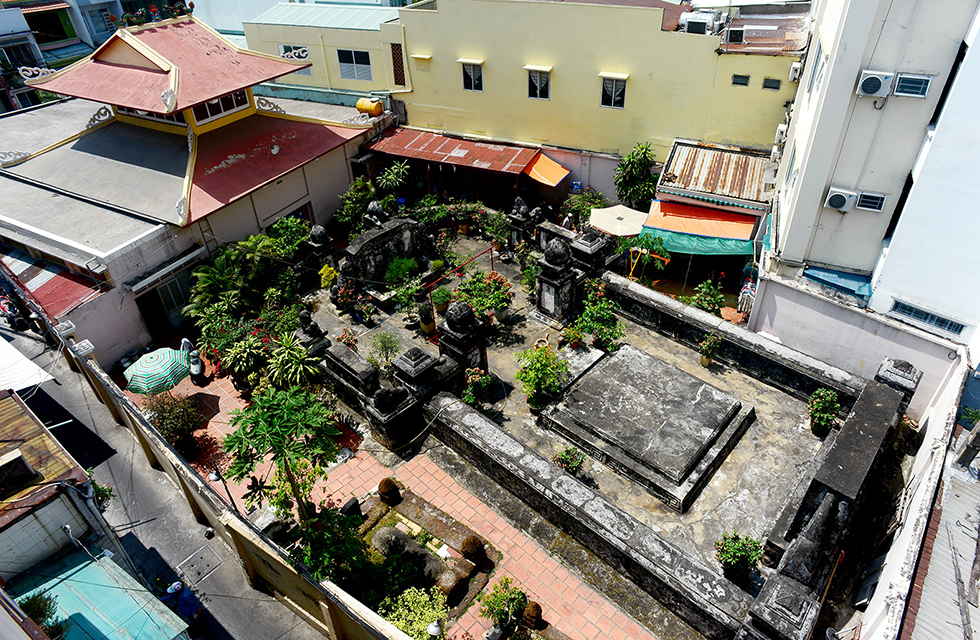
The tomb from the air, source Hồng Lam 13/03/2021
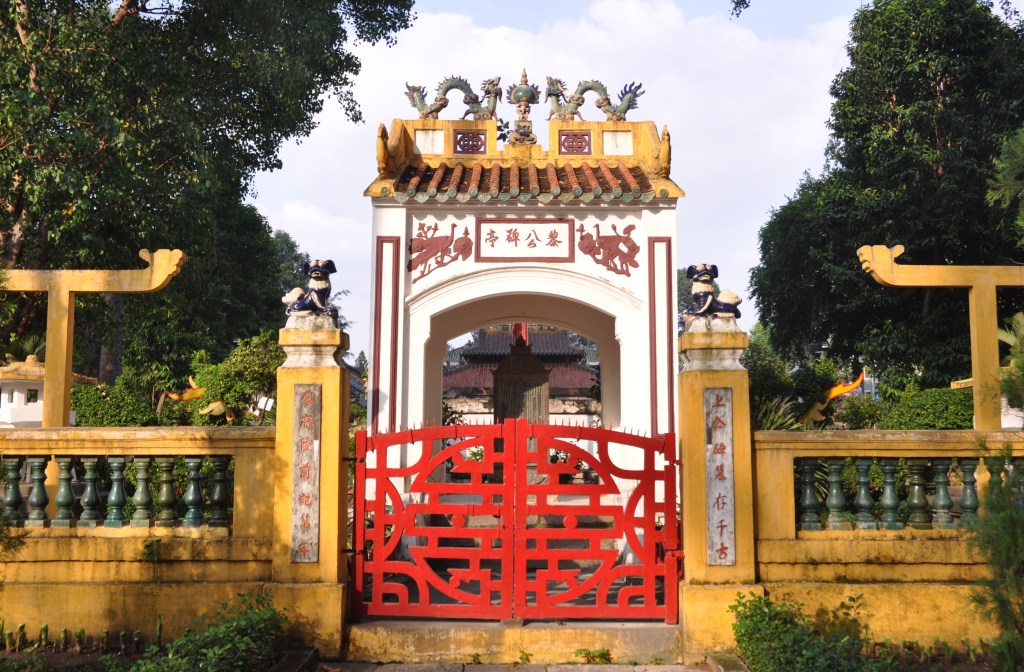
Le Van Duyen

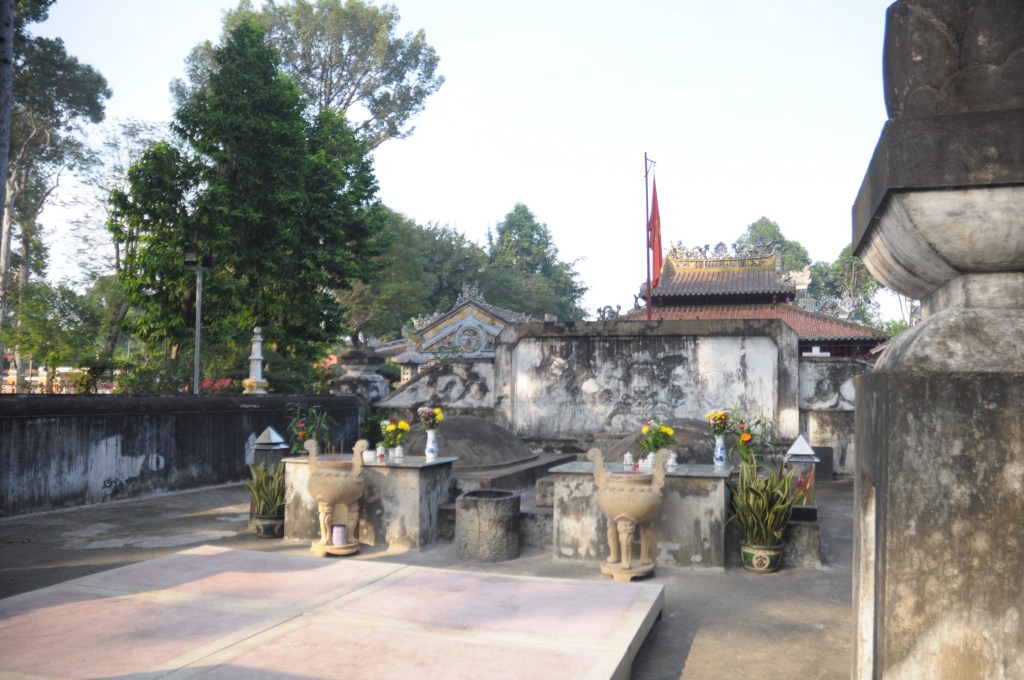
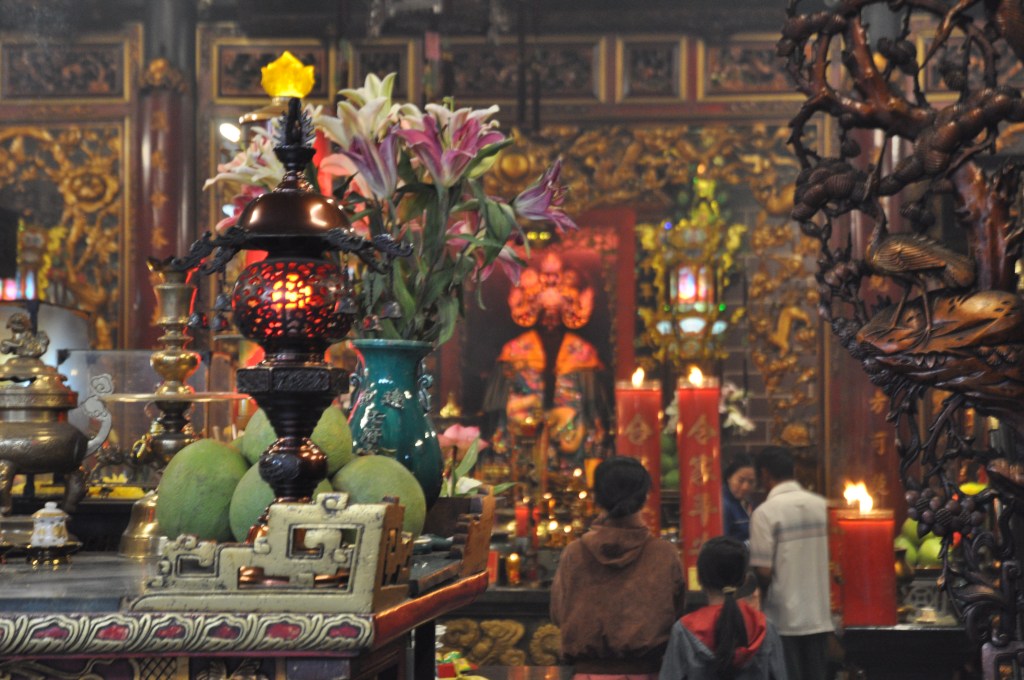
At the next destination, the courtyard was thronging with people posing for photographs. I had timed my visit for golden hour, hoping to get some good photos of the tomb. For these people, the temple was the backdrop for their Tết photos while they show off their ao dai. For me, the tomb was the subject.

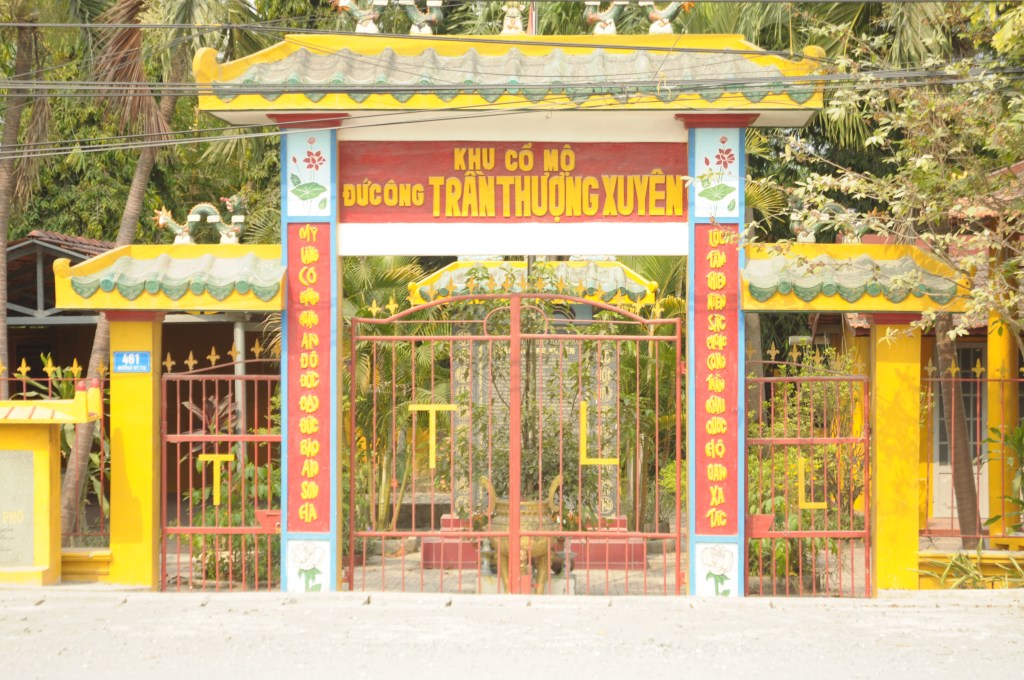
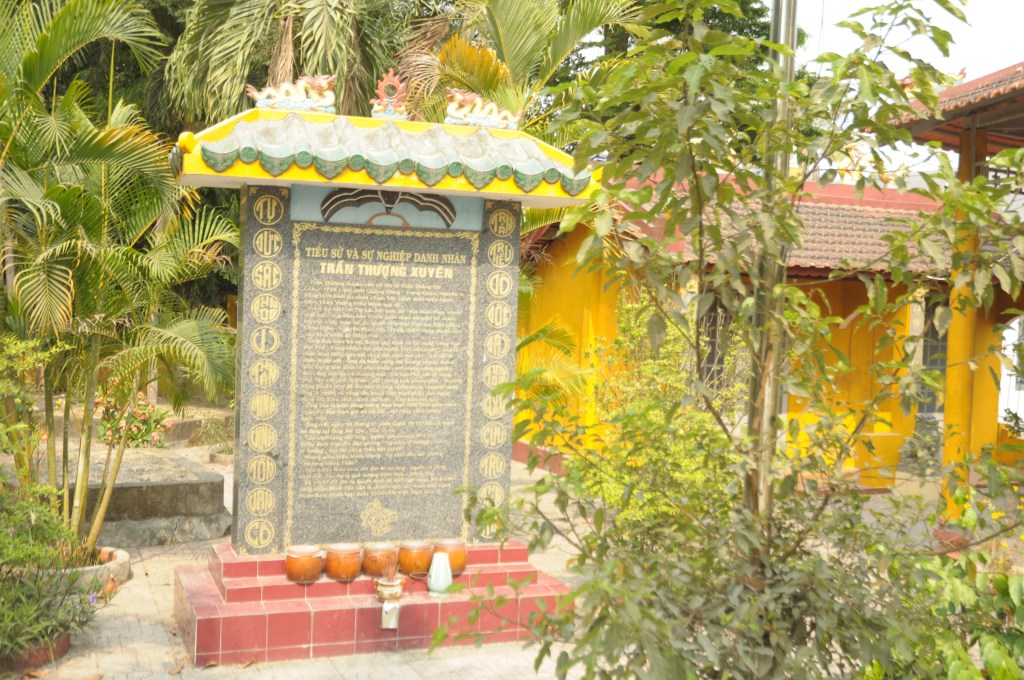
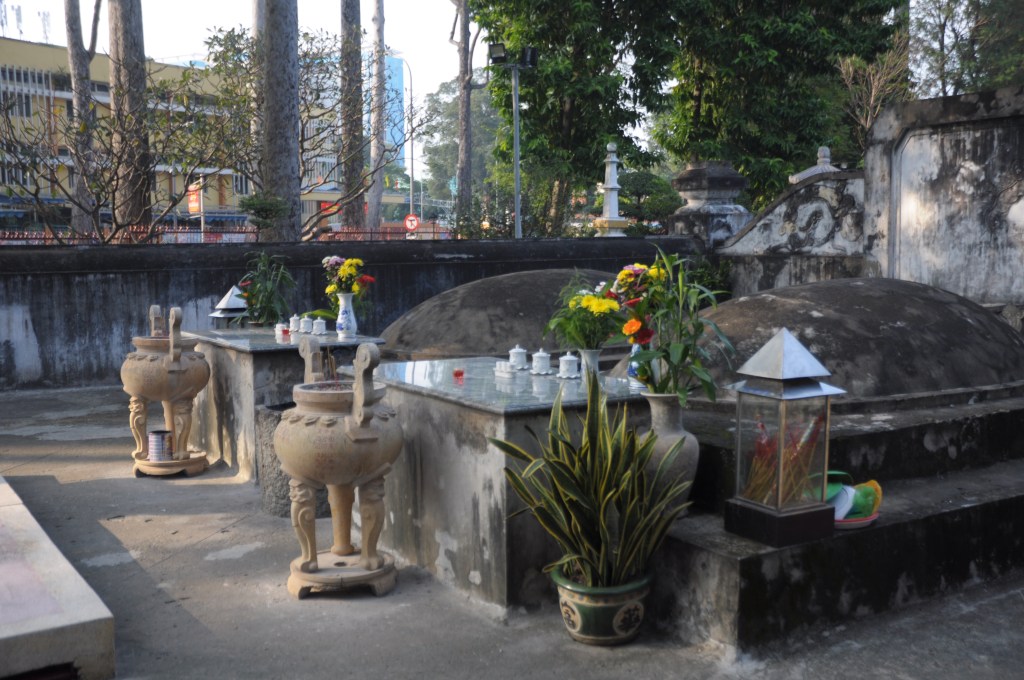
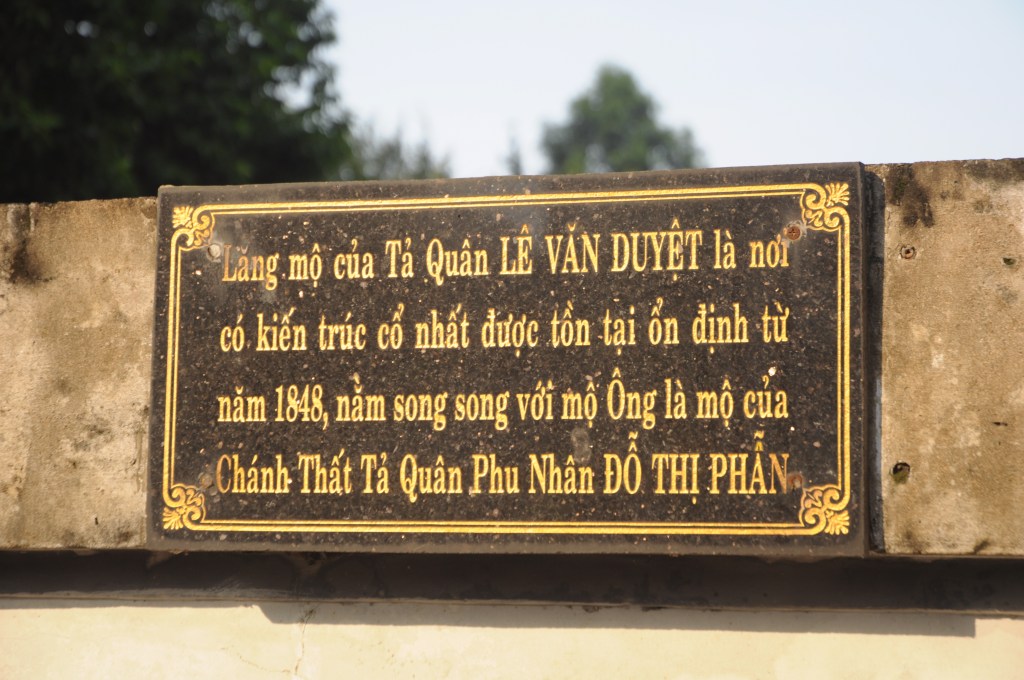
This place is known Lăng Ông (location) and is actually quite a well known spot, unlike the other tombs. In fact, it even featured on the 100 dong bill of the Republic of Vietnam. I used to live not far from here and must have driven past the rear wall hundreds of times without giving it much thought. From the back it looks like just another place of worship.

It surfaced again while I was researching about Thị Nại, because this is the resting place of Lê Văn Duyệt — the other Nguyễn general. It is said that when Võ Di Nguy was killed, the emporer Nguyễn Ánh ordered a reteat but Lê Văn Duyệt refused; fighting harder than ever. The battle was won and Lê Văn Duyệt lived to tell the tale.

After the war he was appointed Governor of Gia Định Citadel in 1812. Gia Định was a large frontier province and the city of Saigon would grow up outside the citadel. Gia Định was the precursor to the modern Hồ Chí Minh City. Lê Văn Duyệt is recorded as having been a good governor who facilitated a lot of growth in the region. He passed away from illness in 1832 but his death was followed by a lot of drama because he was accused of disloyalty. In 1835 the emperor ordered his tomb destroyed and replaced with a headstone reading “The eunuch Lê Văn Duyệt was punished according to the law”. One story says that his grave was whipped 100 times. Once the dust had settled, he was pardoned in 1841 by the next emperor and the current tomb built.
Today the complex stands as an area of calm in the churn of the city. The main entrance is from the back and few guests seem to bother to walk around to the front to visit the tomb.

As Ellis and I finished our tour of these quiet mausoleums, I found myself thinking about how such tucked-away graves connect the Tây Sơn saga directly into the fabric of modern Hồ Chí Minh City. What is now Hồ Chí Minh City—once Saigon, and in the late eighteenth century Phiên An—was still a developing frontier outpost when these dramas unfolded. The citadel here was only raised in the 1780s as a consequence of the Tây Sơn conflict, yet the decision to lay figures like Võ Tánh to rest in the south reveals how important the area was to the Nguyễn court at the time. In fact, Saigon would serve as the capital of the Nguyễn dynasty from the end of the war until 1811 when they moved to the famous palace at Huế. These graves mark the moment a marginal frontier began to transform into the heart of a new polity.

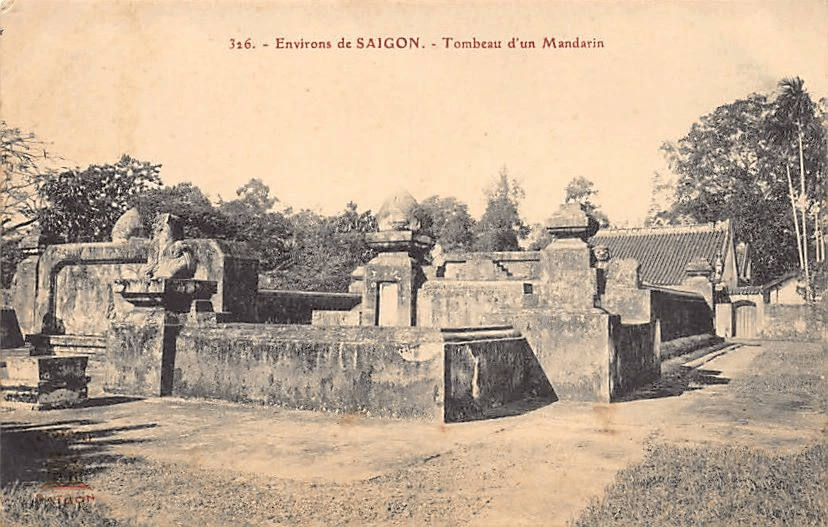
Early 20th century photo of Lăng Ông: “Viet-Nam – Surroundings of Saigon – Tomb of a mandarin – Publ. A. F. Decoly 326 – – Viet-Nam – Environs de Saigon – Tombeau d’un mandarin – Ed. A. F. Decoly 326”
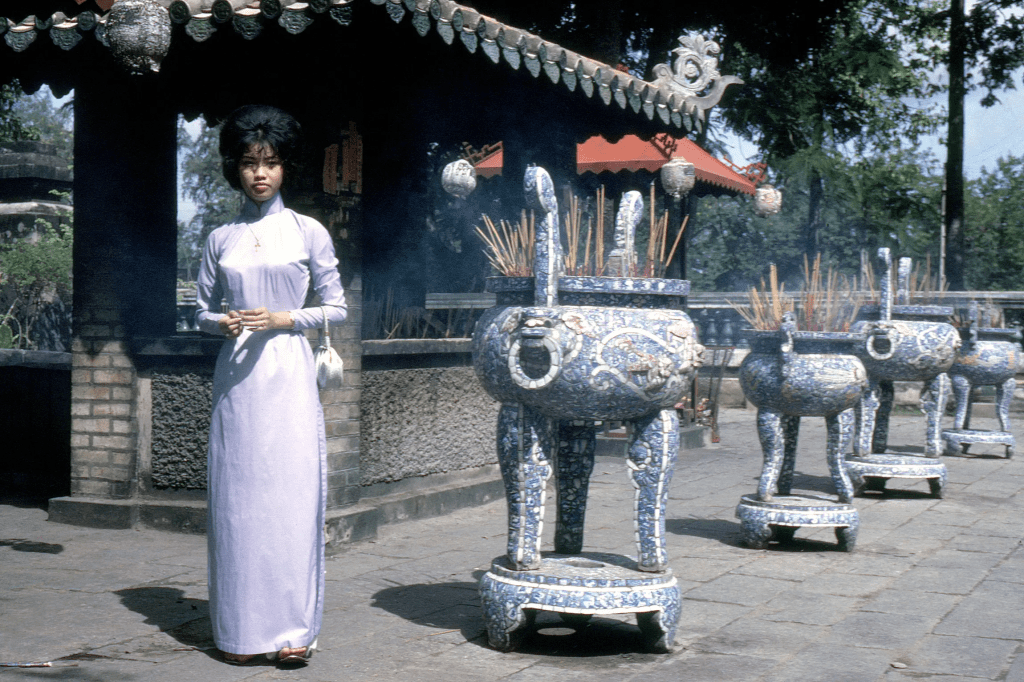
Lăng Ông in 1963 source

Further Reading

Lương Văn Chánh: Phú Yên’s Founding Father

When I first came to Tuy Hòa, I had vague ideas about funding my travels by writing online. This was before ChatGPT, when copywriter might have been a viable option. I used this blog to practise, read a few guides, and produced some quite bad content including a piece about “hidden gems in Vietnam”, which I’ve deleted since out of embarrassment. At the time, I spoke about hidden gems with the assumption all readers knew what it meant: an excellent destination tucked out of sight, unspoilt by tourists or commerce. I even described Quy Nhơn as a hidden gem, which now makes me chuckle, given how touristic it feels compared to places like Pleiku. The longer I travel, the less certain I am that people mean the same thing when they use the phrase at all, or that such gems exist in the way travel blogs like to imagine them.

The topic resurfaced by coincidence over the new year. After an action-packed Christmas in Pleiku, I met an old friend, Pierre, in Buôn Ma Thuột, who pulled together a trip with several people I’d never met. We went first to Nha Trang for the new year fireworks on its crowded promenade, then on to Tuy Hòa. Four of us ended up travelling together, loosely connected and still feeling one another out. During some idle small talk, one expat, Akil, asked me which beaches were good and still unknown given I’d visited Tuy Hoa already. I admitted I didn’t really know. He said, “Oh, so you’re not much of an explorer then.”

The remark stayed with me. For Akil, exploration means beaches, viewpoints, unexpected vegan restaurants. Are they hidden gems? I think some people would agree they are.

For me, exploration usually takes a different form. I’m less drawn to beautiful places and more to historical spots — to places that help explain how a region became what it is. Museums, communal houses, half-neglected shrines by the roadside. Places where the reward is understanding rather than sensory.

The following day, while everyone else was off at a beach I returned to the provincial museum, which I’d already visited once before. This time, I could read the Vietnamese-only signage with far greater ease, and I have a better grasp of the nations history. Names that had once meant little — Lê Thánh Tông, Quang Trung, Gia Long — now connected to chronicles I’m getting familiar with. After that I went to find the tomb of Lương Văn Chánh and had a peaceful afternoon driving across the countryside and resting on a bench in the shade as the local children were playing.

In the museum I had noticed references to several nearby historical sites I’d never visited: a small cluster of đình and đền scattered around the Ba River estuary (communal houses and temples respectively). So the next day after the others left Tuy Hòa, I rented a motorbike and set out alone to find them. I’ll put details of all the stops I made in the appendix. Most were easy enough to reach, sitting quietly in villages, but sign posted and listed on Google maps. Then there was one that refused to be located at all.

Đình Phú Sen had no pin on Google Maps, no photographs, no digital footprint. Armed only with a photo from the museum and the name of the commune, I rode into the village and stopped at a small bakery, buying a few cakes as an excuse to ask for directions. I followed the guidance slowly, scanning for anything that looked older than its surroundings.

I nearly passed it. What caught my eye first was a family gathering under a gazebo. Behind it, half-hidden among trees, stood a low, weathered structure. Outside, a group of children of mixed ages were loitering. “We’re a lion dance troupe!” they told me and eagerly showed me their drums and cymbals. When I asked whether this was Đình Phú Sen, holding up the museum photo, they erupted with excitement and told me it was.

The building was in a squat traditional style, not so old – an inscription suggested the modern building was built in 1995 but the site dates back to one of the earliest Vietnamese settlement in the area. Photos were taken, then selfies, then more selfies. I gave them the cakes. Before leaving, I added the location to Google Maps. I’d actually driven this way before on the road from Pleiku to Tuy Hòa but hadn’t noticed the building at all, it meant nothing to me.

On the ride back to the hotel, I kept thinking about hidden gems. It’s funny that if we search for them: type the phrase into Google and the results are, by how search engines work, the most popular places of all. The term promises reward without crowds, yet anything that reliably delivers a good experience will eventually attract people.

For me, a hidden gem is a place you find by following your most niche interests. It could be a place that you can’t find online, only in a single photo in a museum then you set out to find. Because it takes you off the beaten track and forces you to have interactions you wouldn’t otherwise have. It’s not about spectacular places but the unique experience of that outing: people you happen to meet, the things you learn, and the small things — sharing a few cakes.

Appendix: How Phú Yên became part of Vietnam

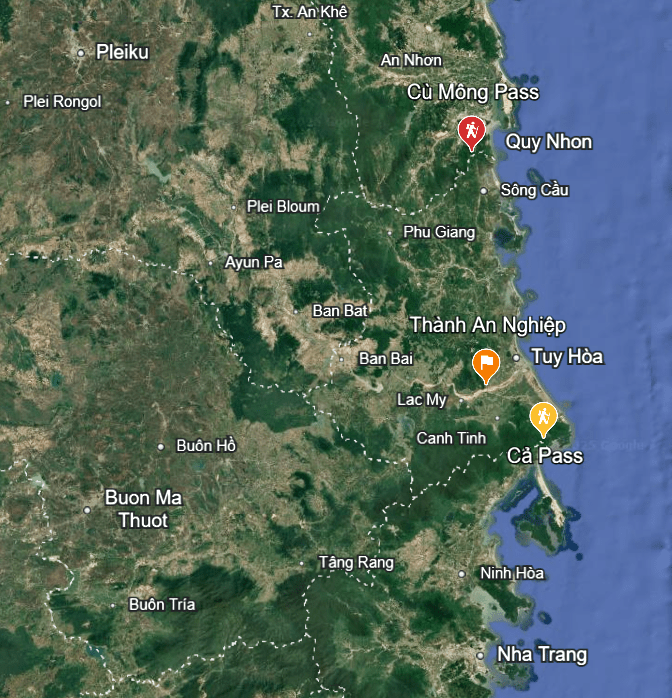
In 1471, The Vietnamese Emporer Lê Thánh Tông defeated the Cham Kingdom of Vijaya in Quy Nhon. Annexing the area of Vijaya (today Gia Lai) into Dai Viet. Tuy Hoa sits in the area the Cham people called Ayaru which is bordered to the north by the Cu Mong pass and to the south by the Ca pass, while on the east is the coast and the west is the rugged highlands. It was a vasal of Kauthara (with the capital at Nha Trang). So, after pacifying Vijaya, Lê Thánh Tôn created an independent buffer state in Ayaru which they called Hoa Anh (source).

Thành Hồ (AKA Thành An Nghiệp)

The death of Lê Thánh Tông would be the start of several centuries of Game of Thrones style political instability which would not end until after the Tay Son wars. In the late 16th century, about 100 years after the creation of Hoa Anh, Nguyễn Hoàng was the governor of the most southern provinces of Dai Viet down to the Cu Mong Pass. He was a rising star against the backdrop of Game of Thrones style political instability where the Le, Trinh and Mac houses were vying for power, he emerged to establish his own clan: he became the first of the Nguyễn Lords – who would go on to rule South Vietnam for centuries, later being the last dynasty of emperors of Vietnam.

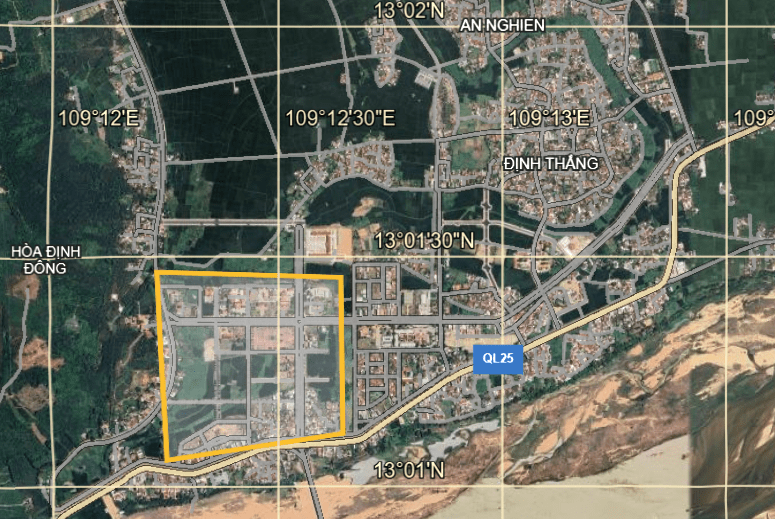
In 1578, in response to an attack from Champa, Lord Nguyễn Hoàng asked his general Lương Văn Chánh to lead an army into Phú Yên, besieging and capturing An Nghiep citadel (Thành Hồ/Thành An Nghiệp) located in Phu Hoa district , west of present-day Tuy Hoa city.

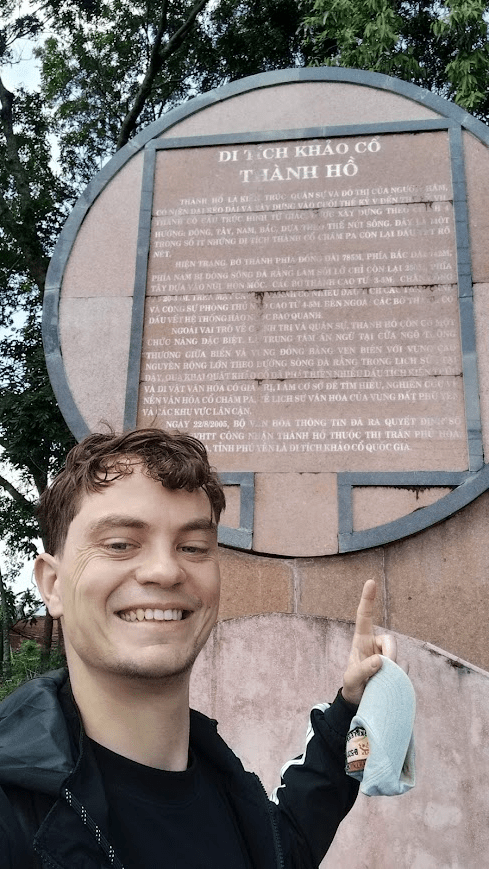
The citadel area can still be visited for free but there is not much to see (maps). The citadel was roughly square with sides of 785x742m and the walls were 3-5m tall. The earth ramparts are still very clear and some brickwork is visible. The moat is still very much there. The site is marked with a huge stele.

Đền thờ Lương Văn Chánh

If Phú Yên had to pick a founding father, I suspect the locals would choose Lương Văn Chánh; the general who took the citadel.

Having pacified the area, in 1597, Lương Văn Chánh received a decree from Nguyễn Hoàng to bring about 4000 Vietnamese migrants to settle the area. This is a major milestone in bringing the area into the fold of Vietnam and is what Lương Văn Chánh is most remembered for today.

After his death in 1611 Panduranga were able to bring Ayaru under their control under the command of King Po Nit (his Wikipedia page is quite interesting as it contains European accounts of Champa). Nguyễn Hoàng sent the ethnic cham general Văn Phong to push Panduranga out of the area. They swiftly succeeded and after that, the Hoa Anh/Ayaru area was established as Phú Yên prefecture and would from then on always be part of Vietnam.

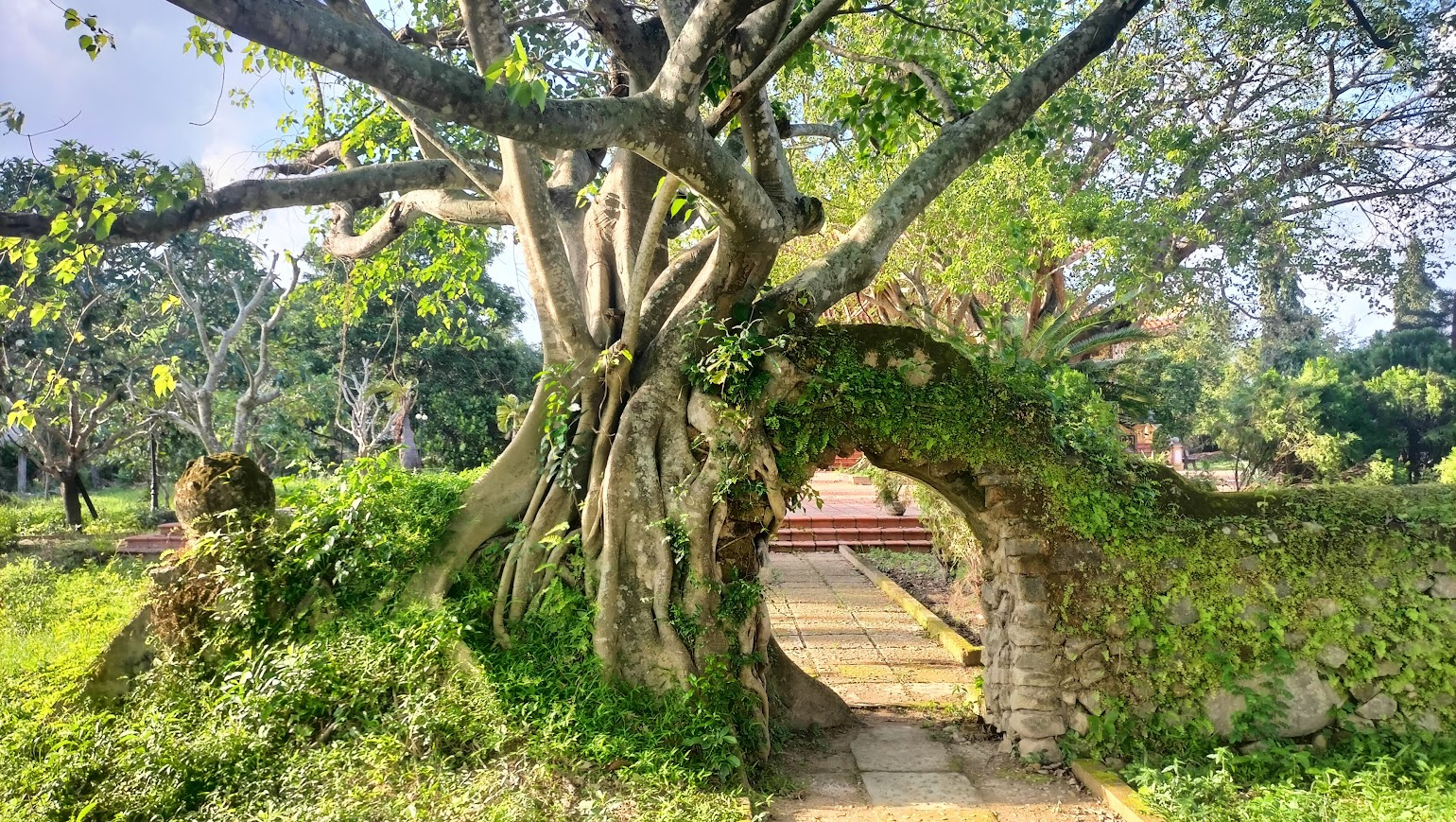
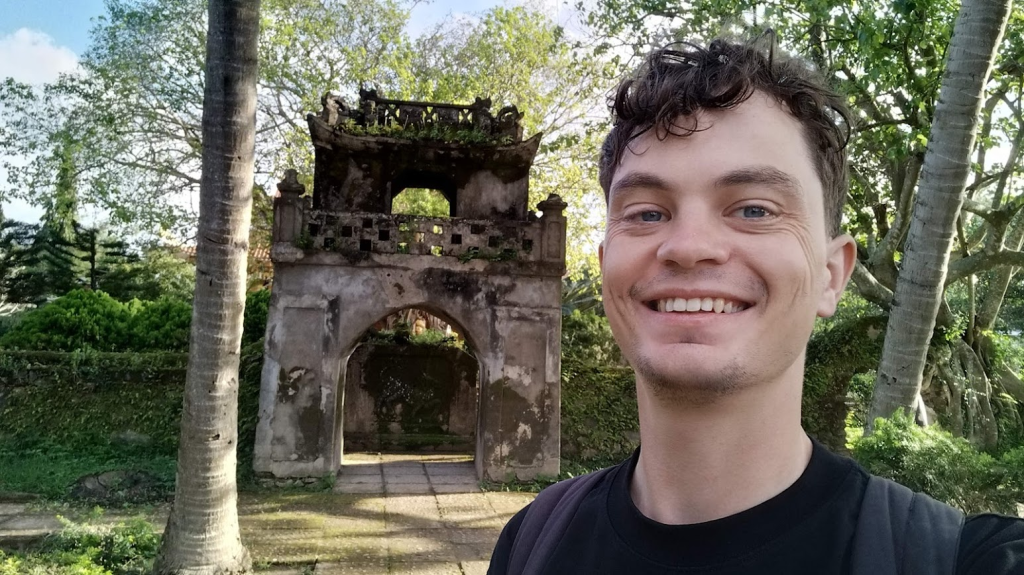
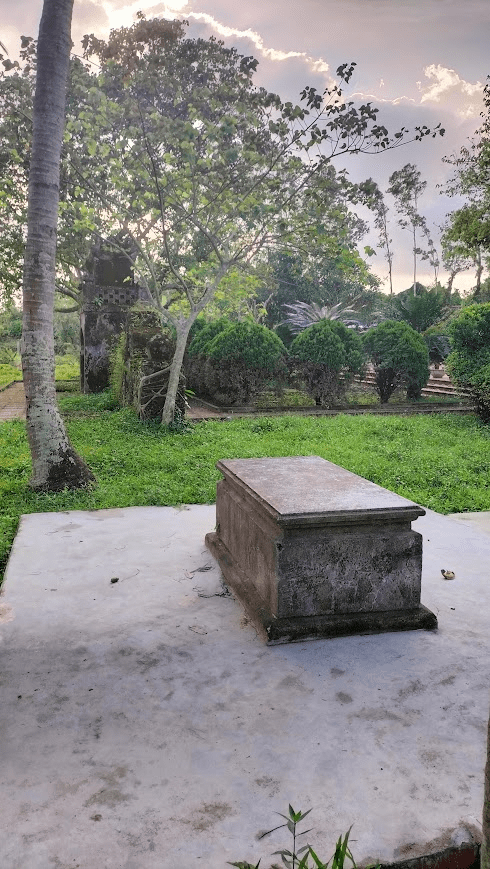
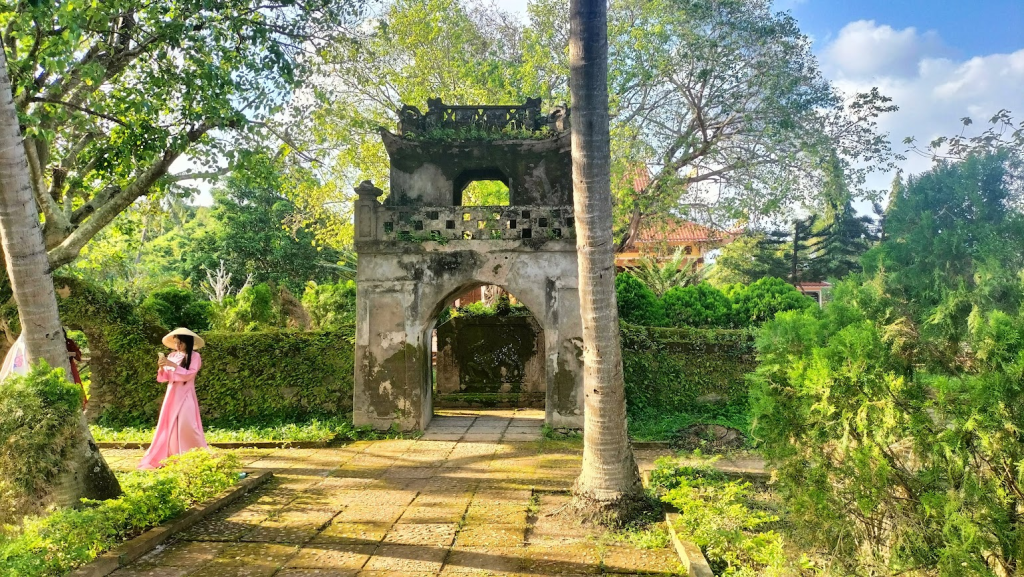
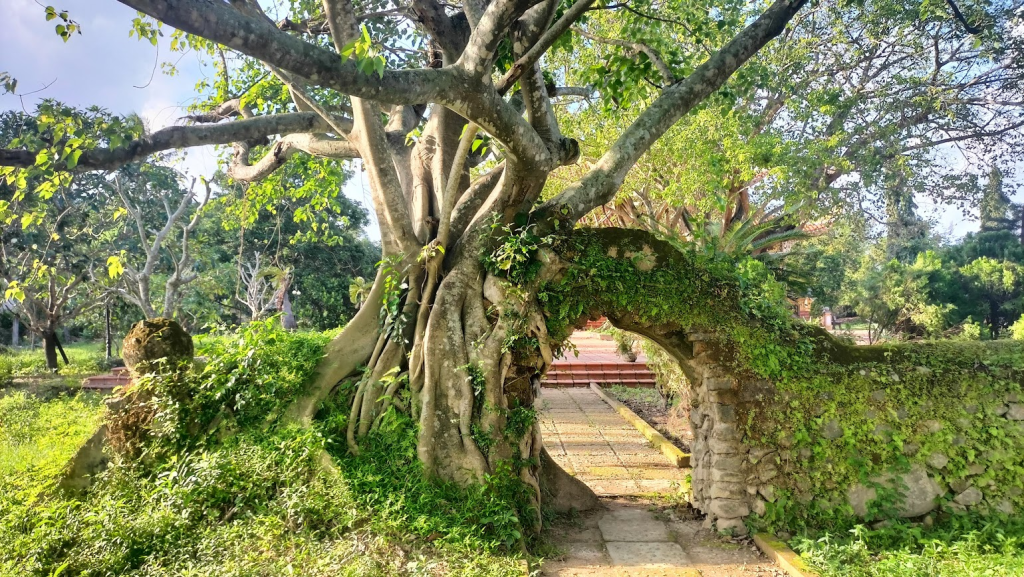
Lương Văn Chánh’s tomb is at shrine in Hoa Tri where he is worshiped as the village protector deity (maps). It is surrounded by a peaceful green garden area. The drive was lovely, skirting Chóp Chài mountain and across rice paddy causeways. When I arrived, some teenage girls were wearing ao dai and taking photos while some small children were playing. There is an old wall with a traditional gateway and the tomb itself is clearly visible. I think it’s well worth a visit.

Lẫm Phú Lâm

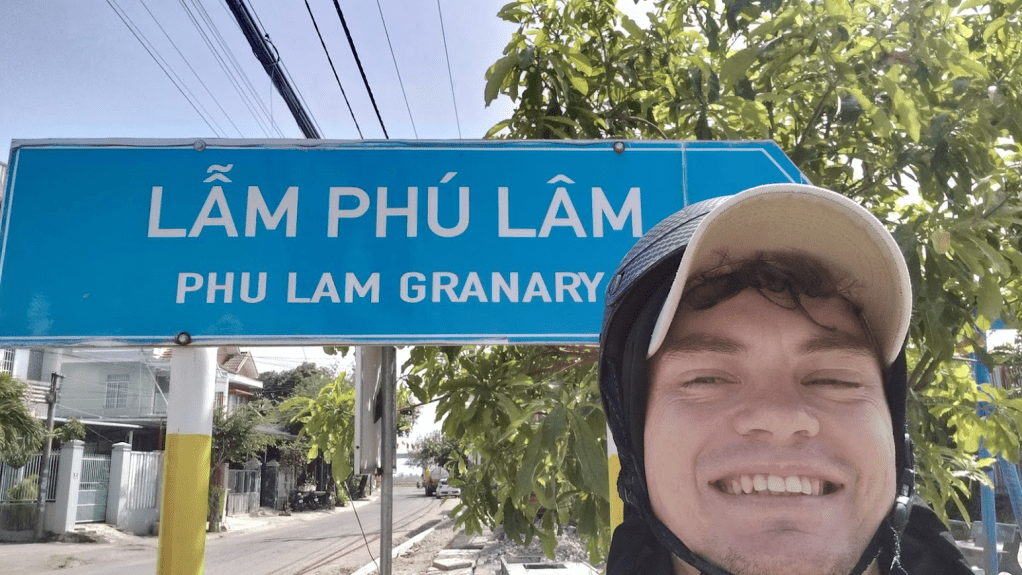
Lẫm Phú Lâm is an old rice granary dating back to the early 17th century (maps). It sits in Phú Lâm village on the south bank of the Ba river estuary. Besides its function as a storage facility, the “lẫm” also served as a place of worship for the village’s ancestors.  Since 1945 Lẫm Phú Lâm no longer serves as a storage facility but is purely a place of worship for the local ancestors, one being Huỳnh Đức Chiếu, one of the founders of the village. It is also used for the worship of Cham goddess Thiên Y A Na aka Po Nagar. (source)

Đình Phú Lễ

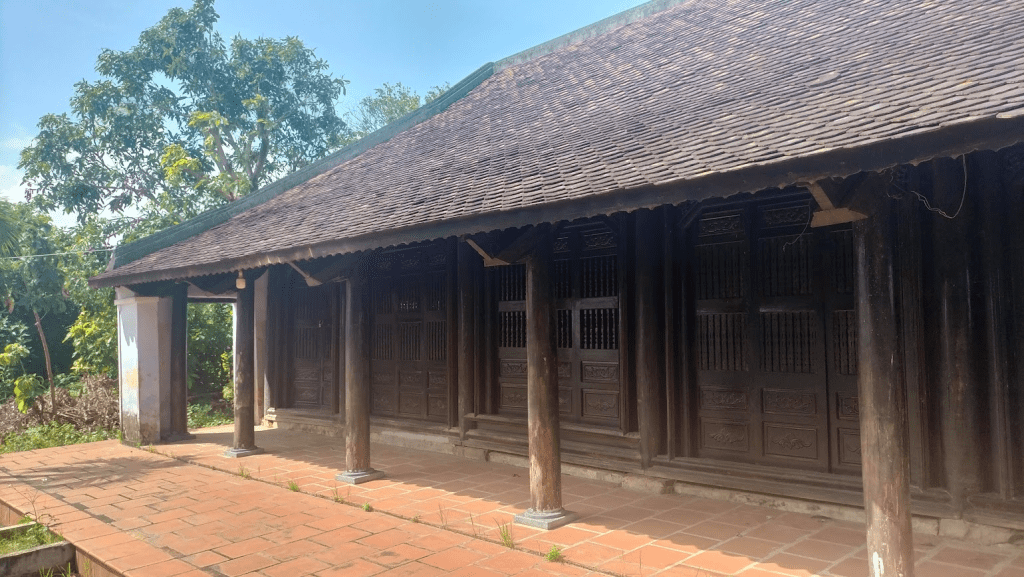
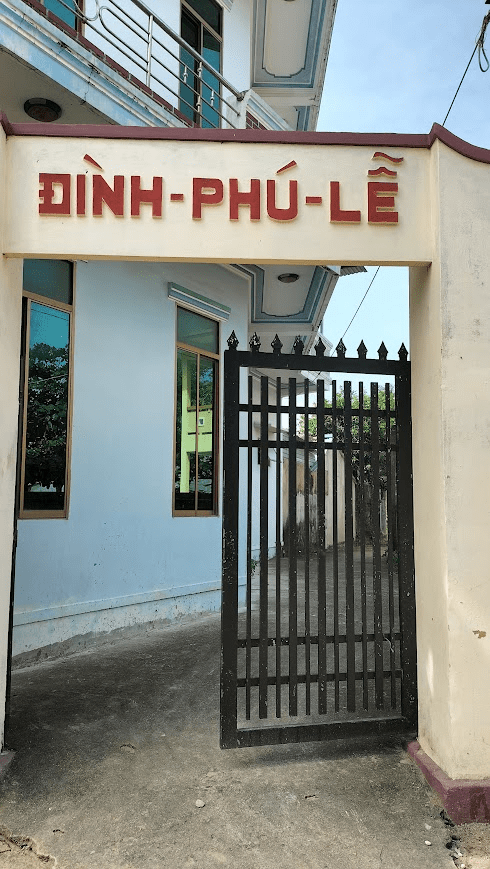
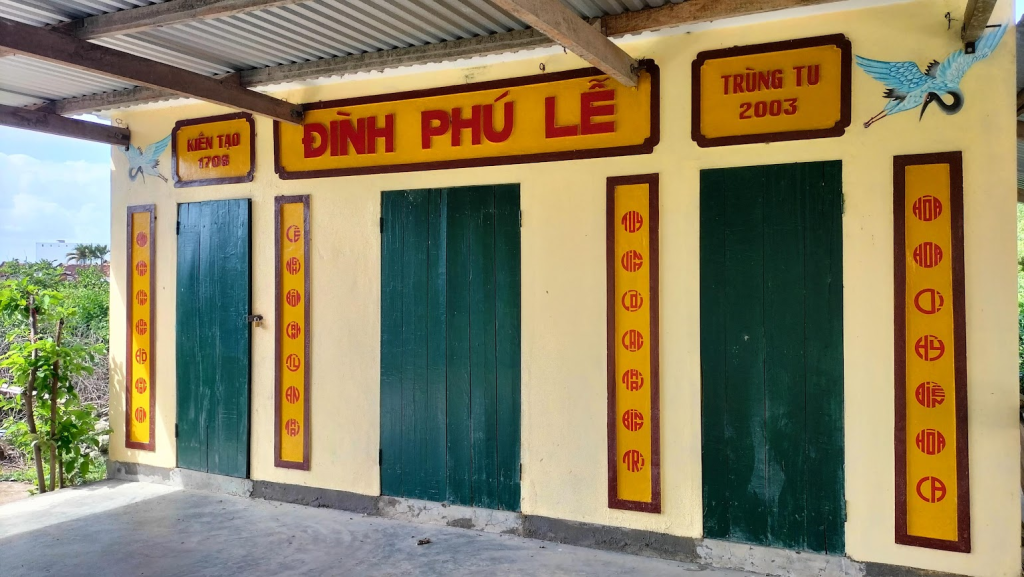
Phú Lễ communal house was established in 1708 (maps). It is in the village of Phú Lễ near Phú Lâm, with an entrance squeezed behind a local school. There, they worship a water god and store some interesting royal decrees. (source)

Others

I also stopped at Đình thôn Phong Niên (maps) and Đình Phú Sen (maps). They were very picturesque and worth visiting but I can’t find any historical information on them. I missed Đình Vĩnh Phú which was also mentioned in the museum.

Bình Định

Three days after the typhoon, I wandered down to The Social in Quy Nhơn, an expat hangout I’d assumed would still be closed—the street had been pitch black the night before—but it was suddenly lit up like a Christmas tree. We hauled wooden armchairs onto the pavement and sat there in the warm, dry evening, drinking craft beer, sharing pizza, and swapping grisly typhoon stories, like one from an expat who’d watched his windows blow out and his fridge lift off the floor before spending the night hiding in the bathroom.

Talk turned to the recent overhaul of Vietnam’s provinces, which has seen Bình Định merged with Gia Lai. One woman said she’d grown up in Bình Định expressed sadness at seeing the name retired, and a few others nodded in agreement. A foreigner tried to soften it by pointing out that at least Quy Nhơn remained unchanged. However, if you’ve been reading this blog very carefully you will know that both place names have been changed multiple times throughout history.

The first recorded name for the area was the Champa city state of Vijaya. After Lê Thánh Tông’s southern campaigns against Vijaya in the late fifteenth century, the area was annexed as Hoài Nhơn prefecture and placed under Quảng Nam province, today better known for Đà Nẵng and Hội An. In 1602, Nguyễn Hoàng renamed Hoài Nhơn prefecture to Quy Nhơn, the first recorded appearance of the name, though it still referred only to the administrative region, as there was no settlement at the site of the modern city and Quy Nhon castle was at Châu Thành. To further highlight how changeable names can be in Vietnam, from 1651 to 1742 it was temporarily renamed to Quy Ninh.

A decisive shift came in 1801, when Nguyễn Ánh captured the area after the Battle of Thị Nại and renamed it Bình Định, meaning “pacification” or “subjugation”. This was the name Minh Mạng later adopted when he elevated it to provincial status in 1832. Quy Nhơn, at its present coastal location, only emerged much later, officially established as Quy Nhơn Town in 1898 at the mouth of Thị Nại, likely because newer, larger ships could no longer navigate the lagoon. For most of its history, it made more sense for the port and administrative centre to sit further inland, a bias that still shapes travel today. The main railway line, for example, bypasses the city entirely, reflecting the fact that An Nhơn, not Quy Nhơn, was still considered the provincial heart when the line was built.

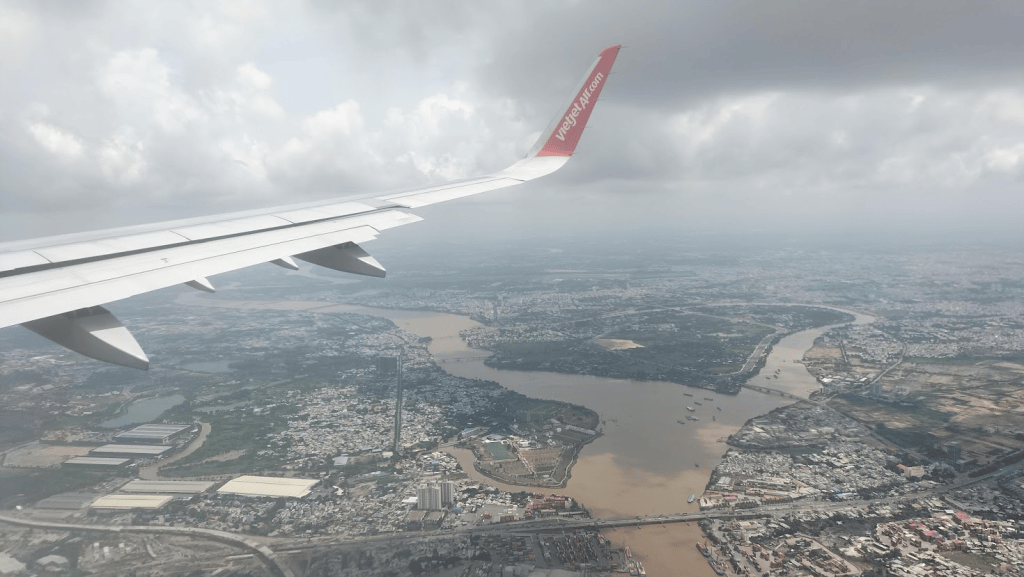
When it came time to say goodbye to Bình Định, I flew out of Phù Cát Airport, built by the Americans as a major wartime airbase near the then still-important town of An Nhơn. The long taxi ride out of Quy Nhơn city felt oddly more tolerable with a clearer sense of why the airport lies so far from the coast. As the plane took off, I looked down to see whether I could spot Bình Định Ward beside Phù Cát Ward, because contrary to what the lady at the expat bar had said, the name Bình Định is still used. The 2025 Bình Định Ward includes An Nhơn town, where the name was first used all those centuries ago.

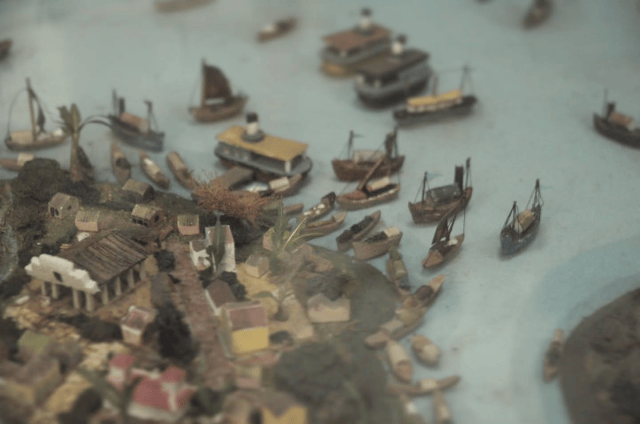
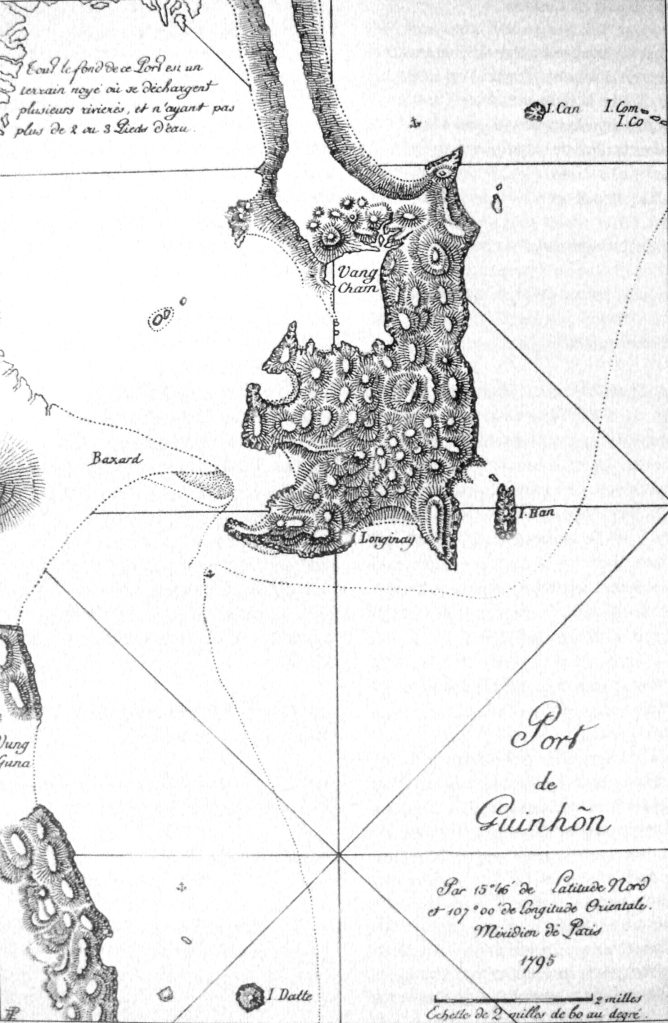
Quy Nhon  Port in 1795 , by  Jean-Marie Dayot 

Chà Citadel

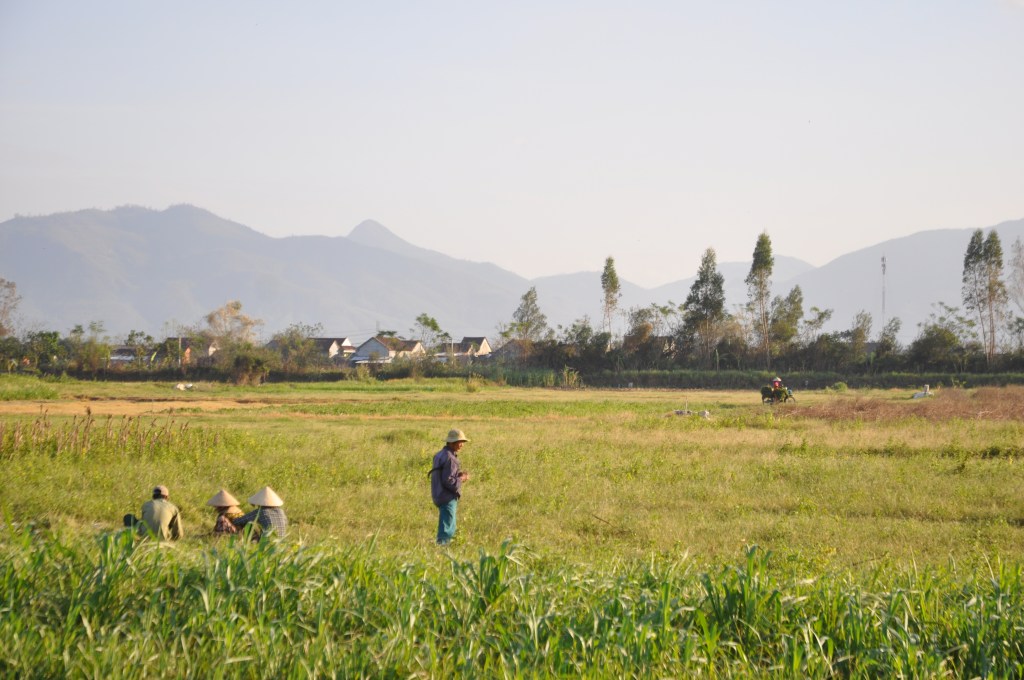
When I went out of Quy Nhơn city again, this time to visit Chà citadel, I had the most idyllic drive through the Vietnam countryside I’ve had to date. There was not a cloud in sight. The Côn river sluggishly drifted by. Cows grazed at its edge, bamboo leant over the water as if it’s nodding off to sleep, and just when I thought it couldn’t be any more perfect, I saw an ox cart trundle down a dirt path, mountains faint and blue behind it. All beautifully bucolic.

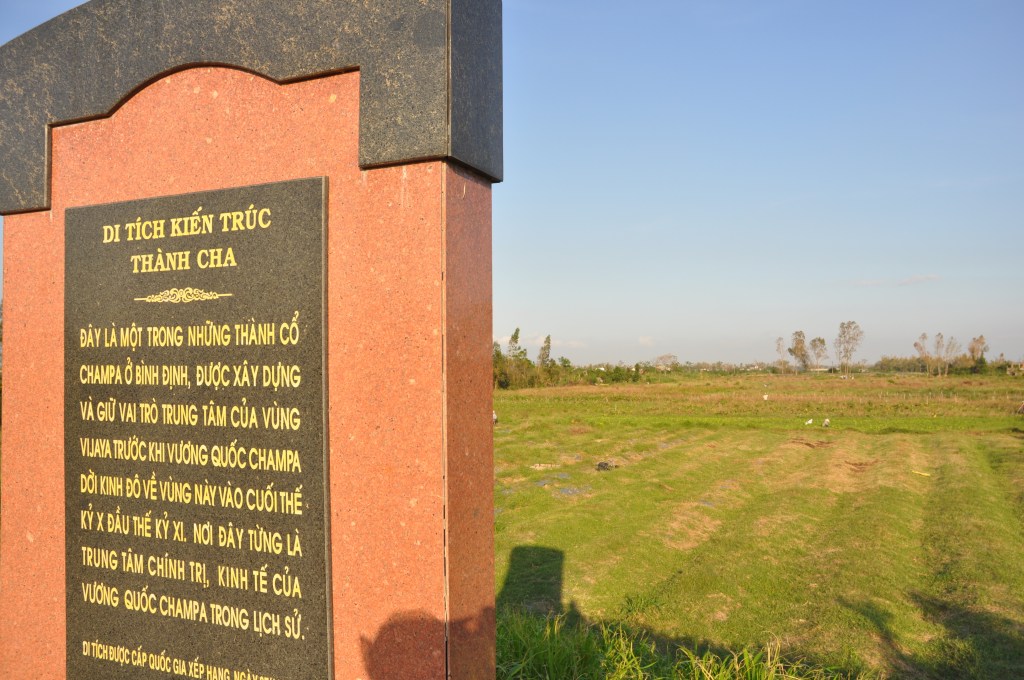
Surely not another castle near Quy Nhơn I hear your ask. I’ve written a lot about different castles in Bình Định, but put simply: Chà citadel, Đồ Bàn, Quy Nhơn, Hoàng Đế, Bình Định, for all these different sites, there has only ever been one administrative centre here at a time, shifting location around the Côn river delta over the centuries in an area with a 8km diameter. Chà is the oldest of the sites, a place whose story reaches back even before the medieval period. It was the dominant Champa power in the area until they moved to Đồ Bàn around the early 11th century.

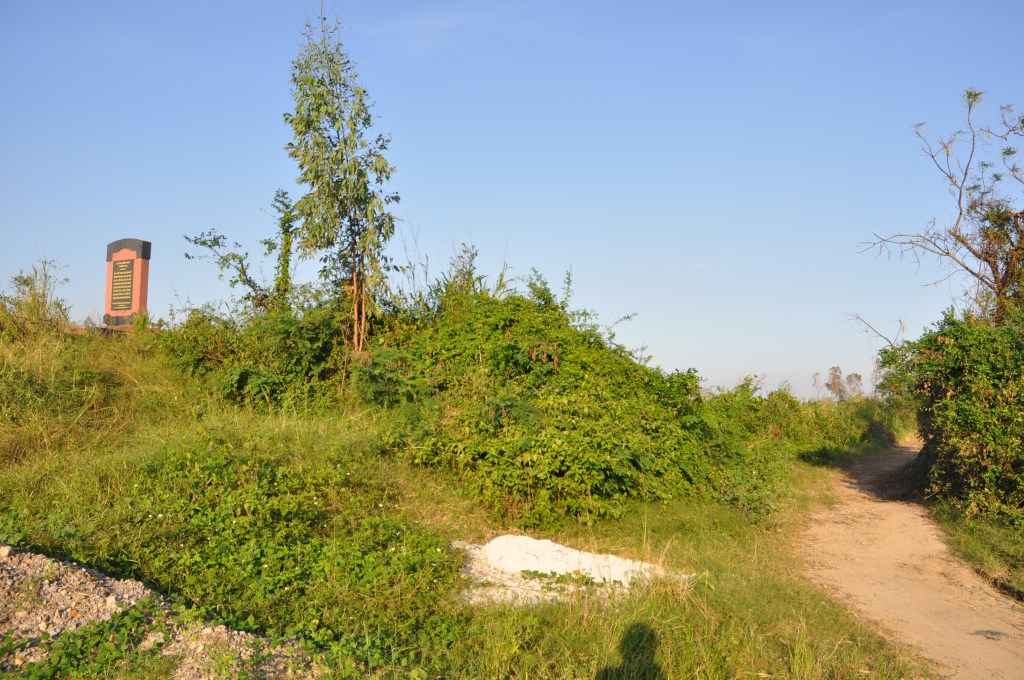
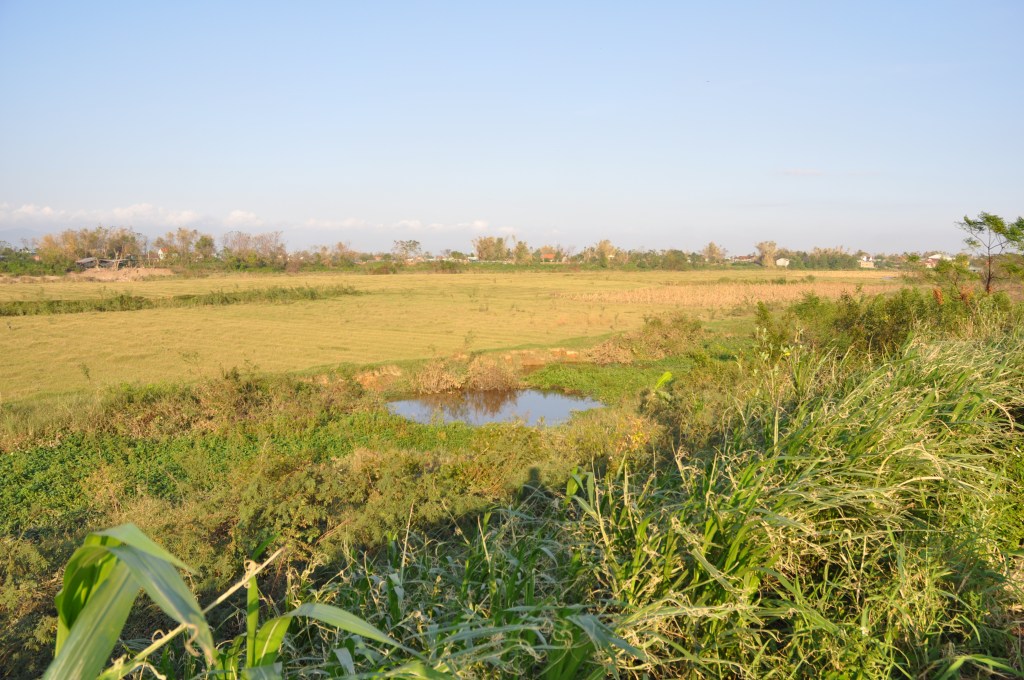
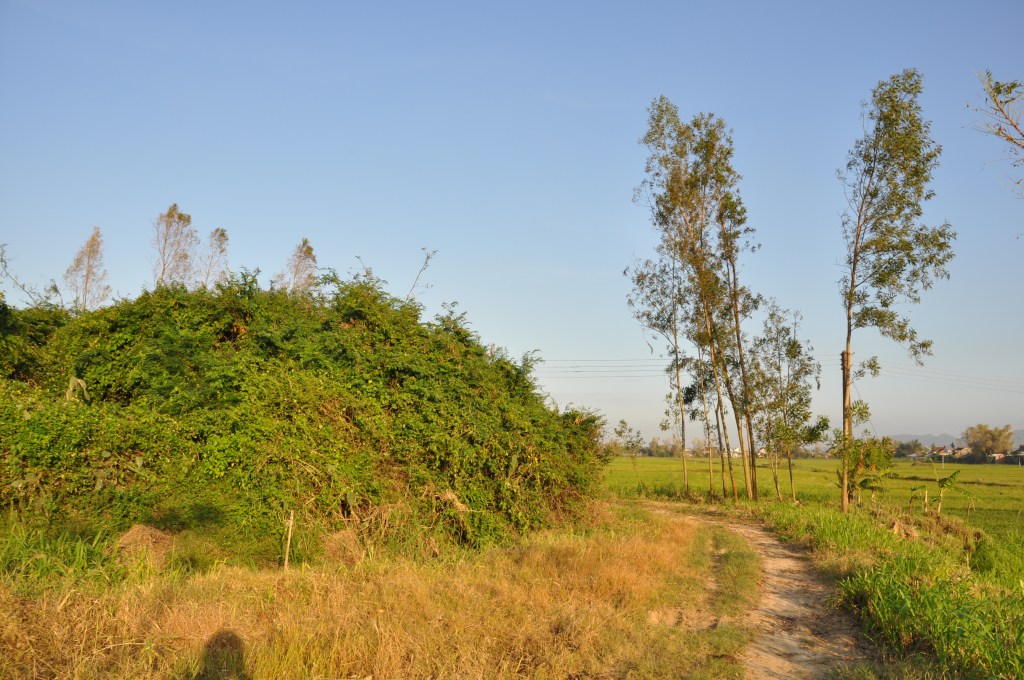
I prepared myself to see nothing at the site but decided to check it out anyway and I was pleasantly surprised that you can in fact clearly see the earthworks. There is a clear square marked out by a tall earth rampart, about 3-4metres high. A black-and-pink stele stands high on the southwest corner as you drive in announcing the history of the site. A few people in conical hats rested in the middle of the old castle as I arrived, and I could see why. It is an ideal spot for a picnic.


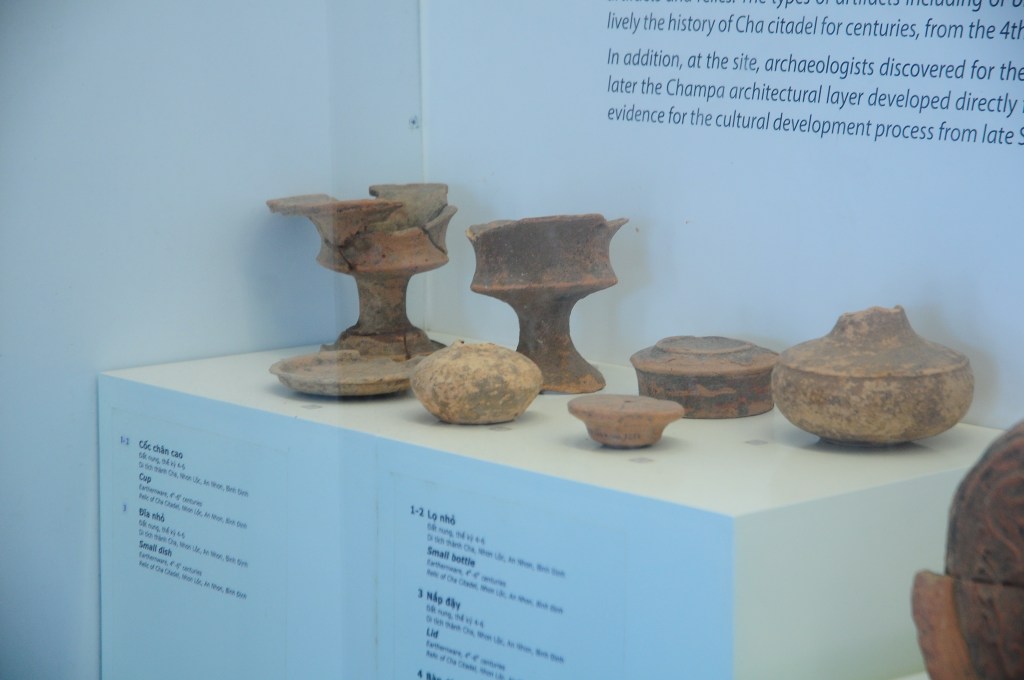
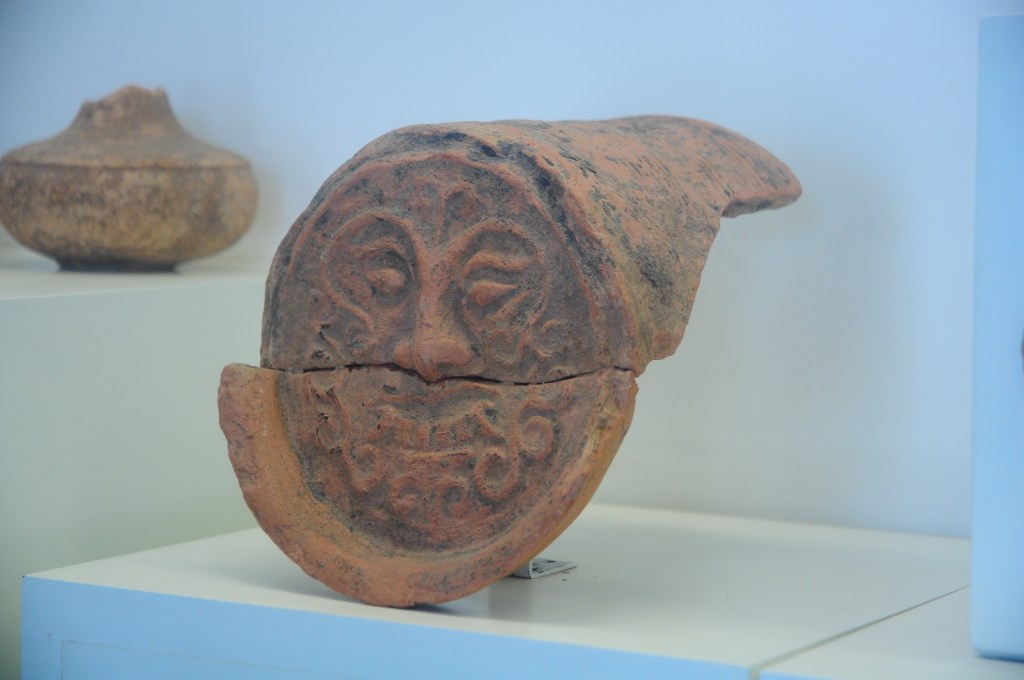
The next day I escaped from the blistering heat of Quy Nhơn city by popping into the museum to see the archeological finds from Chà castle. There are lots of pots and some really cool ornamentation with faces.

Archeological digs have not only uncovered Champa artefacts but also older Sa Huỳnh pottery at the Chà castle site (source). Sa Huỳnh is the name given to the iron-age culture of South Vietnam. This Austronesian culture has proven links all over southeast Asia being a related group to those found in Malaysia, Indonesia and the Philippines. It’s today widely accepted that this culture didn’t get replaced but instead evolved into the Cham culture through a process of Indianisation where they adopted Indian art, religion and philosophy.


I sat in a local Quy Nhơn city cafe next to my hotel to find historic written records of Chà Castle online. The cafe is next to my hotel so I’m there every morning and I’ve stuck up conversation with the owner, a single lady in her late 20s who goes by Mèo (cat). That time when I walked in a regular jokes “Mèo, your boyfriend is here”.

I learned that multiple historians identify Chà with Phật Thệ, a fortress mentioned in 15th century chronicle Đại Việt sử ký toàn thư (source). According to the chronicle, in 1044 the Vietnamese emperor Lý Thái Tông (remembered for the One Pillar Pagoda) marched south and attacked Phật Thệ. Cham King Jaya Simhavarman II was killed. Elephants, treasure and even a princess named Mi E were taken as loot.

This coincides with the time Đồ Bàn Citadel was first constructed. It seems that after the defeat, Chà was abandoned. Đồ Bàn is larger by far, but I still find myself wondering why they shifted their capital rather than expanding and strengthening the old one. Perhaps the defeat exposed some strategic flaw in the location. Or perhaps the place seemed unlucky, its spirit broken in a way that couldn’t be repaired. Civilisations move on not only because they must adapt, but because sometimes rebuilding on the same foundations is emotionally harder than moving and starting afresh.

The Capture of Nguyen Nhac at Quy Nhon

It’s 1773, and the red flag of the Tây Sơn movement flies above An Khê town. Due to being squeezed for taxes, people have gathered there in open rebellion against the Lê emperor and their subordinate Nguyễn lords who rule the puppet Kingdom of Champa as their own private thiefdom.

Having strengthened their ranks for two years in An Khê, the Tây Sơn forces are ready to move out from their mountain fastness and prove to the Nguyễn house how formidable the rebel army had become. At the head of the movement at this time is Nguyễn Nhạc, a charismatic and capable leader. I want to share the entry about him in the chronicle Đại Nam chính biên liệt truyện because it amuses me

Nhạc was a betel leaf trader, he used to trade with the barbarians, on his way through An Duong mountain, he got a sword, he said it was a magic sword, he brought it to deceive the people, many people believed him. – Đại Nam chính biên liệt truyện – volume 30 – 1889 (link pp 521)

So, according to his enemies, his only claim to leadership was a magic sword!


In late summer, Nhạc marched down to the plains with his cavalry and war elephants. They swiftly occupied most of the land of present-day Bình Định. However one thing stood in their way: the formidable fortress of Quy Nhơn held by the provincial governor Nguyễn Khắc Tuyên.

What follows is not attested in chronicles but instead comes from popular folklaw though the story is famous enough, and compelling enough, that I want to include it here.

The story goes that the Tây Sơn army besieged the citadel for 3 days without making any progress. And so Nhạc ordered his army to fall back. Nguyễn Khắc Tuyên was worried that the rebels would regroup in the mountains and continue to be a thorn in his side and so to try and nip the whole thing in the bud the mandarin put a substantial bounty on the capture of Nhạc.

Before long, Nhạc was brought to the citadel gate being carried in a cage, captured by some double-crossing Tây Sơn soldiers. The men carrying the cage announced they had captured the rebel leader and brought him to the provincial governor Nguyễn Khắc Tuyên to face judgement. Tuyên gleefully ordered the prisoner be brought inside.

Painting of the capture of Nguyen Nhac in the Quang Trung museum

But it had been planned by Nhạc all along. Nhạc’s cage had been cleverly designed so that it could be opened from the inside, so that night he let himself out of the cage and opened the city gates wide. He sent up a flare which was the signal for the army who had been waiting out of sight to spring into action and take the city. It’s a good thing the Nguyễn governor hadn’t read the story of the trojan horse!

The citizens and merchants of the city celebrated the downfall of Nguyễn Khắc Tuyên who had been a tyrannical ruler. The Tây Sơn now controlled one of the busiest ports in the country and the sea became a major part of their strategy, they would even recruit Chinese pirates.

After the fall of Quy Nhơn citadel, Quy Nhơn prefecture was held by the Tây Sơn dynasty right up until it’s downfall in 1801. They would use the citadel as their capital until 1776, when Nhạc ordered the ancient Đồ Bàn citadel to be repaired and turned into the grand Hoàng Đế citadel: The Emperor Citadel.


I’ve always liked this story and just generally the character of Nhạc as a cunning people’s hero who united a diverse army, he must have been very charismatic. I couldn’t find any near contemporary sources for the “trojan horse” story so I it may be little more than a legend. Here is the chronicle Đại Nam chính biên liệt truyện again on the fall of Quy Nhơn.

In the autumn of the year Quy Ty (1773), Nhac from Tay Son led his troops down to attack Kien Thanh hamlet… Nhac made a secret agreement with the queen of Champa for aid. He also recruited the names Nhung Huy and Tu Linh and sent them with Nguyen Thung to lead a band of troops down to Quy Nhon prefecture, taking advantage of the night to raid, everyone was afraid of being scattered. The governor, Nguyen Khac Tuyen, fled. – Đại Nam chính biên liệt truyện – volume 30 – 1889 (link pp 523)

I wanted to visit the site of the Quy Nhơn Citadel. Contrary to what you might assume, Quy Nhơn Citadel was not in the bounds of the modern city of Quy Nhơn which would not be established for more than 100 years. The site was next to the current airport at a place called Châu Thành. Archeologists have excavated the site finding 18th century bullets. The citadel recorded to have been built in 1744 (source) (source). Another interesting thing about the site is that lots of relics have been found from a 4th century Champa temple.

Inspired by this story of course I went to visit the site. Today it’s marked by the type of stele you can find in many places, the Vietnamese equivalent of a blue plaque. It sits in a sleepy little village and there are no other traces of the citadel as far as I can see. But one thing that stood out to me was Tháp Phú Lốc Champa tower stood on a nearby hill which would certainly would have been visible from the old citadel. Sometimes the only way to connect with history is looking at the same views they would have been. Did Nhạc look at the tower as he was being carried into the citadel?

the nearby Tháp Phú Lốc Cham tower from the location of the stelle

Further Reading

An Nhơn: Bình Định Citadel

A painting caught my eye; a mob surging towards a castle gate while French soldiers in pith helmets brace to hold the line. This was in the Quy Nhơn Museum back in 2020, and it made me want to walk in the footsteps of those brave folk. But when I tried to find the castle on a map, there wasn’t one. It would be five years before I uncovered the clues that led me to the location.

The painting in Quy Nhon museum

So continuing the history from my last post, after the Tây Sơn were defeated at the Battle of Thị Nại in 1801 the new Nguyễn dynasty decided that the 800 year old citadel used by the Tây Sơn was passed it’s use-by date. They moved just 5km south to a different distributary of the Côn River and built a modern star-fort. The Citadel was named Bình Định (平定) meaning “Subjugation” — no dressing up what was happening to the Tây Sơn homeland. It was the first time the name Bình Định was used but it would later be the name of the whole province (until discontinued in 2025).

When I showed up in An Nhơn, people were still sweeping up after the typhoon. Leaves were piled along the kerbs and branches lay scattered about, though the town had clearly fared better than the coast. The storm had cleared the air; it was a cloudless blue and the heat was already intense. Part of the reason I’d come was the hope of finding a hotel with electricity, since Quy Nhơn city was completely without power — but An Nhơn was in the same state.

Despite that, I persevered to find some traces of the old citadel. Like most towns in Vietnam, An Nhơn has an arch across the main road to welcome visitors. But while many towns go for something that looks like the Blackpool lights, with flashing technicolour lights, An Nhơn instead greets travellers with a grand, castle-style gate. It marks the site of the original west gate of the citadel. Further down, parts of the old moat survive as ponds thick with water plants, and the local library keeps an old cannon stationed proudly at its entrance. The main street Gia Tự even zigzags where it follows the outline of the former star-fort.

While the Citadel stood, An Nhơn was once the administrative heart of Bình Định and knowing this history solves one modern day mystery about Quy Nhơn city. Tourists come to Quy Nhơn City these days to enjoy the beach but are inconvenienced by the way the railway mainline doesn’t come into the City. Well, Quy Nhơn at the current location would be established by imperial decree in 1898 but was little more than a couple of fishing villages and would not have been at all important enough to consider on the route of the railway, construction on which started in 1899. An Nhơn however does have a railway station named Bình Định.

I stopped for a coffee, choosing a cafe next to the overgrown pond that you can see clearly on a map is the shape of a star-fort moat. I had a chat with some friendly locals who were really keen to hear me speaking Vietnamese and wanted to know all about me. Then the owner insisted I not pay for the coffee. After that, some other locals helped me find the old forts flagpole. After taking a well hidden dirt path between farm buildings, I cam across a brick tiered base with a flagpole, the only structural remains of the citadel left to mark the spot.

After a lot of digging I learned that the painting in the Quy Nhơn Museum depicts the uprising of 1908, when thousands of local rose up to protest high taxes set by the French colonists. The demonstration was mercilessly crushed, many were executed or sent to Côn Đảo — the infamous prison island (source). Today these demonstrators are remembered as heroes of the long fight for freedom.

Tax protest participants in 1908 (Photo: nghiencuulichsu.com)

Would I recommend tourists come here? Probably not. Although my interactions with locals made the day out worthwhile, there isn’t much to “do” or “see.” Visitors from Europe often say South Vietnam lacks history, not much in the way of castles or ruins to speak of. I used to think that too. But it’s here, it just takes a bit of searching to find it. Even in China, most of the “ancient” citadels were reconstructed in the 1980s (source). Perhaps one day Vietnam will follow suit. I think relocating relevant artifacts from other Gia Lai museums to an onsite reconstruction at An Nhơn for the Bình Định Citadel and Hoàng Đế citadel could be a great boost to tourist, especially given the proximity to the airport.

A gate to the fortress in 1920. I guess this exact photo was used as reference for the painting

Thị Nại Lagoon

I stopped to take a photo of the Cham tower between the houses and an elderly lady struck up conversation. She pointed to the other side of the road and said I should take a photo of that house too.
I politely asked her why.
She replied matter-of-factly “The storm blew the roof blew off”.

Bình Lâm is a quiet village sat as an island surrounded by flooded rice paddies, the roads rose just above the placid water like causeways. Villagers went about their business with no sense of hurry. It reminded me of the type of lacquered painting of rural scenes you see in many Vietnamese households.

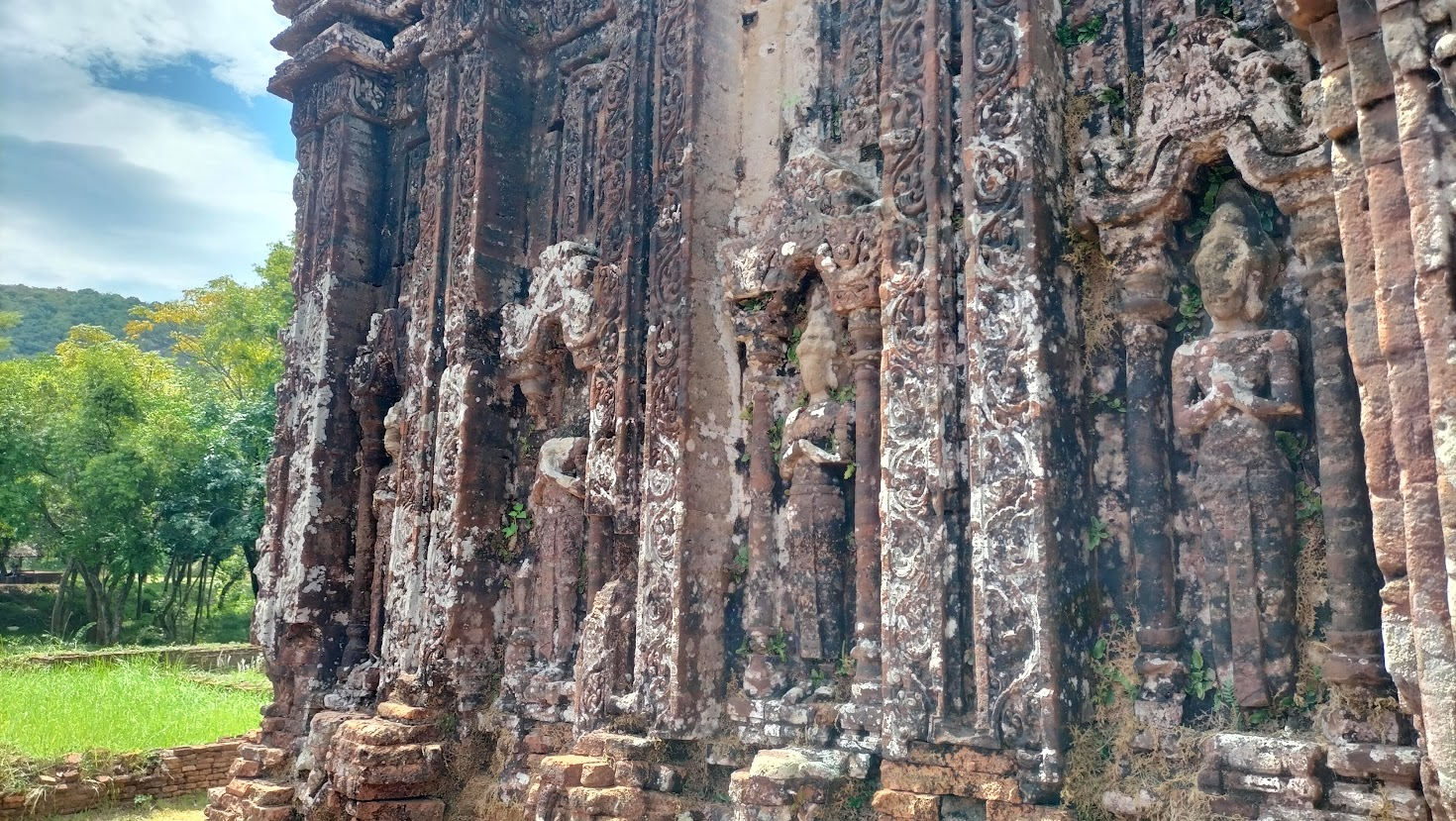
Most Cham towers in the province stand on solitary hilltops, but in Bình Lâm a brick spire rises right in the middle of the village, hemmed in by houses.. As I wonder around and looked inside, taking photos and reading the information board, a grey-haired man is sweeping his front yard just meters away. The signs say this is the oldest surviving tower in Bình Định, built sometime in the 10th or early 11th century (source) but that’s not the only reason it’s interesting to me.

I’d read online that the tower once sat in Thị Nại Castle and I wanted to see if I could see any traces of the fortifications because Wikipedia has a photo of a section of wall. In the days of Champa, the castle guarded the capital of Vijaya from attacks by sea, standing downstream near the mouth of the Kon River as it emptied into Thị Nại Lagoon. Bình Lâm is on an island where the river’s branching distributaries form a natural moat — while the lagoon beyond formed a vast defensive basin enclosed by the long, mountainous Phương Mai Peninsula, with its narrow southern entrance called the Thị Nại Gate.

Across the centuries, the lagoon has witnessed some of the defining moments of Vietnamese history, the sort that fill the chronicles with all their grim detail. If Thành Hoàng Đế was the capital of two kingdoms, then Thị Nại lagoon became their graveyard. Yet none of that weight felt apparent as I drove around the area. The only hint of history is the Bình Lâm tower, faintly visible from the road between Quy Nhơn and Cát Tiến, a resort town known for its giant hillside Buddha. Even the Quy Nhơn Museum understates the history, but a few nineteenth-century cannons from the naval battle that ended the Tây Sơn dynasty stand quietly in the front yard giving a hint about the history.

Here is a 1932 poem by Trường Xuyên

Thi Nai was once a battlefield, the ups and
downs of the world were the result of many dynasties…
The mountains and clouds were billowing where soldiers were fierce,
The sea of ​​red blood had not yet dissipated.
The cold geese played with the emperor’s mirror in
the Phuong Mai forest, covering the wounds of grief.
Sadly, I look back at the scene,
Layers of cars bustling the streets!


The late afternoon light was weak through the cloud cover, at least I didn’t need to worry about sunburn. I didn’t manage to find any trace of the castle in the end other than the cham tower but it was nice to drive around a quiet village and enjoy the scenery. I rode back down the windswept Phương Mai Peninsula, the wide roads half-buried in sand, giving it a desolate feel. Crossing the long Thị Nại Bridge that today stretches across the middle of the lagoon, I could see the city’s high-rises in the distance, with the odd boat drifting quietly across the calm lagoon.

But I had one final stop to make. It was at my friend Brad’s all-time favourite tourist attraction: the First Vending Machine in Bình Định. Erected in 2007 shortly after the bridge was opened — wow what a venerable relic! It even has a light-up arrow sign, like something out of an American movie. To my dismay, it too had been blown over by the same storm that had lifted a roof off a house in Bình Lâm. Let the chroniclers record one more fallen hero on the banks of the Thị Nại Lagoon.

Appendix

Thị Nại Lagoon has borne witness to some of the defining moments in Vietnamese history. One such event took place in 1284, when a Mongol fleet of over a thousand ships arrived at Thị Nại and took the castle (source). However, unable to make further gains in Champa, the Mongols withdrew and headed north to challenge Đại Việt — where Emperor Trần Hưng Đạo crushed them in battle. Now, a 16-metre statue of Trần Hưng Đạo stands on the tip of the Phương Mai Peninsula watching over the Thị Nại Gate.

Trần Hưng Đạo statue on the Phương Mai Peninsula, looking over the Thị Nại Gate at Modern Quy Nhon City.

Another major event happened two centuries later, in 1471. According to the chronicles, Vietnamese emperor Lê Thánh Tông attacked this castle, beheading a hundred defenders before taking the capital of Vijaya thirteen kilometres inland. From then on the area would be firmly under the control of the Vietnamese — a major milestone in Vietnam’s southward expansion that shaped the country’s modern borders.

On the 27th, the king himself [Lê Thánh Tông] led a large army to attack Thị Nại castle, beheaded more than 100 people. (Đại Việt sử ký toàn thư pp. 1383)

Jump ahead to the early 19th century and Vietnam is torn apart by the civil war between the Tay Son and the Nguyen Lords. Here was The Battle of Thị Nại — a naval battle that took place in 1801 — considered to be the decisive victory for the Nguyen dynasty. The Tay Son lost around 20,000 men and almost the entire fleet: 1,800 ships and 600 cannons. Some cannons have been recovered from the lagoon and are displayed outside Quy Nhơn museum, tangible reminders of the fierce history the calm waters hide.

The enemy held the fortress and fought fiercely. From the hour of Dần to the hour of Ngọ, the sound of guns resounded throughout the sky, bullets flew like rain. … Duyệt [Lê Văn Duyệt] swore to offer his life, waved his troops to charge forward, and at the right moment entered the sea gate, using fire torches to attack the enemy’s flagship. The Tây Sơn army was broken and many died. Dũng [Võ Văn Dũng] was defeated and fled. The Tây Sơn boats were almost all burned. Our army then held Thị Nại Gate. People praised this battle as the greatest martial art – Đại Nam thực lục

In 1885, the castle was occupied by the French, then, some time during the reign of emperor Thành Thái (1889-1907), the castle was demolished and the area turned into farmland. Not needing the natural defenses, the modern city of Quy Nhơn continued to grow outside the Thi Nai gate for easy access for shipping vessels and fishing ships alike, as well as a beautiful beach-front attracting tourists.

Links

An Khê – Chăm Stele

As I pulled my foot out of the mud that came up to my knees, I realised it was no longer wearing a flipflop. I put my foot back in to try and feel around for it but couldn’t. The other flipflop was lost much the same way. I continued the walk barefoot. The hike was quite pleasant – the road was made of soft sandy mud. I’d parked up the bike when I’d come to the first flood, I’d tried driving through it but chickened out when the water got as deep as the exhaust pipe, I wasn’t sure how much water my moped could handle even though I’ve seen people in vietnam driving totally submerged mopeds.

I had read online that An Khê has a rock carved with ancient Chăm script. However I didn’t know exactly where it was. I’d be driving around Lu Tuong ward for a while looking. Some locals were unhappy to have a “tây ba lô” driving around (western backpacker). Eventually I found a sign for the “bia ký” (stele).

When I got to the location, I reported to Google Maps where it is so future curious people don’t need to spend quite so much time driving around the fields. Although I can’t do anything about the amount of mud!

For me, learning about this stele was significant because it’s proof of another layer to An Khê’s history. I’ve written before about the Tây Sơn dynasty and the unique situation the town had in the war of the 1960s and 70s. But here is proof that the area was significant to the Chăm. The stele was only discovered in 2010 and as a tourist site is still under development. It’s an exciting indication that there may still be more to discover. The layers of history in Gia Lai are still being understood.

I got back to the bike and luckily had my running shoes to put on. It would have been a bit of a hairy drive barefoot! I went to Tây Sơn Thượng Đạo again to try getting some arty photos. It’s always worth a visit there every trip to An Khê!

Appendix

Details of the Stele

The stele – given the label C. 237 –  The stele dates itself as 1360 Saka which is 1438CE. The engraving was discovered in 2010 when locals reported to the district council that they’d found something interesting. You can find details of what it actually says here . It talks about “taking the name of Indravarman” I think this is Indravarman VI some sources agree, others do not but his reign fits the date of the stele. The Samṛddhipurī mentioned is taken by many to be at modern day An Khê, the area where the stele is located. The Hayāv river has not been identified but most people assume it is the Ba.

 Hail! There was a supreme sovereign of kings, son of His Majesty (yāṅ poṅ ku) Jayasiṅhavarman of the line of Vr̥ṣu, my lord (pu-pov ku) of the city of royal residence (rājagrāma) Ṅauk Glauṅ Vijaya. [When] this one (dunan) took the kingship, the Viets (yvan) and the Khmers (kvīra) attacked openly (tupak), wishing (khin) to make war.

⟨A4–A6⟩ And in [the year] thirty-two, he received consecration, taking [the name of] Indravarman,1 awarded various estates (bhaṇḍāra), by his grace (kanāya) had a prince crowned (pa-tryak),2 founded (the temple called) Samr̥ddhipurī.3

⟨A6–A8⟩ In the year of the Tiger (vyāghra-nakṣatra),4 he founded temples (maṇḍīra) and built houses of letters5 [on] various roads (adhvā), laid dams across the Hayāv river, founded the capital.

⟨A8–B3⟩ It happened that he met (madā ka tmuv) the Montagnards (kirendra)6 a total (vap) of twenty times in Hayāv … he again put the various social classes (varṇa) in order. It happened that he obtained this white [excellent elephant].7 He washed (putta) himself at the mouth of the Air Laṅuv. In (the year) thirty-eight [was built] the house of letters of this stone inscription on the royal road. [It was in the year Śaka] 1360.

Design a site like this with WordPress.com
Get started