At VUS, where I teach, we have a lesson for secondary students on the topic of what their town was like in the past. Of course, this is perfect for me, a self-declared local amateur historian. But a recent comment from my teaching assistant stopped me in my tracks. She mentioned that when she was young, there were no cinemas in Pleiku. This caught me off guard—surely there had been cinemas in the past, hadn’t there?
Before 1975
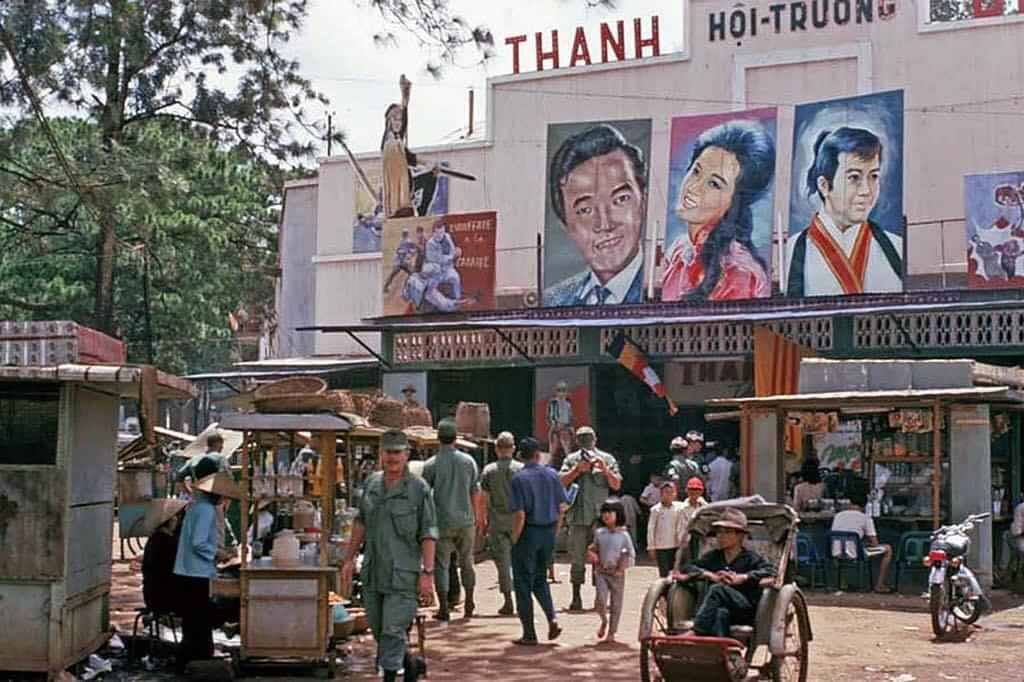
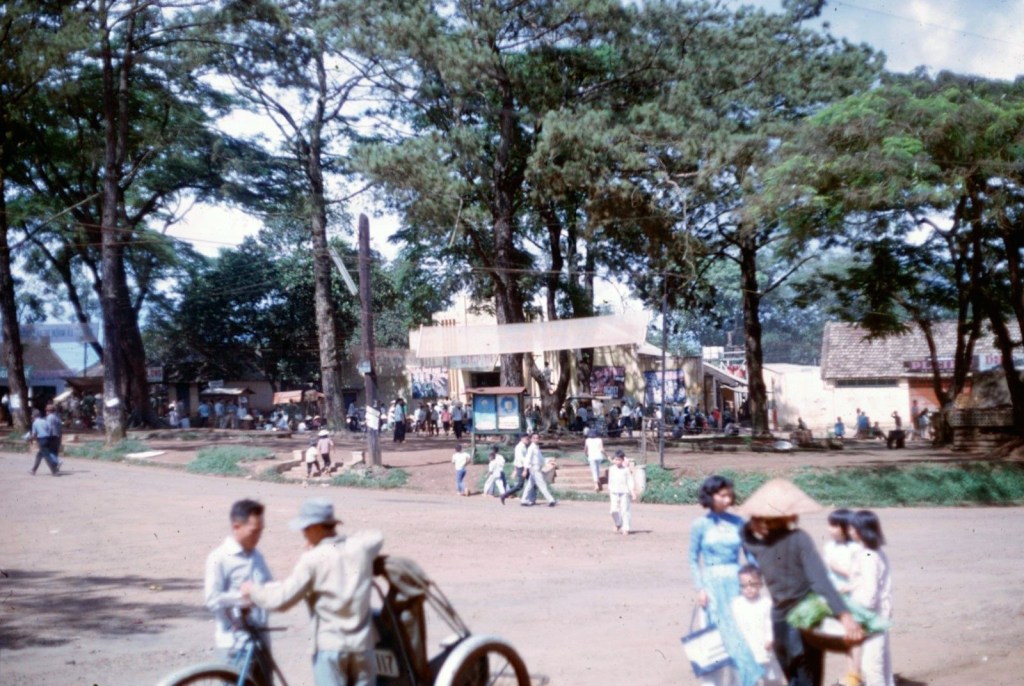
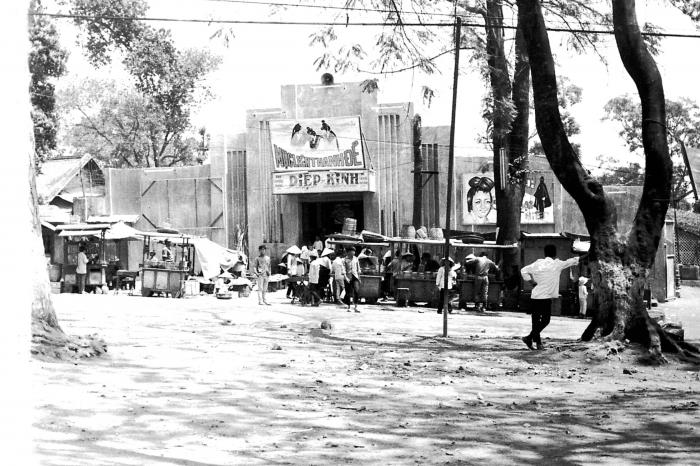
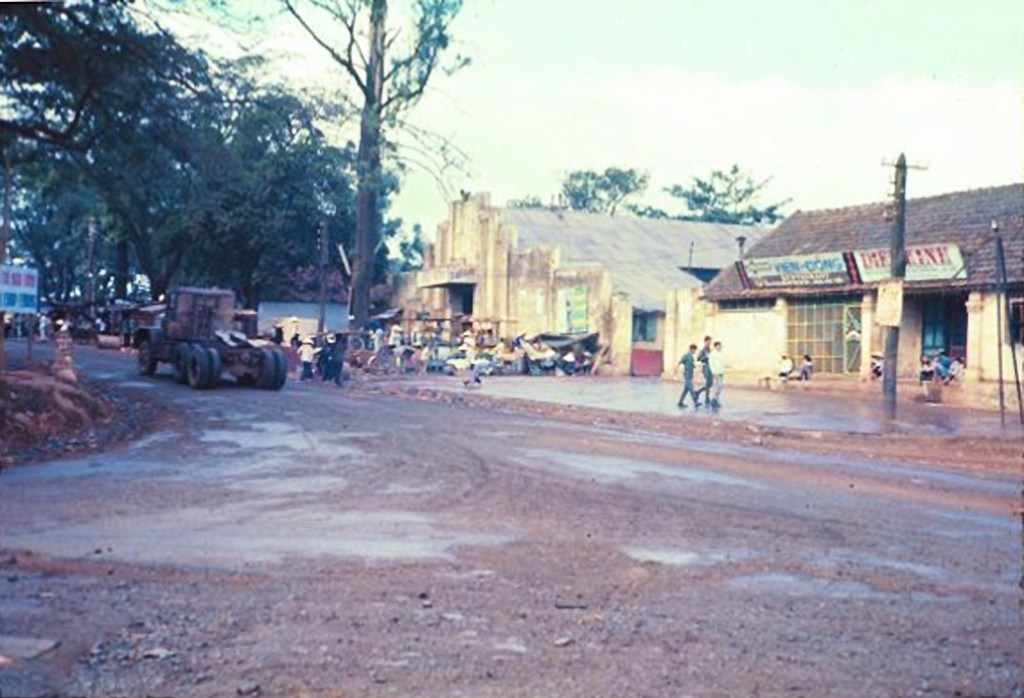
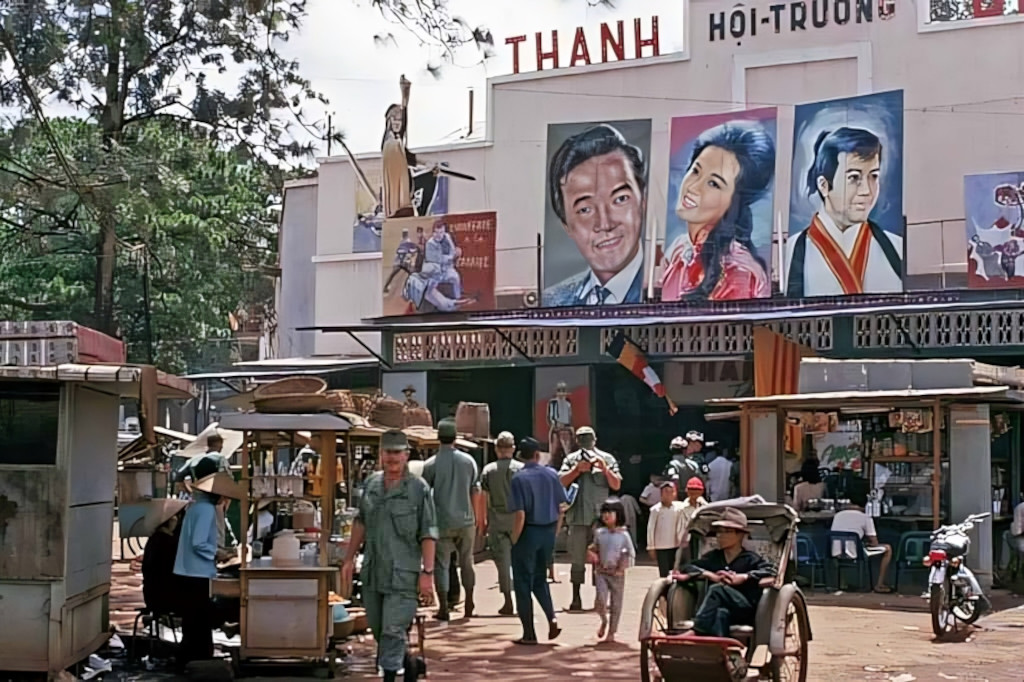
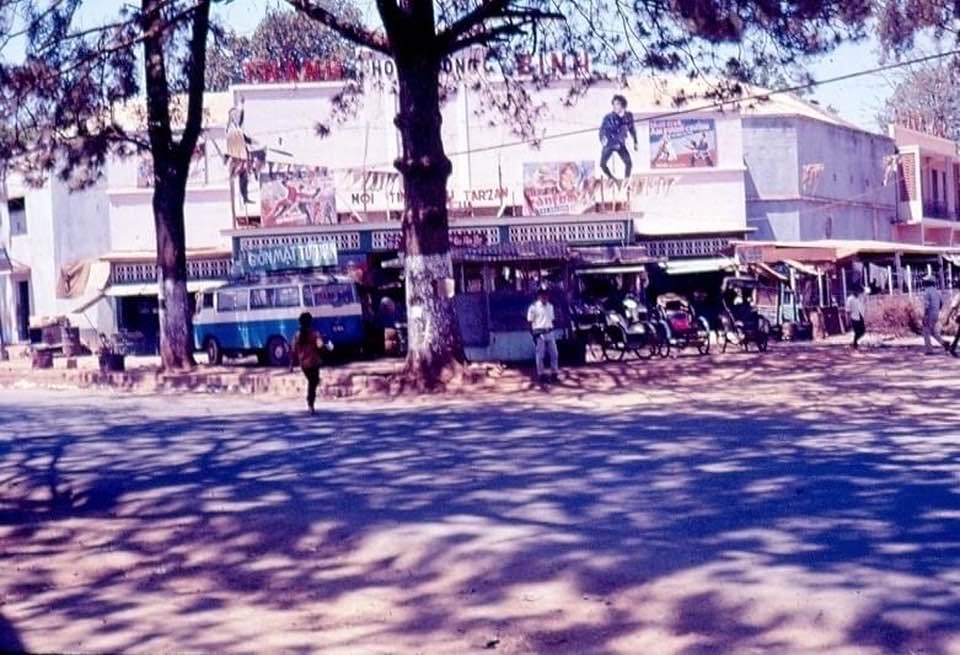
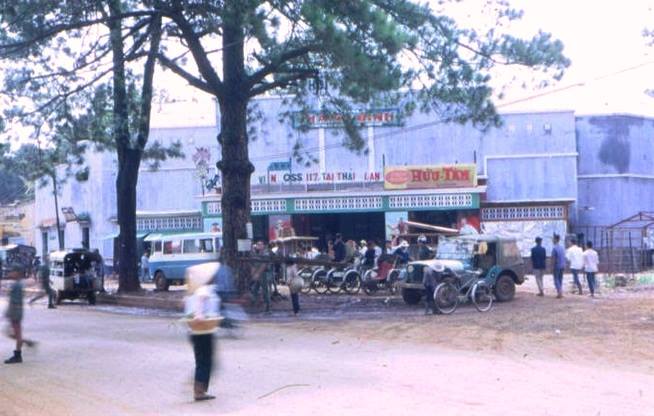
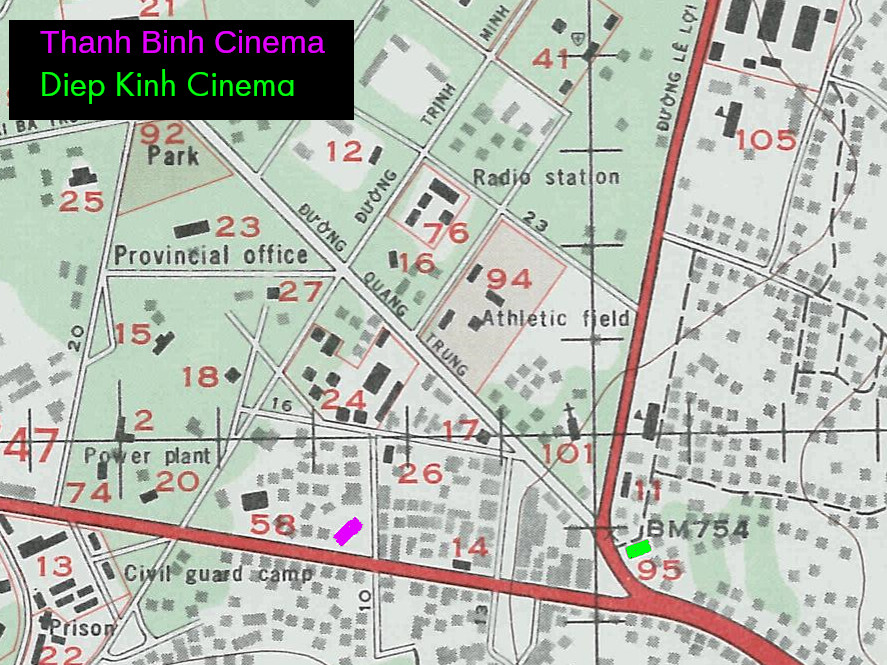
Some digging revealed that Pleiku did indeed have cinemas, even before 1975. And not just one, but at least two large theaters: Diep Kinh, Thanh Binh. They were on Hoang Dieu, the main road now called Hung Vuong, less than 300 meters apart. These theaters even had mezzanine seating, classy! (source)
Diep Kinh Cinema
Before 1975, Diep Kinh cinema was built at this intersection, named after the theater owner. Gradually, people got used to the name Diep Kinh so it also became the name of the intersection [note: the corner of Hung Vuong and Le Loi]. At that time, a cinema was something extremely luxurious. Therefore, since the cinema opened, many restaurants and hotels have sprung up one after another at Diep Kinh Pleiku intersection. – VAN CONG HUNG
When talking about Diep Kinh at that time, many old men and women remember that it was a gathering place for “flower girls”. Every evening, they would put on beautiful makeup, gather at the Diep Kinh intersection and sit in groups. The bustling crowd caused many fights between protection gangs when some shaggy customers appeared, teasing the girls or defaulting on their payments, causing trouble. – VAN CONG HUNG
Thanh Bình Cinema – Pleiku 1969 – (formerly Thăng Long Theatre)Thanh Bình Cinema – Pleiku 1969 Photo by Dave Bakerwider view of Thanh Binh CinemaThanh Binh Cinema
colour-coded map of cinemas in Pleiku. The red road going east to west is Hoang Dieu (now Hung Vuong).
A third cinema is mentioned “Diên Hồng” which was renamed Thống Nhất after the war. I can’t find any photos or the location of this cinema (maybe somewhere around Cu Chinh Lan street).
After 1975
After 1975, there were 3 cinemas in Pleiku, the largest and oldest Diep Kinh, then Thang Long and Dien Hong. Except for Diep Kinh, which took the owner’s name, the other 2 were also private but had the generous names Thang Long and Dien Hong. After being taken over, the government renamed the cinemas Nhan Dan (Diep Kinh), Thong Nhat (Dien Hong), while Thang Long was transformed into the Provincial Cultural House, now the Dam San Music and Dance Theater. –VAN CONG HUNG
At that time, there were several sources of films, foreign films were mainly from the Soviet Union, occasionally Polish films, Czechoslovak films… which had to be approved in advance. The approval board was set up by the Department of Culture and Information, I was occasionally invited to attend, and enjoyed it very much. –VAN CONG HUNG
The film was shown in Pleiku town until it was strung up before being transferred to the districts for the mobile projection teams, so it was normal for the film to be spliced or interrupted while showing. The dubbing versions were torn or blurred, so to be good at dubbing, one had to know how to… lie. I was sometimes invited to narrate for the mobile team showing at the outdoor theater (now a corner of Dai Doan Ket Square), and I also had to… lie, sometimes making up half of the film without anyone knowing. –VAN CONG HUNG
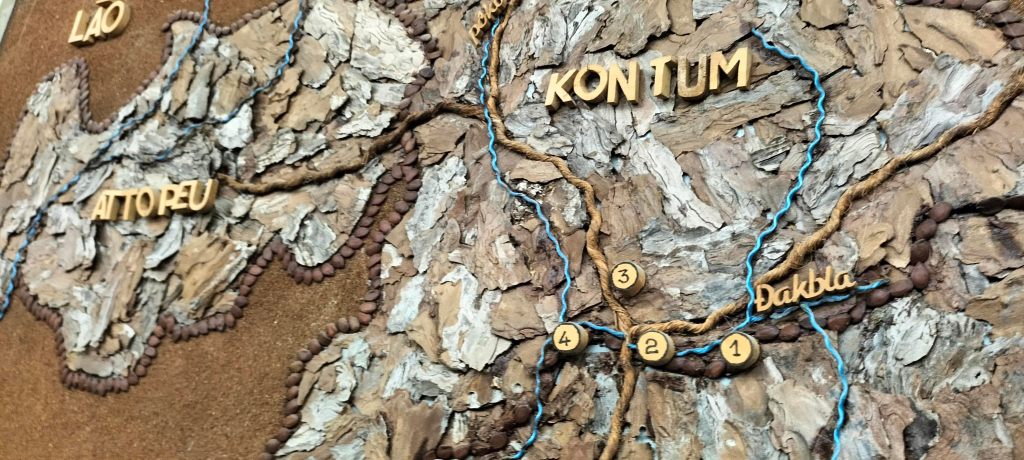
In the course of my research for the two-part series on the Kingdom of Sedang, I stumbled upon references to a village by the name of “Kon Djéri Kong”, the site where Guerlach said he was based for his catholic mission at the time. I thought knowing more about the place might give me something to add to my blog so I set out on a quest to find it. My journey began with a lead from a Bahnar acquaintance in Kontum. She suggested that the village might Be Kon Jo Dreh nestled on the banks of the Bla river, a little way upstream of Kon Tum City.
Fortune smiled on me when a work event scheduled in Kontum gave me the perfect excuse to take a detour into the countryside. I decided to make the most of it and set off with the vague hope that I might unearth some fragment of the past.
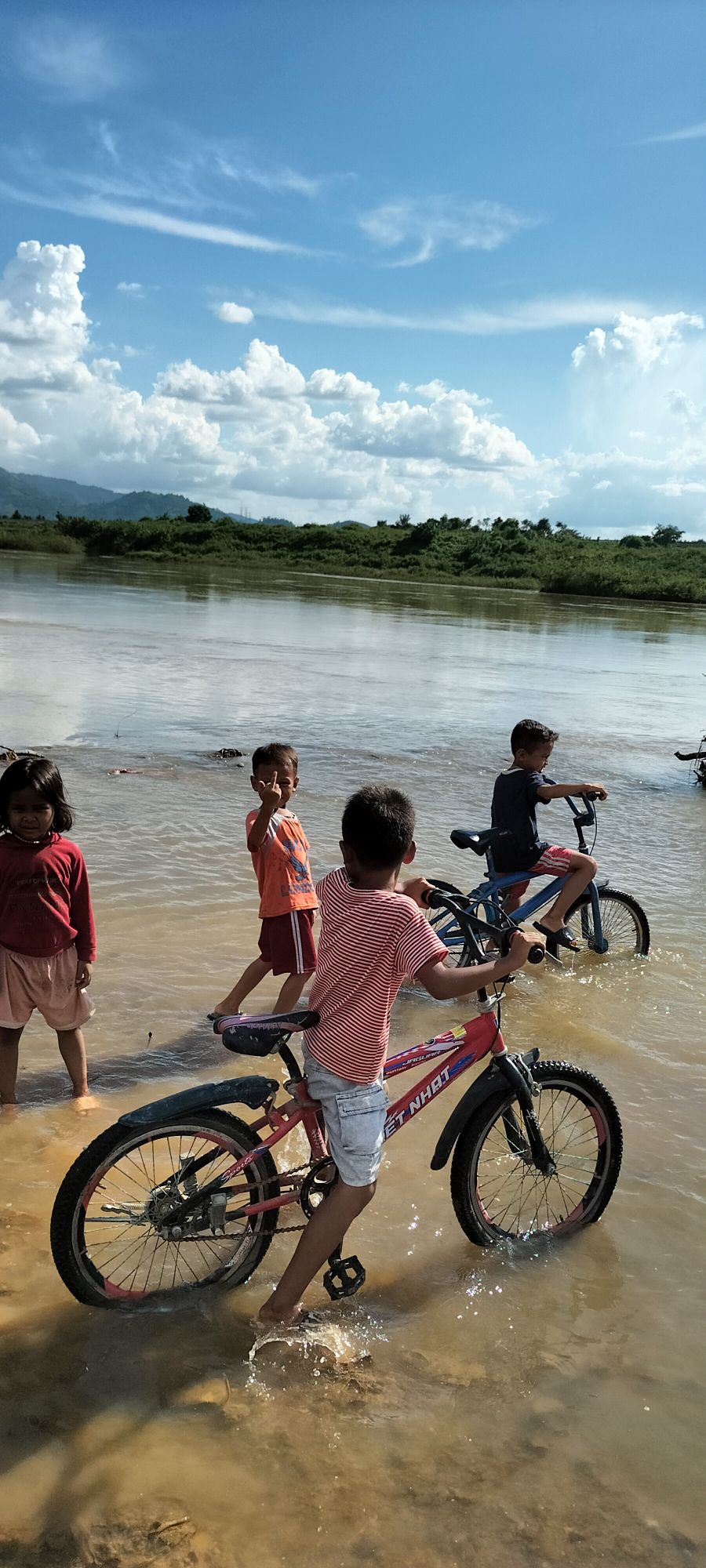
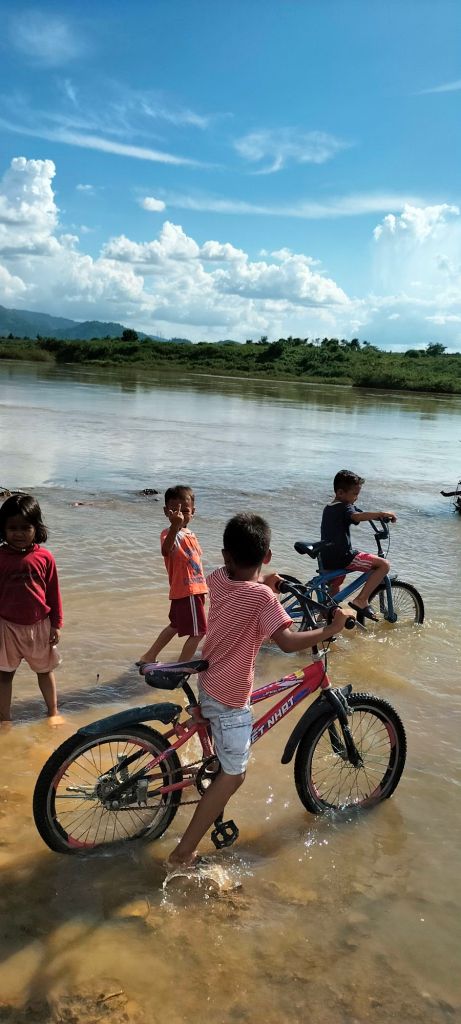
To reach Kon Jo Dreh today, you start on the three-lane highway towards Mang Den, then turn off onto a crumbling, stony road just before the endless rows of rubber trees. As I drew closer to the village, a group of children noticed me and began to follow, some running and others wobbling along on oversized bicycles. Their laughter and whispered chatter provided a lively soundtrack to my otherwise solitary journey.
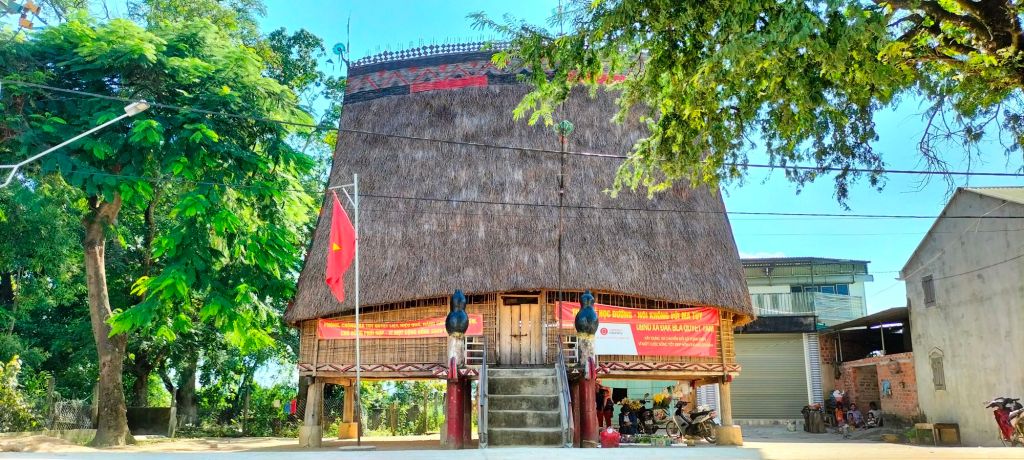
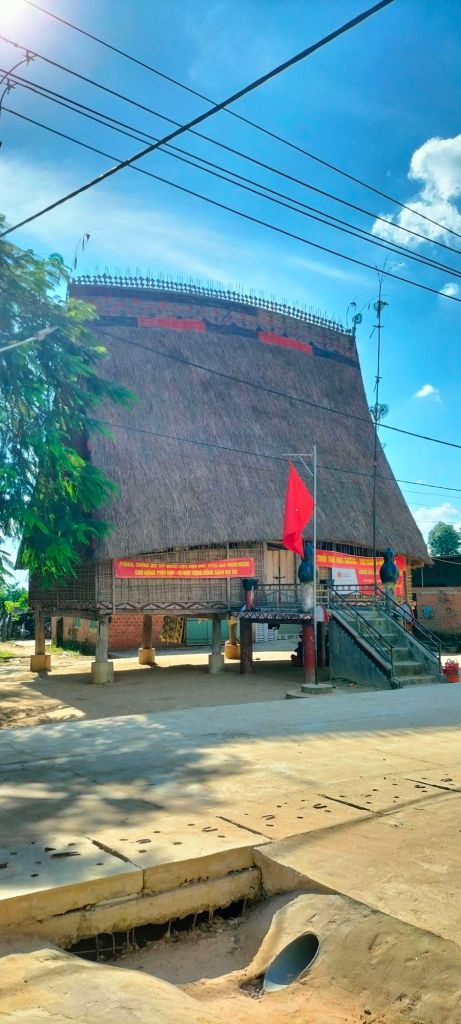
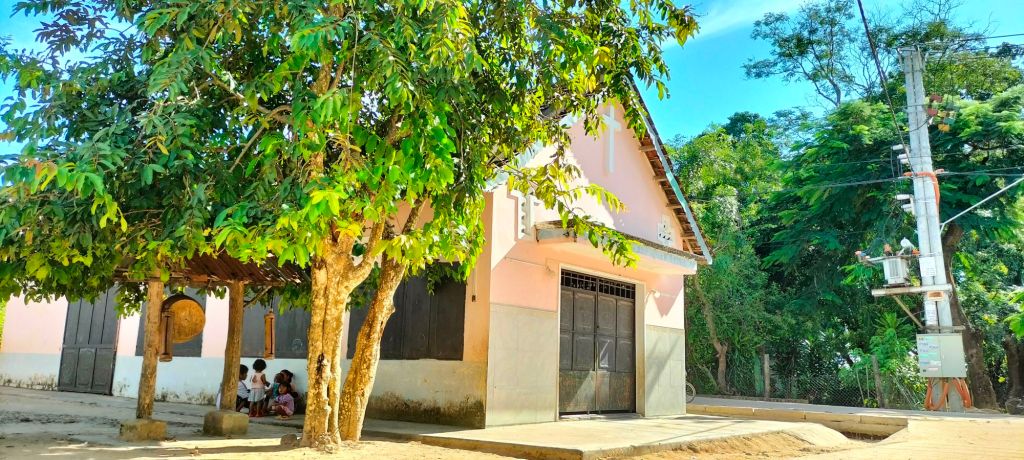
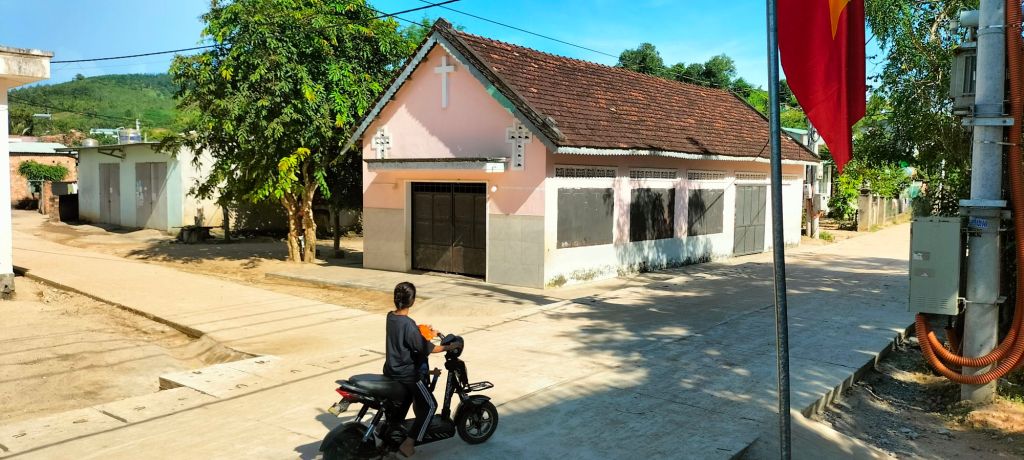
I visited the village center, where a rong house provided shade for a small vegetable market beneath, next to it was the dignified structure of a squat chapel standing quietly in the afternoon sun. The villagers, kind and welcoming though they were, seemed baffled by my questions. The name Guerlach drew blank stares, and no one knew of any historical missionary. It was disheartening but not entirely surprising; so much has changed in this area over the years. Giving up on my research, I decided to make the most of the sunny afternoon and wandered down to the river, the children trailing along behind me. They entertained themselves by showing off their English, each proudly declaring, “My name is…” followed by whatever made them laugh: “My name is Spiderman,” “My name is Ronaldo.” I recognized this game from my volunteer teaching days, so I joined in with, “My name is Hla Blang!”—a local cassava leaf dish. The kids burst into raucous laughter, delighted by my attempt, and I knew I’d won them over.
A rong house in Kon Jơ Dreh
A rong house in Kon Jơ Dreh
A chapel in Kon Jơ Dreh
A chapel in Kon Jơ Dreh
Kids followed me down to play in the Dak Bla river
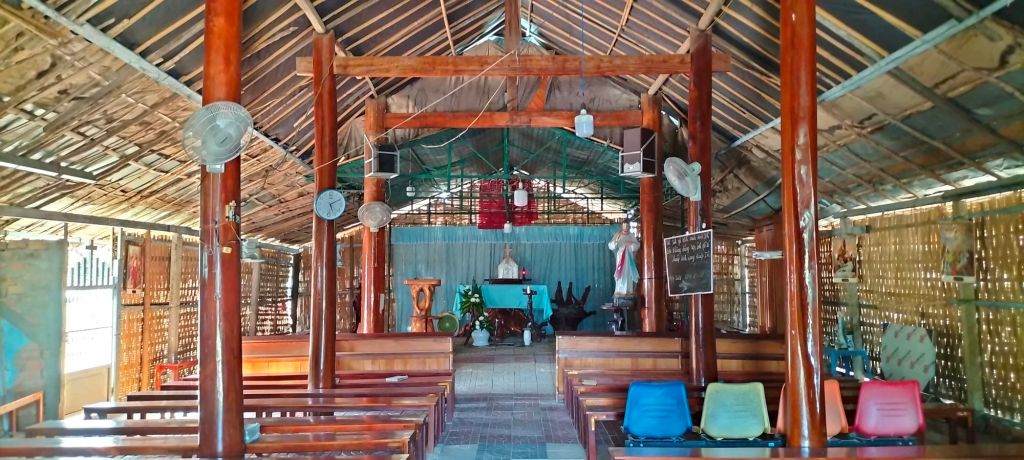
After leaving Kon Jo Dreh, I stopped at a church I’d seed from the road called Kon Kơpăt. I was invited into the church by a group of elderly women, who were busy preparing flowers for some forthcoming celebration. The church had a brick front but the back had crumbled to ruin and had been rebuild from wood. The effect was beautiful. The ladies spoke R’ngao, a language that was new to my ears but related to Bahnar. They began to teach me a few basic phrases, laughing at my clumsy attempts. It was a delightful and unexpected exchange.
Kon Kơpăt church
As I headed back to Kontum, I reflected on the unpredictable path outings can take. Chasing the ghost of an obscure mission had brought me into the heart of a community, where I picked up a few words of the local language and rediscovered the joy of connecting with new people. Living and working here as an expat, it’s easy to fall into routine, but working on this blog—regardless of the outcome—gives me a reason to get out, explore new places, and meet people I’d otherwise never encounter. While I found no trace of Guerlach’s mission or even figured out if Kon Djéri Kong was the same as Kon Jo Dreh, I was reminded that it’s the experiences that make writing this blog worthwhile.
In part 1, we explored how Mayréna lead an expedition into the wild jungle near Kontum, Central Vietnam. Here he succeeded in thwarting a rival Prussian expedition and thus secured French dominance in the region by forging alliances with chiefs of the Sedang Tribe; the last tribe standing in the way of a road from Quy Nhon on the Annam Coast to Attapeu in Laos.
In this second part, we will delve into how Mayréna seized the moment to declare himself king of an independent Sedang kingdom — a bold move that would set the stage for his own downfall.
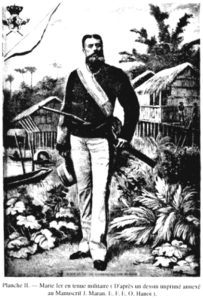
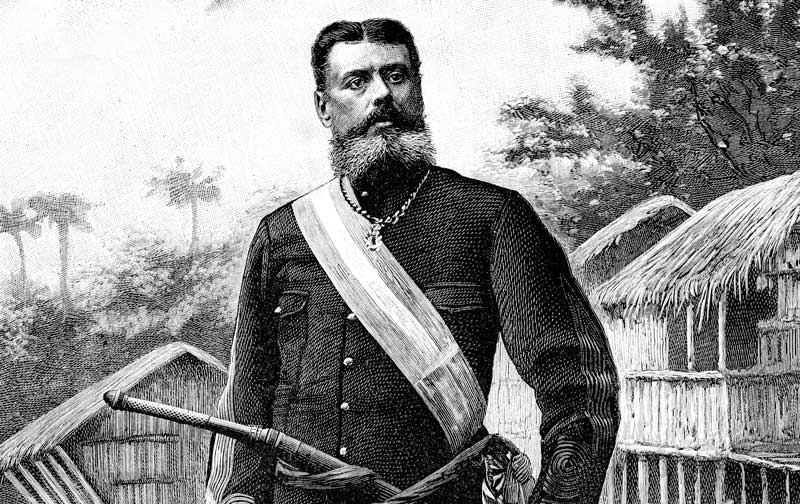
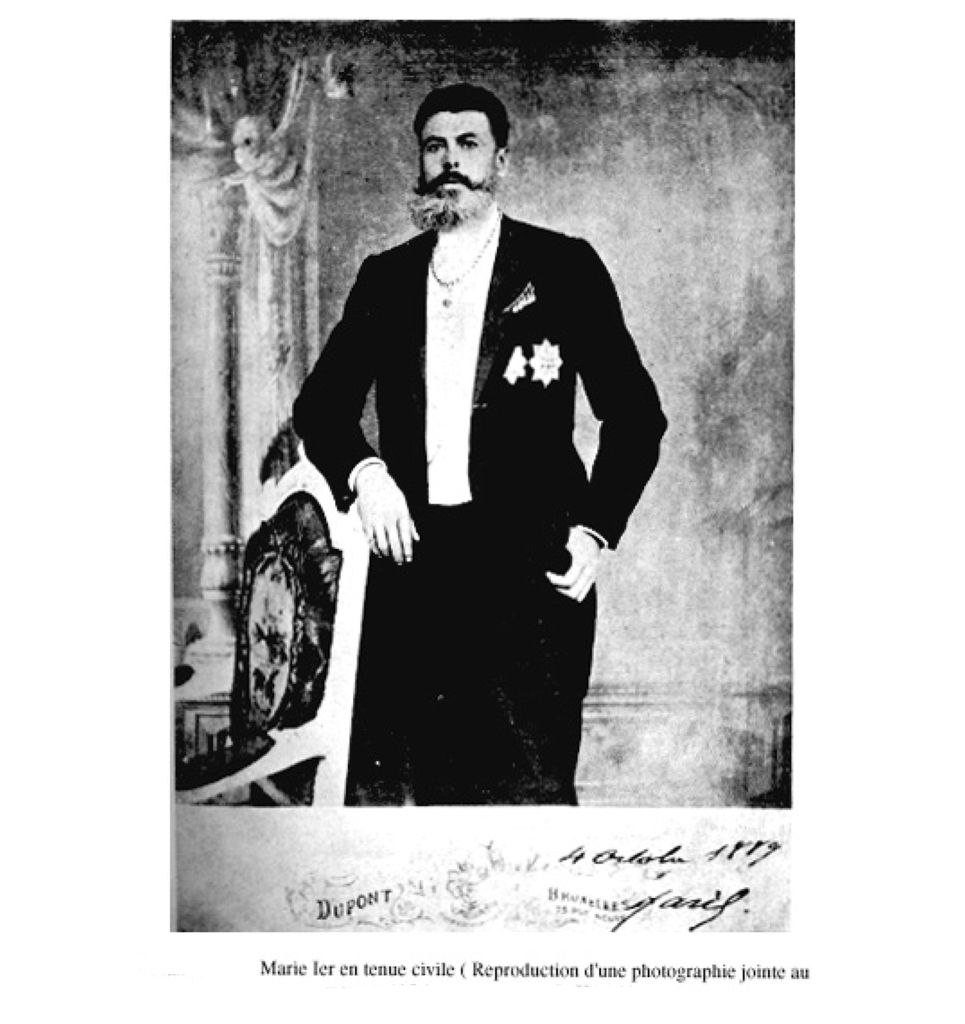
Charles-Marie David de Mayréna
Earlier in their mission, Mayréna had informed his guide and interpreter, the missionary Guerlach, that the governor-general of French Indochina had strictly ordered Mayréna not to act in the name of France. Recall that this mission was entirely unofficial, in order to avoid causing diplomatic problems. So when initially Mayréna was asking the Sedang chiefs to sign allegiance to him personally, it did not ring alarm bells for Guerlach.
The expedition would set up their forward base at Kontum which was well established – having the Christian mission, 4 converted Bahnar villages and a small Vietnamese population. Mayréna would take three forays from Kontum to the Sedang land, collecting signatures from various village chiefs on treaties while missionaries translated and signed as witnesses.
Over time Guerlach grew increasingly uneasy with this approach. Although he signed the treaties as a witness, he would later clarify this was in no way an endorsement. His letters suggest he felt Mayréna was not acting in the best interest of France, and after the second foray to the Sedang land, Guerlach seemed to distance himself from his countryman. For the third and last foray, it was Father Irigoyen, a missionary stationed at Kon Trang, who acted as interpreter for Mayréna. After this Mayréna would not see the Sedang people ever again.
At this point I want to step aside from the story to explore how and why all this happened. Mayréna’s own account was that after he had impressed the Sedang with his skill with a sabre, he was asked to lead the Sedang against a neighboring tribe, the Jrai, and upon his victory the chiefs spontaneously declaring Mayréna king totally unprompted. Although this is blatantly a lie, evidence from more reliable sources does indeed back up that the Sedang chiefs did indeed crown him king of their own freewill. Was this due to Mayréna’s charisma, or was he merely a clever opportunist who exploited the hard work of those like Guerlach? After all, it was the missionaries like Guerlach who had lived among the Sedang, learned their language, and won their respect through years of hard work. Maybe it was simply a matter of time until they won over the Sedang – and Mayréna turned up at just the right time.
I, Blak, first chief of the village Dry or Drey, declare that my village and its inhabitants; its lands and its rivers is a village of the kingdom Sedang; furthermore I declare to call and recognize His Majesty Marie, king of the whole kingdom Sedang, and my king; furthermore, I declare that, from time immemorial until this day, I have never called and recognized a king chief of another country; today only, I, first chief of the village of Dry, call and recognize His Majesty Marie, king of the whole kingdom Sedang, and also king of the village of Dry, and its dependencies; again I declare to have heard and understood all the things that the king of the kingdom Sedang orders to be observed in each village of the kingdom Sedang [snip].
and the undersigned, P. Irigoyen, apostolic missionary, declares that the above French translation is the literal of the Sédang Convention passed before me by the village of Dak Dry. Signed: P. IRIGOYEN, Apostolic Missionary.
My theory is that the Sedang may have overestimated Mayréna’s standing within the French Empire. The chiefs likely sensed that their traditional way of life was under threat and would not survive the march into the 20th century. Surrounded by powerful empires, they must have realized that securing a strong ally was essential for their survival. Unfortunately, their error was in believing that Mayréna was the ally they needed. With the confidence and charisma of a seasoned conman, he convinced them of his influence and power.
One thing is certain: the Sedang people were never called upon to demonstrate their loyalty. I suspect it would not have been easily given, as their commitment to Mayréna’s supposed kingdom was likely tenuous at best. Perhaps Mayréna was well aware of this and understood that their loyalty was irrelevant to his true intentions. His plans were never about building a lasting kingdom for the Sedang; rather, they were about using the illusion of one to serve his own ambitions.
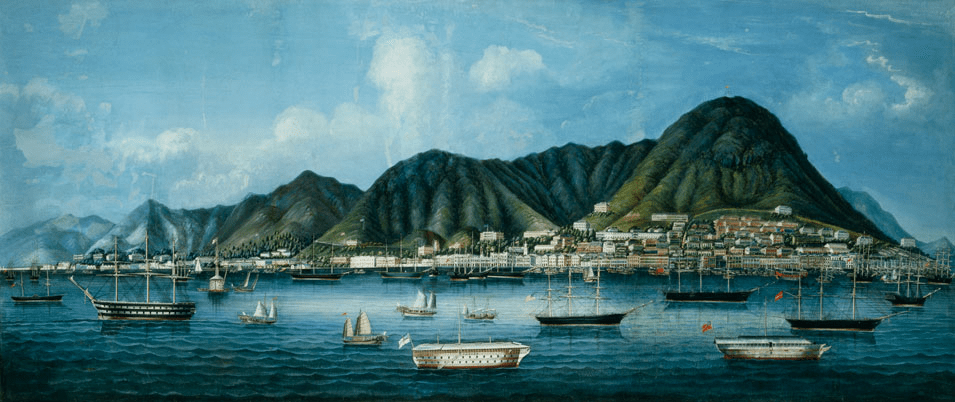
Back to the story, after the third foray with Irigoyen, Mayréna left the highlands and returned to civilisation. The likely reason being that without Guerlach’s support Mayréna would not be able to set up more meetings with more chiefs. Or maybe he just felt he had gathered enough signatures to lend weight to his scheme. Whatever the reason, he quickly put a lot of distance between himself and his supposed kingdom, travelling first to Hong Kong. Here, he would write prolifically to quickly put spin on what he had done.
Hong Kong 1860s
Mayréna boasted that he was received as royalty in Hong Kong, likely embellishing his exploits to gain favor and attention. With his newfound status, he wasted no time in exploiting his self-proclaimed kingship to its fullest. He began selling titles, land, and mining rights, to gullible buyers enticed by the promise of influence and wealth in his so-called kingdom. Many of these transactions were dubious at best, as Mayréna had dubious power to offer such assets. Regardless, he pocketed the profits and indulged in a life of luxury, parading his fabricated success while living off the proceeds of his fraudulent schemes. His reign, built on deception, became less about leadership and more about how much he could extract from Europeans.
To a world that had never heard of Sedang people, Mayréna had to justify his right to rule, Mayréna wrote at length to passionately argue that the tribes were not, and never had been, subjects of Annam or anyone else. Thus by choosing him as their king, he claimed an unassailable sovereign right to govern.
The independence of these countries is incontestable. It is affirmed by the missionaries, by the people of the country who declare that they have never accepted foreign leaders, it is incontestable according to the geographical configuration of the country, because three chains of high mountains, successive chains, protect it on the side of Annam and Siam; they are natural and impassable walls, where, with a hundred men, one could stop an army. – Marie-Charles David de Mayréna,
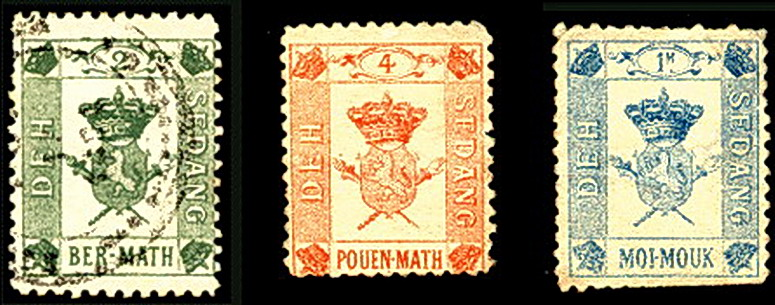
Mayréna went to great lengths to create an aura of legitimacy around his so-called kingdom, producing a variety of paraphernalia such as stamps, medals, and even currency. Many of these items bore inscriptions in the Sedang language—a surprising touch that suggests he must have carefully transcribed the language from Guerlach’s notes before leaving. However, this level of detail was largely wasted, as you could probably count on one hand the number of people who could read and write Sedang at that time. Ironically, none of these symbols of his “kingdom” ever made their way back to the Sedang people.
Stamps of the Kingdom of Sedang. Deh Sedang is how they decided to render Kingdom of Sedang in Sedang language. Math / Mouk was the name of the currency that almost certainly never circulated.
Moi means 1 in Sedang language, I assume “ber” means 2 although it’s generally written pếa these days. “pouen” is similarly probably pún (meaning 4). source: Glosbe
After Hong Kong the king travelled to France hoping for an audience with the president and aiming to open an embassy. He conducted many press interviews at this time but also the press dug up his past to smear his name – recall he’d fled France due to misconduct in the banking industry.
His downfall would begin in April 1889, when a Belgian financier named Somsy agreed to give the self-styled king arms and money in exchange for mineral rights in Sedang. But on his return journey to Vietnam, the French Navy blockaded the ports in order to prevent him reaching Sedang. The arms were then seized as contraband in Singapore. Mayréna’s dreams crushed, fled in to British Malaya.
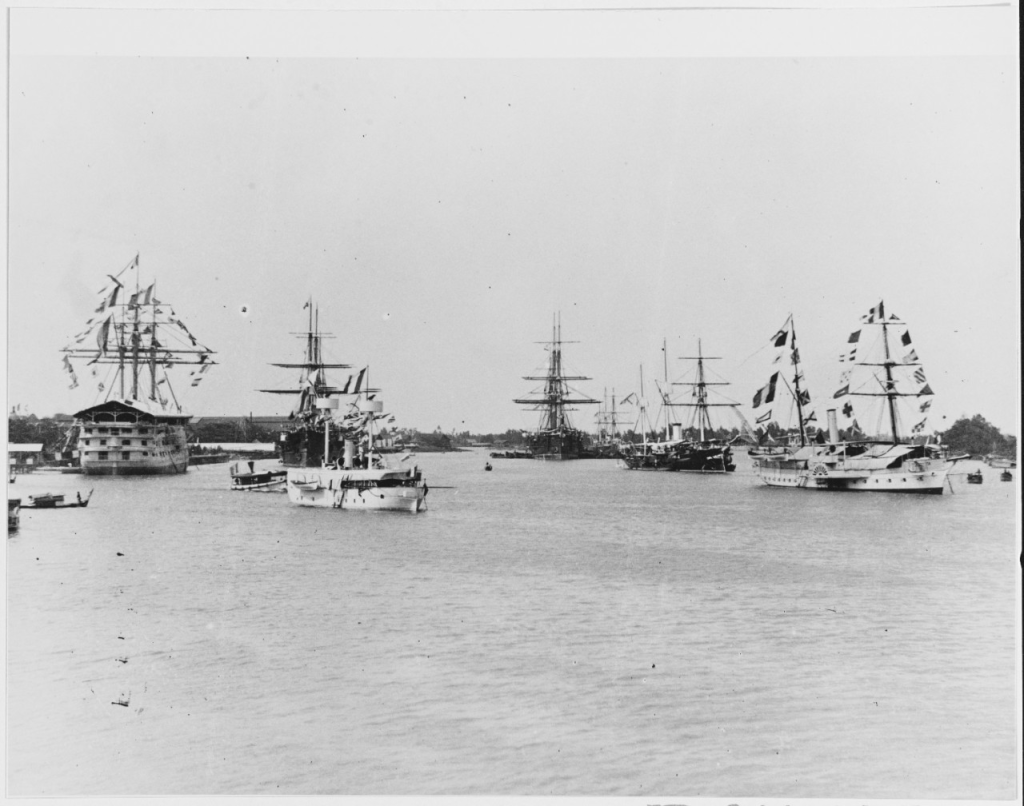
Warships at Saigon, French Indochina, late 1880’s.
In British Malaya Mayréna would embrace Islam and take several local wives. On November 11, 1890, the life of King Marie I came to a mysterious end. Reports of his death on Tioman Island vary, with claims ranging from poisoning to snakebite or death in a duel.
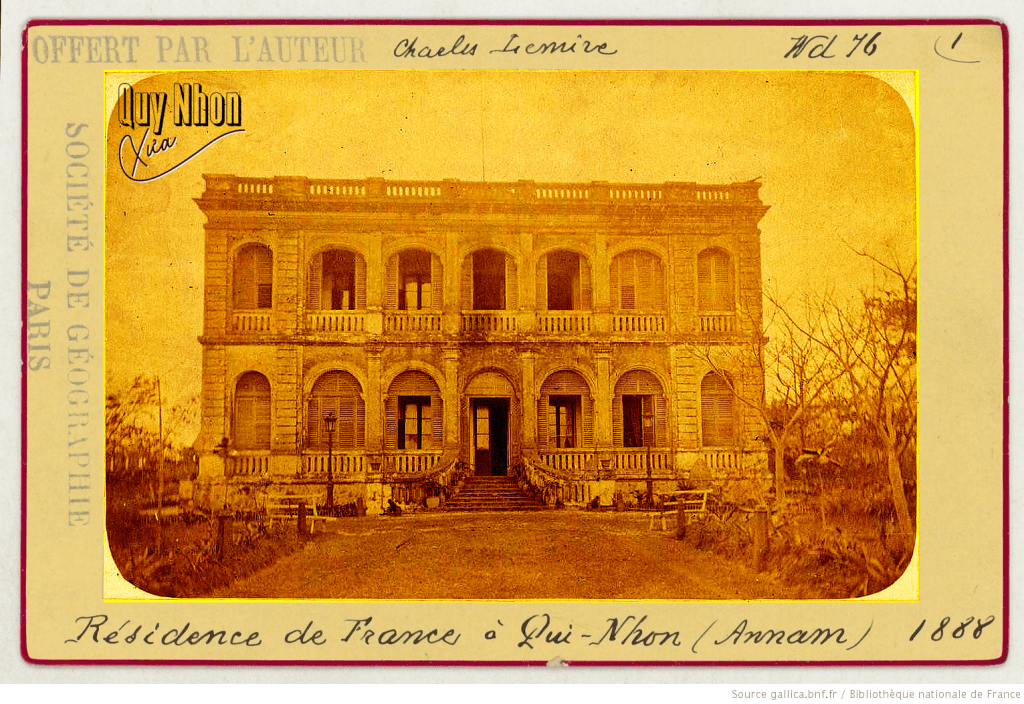
In early March 1890 – only 2 years after the “founding” of the Kingdom of Sedang – The Resident of France in Quy Nhon lead an sizable force into the Central Highlands to inform the Sedang Mayréna was dead and he would be taking control of the region. This was the start of Kontum being integrated into the French colony. Within the next few years, the French would go on to push to Attapeu and all the way to the Mekong, joining up with their Cambodian colony and taking the southern part of Laos from Siam.
Does any legacy of the so-called Kingdom of Sedang survive today? The short answer is no. While there are a few pieces of memorabilia, such as stamps you can view in Hue museum, in the region itself there is no sign that such a kingdom ever existed. In the 1990s a group in Canada decided to pick up the idea of the failed state. They founded the Assembly For the Restoration of the Sedang Nobility in Montreal on November 2, 1995. They seem to have no connection to Mayréna or the Sedang people or the region. At the time of writing, Their website has not been updated since 2006.
In many ways, The Kingdom of Sedang seems to have been a stunt pulled by a showman and opportunist, a man eager to gain fame and fortune by hook or by crook. For me, the story reminds me of modern-day phenomenon of self-declared micronations like Sealand and Liberland. Indeed, the Kingdom of Sedang wasn’t the first of this kind, for example in 1860 there was The Kingdom of Araucanía and Patagonia. These audacious ventures tap into a deep-rooted human fascination with power and ambition, time and again capturing the public imagination in a way that is both intriguing and entertaining.
In this 2 part post I’m going to recount a remarkable episode in the history of Kontum province, central Vietnam. It follows the escapades of a French cavalryman turned confidence trickster,Marie-Charles David de Mayréna, who ventured beyond the frontiers into lawless winderness. When he got there he did something very unexpected. He declared himself king.
Born in Toulon, France in 1842, Mayréna started his career in the French cavalry where he was involved with the annexation of Vietnam- here he would gain experience which he would draw from with his later ambitions. In 1868, he resigned from the army and returned to France, settling in Paris. Strikingly tall and handsome, Mayréna was a natural seducer and duelist, often seen prowling the Grands Boulevards. His commanding presence, combined with his flair for storytelling, made him a magnet for intrigue and opportunity, as he schemed to make his fortune. After setting himself up as a banker on the Rue de Châteaudun, he was forced to flee the country in 1883 following questionable stock market transactions and a complaint of fraud. He ended up back in Vietnam because he had nowhere else to go.
In Vietnam, Mayréna hopped from one con to another, for example in one scheme he secured government funds for a rubber plantation in Ba Ria, near Saigon. The rubber plantation never existed. His personal life was no less scandalous—he seemed to marry a new woman in every town he passed through, despite already having a wife in France. One such lover, Mayréna claimed, was a princess of the ancient kingdom of Champa, cheated out of her inheritance by Vietnamese warlords. This romanticized fiction was foreshadowing of his later grand ambitions.
In January 1888, word had reached him of an impending Prussian expedition from Siam through the lawless region between the Mekong and the rugged highlands west of Annam – the French colony that is now the Central Coast of Vietnam. The Prussians, looking to exploit recent unrest in Annam, were seeking alliances with local tribes to establish themselves a colonial foothold. They set out from Battambang with a Siamese armed guard headed for Attapeu which would be their base to penetrate deeper into the wilderness.
Like many modern conmen, Mayréna had a sixth sense for turning political turmoil to his financial advantage. Acting quickly; he petitioning the Governor-General to let him intercept the Prussians. The official rebuffed him, due to diplomatic concerns. Undeterred, he quickly reshaped his proposal and offered to lead an unofficial expedition into the highlands west of Annam’s Binh Dinh province. His objective was to secure treaties with the local chiefs before the Prussians could. This time, the Governor-General approved his plan.
The French had already made some inroads into the highland territory, largely due to the efforts of Christian missionaries. These missions had established routes from An Khe in Binh Dinh to Kon Tum, fostering connections with the Bahnar and Rengao peoples. However, standing between the French and Prussian interests in Attapeu was the Sedang tribe. Whichever side could win over the Sedang would gain the upper hand in the region.
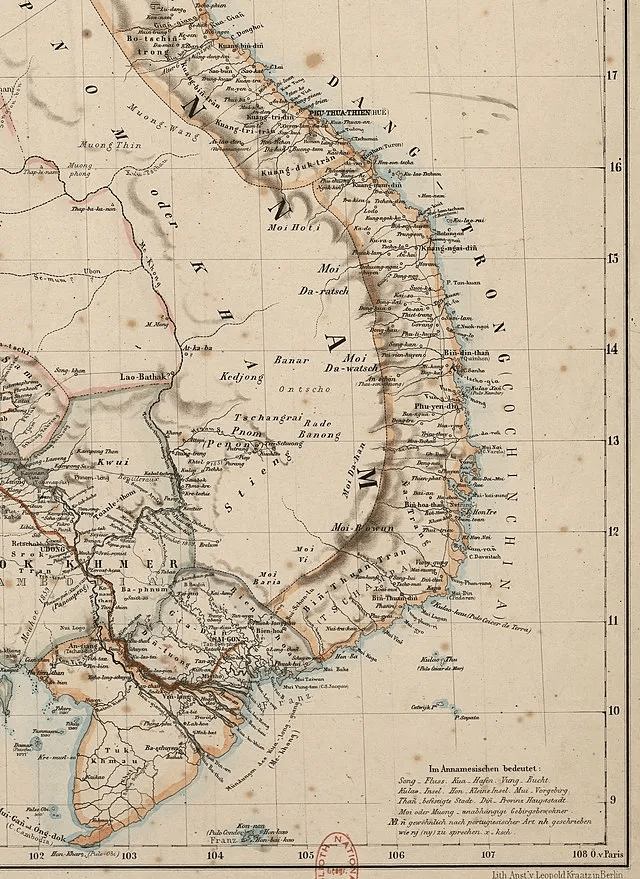
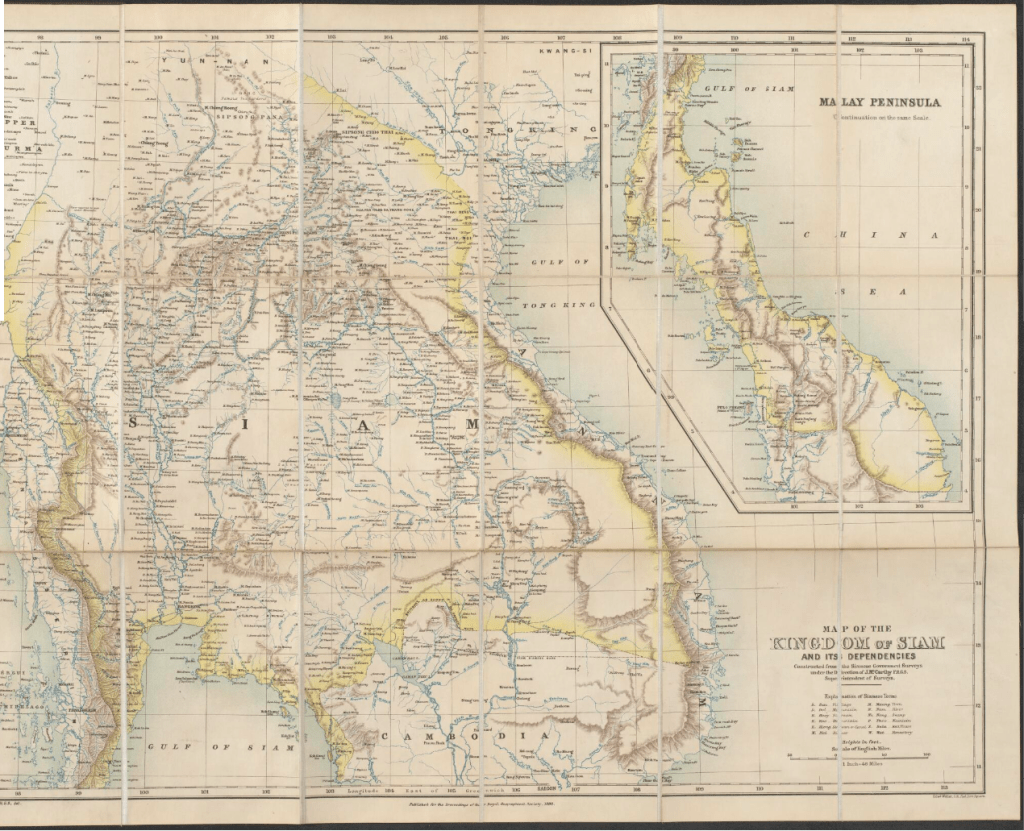
1867 Map showing all the land East of the Mekong as stateless “moi” territory.1888 This British map shows Siam in yellow extending all the way up to the Vietnamese border. The difference between the two maps is due to the politics of the map makers rather than any de facto change since 1867.
So it was that this ambitious expedition was set in motion. Mayréna and a friend, Alphonse Mercurol, set sail from Ba Ria and arrived in Quy Nhon City, Binh Dinh, in March 1888. Mercurol, like Mayréna, had been a soldier, though dishonorably discharged. Their journey was delayed in Quy Nhon after a mishap with wet gunpowder—while attempting to dry it, they accidentally set it on fire, and Mayréna was badly burned trying to contain the blaze. This setback gave the Prussians a lead and heightened the urgency, as the looming highland rainy season would soon make any expedition nearly impossible. Nevertheless, on April 21, 1888, they finally left Quy Nhon and ventured into the wild west of Annam.
Mayréna would have certainly come here
It was indeed a real column that was heading West! At the head, went David de Mayréna, the Colt at his belt, mounted on a large Arab horse, survivor of the mounts of the Chasseurs d’Afrique of the conquest, then Alphonse Mercurol, Paoli [a cook], the two “congaï” [girls], the four Chinese, prospectors of future gold mines! the interpreter of the Sûreté Pham-Van-San, 18 Saigonese and, finally, 80 coolies carrying baggage! Mayréna has the four hundred piastres that the government coffers generously granted him, weapons, a barrel of powder, canned food of his food officer! Before his departure, he received the wishes of a good journey and the wishes of success from his compatriots of Qui-Nhon – Father François-Xavier VAN CAMELBEKE, Quy Nhon
From Quy Nhon, Mayréna and his party journeyed toward the village of Chief Pim. Educated by missionaries in Kontum, Pim was literate and maintained a friendly relationship with the French. It was at this pivotal location that the expedition would coordinate with the Christian mission, in the form of Father Guerlach.
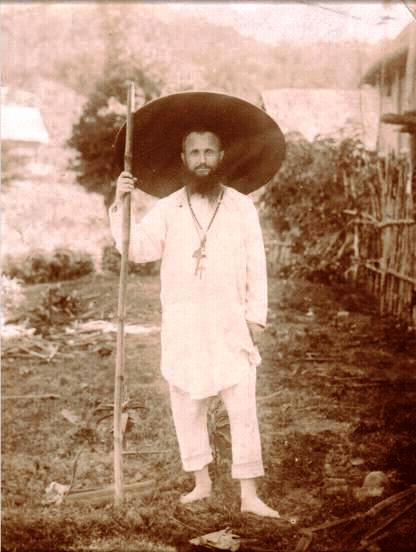
Guerlach was quite the character himself. A missionary based near Kontum, he had mastered several local languages and earned a formidable reputation. During the Cần Vương Revolt of 1887, when Vietnamese rebels targeted Christians, Guerlach—known as Boc Can to the Bahnar—led 200 Bahnar warriors to rout the Vietnamese forces. He later commanded 1,200 warriors against Jrai bandits, this was said to be the largest highland force ever assembled. His influence and respect among the Bahnar and Rengao tribes were unparalleled.
Father Jean-Baptiste-Marie Guerlach
After eleven arduous days of travel, Mayréna’s party ascended from the coastal plains into the high-altitude interior, finally reaching the village of Chief Pim. Nestled among the wooden stilt houses typical of the Montagnard tribes, they were met with the modest yet sincere hospitality of their hosts, providing them with shelter and a brief respite from the trials of the journey. From this temporary refuge, Mayréna’s group sent word to Guerlach, to support the expedition.
I am at Pim’s, and I have not come to ask you to do the corvée of your Christianity here; but you would be very kind to send me some Catholics and your two elephants. I had 100 coolies, but, to use a parliamentary word, the incapacity of the Résident was the cause that at Pim’s they fled. – Mayréna, May 1st 1888
Mayréna’s charm initially proved irresistible to Guerlach, who, as a staunch patriot, was easily persuaded that their goals were aligned. Mayréna deftly presented himself as a champion of both French interests and the Christian faith, convincing the missionary of the nobility of his mission. In response, Guerlach offered significant support, swayed by Mayréna’s apparent dedication to their shared ideals. However, later when Mayréna’s true motives emerged, Guerlach would grow increasingly disillusioned, distancing himself from the conman once he recognized the self-serving nature of his schemes.
On May 10, the entire caravan left the village of Pim and took the road to Kon Jeri Krong(1), where the staff of the commission was installed on Sunday, May 13. Ten days were devoted to rest, installation work and preparations for the first excursion. On May 23, in the evening, we went to sleep at Kon-Tum; on the 24th, we were at Kon-Trang(2), the residence of Father Irigoyen. To celebrate the arrival of our compatriots, the Father gave an ox that the people of the village tied to the post, and the Rolang dance was performed to a large orchestra of drums and tom-toms. Here the expedition truly begins. The caravan consisted of three Frenchmen: Mr. de Mayréna, Mr. Mercurol and myself, two Annamites on horseback, ten savages from my household, who carried our baggage, a pack horse, six Saigonese matas [police officers] who were not very resourceful, except for Doi and finally four Chinese, delegated by Chinese traders from Saigon, to check the presence of gold mines- Guerlach, November 13, to the newspaper Le Courrier d’Haïphong
(1): from this document, it seems that Kon Jeri Krong is now called Kon Jơdreh, a Rengao village near Kon Tum City.(2): Kon Trang is here.
Charles-Marie David de Mayréna
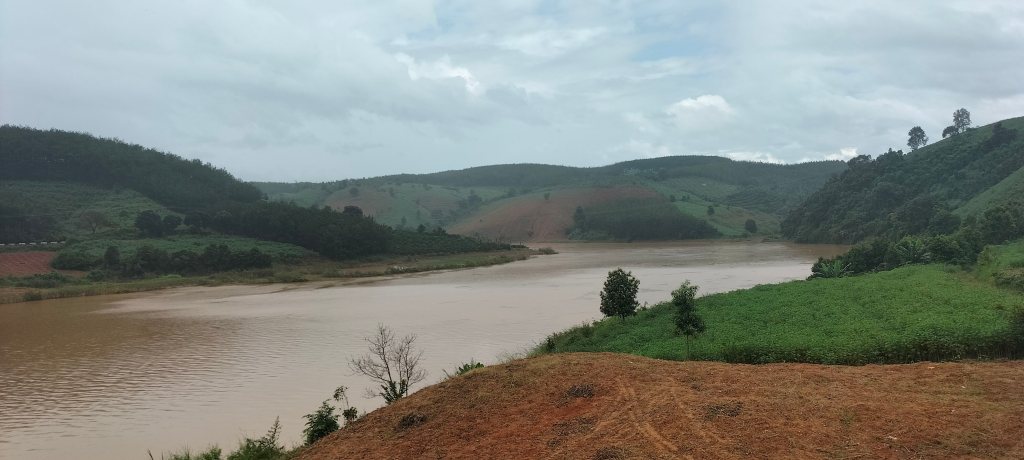
Letters by Guerlach meticulously detail their journey, documenting each village they visited, the exchange of red beaded necklaces for rice, and the nights spent in communal houses. Guerlach was also able to sent locals ahead of the expedition to clear a road as well as keep it safe from bandits. Over the course of three arduous weeks, they steadily approached their final destination – the the Pekau river. At last, they were able to make contact with the Sedang people, as Mayréna himself recounted in a letter.
View of the Pekau river. Photo by the author.
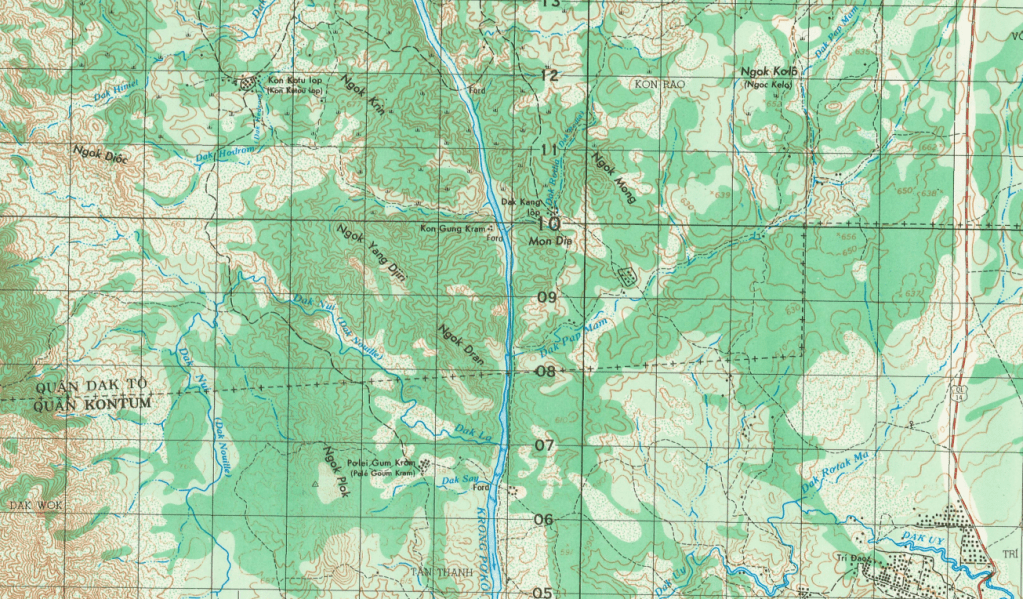
I explained to the Sedangs that I was going to meet Europeans [the Prussians] who wanted to enter their country. My character pleased these untamed nations. It rained as it rains in India, the rivers were transformed into torrents; I remained in the rain, I crossed the rivers by swimming. I thus reached the Pekau. Having crossed this great river, I stopped at the village of Kon-Gung. I was looking for a solution, when the chief of this village, named Sui, made me find it by offering me a war performance. They were very proud of their skill in handling the sabre. I let it happen, then I provoked the victor. After a few parries I succeeded in touching him… I therefore offered to the chiefs and warriors to take me as war chief (tenul bla) or (Kedra bla) — both are said — which was accepted. I was successively appointed by all the villages bordering Pekau. I then had warriors placed blocking the road. He was no longer a French explorer, he was a Sedang chief opposing an invasion. The Prussians learned of this new state of affairs, and withdrew to the right bank of the Mekong, saying that they had the fever – Marie-Charles David de Mayréna, October 8th 1888
Kon Gung and surrounding area in 1970. Now flooded by dams.
The expedition had successfully outmaneuvered the Prussians, eliminating the threat of their influence in the region, but for Mayréna, this was just the beginning. Mayréna’s success emboldened him, revealing selfish ambitions that may have been the force that was driving his actions all along. In part two, we’ll delve into how Mayréna declared himself king, and how this bold move brought him fame and fortune before ultimately leading to his downfall.
My main source for this post is a collection of letters written by those involved collected as a book in 1927 in Bulletin des Amis du Vieux Hue, 14e Année No 1-2 Janv-Juin. If you find getting stuck into the gory details in letter form fun, I highly recommend reading this in its entirety as I found reading it incredibly entertaining and I had to leave out a lot of details here.
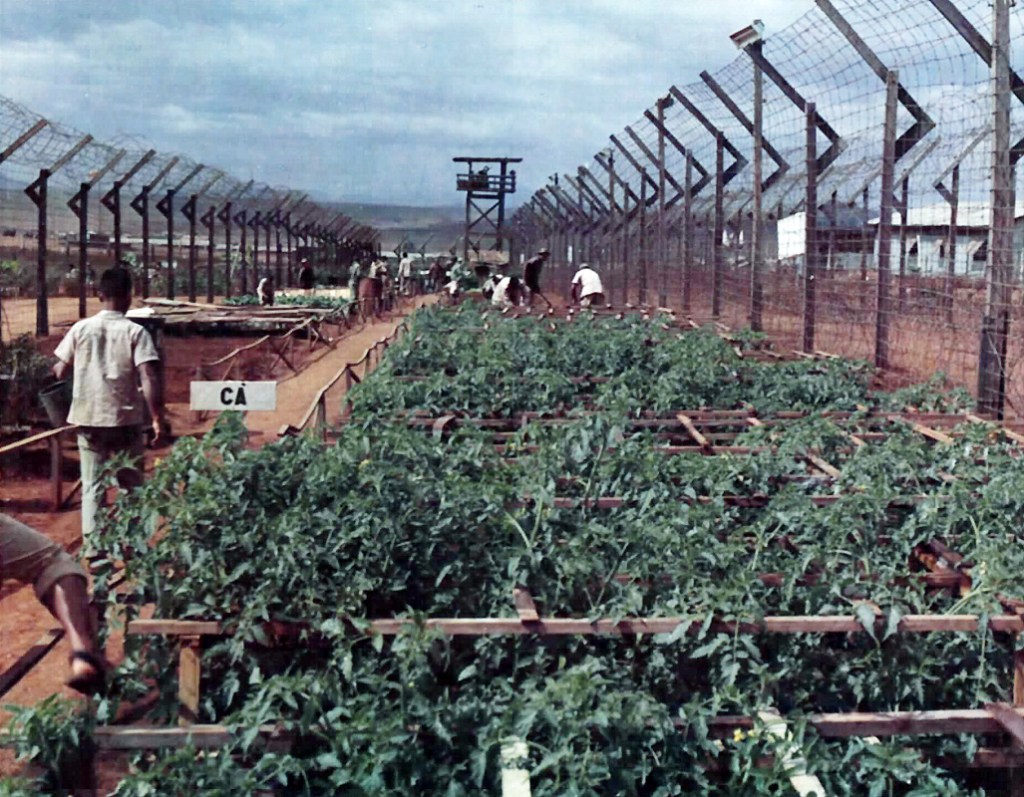
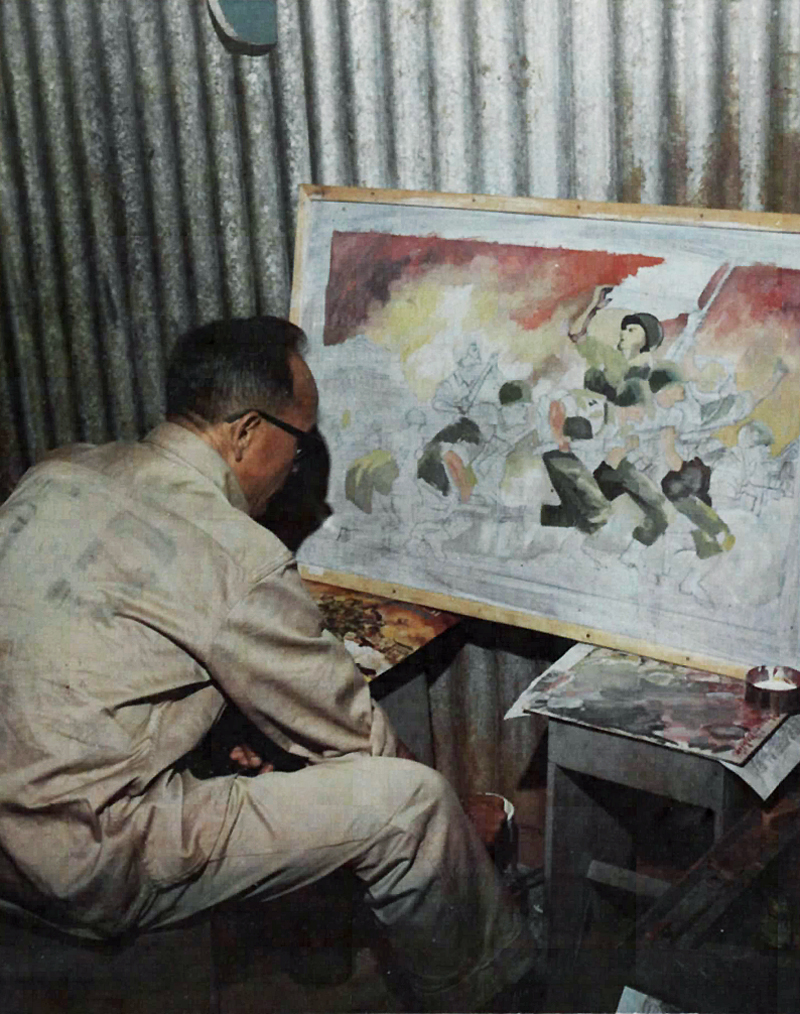
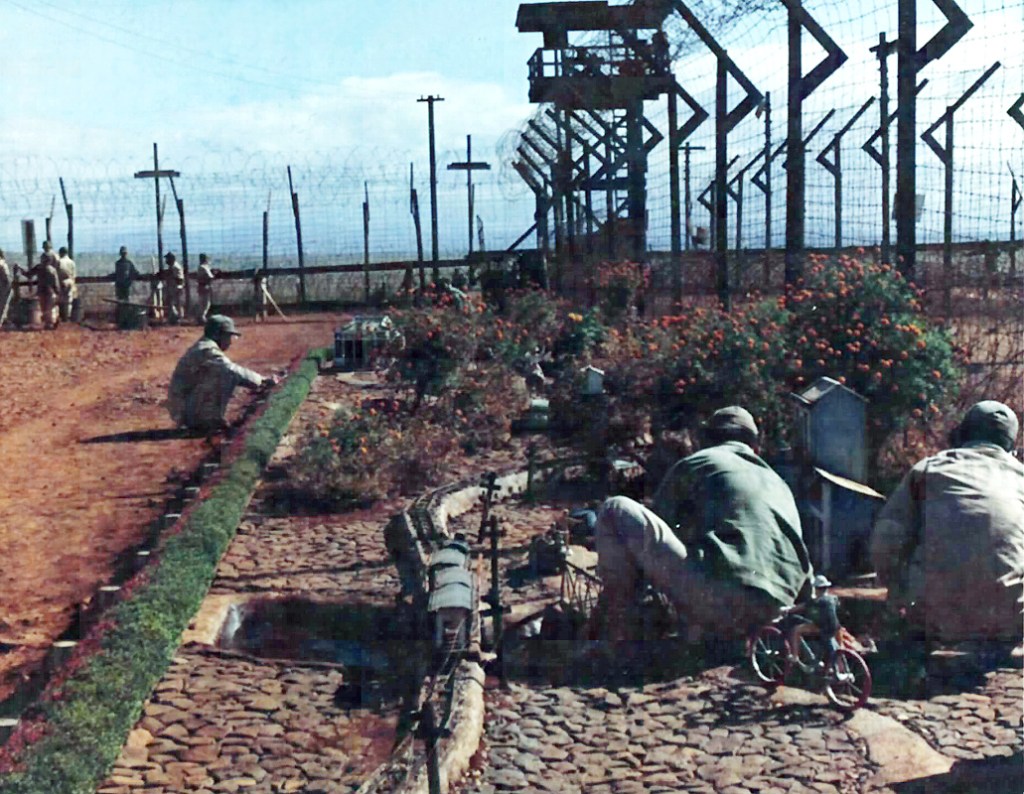
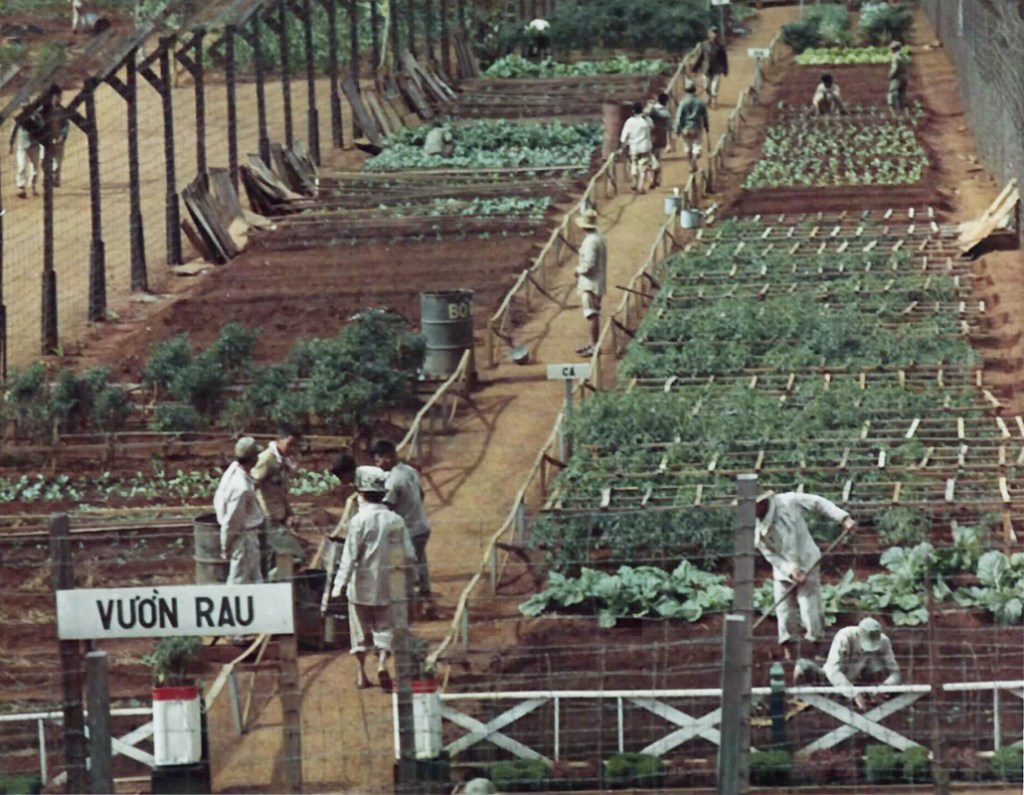
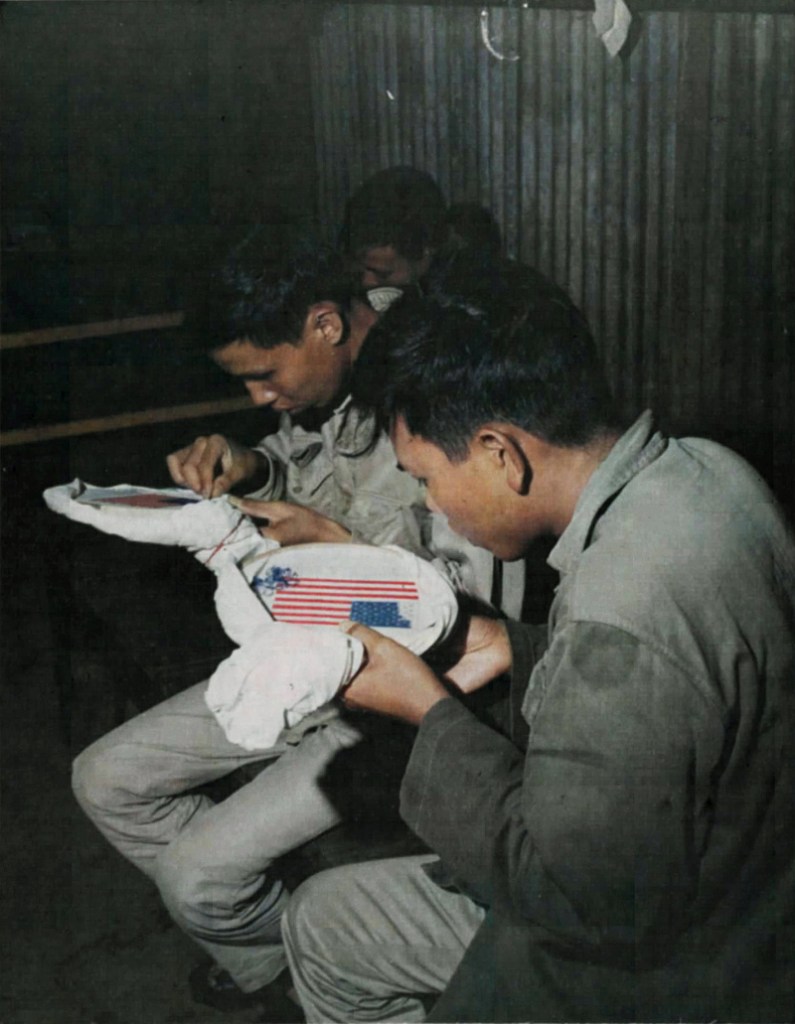
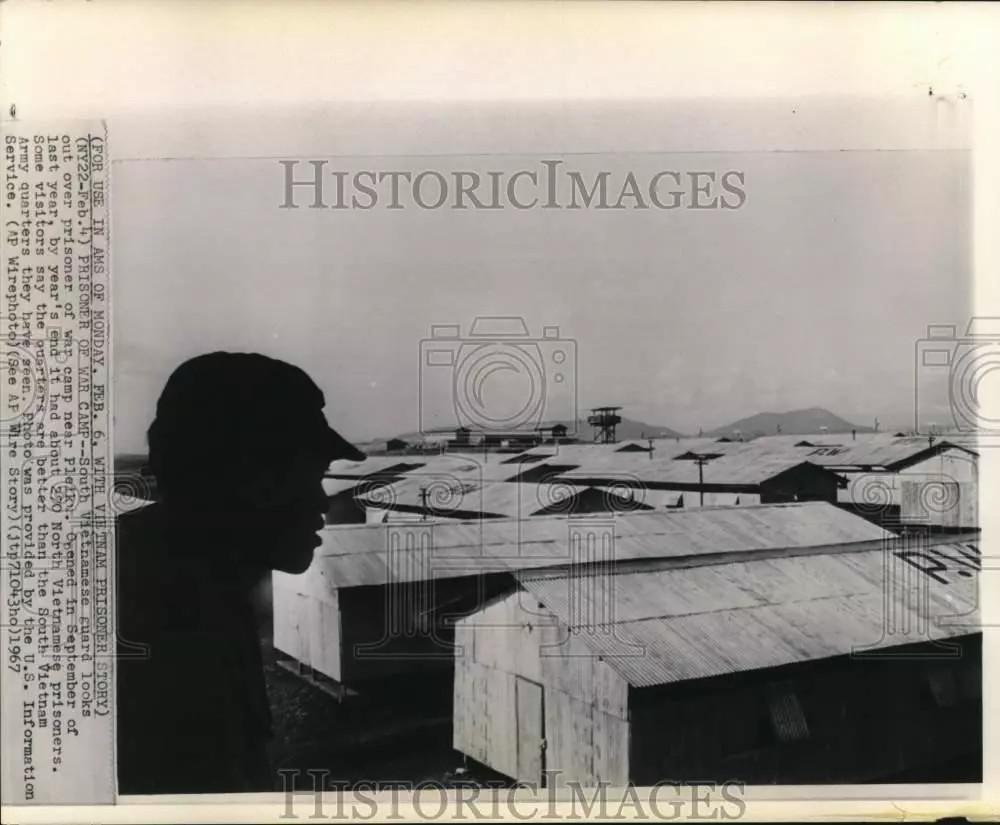
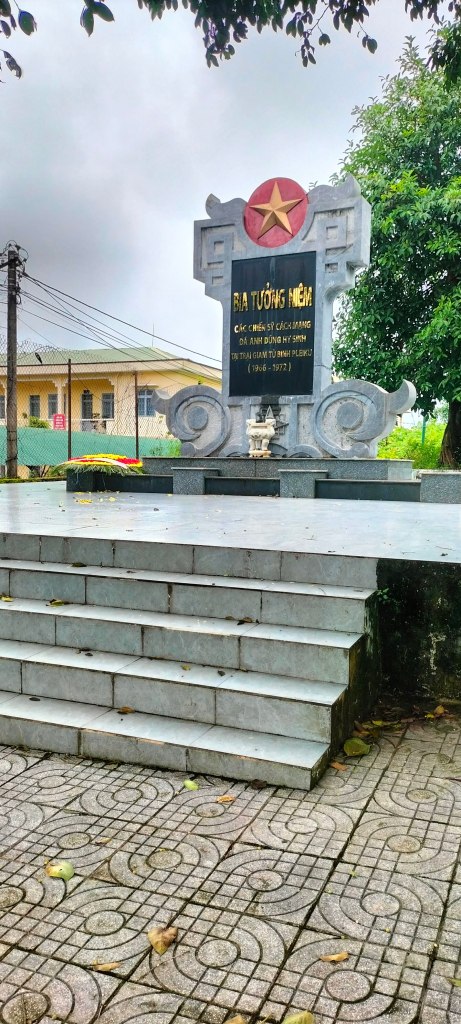
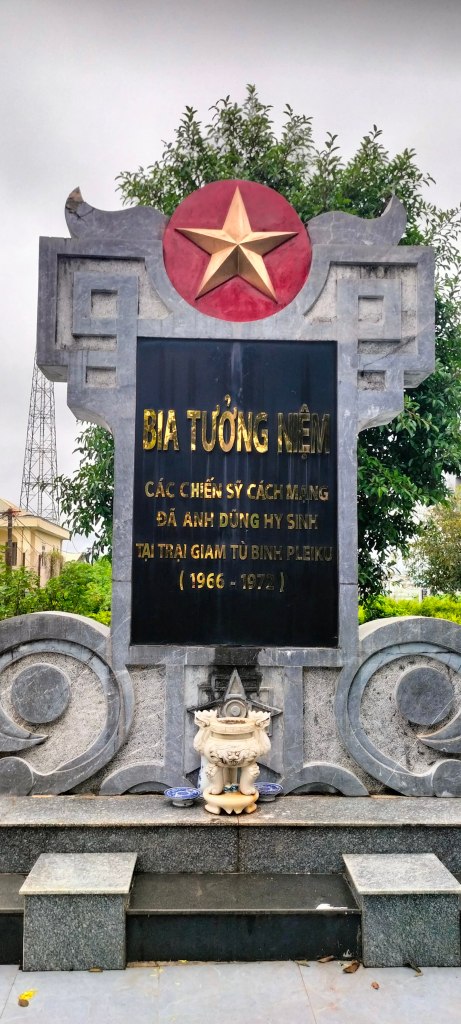
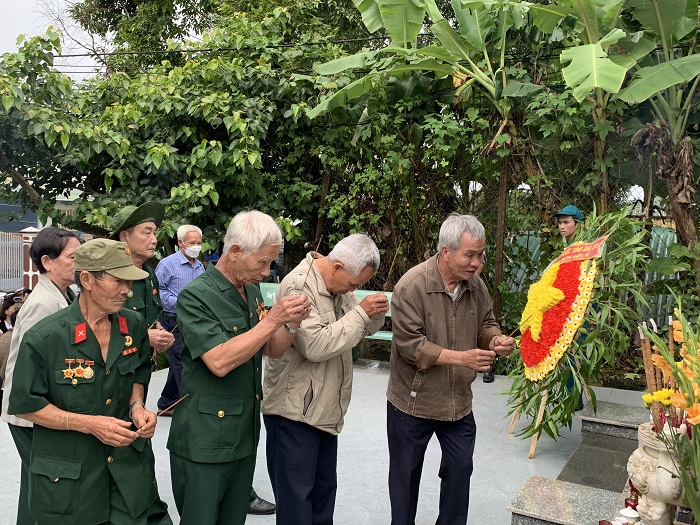
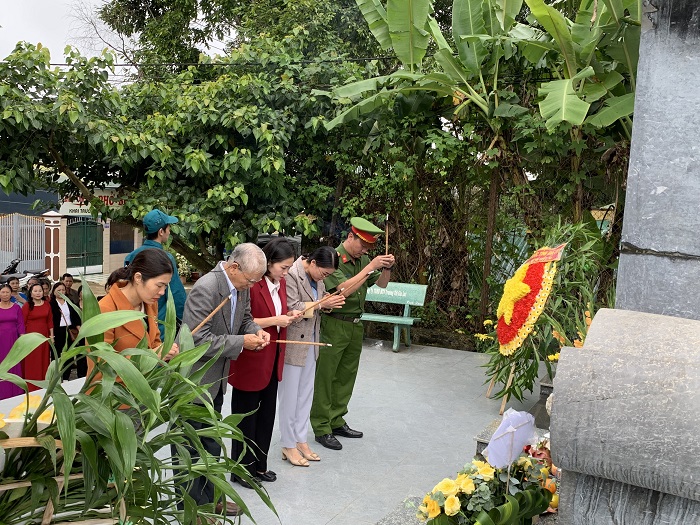
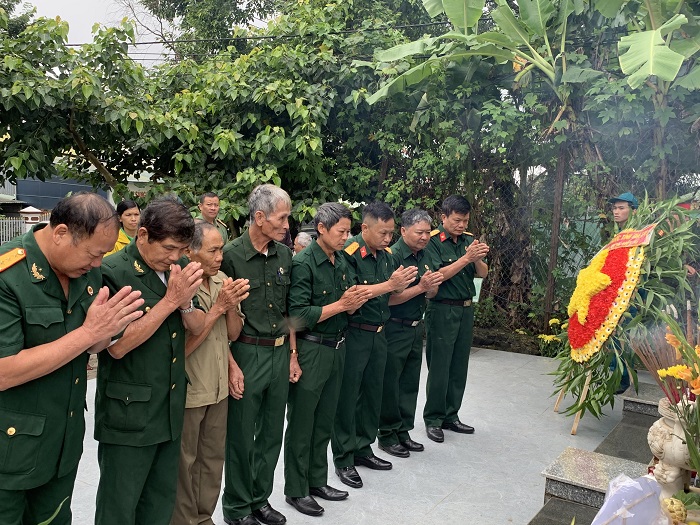
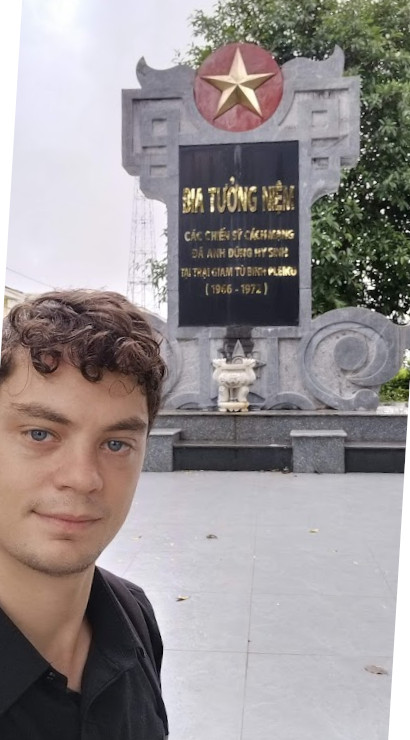
Not to be confused with the older French-built Pleiku Jail, the Pleiku Internment Camp (also known as the POW camp) was constructed in 1966 and remained in operation until 1972. The camp was run by the South Vietnamese Army (ARVN II Corps) so little has been written in English that I’ve been able to find except a brief mention in The International Review of the Red Cross, March 1972 referring to it as the the “Pleiku Correctional Institution” although the photo archive in French calls it the “Camp d’internement de Pleiku.”
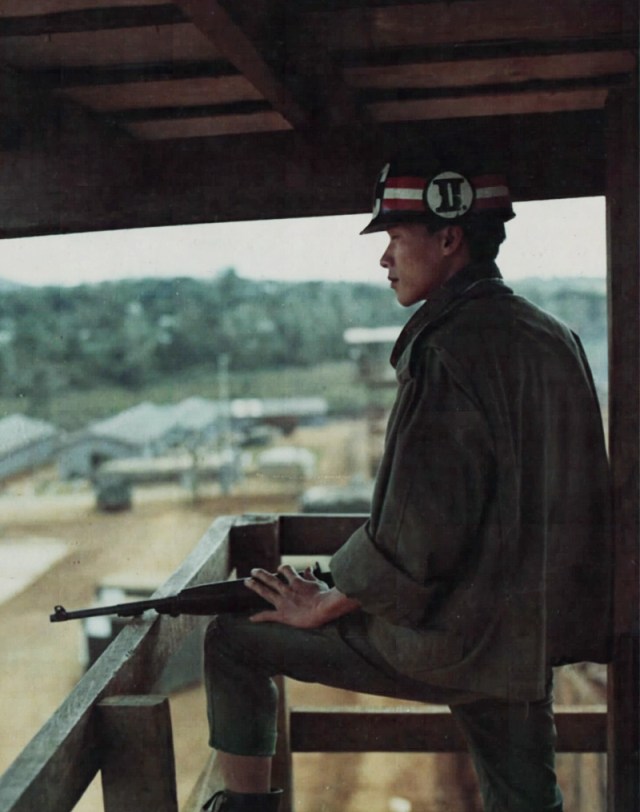
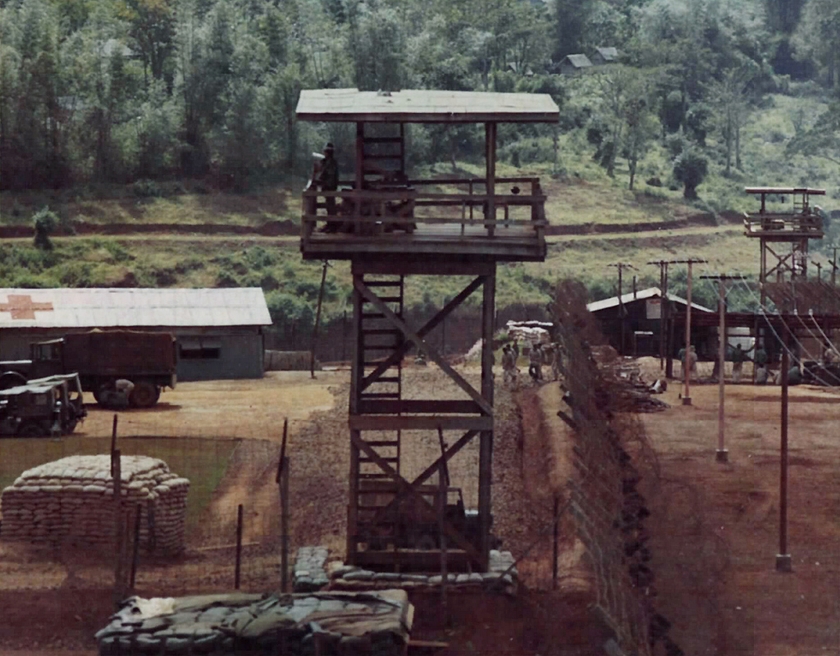
source: fold3.com – Nov 14, 1968. A Quan Canh (ARVN Military Police) stands guard in a guard tower at the POW camp.
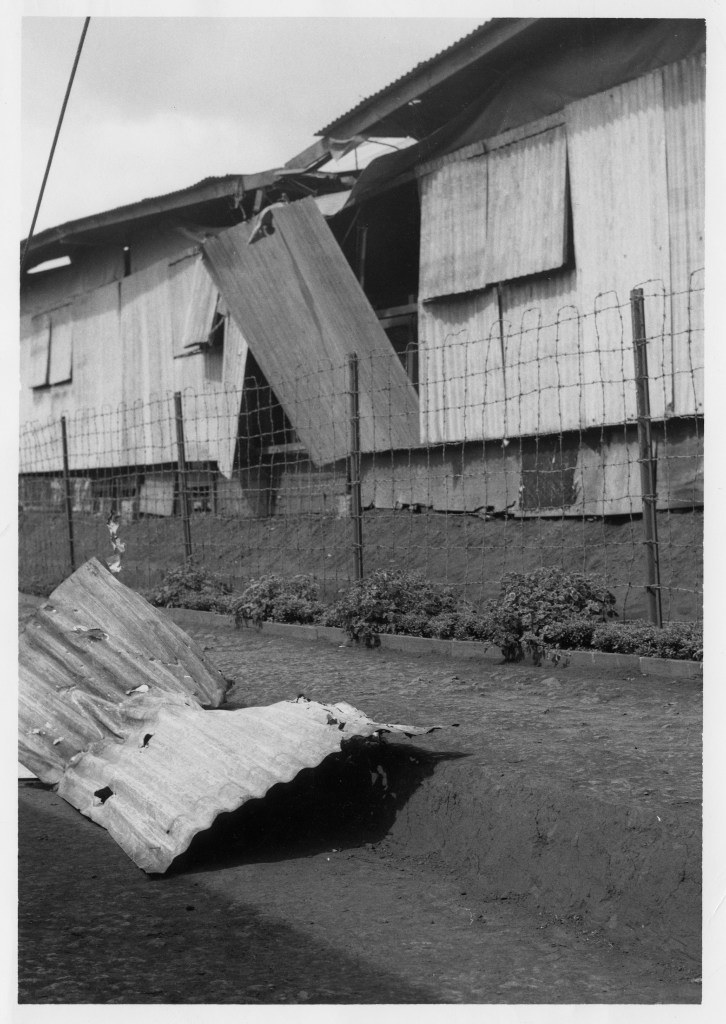
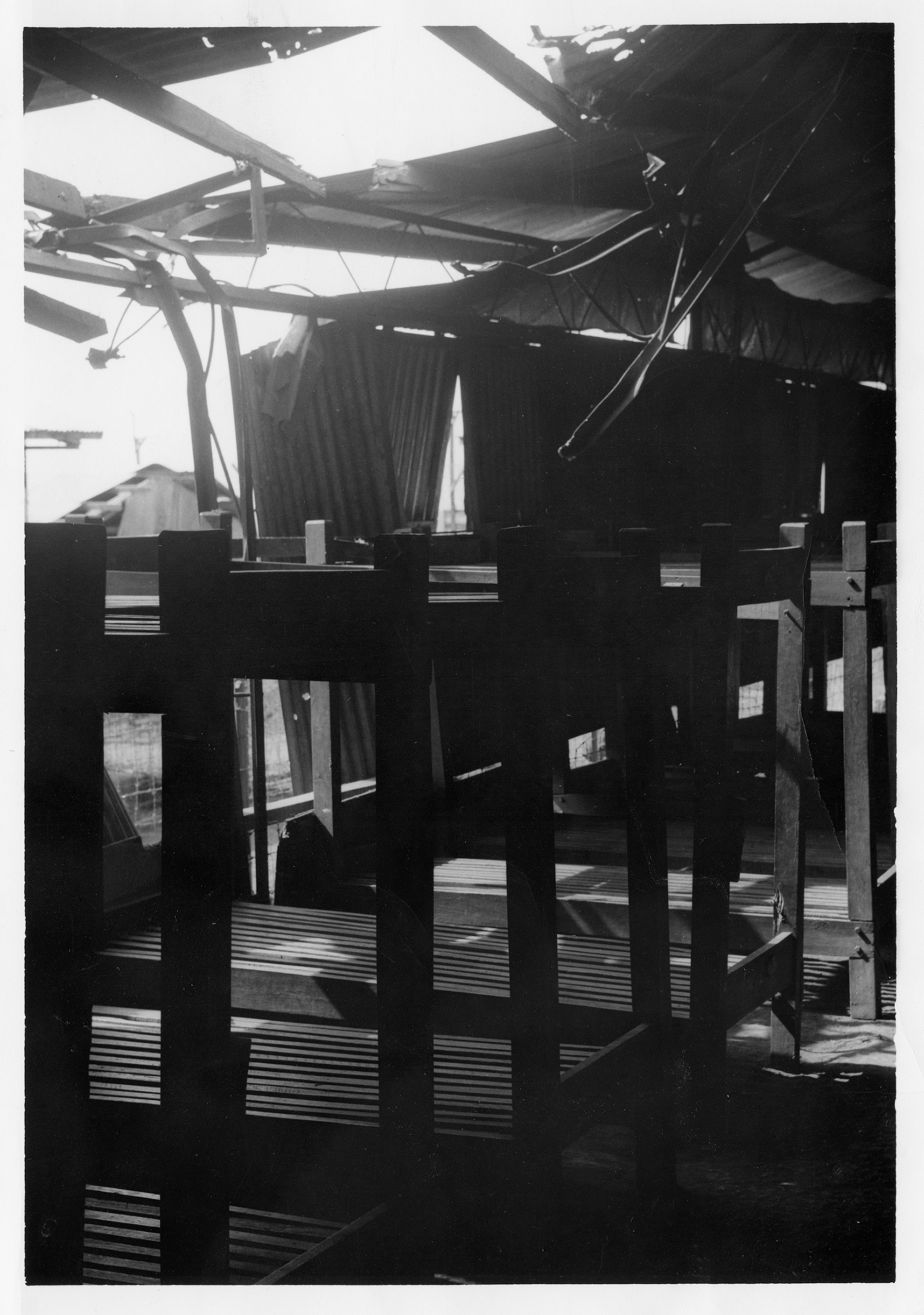
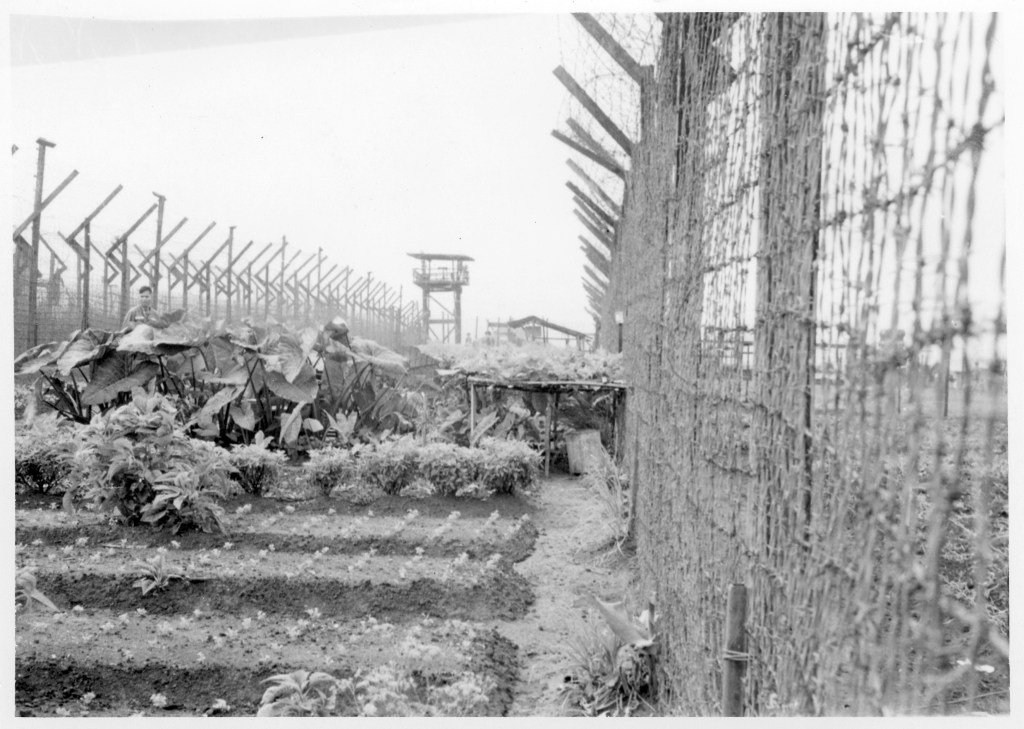
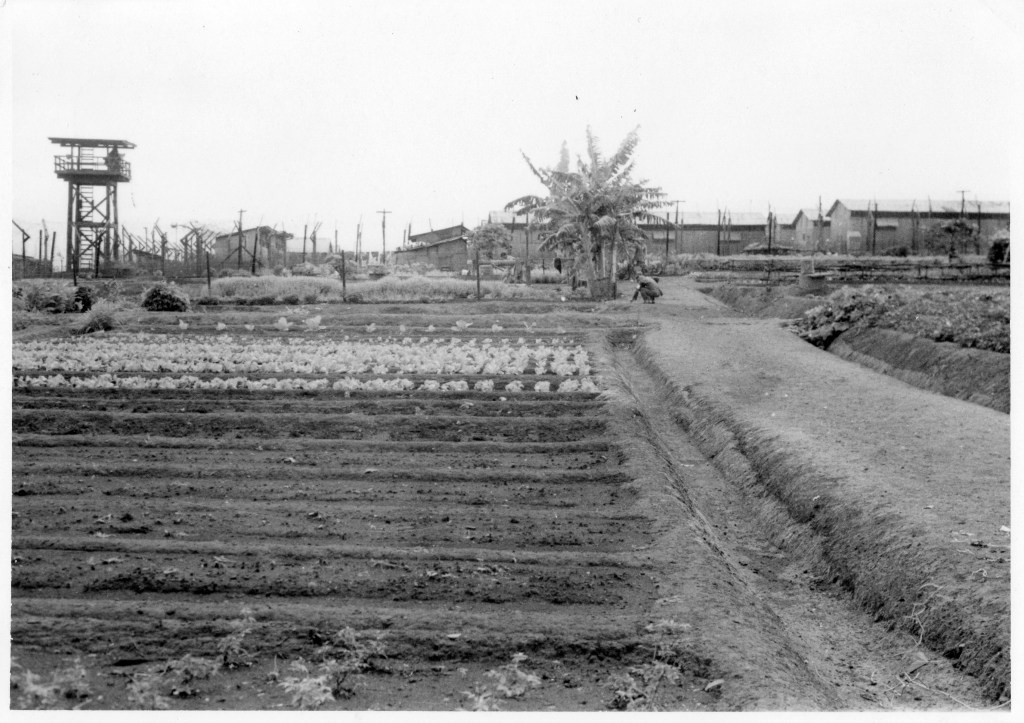
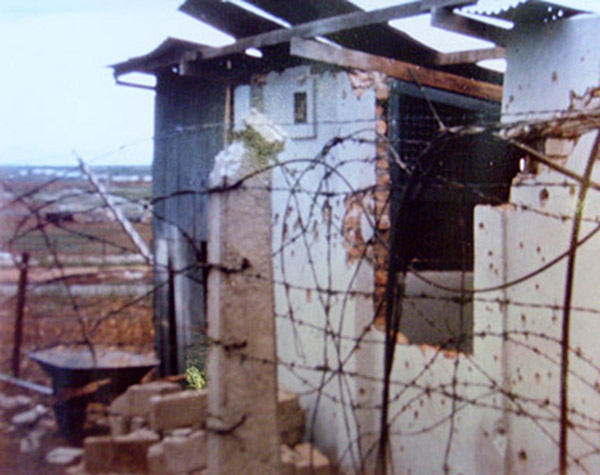
According to the Gia Lai museum, the camp covered roughly seven hectares and housed over 4,000 individuals by the end of its operation. The simple buildings were constructed of an iron frame with corrugated metal walls. Photos of a damaged building show how simple they were which must have been very uncomfortable in the Pleiku climate which alternates between tropical heat and tropical rain. These structures were encircled by barbed wire fences, and the entire camp was surrounded by minefields.
Crude building after damage, 20th or 21st January, 1972 source
Those held in the camp included soldiers from the North, guerrillas, and civilians, most of whom had been captured across the Central provinces. Once imprisoned, many were transferred to larger POW camps, such as the one on Phu Quoc Island.
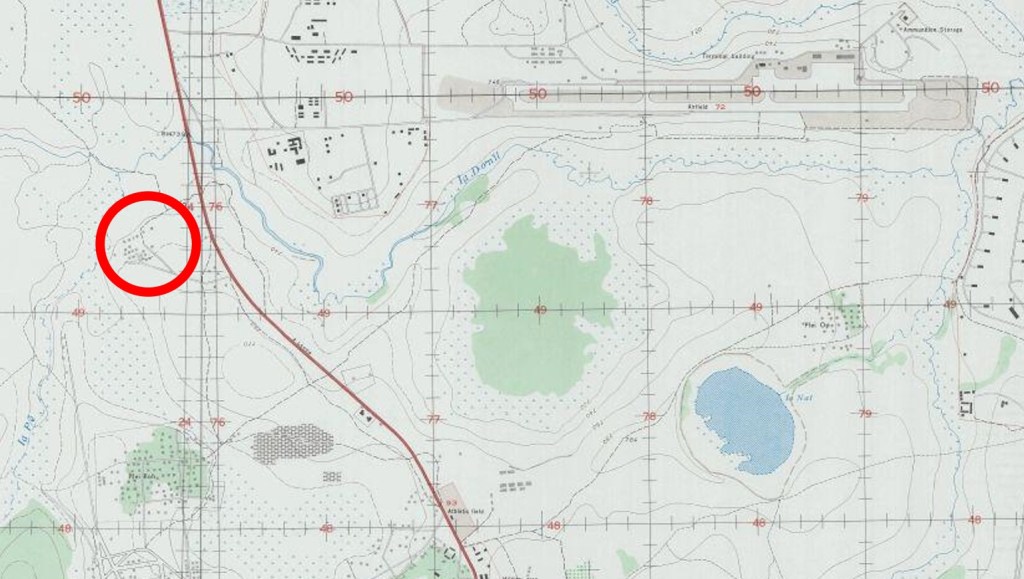
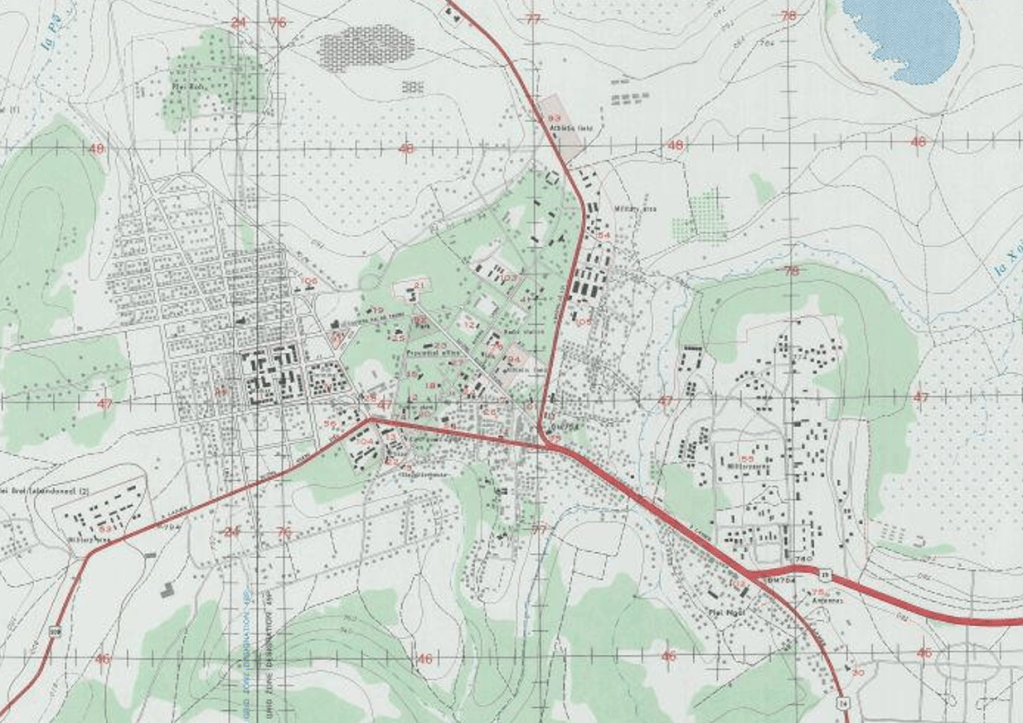
My educated guess of where the POW camp was. The red road is the modern Phạm Văn Đồng street, Pleiku Airbase (now the airport) can be seen at the top right and Plei Roh can be seen at the bottom left. From the Pleiku city map Series L909 .
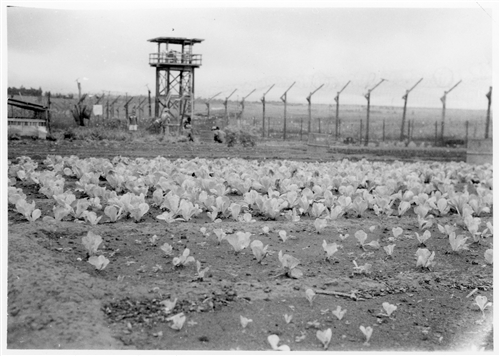
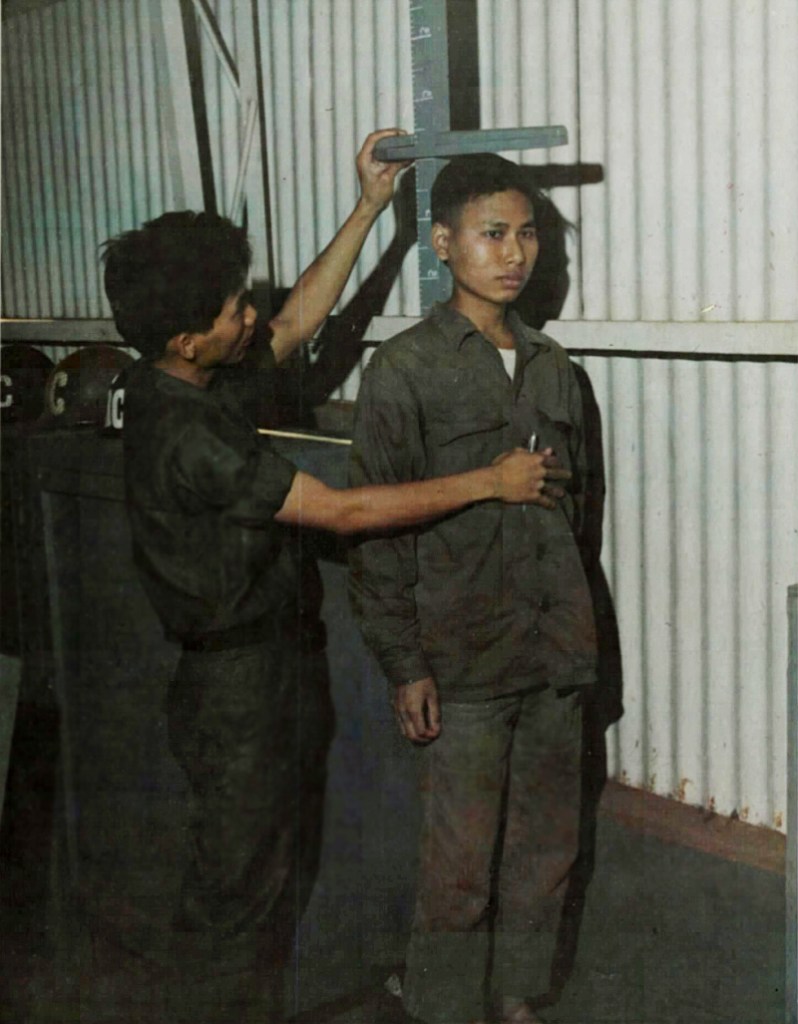
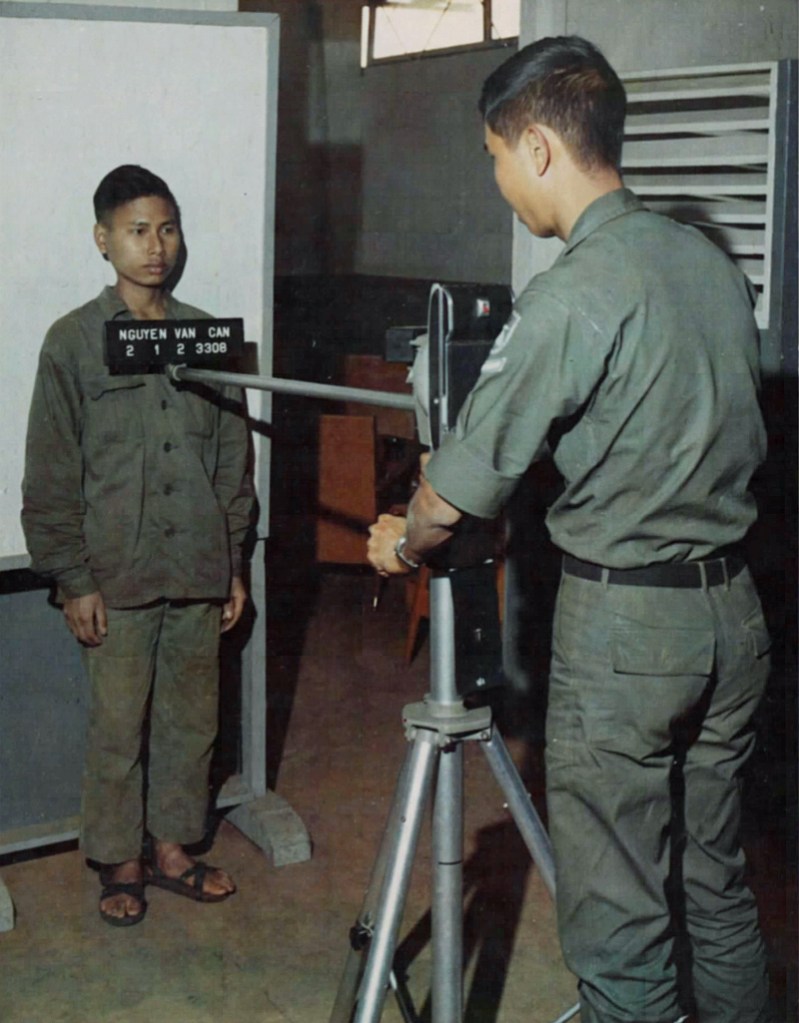
source: fold3.com – Nov 14, 1968. A POW gets measured in height by a Quan Canh (ARVN Military Policeman) with a measuring pole at the processing building of the POW camp.source: fold3.com – Nov 14, 1968. A POW is photographed for identification purposes by a QuanCanh (ARVN Military Policeman) at the Processing building of the POW camp.source: fold3.com – Nov 14, 1968. POWs work in the garden raising crops to be used in the mess hall at the POW camp.source: fold3.com – Nov 14, 1968. A POW paints a combat type picture in oils as he relaxes at the POW camp.source: fold3.com – Nov 14, 1968. POWs clean up the display area, which includes a model village built by the prisoners, as part of the camp beautification program.source: fold3.com – Nov 14, 1968. POW’s work in their garden at the POW camp.source: fold3.com – Nov 14, 1968. POW’s do embroidery work for relaxation at the POW camp. Tù binh thêu thùa để thư giãn tại Trại tù binh chiến tranh Pleiku.striking photo of guard looking out over the camp, the distinctive shape of Chu Nam mountain in the backgroundCamp d’internement de Pleiku. Activités des prisonniers de guerre communistes vietnamiens, jardin potager. 20th or 21st January, 1972sourceCamp d’internement de Pleiku. Activités des prisonniers de guerre communistes vietnamiens, jardin potager. 20th or 21st January, 1972sourceCamp d’internement de Pleiku. Activités des prisonniers de guerre communistes vietnamiens, jardin potager. 20th or 21st January, 1972source
It’s been a busy summer. I spoke at a conference in Saigon, I spent a lot of time volunteering. Now we’ve reached the Bank holiday break for Vietnamese Independence day and I’m off to Saigon to see some friends for a well earned break.
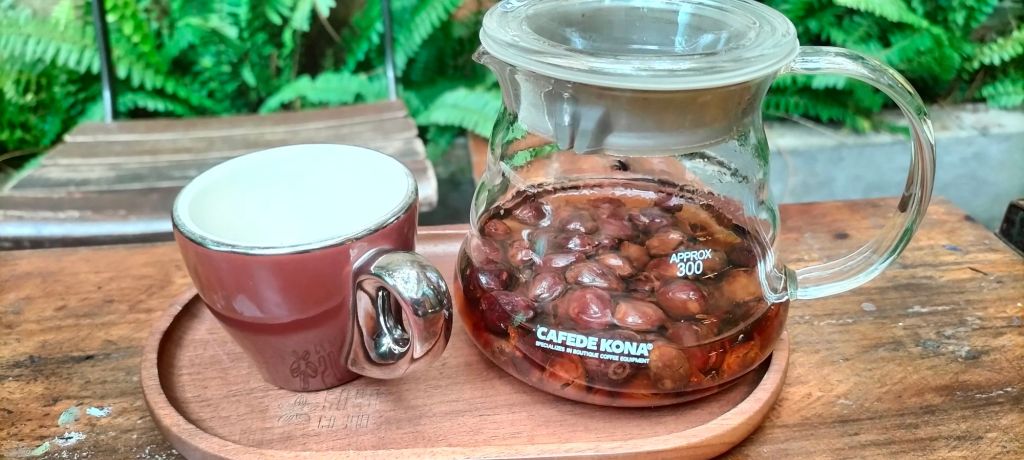
As a random aside, I tried coffee cherry tea this week. Tasted quite similar to hibiscus tea and gave me a real caffeine buzz
Conference
At some point early in the year my employer VUS put out a call for speakers for the annual conference they sponsor. I decided why not submit a proposal, the worst they can do is say no!
So I threw together a summary, got my boss to give it a sanity check then threw my hat in the ring.
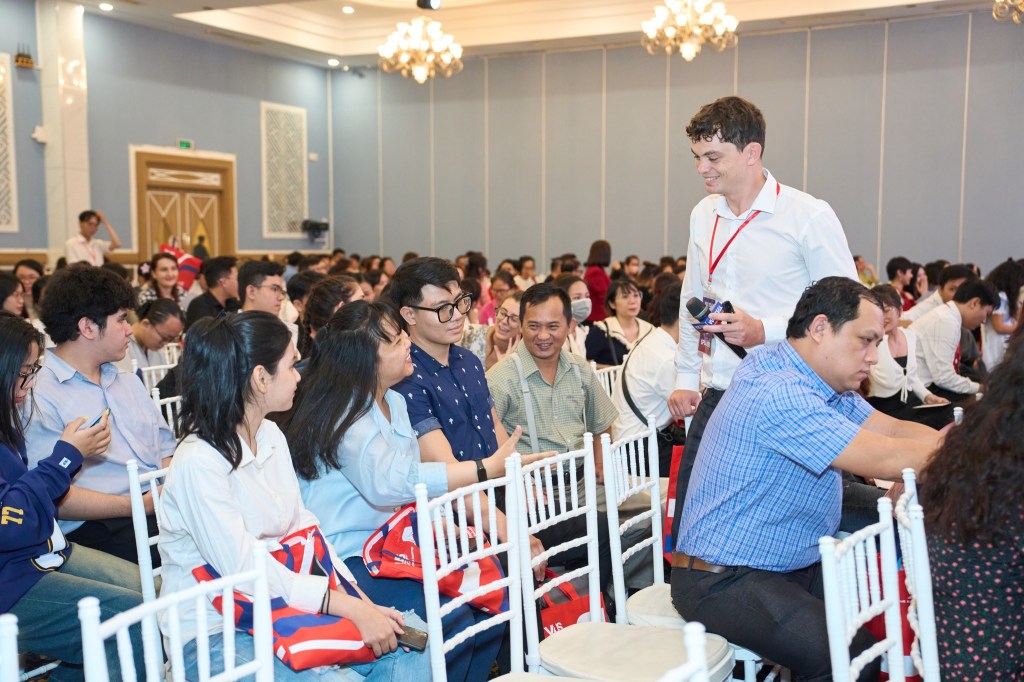
To my surprise they accepted and so on On June 28th 2024, I was off to the VUS TESOL Conference. The theme was “Embracing Holism in ELT for Life Education” (a chatGPT job?). So I decided to make my talk about brining personal passion into the classroom, it seemed appropriate enough. It wasn’t my own original idea; I took it from one of my favourite books in the industry: Teach Like a PIRATE. I did also take the chance to show-off some of my projects like my arcade game I’d made for the classroom.
I took an overnight bus to the conference so didn’t get great sleep so look a bit of a zombie in the photos. But we got good feedback.
Volunteering
Out of the blue Hunter messaged me saying the company had a programme to submit proposals for charity projects, they had an idea to help some local minority people but wanted my help reaching out to a village…and by the way the deadline is tomorrow.
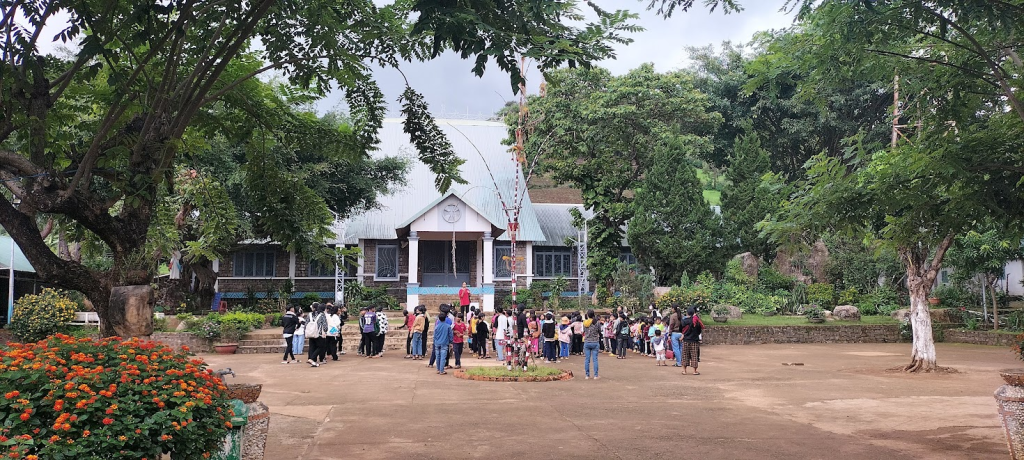
So I hopped on my moped and went out to the first village I could think of that could use the help which was Ha Bau. I went to the church and spoke to the priest. I didn’t want to say “hey there’s a chance we’ll be able to get some money so please give some details to a stranger please,” so what I did was offer to teach there over summer and by the way there might be some funding.
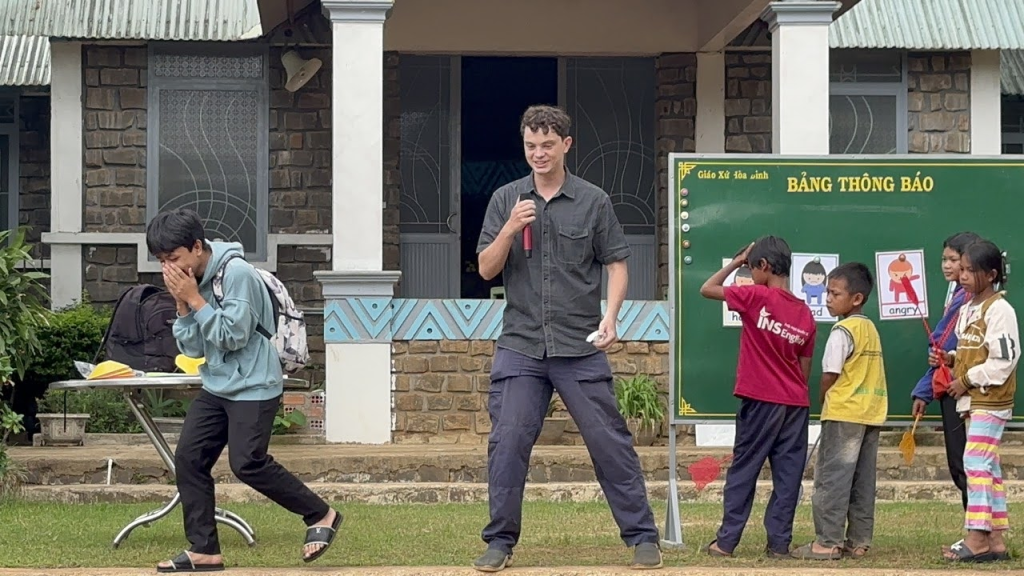
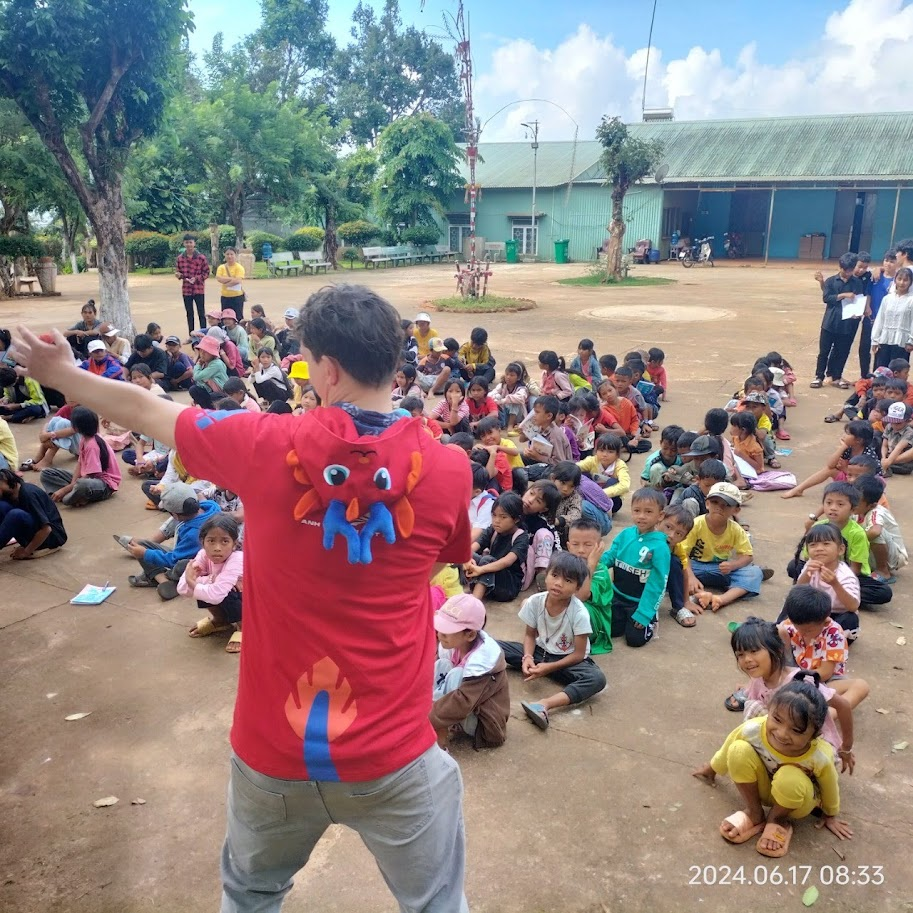
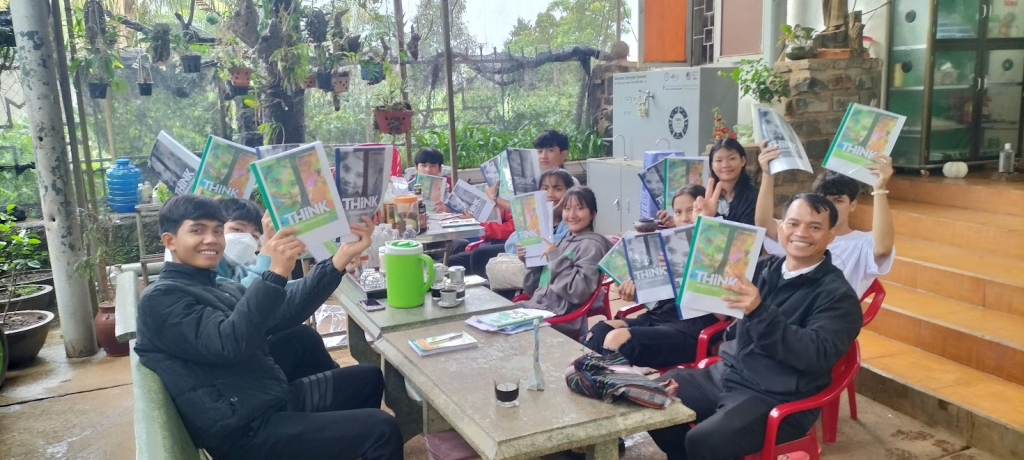
Well we never heard back from VUS about the proposal I submitted but I ended up teaching there every morning. Number of students varied depending on the weather but there were between 50 and 150. Some days other people from VUS came to help me but often it was just me. I’d teach the kids first at 8am for 90 minutes then go teach a smaller group of 15 teens until lunch time.
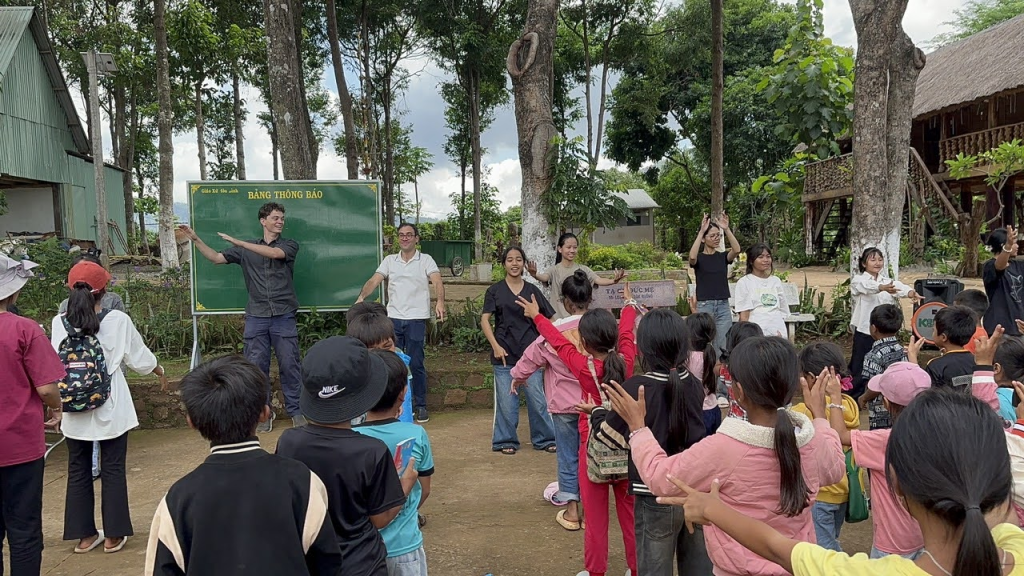
I learned a lot from the experience in terms of planning out what to teach them when there are no external motivations like exams or company mandates to do a certain textbook. Also I had to invent activities that could keep 150 kids entertained! It was challenging and rewarding. Having caught the bug for volunteering I also found an orphanage outside Pleiku where I would teach after lunch.
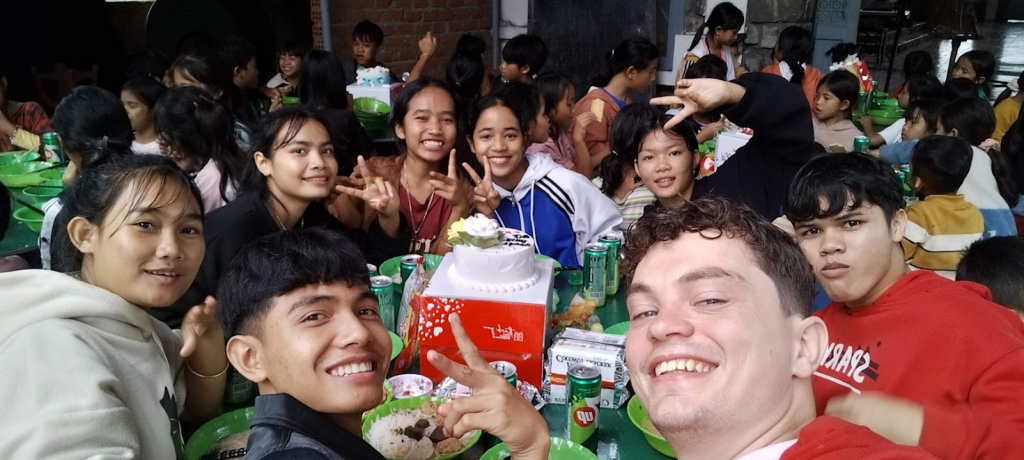
We ended up celebrating my Birthday there too! It was a crazy party. The summer holidays are over now so those voluntary classes have wrapped up.
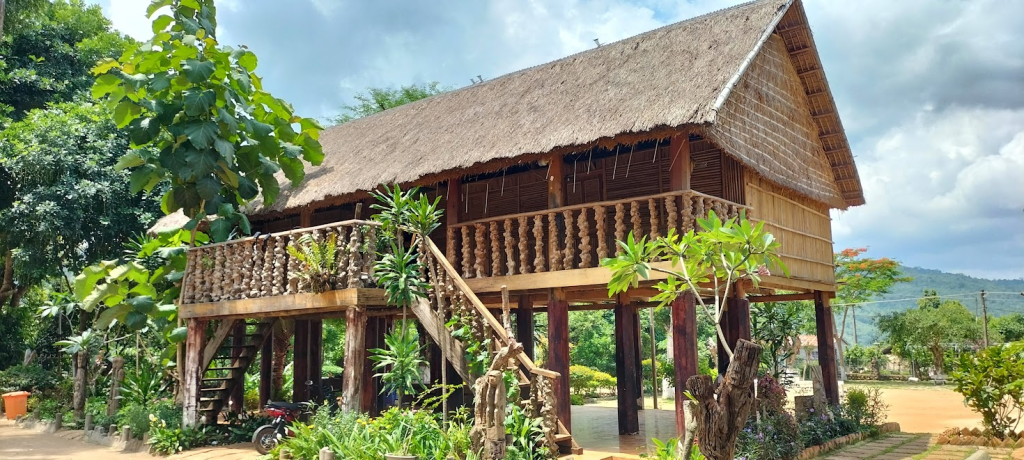
The church nestled in the treesgames at the churchHunter joined us for some dancingA few students…A traditional building at the church
I’ve not been to the beach or been out exploring much but it’s been a busy and very rewarding summer time. I think it’ll be one that I remember forever.
The real war however, is being fought not for the bodies but the minds of the Vietcong.
– Congressman David S. King 1966
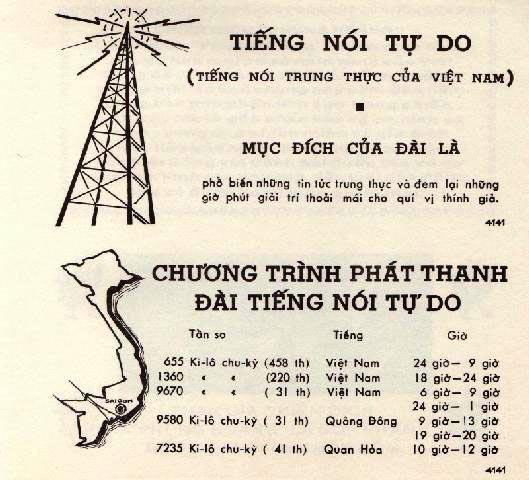
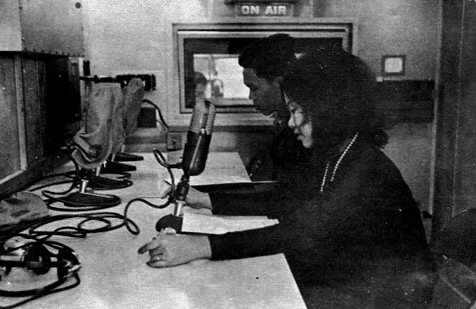
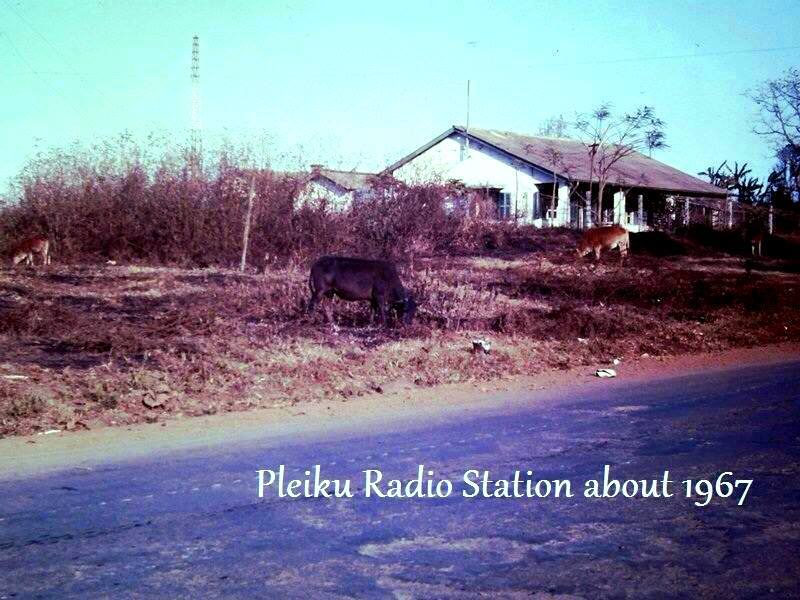
In late 1967, U.S. Military Assistance Command-Vietnam (MACV) placed a 50,000-watt AM radio transmitter in Pleiku to broadcast to the northern provinces of South Vietnam. “The Voice of the Army and the People of Vietnam” became one of the most powerful radio transmitters in the country
The ARVN [The Army of the Republic of Vietnam] personnel were responsible for all radio programming, while the US provided the equipment and supervised the technical operation of the station. The station began daily broadcasting on 20 January 1968 under Operation Yellowbird with six hours of news, music, and PSYOP messages to Viet Cong and North Vietnamese Army troops, their dependents, and sympathizers throughout the Central Highlands.
[snip]
The Chief, Republic of Vietnam Armed Forces General Political Warfare Department, has recognized the desirability of motivating and indoctrinating the Montagnards to support the Government of Vietnam and decided to use Radic Pleiku as one of the principal means of accomplishing this task. Plans were underway to procure the added personnel and funds to increase broadcasting from 6 to 11 hours daily. The increased time will include programs directed primarily toward the Montagnard audience. Programs in the Montagnard dialect are scheduled to begin 1 September 1969.
– Employment of U.S. Army Psychological Operations Units in Vietnam 1969 Jun 07
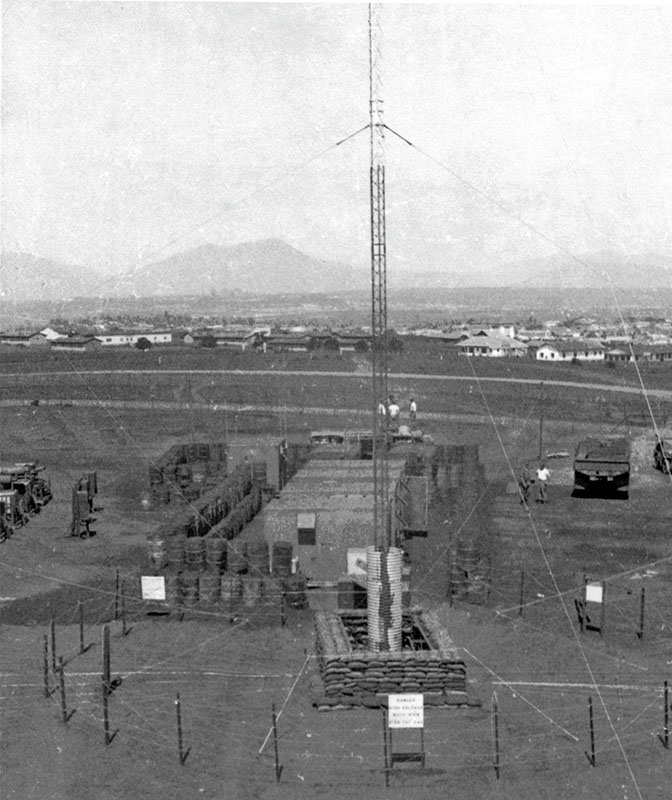
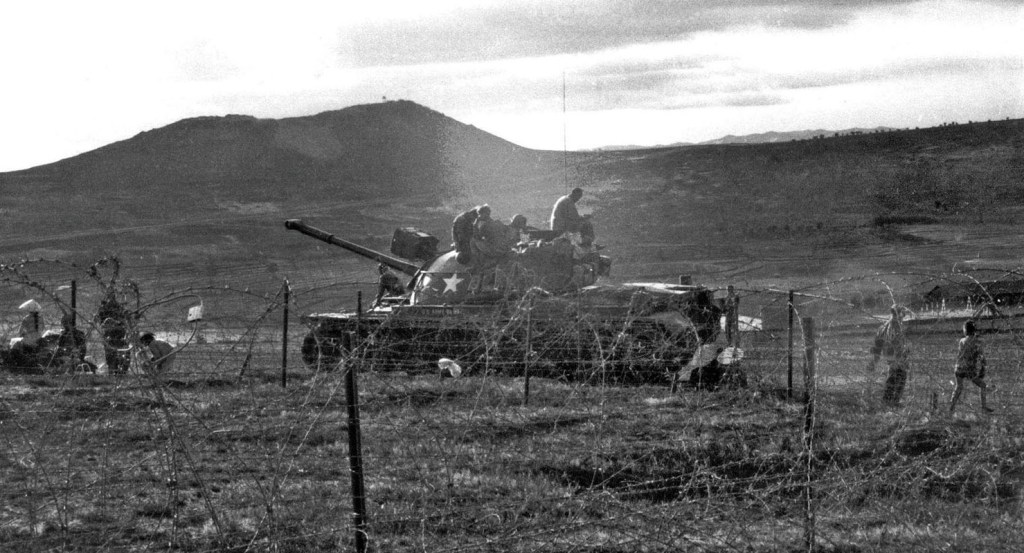
While it was in an ideal location for broadcasting, the site was remote and tactically exposed. The radio station was essentially an outpost—it was not inside any unit’s defensive perimeter. As such, the small compound was very vulnerable to attack. Only barbed wire and concertina fences surrounded the outlying compound. A single wooden guard tower provided early warning. It was guarded by a Vietnamese Army (ARVN) squad. The 23rd ARVN Division was responsible for outer perimeter security in Pleiku. What distinguished the compound from the other American facilities in Pleiku was the 250-foot radio antenna. It quickly became a Viet Cong (VC) rocket and mortar aiming post and rounds were received almost daily
photo taken from the radio station, looks to me to be somewhere near Plei Khưn
Broadcasting terminated from the radio station on 31 July 1971. Transmitter operation for the month totaled 2 hours 25 minutes at low power, and 245 hours 25 minutes at high power.
–the 4th PSYOP Group Monthly Operations Report of July 1971
Photo from Pleiku Airbase website but no additional information given. If anybody knows more about this photo could they get in touch?
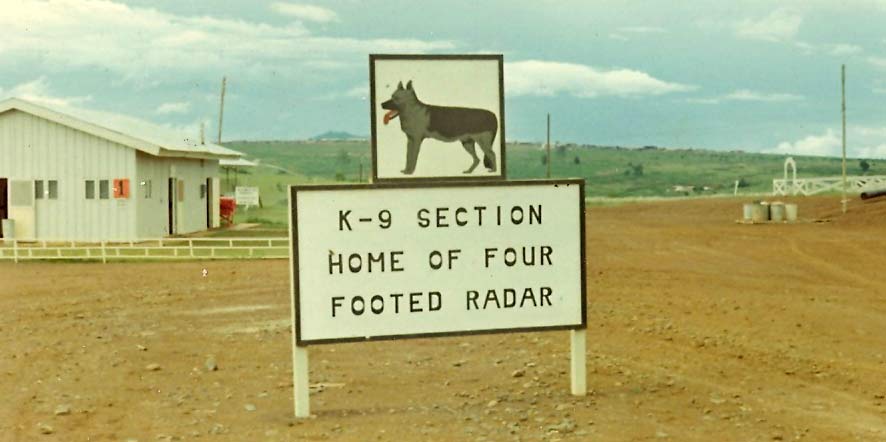
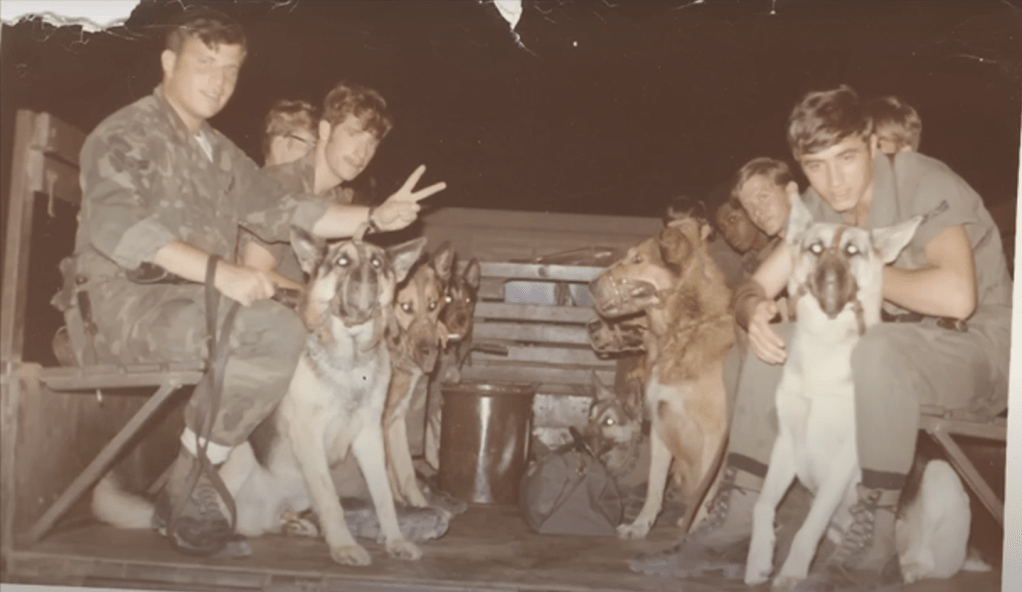
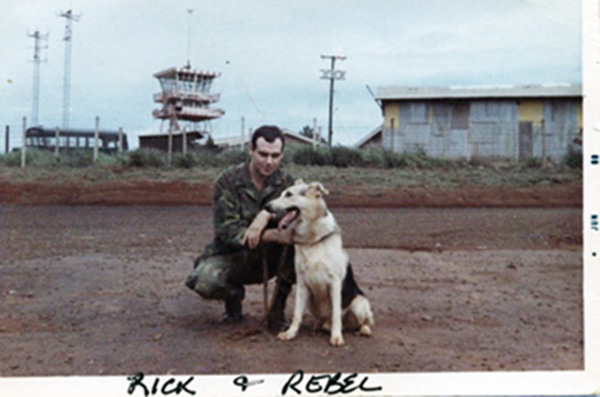
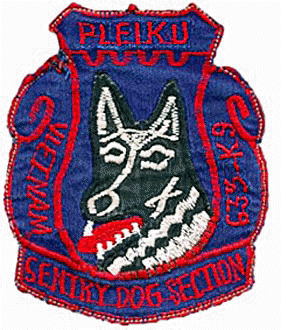
In 1960, U.S. advisers to the South Vietnamese military initiated a dog program, aiming to use sentry dogs for base protection and scout dogs for tracking the Viet Cong. From 1965 to 1970, Pleiku Airbase, now the airport, employed 26 dogs, humorously nicknamed “Four Footed Radar,”.
On October 29th [1965], twenty-five of us received orders for Pleiku AB. That afternoon we packed our gear and boarded a C-130 headed north. Upon our arrival, we were told we were told unexpected. We just laughed it off and took our dogs off the plane, staking them out between the runway and the rice paddies. The only buildings, in the distance, near the foothills, were those the 25th Infantry Division. We soon discovered we were to share those quarters with them for the next month.
There wasn’t a place for our dogs to stay, so the first day we began by making temporary kennels for them. We put the shipping crates in two lines and staked the dogs between them. Within a couple of days we had our dogs settled in and we began guard duty at the ammo dump, the fuel storage area, and the perimeter of the base between the runway and the rice paddies.
We lived in tents and worked 12-hour shifts from 6 PM to 6 am, everyday, although once in awhile we got a day “off post” when we spent our time building a permanent type kennel for our dogs.
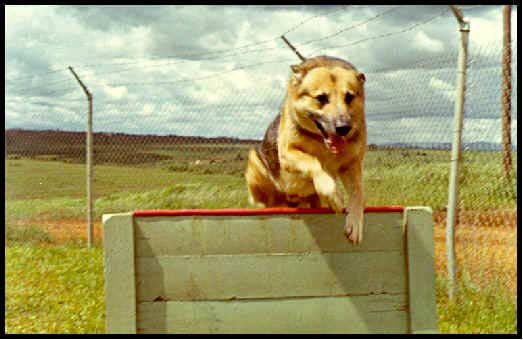
Fred Hewitt & Sentry Dog Bullet Da Nang AB Perimeter Dec 1967 Photo courtesy of Monty MooreBullet training at Pleiku Airbase
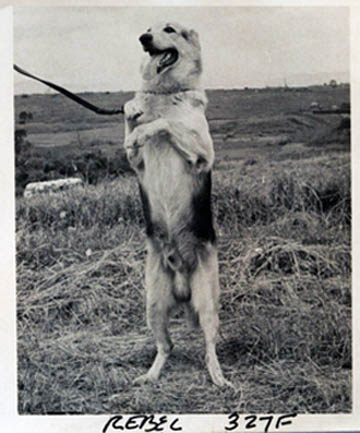
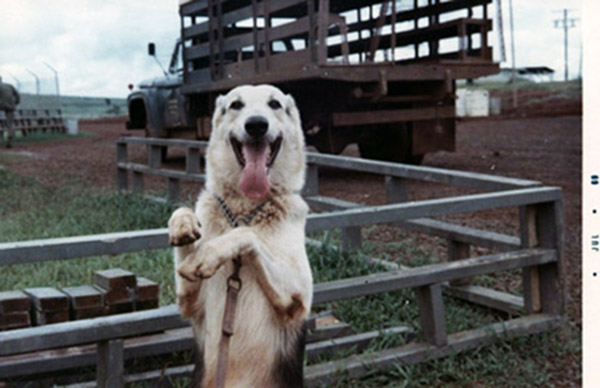
Another Dog Rebel appears in a lot of photographs. Rebel joined the team in pleiku in 1969. Definitely a photogenic and happy dog! I can see why there are a lot of pictures of him! Richard Schlosser was Rebel’s handler for a year from 03/31/1969 – 03/28/1970.
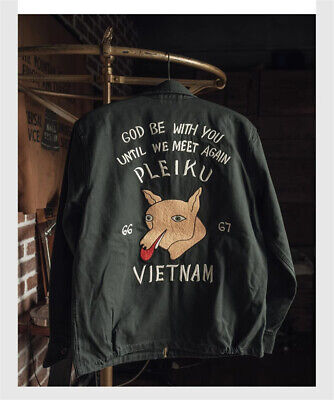
I’ve written before about Pleiku jackets and patches. There is a great Pleiku jacket with a silly dog face on the back which I assume has some connection to the K-9 unit.
I think this may be the best jacket ever made
But there is another day that REALLY sticks with me. April 22, 1966. It was another mortar attack. I was “off post” that night and Duke was at the kennels. Just after 2:00 am the first mortar hit. … When I got to the kennels Duke was up on the posting truck like he was waiting to go to post. I walked up to the truck calling his name. He was growling and barking at me… Eventually I was able to get my leash around his neck and get him under control. The veterinarian was right behind me and he was able to tranquilize him. It was only then that we were able to see that he was badly injured. He had ripped the kennel’s chain link fence trying to get out of the kennel during the attack and his back legs were totally torn up. He had lost a lot of blood and was in very bad shape. The vet told me he had to be transported to the 9th Med. Center, in Saigon,…That is the last time I saw Duke.
This is the back of Duke’ss kennel the night I lost him. Duke was sent to Tan Son Nhut but never return to me and was euthanized Oct 4 1966, one day before I returned home. I didn’t know his fate until the VSPA Reunion in Las Vegas, when Bill Cummings told me they found Duke’s info. – John Risse
If you want to know more about dogs in the vietnam war in general you can read here
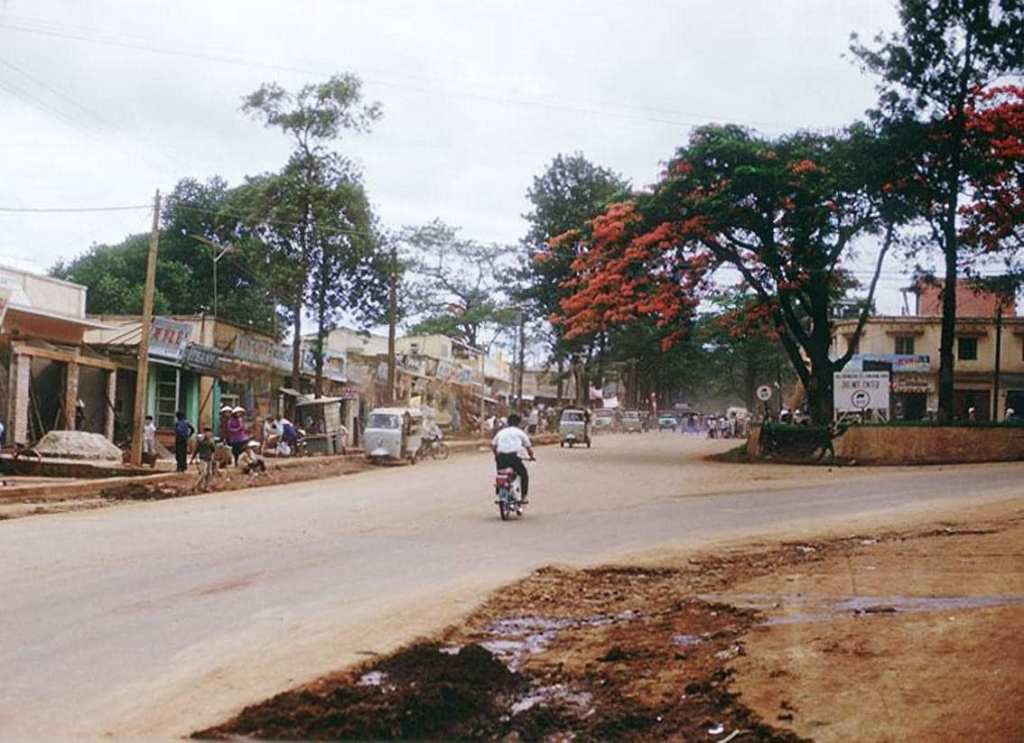
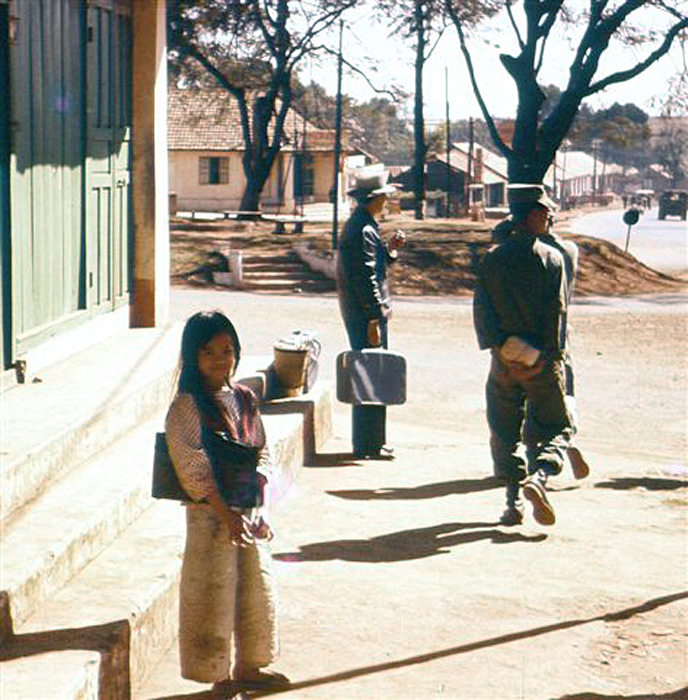
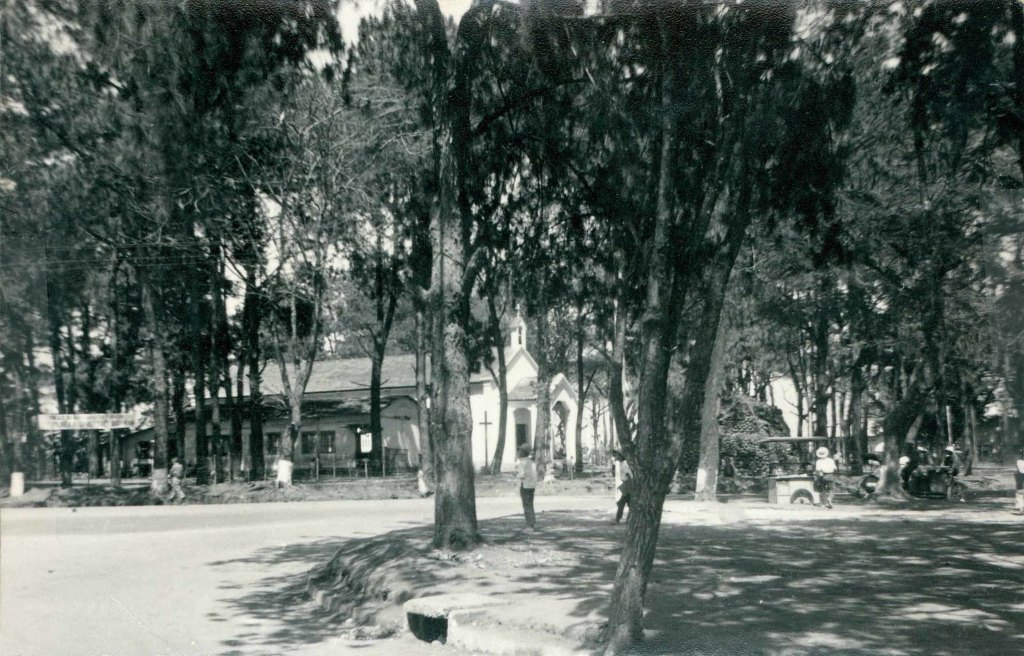
In 1962, Pleiku buzzed with the onset of US operations[1]. As the war escalated, this city would transform into a key battleground, changing rapidly in response. But in 1962, Pleiku remained a tranquil oasis for the Republic of Vietnam in the wild highlands. Join me as we journey back in time with photos and quotes to capture the essence of Pleiku as those first American arrivals saw it. While not all the photos are from 1962, some are from later in the decade, I’ve aimed to recreate the atmosphere of that pivotal year.
I’ve drawn a lot of quotes from the book Saigon to Pleiku by David Noble so many thanks there.
The City Center
When Pleiku town was first established on the land of Hoi Thuong and Hoi Phu villages, the inner-city roads were not yet developed; at that time, the French named the roads very simply: such as Hoi Thuong village’s pagoda road (French: route de la pagode Hoi-Thuong – now Su Van Hanh street), the road to the Post Office-Telegraph building (French: rue des Postes et Télégraphes, then Hoang Dieu street until 1975, now Hung Vuong street), the road to the Administrative Agency Residence (rue de Bâtiments de la Délégation, now Quang Trung street), etc. Pleiku town was planned mainly along two main axes: the business development road was Hoang Dieu street and the administrative road named Trinh Minh The street; most of the government offices and departments were located on this road (now Tran Hung Dao street) – Nguyen Quang Hien April 30, 2023
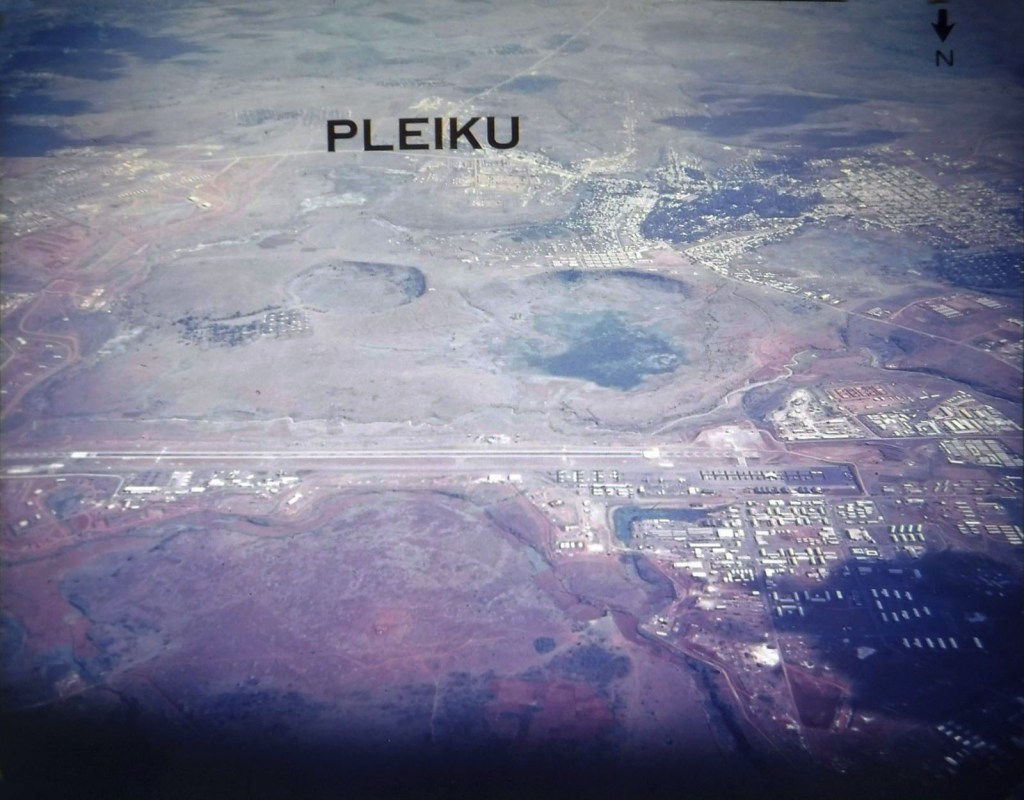
Map of Pleiku from 1968Pleiku Airbase is running across the middle of this picture, looking south. You can see a dark green triangle which is in the middle of the map. The green blob on the far right is Plei Roh at the top left of the map, thenyou can make out the built up area in between
In the small town, most students walked to school. Before 1975, only the middle section of Hoang Dieu Street—approximately from the Diep Kinh intersection to the Post Office—was bustling and busy; this liveliness extended to the nearby arc: Phan Boi Chau, Quang Trung, Phan Chu Trinh, and Le Loi streets. People usually strolled around these streets. – HOÀNG TRẦN 11/05/2015
Until 1970, Pleiku city only had 3 buildings with 3 floors or more, which were: Hoang Lieng restaurant next to Diep Kinh theater (Hoang Lieng is now Hung Vuong hotel), Minh Duc private school (now Le Loi high school) and Saigon Moi shop (in front of the Moi market’s tent). There were 2-storey houses at that time but not many, only a few well-off families – Nguyễn Quang Hiền 29/02/2024
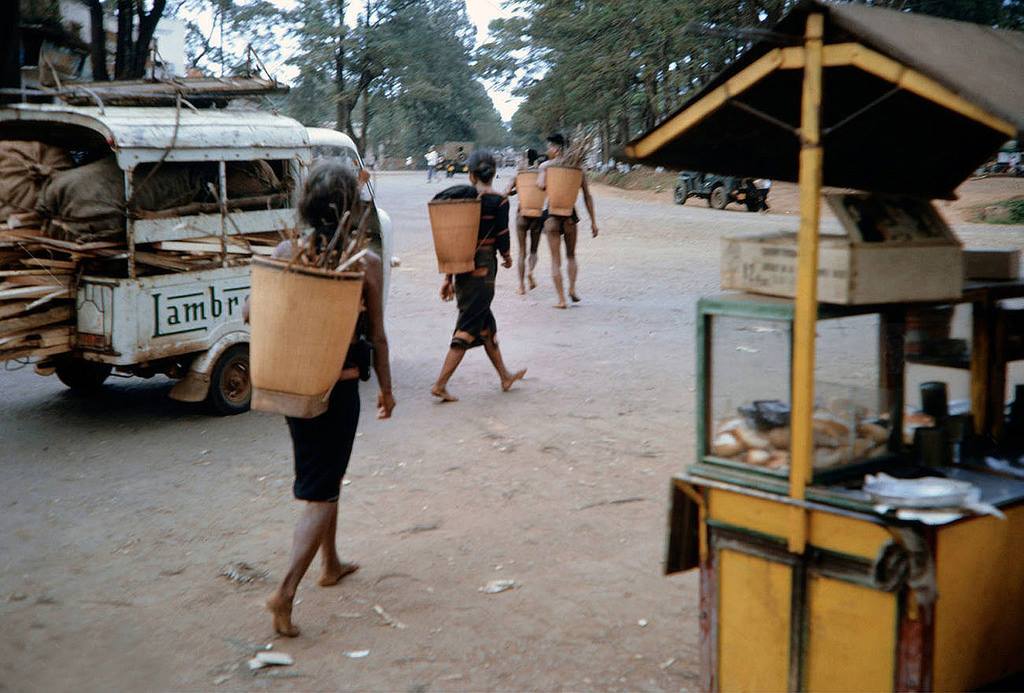
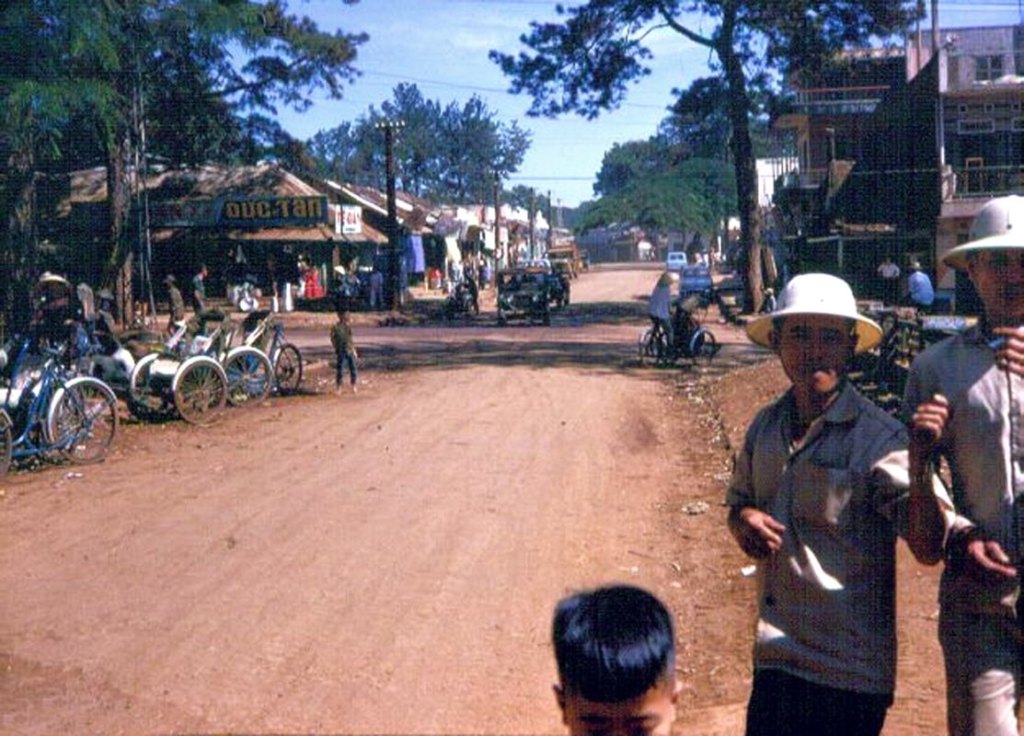
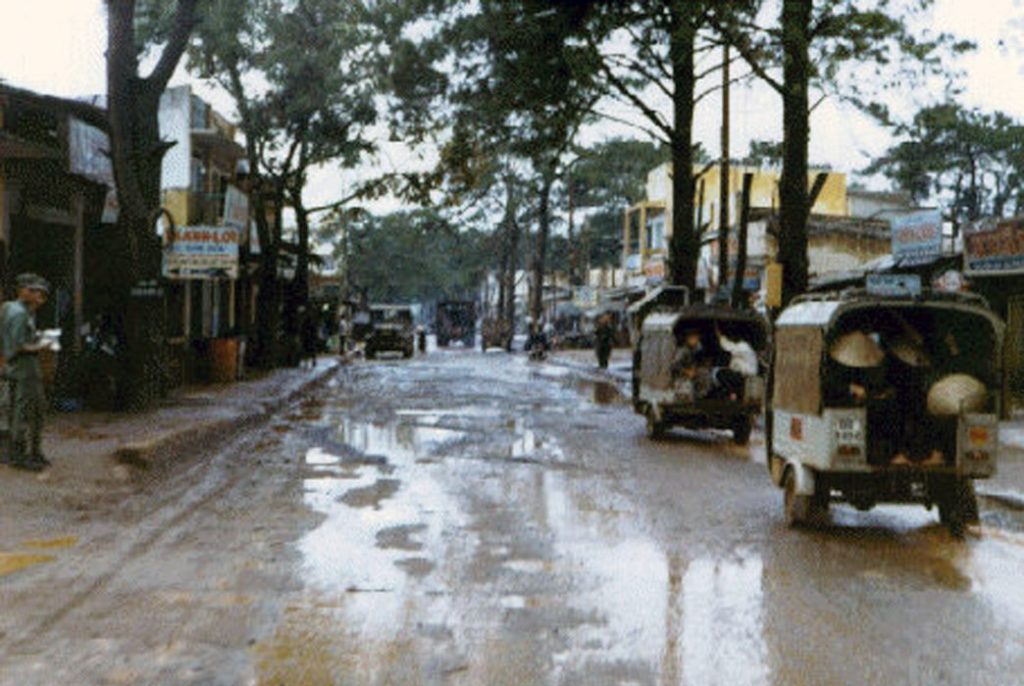
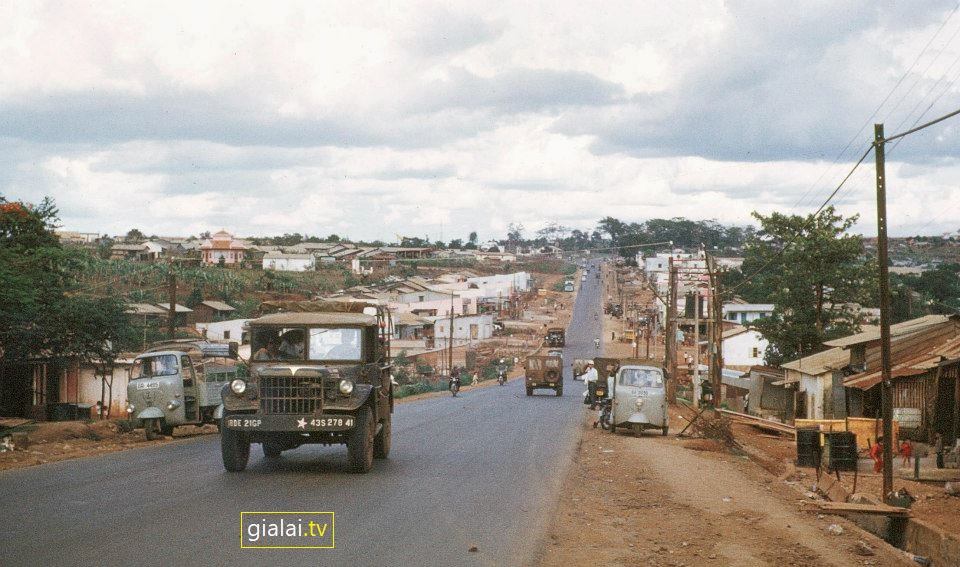
Low-rise buildings, rarely going as high as three stories, defined the cityscape[2]. The primary modes of transport were walking, cyclos, tuk-tuks (Italian Lambro 550s), and the occasional jeep—a stark contrast to Saigon’s streets filled with shiny, fashionable 60s cars. The streets were shaded by 30-year-old trees planted by the French, some of which still stand today, though many have sadly been removed and paved over.
The Zero Mile Marker at the corner of Hoang Diep and Le Loi. Unknown year
By the way, speaking of Trinh Minh The Street, now known as Tran Hung Dao Street, it was the most beautiful street in the provincial town, lined with many public offices, residences, and old trees, and had little traffic. Later on, when Pleime Girls’ High School and then Pham Hong Thai Semi-Public School were established, this street during dismissal time was always filled with the white ao dai of the schoolgirls, and naturally, there was no shortage of lovelorn boys following! – HOÀNG TRẦN 11/05/2015
Zero mile marker again but seen from the other side in 1962
Although Pleiku was the provincial capital, it was not a large town with, depending on the season, a dusty or muddy main street and several side streets, People gathered at public pumps to draw their water in cans. The main drag had a series of textile shops owned and managed by Indians of dark complexions. Indians were Vietnam’s ubiquitous street merchants. There were other shops, too, including a jewelry store where I considered investing in a gold wedding ring for potential future use because the price seemed remarkably low. – David Noble, Saigon to Pleiku
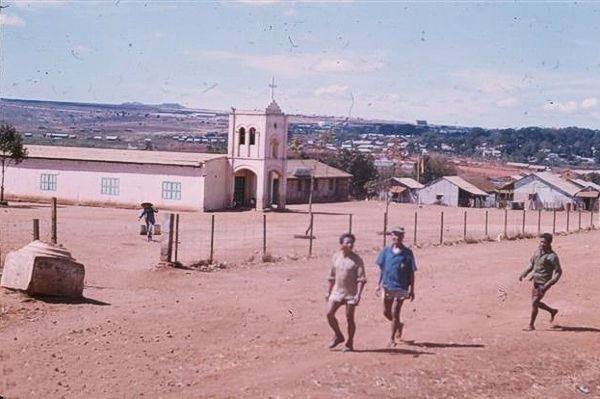
Thăng Thiên Catholic Church in Pleiku, Vietnam, 1962, Paul Purnell Collection
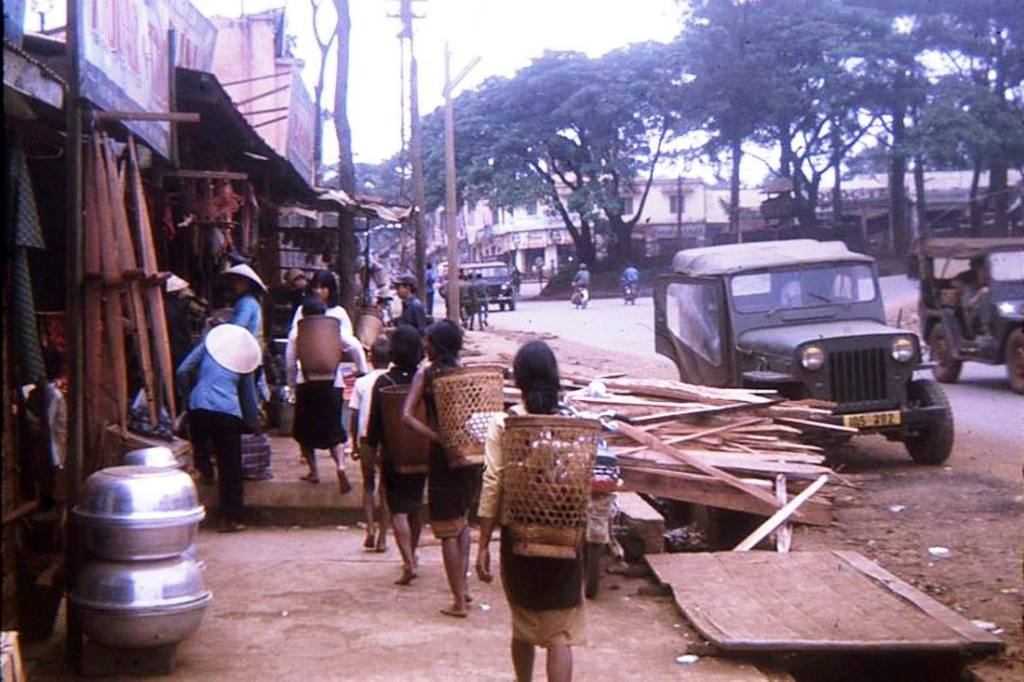
[The Montagnards] walk through town single file (out of habit from using narrow mountain trails) with baskets strapped to their backs and babies hung on their sides (and usually hanging on to a tit for dear life!). Or they squat around smoking weird pipes, their shaggy hair falling over their shoulders… an amazing sight! – Letter by David Noble, September 13th 1962
Montagnards in the city cente, unknown year
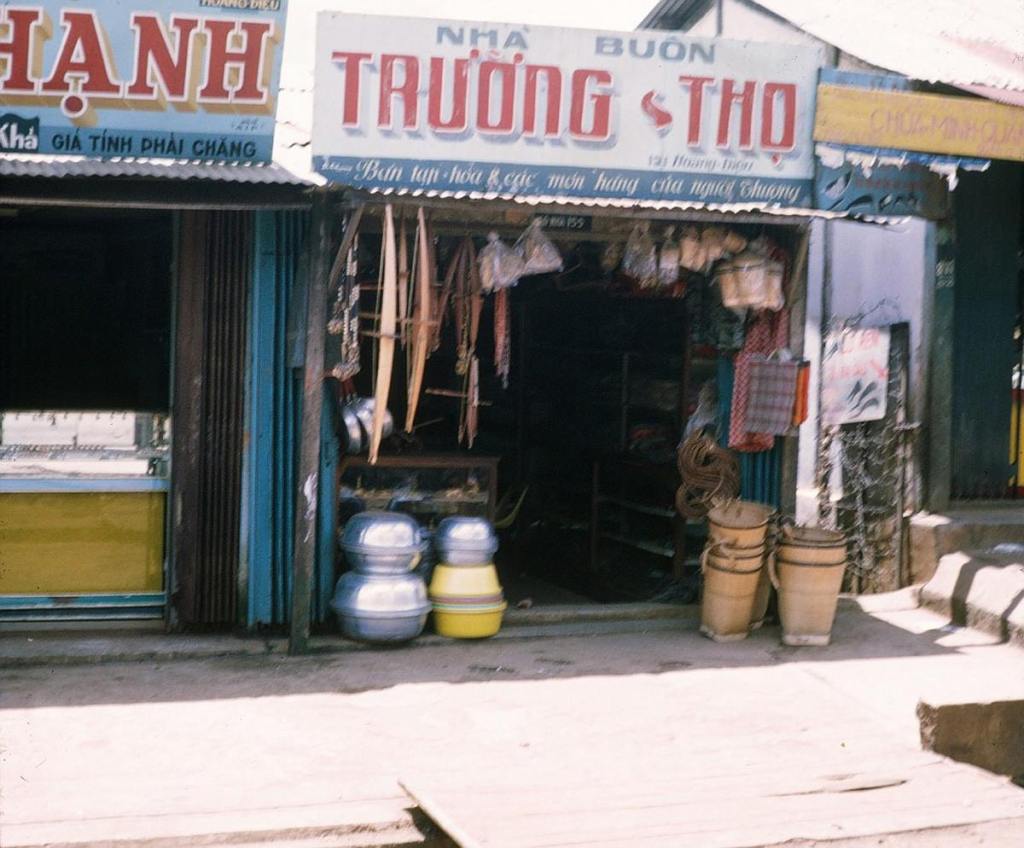
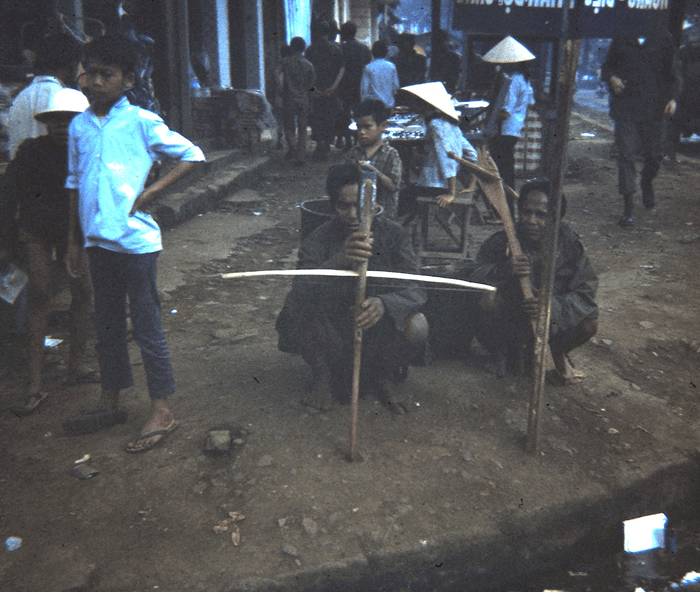
Montagnard women on Hoang Dieu, crossbows for sale at Truong Tho, unknown year but definitely later as there is a guard tower o the zero mile traffic island.
“Truong Tho” Crossbows for sale in 1967 on Hoang Dieu
Satisfied customers? Unknown street, unknown year
unpaved roads in the city center. A lot of cyclos, unknown street, unknown year
I frequented the Blue Spring Bar in Pleiku where, as in Saigon, two or three local girls would invite us to buy them shots of their colored-water beverage while we drank ba muoi ba, chatted with them, and tossed dice. – David Noble, Saigon to Pleiku
Pleiku was famous for being muddy, unknown street, unknown year
Hoi Phu
Hoi Thuong and Hoi Phu, now wards of Pleiku city, were separate villages in 1962 that actually predated the city itself. These areas were ramshackle affairs, likely growing up around the junction of roads QL14 and QL19.
Today, they are fully integrated into Pleiku, yet they still retain traces of their past which are arguably the most notable landmarks of the city (such as Minh Thanh pagoda and bờ kè embankment).
Thanh Tam church, 1962
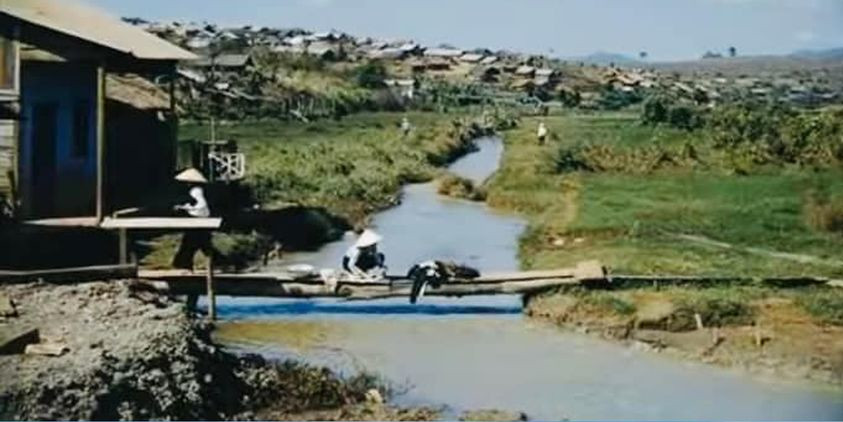
Hoi Phu Stream, unknown year
This is now Hung Vuong, looking looking down towards the turning for Nguyen Viet Xuan (notice then a dirt road) at the bottom then climbing to the junction by the Thanh Tam church, 1970
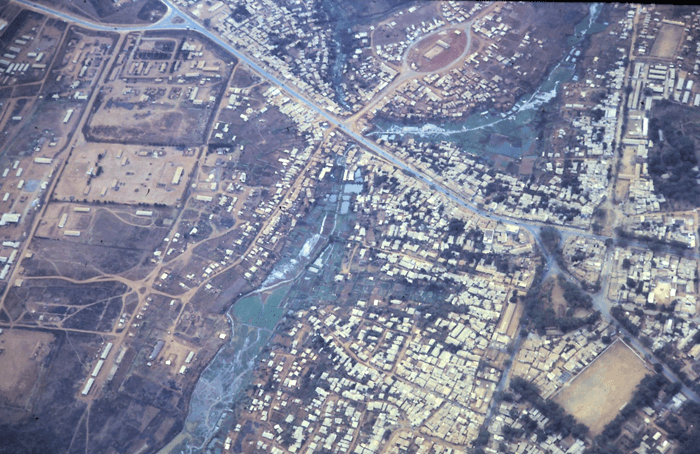
Areal view of Hoi Phu stream. Hoi Phu village on the left and Pleiku City on the right. Unknown year
Conditions for Soldiers
There were 6 of us Air Force guys working along side the Army guys who were working with the ARVN and the Montagnards in and around Pleiku.
At first, we ate from C-rations, dated 1946. Later we had a small mess hall where we ate a lot of powdered this and powdered that and lot’s of SOS. But, we also had some local foods like Papaya, Tea and Bananas.
We were housed in a mud hut with a tiled roof and a dirt floor. There were a couple of shutters with no glass, so we had plenty of mosquitos, bugs and snakes and rats everywhere to keep us company. We slept on cots with air mattresses with mosquito net on each cot. Didn’t seem to help much because the rats would somehow get under the nets and of course scare the daylights our of us, not to mention the gunfire and explosions nearby. To this day, I often wake up thinking of those rats crawling on me. Can’t get rid of that experience. I hate rats!!
But we also had a lot of rain to deal with. It was the beginning of the rainy season and we were wet all the time, it seemed, until September.
My buddy Rodney and I got back into the Village a couple of times but all I remember is getting a haircut one time and drinking some Ba Me Ba [sic]. This was a warm liter bottle of beer that had some formaldehyde in it. It was awful, and they told us not to drink it, but we did! There was also an opium den next to where we were. We stayed out of there, but what an eye opener.
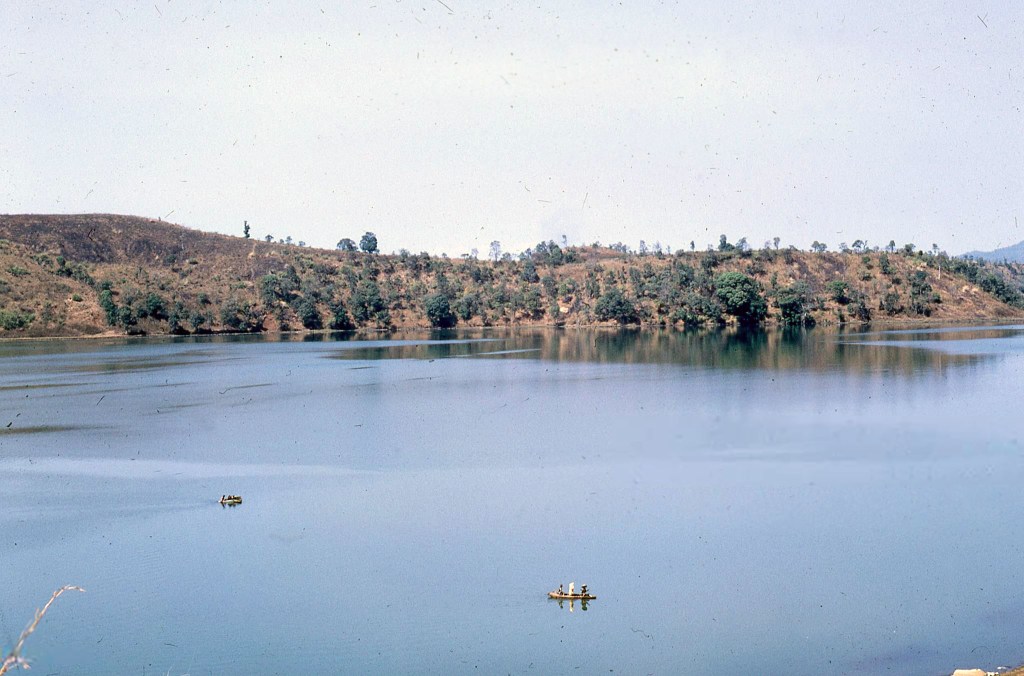
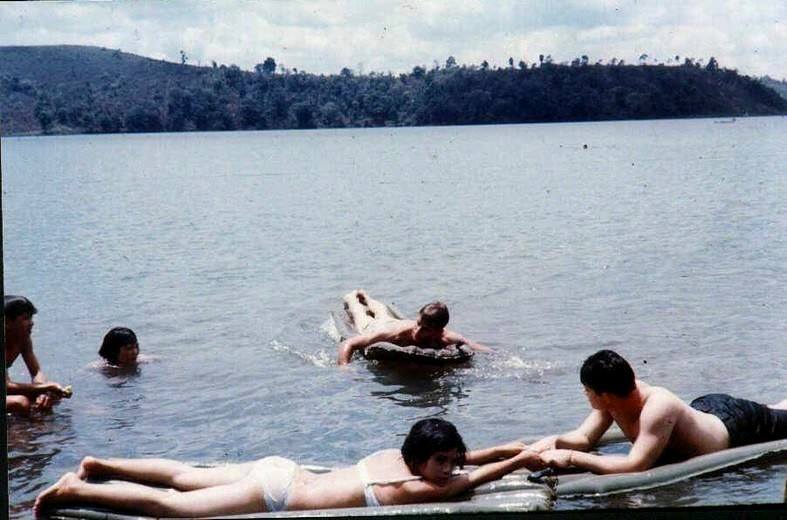
When the dust of Pleiku became overwhelming, residents and visitors alike could retreat to the serene Bien Ho Lake for some much-needed rest and relaxation. Although the pine trees it’s famous for today hadn’t yet been planted, this tranquil haven offered a perfect escape from the daily grind, where one could enjoy the calm waters and picturesque surroundings. Whether for a leisurely picnic or a dip in the cool water, Bien Ho Lake was the ideal spot to recharge. People weren’t afraid to get in the water like they are today.
High angle view over a body of water [definitely Bien Ho], on a sunny day, with two vessels full of people and parched brown and green hills in the background, courtesy of the 447th Medical Detachment Military Provincial Health Assistance Program (MILPHAP) team in Vietnam, 1965. (Photo by Stuart Lutz/Gado/Getty Images)
A day off on the lake, unknown year
A couple of times [Captain Bang] even invited me to join him and his family on Sunday picnic outings at nearby Bien Ho Lake, where the kids would paddle around in the shallows, and, out of the corner of my eye, I would watch Montagnard women bathing. – David Noble, Saigon to Pleiku
The City Today
Now, the streets of Pleiku are half familiar, half strange. The main streets are still those beloved roads. However, Nguyen Tat Thanh Avenue and the newly opened roads towards the west have made the old downtown area feel increasingly small. In the past, reaching the Kilometer 3 milestone or Phu Dong intersection felt far, very far. But now, even driving all the way along Pham Van Dong Street to Bien Ho still feels close… – HOÀNG TRẦN 11/05/2015
Someone who lived and taught in Pleiku for a while shared his thoughts when he revisited Pleiku after nearly 40 years: The Pleiku of the past in his memory is really no longer there, now the roads, houses, and urban landscape are completely different from before. The place where he lived and taught was known as “Pleiku – dusty sun, muddy rain” but now it is an urban area with a remarkable growth rate and change. – Nguyễn Quang Hiền 29/02/2024
During the urban development process, many trees planted since the establishment of Pleiku town in 1929 have been cut down and it seems that there is something unreasonable about the types and methods of planting urban trees. The expansion of roads and the scarcity of fuel have caused many pine trees nearly a hundred years old to be cut down. Early in the morning, if you walk on Hai Ba Trung, Hoang Hoa Tham, Quang Trung streets… you can see the “old” trees of the past still lying deep inside the sidewalk, quite far from the edge of the widened road. Looking back, we see that cutting down the old trees was a pity. Nguyen Quang Hien April 30, 2023
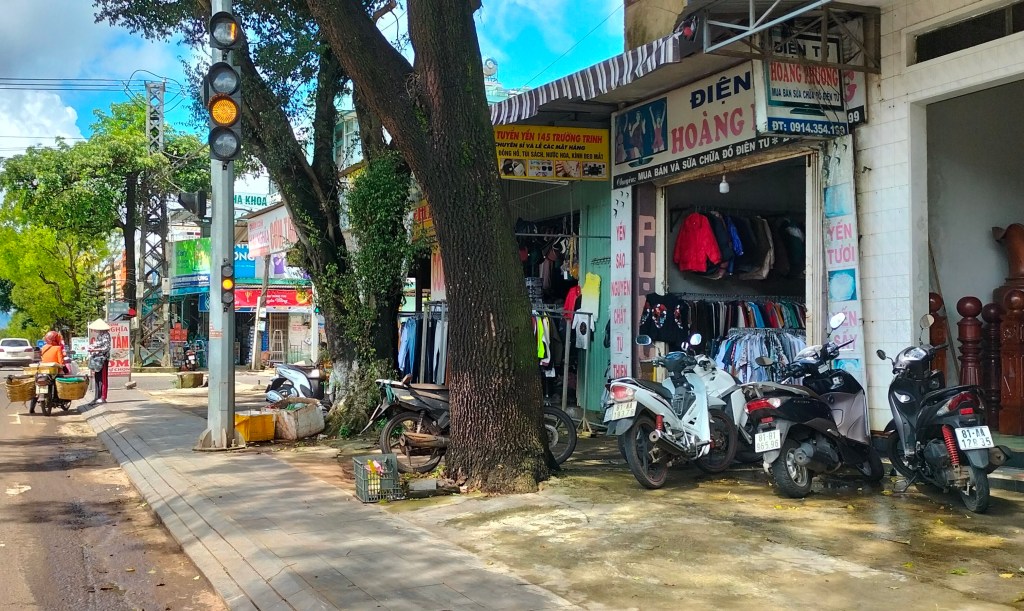
The city has changed a lot but every so often I catch glimpses that look like they could be from these old photos.
Embroidered jacket for sale on a tree shaded street. Photo by me, 29/08/2024
I’ll end on a poem written by Vũ Hữu Định about a 1970 visit to Pleiku to see his girlfriend. It’s entitled “Còn một chút gì để nhớ” (There’s little to remember). Translation thanks to Joshua Furler, original text here.
Mountain town high, mountain town full of fog
Mountain town has green trees, the sky is low and sorrowful
A strange visitor climbs up and down
fortunate to have you so that life remains sweet

Mountain town high, it reaches close to the heavens
A friendly atmosphere within streets that don't stretch far
In only a few minutes you can return to that old place
Every other afternoon there fills me with a deep melancholy

Pleiku girl with red cheeks and pink lips
Each afternoon feels like the passing of Winter
It leaves her eyes wet and her hair damp
Her skin soft like afternoon clouds

I am grateful to the city that has you
I am grateful for that soft head of hair
Tomorrow feels so distant, next to that hill on the border
I still have something more to ponder
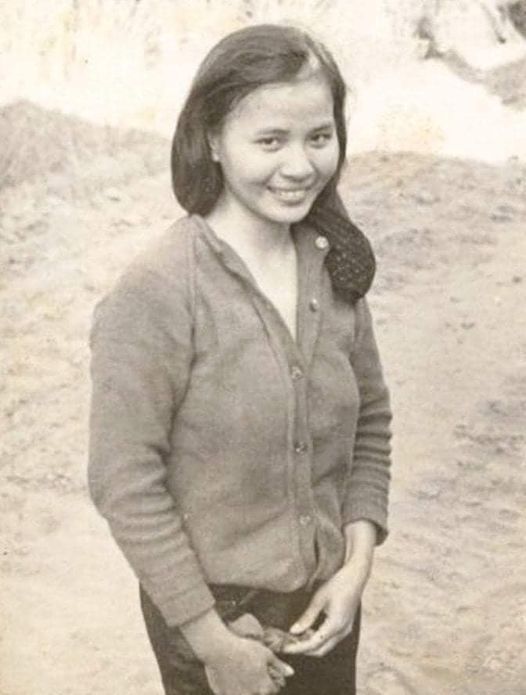
According to the Việt Luận (a Vietnamese Australian newspaper), this is the girl from the poem
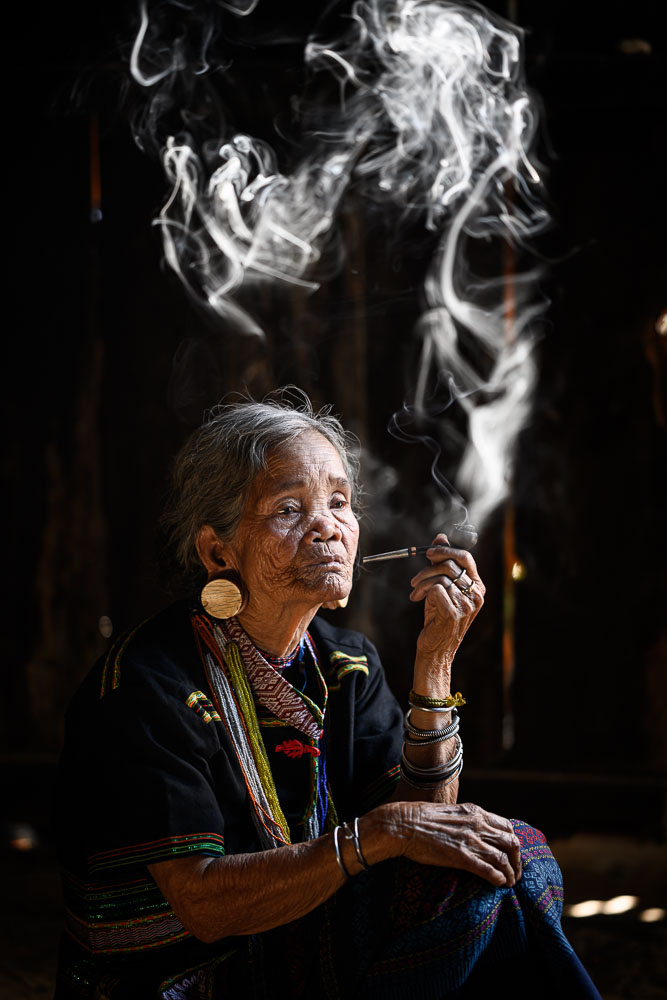
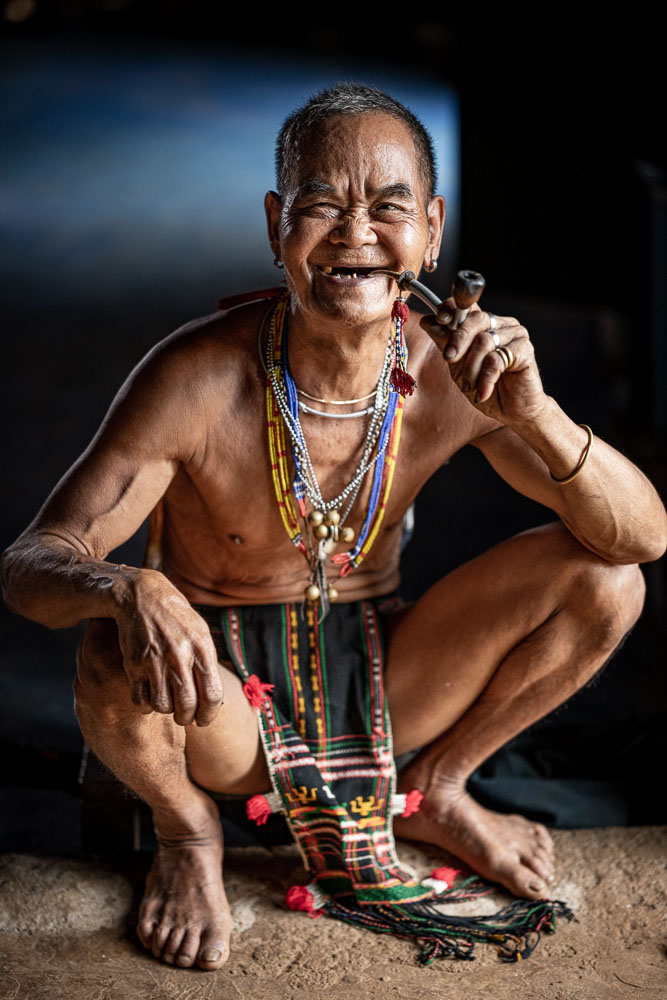
Mrs Pe of Kontum Province (brau group)Mr Brê of Lam Dong Province (Ma group)Highland people decked out in their jewelry
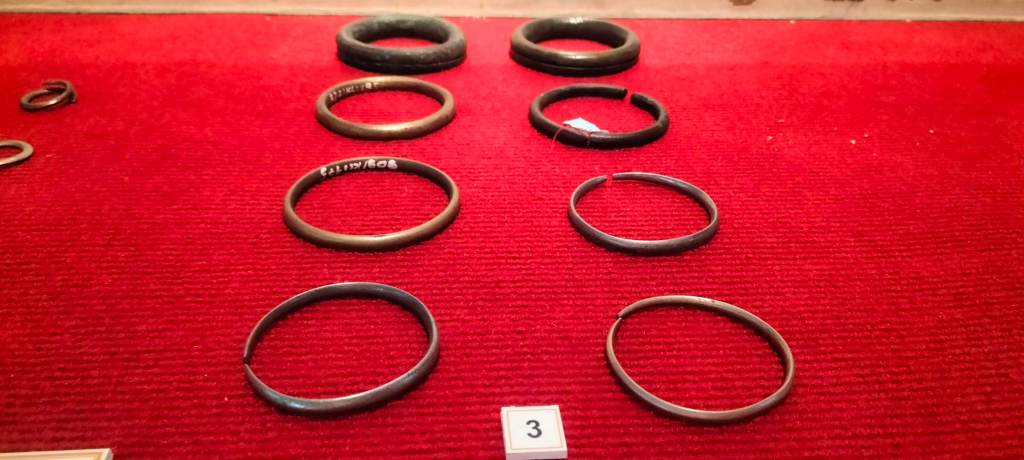
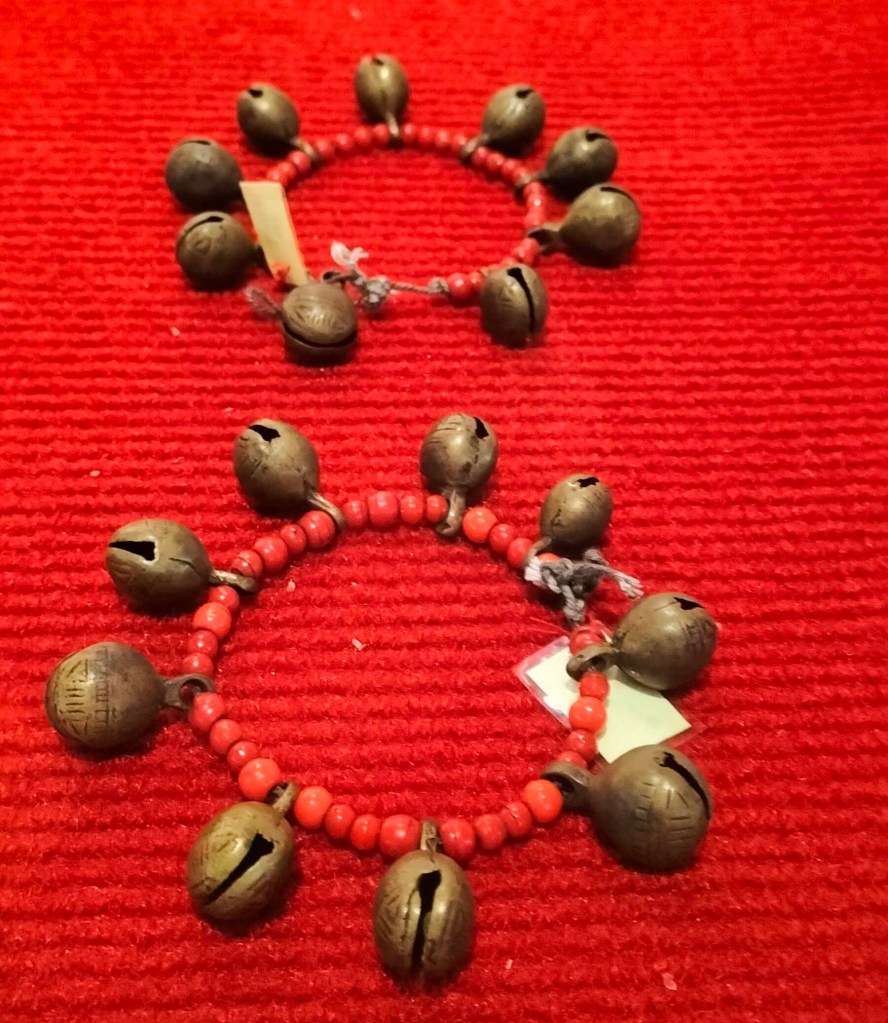
Jewelry plays a significant role in the cultures of the space of gong culture, including items like beaded bracelets, necklaces, metal belts, jingle bracelets, ear plugs, earrings, and torques. As in most cultures worldwide, this jewelry can be worn for purely aesthetic reasons or can hold deeper meaning for the individual on a personal level or social level.
Among this array of jewelry, simple metal bangles stand out as particularly culturally significant. In Vietnam’s Central Highlands, these plain bands, made of copper, bronze, or even silver, hold profound cultural value. Today, these bangles are not only worn by highlanders proud of their heritage but have also become prized collectibles for enthusiasts of Vietnam War memorabilia, for reasons we’ll explore below.
For many people, these bangles act as enduring symbols, mementos that are presented to encapsulate various important occasions such as rituals, promises and life milestones. I’ll explore three such rituals, though this is not an exhaustive list. Firstly, we’ll look at how bangles are used for protection and promote good health. Next, we’ll look at they are exchanged during sworn-brother ceremonies. Lastly, we will look at how bangles can play a crucial role in marriage ceremonies.
Bangles for Health and Protection
Mr. Y Yuin Niê in Ea Ngai commune, (Krong Buk district) said that after a very serious traffic accident, his parents gave him a bronze bracelet in the hope of recovering from the accident. And like a miracle, the bracelet helped him gradually stabilize his health and recover quickly. Every time someone in the family is sick, the Ede people wear a bracelet that has been blessed to help the sick person get well quickly. – 2021 source
The copper bracelet is like a witness of the yang to protect and bless the person wearing the bracelet. After making offerings, the copper bracelet will be engraved with a number of marks corresponding to the number of wine jars used for the ceremony, then brought to the owner, with a maximum of 7 engraved marks. – source
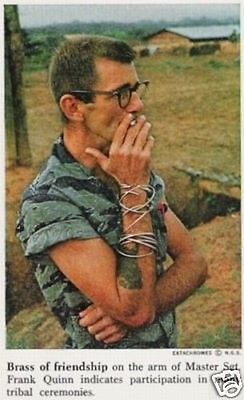
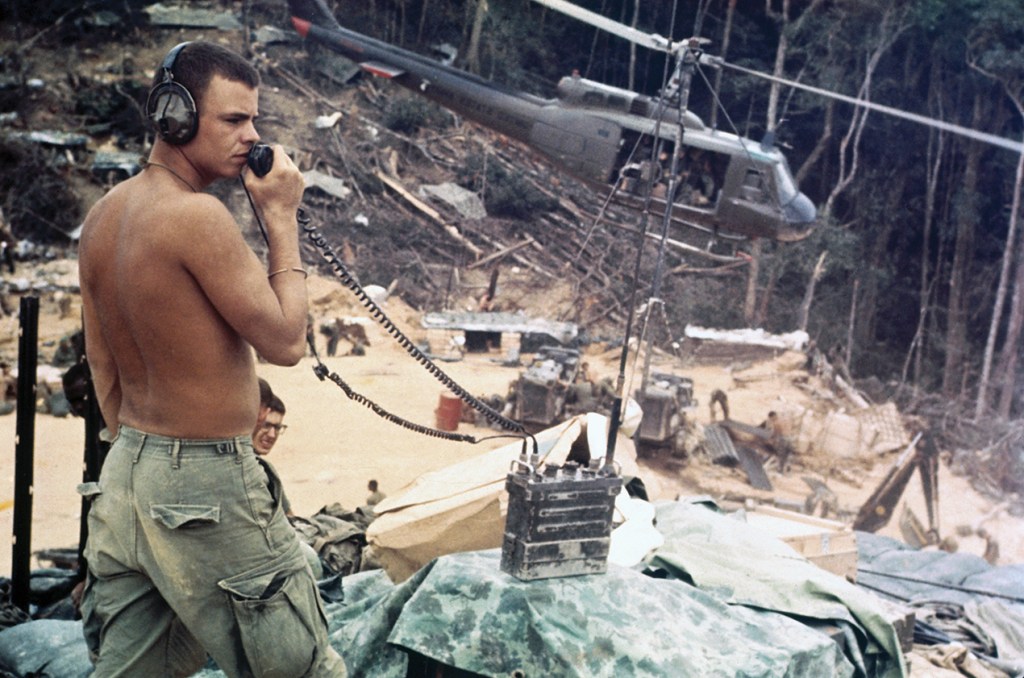
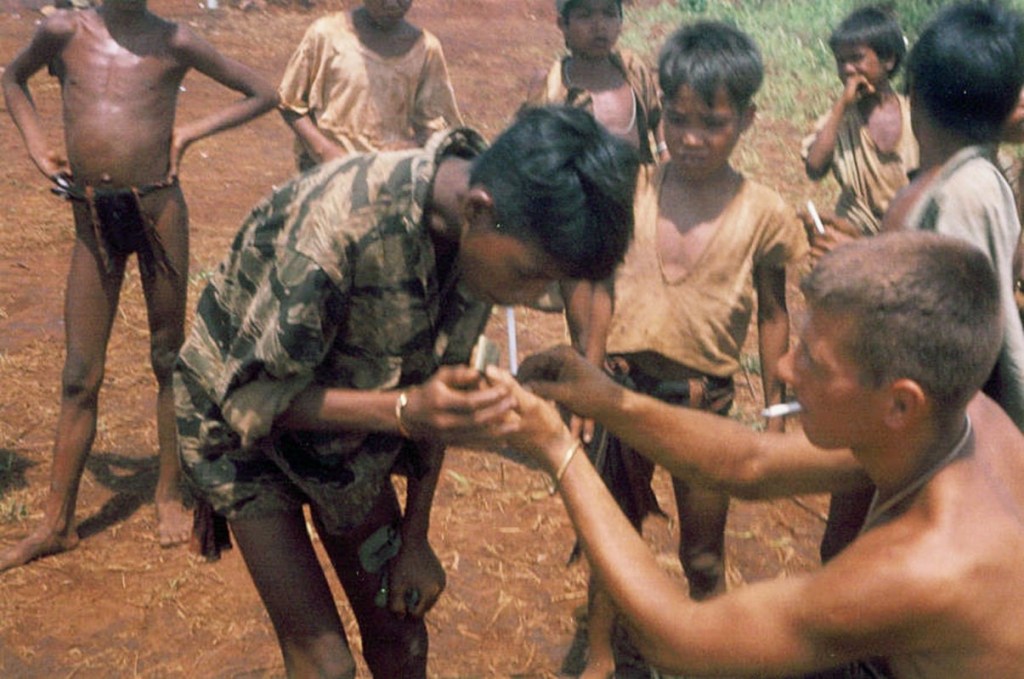
The protection these bangles offer may be spiritual in nature, however, during the war, for American soldiers, wearing such a bangle had a very tangible worldly effect; It allowed the indigenous highlanders to tell which individuals had demonstrated kindness and generosity to highland people, who were often called savages by the French and Republic of Vietnam. This lead to many Americans to refer to these as “friendship bracelets.”
Many of the green beret-boys wear a simple brass coil around one wrist—not to be fashionable, but for added life insurance. “A bracelet identifies you as a friend of the Montagnards,” explained Capt. Larry Brown at II Corps Hq. in Pleiku. “If you are out alone and get into trouble, the bracelet could make the difference in being rescued.” – STARS AND STRIPES • December 15, 1965
Radio repairman can be seen wearing a bangle Original Caption: Specialist 4th Class Stephen Haskins from Odon, Indiana, a Radio Repairman with the 101st Airborne Division, (Air Mobile) tests an AN/PRC 77 radio transmitter here. A Huey helicopter lifts off the landing pad in the background.
The cost of a bracelet…we paid for them in a lot of ways. Often they were gifts, sometimes a few cigarettes were traded, for the bracelet, some C rations were a good trade, sometimes we were given the bracelets for just being in the area. Montenyards were a generous people for all the ones I knew. – Steve Richey, on Mon, 19 Aug 2002
Were similar bangles given to soldiers and guerrillas from the North? I’m certain it must be the case, as there are many reports of individuals earning immense respect from the locals. Unfortunately, I have not found any contemporary writings or photos to confirm this. If you have any information or sources, please reach out and let me know!
Bangles in Sworn-Brother Ceremonies
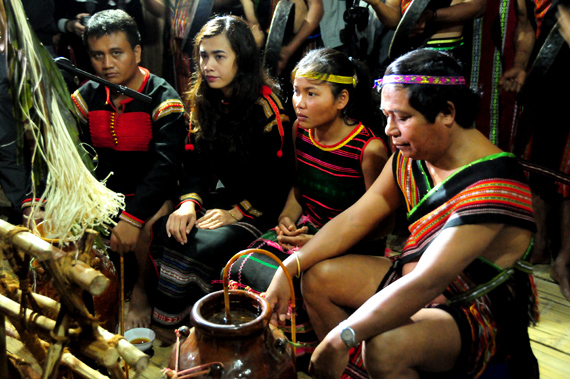
The second use of bangles is tomark brotherhood, known as “Jiang” or “Jiang Mah” in Jrai, which translates to “ally” or “sworn brother” (anh em kết nghĩa in Vietnamese). Historically, a Ptuh Jiang or Tuh Jiang ceremony involved animal sacrifice, drinking jar wine mixed with chicken blood, and exchanging bangles . The bangles represent an unbreakable promise (indeed they may also be used to enforce a promise of improved behavior after a misdemeanor). From the day they take the ceremony, the jiang brothers swear to help each other through thick and thin and the bangle acts as a reminder of that promise. I like to think of this ceremony as like a wedding for a “bromance”.
Anthropologist Jonathan Padwe observed this in Jrai culture in Ratanakiri, Cambodia around 2001. From interviews I’ve conducted in Gia Lai, older residents recall the ceremony from their youth, but it has become rare today. However newspapers still report it in Ede and Mnong cultures in Dak Lak.
Mr. Y To Bkrong said that when the Ede people love someone outside their clan and want to become a brother, they will hold a twinning ceremony. After worshiping, the bronze bracelet is given to the sworn brother. – source
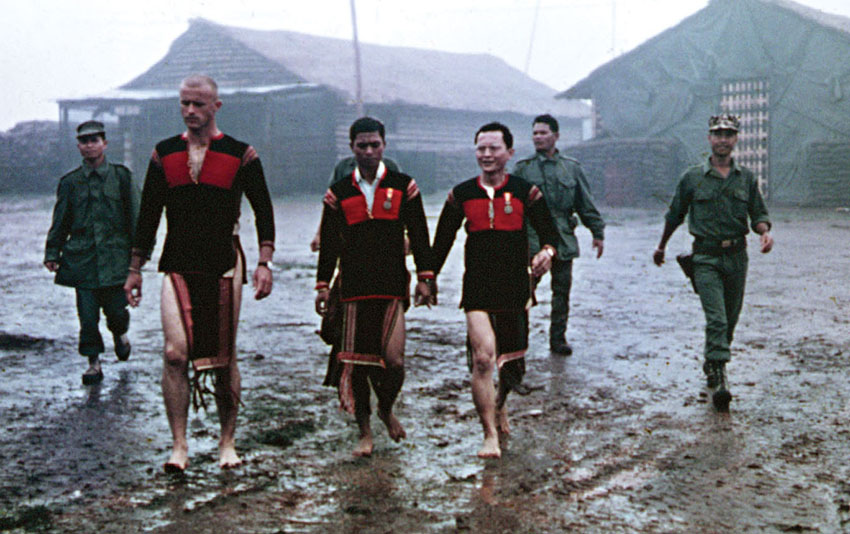
Captain Vernon Gillespie, Y Jhon, and Captain Truong, Bracelet ceremony – Buon Brieng, Dak Lak, 1973.
Y Jhon, Gillespie, and Truong stepped out, dressed in traditional Montagnard clothing for the two-hour ceremony. As Gillespie, Y Jhon, and Truong drank Nhom Pae through long reeds, a Montagnard shaman chanted and daubed their bare feet with the blood of the sacrificed buffalo to drive the evil spirits away. At the same time, “Montagnard women danced in the background to the tune of brass gongs.” When the ceremony ended, the shaman placed identical copper bracelets on the wrists of Y Jhon, Gillespie, and Truong to symbolize the bond of brotherhood and friendship. The three soldiers from different cultures were now joined together as allies – Howard James Sochureksource
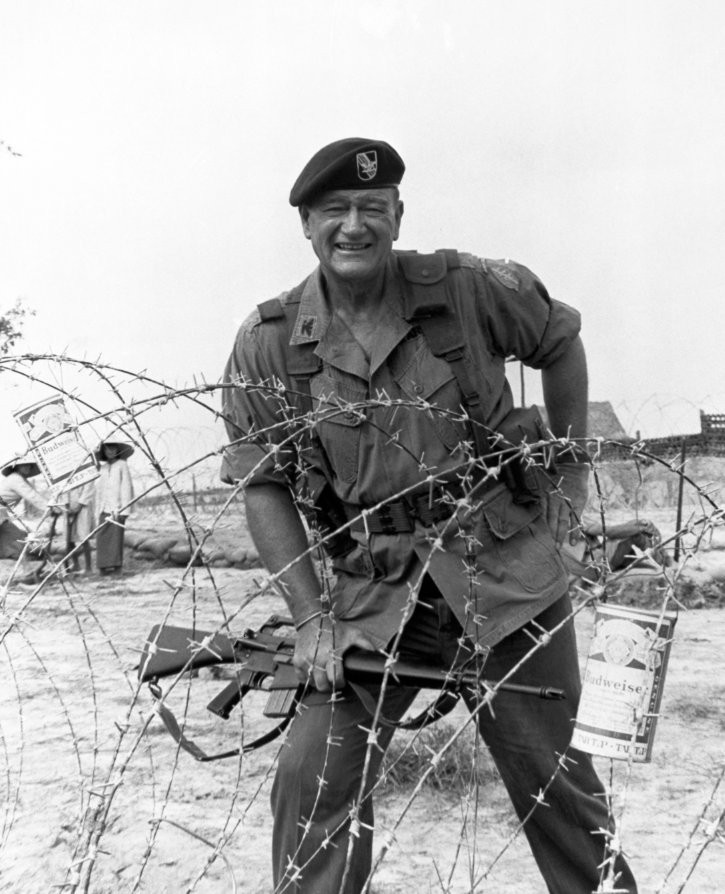
An interesting tidbit here is that the classic western movie star John Wayne visited the Gia Lai/Kontum area in 1966 where he was gifted one of the bangles as a sign of brotherhood. You can catch glimpses of the bangle in True Grit. Did “Duke” perform the full sworn-brother ceremony like Gillespie? I think it’s likely he did a modified version like David Noble describes doing in Plei Mrong in 1962.
the most famous gift Duke was given in Vietnam was the silver friendship bracelet presented by a Montagnard Strike Force unit, made up of indigenous Vietnamese soldiers. The bracelet was bent to fit his wrist, and he wore it for the rest of his life. – source
Much has been written about the movie star’s visit in preparation for the movie The Green Berets but sources are vague on the locations he visited. However, “Sergeant Gilbert Mumfort of the Fourth Infantry Division” is mentioned in connection with this visit. The 4th Infantry Division was involved in the battle of Dak To the following year. Additionally, there is a video that mentions Operation Hawthone, which also took place around Dak To so I think it’s safe to say he probably visited Dak To.
Movie star John Wayne in Vietnam, bracelet visible on his right wrist. Probably in Dak To
Bangles in Marriage
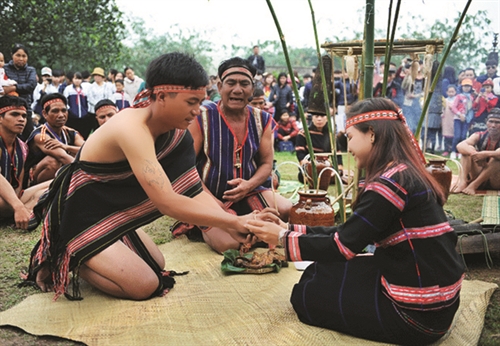
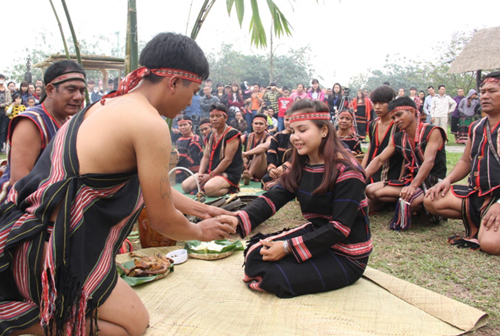
Another important cultural role of these bangles is their role in marriage. This practice, too, revolves around the theme of an unbreakable promise. A couple can exchange copper bangles that stand for fidelity and responsibility (source). Unlike some traditional practices that have faded over time, this custom remains common in 2024 although some Jrai I spoke to consider it old-fashioned. I think for those of us from a western Christian background its easy to see parallels with wedding rings.
The Gia-rai bracelet, in addition to its aesthetic function as jewelry, also performs a social function, has great significance in engagement, as the first sign of marriage….[A woman] pulls out a bracelet and asks the matchmaker (greng) to bring it and give it to her beloved. If the boy agrees, he will take the bracelet. If not, he will hold the bracelet for a while and then return it to the matchmaker. If the girl still pursues, she can ask the matchmaker to give her one, two, three more times until all hope is gone. If the boy accepts it, the matchmaker arranges a date to meet at a certain location for the girl to receive her partner’s bracelet. – source 2006
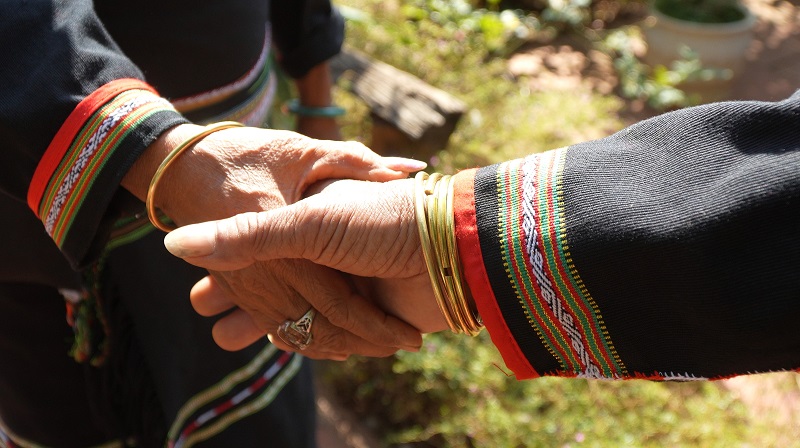
A Jrai couple (personal acquaintances of mine) from Pleiku Roh exchange bracelets
The cultural significance of bangles in Vietnam’s Central Highlands is rich and multifaceted. Whether for protection, marking brotherhood, or symbolizing marital union, these bangles are deeply embedded in Montagnard traditions. Despite the passage of time and rapid changes in the region, some practices endure. From their historical roots to their present-day relevance, these bangles offer a fascinating glimpse into the region’s fascinating cultural heritage.