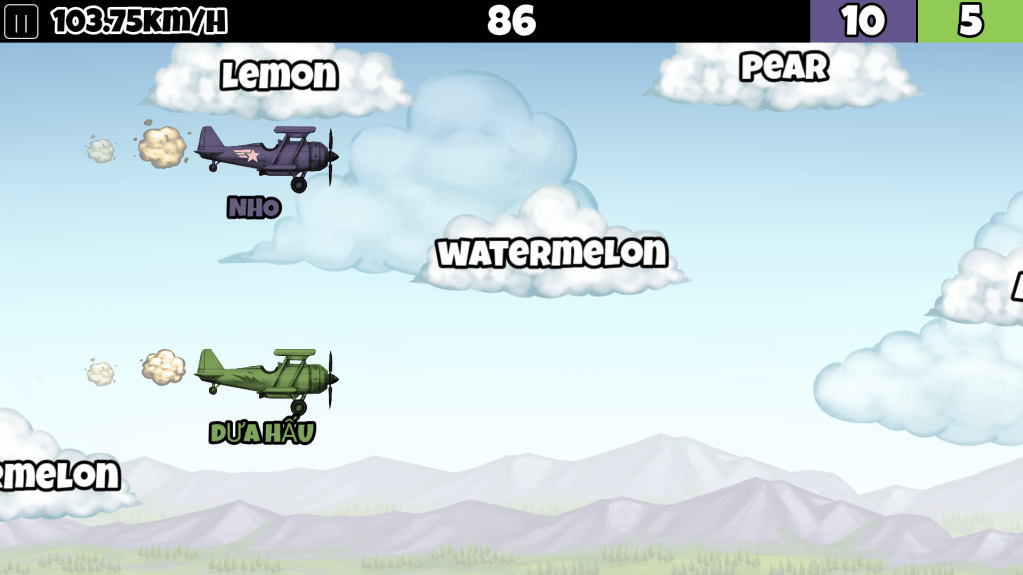
A few weeks ago, I started tinkering with the idea of a classroom videogame as a way to get more use out of the arcade computer peripheral device I made last year. After trying it out in a few classes, I began to realise the game had potential so I recruited an artist to create proper graphics (the kids who playtested it really cared about visuals) and got some feedback from friends.
So today, I’m officially announcing the launch of WordStrike. It’s a fast-paced classroom game that’s now available for free on itch.io (link to my game). You can play it with just a normal keyboard.
The idea of the game is simple: each player flies their plane into the cloud that matches the correct word. What I think sets it apart is the competitive multiplayer element and how easy it is for teachers to customise the content to fit their exact lesson completely free of charge.
It has been a real joy to see kids genuinely enjoying a videogame I’d made. I hope other teachers can use it in their classes too. It’s designed to be easy for kids to learn and quick for teachers to set up. Two students can play at once, but you can also split the class into teams to keep everyone involved.
I’ve made videogames before for my own enjoyment, but this is the first one I’ve polished to this standard and felt happy to share with the world.
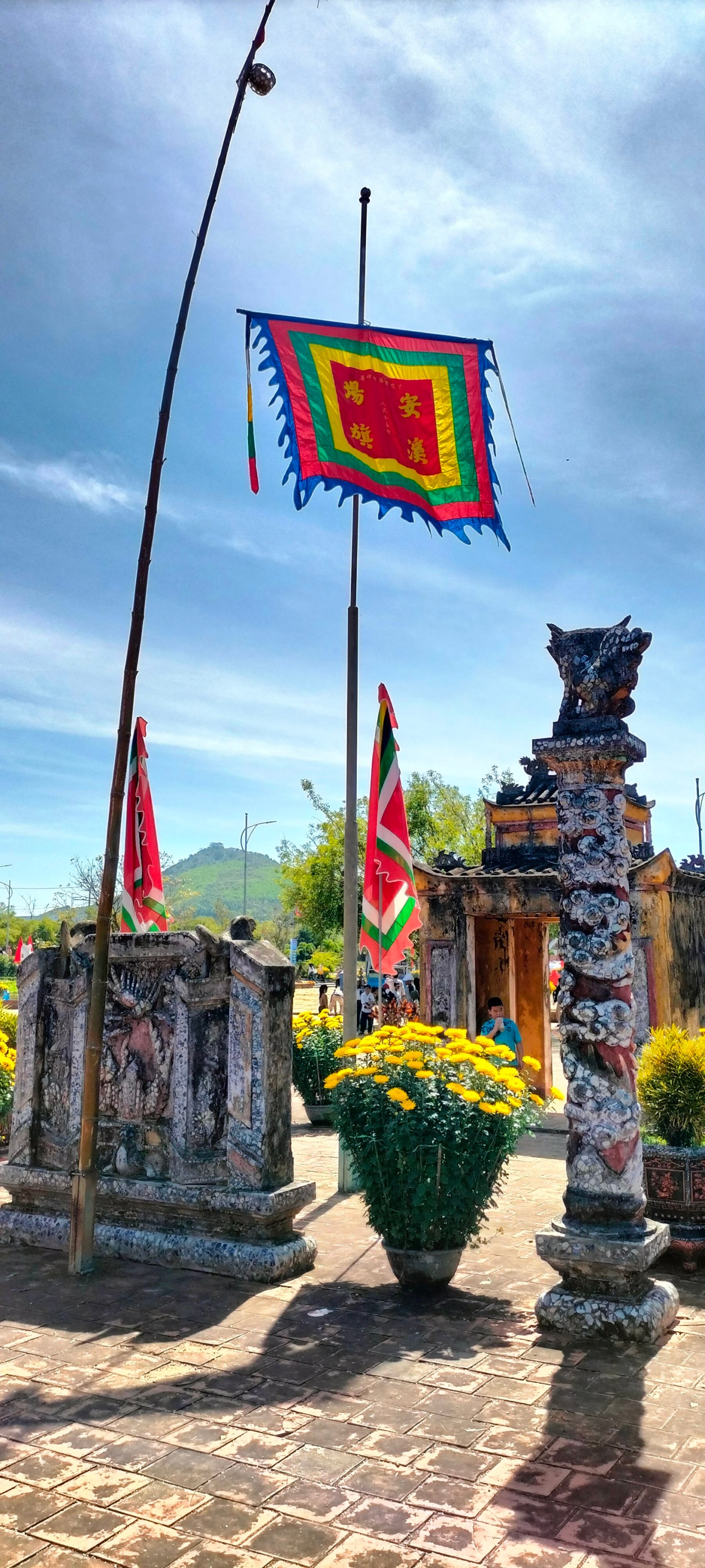
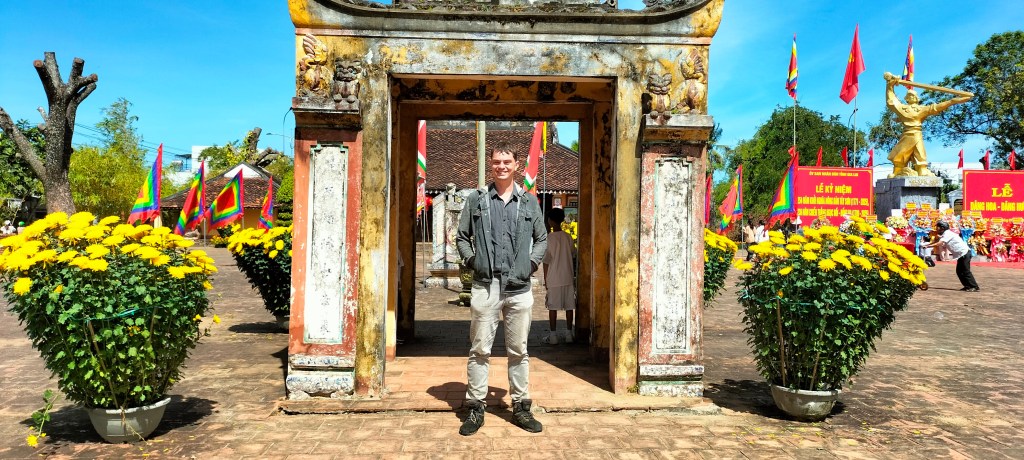
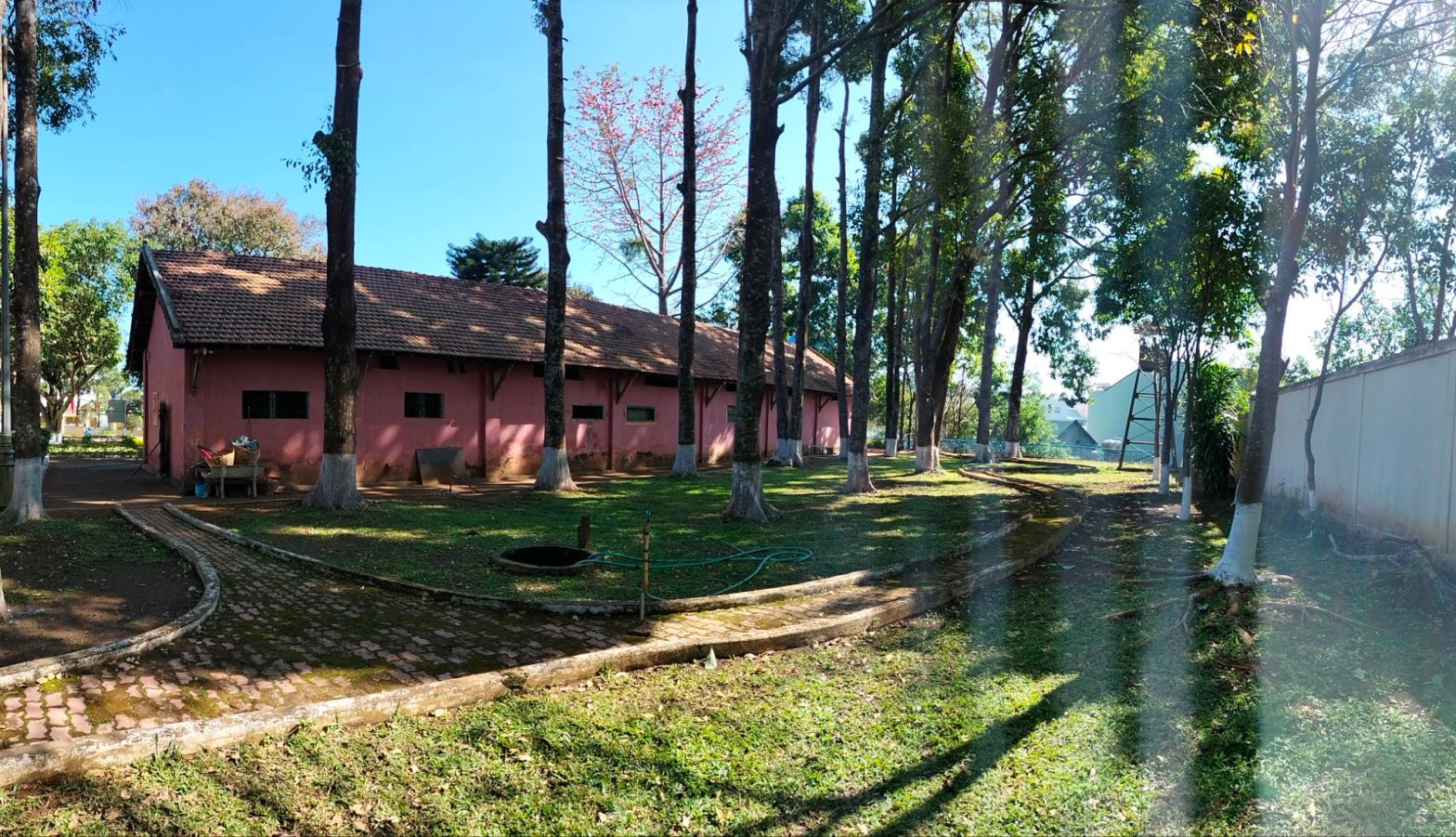
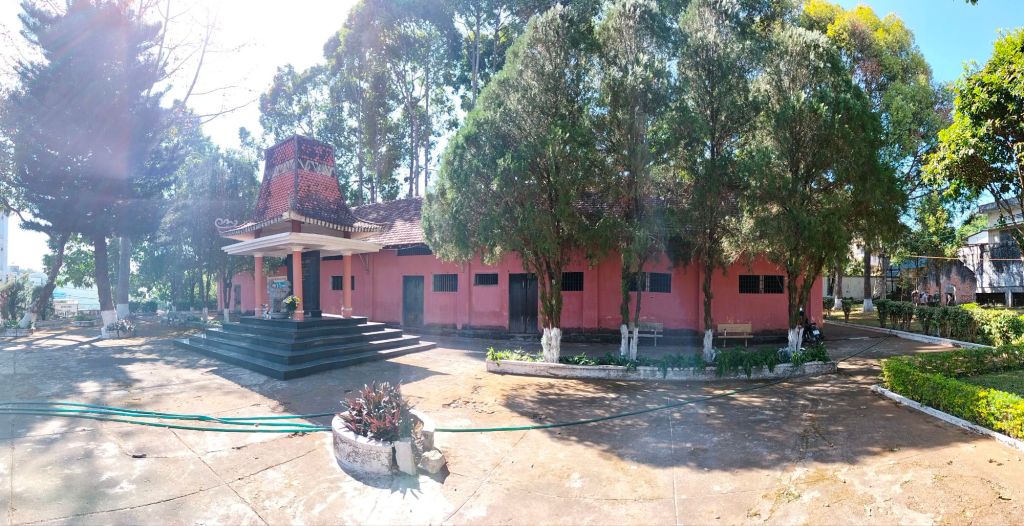
One thing I love is visiting historic sites. Another thing I love is the central highlands of Vietnam. And it’s exactly those twin passions that brought me to the town of An Khê. There sits, right in the heart of this town, perched not far from the Ba River, the venerable site of Tây Sơn Thượng Đạo—a military training ground built about 250 years ago, now a national monument. During Tet holiday 2025 I came here to learn more.
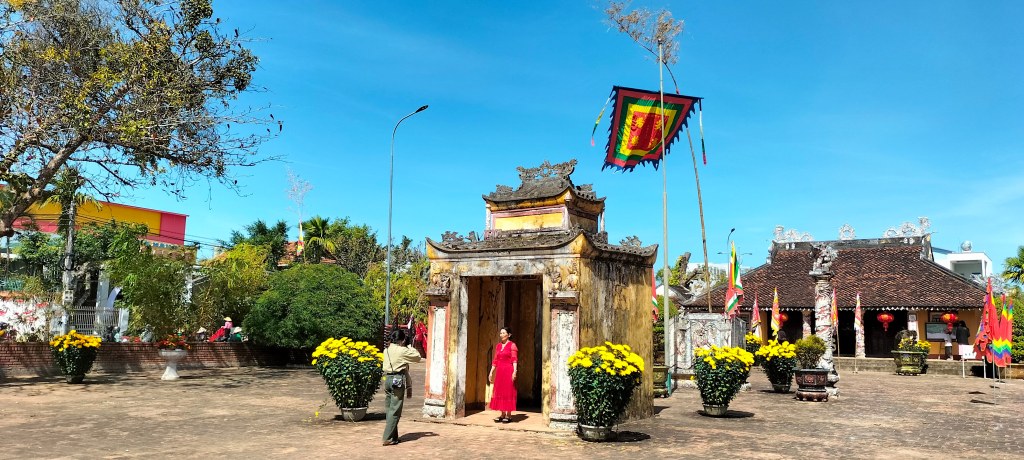
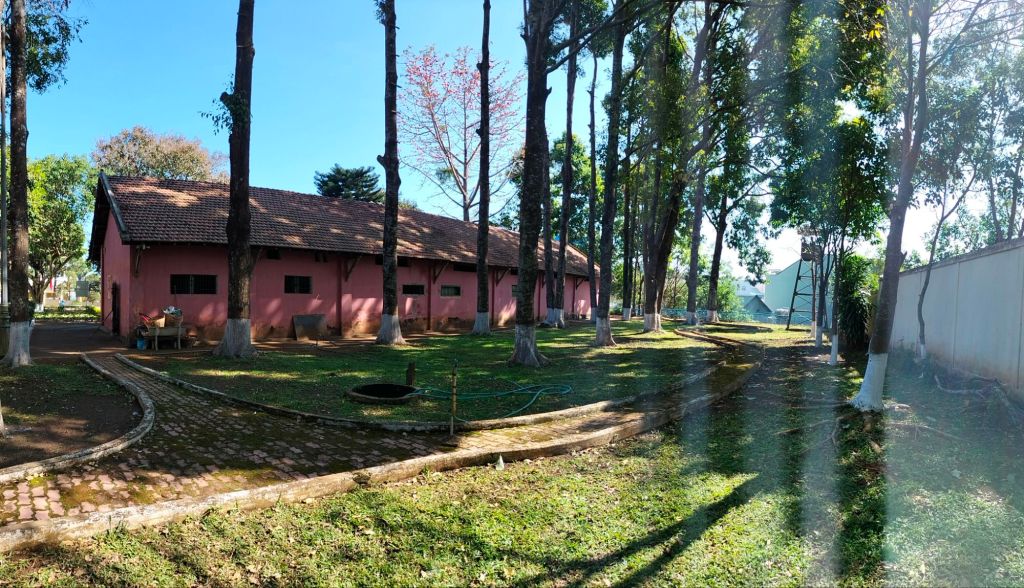
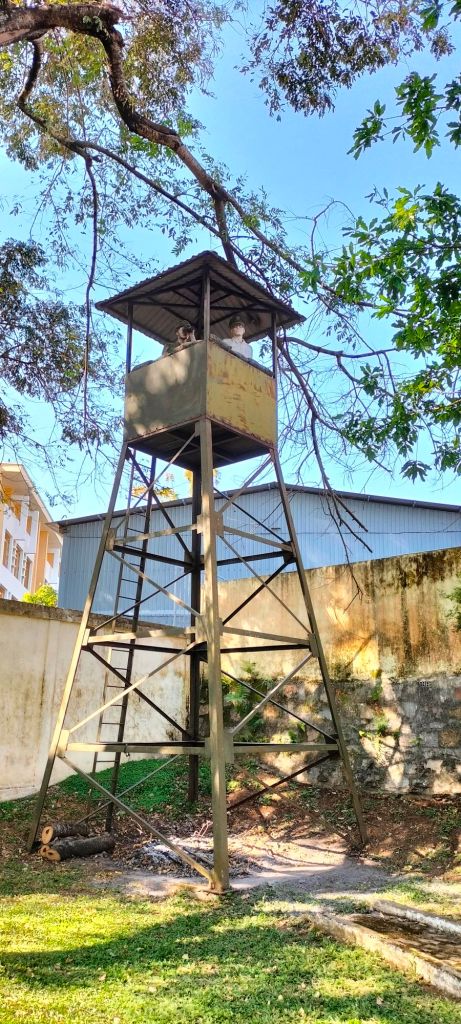
At first glance, the place might be underwhelming, especially if you’ve seen old Vietnamese sites in Hue, Hanoi or Ninh Binh. There are a modest cluster of buildings in the familiar style of Vietnamese temples, a sun-scorched courtyard, a handful of statues and exhibits— and that’s about it. Yet being one of the few places with historic remnants in the highlands of Tay Nguyen makes it a rare treat for me to visit.
Today, An Khê is a toilet break on a road-trip between Pleiku and Quy Nhon cities. But in the mid-18th century, it was a wildwest frontier, just beyond the western edge of imperial control. Getting here from the lowlands meant ascending the An Khê Pass—a steep, winding climb that even now is spectacular but challenging. But it was precisely this location, at a strategic crossing of the Ba River and near tribal trade routes, that made An Khê ideal as a mountain fastness.
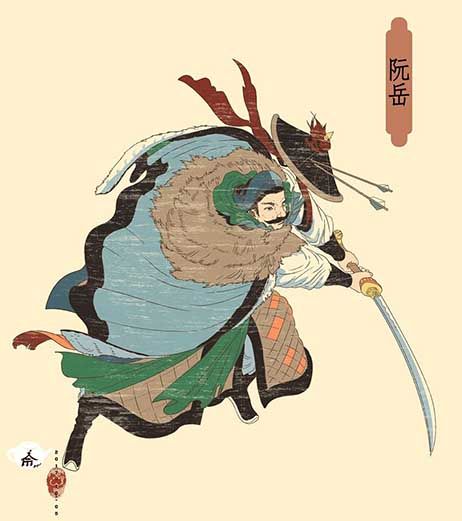
The site was founded by a man named Nguyễn Nhạc. Nguyễn Nhạc was born to a family of traders in Tây Sơn, Bình Định, working the wild frontier between lowland Vietnam and the highlands beyond. He likely knew An Khê well from his time bartering goods with the Bahnar and Jarai peoples—betel nuts for salt, forest goods for rice. In a country fractured between the Trịnh Lords in the north and the Nguyễn Lords in the south, he saw the hardship of ordinary people. Originally a tax collector, he grew into a kind of Vietnamese Robin Hood—redistributing wealth, resisting corruption, and gaining a following. The name Tây Sơn Thượng Đạo literally means the “high road” of the Tây Sơn, and Nguyễn Nhạc seems to have been a virtuous man by all accounts – taking the high road in more ways than one.
modern artists impression of Nguyen Nhac. by: “teapot”
When Nguyễn Nhạc and his brothers launched their armed uprising, An Khê was a strategic choice. Tucked behind the steep slopes of the An Khê Pass and straddling the vital crossing of the Ba River, it offered both protection and access. But location alone wasn’t enough. It was Nguyễn Nhạc’s leadership—his charisma, his deep roots in the region, and his trusted relationships with local highland tribes, especially the Bahnar—that made it possible to gather a unified rebel force here. Without that rare combination of vision and local knowledge, the rebellion might never have taken root in such a crucial place—let alone succeeded.
Nguyễn Nhạc and his brothers would go on to reshape Vietnam’s political landscape—defeating the southern Nguyễn Lords, toppling the northern Trịnh, and establishing the Tây Sơn Dynasty—a more stable chapter of Vietnam’s history.
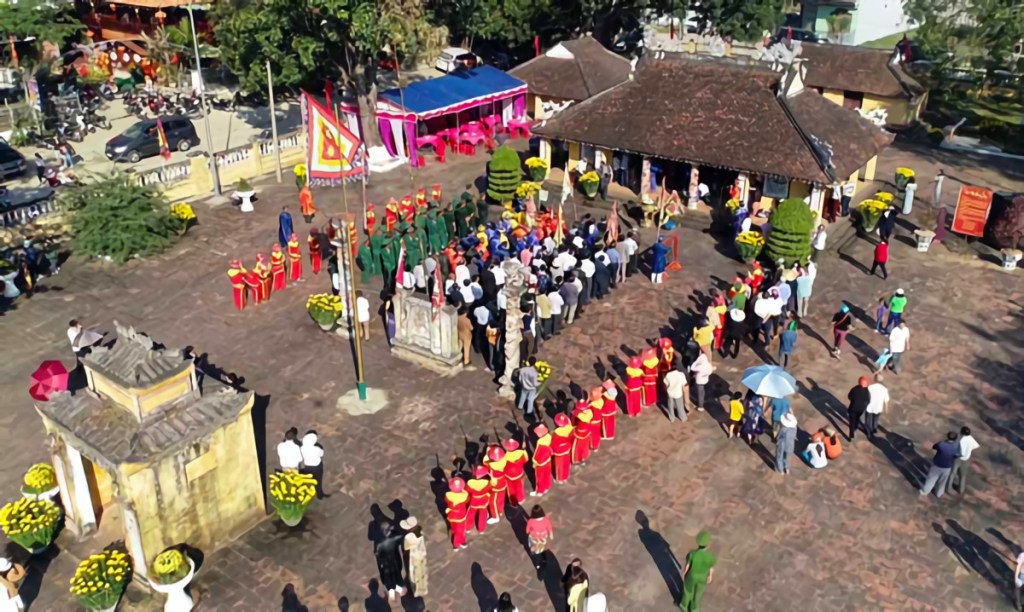
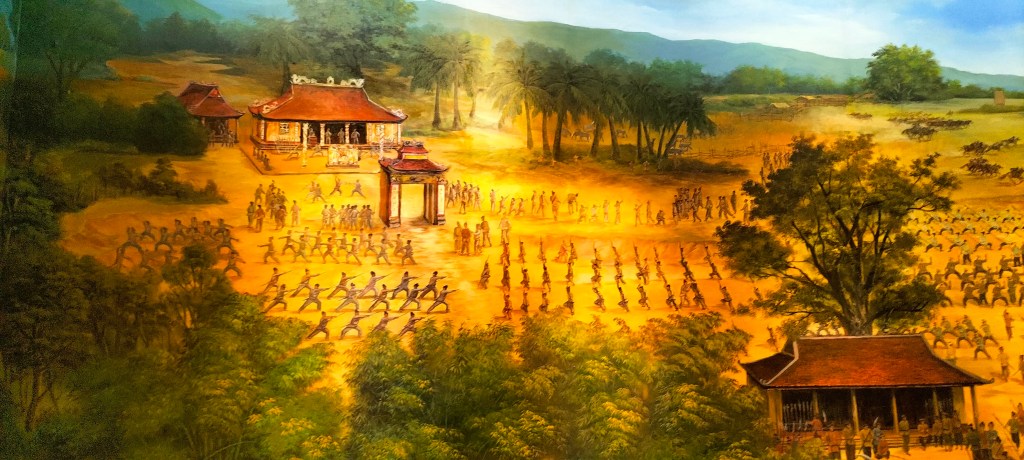
Artists rendition of Tây Sơn Thượng Đạo in the Quang Trung museum, Tay Son
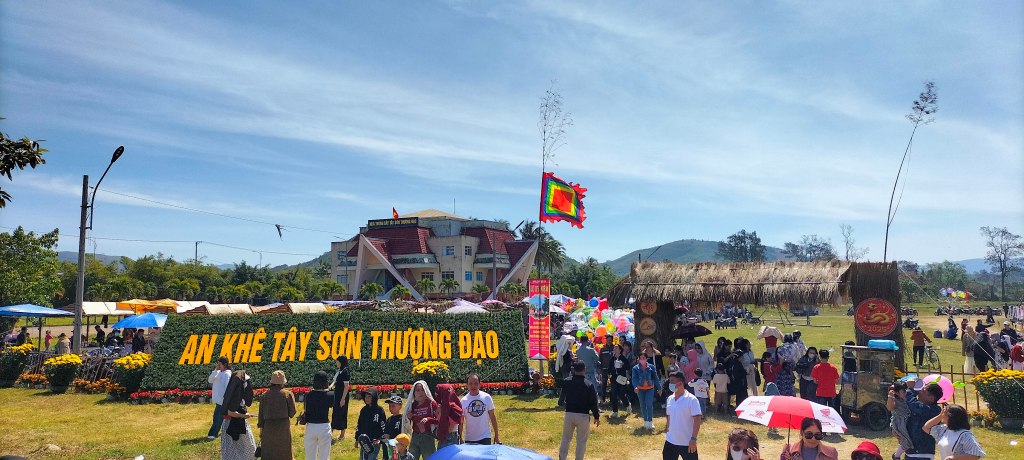
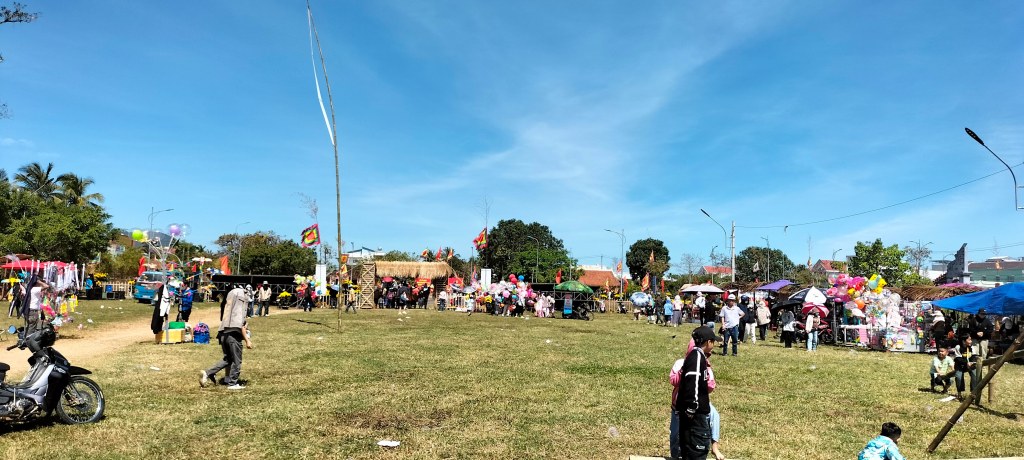
These days, Tây Sơn Thượng Đạo draws visitors from all over the country, especially during the week long national holiday for Tet – Vietnamese New Year in spring. Tet holiday happened to be the time I had off work to visit this site and I was pleasantly surprised to find a fair set up in the field and a very festive atmosphere. Visitors could buy Bahnar food, local produce, and there was even a stand offering traditional Vietnamese calligraphy. To me, it was the perfect encapsulation of the areas diverse history.
It’s not hard to see why this site still resonates with the Vietnamese people. The people rising up to express their displeasure with the running of the country is a recuring theme in the history of Vietnam as much as anywhere – and of course the most recent time that happened is still very much in living memory. In that way, the spirit of Tây Sơn lives on.
Whether you’re a history lover, a curious traveler, or someone looking to get away from the more famous tourist sites — I suggest you stop in An Khê. Walk the grounds where a rebellion once stirred. Cross the Ba River where traders and rebels once passed. Stand where Nguyễn Nhạc trained his troops who would change the history of the nation forever.
bahnar foodcalligrapher writes new year wishes for some childrenstopped by again 01/11/2025 and got some more shotsstopped by again 01/11/2025 and got some more shotsstopped by again 01/11/2025 and got some more shots
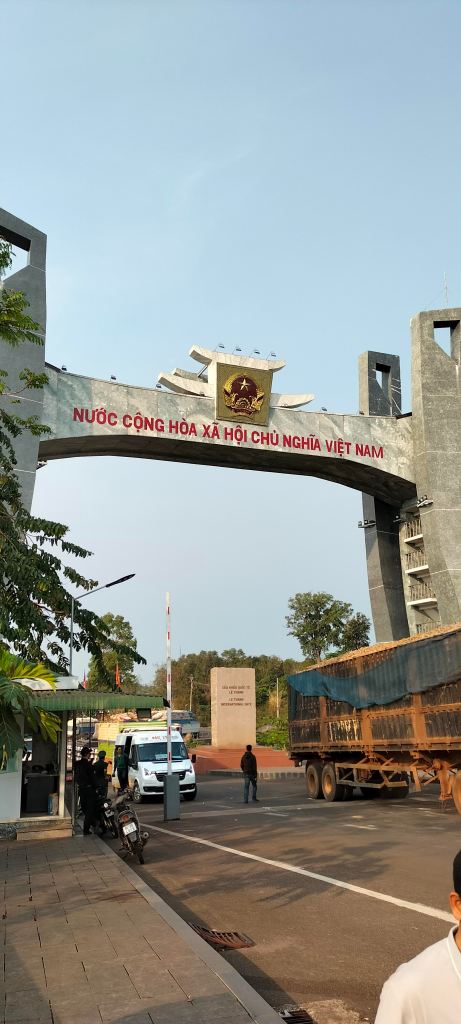
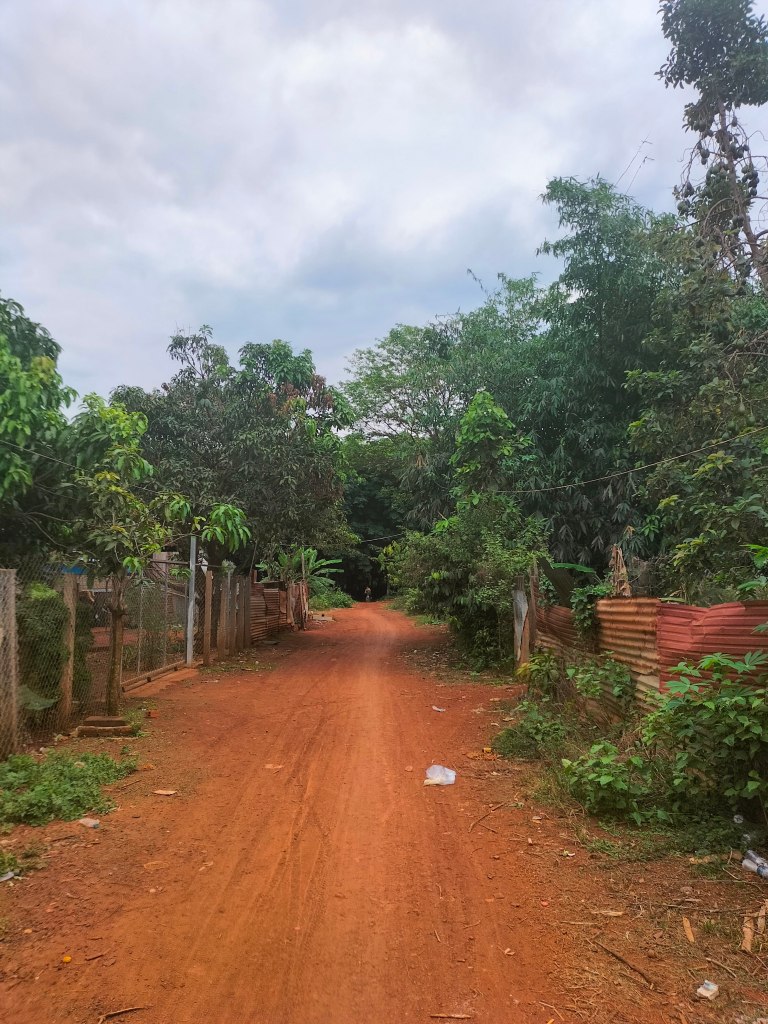
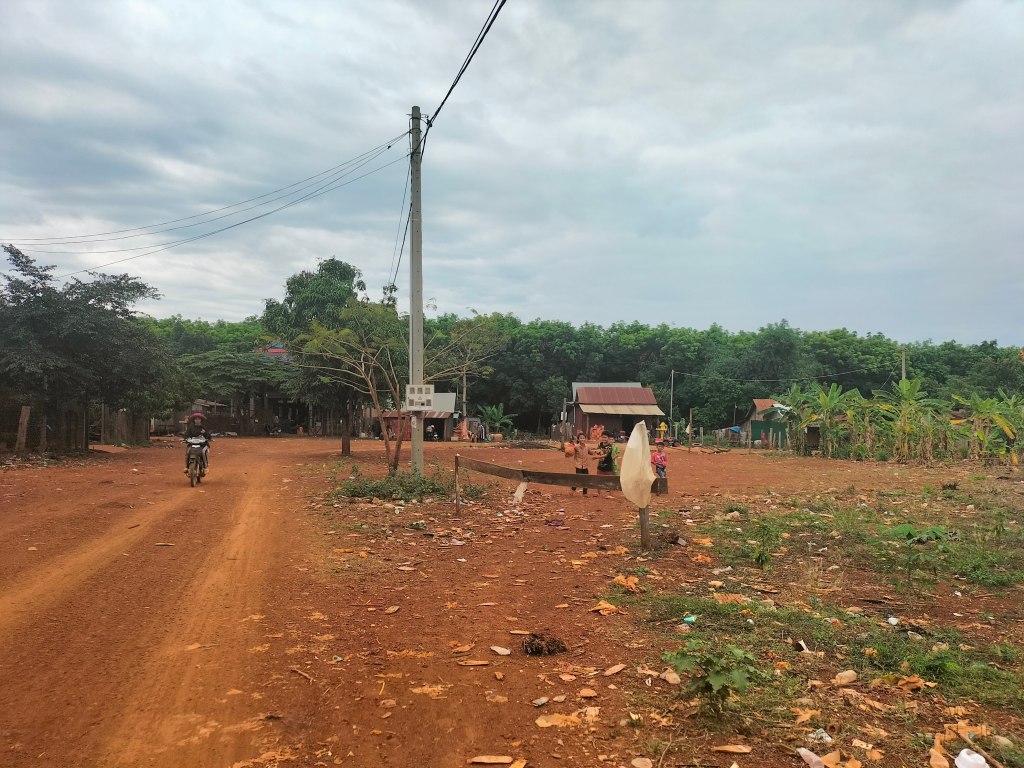
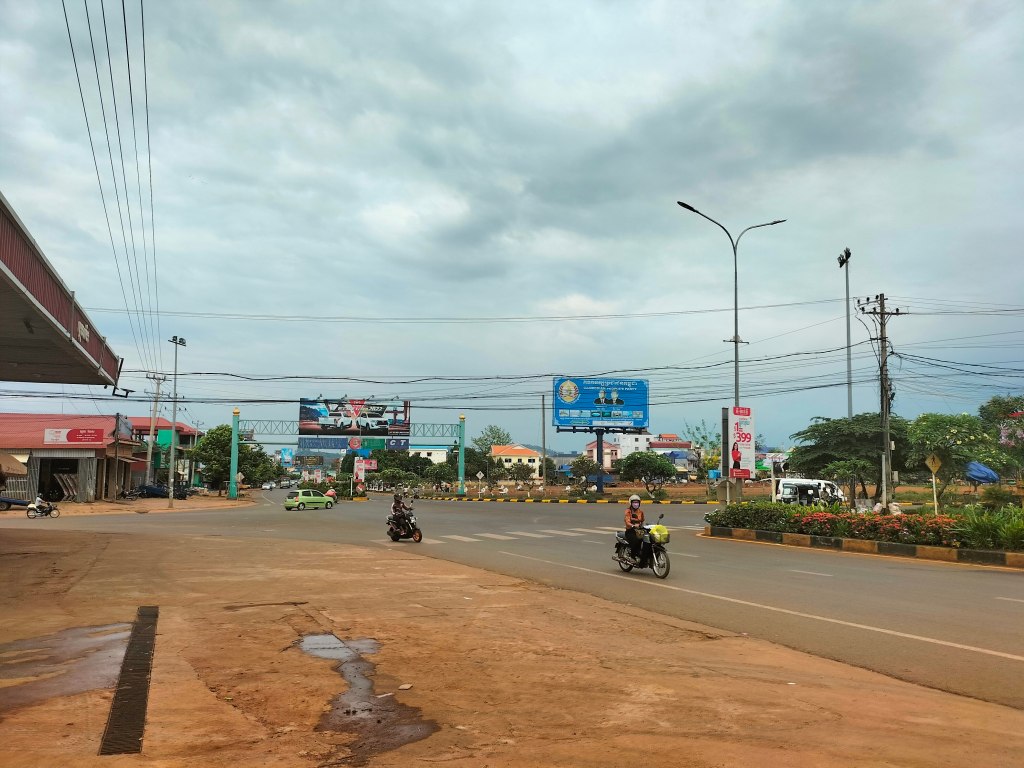
With my VUS campus still very new when I joined two years ago, it’s been tough finding time to get away from the six-day workweeks. But I finally managed to stash a few overtime hours, and so I decided to do something different: I crossed the border from Gia Lai, Vietnam, into Ratanakiri Province, Cambodia. It’s a short trip, geographically speaking—just seventy miles—but one that feels significant. Ever since moving to Pleiku I’ve looked westward and wanted to cross the border into Cambodia from here. I have actually visited once before, during COVID, but that involved a flight to Phnom Penh and a painfully long coach ride north. This time was blissfully simpler: a three-and-a-half-hour VIP minibus ride from Pleiku City to Banlung City, with a smooth border crossing along the way. Besides crossing the border here somehow feels more significant.
I might be the first non-ASEAN passport holder among my Pleiku acquaintances to try this route. Everyone was interested in how it would go. I half-expected to be turned away at the border, but for 300,000 VND, the Vietnamese company’s minibus whisked me to the crossing in under two hours. We arrived to find plenty lorries carrying produce but few other travelers. An almost comically empty duty-free shop beckoned on the Vietnamese side, and an equally quiet visa office greeted me on the Cambodian side. A quick form, a $30 USD visa fee, and we were off again, arriving in Banlung ahead of schedule.
The border gate between Vietnam and Cambodia near Pleiku
Despite its remote location, Banlung welcomes travelers with an infrastructure that suggests it’s not quite the undiscovered gem visitors like to think. I meet plenty of tourists here—far more than in Pleiku—who insist they’re “avoiding tourists,” which makes me smile inwardly. Banlung’s tourism industry is quite developed, with a wide selection of tour-guides, homestays, and restaurants that cater to English speakers. It’s true that it’s a good place for anyone wanting to dodge the thronging crowds of Siem Reap or Hoi An, but let’s be honest—it’s not exactly an undiscovered frontier. I’ve learned that if you truly avoid tourists, you also avoid the amenities that make travel fun. I’ve been to small towns with zero tourism, and trust me, they can be pretty dull when you’re craving a decent meal or a comfortable bed, especially if you don’t speak the language.
banlung suburbs streetbanlung suburbs streetmy first impression of banlung in 2022all of banlung viewed from a hillSome ethnic tourist attractions near Banlung, the people here are closely related to those in Pleiku
One thing that really surprises me about Ratanakiri is its unexpectedly fancy supermarket called Setra—much nicer than anything I’ve seen in central Vietnam. My guess is it’s here for Chinese workers in the area, but its shelves boast all sorts of international goodies, including HP Sauce! Naturally, I stocked up on herbs, sauces, and a variety of beers from Thailand and Laos to share with my homestay hosts.
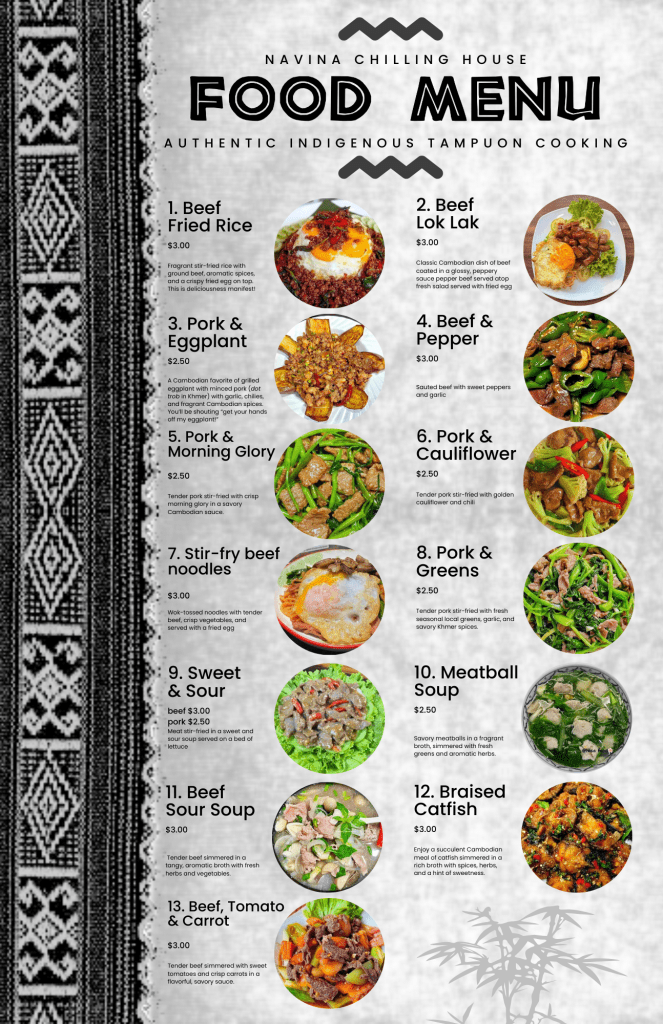
Speaking of which, I’m staying at a homestay run by the Tampuan, an indigenous Bahnaric-speaking group. I even catch a few words that sound suspiciously like Jrai, my second language in Pleiku. The homestay is listed on Booking.com and Couchsurfing; you can either pay for your room or work in exchange for it. We hadn’t agreed anything in advance but I ended up not paying in cash—I helped with light chores and used my laptop to design them a menu, assist Yok (one of the hosts) with his English CV, and create a collage of past guests for the wall. I’m no graphic designer, but knowing how to use Canva feels like a superpower out here. It makes me realize how many skills we take for granted—tools that seem trivial to us but can be game-changing in a place like this where few people even have their own PC or laptop.
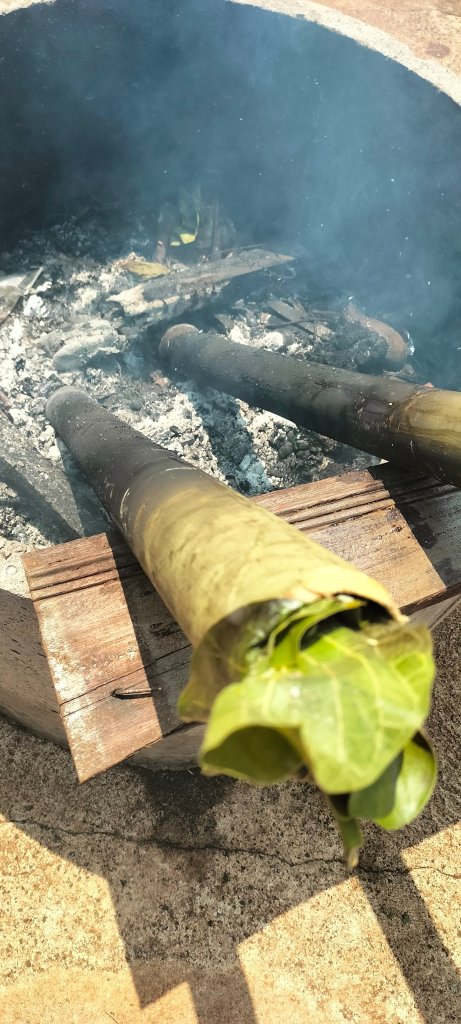
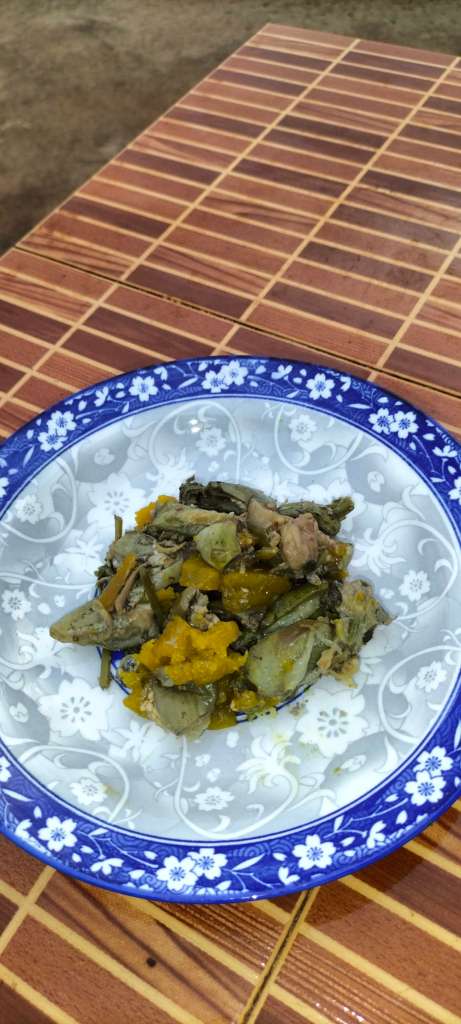
my menu design using local crafts as inspirationlocal food: chicken and aubergine stew cooked inside bamboolocal food: chicken and aubergine stew cooked inside bamboo
Over dinner one night, Yok shares a story that gets everyone laughing. It’s about a Khmer man who marries a mountain girl and takes her to his town. The attitude definately reminds me of some people I know in Pleiku. Here is the full story.
Once a Khmer man married a mountain girl and took her back to his town. She was so excited by everything there that they didn’t have in her small village. He took her to the amusement park and she had childish joy going on all the rides.
When she was on a big swing her husband was waiting on the ground. To his horror, he saw that her underpants were visible under her skirt. When she got off the ride he said to her “Do not do that again, I don’t want people seeing your underwear!”. The girl smiled and was submissive to her husbands wishes as she had been taught a good girl should be.
The husband was satisfied and went to buy them both ice-cream but when he returned, he saw his wife was back on the same swing. He shouted and gesticulated madly. He ran and hit the emergency stop on the ride. The wife came down still smiling and asked “what’s the matter husband?”
“I told you not to go on that ride again because I don’t want people to see your underwear!” yelled the husband.
“Oh don’t worry darling husband, before I went on the ride, I took off my underwear!”
I really enjoy spending time in Ratanakiri. The sun here seems to shine at a different angle, bathing the landscape—and my mood—in an amber glow. It’s not just physical warmth; it’s an invitation to consider new possibilities. Maybe I’ll move here. Maybe I’ll open a restaurant or become a YouTuber. Or maybe I’ll return to Pleiku and get back to the daily grind; after all, there’s plenty waiting for me there, too.
Ultimately, it’s nice to step away from routine, cross a border, and remember that the world is out there, bigger than my usual bubble. The tourists I meet remind me that we each bring our own lens to new places, shaping how we see them—and how they see us. And as Yok’s story proves, sometimes the best thing you can do is step back, realize you’re taking yourself a bit too seriously, and share a good laugh.
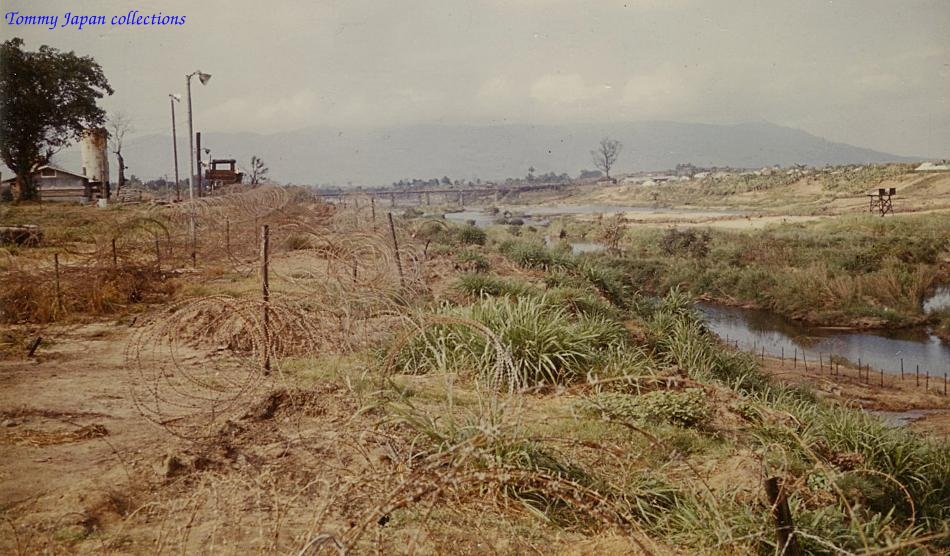
An Khe, 1971. View of the Ba Bridge from the north. On the left is the old French army base and airfield, later run by the American military and today by the Vietnamese army.
This post is about An Khê which is a town 70km east of Pleiku via the Mang Yang pass and 55km west of Quy Nhon via the An Khê pass. Situated between these two difficult mountain passes, the town has always been an important gateway to the insulated highland interior of Gia Lai and Kontum. It was of strategic importance during the Vijayapura Champa kingdom (11th-15th century) and it’s location was used to the advantage of the Tây Sơn uprising in 1771.
The town’s role as a staging ground for military operations continued into the French colonial era and the American Vietnam War when An Khê took on a unique identity. Amid the conflict, this highland town became the home to the unusually named places of “Disneyland East,” and “The Golf Course,”. During Tet holiday, I made a stop in An Khê to learn more.
Camp Radcliff and the Origins of “The Golf Course”
Wright [Brig. Gen. John M. Wright Jr.] pointed across the dirt airstrip where a day earlier we had landed in C-130s. “Triple-canopy jungle,” he said. “Big trees about 200 feet high. Then secondary growth up to about 80 feet. Under that, bamboo, thorn thickets, shrubs, and vines. And beneath all that is grass—turf. If we could magically pluck out all that foliage, it would look like a golf course…“If we scrape away the jungle with bulldozers, in a month we’ll have a giant dust bowl. That dust will be sucked into helicopter engines and turbines. This is the end of the longest supply line in the world. Every turbine blade, air filter, every fuse—every spare part—has to travel 12,000 miles. If our heliport is a dust bowl, we’ll wear out our ships faster than we can fix them. “So we’ll create a golf course. Chop down the trees, pull out the bushes and cut the bamboo, elephant grass, and the wait-a-minute vines—but leave the turf. – Marvin J. Wolf
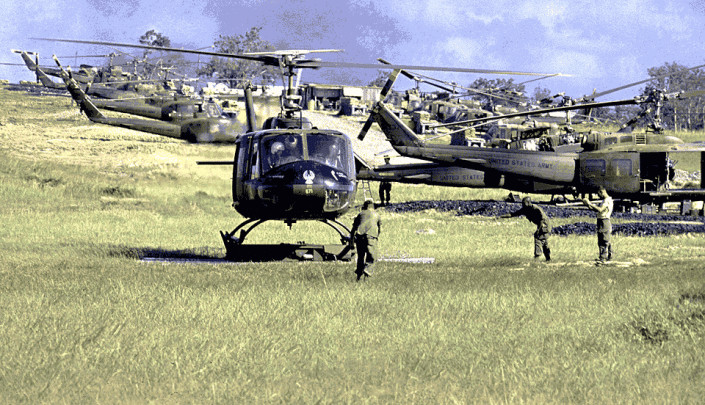
In 1965 the US army established Camp Radcliffe at An Khe. The helicopter landing strip there got the nickname the golf course due to the grass. Although there never really was a golf course, it’s a strange word to see associated with 1960s Gia Lai (despite several attempts in recent years, Gia Lai still does not have any golf courses as of 2025).
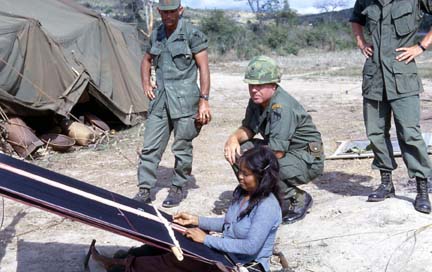
Watching a local Bahnar lady doing some traditional weaving
“Disneyland”
Nowhere was the shock of massive encampment greater in Viet Nam than in the sleepy little town of An Khe in the barren Central Highlands. Late last summer, 21,000 troopers of the U.S. 1st Cavalry (Airmobile) set up tents and helipads near An Khe. Prostitutes and profiteers swarmed into the town; prices for everything from beef to beer soared, as did the incidence of disease among the Americans. Dysentery and other intestinal diseases multiplied fourfold within four months; venereal disease soon afflicted nearly a third of the G.I.s.
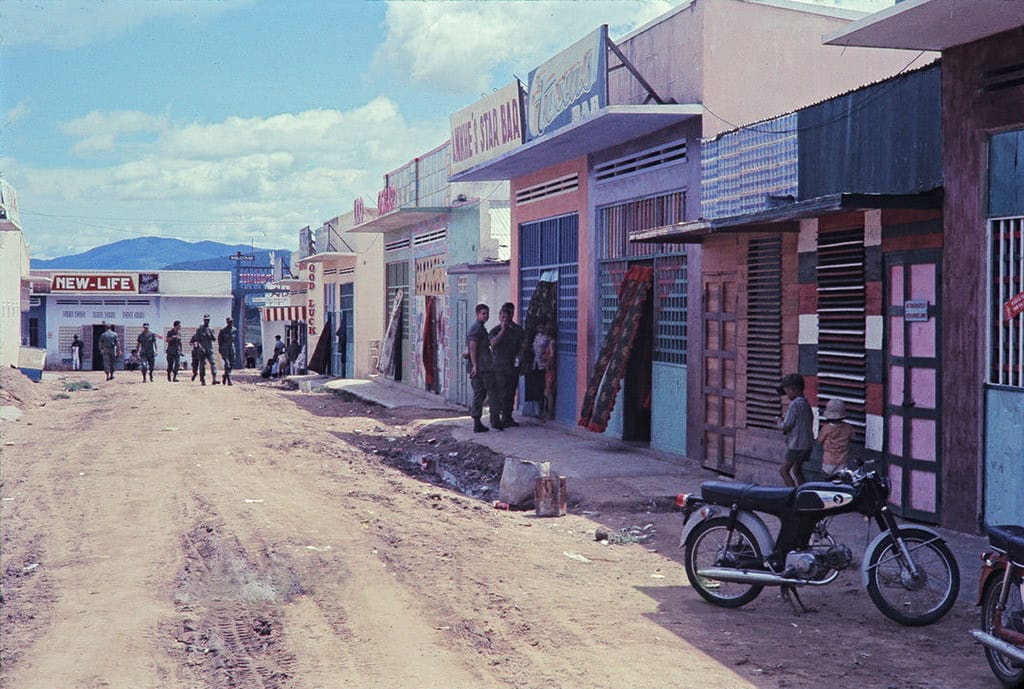
It was the Vietnamese village elders who came up with a solution, which Kinnard reluctantly accepted as the best among unhappy alternatives: the first brothel quarter built exclusively for American soldiers in Viet Nam. Half finished, An Khe Plaza, as the sign at the M.P. gatehouse declares, or “Disneyland,” as the G.I.s call it, is a 25-acre sprawl of “boum-boum parlors” built of concrete blocks and surrounded by coils of concertina barbed wire. Each parlor consists of a bar with eight cubicles opening off the back. Eventually there will be 40 parlors, bearing such rubrics as Paradise, Caravelle, Golden Hind, Hill Billy, Washington and the Moderate Tearoom.
The price of a “short time” varies with the demand from $2.50 to $5 and inevitably has produced grumbling. “General Kinnard ought to put his foot down,” complained one cavalryman last week. “Five bucks is too high. He oughta make three bucks the standard price.” The plaint is, of course, misdirected. An Khe Plaza is a creation of the Vietnamese and run by the Vietnamese, albeit for Americans.
Vietnamese girls who want to work in Disneyland must obtain a special entertainer’s card and visit An Khe’s clinic once a week for a medical examination by Vietnamese doctors and a U.S.-provided shot of a long-lasting penicillin-type drug to suppress disease. Forced to choose between morality and the morale of their men, the division’s officers are clearly troubled by Disneyland. But, as one colonel explained, “We wanted to get the greatest good for our men with the least harm.” For visitors to An Khe, even clerics and chaplains, Disneyland is as hard to condemn as it is to condone. In that respect, it is not unlike war itself, of which Disneylands—and far worse—are an inevitable accompaniment.
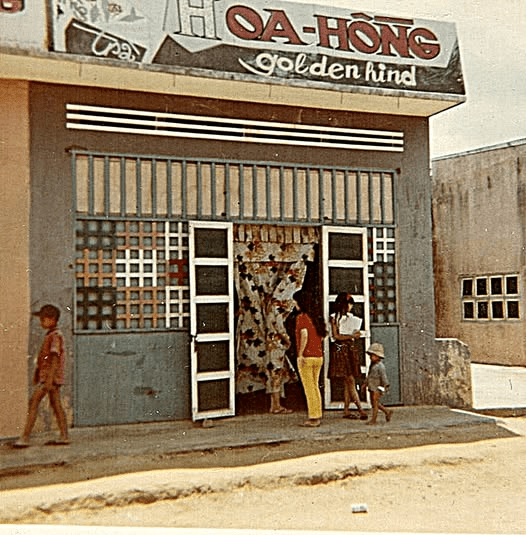
(source) Disneyland East! Here is one of the bars in Sin City. All the bars looked pretty much the same from the front. Most of them were named after U.S. cities or states. I’m sure there was a California Bar, a Texas Bar, a Chicago Bar, a little bit of home. There was an M.P. checkpoint as you entered the compound. As I remember you needed a pass, although in our case, we were brought in by the truckload, and I’m not sure I showed a pass, I think we only had like two or three hours before the trucks would pick us up. If we stayed somewhat sober, and in uniform, the M.P.’s wouldn’t bother us. One night later in my tour my Civic Action team snuck into An khe, and spent the night in “Disneyland East”, even though town was off limits, after a sapper attack at Radcliff. A very successful attack, destroying a bunch of choppers. The Golden Hind is where we stayed, with our 3/4 ton truck parked in the little alley next to it, so the MP’s wouldn’t see it. You will see the Golden Hind was mentioned in this Time magazine story. https://content.time.com/…/art…/0,33009,901833-2,00.html
Disneyland, 1967
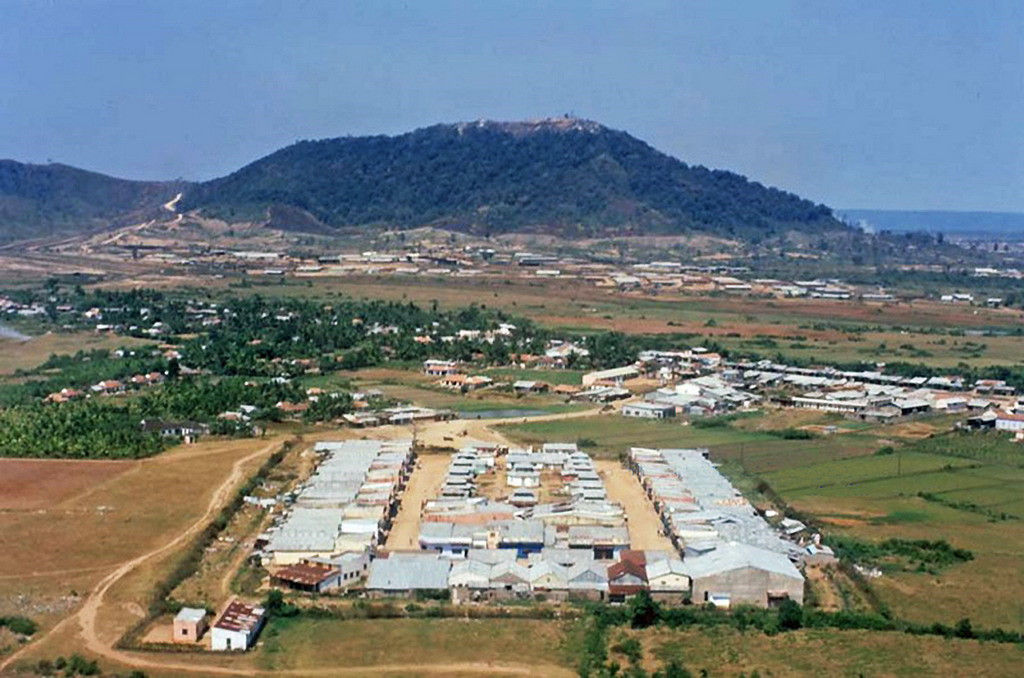
Disneyland in the foreground and Hon Cong mountain behind
An Khê Today
An Khe is one of the largest towns in Gia Lai outside of Pleiku. It might seen sleepy by most people’s standards but I had a great time here for a few days with some locals and some foreign English teachers.
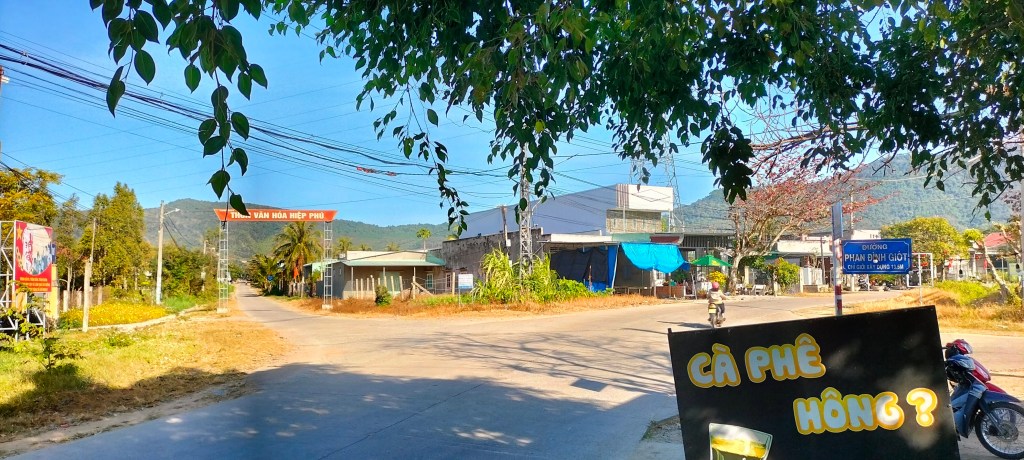
Although I couldn’t get anywhere near the golf course because it’s a military area, I did go to where I believe disneyland used to be, there is no sign of it’s sorded past but a local cafe owner did give me a free coffee.
Where I believe the entrance to disneyland was.
Bahnar food in An Khe, yummy!
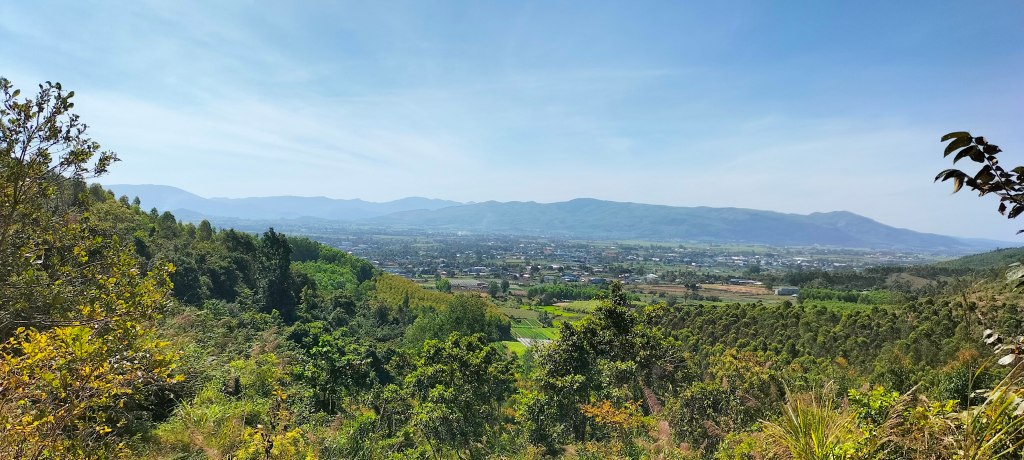
View of An Khe town from my hike up Hon Cong mountain
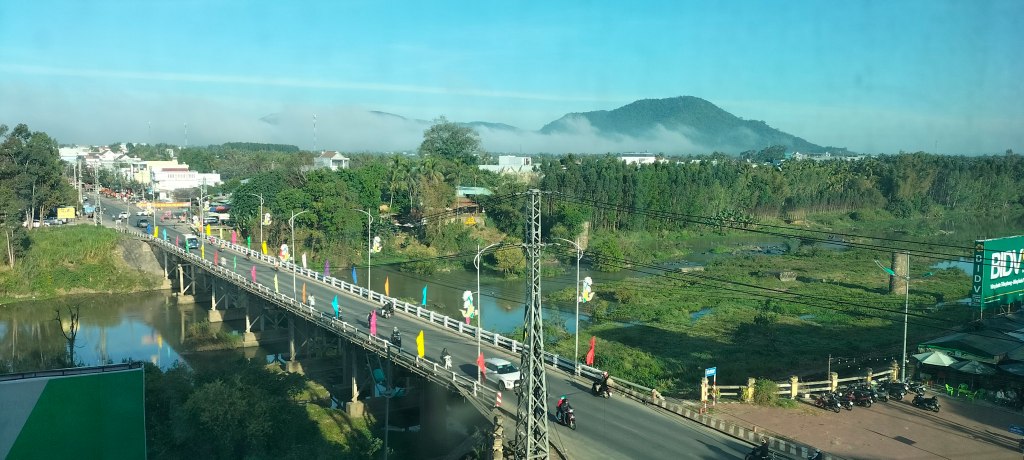
Ba Bridge today, view from my hotel, Hon Cong mountain behind
The well-known travel guide Rough Guides has this to say about Pleiku:
Though it’s not terribly easy on the eye, the regional capital of Pleiku possesses a carefree air quite in keeping with its far-flung location. The city was wrecked during the war, and so little of it was left standing that a near-total reconstruction was required when hostilities ceased. (source as of 08/01/2024)
This comment irritates me because it’s clear the author didn’t research properly. Pleiku wasn’t destroyed by the war—it was built by the war. The city expanded dramatically to meet wartime needs. Before the war, Pleiku was little more than a few bungalows and French administrative buildings. Contrary to Rough Guides‘ claim, many of these original buildings still stand today (source). It seems the writer visited, spent one night, found the city wasn’t Hoi An, and made assumptions based on a quick impression. However, for those who know where to look, some prewar remnants can be seen.
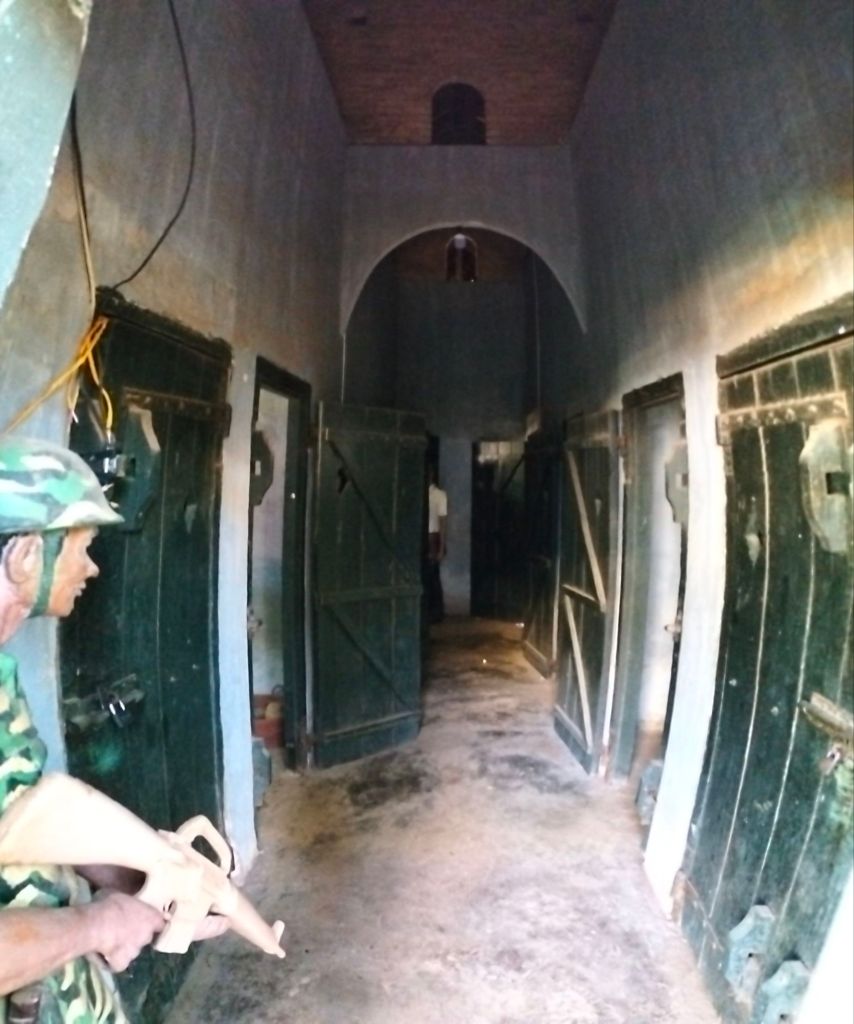
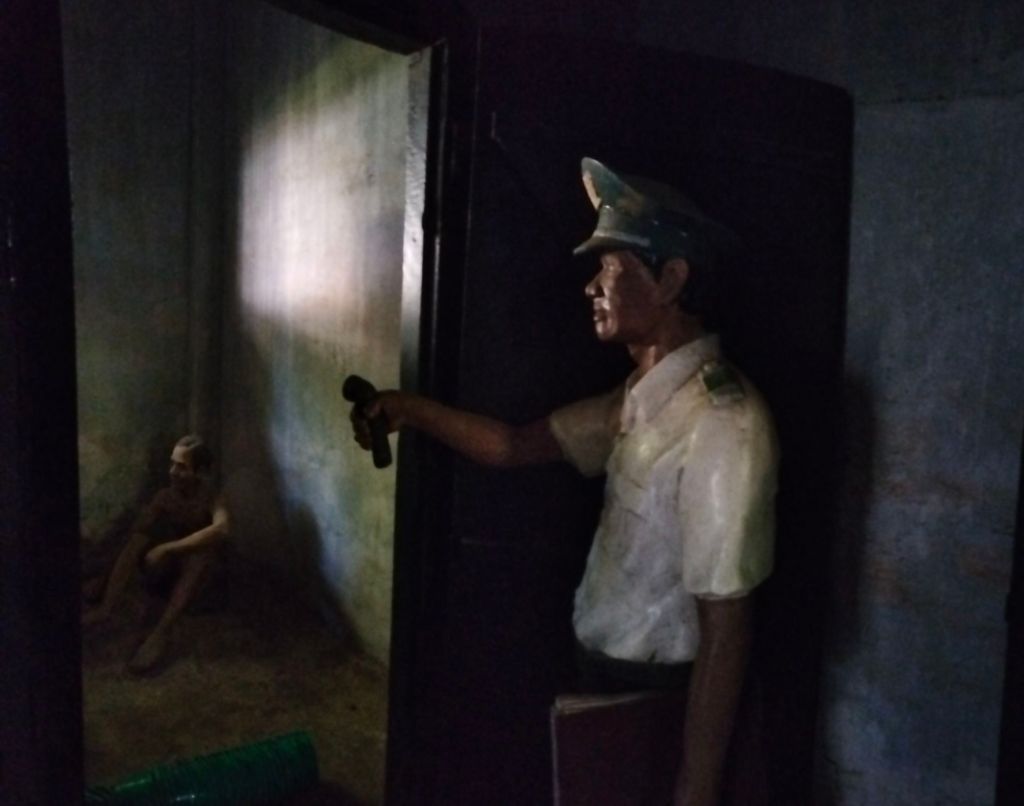
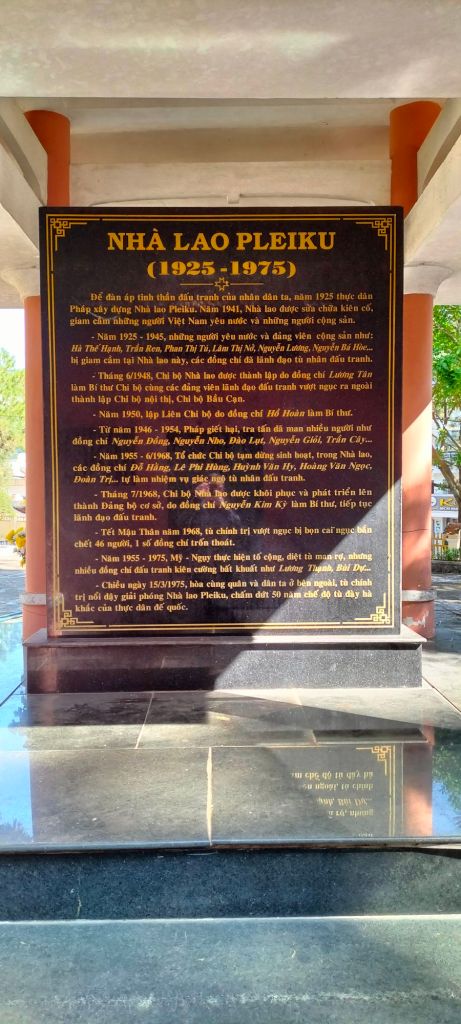
One such piece of history is Pleiku Prison, a site worth visiting if you’re interested in the countries past. Built around 1925, the prison housed both unruly indigenous peoples and political prisoners. The complex was surrounded by 3-meter-high walls and layers of barbed wire. Today, only one of the original buildings remains intact – but with it’s cramped, gloom cells – it’s a sobering glimpse into the past.
During the Second Indochina War, There was also a separate POW camp, where uniformed combatants were held, while civilian dissidents with suspected communist sympathies were imprisoned in the inner-city jail. It is claimed that after the Tet offensive of 1968 the prison help 800 captives. On March 15, 1975 the South Vietnamese were in a hasty retreat from Pleiku and the prisoners managed to break out of the prison prior to the arrival of the North Vietnamese army.
Unfortunately, I’m unable to give any other perspective on the prison because I’ve never been able to find any French or American records other than it being marked on the city map. I also can’t find any old photos. If you have any sources, please let me know.
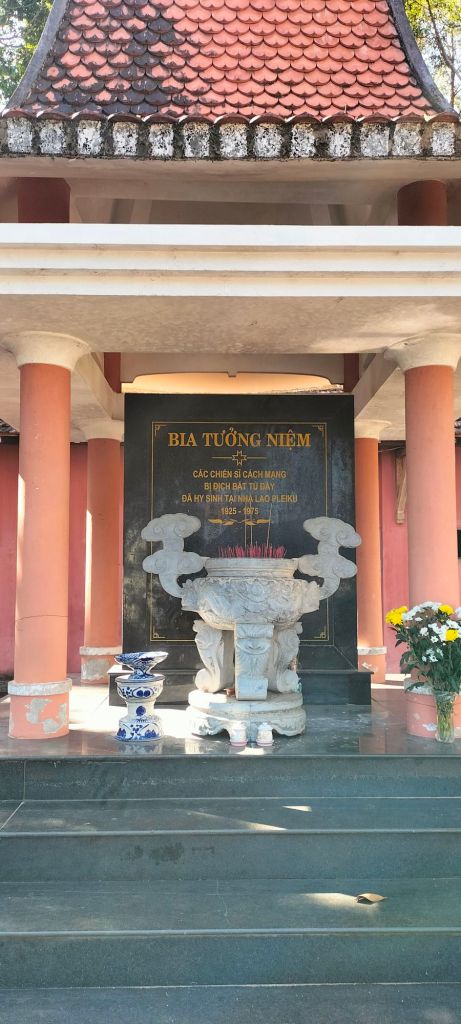
Visiting Pleiku Prison is free. The main gate is typically locked and entry is via a smaller gate just at the top corner of the site. Today, there is a monument dedicated to the prisoners in the forecourt, commemorating their hardships and escape. In the Gia Lai province museum you can find a handkerchief which embroidered by Pham Kim Cuc during her time in Pleiku prison from 1968-1972 (source).
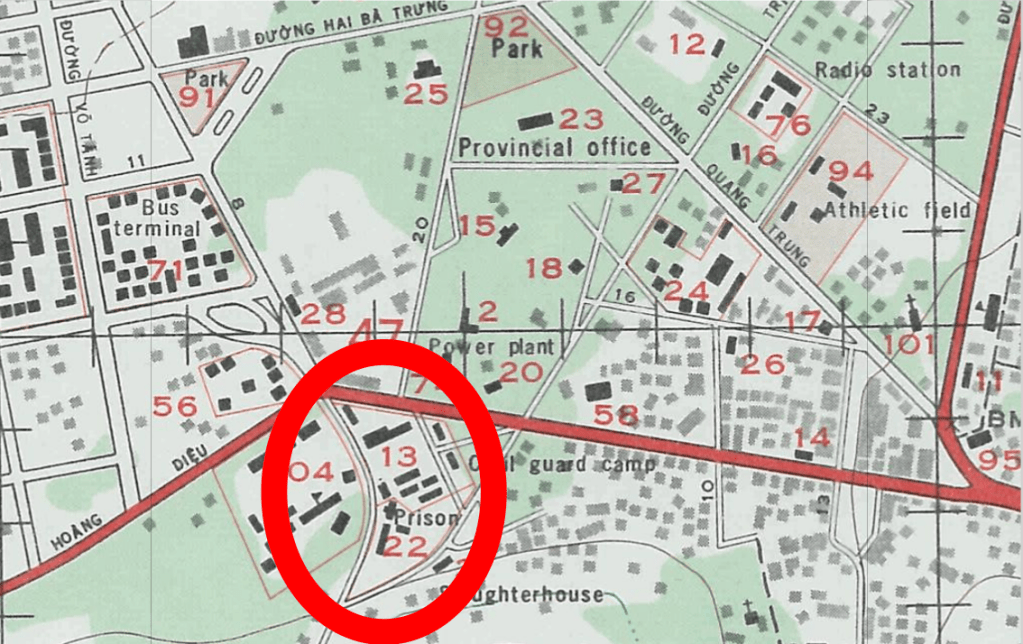
Key: 13 – civil guard camp, 22 prison. Many of the surrounding roads no longer exist but the red road north of the guard camp is now Hung Vuong and the modern route of Thống Nhất street can be seen going around the prison to the east. The long building which is currently a museum can clearly be seen, the + shaped building north of it remains as a ruin.
The sand bags look the same: a dismal green-grey bag leaks red clay upon the bags below. Outside the perimeter, children pick though the garbage, thrown out waste of a thousand men. Christmas in Pleiku, 1967, war fills the surrounding hills. Across the valley we see cloud puffs of artillery and
at night red, green, amber flares dangle, shining bright beneath white parachutes displays in sound and light rivaling the staged events of a thousand towns across the “world” on New Year’s Day. But this is Christmas: a time of truce.
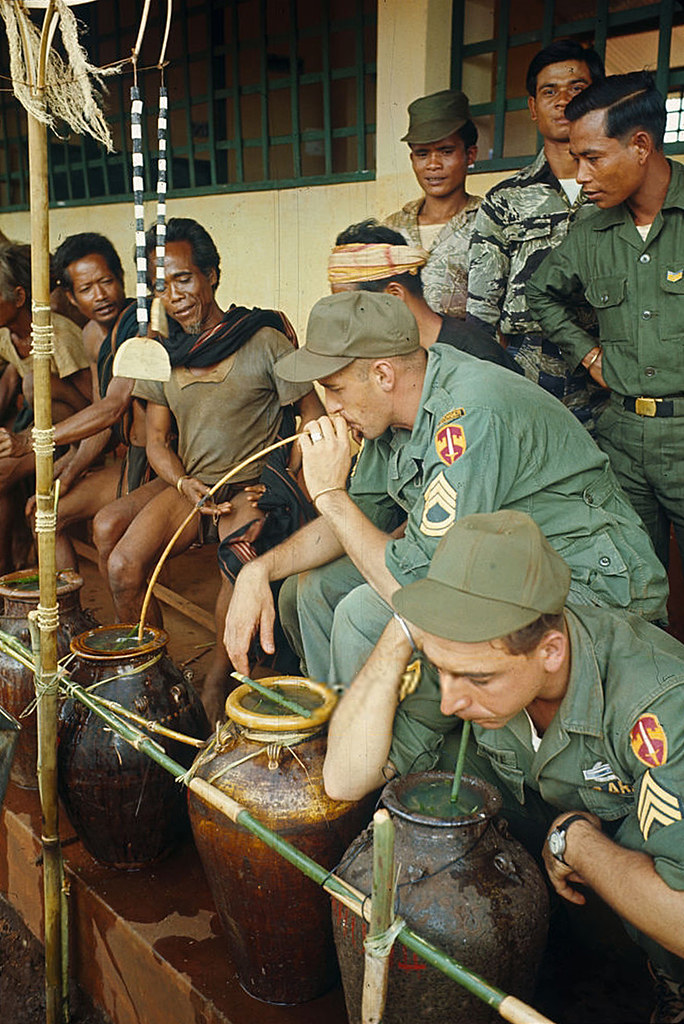
U.S. Army men drinking rice wine from urns as they celebrate Christmas with the Montagnards. December 24, 1966
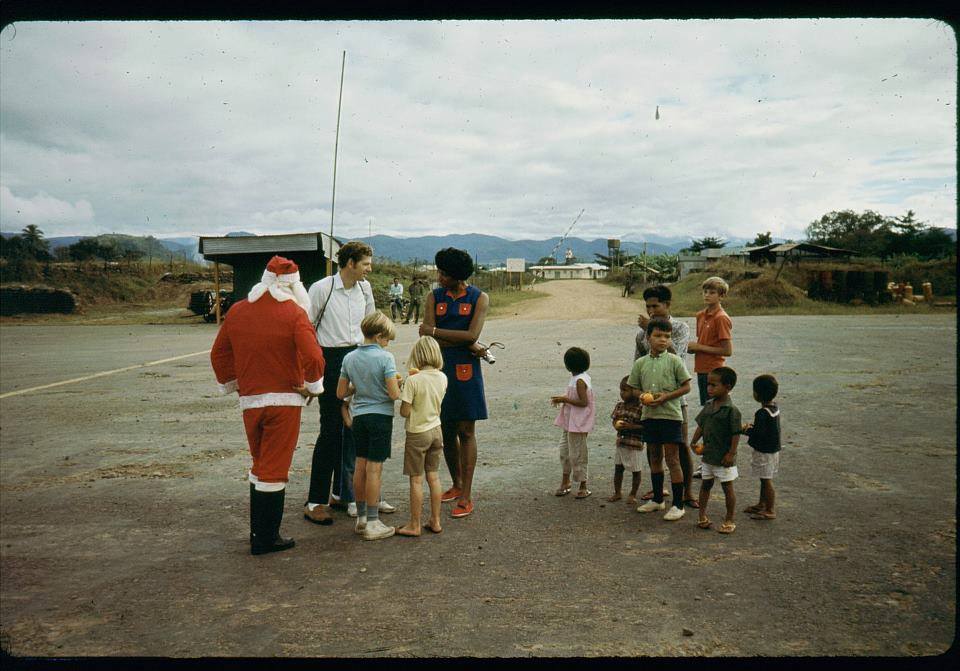
A war zone couldn’t keep Santa from his appointed rounds – Cheo Reo – Christmas 1971 Chris Towne
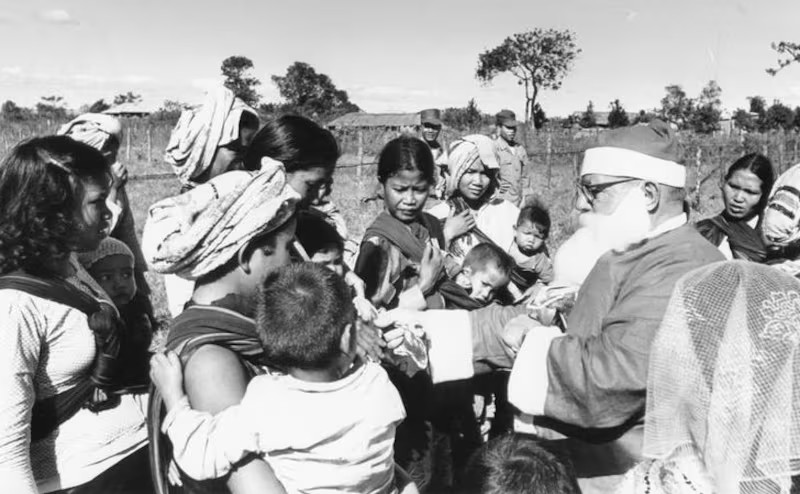
Maxmilian Kersthold, a U.S. Navy engineer stationed near Pleiku, plays Santa Claus, delivering gifts on Christmas Eve to Montagnard women and children in Mang Yang, a remote area of the Central Highlands, Dec. 24, 1965. | Associated Press
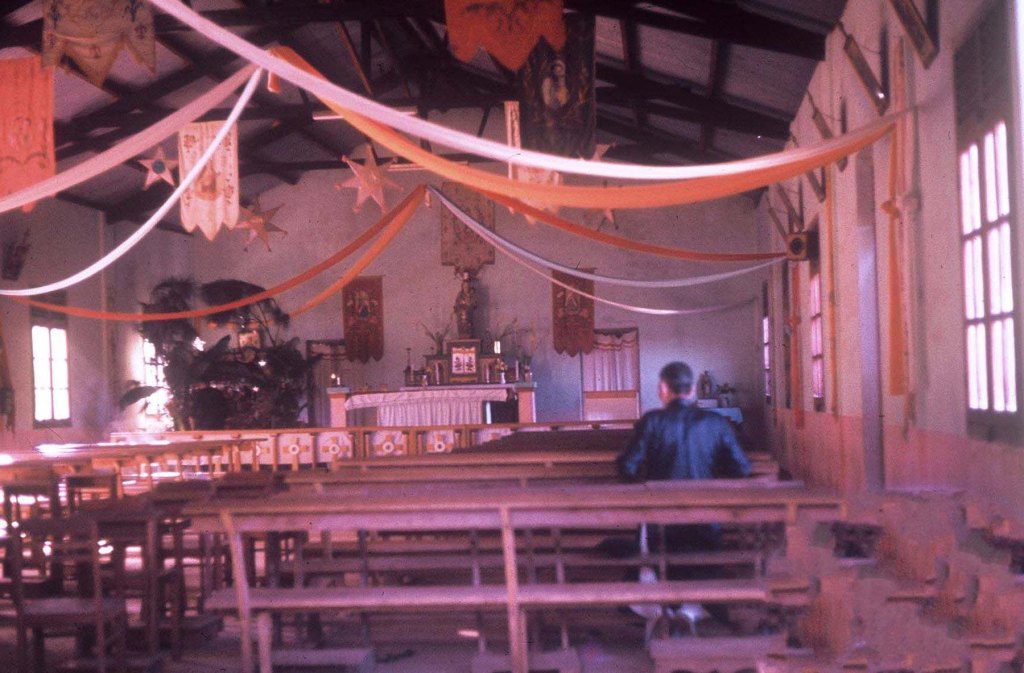
a parish in Pleiku (1967-69) Photo by Schneider (link)
The dirt road gave way abruptly to a stretch of wet concrete drying under the sun. Nearby, men were clearing up after a days work. A glance at Google Maps suggested I was only 1.5 kilometers from my destination, so I decided to park my moped on the verge and began walking.
From behind a hedge, an old woman called out, “Where are you going?”
“Plei Ring,” I answered.
She shook her head. “Plei Ring’s been under the lake for years. The road only leads to the water.” I replied that I think there is a monument there. “There’s no such monument” she said.
Her words lingered in my mind as I made my way forward, determined to find what I’d come for. While researching for my blog I came across the Battle of Plei Ring. I initially found references only in Vietnamese sources and found out there was a stele erected in the area to commemorate it – that’s where I was headed now. At first, I thought western records of the battle were nonexistent. It wasn’t until I closely studied old maps that I realized the discrepancy: where Vietnamese sources spell it Plei Ring, western accounts use Plei Rinh. This subtle difference highlights the care required when researching history so as not to miss important sources.
The Battle of Plei Ring involved one of the most formidable units of the French forces in the First Indochina War: Group Mobile 100 (GM100). Its core consisted of battle-hardened veterans from Korea, renowned for their valor in battles like Chipyong-ni, Wonju, and Arrowhead Ridge. The unit was bolstered by indochina troups in a process the french weirdly called « jaunissant ». After the Korean cease-fire in July 1953, this elite force was transferred to Indochina and formally reorganized as Group Mobile 100 on November 15, 1953. The G.M.s were designed as self-sustaining motorized regimental task force unit modelled on the U.S. Army’s World War II regimental combat teams. The G.M.s typically consisted of three infantry battalions with one artillery battalion, along with elements of light armor or tanks, engineer, signal and medical assets, totaling 3,000–3,500 soldiers
GM100
While up north things were heating up at Điện Biên Phủ, this veteran unit was tasked with securing strategic locations in the Central Highlands, after being battered around by the Viet Minh from Dak To down to Dak Doa, they moved to dig in at Plei Ring in the Ayun Valley, which was on what the French referred to as the “Pleiku-Ban Me Thot axis”.
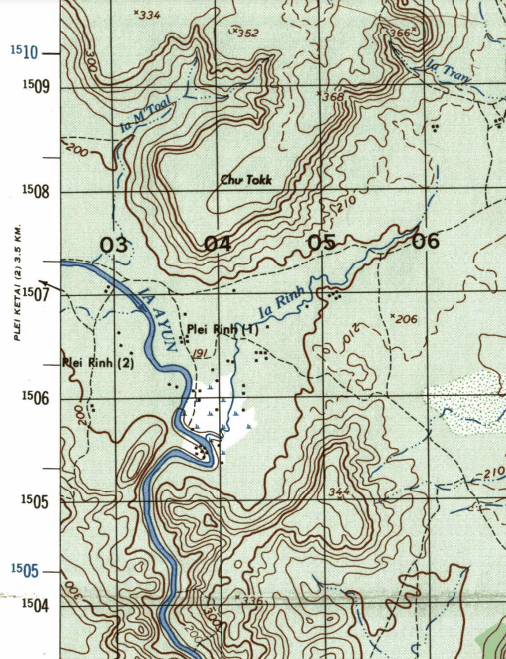
The Ayun Valley is a striking contrast to the otherwise flat terrain of the Pleiku Plateau. From the ground, the plateau appears unbroken until the valley suddenly reveals itself—a vast, hidden expanse carved into the land. I was unaware of its existence during my first years in Pleiku until studying detailed 1:50,000 maps revealed the contours of this dramatic feature. Its natural concealment, reminding me of a ha-ha, probably made it an ideal approach for Vietnamese troops to advance undetected, likely influencing the strategic placement of the Plei Ring outpost.
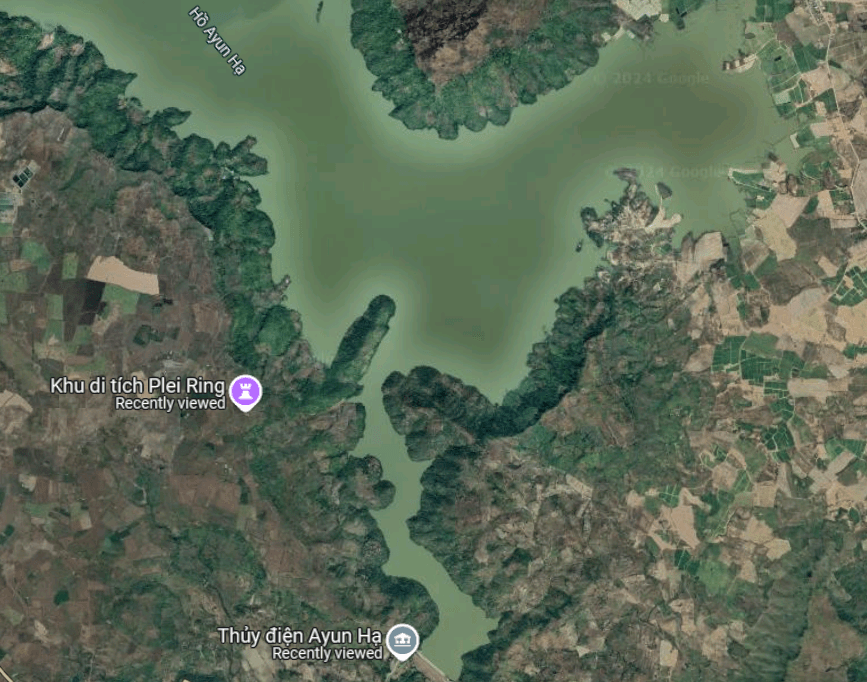
Plei Rinh on the L7014 series map 1970The area nowHow the area appeared in 1970 vs now
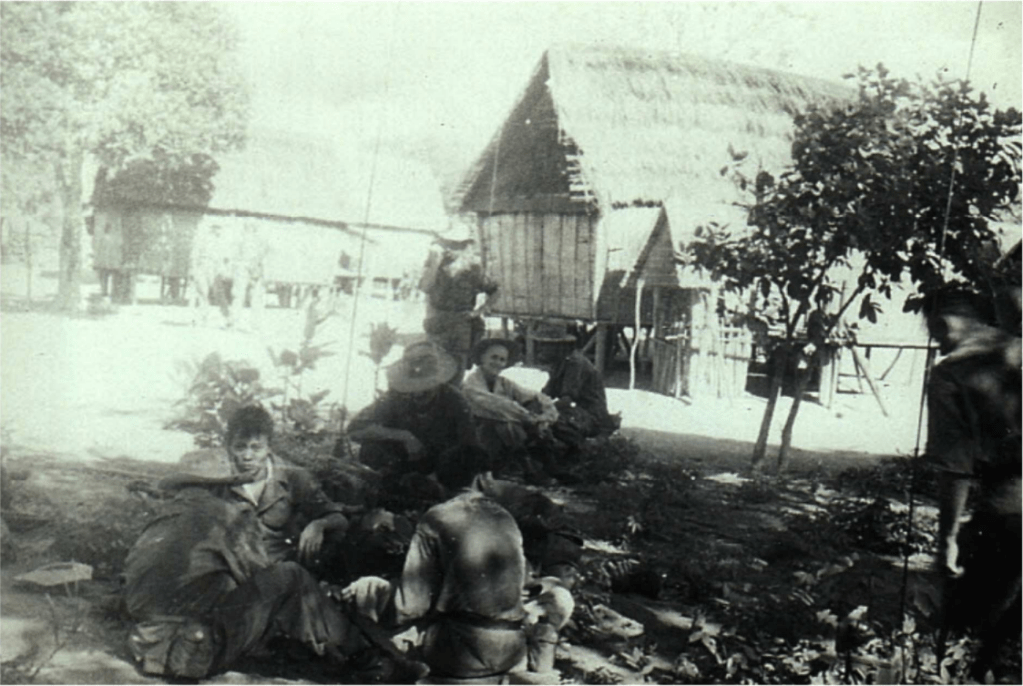
“At that time, my unit operated in the southwest of Pleiku town, but we often marched through Ring village… Plei Ring post was located in the middle of a fairly flat valley. The post was triangular in shape, surrounded by sparse barbed wire fences, thatched roofs, about 15m in height, and they added patrols and guards. Many of my comrades on the march unfortunately died here.” – Ngô Thành (source)
On March 21, 1954, the Viet Minh’s 803rd Regiment launched a surprise attack on GM100 at Plei Ring. Employing rapid and decisive tactics, they overwhelmed the French garrison in just two hours. This victory not only disrupted the French defenses in the region but also boosted the morale of Viet Minh forces across other theaters of the war.
G.M. 100 setup camp at a small remote outpost called Plei Rinh. There they were viciously attacked again. First came the violent mortar fire, then the concentrated fire of rifles and machine guns. The CP was targeted and hit. Suddenly came the onrushing wave of black clad Viets screaming “Tien-len!” The post soon burst into flames as the Recoilless cannons peppered the grounds. All was sound, fury, and chaos. Then, as quickly as they had appeared, the soldiers of the 803rd disappeared. The toll was heavy on the French… G.M. 100 had been severely crippled. But not beaten. – source
The French reported over 250 casualties, with the Vietnamese claiming to have neutralized nearly 1,000 enemy soldiers and destroyed more than 200 vehicles. Though figures vary, the significance of the Viet Minh victory is undeniable. It disrupted French control in the area and dealt a blow to their morale during a critical phase of the war. The GM100 would retreat to Pleiku and later move to An Khe setting the stage for their ultimate downfall at the (in)famous battle of Mang Yang pass.
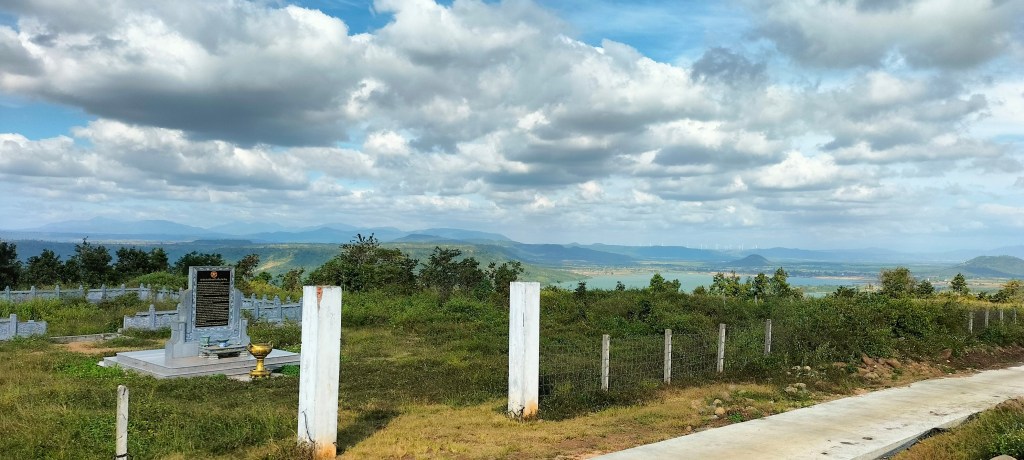
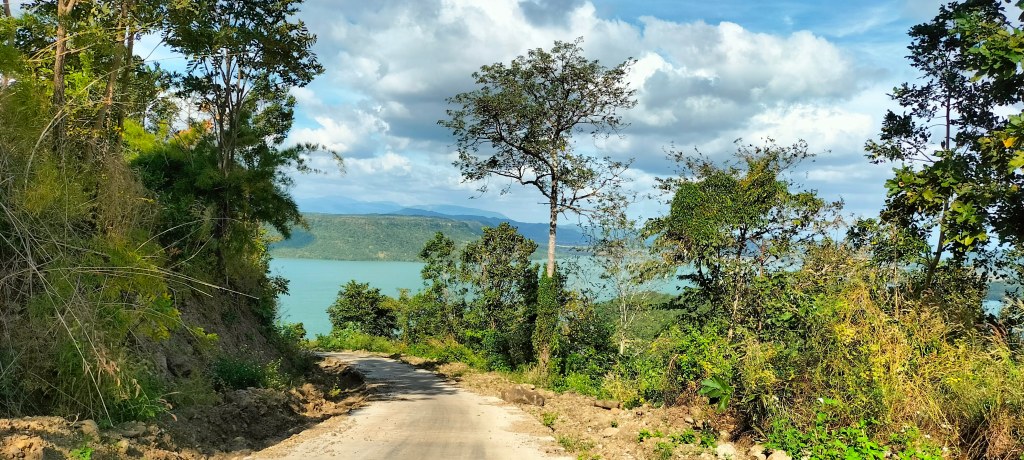
Today, the site of Plei Ring village itself lies beneath the waters of Ayun Hạ Lake, created by the Ayun Hạ Dam in the 1990s. A small commemorative stele near the lake honors the sacrifices made. As I followed the newly paved road called “the French pass” into what was once the fertile Ayun Valley, now transformed into a reservoir, I imagined the events that unfolded here decades ago—the place is now makes a good location for a peaceful hike in the native dipterocarp forest.
stele with lake visible in the backgroundRecently paved “đèo Pháp” that used to lead to Plei Ringstele
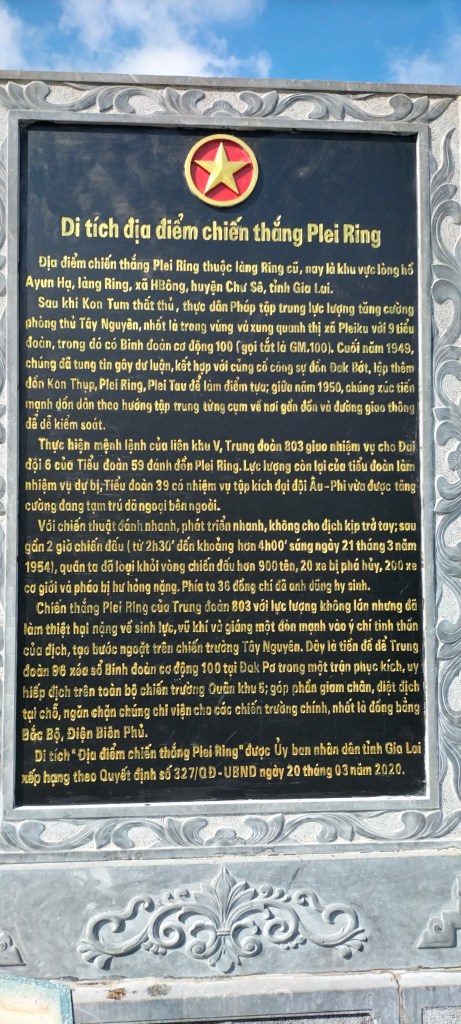
Plei Ring Victory Site Relic
The Plei Ring victory site belongs to the old Ring village, now the Ayun Ha reservoir area, Ring village, HBong commune, Chu Se district, Gia Lai province.
After Kon Tum fell, the French colonialists concentrated their forces to strengthen the defense of the Central Highlands, especially in and around Pleiku town with 9 battalions, including Mobile Regiment 100 (abbreviated as GM.100). At the end of 1949, they spread rumors to stir up public opinion, combined with consolidating the fortifications of Dak Bot station, establishing Kon Thup, Plei Ring, and Plei Tau stations as support points; in mid-1950, they strongly promoted the concentration of people in clusters near the station and traffic routes for easier control.
Carrying out orders from Inter-Zone V, Regiment 803 assigned Company 6 of Battalion 59 to attack Plei Ring post. The remaining force of the battalion acted as reserve, Battalion 39 was tasked with attacking the newly reinforced Euro-African company that was temporarily camping outside.
With the strategy of quick attack and rapid development, not giving the enemy time to react; after nearly 2 hours of fighting (from 2:30 a.m. to about 4:00 a.m. on March 21, 1954), our army eliminated more than 900 enemies from the battle, 20 vehicles were destroyed, 200 vehicles and artillery were severely damaged. On our side, 36 comrades heroically sacrificed themselves.
The Plei Ring victory of the 803rd Regiment, although not a large force, caused heavy losses in manpower and weapons and dealt a heavy blow to the enemy’s will to stay awake, creating a turning point on the Central Highlands battlefield. This was the premise for the 96th Regiment to wipe out the 100th Mobile Division at Dak Po in an ambush, threatening the enemy on the entire battlefield of Military Region 5; contributing to reducing and destroying the enemy on the spot, preventing them from supporting the main battlefields, especially the Northern Delta and Dien Bien Phu.
The relic “Plei Ring Victory Site” was ranked by the People’s Committee of Gia Lai province according to Decision No. 327/QD-UBND dated March 20, 2020. – engraving on the stele
Today, Ayun Hạ Lake covers what was once the village of Plei Ring, hiding its stories beneath the water. While the dam and reservoir serve the needs of modern life—powering homes, irrigating fields, and supporting livelihoods—they also submerge the traces of a history. The past may be buried under the water, but the stories are floating around to be found by those who look.
There’s something oddly nostalgic about taking a drive I used to hate. My weekly 6am drive to Đắk Đoa once felt like a chore, but over time, the small town grew on me. I started to appreciate its quiet charm—exploring its cozy cafés, like one with tiny tiled-roof huts and hammocks, or wandering through the pine forest between classes. Occasionally, I’d take scenic detours from Pleiku, winding through rubber plantations, stilt houses, and ethnic villages. Since changing jobs, I no longer make this trip for work, this time I’m heading back to Đắk Đoa for a special event.
The small town of Đắk Đoa is known for its pink grass, nhět rơmuay in Bahnar (possible a species of red top, I’ve not got a proper scientific ID), a seasonal phenomenon that blankets the open fields. You could say it puts the sleepy town on the map, in fact I once did have a tourist map of Gia Lai that listed “pink grass” as Đắk Đoa’s only attraction.
Today, Monday—my precious day off—the pink grass was calling me back to Đắk Đoa. Held in late November, right after the more famous Chu Dang Ya Flower Festival, the Pink Grass Festival showcases the town’s unique natural beauty alongside its rich cultural traditions and strong sense of community. I’d never been before, but when a local friend invited me to check it out, I couldn’t resist.
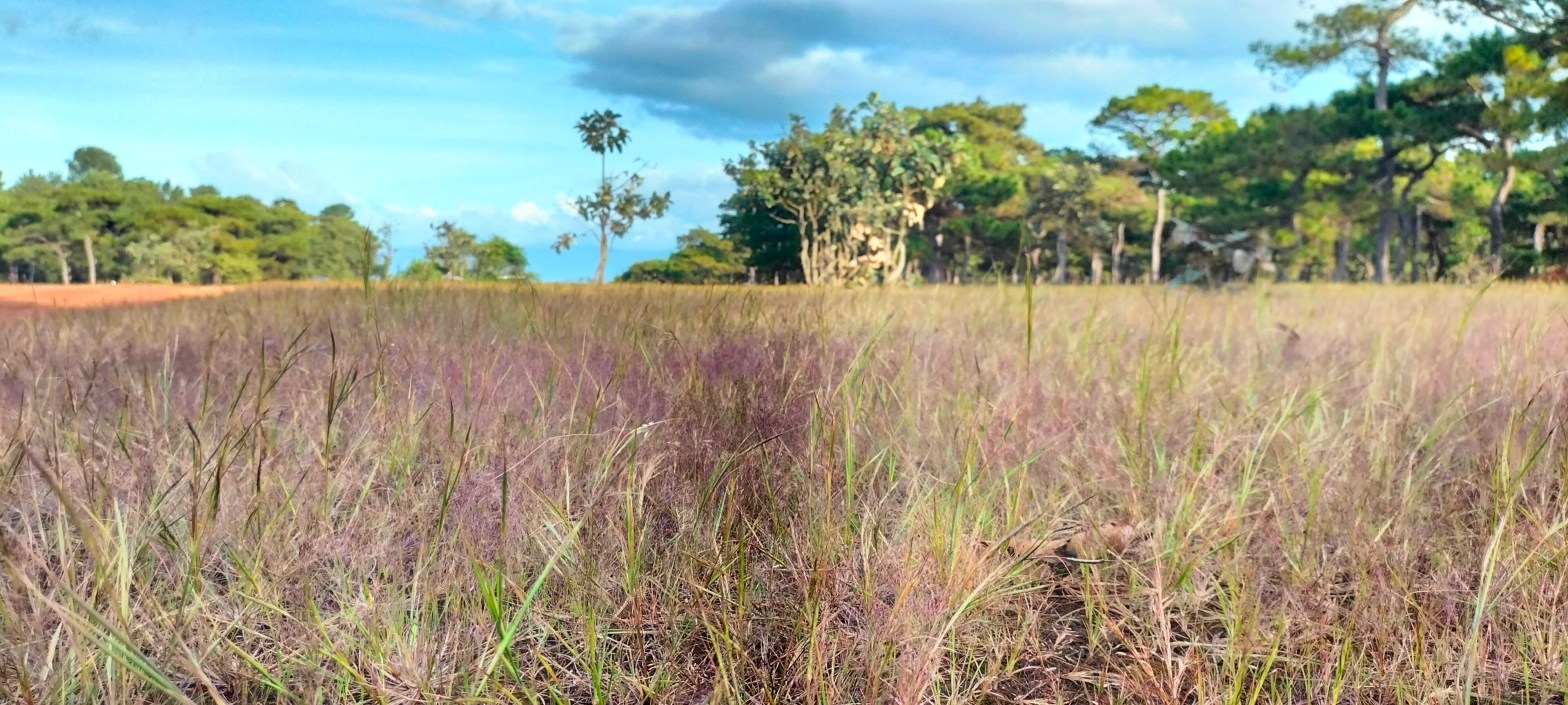
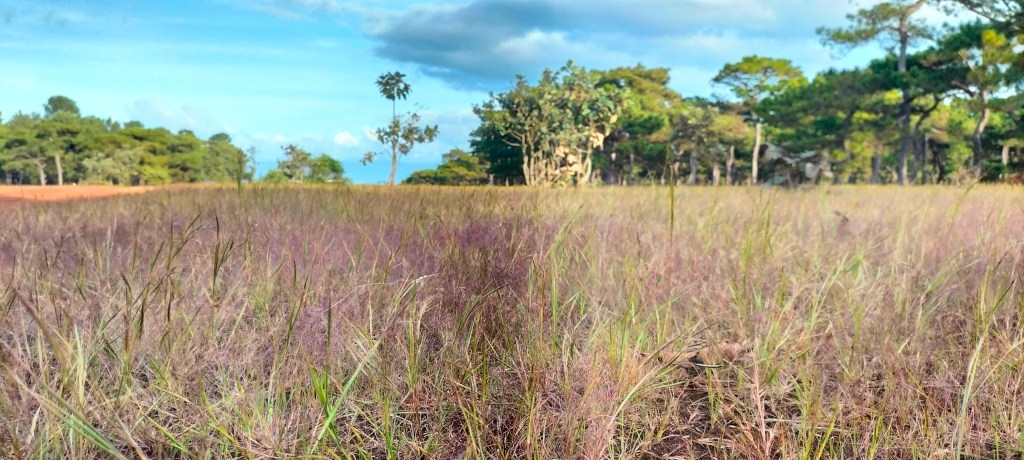
I arrived at the small festival in amongst the pine forest south of the town and parked my bike, noticing a few curious stares as I stepped into the field. The sun was shining brightly, casting a warm, golden glow over everything, while little puffs of cloud drifted lazily across the sky. The air was clear and crisp, not too hot—just perfect T-shirt weather with a light breeze keeping things comfortable. The first thing that struck me was the grass—not quite the vibrant pink from the heavily photoshopped images online. Instead, it was a desaturated reddish-purple, having browsed some colour palettes online I’d now describe it as “Antique Fuchsia.” Subtle and not unpleasant, the color gave the landscape a dreamy sheen, far more refined than the photos suggest.
unedited photo of the “pink” grass
As I wandered, I noticed people gathering around a stage and decided to check it out, though I couldn’t shake the feeling of standing out. Just as I started wondering if I was even supposed to be there, I spotted my friend, Mr Suk, walking toward me with his two preschool-aged daughters. He’s a local-born English teacher I know from my time teaching his family here, and we’ve coincidentally worked on some of the same charity projects. His daughters were full of life, their energy lighting up the day more than any festival could. When one of them confidently said in English, “My name is… car,” I had to laugh and admire her playful confidence.
The festival itself buzzed with activity, featuring a traditional weaving competition and performances of local music. There were also stalls showcasing local organic produce, like peppercorns and macadamia nuts. Anticipation filled the air as judges examined the intricate brocades being woven, each thread telling a story of skill passed down through generations. Unfortunately, I missed all of that—arriving on the wrong day. The main events had wrapped up on Sunday while I was busy with work, and now, here I was on a Monday as the stalls were all packing up—such is the life of an English center teacher. With extra curricular classes to teach, I’m always tied up when everyone else is free.
I did arrive just in time to catch the awards ceremony on the big stage, where the winners of the previous day’s competitions were being recognized. There was a sense of pride and excitement in the air as the judges called up the winners to receive their prizes. I watched as different groups were called up, high fiving their friends as they came forward. Mr Suk’s family’s team won a prize for their brocade weaving, they were each awarded a framed certificate.
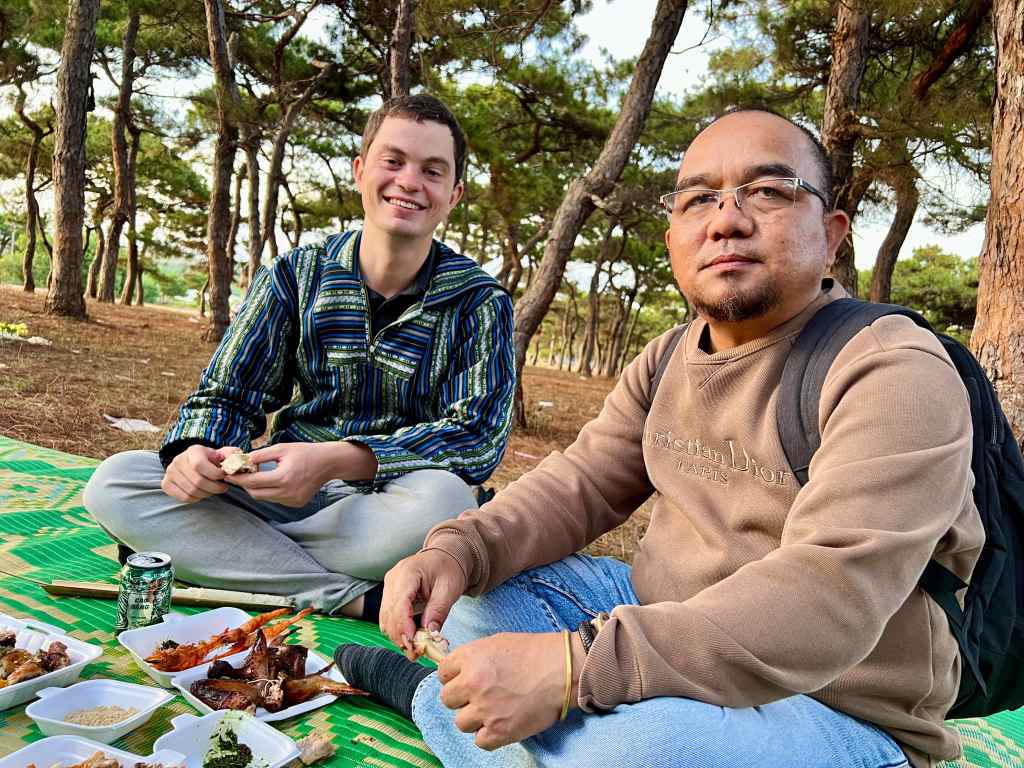
After the ceremony, we found a quiet, shady spot beneath the pine trees to sit on a woven mat. It was very pleasant in the late-afternoon sun. The soft breeze carried the scent of pine and earth. We settled in comfortably, and soon, our meal arrived—sticky rice, perfectly cooked, alongside tender grilled chicken. We ate together, savoring each bite in the relaxed, unhurried atmosphere. The girls played with their teddy bears that had been won at a fairground game: one capybara and one labubu – very on trend.
Driving back to Pleiku that evening, I felt a deep sense of gratitude for the friendships I’ve built during my time here. These connections have not only pulled me away from the isolation that can sometimes come with being a foreigner in smalltown Vietnam but have also added meaning to my days. Festivals like this help mark the rhythm of the year in ways that might otherwise pass unnoticed, especially for outsiders. It’s a unique perspective—to see these events as both a visitor and someone rooted enough to share them with friends, offering a richer, more personal experience.
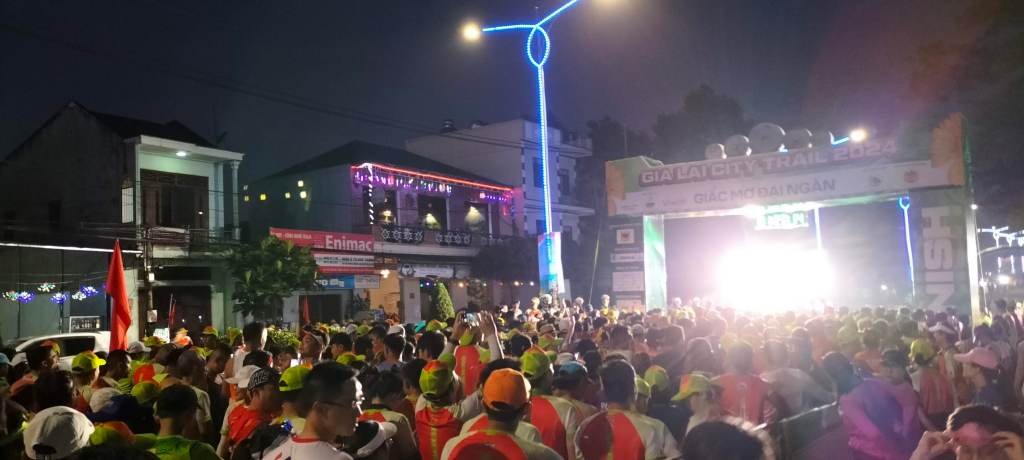
It’s still dark when I arrive at Biển Hồ 9km north of Pleiku City. I shuffle nervously through the large crowd, unsure of where to go or what to do. The PA crackles in Vietnamese, but I can’t make out the words. I’m surrounded by seasoned runners adjusting their gear and some people looking a little apprehensive like me. This is my first time running a 10k, but I’ve been training for months now, ever since I decided to take on long-distance running this summer. Before then, I’d never run for more than a few minutes at a time. So when I signed up for this event, I knew it would be a challenge.
Runners waiting at the start line before the sun has risen
I’d come here to pick up my bib a previous evening, and in doing so, bumped into a friend I hadn’t seen since I lived in Saigon – 4 years ago. It showed how much of a draw this event is, pulling people not just from Gia Lai but from all over Vietnam. Around the starting line, a small fair had been set up, offering everything from local produce to fitness and wellness products.
I’m not just running for myself today; I’ve been sponsored by friends and family, raising nearly £500 for local community projects. The weight of that generosity makes me feel equal parts proud and determined—it’s about more than just fitness for me now.
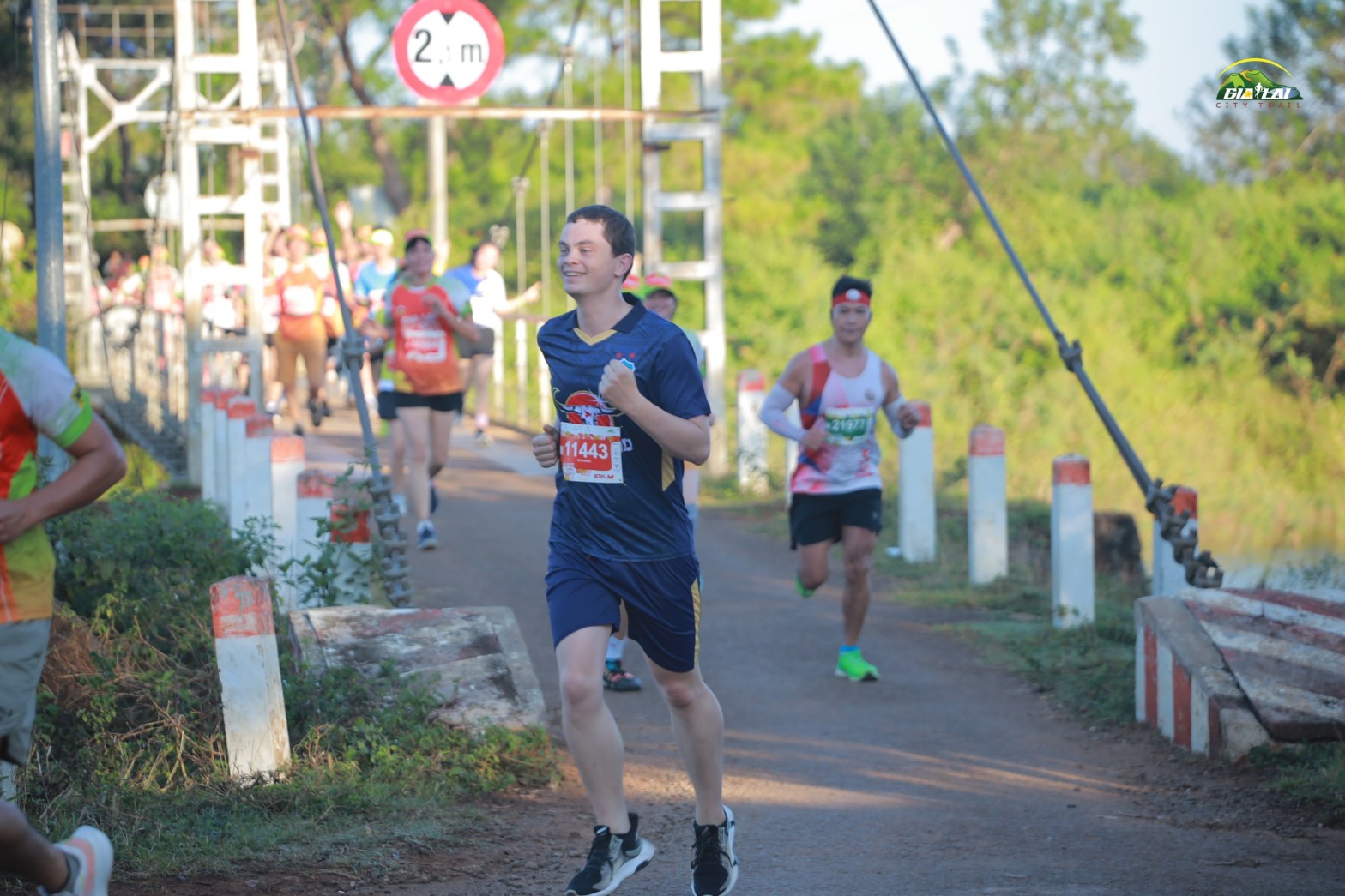
As the starting countdown ends, the mass of runners moves forward like honey dripping off a spoon—slow at first then spreading out as it gains momentum. In my effort to show appreciation for the local area, I’d chosen to wear the HAGL football team kit—Gia Lai’s pride. It’s my small way of connecting with this place that’s become home. The first corner hosts a Jrai band playing traditional music. I know these musicians from Pleiku Roh; they spot me, shouting and waving as I pass. Their cheers make me grin—a moment of connection that reminds me why I love living in Pleiku.
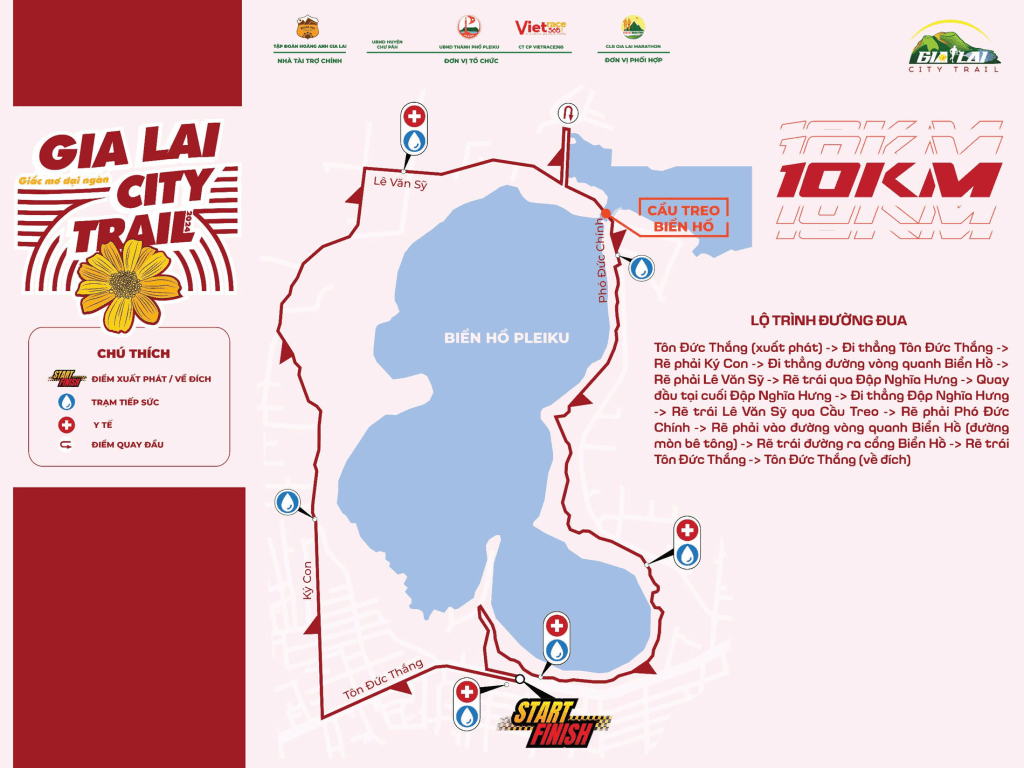
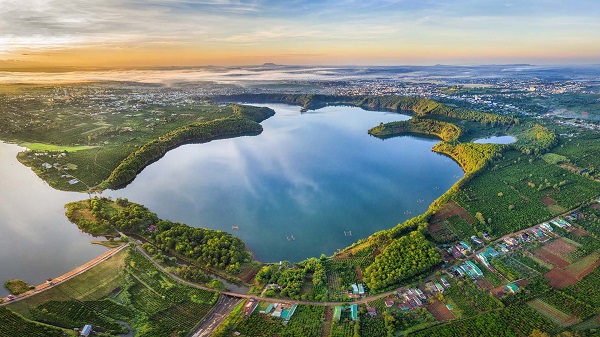
The 10k route encircles Biển Hồ lake – the “Sea Lake” of Gia Lai province, a popular tourist attraction. We set off clockwise, taking us first past its iconic pine trees. The lake itself is a remnant of volcanic activity, formed by overlapping craters, it covers and area of 228 hectares and conveniently for today, a lap around is about 10km.
Biển Hồ isn’t just beautiful; it’s a place of deep cultural significance. Stone Age tools discovered here hint at its importance to early human settlers. Of course there are several “pourquoi” origin stories of this natural feature. One story says the lake was once only a small spring. But when the magical giant white pig belonging to Ya Chao was killed to be eaten, water erupted, creating the lake and turning Ya Chao to stone.
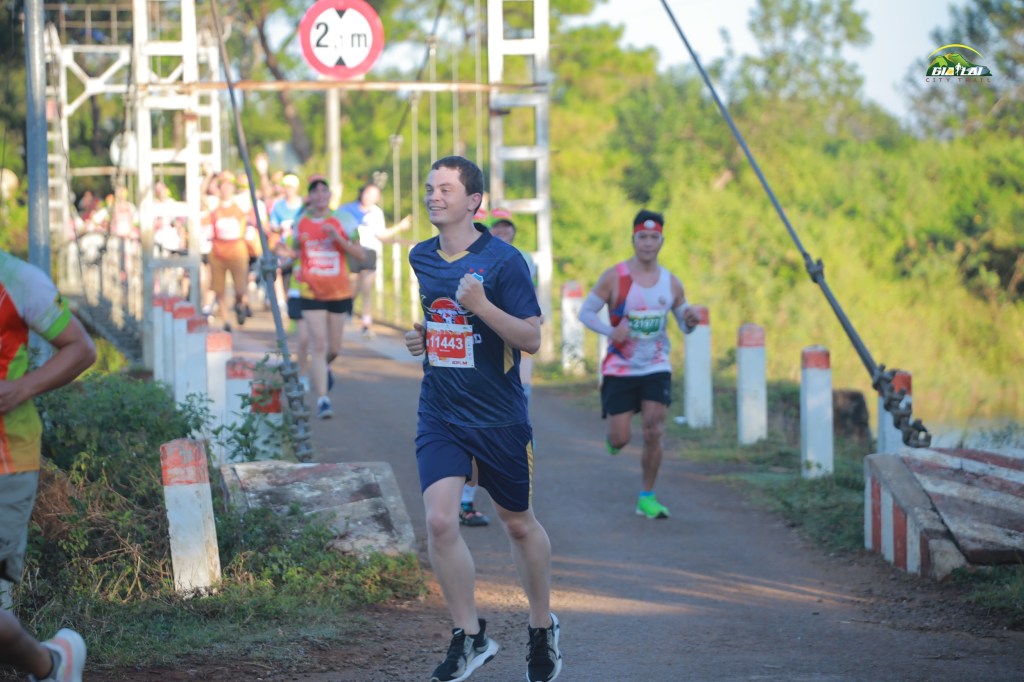
The first kilometer or so of running flies by easily. We pass a local school where a marching band is playing. Their music is invigorating, blowing away the last vestiges of sleep as the sun rises.
My guilty secret is that I’ve never actually run a full 10 kilometers before. My best distance is 8.5 km on a treadmill, and life’s been so busy lately with a promotion and moving house that I had no time to complete my running training program. At this point, I don’t know whether to conserve energy or push harder. Some runners are already walking, while others surge ahead with confidence.
We reach Nghĩa Hưng dam, crossing to the northern side of the lake near the old French tea plantation. The main body of Biển Hồ lies to the south, while the northern reservoir, created by a dam in 1978, shimmers in the early morning sun. Although some people call this upper reservoir part of Biển Hồ, the Jrai villagers call it Ia Rơnhing, after the stream that was dammed. Although there was no dam prior to 1978, it wasn’t the first of it’s kind. Centuries earlier, the Cham people are said to have attempted hydroengineering here, redirecting water for their agriculture.
American wartime photo of Bien Ho before Nghĩa Hưng dam was built viewed from the northBien Ho after Nghĩa Hưng dam was built viewed from the north
French missionary Henri Maître recorded(source) an oral legend from the Jrai people dating back to the time of the Vijayapura Dynasty, when the Cham dominated Gia Lai. The Cham reportedly drained Biển Hồ to irrigate the Menam plains on the north side of the lake. However after suffering a major defeat to the rebellious Jrai in the 13th century, they were forced out of the area. As the retreating Cham tried to seize a valuable jar from the lakebed—that had belonged to the same Ya Chao from the origin myth—spring water burst forth, drowning their entire army and reflooding the basin. This tale, perhaps contains some grains of true historical events, as it aligns with the Cham’s presence in the region; a Cham-era archeological site lies just 14 km away in An Phú (source).
The next water station is a welcome sight as the sun gains strength heating up the trail. By now, the different race groups—10k runners, 5k runners, and marathoners—have started to merge. The path narrows, creating congestion. Shouts of “42 coming through!” echo through the crowd as marathoners on their final stretch try to pass. Some people step aside, but others remain oblivious. While it’s great to see so many enjoying the event, I can’t help but wish for some more displays of etiquette.
As we round the far side of the lake, I spot one of my students wearing a 5k bib. We exchange a quick wave, and I feel a spark of pride seeing different generations out here, embracing the event.
The last stretch takes us along the spit at the southern edge of the lake. A marshal shouts that there’s only 400 meters left. At the tip of the spit stands the Quan Âm, or Lady Buddha, shrine. During the war, Pleiku became a sanctuary for Buddhist communities under the South Vietnamese regime, which systematically favored Christians. The iconic Quan Âm statue, originally erected around 1969, was rebuilt in 2018 after falling into disrepair. While this revival has brought new life to the shrine, some locals who grew up with the 1990s structure—a hexagonal pavilion—view the change unfavourably.
I got a time of 1h11:44
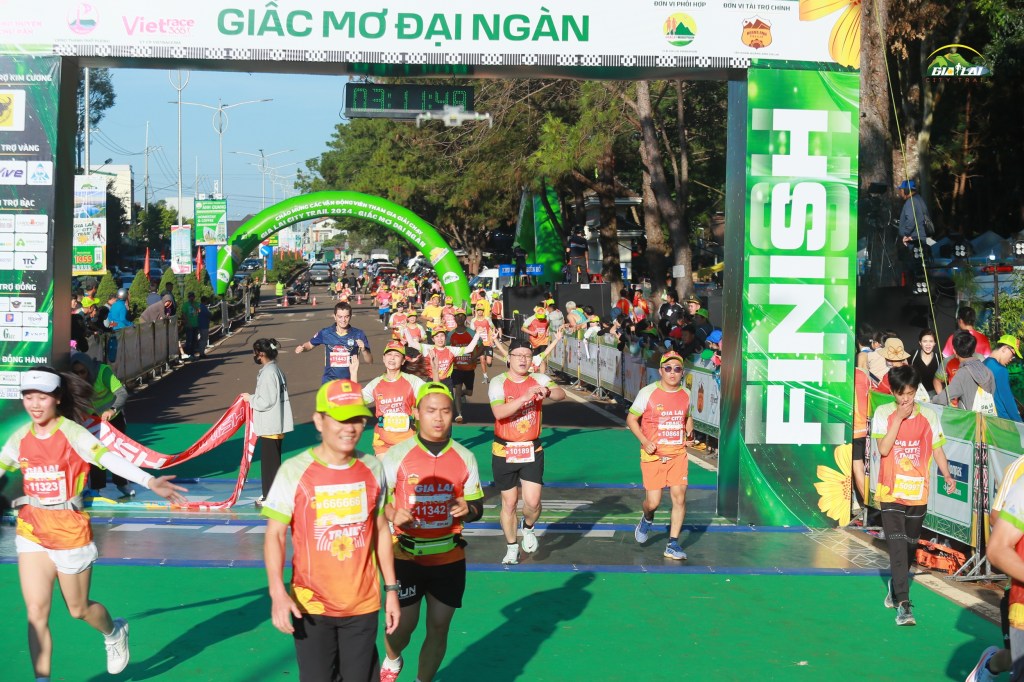
As I cross the finish line, exhausted but elated, a surge of emotion hits me. This wasn’t just about testing my limits; it was also about the generosity of the people who believed in me. Nearly £500 in sponsorship money will go to causes that matter deeply to me here. Thinking about the lives this will touch fills me with gratitude. Running around Biển Hồ, with all its beauty and history, feels like an offering in return. I remember this poem by Hồng Thanh Quang:
“Biển Hồ như tình yêu, Mặt nước chỉ hiện ra từng đấy, Nhưng ai biết ở sâu dưới đáy, Nó ăn lan rộng đến bao chừng…”
(“Biển Hồ is like love. Its surface appears only so, But who knows deep below, How far does it go…”)
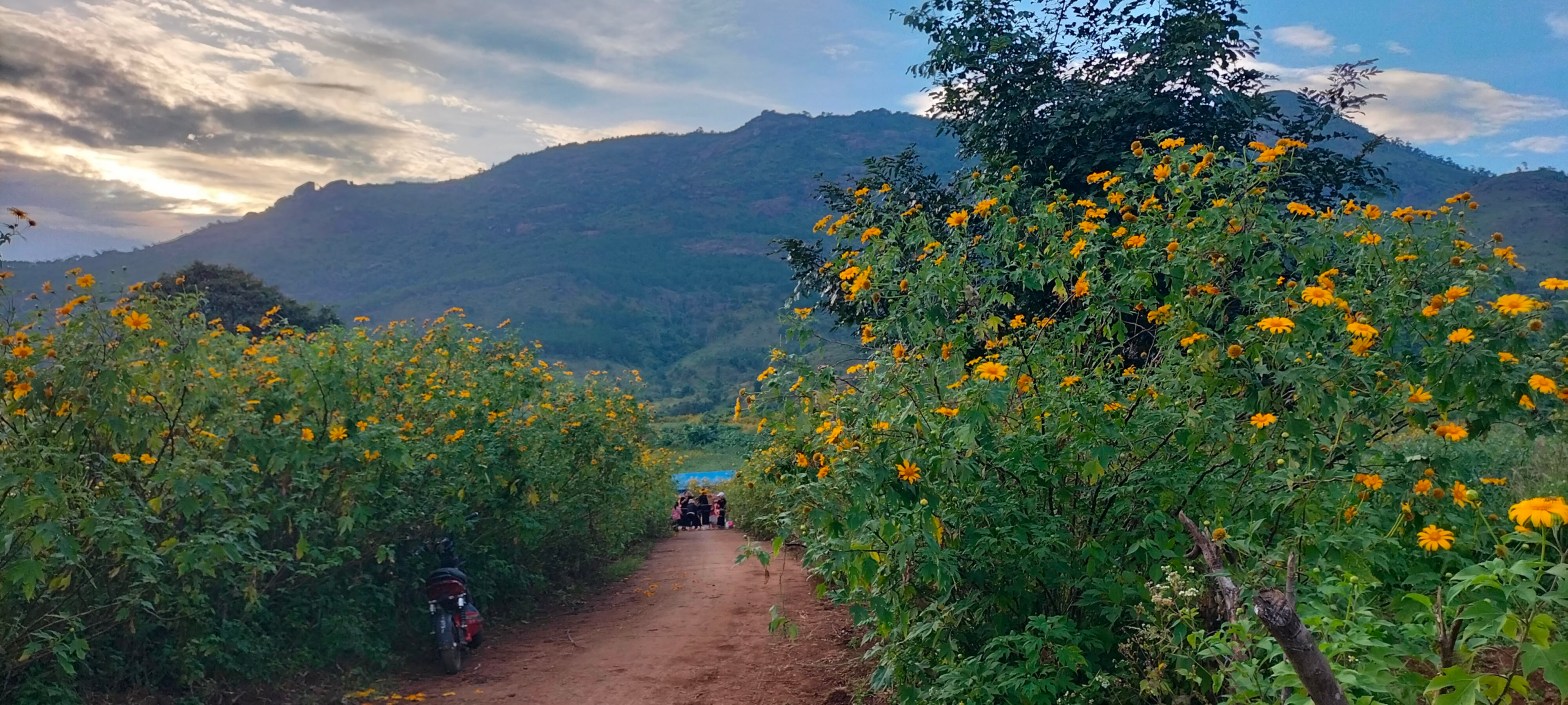
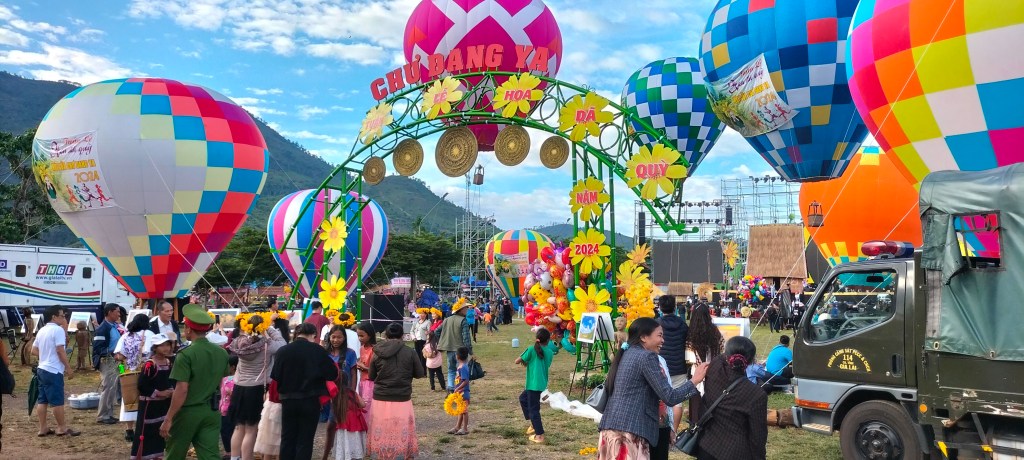
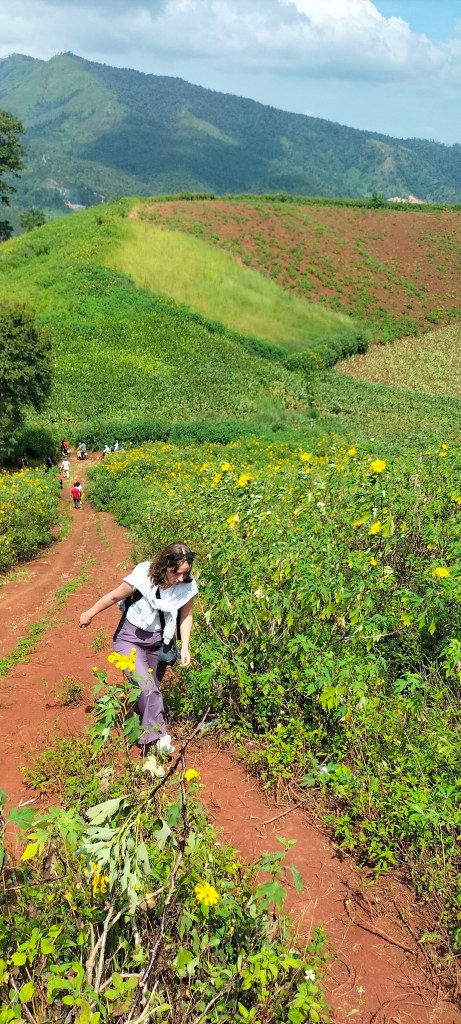
“Teacher Will!” a small voice calls out. I turn and scan the bustling crowd to see a group of my former students grinning and waving yellow flowers, dressed in striking black Jrai clothes with intricate brocaded trim. They’re selling dã quỳ wreaths, made from the bright yellow tithonia diversifolia flowers. The occasion? The annual Chu Dang Ya Flower Festival. Established in 2017 (source), this festival draws visitors from across Vietnam to witness the mountainsides bloom in early November, at the end of the rainy season.
Chu Dang Ya Flower Festival 08/11/2024
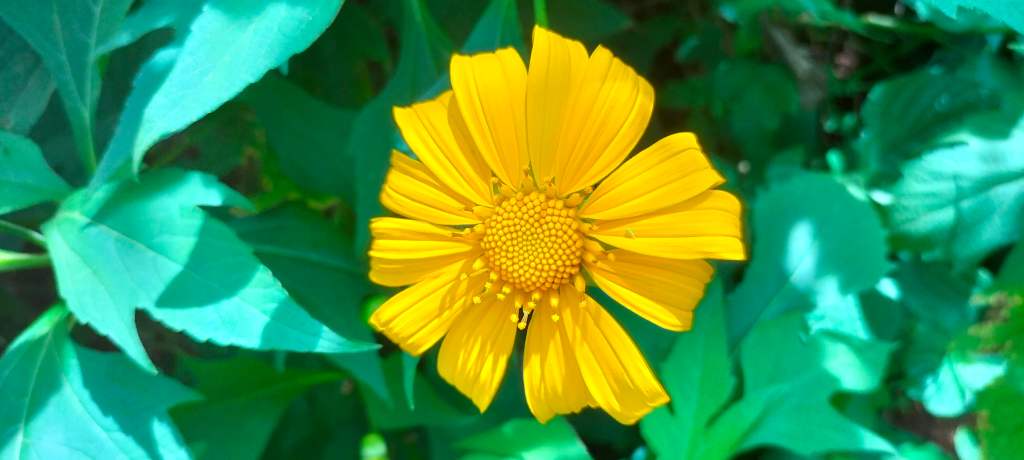
a da quy (tithonia diversifolia) flower
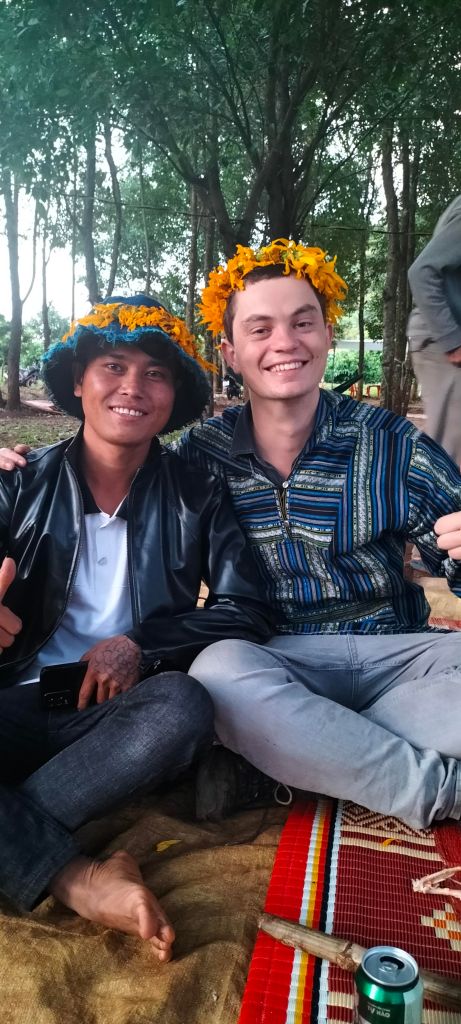
The girls are locals of the village that hosts the festival – a Jrai village about 20km north of Pleiku. They know me from the summer school I taught here this year. So of course, I buy a flower wreath. These flowers are so delicate that they start wilting almost immediately after they’re picked, so they have to work fast, making and selling the wreaths quickly before they fade. “Am I beautiful?” I ask them in Jrai as I put the wreath on my head. They laugh and assure me that I am.
My friends Jack and Jimmy, longtime expats, had different views about the festival’s authenticity. Jack described it as “a bit of a tourist trap,” while Jimmy had declared it “not worth the trip.” I decided to go anyway, having missed it during my four years in Pleiku (partly due to it being canceled during COVID), if only for something to write about. But as I walk through the grounds, I find something genuine in the community atmosphere. Despite the inevitable influx of outside vendors, I’m surrounded by familiar faces—some are my students and their families; others are friends who’ve come up from Pleiku like me. It reminds me of a village fête in England.
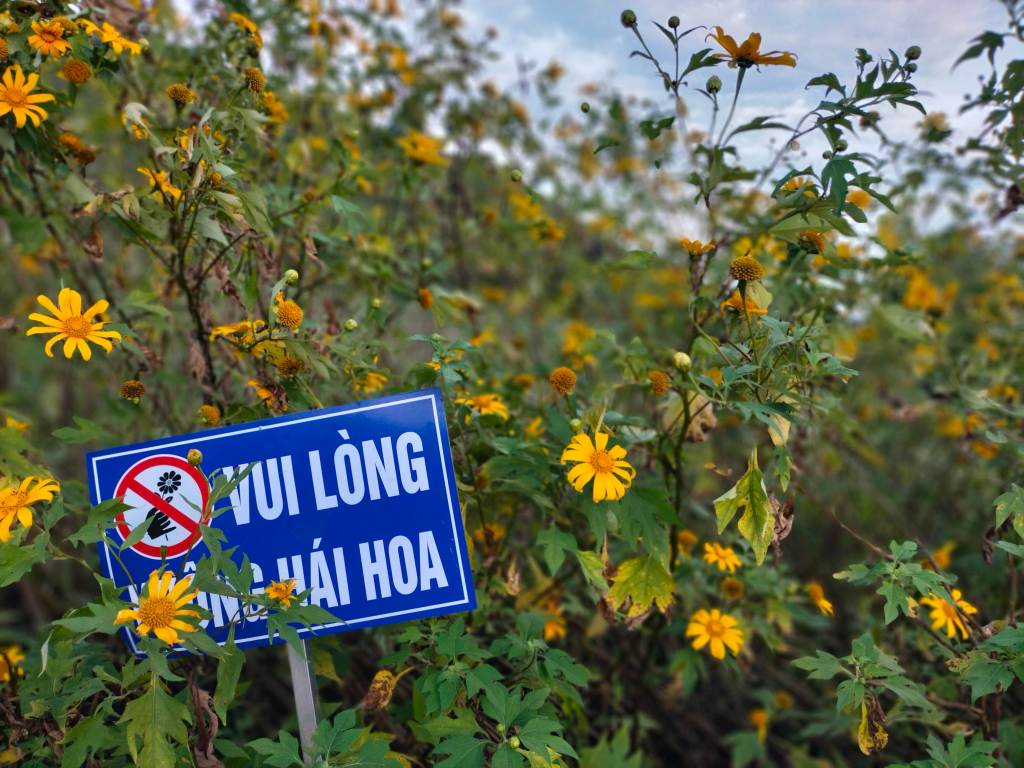
“please don’t pick the flowers”View south, Chu JorMy students having their photo taken by visitorsOne of the many photos taken by visitors
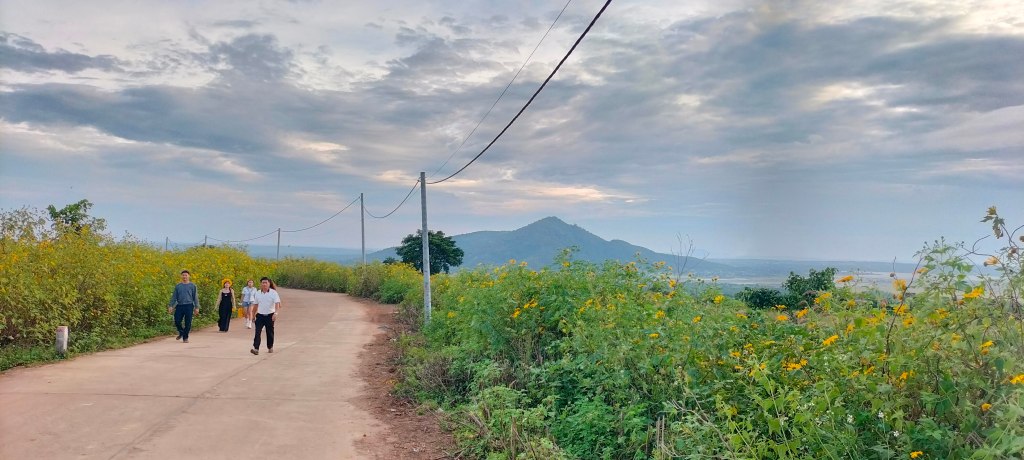
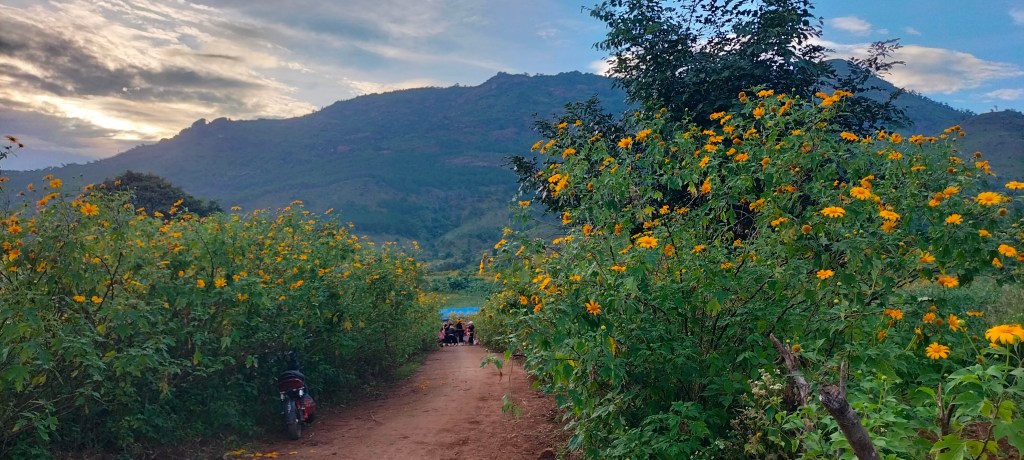
As I wander through the festival field with a large stage and up the winding road to the volcano there are hundreds of visitors taking taking portrait photos – this seems to be the main attraction for a certain type of visitor. People say that by the end of the festival, there are barely any flowers left on the plants as they’ve all been picked. However, for many locals the dã quỳ flower has become a symbol of Gia Lai province. Some expats have even gone as far as getting dã quỳ tattoos to commemorate their time in Pleiku. I don’t know how many people here know that the flower is not unique to Pleiku; Dalat even has their own Flower Festival which predates Pleiku’s (source). Although it is not native, the dã quỳ is a hardy flower and it has shown potential in raising the soil fertility in soils depleted in nutrients (source).
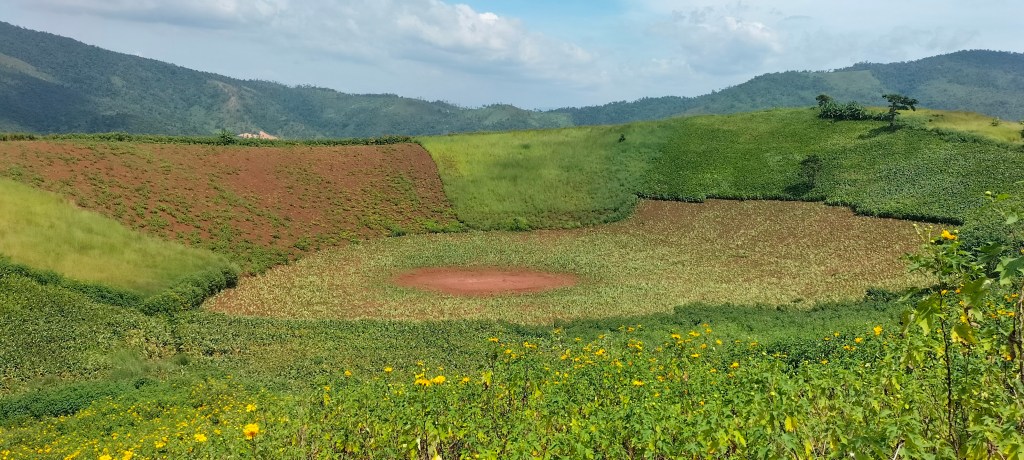
Chu Dang Ya crater with da quy flowers
Though the city dwellers love the sight of the flowers, many rural locals are less impressed.
“Hoa dã quỳ … I used to hate them when I was little. It turns out now they are the tourist attraction. I hated the smell and the feeling when I touch them. And at the time we had those wild flowers everywhere. I didn’t appreciate it. I was into those fancy flowers I couldn’t touch.” – Helen Nguyen, friend of the author, 4/11/2024
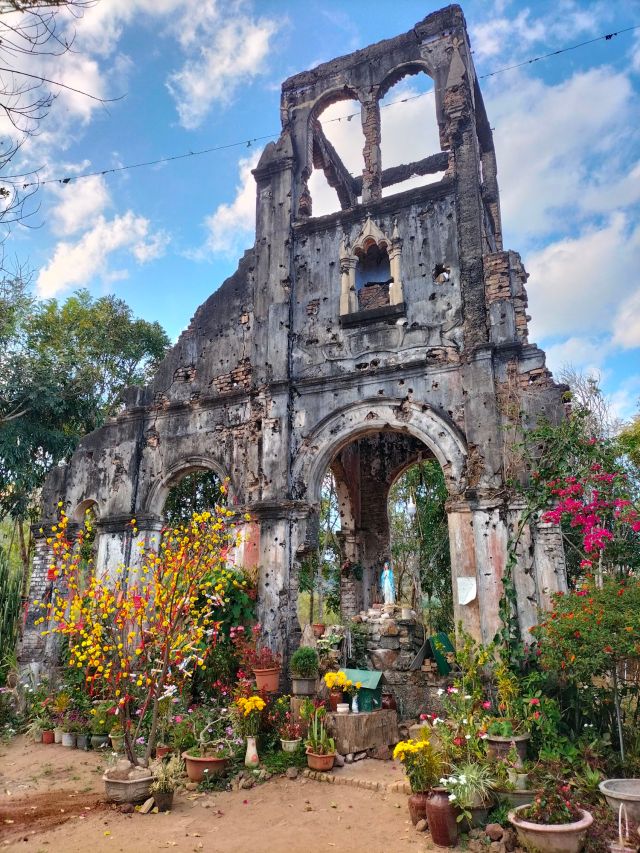
As well as researching the local flora, I’ve been looking into the local history lately too, with help from Brother Hiep, a local seminarian who helped me during the summer school. The village is important because it was the first Christian village of the Jrai people. According to the tale his mother would tell him when he was young (and supported by church records), the village was established by freed slaves under the guidance of French missionary Father Gabriel Nicolas (source). This seminal Christian community for the Jrai people became a refuge, the location chosen because of the ring of mountains that surround it – protecting the inhabitants from nearby slave-trading clans. Nicolas’s church, built in 1905, endured until it was destroyed in 1972 due to the war. Today, a single wall remains, serving as both a site for quiet Christian reflection and a tourist attraction.
Chu Dang Ya ruined church
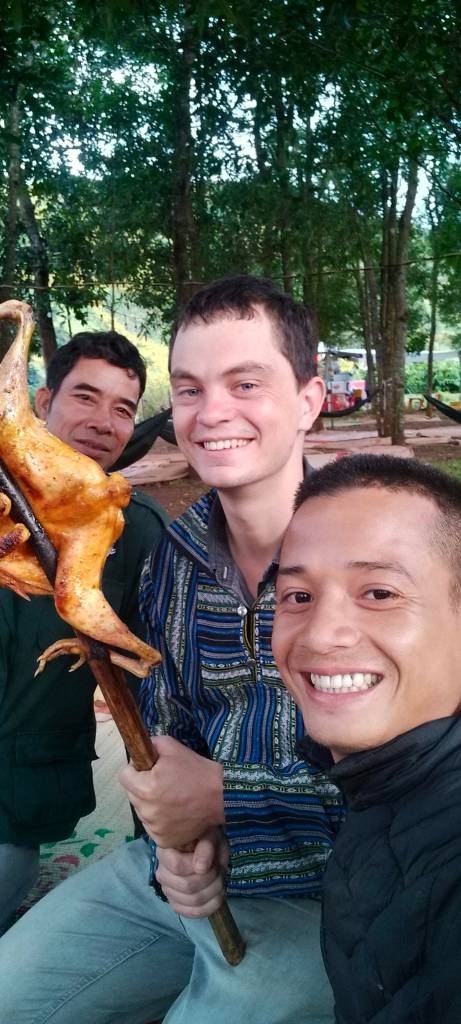
Eventually, between photo requests from Vietnamese holidaymakers and absorbing the festive buzz, I start to think about the one festive aspect I haven’t tried yet: the food. Before I can choose from one of the many food stalls, though, a group of locals sitting on a straw mat in an orchard waves me over to join them. I accept, joining them sitting cross-legged as they pour me a shot of rice wine in a shared glass, which they pass to the left, in the Jrai way. One man, dressed in an old Cambodian police jacket, insists on getting me a whole roasted chicken on a stick. I try to share it around, but he shakes his head, puts on a serious face, and says, “It’s only for you.” So I dig in.
My personal skewerda quy wreaths
The men casually ask a few questions that make me wonder if I’m being tested—‘What’s the name of the priest again?’ or, ‘Did you see him today?’ (I hadn’t; he was away in Saigon for four days.) They relax a little, maybe satisfied that I am indeed a friend of the community, and I win more of their trust by using what few words of Jrai I know. The conversation turns to local history, and I seize the opportunity to ask about the nearby church ruins and the village’s origins. One elder, born in 1951, confirms how the village was originally a settlement for freed slaves. With limited access to resources, they had to be resourceful—flavoring food primarily with ginger, which covered the forested mountains and gave the mountain its current name, Chu Dang Ya, or “ginger mountain” in Jrai. I try to absorb the details, but some phrases are lost in translation, and I feel as though there’s still so much I don’t know. I do catch a bit about salt shortages and subsisting on monkeys and cassava leaves, a sobering lesson in the struggles these first settlers faced.
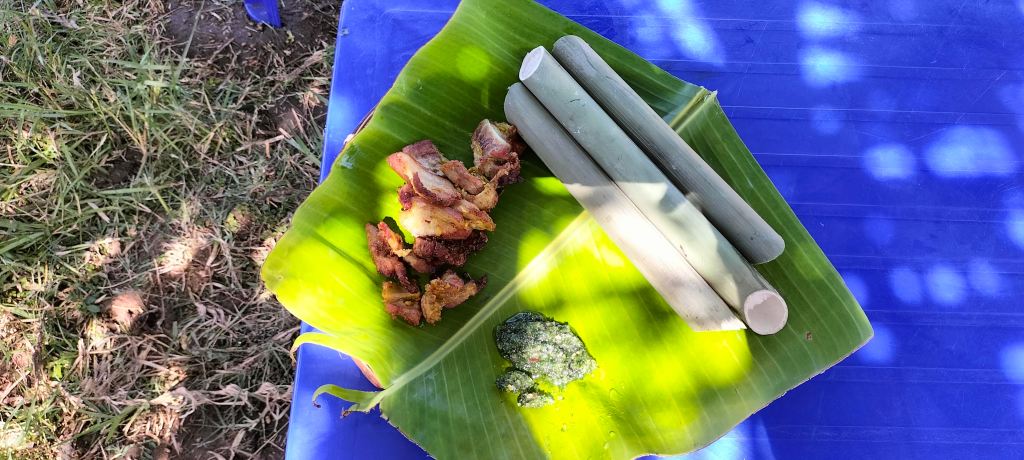
As the sun sinks behind the prominent peaks to our west, my host insists on packing me some sticky rice in bamboo to take home. He also insists on giving me a lift back down the slope by moped, rounding off my visit with much unexpected kindness. For all the opinions about the festival’s authenticity, the dã quỳ seems to me to be an apt symbol here—they fade quickly, but their roots are resilient, nourishing the soil. This festival may have its commercial aspects, but it’s also a time for the community to come together. For anyone considering a visit, I’d say go. It’s good for the community, and as far as experiences go, this one’s a festival I’d return to.
My cousin Alice climbs Chu Dang ya surrounded by da quy flowers



 Eastward Ho!